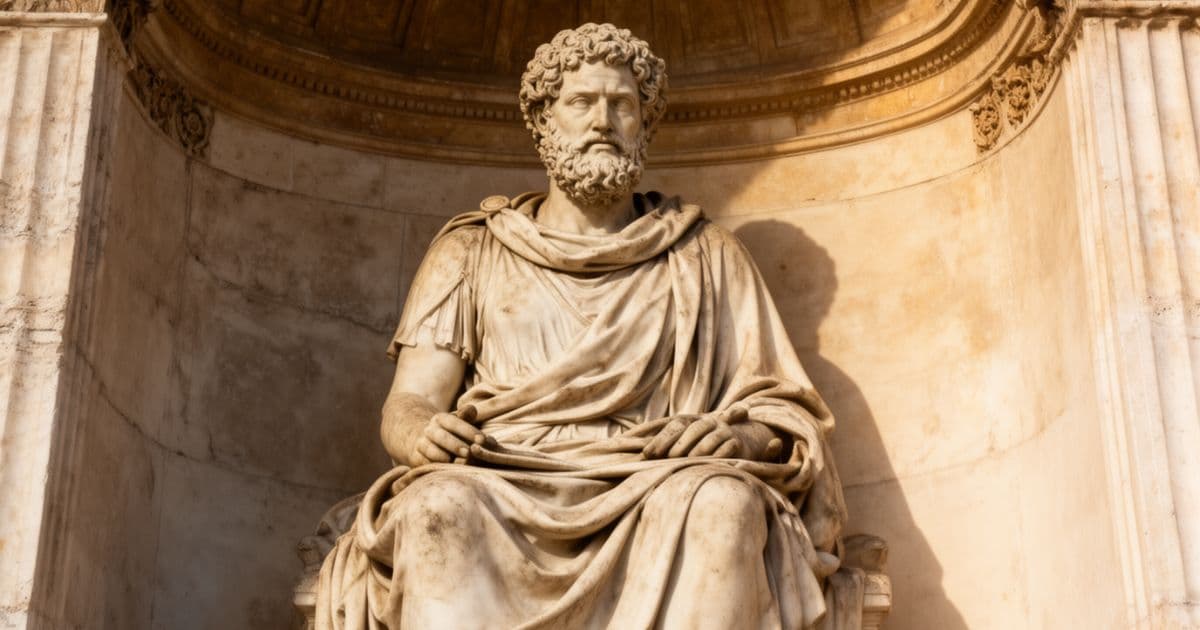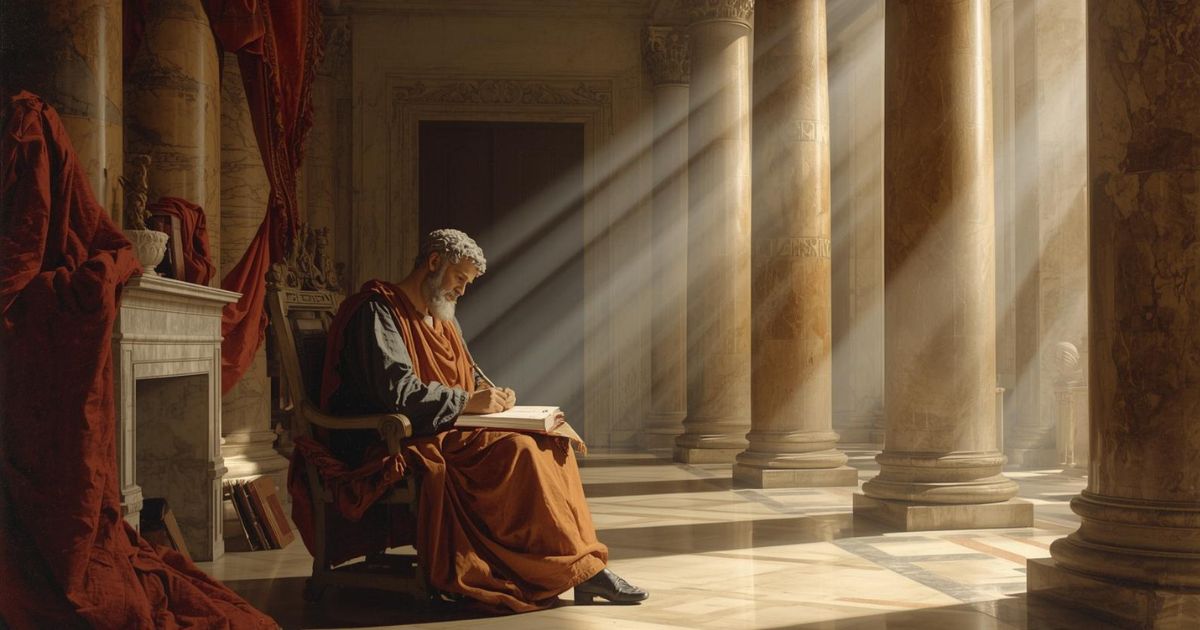
An excerpt from the original text.(complete · 1224 words)
←etter 6. On sharing knowledgeMoral letters to Luciliusby Seneca, translated by Richard Mott GummereLetter 7. On crowdsLetter 8. On the philosopher's seclusion→482832Moral letters to Lucilius — Letter 7. On crowdsRichard Mott GummereSeneca VII. ON CROWDS 1. Do you ask me what you should regard as especially to be avoided? I say, crowds; for as yet you cannot trust yourself to them with safety. I shall admit my own weakness, at any rate; for I never bring back home the same character that I took abroad with me. Something of that which I have forced to be calm within me is disturbed; some of the foes that I have routed return again. Just as the sick man, who has been weak for a long time, is in such a condition that he cannot be taken out of the house without suffering a relapse, so we ourselves are affected when our souls are recovering from a lingering disease. 2. To consort with the crowd is harmful; there is no person who does not make some vice attractive to us, or stamp it upon us, or taint us unconsciously therewith. Certainly, the greater the mob with which we mingle, the greater the danger. But nothing is so damaging to good character as the habit of lounging at the games; for then it is that vice steals subtly upon one through the avenue of pleasure. 3. What do you think I mean? I mean that I come home more greedy, more ambitious, more voluptuous, and even more cruel and inhuman,—because I have been among human beings. By chance I attended a mid-day exhibition, expecting some fun, wit, and relaxation,—an exhibition at which men’s eyes have respite from the slaughter of their fellow-men. But it was quite the reverse. The previous combats were the essence of compassion; but now all the trifling is put aside and it is pure murder.[1] The men have no defensive armour. They are exposed to blows at all points, and no one ever strikes in vain. 4. Many persons prefer this programme to the usual pairs and to the bouts “by request.” Of course they do; there is no helmet or shield to deflect the weapon. What is the need of defensive armour, or of skill? All these mean delaying death. In the morning they throw men to the lions and the bears; at noon, they throw them to the spectators. The spectators demand that the slayer shall face the man who is to slay him in his turn; and they always reserve the latest conqueror for another butchering. The outcome of every fight is death, and the means are fire and sword. This sort of thing goes on while the arena is empty. 5. You may retort: “But he was a highway robber; he killed a man!” And what of it? Granted that, as a murderer, he deserved this punishment, what crime have you committed, poor fellow, that you should deserve to sit and see this show? In the morning they cried “Kill him! Lash him! Burn him! Why does he meet the sword in so cowardly a way? Why does he strike so feebly? Why doesn’t he die game? Whip him to meet his wounds! Let them receive blow for blow, with chests bare and exposed to the stroke!” And when the games stop for the intermission, they announce: “A little throat-cutting in the meantime, so that there may still be something going on!” Come now; do you[2] not understand even this truth, that a bad example reacts on the agent? Thank the immortal gods that you are teaching cruelty to a person who cannot learn to be cruel. 6. The young character, which cannot hold fast to righteousness, must be rescued from the mob; it is too easy to side with the majority. Even Socrates, Cato, and Laelius might have been shaken in their moral strength by a crowd that was unlike them; so true it is that none of us, no matter how much he cultivates his abilities, can withstand the shock of faults that approach, as it were, with so great a retinue. 7. Much harm is done by a single case of indulgence or greed; the familiar friend, if he be luxurious, weakens and softens us imperceptibly; the neighbour, if he be rich, rouses our covetousness; the companion, if he be slanderous, rubs off some of his rust upon us, even though we be spotless and sincere. What then do you think the effect will be on character, when the world at large assaults it! You must either imitate or loathe the world. 8. But both courses are to be avoided; you should not copy the bad simply because they are many, nor should you hate the many because they are unlike you. Withdraw into yourself, as far as you can. Associate with those who will make a better man of you. Welcome those whom you yourself can improve. The process is mutual; for men learn while they teach. 9. There is no reason why pride in advertising your abilities should lure you into publicity, so that you should desire to recite or harangue before the general public. Of course I should be willing for you to do so if you had a stock-in-trade that suited such a mob; as it is, there is not a man of them who can understand you. One or two individuals will perhaps come in your way, but even these will have to be moulded and trained by you so that they will understand you. You may say: “For what purpose did I learn all these things?” But you need not fear that you have wasted your efforts; it was for yourself that you learned them. 10. In order, however, that I may not to-day have learned exclusively for myself, I shall share with you three excellent sayings, of the same general purport, which have come to my attention. This letter will give you one of them as payment of my debt; the other two you may accept as a contribution in advance. Democritus[3] says: “One man means as much to me as a multitude, and a multitude only as much as one man.” 11. The following also was nobly spoken by someone or other, for it is doubtful who the author was; they asked him what was the object of all this study applied to an art that would reach but very few. He replied: “I am content with few, content with one, content with none at all.” The third saying—and a noteworthy one, too—is by Epicurus,[4] written to one of the partners of his studies: “I write this not for the many, but for you; each of us is enough of an audience for the other.” 12. Lay these words to heart, Lucilius, that you may scorn the pleasure which comes from the applause of the majority. Many men praise you; but have you any reason for being pleased with yourself, if you are a person whom the many can understand? Your good qualities should face inwards. Farewell. ↑ During the luncheon interval condemned criminals were often driven into the arena and compelled to fight, for the amusement of those spectators who remained throughout the day. ↑ The remark is addressed to the brutalized spectators. ↑ Frag. 302ᵃ Diels². ↑ Frag. 208 Usener.
Master this chapter. Complete your experience
Purchase the complete book to access all chapters and support classic literature
As an Amazon Associate, we earn a small commission from qualifying purchases at no additional cost to you.
Available in paperback, hardcover, and e-book formats
Let's Analyse the Pattern
We unconsciously absorb the values and behaviors of whatever environment we spend time in, often without realizing we're changing.
Why This Matters
Connect literature to life
This chapter teaches how to detect when your surroundings are subtly changing your behavior and values.
Practice This Today
This week, notice when you act differently in different groups—are you meaner with some coworkers, more generous with others, more honest in certain spaces?
Now let's explore the literary elements.
Key Quotes & Analysis
"I never bring back home the same character that I took abroad with me."
Context: He's explaining why he avoids crowds—admitting that he always comes home morally weakened
This is Seneca's brutal honesty about his own vulnerability. Even as a philosopher, he recognizes that social influence is stronger than willpower. It's not about being weak—it's about being realistic.
In Today's Words:
Every time I go out, I come back a little bit worse than I was.
"There is no person who does not make some vice attractive to us, or stamp it upon us, or taint us unconsciously therewith."
Context: Warning about how everyone we meet influences our character in some way
This reveals how character corruption works—it's unconscious and gradual. We don't decide to become worse people; we absorb attitudes without realizing it through repeated exposure.
In Today's Words:
Everyone you hang around with rubs off on you somehow, usually in ways you don't even notice.
"Nothing is so damaging to good character as the habit of lounging at the games."
Context: Explaining why entertainment venues are particularly dangerous for moral development
Seneca identifies how entertainment designed around cruelty gradually shifts our moral boundaries. When violence becomes fun, our capacity for empathy shrinks.
In Today's Words:
Nothing ruins your character faster than getting entertained by other people's suffering.
Thematic Threads
Social Influence
In This Chapter
Seneca shows how crowds corrupt even good people through unconscious absorption of group values
Development
Introduced here
In Your Life:
You might notice yourself becoming more negative after spending time with complainers, or more materialistic around status-focused friends.
Character Protection
In This Chapter
Seneca advocates withdrawing from toxic environments and being selective about influences
Development
Introduced here
In Your Life:
You might need to limit time with certain coworkers or family members who bring out your worst impulses.
Self-Awareness
In This Chapter
Seneca admits his own vulnerability to corruption, recognizing he comes home worse after being in crowds
Development
Introduced here
In Your Life:
You might catch yourself adopting behaviors or attitudes that aren't really you after certain social situations.
Quality over Quantity
In This Chapter
Seneca values one true friend over applause from crowds who don't understand you
Development
Introduced here
In Your Life:
You might realize it's better to have a few close relationships than many shallow ones that don't truly support your growth.
Violence and Desensitization
In This Chapter
The gladiator games show how entertainment can normalize cruelty and make people cheer for suffering
Development
Introduced here
In Your Life:
You might notice how constant exposure to violent media, workplace gossip, or toxic online content gradually makes you less sensitive to harm.
You now have the context. Time to form your own thoughts.
Discussion Questions
- 1
What happened to Seneca when he went to the gladiator games, and how did it surprise him?
analysis • surface - 2
Why does Seneca believe that crowds have the power to corrupt even good people?
analysis • medium - 3
Where do you see this pattern of 'invisible contamination' happening in modern workplaces, social media, or friend groups?
application • medium - 4
How could you apply Seneca's advice about being selective with influences to protect your own values and character?
application • deep - 5
What does this letter reveal about the balance between being social and protecting your integrity?
reflection • deep
Critical Thinking Exercise
Audit Your Influence Network
List the five environments where you spend the most time (work, home, social media, friend groups, etc.). For each one, write down what behaviors and attitudes that environment actually rewards—not what it claims to value, but what it really celebrates. Then honestly assess: which of these environments are making you better, and which are pulling you toward becoming someone you don't want to be?
Consider:
- •Notice the difference between stated values and rewarded behaviors
- •Consider both obvious influences and subtle ones that creep in over time
- •Think about which environments you have control over versus which ones you must navigate carefully
Journaling Prompt
Write about a time when you noticed yourself changing after spending time in a particular environment. What values or behaviors did you pick up that surprised you? How did you handle it?
Coming Up Next...
Chapter 8: The Power of Strategic Withdrawal
But wait—isn't withdrawing from society just selfish? In the next letter, Seneca tackles the tension between self-improvement and social responsibility, addressing critics who say philosophers should engage with the world, not hide from it.