An excerpt from the original text.(complete · 1837 words)
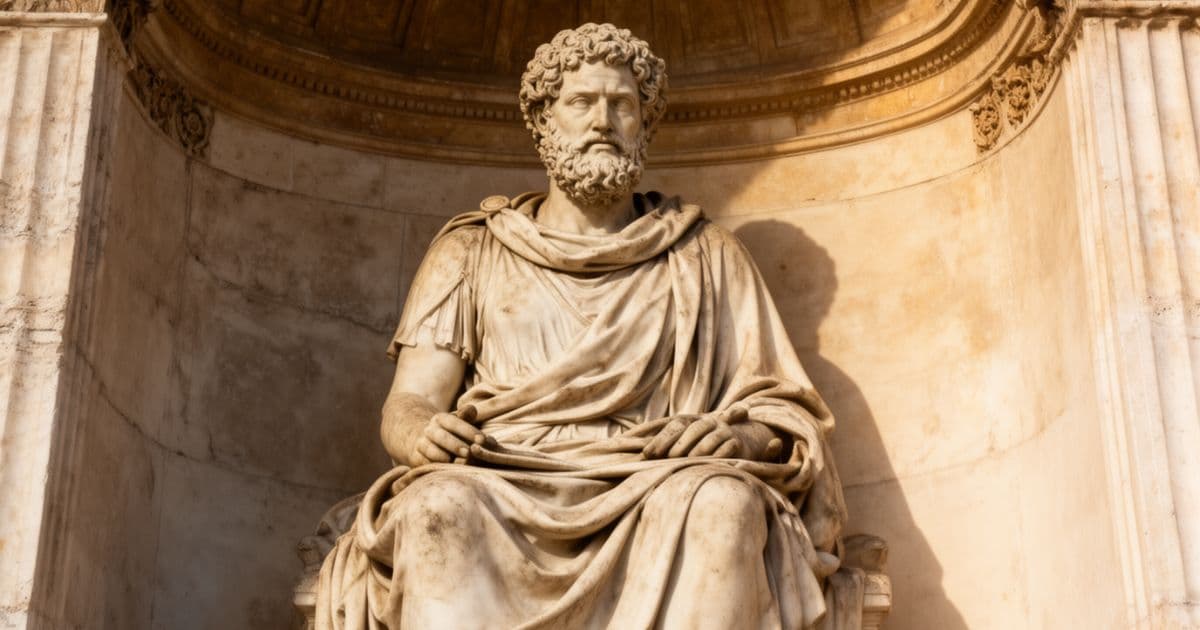
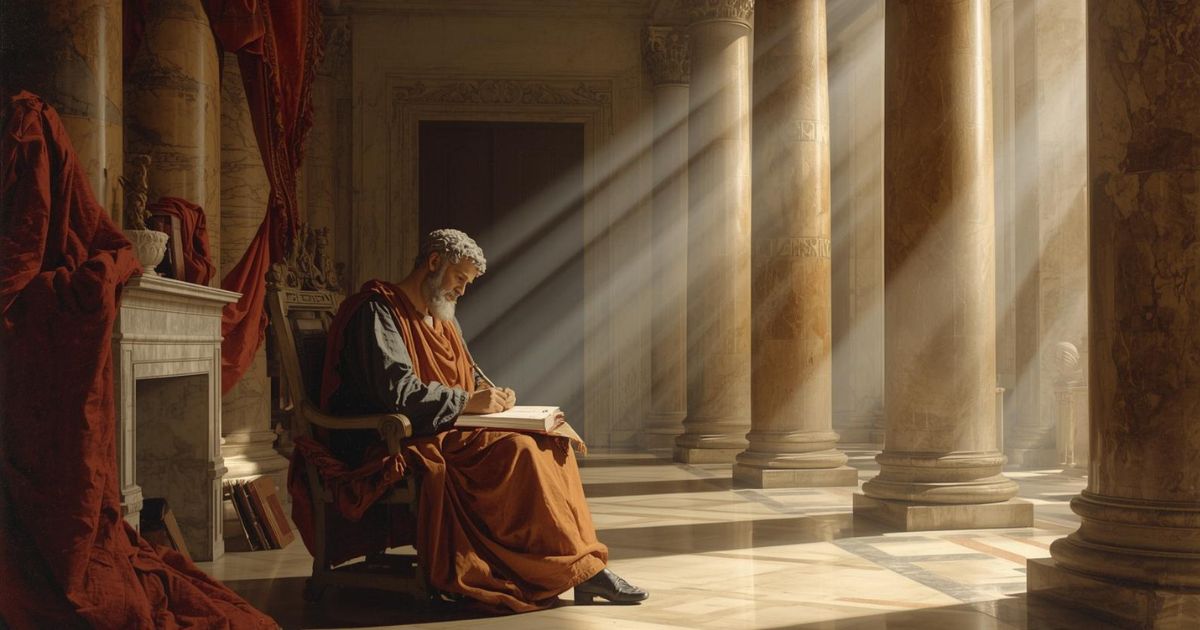
←etter 74. On virtue as a refuge from worldly distractionsMoral letters to Luciliusby Seneca, translated by Richard Mott GummereLetter 75. On the diseases of the soulLetter 76. On learning wisdom in old age→483218Moral letters to Lucilius — Letter 75. On the diseases of the soulRichard Mott GummereSeneca LXXV. ON THE DISEASES OF THE SOUL 1. You have been complaining that my letters to you are rather carelessly written. Now who talks carefully unless he also desires to talk affectedly?[1] I prefer that my letters should be just what my conversation[2] would be if you and I were sitting in one another’s company or taking walks together,—spontaneous and easy; for my letters have nothing strained or artificial about them. 2. If it were possible, I should prefer to show, rather than speak, my feelings. Even if I were arguing a point, I should not stamp my foot, or toss my arms about, or raise my voice; but I should leave that sort of thing to the orator, and should be content to have conveyed my feelings to you without having either embellished them or lowered their dignity. 3. I should like to convince you entirely of this one fact,—that I feel whatever I say, that I not only feel it, but am wedded to it. It is one sort of kiss which a man gives his mistress, and another which he gives his children; yet in the father’s embrace also, holy and restrained as it is, plenty of affection is disclosed. I prefer, however, that our conversation on matters so important should not be meagre and dry; for even philosophy does not renounce the company of cleverness. One should not, however, bestow very much attention upon mere words. 4. Let this be the kernel of my idea: let us say what we feel, and feel what we say; let speech harmonize with life.[3] That man has fulfilled his promise who is the same person both when you see him and when you hear him. 5. We shall not fail to see what sort of man he is and how large a man he is, if only he is one and the same. Our words should aim not to please, but to help. If, however, you can attain eloquence without painstaking, and if you either are naturally gifted or can gain eloquence at slight cost, make the most of it and apply it to the noblest uses. But let it be of such a kind that it displays facts rather than itself. It and the other arts are wholly concerned with cleverness;[4] but our business here is the soul. 6. A sick man does not call in a physician who is eloquent; but if it so happens that the physician who can cure him likewise discourses elegantly about the treatment which is to be followed, the patient will take it in good part. For all that, he will not find any reason to congratulate himself on having discovered a physician who is eloquent. For the case is no different from that of a skilled pilot who is also handsome. 7. Why do you tickle my ears? Why do you entertain me? There is other business at hand; I am to be cauterized, operated upon, or put on a diet. That is why you were summoned to treat me! You are required to cure a disease that is chronic and serious,—one which affects the general weal. You have as serious a business on hand as a physician has during a plague. Are you concerned about words? Rejoice this instant if you can cope with things. When shall you learn all that there is to learn? When shall you so plant in your mind that which you have learned, that it cannot escape? When shall you put it all into practice? For it is not sufficient merely to commit these things to memory, like other matters; they must be practically tested. He is not happy who only knows them, but he who does them. 8. You reply: “What? Are there no degrees of happiness below your ‘happy’ man? Is there a sheer descent immediately below wisdom?” I think not. For though he who makes progress is still numbered with the fools, yet he is separated from them by a long interval. Among the very persons who are making progress there are also great spaces intervening. They fall into three classes,[5] as certain philosophers believe. 9. First come those who have not yet attained wisdom but have already gained a place near by. Yet even that which is not far away is still outside. These, if you ask me, are men who have already laid aside all passions and vices, who have learned what things are to be embraced; but their assurance is not yet tested. They have not yet put their good into practice, yet from now on they cannot slip back into the faults which they have escaped. They have already arrived at a point from which there is no slipping back, but they are not yet aware of the fact; as I remember writing in another letter, “They are ignorant of their knowledge.”[6] It has now been vouchsafed to them to enjoy their good, but not yet to be sure of it. 10. Some define this class, of which I have been speaking,—a class of men who are making progress,—as having escaped the diseases of the mind, but not yet the passions, and as still standing upon slippery ground; because no one is beyond the dangers of evil except him who has cleared himself of it wholly. But no one has so cleared himself except the man who has adopted wisdom in its stead. 11. I have often before explained the difference between the diseases of the mind and its passions. And I shall remind you once more: the diseases are hardened and chronic vices, such as greed and ambition; they have enfolded the mind in too close a grip, and have begun to be permanent evils thereof. To give a brief definition: by “disease” we mean a persistent perversion of the judgment, so that things which are mildly desirable are thought to be highly desirable. Or, if you prefer, we may define it thus: to be too zealous in striving for things which are only mildly desirable or not desirable at all, or to value highly things which ought to be valued but slightly or valued not at all. 12. “Passions” are objectionable impulses of the spirit, sudden and vehement; they have come so often, and so little attention has been paid to them, that they have caused a state of disease; just as a catarrh,[7] when there has been but a single attack and the catarrh has not yet become habitual, produces a cough, but causes consumption when it has become regular and chronic. Therefore we may say that those who have made most progress are beyond the reach of the “diseases”; but they still feel the “passions” even when very near perfection. 13. The second class is composed of those who have laid aside both the greatest ills of the mind and its passions, but yet are not in assured possession of immunity.[8] For they can still slip back into their former state. 14. The third class are beyond the reach of many of the vices and particularly of the great vices, but not beyond the reach of all. They have escaped avarice, for example, but still feel anger; they no longer are troubled by lust, but are still troubled by ambition; they no longer have desire, but they still have fear. And just because they fear, although they are strong enough to withstand certain things, there are certain things to which they yield; they scorn death, but are in terror of pain. 15. Let us reflect a moment on this topic. It will be well with us if we are admitted to this class. The second stage is gained by great good fortune with regard to our natural gifts and by great and unceasing application to study. But not even the third type is to be despised. Think of the host of evils which you see about you; behold how there is no crime that is not exemplified, how far wickedness advances every day, and how prevalent are sins in home and commonwealth. You will see, therefore, that we are making a considerable gain, if we are not numbered among the basest. 16. “But as for me,” you say, “I hope that it is in me to rise to a higher rank than that!” I should pray, rather than promise, that we may attain this; we have been forestalled. We hasten towards virtue while hampered by vices. I am ashamed to say it; but we worship that which is honourable only in so far as we have time to spare.[9] But what a rich reward awaits us if only we break off the affairs which forestall us and the evils that cling to us with utter tenacity! 17. Then neither desire nor fear shall rout us. Undisturbed by fears, unspoiled by pleasures, we shall be afraid neither of death nor of the gods; we shall know that death is no evil and that the gods are not powers of evil. That which harms has no greater power than that which receives harm, and things which are utterly good have no power at all to harm. 18. There await us, if ever we escape from these low dregs to that sublime and lofty height, peace of mind and, when all error has been driven out, perfect liberty. You ask what this freedom is? It means not fearing either men or gods; it means not craving wickedness or excess; it incans possessing supreme power over oneself. And it is a priceless good to be master of oneself. Farewell. ↑ For putidum (that which offends the taste, i.e., is too artificially formal) see Cic. De Orat. iii. 41 nolo exprimi litteras putidius, nolo obscurari neglegentius. ↑ Cf. Ep. lxvii. 2 si quando intervenerunt epistulae tuae, tecum esse mihi videor, etc. ↑ Cf. Ep. cxiv. 1 talis hominibus fuit oratio qualis vita, and passim in Epp. xl., lxxv. and cxiv. ↑ Eloquence and other arts please mainly by their cleverness; nor does philosophy abjure such cleverness as style; but here in these letters, wherein we are discussing the soul, the graces of speech are of no concern. ↑ Chrysippus, however, recognised only the first two classes, as did Epictetus (iv. 2). ↑ Ep. lxxi. 4. ↑ For Seneca’s own struggles with this disease cf. Ep. lxxviii. 1. ↑ The difference between the first and second classes is well described in Ep. lxxii. 6 hoc interest inter consummatae sapientiae virum et alium procedentis, quod inter sanum et ex morbo gravi ac diutino emergentem. ↑ This idea is a favourite with Seneca; cf. Ep. liii. 8 non est quod precario philosopheris, and § 9 (philosophia) non est res subsiciva, “an occupation for one’s spare time.”
Master this chapter. Complete your experience
Purchase the complete book to access all chapters and support classic literature
As an Amazon Associate, we earn a small commission from qualifying purchases at no additional cost to you.
Available in paperback, hardcover, and e-book formats
Let's Analyse the Pattern
Real growth happens in vulnerable stages where genuine development matters more than impressive appearances.
Why This Matters
Connect literature to life
This chapter teaches how to recognize when you're trying to look advanced rather than actually developing.
Practice This Today
This week, notice when you catch yourself trying to sound smarter or more together than you feel—then experiment with just being honest about where you actually are.
Now let's explore the literary elements.
Key Quotes & Analysis
"I prefer that my letters should be just what my conversation would be if you and I were sitting in one another's company or taking walks together—spontaneous and easy."
Context: Defending his casual writing style against criticism
This reveals Seneca's commitment to authentic communication over impressive rhetoric. He values genuine connection and practical help over sounding sophisticated, showing that real wisdom doesn't need fancy packaging.
In Today's Words:
I want to write to you the same way I'd talk to you if we were just hanging out—natural and real.
"I should like to convince you entirely of this one fact—that I feel whatever I say, that I not only feel it, but am wedded to it."
Context: Emphasizing that his advice comes from genuine belief and experience
Seneca is establishing credibility not through credentials but through authentic commitment to his principles. He's saying his advice isn't theoretical but lived experience he's personally invested in.
In Today's Words:
I need you to know that everything I'm telling you, I actually believe and live by myself.
"Most of us, including myself, are hampered by old habits while trying to build better ones."
Context: Acknowledging that personal growth is an ongoing struggle
This shows Seneca's humility and realism about change. He doesn't pretend to be perfect but admits he's still working on himself, making his advice more relatable and trustworthy.
In Today's Words:
Look, most of us—me included—are still fighting our old bad habits while trying to develop new good ones.
"True freedom comes from not fearing death or gods, not craving harmful things, and having complete self-mastery."
Context: Describing the ultimate goal of philosophical development
This defines freedom not as doing whatever you want, but as being free from the fears and desires that control most people. It's about internal liberation rather than external circumstances.
In Today's Words:
Real freedom means you're not controlled by fear, addiction, or other people's opinions—you're in charge of yourself.
Thematic Threads
Authenticity
In This Chapter
Seneca defends casual communication over polished rhetoric as more genuinely helpful
Development
Introduced here as core principle for real wisdom transfer
In Your Life:
You might recognize this when you find yourself performing 'growth' instead of actually growing
Personal Growth
In This Chapter
Three distinct stages of development from knowing right to mastering specific weaknesses
Development
Builds on earlier themes by providing concrete framework for progress
In Your Life:
You might see this in how you handle stress differently now than five years ago, but still struggle with specific triggers
Self-Knowledge
In This Chapter
Honest assessment of current stage rather than pretending to be further along
Development
Continues emphasis on realistic self-evaluation over self-deception
In Your Life:
You might notice this when you catch yourself exaggerating your progress in difficult areas
Human Relationships
In This Chapter
Communication should help people heal and grow, not impress them
Development
Extends relationship themes to include how we share wisdom and support others
In Your Life:
You might recognize this when deciding whether to give real advice or just say what sounds good
Freedom
In This Chapter
True liberty comes from self-mastery and escaping the 'low dregs' of vice
Development
Culminates earlier discussions of freedom by defining it as internal achievement
In Your Life:
You might experience this as the relief that comes from not needing things or approval that used to control you
You now have the context. Time to form your own thoughts.
Discussion Questions
- 1
Why does Seneca defend his casual writing style instead of trying to sound more impressive?
analysis • surface - 2
What's the difference between someone in stage one versus stage three of personal development, and why does this matter?
analysis • medium - 3
Where do you see people performing growth instead of actually growing in your workplace, family, or community?
application • medium - 4
How would you honestly assess which stage you're in right now, and what specific test would reveal your true progress?
application • deep - 5
What does Seneca's framework teach us about why most self-improvement fails?
reflection • deep
Critical Thinking Exercise
Map Your Real Stage
Think of an area where you want to grow (patience, honesty, health habits, work boundaries). Write down what stage you think you're in, then identify the last three times you were actually tested in this area. How did you really respond versus how you wanted to respond? This gap reveals your actual stage.
Consider:
- •Focus on your actual responses under pressure, not your good intentions
- •Look for patterns in when and why you slip back to old habits
- •Consider what specific situations consistently trigger your weaknesses
Journaling Prompt
Write about a time when you realized you weren't as far along in your growth as you thought you were. What did that moment teach you about the difference between knowing what's right and actually doing it consistently?
Coming Up Next...
Chapter 76: Never Too Old to Learn
Seneca threatens to cut off correspondence if Lucilius doesn't keep him updated on daily activities, but then reveals the surprisingly intimate terms of their friendship. The next letter explores how to maintain meaningful relationships and accountability as we age.