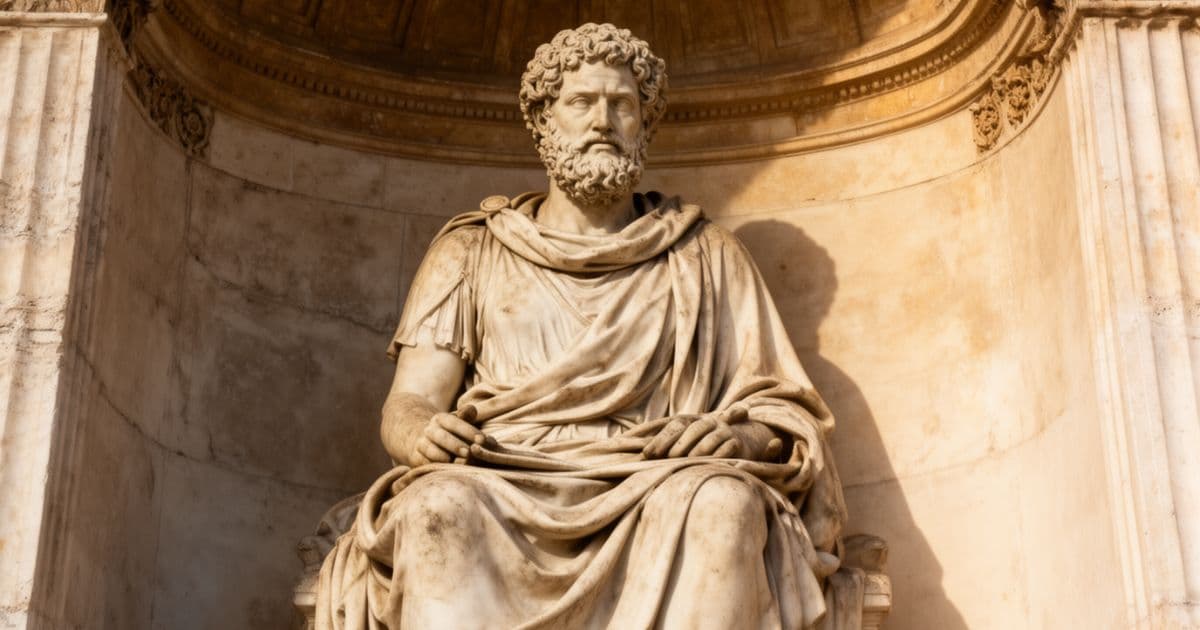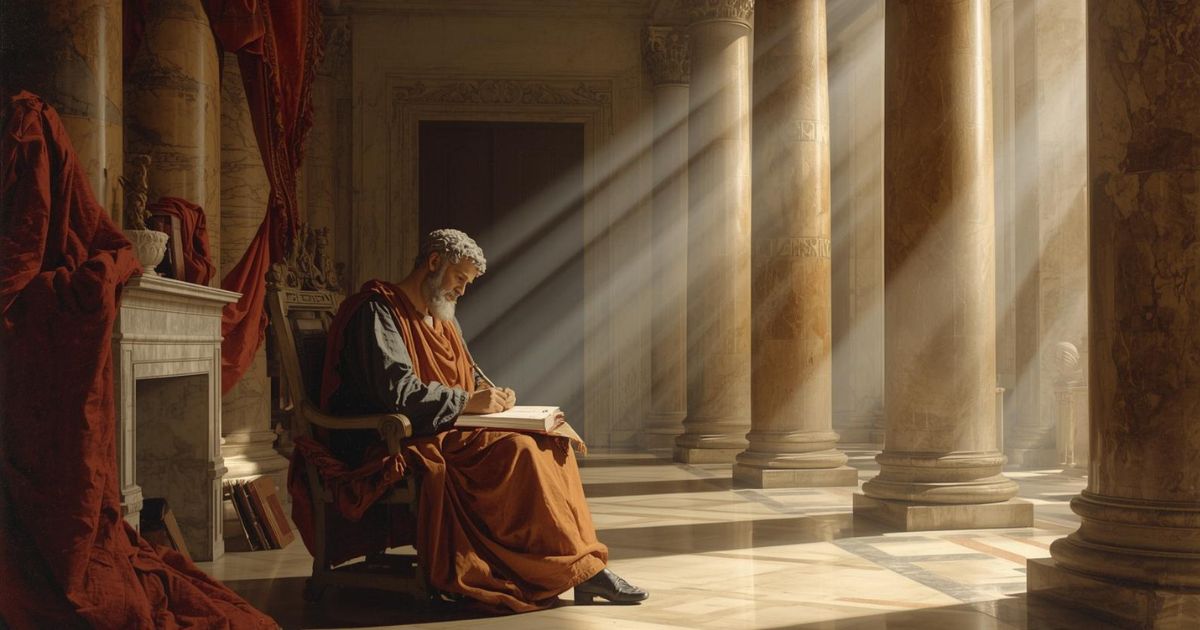
An excerpt from the original text.(complete · 992 words)
←etter 41. On the god within usMoral letters to Luciliusby Seneca, translated by Richard Mott GummereLetter 42. On valuesLetter 43. On the relativity of fame→483012Moral letters to Lucilius — Letter 42. On valuesRichard Mott GummereSeneca XLII. ON VALUES 1. Has that friend of yours already made you believe that he is a good man? And yet it is impossible in so short a time for one either to become good or be known as such.[1] Do you know what kind of man I now mean when I speak of “a good man”? I mean one of the second grade, like your friend. For one of the first class perhaps springs into existence, like the phoenix, only once in five hundred years. And it is not surprising, either, that greatness develops only at long intervals; Fortune often brings into being commonplace powers, which are born to please the mob; but she holds up for our approval that which is extraordinary by the very fact that she makes it rare. 2. This man, however, of whom you spoke, is still far from the state which he professes to have reached. And if he knew what it meant to be “a good man,” he would not yet believe himself such; perhaps he would even despair of his ability to become good. “But,” you say, “he thinks ill of evil men.” Well, so do evil men themselves; and there is no worse penalty for vice than the fact that it is dissatisfied with itself and all its fellows. 3. “But he hates those who make an ungoverned use of great power suddenly acquired.” I retort that he will do the same thing as soon as he acquires the same powers. In the case of many men, their vices, being powerless, escape notice; although, as soon as the persons in question have become satisfied with their own strength, the vices will be no less daring than those which prosperity has already disclosed. 4. These men simply lack the means whereby they may unfold their wickedness. Similarly, one can handle even a poisonous snake while it is stiff with cold; the poison is not lacking; it is merely numbed into inaction. In the case of many men, their cruelty, ambition, and indulgence only lack the favour of Fortune to make them dare crimes that would match the worst. That their wishes are the same you will in a moment discover, in this way: give them the power equal to their wishes. 5. Do you remember how, when you declared that a certain person was under your influence, I pronounced him fickle and a bird of passage, and said that you held him not by the foot but merely by a wing? Was I mistaken? You grasped him only by a feather; he left it in your hands and escaped. You know what an exhibition he afterwards made of himself before you, how many of the things he attempted were to recoil upon his own head. He did not see that in endangering others he was tottering to his own downfall. He did not reflect how burdensome were the objects which he was bent upon attaining, even if they were not superfluous. 6. Therefore, with regard to the objects which we pursue, and for which we strive with great effort, we should note this truth; either there is nothing desirable in them, or the undesirable is preponderant. Some objects are superfluous; others are not worth the price we pay for them. But we do not see this clearly, and we regard things as free gifts when they really cost us very dear. 7. Our stupidity may be clearly proved by the fact that we hold that “buying” refers only to the objects for which we pay cash, and we regard as free gifts the things for which we spend our very selves. These we should refuse to buy, if we were compelled to give in payment for them our houses or some attractive and profitable estate; but we are eager to attain them at the cost of anxiety, of danger, and of lost honour, personal freedom, and time; so true it is that each man regards nothing as cheaper than himself. 8. Let us therefore act, in all our plans and conduct, just as we are accustomed to act whenever we approach a huckster who has certain wares for sale; let us see how much we must pay for that which we crave. Very often the things that cost nothing cost us the most heavily; I can show you many objects the quest and acquisition of which have wrested freedom from our hands. We should belong to ourselves, if only these things did not belong to us. 9. I would therefore have you reflect thus, not only when it is a question of gain, but also when it is a question of loss. “This object is bound to perish.” Yes, it was a mere extra; you will live without it just as easily as you have lived before. If you have possessed it for a long time, you lose it after you have had your fill of it; if you have not possessed it long, then you lose it before you have become wedded to it. “You will have less money.” Yes, and less trouble. 10. “Less influence.” Yes, and less envy. Look about you and note the things that drive us mad, which we lose with a flood of tears; you will perceive that it is not the loss that troubles us with reference to these things, but a notion of loss. No one feels that they have been lost, but his mind tells him that it has been so. He that owns himself has lost nothing. But how few men are blessed with ownership of self! Farewell. ↑ Seneca doubtless has in mind the famous passage of Simonides, ἄνδρ᾽ ἀγαθὸν μὲν ἀληθῶς γενέσθαι χαλεπόν, discussed by Plato, Protagoras, 339 A.
Master this chapter. Complete your experience
Purchase the complete book to access all chapters and support classic literature
As an Amazon Associate, we earn a small commission from qualifying purchases at no additional cost to you.
Available in paperback, hardcover, and e-book formats
Let's Analyse the Pattern
We consistently underestimate the true cost of our choices by focusing on obvious expenses while ignoring what we sacrifice in time, peace, health, or integrity.
Why This Matters
Connect literature to life
This chapter teaches how to identify what you're really trading when something appears free or beneficial.
Practice This Today
This week, before saying yes to anything, write down three things you're giving up beyond money—your time, energy, peace of mind, or freedom to choose.
Now let's explore the literary elements.
Key Quotes & Analysis
"Do you know what kind of man I now mean when I speak of 'a good man'? I mean one of the second grade, like your friend. For one of the first class perhaps springs into existence, like the phoenix, only once in five hundred years."
Context: Warning Lucilius not to mistake ordinary decency for true virtue
Seneca is establishing different levels of goodness and showing that what we usually call 'good' is actually pretty average. True virtue is incredibly rare and shouldn't be claimed lightly.
In Today's Words:
Your friend might be decent, but don't confuse that with being truly exceptional - those people are once-in-a-lifetime rare.
"Fortune often brings into being commonplace powers, which are born to please the mob; but she holds up for our approval that which is extraordinary by the very fact that she makes it rare."
Context: Explaining why true goodness is so uncommon
This reveals how most people are designed to fit in and please others, while genuine virtue stands apart precisely because it's uncommon and doesn't seek approval.
In Today's Words:
Life produces lots of people-pleasers, but the really impressive ones are rare because they don't need everyone to like them.
"There is no worse penalty for vice than the fact that it is dissatisfied with itself."
Context: Explaining why even bad people recognize badness in others
Even people who do wrong things know they're wrong, which creates internal conflict and unhappiness. This self-awareness becomes its own punishment.
In Today's Words:
The worst part about being a bad person is that deep down, you know it, and it eats at you.
Thematic Threads
Trust
In This Chapter
Seneca warns against trusting people too quickly, noting that apparent virtue often masks hidden vice that emerges when circumstances change
Development
Builds on earlier themes about human nature and the difficulty of genuine relationships
In Your Life:
You might recognize this when someone seems too helpful too fast, or when people change dramatically after getting promoted or inheriting money
Power
In This Chapter
Hidden vices emerge when people gain influence or wealth, like a snake that strikes only when warm enough
Development
Continues Seneca's exploration of how external circumstances reveal true character
In Your Life:
You see this when coworkers become difficult after promotions, or when family members change after coming into money
Self-ownership
In This Chapter
The person who truly owns themselves has lost nothing, but achieving this self-ownership is rare and valuable
Development
Central theme throughout Seneca's letters about achieving genuine independence
In Your Life:
This shows up when you realize you're making choices based on what others expect rather than what serves your actual goals
Deception
In This Chapter
We deceive ourselves about the true cost of our choices, thinking we're getting things 'for free' when we're paying with non-monetary resources
Development
Introduced here as a key mechanism for poor decision-making
In Your Life:
You experience this when you realize a 'great opportunity' is costing you your health, relationships, or peace of mind
Freedom
In This Chapter
The things that seem free often cost us our freedom, while the losses we fear are often just ideas rather than real deprivations
Development
Builds on Stoic themes about what we can and cannot control
In Your Life:
This appears when you realize you've traded your flexibility or autonomy for something that seemed like a good deal at the time
You now have the context. Time to form your own thoughts.
Discussion Questions
- 1
Seneca says most people only appear virtuous because they lack the power to show their true nature. What examples does he give of this pattern?
analysis • surface - 2
Why does Seneca argue that 'free' things often cost us more than items with clear price tags? What are we actually paying with?
analysis • medium - 3
Where do you see the Hidden Price Pattern in your own life—situations where you focused on the obvious cost but ignored what else you were trading away?
application • medium - 4
If you applied Seneca's 'market stall' approach to a current decision you're facing, listing all the real costs, how might it change your choice?
application • deep - 5
Seneca claims that 'the person who truly owns themselves has lost nothing.' What does self-ownership look like in practice, and why is it so rare?
reflection • deep
Critical Thinking Exercise
Calculate the Real Price Tag
Think of something you want right now—a job opportunity, relationship change, purchase, or commitment someone's asking of you. Write down the obvious 'price' (money, time, effort). Then list everything else you'd actually be trading: energy, peace of mind, other opportunities, relationships, values, or freedom. Compare the two lists.
Consider:
- •Include emotional and physical costs, not just practical ones
- •Consider what you'd have to give up or stop doing
- •Think about how this choice might change who you become
Journaling Prompt
Write about a time when you paid a hidden price that was much higher than you expected. What would you do differently now, knowing Seneca's framework?
Coming Up Next...
Chapter 43: Living in the Spotlight
Next, Seneca tackles the seductive trap of fame and reputation. He reveals how someone discovered Lucilius's secret ambitions and explores why the opinions of others can become our most expensive addiction.