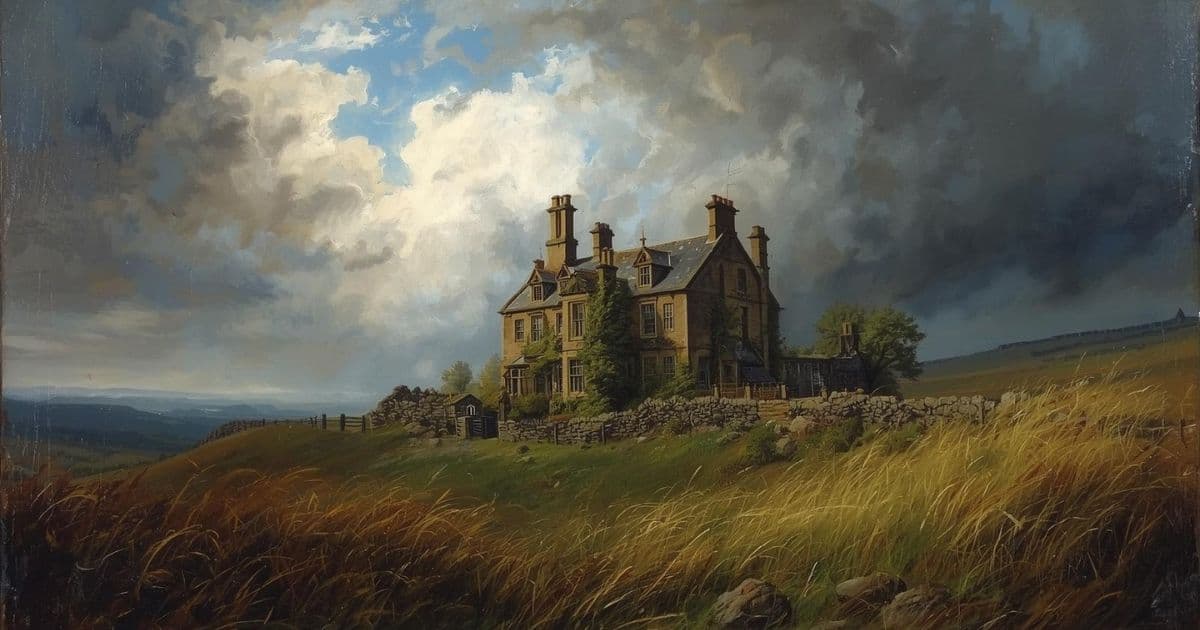
An excerpt from the original text.(complete · 2169 words)
y present situation was one in which all voluntary thought was swallowed up and lost. I was hurried away by fury; revenge alone endowed me with strength and composure; it moulded my feelings and allowed me to be calculating and calm at periods when otherwise delirium or death would have been my portion.
My first resolution was to quit Geneva forever; my country, which, when I was happy and beloved, was dear to me, now, in my adversity, became hateful. I provided myself with a sum of money, together with a few jewels which had belonged to my mother, and departed.
And now my wanderings began which are to cease but with life. I have traversed a vast portion of the earth and have endured all the hardships which travellers in deserts and barbarous countries are wont to meet. How I have lived I hardly know; many times have I stretched my failing limbs upon the sandy plain and prayed for death. But revenge kept me alive; I dared not die and leave my adversary in being.
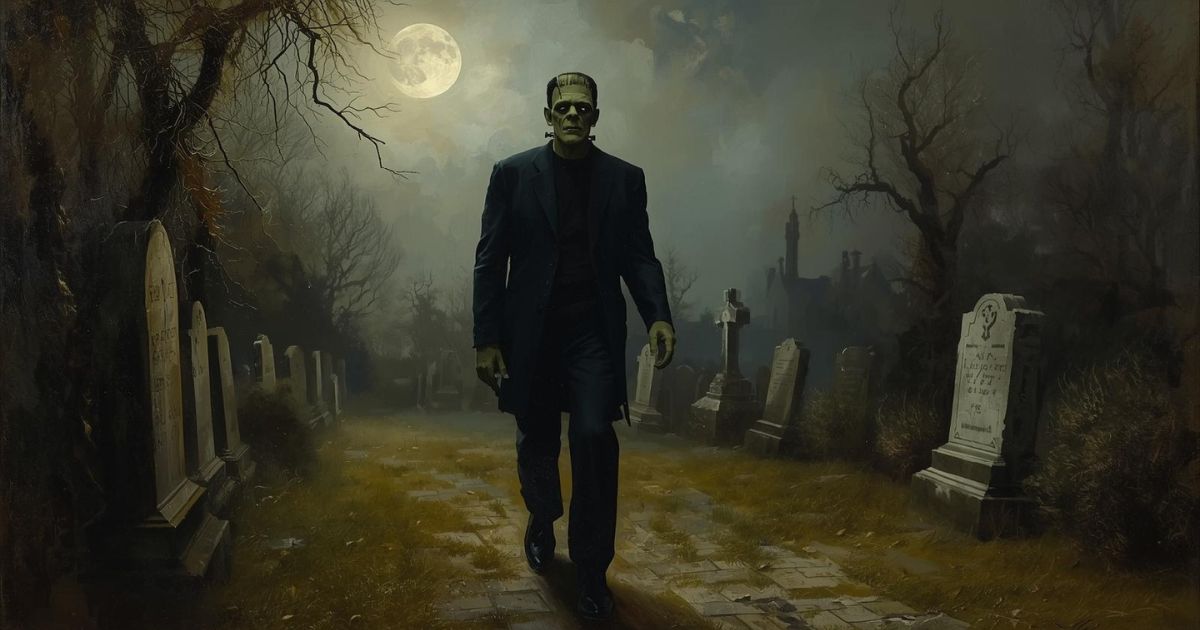
When I quitted Geneva my first labour was to gain some clue by which I might trace the steps of my fiendish enemy. But my plan was unsettled, and I wandered many hours round the confines of the town, uncertain what path I should pursue. As night approached I found myself at the entrance of the cemetery where William, Elizabeth, and my father reposed. I entered it and approached the tomb which marked their graves. Everything was silent except the leaves of the trees, which were gently agitated by the wind; the night was nearly dark, and the scene would have been solemn and affecting even to an uninterested observer. The spirits of the departed seemed to flit around and to cast a shadow, which was felt but not seen, around the head of the mourner.
The deep grief which this scene had at first excited quickly gave way to rage and despair. They were dead, and I lived; their murderer also lived, and to destroy him I must drag out my weary existence. I knelt on the grass and kissed the earth and with quivering lips exclaimed, "By the sacred earth on which I kneel, by the shades that wander near me, by the deep and eternal grief that I feel, I swear; and by thee, O Night, and the spirits that preside over thee, to pursue the daemon who caused this misery, until he or I shall perish in mortal conflict. For this purpose I will preserve my life; to execute this dear revenge will I again behold the sun and tread the green herbage of earth, which otherwise should vanish from my eyes forever. And I call on you, spirits of the dead, and on you, wandering ministers of vengeance, to aid and conduct me in my work. Let the cursed and hellish monster drink deep of agony; let him feel the despair that now torments me."
I had begun my adjuration with solemnity and an awe which almost assured me that the shades of my murdered friends heard and approved my devotion, but the furies possessed me as I concluded, and rage choked my utterance.
I was answered through the stillness of night by a loud and fiendish laugh. It rang on my ears long and heavily; the mountains re-echoed it, and I felt as if all hell surrounded me with mockery and laughter. Surely in that moment I should have been possessed by frenzy and have destroyed my miserable existence but that my vow was heard and that I was reserved for vengeance. The laughter died away, when a well-known and abhorred voice, apparently close to my ear, addressed me in an audible whisper, "I am satisfied, miserable wretch! You have determined to live, and I am satisfied."
I darted towards the spot from which the sound proceeded, but the devil eluded my grasp. Suddenly the broad disk of the moon arose and shone full upon his ghastly and distorted shape as he fled with more than mortal speed.
I pursued him, and for many months this has been my task. Guided by a slight clue, I followed the windings of the Rhone, but vainly. The blue Mediterranean appeared, and by a strange chance, I saw the fiend enter by night and hide himself in a vessel bound for the Black Sea. I took my passage in the same ship, but he escaped, I know not how.
Amidst the wilds of Tartary and Russia, although he still evaded me, I have ever followed in his track. Sometimes the peasants, scared by this horrid apparition, informed me of his path; sometimes he himself, who feared that if I lost all trace of him I should despair and die, left some mark to guide me. The snows descended on my head, and I saw the print of his huge step on the white plain. To you first entering on life, to whom care is new and agony unknown, how can you understand what I have felt and still feel? Cold, want, and fatigue were the least pains which I was destined to endure; I was cursed by some devil and carried about with me my eternal hell; yet still a spirit of good followed and directed my steps and when I most murmured would suddenly extricate me from seemingly insurmountable difficulties. Sometimes, when nature, overcome by hunger, sunk under the exhaustion, a repast was prepared for me in the desert that restored and inspirited me. The fare was, indeed, coarse, such as the peasants of the country ate, but I will not doubt that it was set there by the spirits that I had invoked to aid me. Often, when all was dry, the heavens cloudless, and I was parched by thirst, a slight cloud would bedim the sky, shed the few drops that revived me, and vanish.
I followed, when I could, the courses of the rivers; but the daemon generally avoided these, as it was here that the population of the country chiefly collected. In other places human beings were seldom seen, and I generally subsisted on the wild animals that crossed my path. I had money with me and gained the friendship of the villagers by distributing it; or I brought with me some food that I had killed, which, after taking a small part, I always presented to those who had provided me with fire and utensils for cooking.
My life, as it passed thus, was indeed hateful to me, and it was during sleep alone that I could taste joy. O blessed sleep! Often, when most miserable, I sank to repose, and my dreams lulled me even to rapture. The spirits that guarded me had provided these moments, or rather hours, of happiness that I might retain strength to fulfil my pilgrimage. Deprived of this respite, I should have sunk under my hardships. During the day I was sustained and inspirited by the hope of night, for in sleep I saw my friends, my wife, and my beloved country; again I saw the benevolent countenance of my father, heard the silver tones of my Elizabeth's voice, and beheld Clerval enjoying health and youth. Often, when wearied by a toilsome march, I persuaded myself that I was dreaming until night should come and that I should then enjoy reality in the arms of my dearest friends. What agonising fondness did I feel for them! How did I cling to their dear forms, as sometimes they haunted even my waking hours, and persuade myself that they still lived! At such moments vengeance, that burned within me, died in my heart, and I pursued my path towards the destruction of the daemon more as a task enjoined by heaven, as the mechanical impulse of some power of which I was unconscious, than as the ardent desire of my soul.
What his feelings were whom I pursued I cannot know. Sometimes, indeed, he left marks in writing on the barks of the trees or cut in stone that guided me and instigated my fury. "My reign is not yet over"—these words were legible in one of these inscriptions—"you live, and my power is complete. Follow me; I seek the everlasting ices of the north, where you will feel the misery of cold and frost, to which I am impassive. You will find near this place, if you follow not too tardily, a dead hare; eat and be refreshed. Come on, my enemy; we have yet to wrestle for our lives, but many hard and miserable hours must you endure until that period shall arrive."
Scoffing devil! Again do I vow vengeance; again do I devote thee, miserable fiend, to torture and death. Never will I give up my search until he or I perish; and then with what ecstasy shall I join my Elizabeth and my departed friends, who even now prepare for me the reward of my tedious toil and horrible pilgrimage!
As I still pursued my journey to the northward, the snows thickened and the cold increased in a degree almost too severe to support. The peasants were shut up in their hovels, and only a few of the most hardy ventured forth to seize the animals whom starvation had forced from their hiding-places to seek for prey. The rivers were covered with ice, and no fish could be procured; and thus I was cut off from my chief article of maintenance.
The triumph of my enemy increased with the difficulty of my labours. One inscription that he left was in these words: "Prepare! Your toils only begin; wrap yourself in furs and provide food, for we shall soon enter upon a journey where your sufferings will satisfy my everlasting hatred."
My courage and perseverance were invigorated by these scoffing words; I resolved not to fail in my purpose, and calling on heaven to support me, I continued with unabated fervour to traverse immense deserts, until the ocean appeared at a distance and formed the utmost boundary of the horizon. Oh! How unlike it was to the blue seasons of the south! Covered with ice, it was only to be distinguished from land by its superior wildness and ruggedness. The Greeks wept for joy when they beheld the Mediterranean from the hills of Asia, and hailed with rapture the boundary of their toils. I did not weep, but I knelt down and with a full heart thanked my guiding spirit for conducting me in safety to the place where I hoped, notwithstanding my adversary's gibe, to meet and grapple with him.
Some weeks before this period I had procured a sledge and dogs and thus traversed the snows with inconceivable speed. I know not whether the fiend possessed the same advantages, but I found that, as before I had daily lost ground in the pursuit, I now gained on him, so much so that when I first saw the ocean he was but one day's journey in advance, and I hoped to intercept him before he should reach the beach. With new courage, therefore, I pressed on, and in two days arrived at a wretched hamlet on the seashore. I inquired of the inhabitants concerning the fiend and gained accurate information. A gigantic monster, they said, had arrived the night before, armed with a gun and many pistols, putting to flight the inhabitants of a solitary cottage through fear of his terrific appearance. He had carried off their store of winter food, and placing it in a sledge, to draw which he had seized on a numerous drove of trained dogs, he had harnessed them, and the same night, to the joy of the horror-struck villagers, had pursued his journey across the sea in a direction that led to no land; and they conjectured that he must speedily be destroyed by the breaking of the ice or frozen by the eternal frosts.
On hearing this information I suffered a temporary access of despair. He had escaped me, and I must commence a destructive and almost endless journey across the mountainous ices of the ocean, amidst cold that few of the inhabitants could long endure and which I, the native of a genial and sunny climate, could not hope to survive. Yet at the idea that the fiend should live and be triumphant, my rage and vengeance returned, and like a mighty tide, overwhelmed every other feeling. After a slight repose, during which the spirits of the dead hovered round and instigated me to toil and revenge, I prepared for my journey.
I exchanged my land-sledge for one fashioned for the inequalities of the Frozen Ocean, and purchasing a plentiful stock of provisions, I departed from land.
[Chapter continues with Victor's pursuit across the Arctic ice, his rescue by Walton's ship, his final warnings to Walton about ambition, his death, and the creature's final appearance mourning over Victor's body before departing into the Arctic darkness to die.]
Master this chapter. Complete your experience
Purchase the complete book to access all chapters and support classic literature
As an Amazon Associate, we earn a small commission from qualifying purchases at no additional cost to you.
Available in paperback, hardcover, and e-book formats
Let's Analyse the Pattern
When trauma strips away our identity, revenge can become our only remaining sense of purpose, ultimately destroying what's left of our humanity.
Why This Matters
Connect literature to life
This chapter teaches how to distinguish between seeking justice (which has boundaries) and feeding revenge (which consumes everything).
Practice This Today
This week, notice when anger at injustice starts defining your entire day—that's the moment to ask whether you're seeking resolution or feeding a revenge identity.
Now let's explore the literary elements.
Key Quotes & Analysis
"She was there, lifeless and inanimate, thrown across the bed, her head hanging down and her pale and distorted features half covered by hair."
Context: Victor discovers Elizabeth's body on their wedding night
This graphic description emphasizes the creature's calculated cruelty - he didn't just kill Elizabeth, he destroyed Victor's wedding night and future happiness. The image of her distorted features shows how violence corrupts even beauty and innocence.
In Today's Words:
She was dead, thrown on the bed like a broken doll, her face twisted and her hair covering the damage.
"I will pursue the being to whom I gave existence, and he shall be my companion in death."
Context: Victor vows to hunt down his creature after losing everything
This quote reveals Victor's complete transformation into an obsessed avenger. He's no longer trying to protect others or fix his mistake - he's embracing a death mission fueled by rage and the need for revenge.
In Today's Words:
I'm going to hunt down the monster I created, and we're both going to die in this fight.
"My rage was without bounds; I sprang on him, impelled by all the feelings which can arm one being against the existence of another."
Context: Victor's reaction upon seeing his creature
This shows how completely Victor has been consumed by hatred. The phrase 'arm one being against another' suggests this has become warfare - not justice, but pure destructive rage that mirrors his creature's own violence.
In Today's Words:
I lost it completely and attacked him with every ounce of hate I had - I wanted to destroy him.
Thematic Threads
Identity
In This Chapter
Victor completely abandons his former identity as scientist and family member, becoming purely an instrument of revenge
Development
Evolved from ambitious creator to guilt-ridden survivor to now single-minded avenger
In Your Life:
You might recognize this when a major loss makes you define yourself entirely by what was taken from you.
Social Expectations
In This Chapter
Victor rejects all social norms and relationships, selling everything to pursue his creature beyond civilization
Development
Complete reversal from earlier desire to meet family and social expectations
In Your Life:
You might see this when grief or anger makes you want to abandon all your responsibilities and relationships.
Human Relationships
In This Chapter
Victor becomes as isolated and disconnected as his creature, showing how revenge destroys our capacity for human connection
Development
Final stage of progressive isolation that began with secretive creation of the monster
In Your Life:
You might notice this when seeking payback starts costing you relationships with people who weren't involved in hurting you.
Class
In This Chapter
Victor abandons his privileged status, selling his property and choosing to live as an outcast pursuing vengeance
Development
Complete rejection of the class advantages that previously defined his opportunities
In Your Life:
You might see this when anger makes you willing to sacrifice your stability and security for the chance to get even.
Personal Growth
In This Chapter
Victor's growth stops entirely as he becomes frozen in a cycle of revenge, unable to move forward or heal
Development
Represents the complete failure of his potential for positive development
In Your Life:
You might recognize this when you realize you've stopped growing or changing because you're stuck reliving past hurts.
You now have the context. Time to form your own thoughts.
Discussion Questions
- 1
What specific losses has Victor experienced by this chapter, and how has each one changed him?
analysis • surface - 2
Why does Victor choose revenge over rebuilding his life, and what does this reveal about how trauma affects decision-making?
analysis • medium - 3
Where do you see people in real life become consumed by revenge or grievance to the point where it becomes their entire identity?
application • medium - 4
If you were Victor's friend at this moment, what would you say or do to help him break out of this revenge cycle?
application • deep - 5
How does Victor's transformation into a revenge-obsessed hunter show us the danger of letting our worst experiences define who we become?
reflection • deep
Critical Thinking Exercise
Identity Audit: What Defines You Beyond Your Problems
Victor loses everything that defined him and fills the void with revenge. Make two lists: first, write down 5-7 roles or qualities that currently define who you are (parent, friend, worker, etc.). Then write down your current problems or grievances. Notice the ratio - are your problems taking up more mental space than your defining qualities?
Consider:
- •Are you spending more time thinking about what went wrong than what's going right?
- •When you introduce yourself or think about yourself, do problems or positive roles come to mind first?
- •If your biggest current problem disappeared tomorrow, what would you focus your energy on instead?
Journaling Prompt
Write about a time when you let a problem or grievance consume more of your identity than it deserved. What helped you find your way back to yourself, or what might help you do that now?