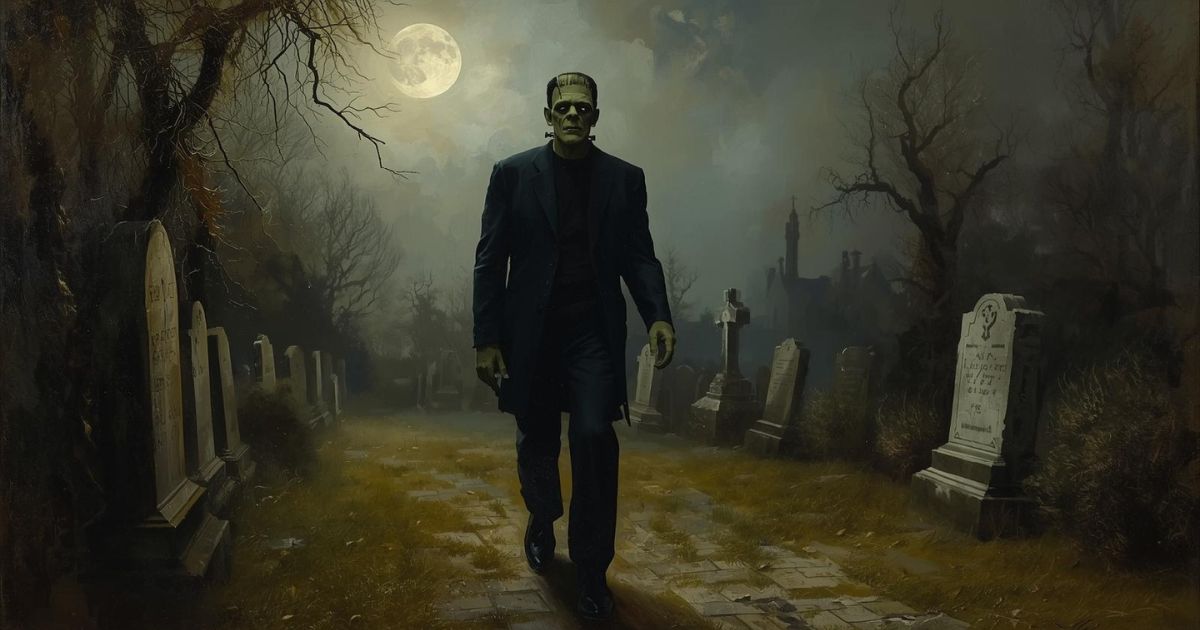
An excerpt from the original text.(complete · 2558 words)
he voyage came to an end. We landed, and proceeded to Paris. I soon found that I had overtaxed my strength and that I must repose before I could continue my journey. My father's care and attentions were indefatigable, but he did not know the origin of my sufferings and sought erroneous methods to remedy the incurable ill. He wished me to seek amusement in society. I abhorred the face of man. Oh, not abhorred! They were my brethren, my fellow beings, and I felt attracted even to the most repulsive among them, as to creatures of an angelic nature and celestial mechanism. But I felt that I had no right to share their intercourse. I had unchained an enemy among them whose joy it was to shed their blood and to revel in their groans. How they would, each and all, abhor me and hunt me from the world did they know my unhallowed acts and the crimes which had their source in me!
My father yielded at length to my desire to avoid society and strove by various arguments to banish my despair. Sometimes he thought that I felt deeply the degradation of being obliged to answer a charge of murder, and he endeavoured to prove to me the futility of pride.
"Alas! My father," said I, "how little do you know me. Human beings, their feelings and passions, would indeed be degraded if such a wretch as I felt pride. Justine, poor unhappy Justine, was as innocent as I, and she suffered the same charge; she died for it; and I am the cause of this—I murdered her. William, Justine, and Henry—they all died by my hands."
My father had often, during my imprisonment, heard me make the same assertion; when I thus accused myself, he sometimes seemed to desire an explanation, and at others he appeared to consider it as the offspring of delirium, and that, during my illness, some idea of this kind had presented itself to my imagination, the remembrance of which I preserved in my convalescence. I avoided explanation and maintained a continual silence concerning the wretch I had created. I had a persuasion that I should be supposed mad, and this forever chained my tongue when I would have given the world to have confided the fatal secret. Yet, still, words like those I have recorded would burst uncontrollably from me. I could offer no explanation of them, but their truth in part relieved the burden of my mysterious woe.
Upon this occasion my father said, with an expression of unbounded wonder, "My dearest Victor, what infatuation is this? My dear son, I entreat you never to make such an assertion again."
"I am not mad," I cried energetically; "the sun and the heavens, who have viewed my operations, can bear witness of my truth. I am the assassin of those most innocent victims; they died by my machinations. A thousand times would I have shed my own blood, drop by drop, to have saved their lives; but I could not, my father, indeed I could not sacrifice the whole human race."
The conclusion of this speech convinced my father that my ideas were deranged, and he instantly changed the subject of our conversation and endeavoured to alter the course of my thoughts. He wished as much as possible to obliterate the memory of the scenes that had taken place in Ireland and never alluded to them or suffered me to speak of my misfortunes.
As time passed away I became more calm; misery had her dwelling in my heart, but I no longer talked in the same incoherent manner of my own crimes; sufficient for me was the consciousness of them. By the utmost self-violence I curbed the imperious voice of wretchedness, which sometimes desired to declare itself to the whole world, and my manners were calmer and more composed than they had ever been since my journey to the sea of ice.
We arrived at Havre on the 8th of May, and instantly proceeded to Paris, where my father had some business which detained us a few weeks. In this city I received the following letter from Elizabeth:
"My dear Friend,
"It gave me the greatest pleasure to receive a letter from my uncle dated at Paris; you are no longer at a formidable distance, and I may hope to see you in less than a fortnight. My poor cousin, how much you must have suffered! I expect to see you looking even more ill than when you quitted Geneva. This winter has been passed most miserably, tortured as I have been by anxious suspense; yet I hope to see peace in your countenance and to find that your heart is not totally void of comfort and tranquillity.
"Yet I fear that the same feelings now exist that made you so miserable a year ago, even perhaps augmented by time. I would not disturb you at this period, when so many misfortunes weigh upon you, but a conversation that I had with my uncle previous to his departure renders some explanation necessary before we meet. Explanation! You may possibly say, What can Elizabeth have to explain? If you really say this, my questions are answered and all my doubts satisfied. But you are distant from me, and it is possible that you may dread and yet be pleased with this explanation; and in a probability of this being the case, I dare not any longer postpone writing what, during your absence, I have often wished to express to you but have never had the courage to begin.
"You well know, Victor, that our union had been the favourite plan of your parents ever since our infancy. We were told this when young, and taught to look forward to it as an event that would certainly take place. We were affectionate playfellows during childhood, and, I believe, dear and valued friends to one another as we grew older. But as brother and sister often entertain a lively affection towards each other without desiring a more intimate union, may not such also be our case? Tell me, dearest Victor. Answer me, I conjure you by our mutual happiness, with simple truth—Do you not love another?
"You have travelled; you have spent several years of your life at Ingolstadt; and I confess to you, my friend, that when I saw you last autumn so unhappy, flying to solitude from the society of every creature, I could not help supposing that you might regret our connection and believe yourself bound in honour to fulfil the wishes of your parents, although they opposed themselves to your inclinations. But this is false reasoning. I confess to you, my friend, that I love you and that in my airy dreams of futurity you have been my constant friend and companion. But it is your happiness I desire as well as my own when I declare to you that our marriage would render me eternally miserable unless it were the dictate of your own free choice. Even now I weep to think that, borne down as you are by the cruellest misfortunes, you may stifle, by the word honour, all hope of that love and happiness which would alone restore you to yourself. I, who have so disinterested an affection for you, may increase your miseries tenfold by being an obstacle to your wishes. Ah! Victor, be assured that your cousin and playmate has too sincere a love for you not to be made miserable by this supposition. Be happy, my friend; and if you obey me in this one request, remain satisfied that nothing on earth will have the power to interrupt my tranquillity.
"Do not let this letter disturb you; do not answer tomorrow, or the next day, or even until you come, if it will give you pain. My uncle will send me news of your health, and if I see but one smile on your lips when we meet, occasioned by this or any other exertion of mine, I shall need no other happiness.
"Elizabeth Lavenza.
"Geneva, May 18th, 17—."
This letter revived in my memory what I had before forgotten, the threat of the fiend—"I will be with you on your wedding-night!" Such was my sentence, and on that night would the daemon employ every art to destroy me and tear me from the glimpse of happiness which promised partly to console my sufferings. On that night he had determined to consummate his crimes by my death. Well, be it so; a deadly struggle would then assuredly take place, in which if he were victorious I should be at peace and his power over me be at an end. If he were vanquished, I should be a free man. Alas! What freedom? Such as the peasant enjoys when his family have been massacred before his eyes, his cottage burnt, his lands laid waste, and he is turned adrift, homeless, penniless, and alone, but free. Such would be my liberty except that in my Elizabeth I possessed a treasure, alas, balanced by those horrors of remorse and guilt which would pursue me until death.
Sweet and beloved Elizabeth! I read and reread her letter, and some softened feelings stole into my heart and dared to whisper paradisiacal dreams of love and joy; but the apple was already eaten, and the angel's arm bared to drive me from all hope. Yet I would die to make her happy. If the monster executed his threat, death was inevitable; yet, again, I considered whether my marriage would hasten my fate. My destruction might indeed arrive a few months sooner, but if my torturer should suspect that I postponed it, influenced by his menaces, he would surely find other and perhaps more dreadful means of revenge. He had vowed to be with me on my wedding-night, yet he did not consider that threat as binding him to peace in the meantime, for as if to show me that he was not yet satiated with blood, he had murdered Clerval immediately after the enunciation of his threats. I resolved, therefore, that if my immediate union with my cousin would conduce either to hers or my father's happiness, my adversary's designs against my life should not retard it a single hour.
In this state of mind I wrote to Elizabeth. My letter was calm and affectionate. "I fear, my beloved girl," I said, "little happiness remains for us on earth; yet all that I may one day enjoy is centred in you. Chase away your idle fears; to you alone do I consecrate my life and my endeavours for contentment. I have one secret, Elizabeth, a dreadful one; when revealed to you, it will chill your frame with horror, and then, far from being surprised at my misery, you will only wonder that I survive what I have endured. I will confide this tale of misery and terror to you the day after our marriage shall take place, for, my sweet cousin, there must be perfect confidence between us. But until then, I conjure you, do not mention or allude to it. This I most earnestly entreat, and I know you will comply."
In about a week after the arrival of Elizabeth's letter we returned to Geneva. The sweet girl welcomed me with warm affection, yet tears were in her eyes as she beheld my emaciated frame and feverish cheeks. I saw a change in her also. She was thinner and had lost much of that heavenly vivacity that had before charmed me; but her gentleness and soft looks of compassion made her a more fit companion for one blasted and miserable as I was.
The tranquillity which I now enjoyed did not endure. Memory brought madness with it, and when I thought of what had passed, a real insanity possessed me; sometimes I was furious and burnt with rage, sometimes low and despondent. I neither spoke nor looked at anyone, but sat motionless, bewildered by the multitude of miseries that overcame me.
Elizabeth alone had the power to draw me from these fits; her gentle voice would soothe me when transported by passion and inspire me with human feelings when sunk in torpor. She wept with me and for me. When reason returned, she would remonstrate and endeavour to inspire me with resignation. Ah! It is well for the unfortunate to be resigned, but for the guilty there is no peace. The agonies of remorse poison the luxury there is otherwise sometimes found in indulging the excess of grief.
Soon after my arrival my father spoke of my immediate marriage with Elizabeth. I remained silent.
"Have you, then, some other attachment?"
"None on earth. I love Elizabeth and look forward to our union with delight. Let the day therefore be fixed; and on it I will consecrate myself, in life or death, to the happiness of my cousin."
"My dear Victor, do not speak thus. Heavy misfortunes have befallen us, but let us only cling closer to what remains and transfer our love for those whom we have lost to those who yet live. Our circle will be small but bound close by the ties of affection and mutual misfortune. And when time shall have softened your despair, new and dear objects of care will be born to replace those of whom we have been so cruelly deprived."
Such were the lessons of my father. But to me the remembrance of the threat returned; nor can you wonder that, omnipotent as the fiend had yet been in his deeds of blood, I should almost regard him as invincible, and that when he had pronounced the words "I shall be with you on your wedding-night," I should regard the threatened fate as unavoidable. But death was no evil to me if the loss of Elizabeth were balanced with it, and I therefore, with a contented and even cheerful countenance, agreed with my father that if my cousin would consent, the ceremony should take place in ten days, and thus put, as I imagined, the seal to my fate.
Great God! If for one instant I had thought what might be the hellish intention of my fiendish adversary, I would rather have banished myself forever from my native country and wandered a friendless outcast over the earth than have consented to this miserable marriage. But, as if possessed of magic powers, the monster had blinded me to his real intentions; and when I thought that I had prepared only my own death, I hastened that of a far dearer victim.
As the period fixed for our marriage drew nearer, whether from cowardice or a prophetic feeling, I felt my heart sink within me. But I concealed my feelings by an appearance of hilarity that brought smiles and joy to the countenance of my father, but hardly deceived the ever-watchful and nicer eye of Elizabeth. She looked forward to our union with placid contentment, not unmingled with a little fear, which past misfortunes had impressed, that what now appeared certain and tangible happiness might soon dissipate into an airy dream and leave no trace but deep and everlasting regret.
Preparations were made for the event, my letters were written, and my father's blessing was bestowed upon us. The time arrived.
Master this chapter. Complete your experience
Purchase the complete book to access all chapters and support classic literature
As an Amazon Associate, we earn a small commission from qualifying purchases at no additional cost to you.
Available in paperback, hardcover, and e-book formats
Let's Analyse the Pattern
Avoiding direct confrontation with problems while managing symptoms leads to exponentially worse outcomes that destroy what we're trying to protect.
Why This Matters
Connect literature to life
This chapter teaches how to distinguish between real protection (addressing root causes) and security theater (managing symptoms while avoiding core problems).
Practice This Today
Next time you're 'protecting' someone, ask yourself: am I addressing the actual threat, or am I managing my own anxiety while keeping them in the dark about real dangers?
Now let's explore the literary elements.
Key Quotes & Analysis
"She was there, lifeless and inanimate, thrown across the bed, her head hanging down, and her pale and distorted features half covered by her hair."
Context: Victor discovers Elizabeth's body on their wedding night
This horrific image shows how the creature has turned what should be Victor's most beautiful moment into his worst nightmare. The description emphasizes Elizabeth's innocence and the violence done to her.
In Today's Words:
She was dead, lying across the bed like a broken doll, her face twisted and her hair covering her features.
"The death of my father was even more an irreparable evil, for the loss of your mother had broken his spirits."
Context: Victor reflects on how his father died from grief after Elizabeth's murder
This shows how tragedy ripples outward, destroying not just direct victims but everyone connected to them. Victor's choices have killed his entire family.
In Today's Words:
Losing dad was even worse because mom's death had already broken him, and this finished him off.
"I was answered through the stillness of night by a loud and fiendish laugh."
Context: Victor hears the creature's triumphant laughter after discovering Elizabeth's body
The creature's laughter shows his satisfaction at completing his revenge. He has successfully made Victor experience the same isolation and despair he has always felt.
In Today's Words:
All I heard back was evil laughter echoing through the night.
Thematic Threads
Isolation
In This Chapter
Victor ends completely alone, having lost everyone through his choices
Development
Evolved from self-imposed secrecy to total devastation
In Your Life:
You might isolate yourself through secrecy when you most need support and honesty.
Consequences
In This Chapter
All of Victor's avoided decisions culminate in the loss of everything he valued
Development
Built from small compromises to complete destruction
In Your Life:
You might face delayed consequences when problems you've avoided finally demand resolution.
Protection
In This Chapter
Victor's attempts to protect Elizabeth through secrecy become the cause of her death
Development
Evolved from misguided good intentions to tragic irony
In Your Life:
You might harm those you love most when you try to protect them from uncomfortable truths.
Responsibility
In This Chapter
Victor's refusal to take full responsibility for his creation costs him everything
Development
Consistent pattern of deflection reaching its logical conclusion
In Your Life:
You might find that avoiding responsibility for your actions eventually makes the consequences unavoidable and worse.
Communication
In This Chapter
Victor's inability to communicate honestly with Elizabeth seals her fate
Development
Pattern of secrecy and half-truths reaching its deadly conclusion
In Your Life:
You might discover that the conversations you avoid having are often the ones that could save your relationships.
You now have the context. Time to form your own thoughts.
Discussion Questions
- 1
What specific choices did Victor make on his wedding day, and how did each one contribute to the tragic outcome?
analysis • surface - 2
Why did Victor focus on protecting himself with weapons and guards instead of warning Elizabeth about the real danger she faced?
analysis • medium - 3
Where do you see this pattern today - people trying to manage a crisis while avoiding the hard conversations that might actually solve it?
application • medium - 4
If you were Victor's friend and knew about the creature, how would you have handled this situation differently to protect everyone involved?
application • deep - 5
What does Victor's complete isolation at the end teach us about how our personal demons affect the people we love most?
reflection • deep
Critical Thinking Exercise
Map Your Own Avoidance Patterns
Think of a current problem in your life where you're managing symptoms instead of addressing the root cause. Draw two columns: 'What I'm Actually Doing' and 'What I'm Avoiding.' Be brutally honest about where your energy is going versus where it needs to go. Then identify one specific action that would address the core issue, even if it's uncomfortable.
Consider:
- •Focus on patterns where your 'solutions' might be making things worse
- •Consider who else is affected by your avoidance - they deserve honesty
- •Ask yourself: what am I really protecting by not facing this directly?
Journaling Prompt
Write about a time when avoiding a difficult conversation made a situation exponentially worse. What would you do differently now, knowing what you know about delayed consequences?
Coming Up Next...
Chapter 27: The Wedding Night—Elizabeth's Murder
The wedding day arrives. Victor arms himself and prepares for the creature's attack, certain he'll face his creation in mortal combat. But the creature has other plans.