
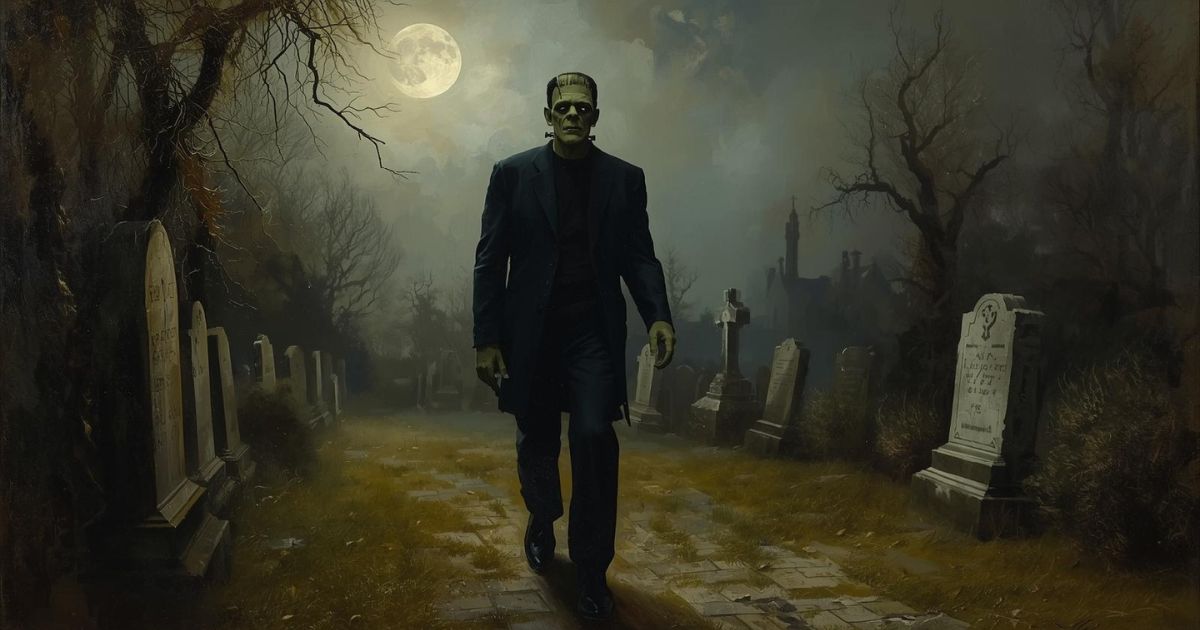
An excerpt from the original text.(complete · 3197 words)
"ursed, cursed creator! Why did I live? Why, in that instant, did I not extinguish the spark of existence which you had so wantonly bestowed? I know not; despair had not yet taken possession of me; my feelings were those of rage and revenge. I could with pleasure have destroyed the cottage and its inhabitants and have glutted myself with their shrieks and misery.
"When night came I quitted my retreat and wandered in the wood; and now, no longer restrained by the fear of discovery, I gave vent to my anguish in fearful howlings. I was like a wild beast that had broken the toils, destroying the objects that obstructed me and ranging through the wood with a stag-like swiftness. Oh! What a miserable night I passed! The cold stars shone in mockery, and the bare trees waved their branches above me; now and then the sweet voice of a bird burst forth amidst the universal stillness. All, save I, were at rest or in enjoyment; I, like the arch-fiend, bore a hell within me, and finding myself unsympathised with, wished to tear up the trees, spread havoc and destruction around me, and then to have sat down and enjoyed the ruin.
"But this was a luxury of sensation that could not endure; I became fatigued with excess of bodily exertion and sank on the damp grass in the sick impotence of despair. There was none among the myriads of men that existed who would pity or assist me; and should I feel kindness towards my enemies? No; from that moment I declared everlasting war against the species, and more than all, against him who had formed me and sent me forth to this insupportable misery.
"The sun rose; I heard the voices of men and knew that it was impossible to return to my retreat during that day. Accordingly I hid myself in some thick underwood, determining to devote the ensuing hours to reflection on my situation.
"The pleasant sunshine and the pure air of day restored me to some degree of tranquillity; and when I considered what had passed at the cottage, I could not help believing that I had been too hasty in my conclusions. I had certainly acted imprudently. It was apparent that my conversation had interested the father in my behalf, and I was a fool in having exposed my person to the horror of his children. I ought to have familiarised the old De Lacey to me, and by degrees to have discovered myself to the rest of his family, when they should have been prepared for my approach. But I did not believe my errors to be irretrievable, and after much consideration I resolved to return to the cottage, seek the old man, and by my representations win him to my party.
"These thoughts calmed me, and in the afternoon I sank into a profound sleep; but the fever of my blood did not allow me to be visited by peaceful dreams. The horrible scene of the preceding day was for ever acting before my eyes; the females were flying and the enraged Felix tearing me from his father's feet. I awoke exhausted, and finding that it was already night, I crept forth from my hiding-place, and went in search of food.
"When my hunger was appeased, I directed my steps towards the well-known path that conducted to the cottage. All there was at peace. I crept into my hovel and remained in silent expectation of the accustomed hour when the family arose. That hour passed, the sun mounted high in the heavens, but the cottagers did not appear. I trembled violently, apprehending some dreadful misfortune. The inside of the cottage was dark, and I heard no motion; I cannot describe the agony of this suspense.
"Presently two countrymen passed by, but pausing near the cottage, they entered into conversation, using violent gesticulations; but I did not understand what they said, as they spoke the language of the country, which differed from that of my protectors. Soon after, however, Felix approached with another man; I was surprised, as I knew that he had not quitted the cottage that morning, and waited anxiously to discover from his discourse the meaning of these unusual appearances.
"'Do you consider,' said his companion to him, 'that you will be obliged to pay three months' rent and to lose the produce of your garden? I do not wish to take any unfair advantage, and I beg therefore that you will take some days to consider of your determination.'
"'It is utterly useless,' replied Felix; 'we can never again inhabit your cottage. The life of my father is in the greatest danger, owing to the dreadful circumstance that I have related. My wife and my sister will never recover from their horror. I entreat you not to reason with me any more. Take possession of your tenement and let me fly from this place.'
"Felix trembled violently as he said this. He and his companion entered the cottage, in which they remained for a few minutes, and then departed. I never saw any of the family of De Lacey more.
"I continued for the remainder of the day in my hovel in a state of utter and stupid despair. My protectors had departed and had broken the only link that held me to the world. For the first time the feelings of revenge and hatred filled my bosom, and I did not strive to control them, but allowing myself to be borne away by the stream, I bent my mind towards injury and death. When I thought of my friends, of the mild voice of De Lacey, the gentle eyes of Agatha, and the exquisite beauty of the Arabian, these thoughts vanished and a gush of tears somewhat soothed me. But again when I reflected that they had spurned and deserted me, anger returned, a rage of anger, and unable to injure anything human, I turned my fury towards inanimate objects. As night advanced, I placed a variety of combustibles around the cottage, and after having destroyed every vestige of cultivation in the garden, I waited with forced impatience until the moon had sunk to commence my operations.
"As the night advanced, a fierce wind arose from the woods and quickly dispersed the clouds that had loitered in the heavens; the blast tore along like a mighty avalanche and produced a kind of insanity in my spirits that burst all bounds of reason and reflection. I lighted the dry branch of a tree and danced with fury around the devoted cottage, my eyes still fixed on the western horizon, the edge of which the moon nearly touched. A part of its orb was at length hid, and I waved my brand; it sank, and with a loud scream I fired the straw, and heath, and bushes, which I had collected. The wind fanned the fire, and the cottage was quickly enveloped by the flames, which clung to it and licked it with their forked and destroying tongues.
"As soon as I was convinced that no assistance could save any part of the habitation, I quitted the scene and sought for refuge in the woods.
"And now, with the world before me, whither should I bend my steps? I resolved to fly far from the scene of my misfortunes; but to me, hated and despised, every country must be equally horrible. At length the thought of you crossed my mind. I learned from your papers that you were my father, my creator; and to whom could I apply with more fitness than to him who had given me life? Among the lessons that Felix had bestowed upon Safie, geography had not been omitted; I had learned from these the relative situations of the different countries of the earth. You had mentioned Geneva as the name of your native town, and towards this place I resolved to proceed.
"But how was I to direct myself? I knew that I must travel in a southwesterly direction to reach my destination, but the sun was my only guide. I did not know the names of the towns that I was to pass through, nor could I ask information from a single human being; but I did not despair. From you only could I hope for succour, although towards you I felt no sentiment but that of hatred. Unfeeling, heartless creator! You had endowed me with perceptions and passions and then cast me abroad an object for the scorn and horror of mankind. But on you only had I any claim for pity and redress, and from you I determined to seek that justice which I vainly attempted to gain from any other being that wore the human form.
"My travels were long and the sufferings I endured intense. It was late in autumn when I quitted the district where I had so long resided. I travelled only at night, fearful of encountering the visage of a human being. Nature decayed around me, and the sun became heatless; rain and snow poured around me; mighty rivers were frozen; the surface of the earth was hard and chill, and bare, and I found no shelter. Oh, earth! How often did I imprecate curses on the cause of my being! The mildness of my nature had fled, and all within me was turned to gall and bitterness. The nearer I approached to your habitation, the more deeply did I feel the spirit of revenge enkindled in my heart. Snow fell, and the waters were hardened, but I rested not. A few incidents now and then directed me, and I possessed a map of the country; but I often wandered wide from my path. The agony of my feelings allowed me no respite; no incident occurred from which my rage and misery could not extract its food; but a circumstance that happened when I arrived on the confines of Switzerland, when the sun had recovered its warmth and the earth again began to look green, confirmed in an especial manner the bitterness and horror of my feelings.
"I generally rested during the day and travelled only when I was secured by night from the view of man. One morning, however, finding that my path lay through a deep wood, I ventured to continue my journey after the sun had risen; the day, which was one of the first of spring, cheered even me by the loveliness of its sunshine and the balminess of the air. I felt emotions of gentleness and pleasure, that had long appeared dead, revive within me. Half surprised by the novelty of these sensations, I allowed myself to be borne away by them, and forgetting my solitude and deformity, dared to be happy. Soft tears again bedewed my cheeks, and I even raised my humid eyes with thankfulness towards the blessed sun, which bestowed such joy upon me.
"I continued to wind among the paths of the wood, until I came to its boundary, which was skirted by a deep and rapid river, into which many of the trees bent their branches, now budding with the fresh spring. Here I paused, not exactly knowing what path to pursue, when I heard the sound of voices, that induced me to conceal myself under the shade of a cypress. I was scarcely hid when a young girl came running towards the spot where I was concealed, laughing, as if she ran from someone in sport. She continued her course along the precipitous sides of the river, when suddenly her foot slipped, and she fell into the rapid stream. I rushed from my hiding-place and with extreme labour, from the force of the current, saved her and dragged her to shore. She was senseless, and I endeavoured by every means in my power to restore animation, when I was suddenly interrupted by the approach of a rustic, who was probably the person from whom she had playfully fled. On seeing me, he darted towards me, and tearing the girl from my arms, hastened towards the deeper parts of the wood. I followed speedily, I hardly knew why; but when the man saw me draw near, he aimed a gun, which he carried, at my body and fired. I sank to the ground, and my injurer, with increased swiftness, escaped into the wood.
"This was then the reward of my benevolence! I had saved a human being from destruction, and as a recompense I now writhed under the miserable pain of a wound which shattered the flesh and bone. The feelings of kindness and gentleness which I had entertained but a few moments before gave place to hellish rage and gnashing of teeth. Inflamed by pain, I vowed eternal hatred and vengeance to all mankind. But the agony of my wound overcame me; my pulses paused, and I fainted.
"For some weeks I led a miserable life in the woods, endeavouring to cure the wound which I had received. The ball had entered my shoulder, and I knew not whether it had remained there or passed through; at any rate I had no means of extracting it. My sufferings were augmented also by the oppressive sense of the injustice and ingratitude of their infliction. My daily vows rose for revenge—a deep and deadly revenge, such as would alone compensate for the outrages and anguish I had endured.
"After some weeks my wound healed, and I continued my journey. The labours I endured were no longer to be alleviated by the bright sun or gentle breezes of spring; all joy was but a mockery which insulted my desolate state and made me feel more painfully that I was not made for the enjoyment of pleasure.
"But my toils now drew near a close, and in two months from this time I reached the environs of Geneva.
"It was evening when I arrived, and I retired to a hiding-place among the fields that surround it to meditate in what manner I should apply to you. I was oppressed by fatigue and hunger and far too unhappy to enjoy the gentle breezes of evening or the prospect of the sun setting behind the stupendous mountains of Jura.
"At this time a slight sleep relieved me from the pain of reflection, which was disturbed by the approach of a beautiful child, who came running into the recess I had chosen, with all the sportiveness of infancy. Suddenly, as I gazed on him, an idea seized me that this little creature was unprejudiced and had lived too short a time to have imbibed a horror of deformity. If, therefore, I could seize him and educate him as my companion and friend, I should not be so desolate in this peopled earth.
"Urged by this impulse, I seized on the boy as he passed and drew him towards me. As soon as he beheld my form, he placed his hands before his eyes and uttered a shrill scream; I drew his hand forcibly from his face and said, 'Child, what is the meaning of this? I do not intend to hurt you; listen to me.'
"He struggled violently. 'Let me go,' he cried; 'monster! Ugly wretch! You wish to eat me and tear me to pieces. You are an ogre. Let me go, or I will tell my papa.'
"'Boy, you will never see your father again; you must come with me.'
"'Hideous monster! Let me go. My papa is a syndic—he is M. Frankenstein—he will punish you. You dare not keep me.'
"'Frankenstein! you belong then to my enemy—to him towards whom I have sworn eternal revenge; you shall be my first victim.'
"The child still struggled and loaded me with epithets which carried despair to my heart; I grasped his throat to silence him, and in a moment he lay dead at my feet.
"I gazed on my victim, and my heart swelled with exultation and hellish triumph; clapping my hands, I exclaimed, 'I too can create desolation; my enemy is not invulnerable; this death will carry despair to him, and a thousand other miseries shall torment and destroy him.'
"As I fixed my eyes on the child, I saw something glittering on his breast. I took it; it was a portrait of a most lovely woman. In spite of my malignity, it softened and attracted me. For a few moments I gazed with delight on her dark eyes, fringed by deep lashes, and her lovely lips; but presently my rage returned; I remembered that I was for ever deprived of the delights that such beautiful creatures could bestow and that she whose resemblance I contemplated would, in regarding me, have changed that air of divine benignity to one expressive of disgust and affright.
"Can you wonder that such thoughts transported me with rage? I only wonder that at that moment, instead of venting my sensations in exclamations and agony, I did not rush among mankind and perish in the attempt to destroy them.
"While I was overcome by these feelings, I left the spot where I had committed the murder, and seeking a more secluded hiding-place, I entered a barn which had appeared to me to be empty. A woman was sleeping on some straw; she was young, not indeed so beautiful as her whose portrait I held, but of an agreeable aspect and blooming in the loveliness of youth and health. Here, I thought, is one of those whose joy-imparting smiles are bestowed on all but me. And then I bent over her and whispered, 'Awake, fairest, thy lover is near—he who would give his life but to obtain one look of affection from thine eyes; my beloved, awake!'
"The sleeper stirred; a thrill of terror ran through me. Should she indeed awake, and see me, and curse me, and denounce the murderer? Thus would she assuredly act if her darkened eyes opened and she beheld me. The thought was madness; it stirred the fiend within me—not I, but she, shall suffer; the murder I have committed because I am for ever robbed of all that she could give me, she shall atone. The crime had its source in her; be hers the punishment! Thanks to the lessons of Felix and the sanguinary laws of man, I had learned now to work mischief. I bent over her and placed the portrait securely in one of the folds of her dress. She moved again, and I fled.
"For some days I haunted the spot where these scenes had taken place, sometimes wishing to see you, sometimes resolved to quit the world and its miseries for ever. At length I wandered towards these mountains, and have ranged through their immense recesses, consumed by a burning passion which you alone can gratify. We may not part until you have promised to comply with my requisition. I am alone and miserable; man will not associate with me; but one as deformed and horrible as myself would not deny herself to me. My companion must be of the same species and have the same defects. This being you must create."
Master this chapter. Complete your experience
Purchase the complete book to access all chapters and support classic literature
As an Amazon Associate, we earn a small commission from qualifying purchases at no additional cost to you.
Available in paperback, hardcover, and e-book formats
Let's Analyse the Pattern
When abandonment or rejection transforms someone's capacity for good into calculated revenge, creating the very behavior we feared.
Why This Matters
Connect literature to life
This chapter teaches how abandoning problems when they get difficult often creates bigger, more targeted problems later.
Practice This Today
This week, notice when you're tempted to ghost someone or abandon a difficult situation - ask what monster that abandonment might create.
Now let's explore the literary elements.
Key Quotes & Analysis
"I am malicious because I am miserable. Am I not shunned and hated by all mankind?"
Context: The creature explains to Victor why he has become vengeful after telling his story of rejection
This reveals the direct connection between how we treat others and how they behave. The creature isn't inherently evil - he became malicious as a response to being treated as a monster. It's a powerful statement about cause and effect in human behavior.
In Today's Words:
I'm mean because everyone treats me like garbage. What do you expect when the whole world hates me?
"My heart was fashioned to be susceptible of love and sympathy, and when wrenched by misery to vice and hatred, it did not endure the violence of the change without torture."
Context: The creature describes the painful transformation from loving to hateful
This shows that becoming cruel isn't easy or natural - it's a violent change that causes internal suffering. The creature had the capacity for good but was forced into evil by circumstances, making his story tragic rather than simply frightening.
In Today's Words:
I was born to love people, and turning into someone full of hate has been agony.
"I had feelings of affection, and they were requited by detestation and scorn."
Context: The creature reflects on his attempts to connect with humans and their rejection
This captures the fundamental tragedy - the creature offered love and received hatred in return. It shows how our responses to others can either nurture their humanity or destroy it completely.
In Today's Words:
I tried to care about people, and all I got back was disgust and rejection.
Thematic Threads
Abandonment
In This Chapter
Victor's complete abandonment of his creation leads directly to the creature's transformation from innocent to vengeful
Development
Evolved from Victor's initial flight to this deeper exploration of abandonment's long-term psychological consequences
In Your Life:
You might recognize this when a colleague or family member becomes increasingly difficult after being consistently ignored or dismissed.
Social Belonging
In This Chapter
The creature's desperate desire to belong to the De Lacey family shows the fundamental human need for acceptance
Development
Introduced here as the creature's core motivation and deepest wound
In Your Life:
You see this in your own need to fit in at work or in social groups, and how rejection from these groups affects your behavior.
Identity Formation
In This Chapter
The creature learns who he is through others' reactions - fear, horror, violence - shaping his self-concept
Development
Builds on earlier hints about the creature's nature, now showing how identity forms through social interaction
In Your Life:
You might notice how others' treatment of you - as competent or incompetent, valuable or disposable - shapes how you see yourself.
Class Exclusion
In This Chapter
The creature is permanently excluded from human society based on his appearance, regardless of his intelligence or capacity for feeling
Development
Introduced here as a form of ultimate social exclusion based on physical difference
In Your Life:
You might experience this through economic class barriers, educational background, or other markers that keep you out of certain social circles.
Responsibility
In This Chapter
Victor's refusal to take responsibility for his creation's wellbeing directly causes the creature's turn to violence
Development
Deepens the theme from Victor's earlier avoidance to show the real-world consequences of shirking responsibility
In Your Life:
You see this when parents, bosses, or leaders create problems then refuse to help solve them, leaving others to deal with the fallout.
You now have the context. Time to form your own thoughts.
Discussion Questions
- 1
What specific experiences transformed the creature from innocent to vengeful, and what was the final breaking point?
analysis • surface - 2
Why did the creature's intelligence and eloquence make his rejection more painful and his revenge more calculated?
analysis • medium - 3
Where do you see this rejection loop playing out today - at work, in families, or in communities?
application • medium - 4
How would you intervene early if you noticed someone starting down this path of escalating rejection and retaliation?
application • deep - 5
What does the creature's story reveal about the responsibility we have for how our treatment of others shapes who they become?
reflection • deep
Critical Thinking Exercise
Map Your Own Rejection Points
Think of a time when you felt rejected or excluded from something you wanted to belong to. Map out what happened: What did you want? How were you rejected? How did it change your behavior toward that person or group? Did you become more defensive, angry, or withdrawn? Now consider someone in your life who might be experiencing rejection. What small gesture could interrupt their rejection loop before it hardens into something destructive?
Consider:
- •Notice how rejection changes your behavior toward the rejector - do you become what they expected?
- •Consider whether your defensive reactions sometimes create more rejection
- •Think about times when one person's acceptance helped you recover from others' rejection
Journaling Prompt
Write about a relationship where you might be unknowingly creating the very behavior you're complaining about through rejection or dismissal. How could you break this cycle?
Coming Up Next...
Chapter 21: The Creature Demands a Mate
The creature finishes his tale, having explained how Victor's abandonment created a murderer. Now he demands a mate—and Victor must decide.



