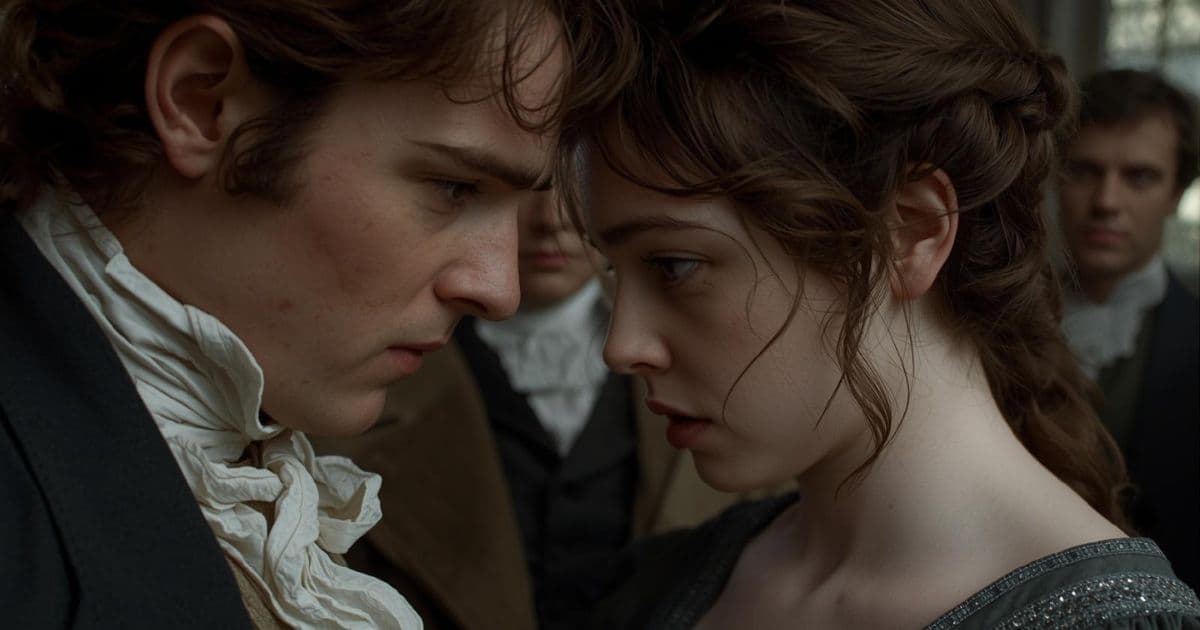
An excerpt from the original text.(complete · 1264 words)
very little quiet reflection was enough to satisfy Emma as to the
nature of her agitation on hearing this news of Frank Churchill. She
was soon convinced that it was not for herself she was feeling at all
apprehensive or embarrassed; it was for him. Her own attachment had
really subsided into a mere nothing; it was not worth thinking of;—but
if he, who had undoubtedly been always so much the most in love of the
two, were to be returning with the same warmth of sentiment which he
had taken away, it would be very distressing. If a separation of two
months should not have cooled him, there were dangers and evils before
her:—caution for him and for herself would be necessary. She did not
mean to have her own affections entangled again, and it would be
incumbent on her to avoid any encouragement of his.
She wished she might be able to keep him from an absolute declaration.
That would be so very painful a conclusion of their present
acquaintance! and yet, she could not help rather anticipating something
decisive. She felt as if the spring would not pass without bringing a
crisis, an event, a something to alter her present composed and
tranquil state.
It was not very long, though rather longer than Mr. Weston had
foreseen, before she had the power of forming some opinion of Frank
Churchill’s feelings. The Enscombe family were not in town quite so
soon as had been imagined, but he was at Highbury very soon afterwards.
He rode down for a couple of hours; he could not yet do more; but as he
came from Randalls immediately to Hartfield, she could then exercise
all her quick observation, and speedily determine how he was
influenced, and how she must act. They met with the utmost
friendliness. There could be no doubt of his great pleasure in seeing
her. But she had an almost instant doubt of his caring for her as he
had done, of his feeling the same tenderness in the same degree. She
watched him well. It was a clear thing he was less in love than he had
been. Absence, with the conviction probably of her indifference, had
produced this very natural and very desirable effect.
He was in high spirits; as ready to talk and laugh as ever, and seemed
delighted to speak of his former visit, and recur to old stories: and
he was not without agitation. It was not in his calmness that she read
his comparative indifference. He was not calm; his spirits were
evidently fluttered; there was restlessness about him. Lively as he
was, it seemed a liveliness that did not satisfy himself; but what
decided her belief on the subject, was his staying only a quarter of an
hour, and hurrying away to make other calls in Highbury. “He had seen a
group of old acquaintance in the street as he passed—he had not
stopped, he would not stop for more than a word—but he had the vanity
to think they would be disappointed if he did not call, and much as he
wished to stay longer at Hartfield, he must hurry off.” She had no
doubt as to his being less in love—but neither his agitated spirits,
nor his hurrying away, seemed like a perfect cure; and she was rather
inclined to think it implied a dread of her returning power, and a
discreet resolution of not trusting himself with her long.
This was the only visit from Frank Churchill in the course of ten days.
He was often hoping, intending to come—but was always prevented. His
aunt could not bear to have him leave her. Such was his own account at
Randall’s. If he were quite sincere, if he really tried to come, it was
to be inferred that Mrs. Churchill’s removal to London had been of no
service to the wilful or nervous part of her disorder. That she was
really ill was very certain; he had declared himself convinced of it,
at Randalls. Though much might be fancy, he could not doubt, when he
looked back, that she was in a weaker state of health than she had been
half a year ago. He did not believe it to proceed from any thing that
care and medicine might not remove, or at least that she might not have
many years of existence before her; but he could not be prevailed on,
by all his father’s doubts, to say that her complaints were merely
imaginary, or that she was as strong as ever.
It soon appeared that London was not the place for her. She could not
endure its noise. Her nerves were under continual irritation and
suffering; and by the ten days’ end, her nephew’s letter to Randalls
communicated a change of plan. They were going to remove immediately to
Richmond. Mrs. Churchill had been recommended to the medical skill of
an eminent person there, and had otherwise a fancy for the place. A
ready-furnished house in a favourite spot was engaged, and much benefit
expected from the change.
Emma heard that Frank wrote in the highest spirits of this arrangement,
and seemed most fully to appreciate the blessing of having two months
before him of such near neighbourhood to many dear friends—for the
house was taken for May and June. She was told that now he wrote with
the greatest confidence of being often with them, almost as often as he
could even wish.
Emma saw how Mr. Weston understood these joyous prospects. He was
considering her as the source of all the happiness they offered. She
hoped it was not so. Two months must bring it to the proof.
Mr. Weston’s own happiness was indisputable. He was quite delighted. It
was the very circumstance he could have wished for. Now, it would be
really having Frank in their neighbourhood. What were nine miles to a
young man?—An hour’s ride. He would be always coming over. The
difference in that respect of Richmond and London was enough to make
the whole difference of seeing him always and seeing him never. Sixteen
miles—nay, eighteen—it must be full eighteen to Manchester-street—was a
serious obstacle. Were he ever able to get away, the day would be spent
in coming and returning. There was no comfort in having him in London;
he might as well be at Enscombe; but Richmond was the very distance for
easy intercourse. Better than nearer!
One good thing was immediately brought to a certainty by this
removal,—the ball at the Crown. It had not been forgotten before, but
it had been soon acknowledged vain to attempt to fix a day. Now,
however, it was absolutely to be; every preparation was resumed, and
very soon after the Churchills had removed to Richmond, a few lines
from Frank, to say that his aunt felt already much better for the
change, and that he had no doubt of being able to join them for
twenty-four hours at any given time, induced them to name as early a
day as possible.
Mr. Weston’s ball was to be a real thing. A very few to-morrows stood
between the young people of Highbury and happiness.
Mr. Woodhouse was resigned. The time of year lightened the evil to him.
May was better for every thing than February. Mrs. Bates was engaged to
spend the evening at Hartfield, James had due notice, and he sanguinely
hoped that neither dear little Henry nor dear little John would have
any thing the matter with them, while dear Emma were gone.
Master this chapter. Complete your experience
Purchase the complete book to access all chapters and support classic literature
As an Amazon Associate, we earn a small commission from qualifying purchases at no additional cost to you.
Available in paperback, hardcover, and e-book formats
Let's Analyse the Pattern
People's actions reveal their true feelings and intentions more accurately than their words ever can.
Why This Matters
Connect literature to life
This chapter teaches how to interpret what people really mean by watching their behavior patterns rather than just listening to their words.
Practice This Today
This week, notice when someone's actions don't match their words—like a coworker who says they're 'fine' with extra shifts but keeps calling in sick, or a friend who claims they want to hang out but always cancels plans.
Now let's explore the literary elements.
Key Quotes & Analysis
"Her own attachment had really subsided into a mere nothing; it was not worth thinking of"
Context: Emma honestly assessing her feelings about Frank Churchill
This shows Emma's growth in self-awareness. She's not fooling herself or clinging to feelings that aren't real anymore. It's a moment of emotional honesty that many people struggle with.
In Today's Words:
She was completely over him and knew it
"She wished she might be able to keep him from an absolute declaration"
Context: Emma hoping to avoid an awkward conversation about their relationship
Emma is trying to spare both of them the discomfort of a conversation about feelings that no longer exist. It shows her consideration for his dignity as well as her own comfort.
In Today's Words:
She really hoped he wouldn't try to have 'the talk' about where they stood
"She felt as if the spring would not pass without bringing a crisis, an event, a something to alter her present composed and tranquil state"
Context: Emma sensing that change is coming
Emma has that intuitive feeling that something big is about to happen. Even when life feels stable, she senses undercurrents that will disrupt her peace.
In Today's Words:
She had that feeling that drama was coming and her peaceful life was about to get complicated
Thematic Threads
Emotional Intelligence
In This Chapter
Emma reads Frank's nervous behavior and shortened visits to understand his true emotional state
Development
Major growth from earlier chapters where Emma misread everyone's feelings
In Your Life:
You might recognize this when learning to read your teenager's mood from their body language rather than their words
Social Expectations
In This Chapter
Both Emma and Frank must navigate how to behave around each other given everyone's assumptions about their relationship
Development
Continues the theme of social pressure influencing personal choices
In Your Life:
You see this when family members expect you to maintain relationships that have naturally evolved or ended
Personal Growth
In This Chapter
Emma demonstrates mature self-awareness by honestly assessing her own feelings and Frank's behavior
Development
Builds on Emma's journey toward greater self-knowledge throughout the novel
In Your Life:
You experience this when you can honestly admit a friendship or romantic interest has run its course
Control
In This Chapter
Frank's aunt continues to manipulate his schedule and presence through her demands and ailments
Development
Ongoing theme of how others use emotional manipulation to control situations
In Your Life:
You might see this with a family member who uses guilt or health concerns to control your time and decisions
Anticipation
In This Chapter
The upcoming ball creates tension as unresolved relationships will be tested in a public setting
Development
Builds dramatic tension toward a social event where all conflicts will converge
In Your Life:
You feel this before family gatherings where you'll see people you have complicated relationships with
You now have the context. Time to form your own thoughts.
Discussion Questions
- 1
What signs does Emma notice that tell her Frank has also moved on from their romantic connection?
analysis • surface - 2
Why does Emma trust Frank's behavior over his words when figuring out his true feelings?
analysis • medium - 3
Think about your workplace or family relationships. When have you seen someone's actions contradict their words, and what did their behavior actually tell you?
application • medium - 4
If you were in Emma's position, how would you handle the upcoming ball knowing you both need to establish new boundaries?
application • deep - 5
What does this chapter reveal about why people sometimes struggle to be direct about their changing feelings?
reflection • deep
Critical Thinking Exercise
Decode the Real Message
Think of someone in your life whose words and actions don't always match up. Write down what they say versus what they actually do in a specific situation. Then analyze what their behavior is really communicating. This could be a coworker who says they're 'swamped' but spends time on social media, or a family member who claims they're 'fine' but acts distant.
Consider:
- •Look for patterns over time, not just single incidents
- •Consider what might be behind the mismatch - fear, uncertainty, or conflicting priorities
- •Think about how you can respond to the behavior rather than just the words
Journaling Prompt
Write about a time when you said one thing but your actions showed something different. What were you really trying to communicate, and why was it hard to be direct?
Coming Up Next...
Chapter 38: The Ball and Mr. Knightley's Kindness
The long-awaited ball at the Crown Inn finally arrives, bringing together all of Highbury's social circles. But what should be an evening of simple pleasure becomes something far more complicated when unexpected revelations surface.