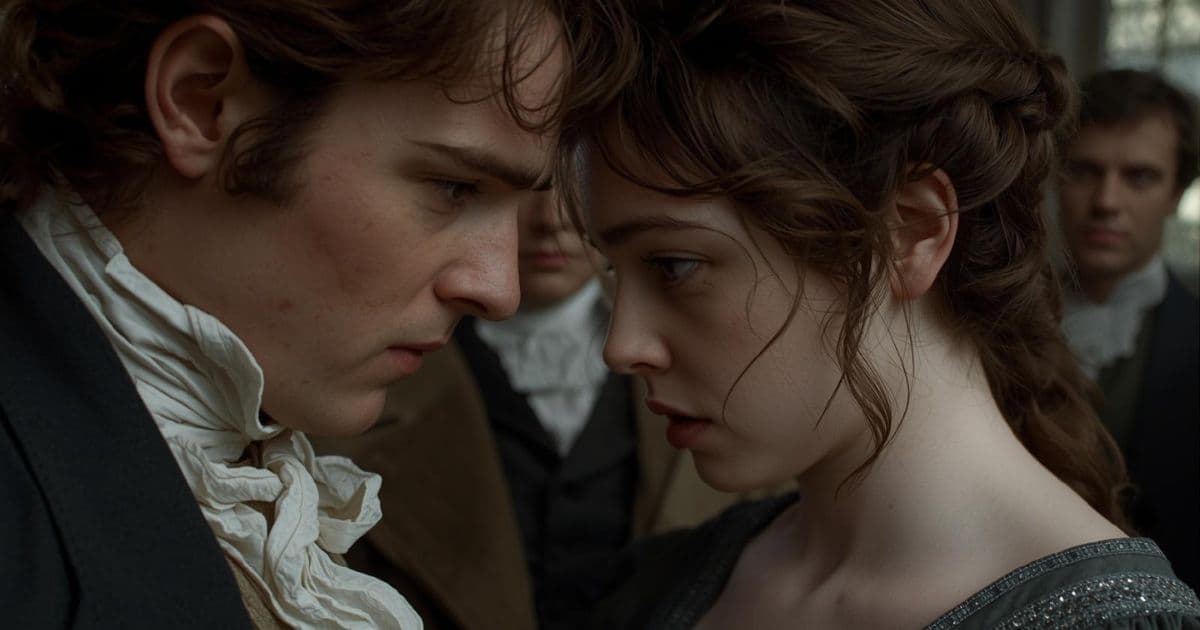
An excerpt from the original text.(complete · 2113 words)
ne thing only was wanting to make the prospect of the ball completely
satisfactory to Emma—its being fixed for a day within the granted term
of Frank Churchill’s stay in Surry; for, in spite of Mr. Weston’s
confidence, she could not think it so very impossible that the
Churchills might not allow their nephew to remain a day beyond his
fortnight. But this was not judged feasible. The preparations must take
their time, nothing could be properly ready till the third week were
entered on, and for a few days they must be planning, proceeding and
hoping in uncertainty—at the risk—in her opinion, the great risk, of
its being all in vain.
Enscombe however was gracious, gracious in fact, if not in word. His
wish of staying longer evidently did not please; but it was not
opposed. All was safe and prosperous; and as the removal of one
solicitude generally makes way for another, Emma, being now certain of
her ball, began to adopt as the next vexation Mr. Knightley’s provoking
indifference about it. Either because he did not dance himself, or
because the plan had been formed without his being consulted, he seemed
resolved that it should not interest him, determined against its
exciting any present curiosity, or affording him any future amusement.
To her voluntary communications Emma could get no more approving reply,
than,
“Very well. If the Westons think it worth while to be at all this
trouble for a few hours of noisy entertainment, I have nothing to say
against it, but that they shall not chuse pleasures for me.—Oh! yes, I
must be there; I could not refuse; and I will keep as much awake as I
can; but I would rather be at home, looking over William Larkins’s
week’s account; much rather, I confess.—Pleasure in seeing dancing!—not
I, indeed—I never look at it—I do not know who does.—Fine dancing, I
believe, like virtue, must be its own reward. Those who are standing by
are usually thinking of something very different.”
This Emma felt was aimed at her; and it made her quite angry. It was
not in compliment to Jane Fairfax however that he was so indifferent,
or so indignant; he was not guided by her feelings in reprobating the
ball, for she enjoyed the thought of it to an extraordinary degree.
It made her animated—open hearted—she voluntarily said;—
“Oh! Miss Woodhouse, I hope nothing may happen to prevent the ball.
What a disappointment it would be! I do look forward to it, I own, with
very great pleasure.”
It was not to oblige Jane Fairfax therefore that he would have
preferred the society of William Larkins. No!—she was more and more
convinced that Mrs. Weston was quite mistaken in that surmise. There
was a great deal of friendly and of compassionate attachment on his
side—but no love.
Alas! there was soon no leisure for quarrelling with Mr. Knightley. Two
days of joyful security were immediately followed by the over-throw of
every thing. A letter arrived from Mr. Churchill to urge his nephew’s
instant return. Mrs. Churchill was unwell—far too unwell to do without
him; she had been in a very suffering state (so said her husband) when
writing to her nephew two days before, though from her usual
unwillingness to give pain, and constant habit of never thinking of
herself, she had not mentioned it; but now she was too ill to trifle,
and must entreat him to set off for Enscombe without delay.
The substance of this letter was forwarded to Emma, in a note from Mrs.
Weston, instantly. As to his going, it was inevitable. He must be gone
within a few hours, though without feeling any real alarm for his aunt,
to lessen his repugnance. He knew her illnesses; they never occurred
but for her own convenience.
Mrs. Weston added, “that he could only allow himself time to hurry to
Highbury, after breakfast, and take leave of the few friends there whom
he could suppose to feel any interest in him; and that he might be
expected at Hartfield very soon.”
This wretched note was the finale of Emma’s breakfast. When once it had
been read, there was no doing any thing, but lament and exclaim. The
loss of the ball—the loss of the young man—and all that the young man
might be feeling!—It was too wretched!—Such a delightful evening as it
would have been!—Every body so happy! and she and her partner the
happiest!—“I said it would be so,” was the only consolation.
Her father’s feelings were quite distinct. He thought principally of
Mrs. Churchill’s illness, and wanted to know how she was treated; and
as for the ball, it was shocking to have dear Emma disappointed; but
they would all be safer at home.
Emma was ready for her visitor some time before he appeared; but if
this reflected at all upon his impatience, his sorrowful look and total
want of spirits when he did come might redeem him. He felt the going
away almost too much to speak of it. His dejection was most evident. He
sat really lost in thought for the first few minutes; and when rousing
himself, it was only to say,
“Of all horrid things, leave-taking is the worst.”
“But you will come again,” said Emma. “This will not be your only visit
to Randalls.”
“Ah!—(shaking his head)—the uncertainty of when I may be able to
return!—I shall try for it with a zeal!—It will be the object of all my
thoughts and cares!—and if my uncle and aunt go to town this spring—but
I am afraid—they did not stir last spring—I am afraid it is a custom
gone for ever.”
“Our poor ball must be quite given up.”
“Ah! that ball!—why did we wait for any thing?—why not seize the
pleasure at once?—How often is happiness destroyed by preparation,
foolish preparation!—You told us it would be so.—Oh! Miss Woodhouse,
why are you always so right?”
“Indeed, I am very sorry to be right in this instance. I would much
rather have been merry than wise.”
“If I can come again, we are still to have our ball. My father depends
on it. Do not forget your engagement.”
Emma looked graciously.
“Such a fortnight as it has been!” he continued; “every day more
precious and more delightful than the day before!—every day making me
less fit to bear any other place. Happy those, who can remain at
Highbury!”
“As you do us such ample justice now,” said Emma, laughing, “I will
venture to ask, whether you did not come a little doubtfully at first?
Do not we rather surpass your expectations? I am sure we do. I am sure
you did not much expect to like us. You would not have been so long in
coming, if you had had a pleasant idea of Highbury.”
He laughed rather consciously; and though denying the sentiment, Emma
was convinced that it had been so.
“And you must be off this very morning?”
“Yes; my father is to join me here: we shall walk back together, and I
must be off immediately. I am almost afraid that every moment will
bring him.”
“Not five minutes to spare even for your friends Miss Fairfax and Miss
Bates? How unlucky! Miss Bates’s powerful, argumentative mind might
have strengthened yours.”
“Yes—I have called there; passing the door, I thought it better. It
was a right thing to do. I went in for three minutes, and was detained
by Miss Bates’s being absent. She was out; and I felt it impossible not
to wait till she came in. She is a woman that one may, that one must
laugh at; but that one would not wish to slight. It was better to pay
my visit, then”—
He hesitated, got up, walked to a window.
“In short,” said he, “perhaps, Miss Woodhouse—I think you can hardly be
quite without suspicion”—
He looked at her, as if wanting to read her thoughts. She hardly knew
what to say. It seemed like the forerunner of something absolutely
serious, which she did not wish. Forcing herself to speak, therefore,
in the hope of putting it by, she calmly said,
“You are quite in the right; it was most natural to pay your visit,
then”—
He was silent. She believed he was looking at her; probably reflecting
on what she had said, and trying to understand the manner. She heard
him sigh. It was natural for him to feel that he had cause to sigh.
He could not believe her to be encouraging him. A few awkward moments
passed, and he sat down again; and in a more determined manner said,
“It was something to feel that all the rest of my time might be given
to Hartfield. My regard for Hartfield is most warm”—
He stopt again, rose again, and seemed quite embarrassed.—He was more
in love with her than Emma had supposed; and who can say how it might
have ended, if his father had not made his appearance? Mr. Woodhouse
soon followed; and the necessity of exertion made him composed.
A very few minutes more, however, completed the present trial. Mr.
Weston, always alert when business was to be done, and as incapable of
procrastinating any evil that was inevitable, as of foreseeing any that
was doubtful, said, “It was time to go;” and the young man, though he
might and did sigh, could not but agree, to take leave.
“I shall hear about you all,” said he; “that is my chief consolation. I
shall hear of every thing that is going on among you. I have engaged
Mrs. Weston to correspond with me. She has been so kind as to promise
it. Oh! the blessing of a female correspondent, when one is really
interested in the absent!—she will tell me every thing. In her letters
I shall be at dear Highbury again.”
A very friendly shake of the hand, a very earnest “Good-bye,” closed
the speech, and the door had soon shut out Frank Churchill. Short had
been the notice—short their meeting; he was gone; and Emma felt so
sorry to part, and foresaw so great a loss to their little society from
his absence as to begin to be afraid of being too sorry, and feeling it
too much.
It was a sad change. They had been meeting almost every day since his
arrival. Certainly his being at Randalls had given great spirit to the
last two weeks—indescribable spirit; the idea, the expectation of
seeing him which every morning had brought, the assurance of his
attentions, his liveliness, his manners! It had been a very happy
fortnight, and forlorn must be the sinking from it into the common
course of Hartfield days. To complete every other recommendation, he
had almost told her that he loved her. What strength, or what
constancy of affection he might be subject to, was another point; but
at present she could not doubt his having a decidedly warm admiration,
a conscious preference of herself; and this persuasion, joined to all
the rest, made her think that she must be a little in love with him,
in spite of every previous determination against it.
“I certainly must,” said she. “This sensation of listlessness,
weariness, stupidity, this disinclination to sit down and employ
myself, this feeling of every thing’s being dull and insipid about the
house!— I must be in love; I should be the oddest creature in the world
if I were not—for a few weeks at least. Well! evil to some is always
good to others. I shall have many fellow-mourners for the ball, if not
for Frank Churchill; but Mr. Knightley will be happy. He may spend the
evening with his dear William Larkins now if he likes.”
Mr. Knightley, however, shewed no triumphant happiness. He could not
say that he was sorry on his own account; his very cheerful look would
have contradicted him if he had; but he said, and very steadily, that
he was sorry for the disappointment of the others, and with
considerable kindness added,
“You, Emma, who have so few opportunities of dancing, you are really
out of luck; you are very much out of luck!”
It was some days before she saw Jane Fairfax, to judge of her honest
regret in this woeful change; but when they did meet, her composure was
odious. She had been particularly unwell, however, suffering from
headache to a degree, which made her aunt declare, that had the ball
taken place, she did not think Jane could have attended it; and it was
charity to impute some of her unbecoming indifference to the languor of
ill-health.
Master this chapter. Complete your experience
Purchase the complete book to access all chapters and support classic literature
As an Amazon Associate, we earn a small commission from qualifying purchases at no additional cost to you.
Available in paperback, hardcover, and e-book formats
Let's Analyse the Pattern
We unconsciously create or welcome interruptions just before important revelations that might change everything.
Why This Matters
Connect literature to life
This chapter teaches how people use timing and crisis to avoid difficult conversations and maintain control over situations.
Practice This Today
This week, notice when important discussions get derailed by sudden 'emergencies' - and ask yourself whether the interruption serves someone's need to avoid truth.
Now let's explore the literary elements.
Key Quotes & Analysis
"All was safe and prosperous; and as the removal of one solicitude generally makes way for another, Emma, being now certain of her ball, began to adopt as the next vexation Mr. Knightley's provoking indifference about it."
Context: Just after Emma learns the ball can proceed as planned
This reveals Emma's tendency to always find something to worry about, even when things go well. It also shows how she craves Mr. Knightley's approval and attention, even when she doesn't realize it.
In Today's Words:
As soon as one problem was solved, Emma found something else to stress about - why wasn't Mr. Knightley excited about her party?
"Very well. If the Westons think it worth while to be at all this trouble for a few hours of noisy entertainment, I have nothing to say against it."
Context: His dismissive response to Emma's enthusiasm about the ball
Mr. Knightley's practical nature shows through his view of the ball as frivolous. His indifference frustrates Emma because she values his opinion, though she doesn't fully understand why his approval matters so much to her.
In Today's Words:
Sure, if they want to go through all that work for one night of loud partying, whatever.
"I have something to tell you, Emma; some news that will rather surprise you."
Context: Frank's attempt to confess something important before his departure
This unfinished confession creates tension and leaves Emma wondering what Frank wanted to say. The interruption prevents a moment of truth that might have changed everything between them.
In Today's Words:
Emma, I need to tell you something that's going to shock you.
Thematic Threads
Timing
In This Chapter
Frank's departure forces rushed goodbyes and prevents honest conversation
Development
Building from earlier social timing pressures to personal emotional timing
In Your Life:
Important conversations always seem to get interrupted by 'urgent' distractions
Self-Knowledge
In This Chapter
Emma's sadness about Frank's departure makes her think she's falling in love
Development
Continuing Emma's pattern of misreading her own emotions
In Your Life:
We often mistake one feeling for another when we're not ready for the truth
Hidden Agendas
In This Chapter
Mrs. Churchill's convenient illness manipulates Frank's schedule
Development
Expanding from individual manipulation to family power dynamics
In Your Life:
Family members often create crises to control other people's choices
Unspoken Communication
In This Chapter
Frank struggles to say something important but never manages it
Development
Building tension around secrets and incomplete communications
In Your Life:
The most important things often go unsaid because we fear the consequences
Unexpected Kindness
In This Chapter
Mr. Knightley shows unusual sympathy for Emma's disappointment
Development
Revealing new depth in their relationship dynamic
In Your Life:
Sometimes the people who challenge us most also understand us best
You now have the context. Time to form your own thoughts.
Discussion Questions
- 1
What forces Frank Churchill to leave suddenly, and how does Emma react differently to the cancelled ball versus his departure?
analysis • surface - 2
Why does Frank struggle so much to say what he wants to tell Emma during their goodbye? What stops him besides his father's arrival?
analysis • medium - 3
Think about times when you were about to have an important conversation but got interrupted. Was it really just bad timing, or did part of you welcome the interruption?
application • medium - 4
Emma realizes her feelings by noticing what disappoints her most. How can you use your own disappointments as clues to what you actually care about?
application • deep - 5
Why do we often create our own interruptions when we're on the verge of important breakthroughs or difficult conversations?
reflection • deep
Critical Thinking Exercise
Create Your Completion Ritual
Think of an important conversation you've been avoiding or that keeps getting interrupted. Write down exactly what you need to say in 2-3 clear sentences. Then design a specific plan for when and how you'll have this conversation, including what you'll do if you get interrupted again.
Consider:
- •Notice if you immediately think of reasons why this conversation can't happen soon
- •Pay attention to whether you're choosing a time when interruptions are likely
- •Consider what you're actually afraid will happen if you speak honestly
Journaling Prompt
Write about a time when you almost said something important but got interrupted. Looking back, what were you really afraid would happen if you had spoken up? How might your life be different now if you had found a way to complete that conversation?
Coming Up Next...
Chapter 31: The Reality Check of Love
With Frank gone and the social excitement of Highbury dimmed, Emma must navigate the quieter rhythms of daily life. But new revelations about the relationships around her are about to surface, challenging everything she thought she understood.