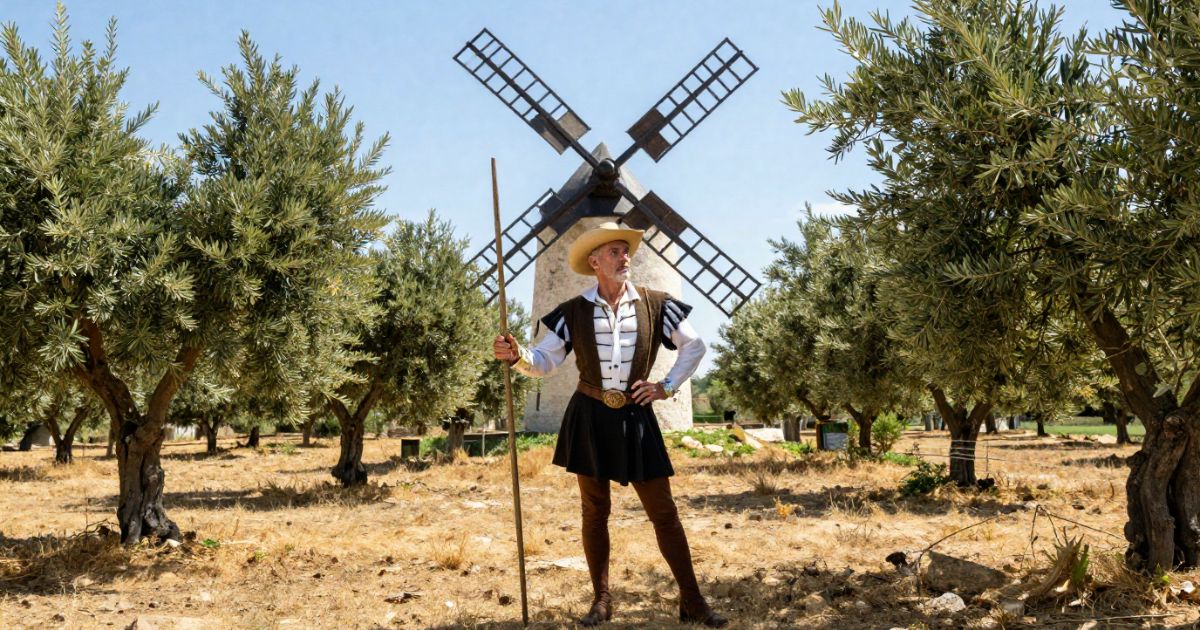
An excerpt from the original text.(complete · 3050 words)
HEREIN ARE INSERTED THE DESPAIRING VERSES OF THE DEAD SHEPHERD,
TOGETHER WITH OTHER INCIDENTS NOT LOOKED FOR
THE LAY OF CHRYSOSTOM
Since thou dost in thy cruelty desire
The ruthless rigour of thy tyranny
From tongue to tongue, from land to land proclaimed,
The very Hell will I constrain to lend
This stricken breast of mine deep notes of woe
To serve my need of fitting utterance.
And as I strive to body forth the tale
Of all I suffer, all that thou hast done,
Forth shall the dread voice roll, and bear along
Shreds from my vitals torn for greater pain.
Then listen, not to dulcet harmony,
But to a discord wrung by mad despair
Out of this bosom’s depths of bitterness,
To ease my heart and plant a sting in thine.
The lion’s roar, the fierce wolf’s savage howl,
The horrid hissing of the scaly snake,
The awesome cries of monsters yet unnamed,
The crow’s ill-boding croak, the hollow moan
Of wild winds wrestling with the restless sea,
The wrathful bellow of the vanquished bull,
The plaintive sobbing of the widowed dove,
The envied owl’s sad note, the wail of woe
That rises from the dreary choir of Hell,
Commingled in one sound, confusing sense,
Let all these come to aid my soul’s complaint,
For pain like mine demands new modes of song.
No echoes of that discord shall be heard
Where Father Tagus rolls, or on the banks
Of olive-bordered Betis; to the rocks
Or in deep caverns shall my plaint be told,
And by a lifeless tongue in living words;
Or in dark valleys or on lonely shores,
Where neither foot of man nor sunbeam falls;
Or in among the poison-breathing swarms
Of monsters nourished by the sluggish Nile.
For, though it be to solitudes remote
The hoarse vague echoes of my sorrows sound
Thy matchless cruelty, my dismal fate
Shall carry them to all the spacious world.
Disdain hath power to kill, and patience dies
Slain by suspicion, be it false or true;
And deadly is the force of jealousy;
Long absence makes of life a dreary void;
No hope of happiness can give repose
To him that ever fears to be forgot;
And death, inevitable, waits in hall.
But I, by some strange miracle, live on
A prey to absence, jealousy, disdain;
Racked by suspicion as by certainty;
Forgotten, left to feed my flame alone.
And while I suffer thus, there comes no ray
Of hope to gladden me athwart the gloom;
Nor do I look for it in my despair;
But rather clinging to a cureless woe,
All hope do I abjure for evermore.
Can there be hope where fear is? Were it well,
When far more certain are the grounds of fear?
Ought I to shut mine eyes to jealousy,
If through a thousand heart-wounds it appears?
Who would not give free access to distrust,
Seeing disdain unveiled, and—bitter change!—
All his suspicions turned to certainties,
And the fair truth transformed into a lie?
Oh, thou fierce tyrant of the realms of love,
Oh, Jealousy! put chains upon these hands,
And bind me with thy strongest cord, Disdain.
But, woe is me! triumphant over all,
My sufferings drown the memory of you.
And now I die, and since there is no hope
Of happiness for me in life or death,
Still to my fantasy I’ll fondly cling.
I’ll say that he is wise who loveth well,
And that the soul most free is that most bound
In thraldom to the ancient tyrant Love.
I’ll say that she who is mine enemy
In that fair body hath as fair a mind,
And that her coldness is but my desert,
And that by virtue of the pain he sends
Love rules his kingdom with a gentle sway.
Thus, self-deluding, and in bondage sore,
And wearing out the wretched shred of life
To which I am reduced by her disdain,
I’ll give this soul and body to the winds,
All hopeless of a crown of bliss in store.
Thou whose injustice hath supplied the cause
That makes me quit the weary life I loathe,
As by this wounded bosom thou canst see
How willingly thy victim I become,
Let not my death, if haply worth a tear,
Cloud the clear heaven that dwells in thy bright eyes;
I would not have thee expiate in aught
The crime of having made my heart thy prey;
But rather let thy laughter gaily ring
And prove my death to be thy festival.
Fool that I am to bid thee! well I know
Thy glory gains by my untimely end.
And now it is the time; from Hell’s abyss
Come thirsting Tantalus, come Sisyphus
Heaving the cruel stone, come Tityus
With vulture, and with wheel Ixion come,
And come the sisters of the ceaseless toil;
And all into this breast transfer their pains,
And (if such tribute to despair be due)
Chant in their deepest tones a doleful dirge
Over a corse unworthy of a shroud.
Let the three-headed guardian of the gate,
And all the monstrous progeny of hell,
The doleful concert join: a lover dead
Methinks can have no fitter obsequies.
Lay of despair, grieve not when thou art gone
Forth from this sorrowing heart: my misery
Brings fortune to the cause that gave thee birth;
Then banish sadness even in the tomb.
The “Lay of Chrysostom” met with the approbation of the listeners,
though the reader said it did not seem to him to agree with what he had
heard of Marcela’s reserve and propriety, for Chrysostom complained in
it of jealousy, suspicion, and absence, all to the prejudice of the
good name and fame of Marcela; to which Ambrosio replied as one who
knew well his friend’s most secret thoughts, “Señor, to remove that
doubt I should tell you that when the unhappy man wrote this lay he was
away from Marcela, from whom he had voluntarily separated himself, to
try if absence would act with him as it is wont; and as everything
distresses and every fear haunts the banished lover, so imaginary
jealousies and suspicions, dreaded as if they were true, tormented
Chrysostom; and thus the truth of what report declares of the virtue of
Marcela remains unshaken, and with her envy itself should not and
cannot find any fault save that of being cruel, somewhat haughty, and
very scornful.”
“That is true,” said Vivaldo; and as he was about to read another paper
of those he had preserved from the fire, he was stopped by a marvellous
vision (for such it seemed) that unexpectedly presented itself to their
eyes; for on the summit of the rock where they were digging the grave
there appeared the shepherdess Marcela, so beautiful that her beauty
exceeded its reputation. Those who had never till then beheld her gazed
upon her in wonder and silence, and those who were accustomed to see
her were not less amazed than those who had never seen her before. But
the instant Ambrosio saw her he addressed her, with manifest
indignation:
“Art thou come, by chance, cruel basilisk of these mountains, to see if
in thy presence blood will flow from the wounds of this wretched being
thy cruelty has robbed of life; or is it to exult over the cruel work
of thy humours that thou art come; or like another pitiless Nero to
look down from that height upon the ruin of his Rome in embers; or in
thy arrogance to trample on this ill-fated corpse, as the ungrateful
daughter trampled on her father Tarquin’s? Tell us quickly for what
thou art come, or what it is thou wouldst have, for, as I know the
thoughts of Chrysostom never failed to obey thee in life, I will make
all these who call themselves his friends obey thee, though he be
dead.”
“I come not, Ambrosio for any of the purposes thou hast named,” replied
Marcela, “but to defend myself and to prove how unreasonable are all
those who blame me for their sorrow and for Chrysostom’s death; and
therefore I ask all of you that are here to give me your attention, for
it will not take much time or many words to bring the truth home to
persons of sense. Heaven has made me, so you say, beautiful, and so
much so that in spite of yourselves my beauty leads you to love me; and
for the love you show me you say, and even urge, that I am bound to
love you. By that natural understanding which God has given me I know
that everything beautiful attracts love, but I cannot see how, by
reason of being loved, that which is loved for its beauty is bound to
love that which loves it; besides, it may happen that the lover of that
which is beautiful may be ugly, and ugliness being detestable, it is
very absurd to say, “I love thee because thou art beautiful, thou must
love me though I be ugly.” But supposing the beauty equal on both
sides, it does not follow that the inclinations must be therefore
alike, for it is not every beauty that excites love, some but pleasing
the eye without winning the affection; and if every sort of beauty
excited love and won the heart, the will would wander vaguely to and
fro unable to make choice of any; for as there is an infinity of
beautiful objects there must be an infinity of inclinations, and true
love, I have heard it said, is indivisible, and must be voluntary and
not compelled. If this be so, as I believe it to be, why do you desire
me to bend my will by force, for no other reason but that you say you
love me? Nay—tell me—had Heaven made me ugly, as it has made me
beautiful, could I with justice complain of you for not loving me?
Moreover, you must remember that the beauty I possess was no choice of
mine, for, be it what it may, Heaven of its bounty gave it me without
my asking or choosing it; and as the viper, though it kills with it,
does not deserve to be blamed for the poison it carries, as it is a
gift of nature, neither do I deserve reproach for being beautiful; for
beauty in a modest woman is like fire at a distance or a sharp sword;
the one does not burn, the other does not cut, those who do not come
too near. Honour and virtue are the ornaments of the mind, without
which the body, though it be so, has no right to pass for beautiful;
but if modesty is one of the virtues that specially lend a grace and
charm to mind and body, why should she who is loved for her beauty part
with it to gratify one who for his pleasure alone strives with all his
might and energy to rob her of it? I was born free, and that I might
live in freedom I chose the solitude of the fields; in the trees of the
mountains I find society, the clear waters of the brooks are my
mirrors, and to the trees and waters I make known my thoughts and
charms. I am a fire afar off, a sword laid aside. Those whom I have
inspired with love by letting them see me, I have by words undeceived,
and if their longings live on hope—and I have given none to Chrysostom
or to any other—it cannot justly be said that the death of any is my
doing, for it was rather his own obstinacy than my cruelty that killed
him; and if it be made a charge against me that his wishes were
honourable, and that therefore I was bound to yield to them, I answer
that when on this very spot where now his grave is made he declared to
me his purity of purpose, I told him that mine was to live in perpetual
solitude, and that the earth alone should enjoy the fruits of my
retirement and the spoils of my beauty; and if, after this open avowal,
he chose to persist against hope and steer against the wind, what
wonder is it that he should sink in the depths of his infatuation? If I
had encouraged him, I should be false; if I had gratified him, I should
have acted against my own better resolution and purpose. He was
persistent in spite of warning, he despaired without being hated.
Bethink you now if it be reasonable that his suffering should be laid
to my charge. Let him who has been deceived complain, let him give way
to despair whose encouraged hopes have proved vain, let him flatter
himself whom I shall entice, let him boast whom I shall receive; but
let not him call me cruel or homicide to whom I make no promise, upon
whom I practise no deception, whom I neither entice nor receive. It has
not been so far the will of Heaven that I should love by fate, and to
expect me to love by choice is idle. Let this general declaration serve
for each of my suitors on his own account, and let it be understood
from this time forth that if anyone dies for me it is not of jealousy
or misery he dies, for she who loves no one can give no cause for
jealousy to any, and candour is not to be confounded with scorn. Let
him who calls me wild beast and basilisk, leave me alone as something
noxious and evil; let him who calls me ungrateful, withhold his
service; who calls me wayward, seek not my acquaintance; who calls me
cruel, pursue me not; for this wild beast, this basilisk, this
ungrateful, cruel, wayward being has no kind of desire to seek, serve,
know, or follow them. If Chrysostom’s impatience and violent passion
killed him, why should my modest behaviour and circumspection be
blamed? If I preserve my purity in the society of the trees, why should
he who would have me preserve it among men, seek to rob me of it? I
have, as you know, wealth of my own, and I covet not that of others; my
taste is for freedom, and I have no relish for constraint; I neither
love nor hate anyone; I do not deceive this one or court that, or
trifle with one or play with another. The modest converse of the
shepherd girls of these hamlets and the care of my goats are my
recreations; my desires are bounded by these mountains, and if they
ever wander hence it is to contemplate the beauty of the heavens, steps
by which the soul travels to its primeval abode.”
With these words, and not waiting to hear a reply, she turned and
passed into the thickest part of a wood that was hard by, leaving all
who were there lost in admiration as much of her good sense as of her
beauty. Some—those wounded by the irresistible shafts launched by her
bright eyes—made as though they would follow her, heedless of the frank
declaration they had heard; seeing which, and deeming this a fitting
occasion for the exercise of his chivalry in aid of distressed damsels,
Don Quixote, laying his hand on the hilt of his sword, exclaimed in a
loud and distinct voice:
“Let no one, whatever his rank or condition, dare to follow the
beautiful Marcela, under pain of incurring my fierce indignation. She
has shown by clear and satisfactory arguments that little or no fault
is to be found with her for the death of Chrysostom, and also how far
she is from yielding to the wishes of any of her lovers, for which
reason, instead of being followed and persecuted, she should in justice
be honoured and esteemed by all the good people of the world, for she
shows that she is the only woman in it that holds to such a virtuous
resolution.”
Whether it was because of the threats of Don Quixote, or because
Ambrosio told them to fulfil their duty to their good friend, none of
the shepherds moved or stirred from the spot until, having finished the
grave and burned Chrysostom’s papers, they laid his body in it, not
without many tears from those who stood by. They closed the grave with
a heavy stone until a slab was ready which Ambrosio said he meant to
have prepared, with an epitaph which was to be to this effect:
Beneath the stone before your eyes
The body of a lover lies;
In life he was a shepherd swain,
In death a victim to disdain.
Ungrateful, cruel, coy, and fair,
Was she that drove him to despair,
And Love hath made her his ally
For spreading wide his tyranny.
They then strewed upon the grave a profusion of flowers and branches,
and all expressing their condolence with his friend Ambrosio, took
their leave. Vivaldo and his companion did the same; and Don Quixote
bade farewell to his hosts and to the travellers, who pressed him to
come with them to Seville, as being such a convenient place for finding
adventures, for they presented themselves in every street and round
every corner oftener than anywhere else. Don Quixote thanked them for
their advice and for the disposition they showed to do him a favour,
and said that for the present he would not, and must not go to Seville
until he had cleared all these mountains of highwaymen and robbers, of
whom report said they were full. Seeing his good intention, the
travellers were unwilling to press him further, and once more bidding
him farewell, they left him and pursued their journey, in the course of
which they did not fail to discuss the story of Marcela and Chrysostom
as well as the madness of Don Quixote. He, on his part, resolved to go
in quest of the shepherdess Marcela, and make offer to her of all the
service he could render her; but things did not fall out with him as he
expected, according to what is related in the course of this veracious
history, of which the Second Part ends here.
c14e.jpg (31K)
Master this chapter. Complete your experience
Purchase the complete book to access all chapters and support classic literature
As an Amazon Associate, we earn a small commission from qualifying purchases at no additional cost to you.
Available in paperback, hardcover, and e-book formats
Let's Analyse the Pattern
When someone sets clear boundaries, others make them responsible for everyone else's emotional reactions to those limits.
Why This Matters
Connect literature to life
This chapter teaches how to separate legitimate concerns from emotional manipulation disguised as care.
Practice This Today
This week, notice when someone says you're 'hurting' them by maintaining a boundary—ask yourself if you actually broke a commitment or if they just don't like your choice.
Now let's explore the literary elements.
Key Quotes & Analysis
"I was born free, and that I might live free I chose the solitude of the fields"
Context: Marcela defending her choice to remain single and independent
This is a revolutionary statement for its time - a woman claiming her right to choose her own path. Marcela refuses to be defined by others' desires and asserts that freedom is her birthright, not something she needs to earn or justify.
In Today's Words:
I don't owe anyone a relationship - I chose to be single and that's my right
"Am I perchance bound to love all those who love me?"
Context: Responding to accusations that she's cruel for not returning Chrysostom's love
Marcela cuts to the heart of the matter - being loved doesn't create an obligation to love back. This challenges the entire foundation of courtly love and male entitlement to women's affection.
In Today's Words:
Just because someone has feelings for me doesn't mean I have to feel the same way
"I have never given anyone hope, and therefore none can say I have deceived him"
Context: Defending herself against charges of leading men on
Marcela distinguishes between honesty and cruelty. She was clear about her intentions from the start, making men's persistence their choice, not her fault. This shifts blame from the woman to those who ignored her clear boundaries.
In Today's Words:
I was upfront about not being interested - if you kept hoping anyway, that's on you
Thematic Threads
Personal Autonomy
In This Chapter
Marcela asserts her right to live unmarried and independent, refusing to let others dictate her life choices
Development
Introduced here as a powerful counter-narrative to social expectations
In Your Life:
You might face pressure to justify major life choices like staying single, changing careers, or moving away from family
Social Expectations
In This Chapter
Society expects beautiful women to be available to men and blames them when men suffer from unrequited love
Development
Building on earlier themes of how society punishes those who don't conform
In Your Life:
You might face judgment for not following traditional paths like marriage, parenthood, or conventional career choices
Accountability
In This Chapter
Marcela refuses to accept responsibility for Chrysostom's death, pointing out she never deceived him
Development
Introduced here as a challenge to misplaced blame
In Your Life:
You might be blamed for other people's poor reactions to your honest communications or reasonable boundaries
Honesty vs Kindness
In This Chapter
Marcela's honest rejection is seen as cruelty, though she never gave false hope
Development
Introduced here as the tension between truth-telling and social harmony
In Your Life:
You might struggle with whether to be direct about your feelings or soften the message to avoid conflict
Identity
In This Chapter
Marcela defines herself by her own values and choices rather than others' desires for her
Development
Evolving from Don Quixote's self-created identity to show healthy self-definition
In Your Life:
You might need to resist others' attempts to define who you should be based on their needs or expectations
You now have the context. Time to form your own thoughts.
Discussion Questions
- 1
What specific arguments does Marcela make to defend herself against the accusations that she caused Chrysostom's death?
analysis • surface - 2
Why do you think the community was so quick to blame Marcela for Chrysostom's suicide rather than holding him responsible for his own choices?
analysis • medium - 3
Where do you see this same pattern today—someone setting clear boundaries but getting blamed when others can't handle those limits?
application • medium - 4
If you were in Marcela's position, facing a community that blamed you for someone else's extreme reaction to your boundaries, how would you handle the situation?
application • deep - 5
What does this chapter reveal about how society often makes boundary-setters responsible for other people's emotional reactions?
reflection • deep
Critical Thinking Exercise
Boundary Audit: Map Your Own Patterns
Think of a time when you set a clear boundary (said no to extra work, declined a social invitation, ended a relationship, etc.) and faced pushback or guilt-trips. Write down what boundary you set, how you communicated it, and what reactions you received. Then analyze: were you blamed for other people's inability to accept your decision?
Consider:
- •Notice if you started doubting yourself or feeling guilty for maintaining reasonable limits
- •Identify who supported your right to set boundaries versus who tried to make you responsible for others' reactions
- •Consider whether the people pushing back had their own interests in getting you to change your mind
Journaling Prompt
Write about a boundary you need to set but have been avoiding because you fear the reaction. What would Marcela's approach teach you about standing firm despite potential backlash?
Coming Up Next...
Chapter 35: When Reality Meets Delusion
Don Quixote sets off to find Marcela and offer his services, but his quest takes an unexpected turn when he encounters some rough Yanguesan carriers. His chivalric ideals are about to meet a harsh reality that will leave both knight and squire worse for wear.