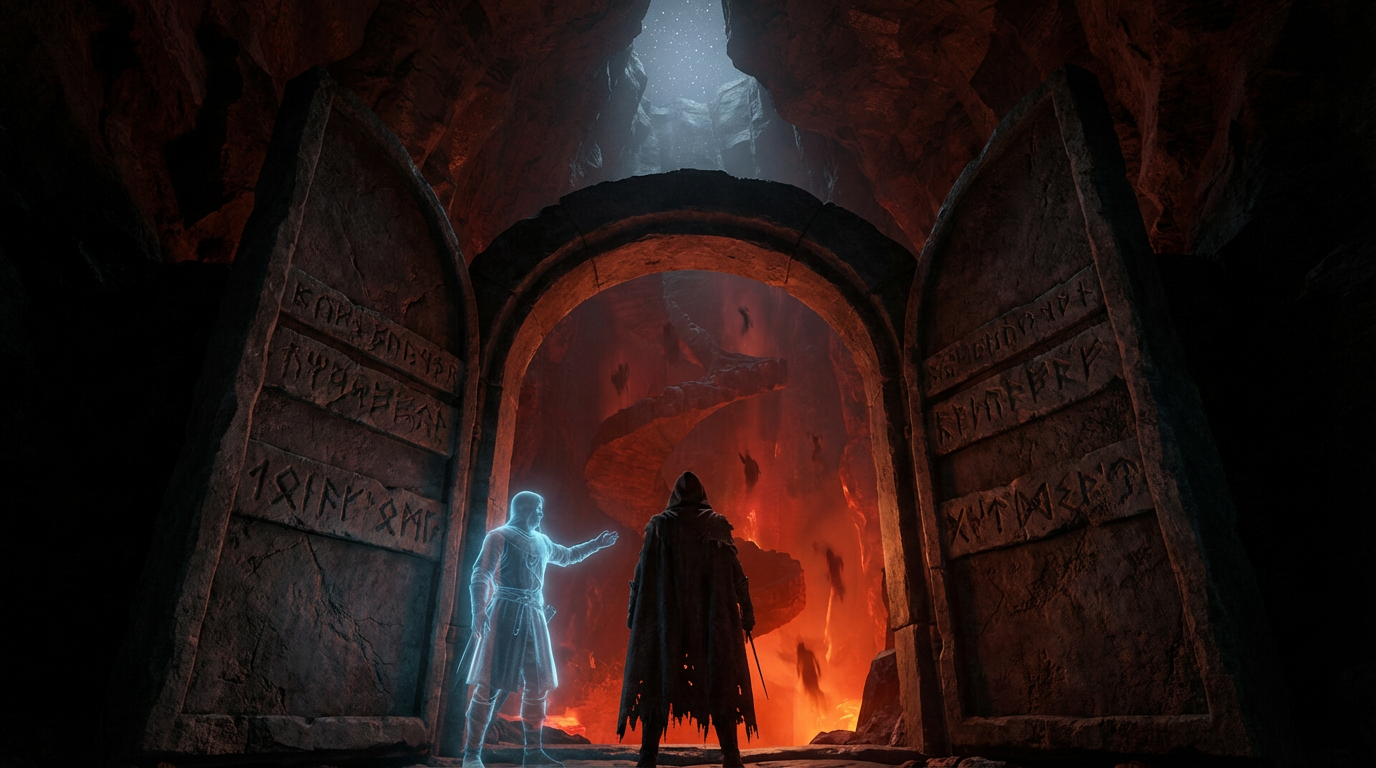
An excerpt from the original text.(complete · 1045 words)
After solution of my doubt, thy Charles,
O fair Clemenza, of the treachery spake
That must befall his seed: but, “Tell it not,”
Said he, “and let the destin’d years come round.”
Nor may I tell thee more, save that the meed
Of sorrow well-deserv’d shall quit your wrongs.

And now the visage of that saintly light
Was to the sun, that fills it, turn’d again,
As to the good, whose plenitude of bliss
Sufficeth all. O ye misguided souls!
Infatuate, who from such a good estrange
Your hearts, and bend your gaze on vanity,
Alas for you!—And lo! toward me, next,
Another of those splendent forms approach’d,
That, by its outward bright’ning, testified
The will it had to pleasure me. The eyes
Of Beatrice, resting, as before,
Firmly upon me, manifested forth
Approva1 of my wish. “And O,” I cried,
Blest spirit! quickly be my will perform’d;
And prove thou to me, that my inmost thoughts
I can reflect on thee.” Thereat the light,
That yet was new to me, from the recess,
Where it before was singing, thus began,
As one who joys in kindness: “In that part
Of the deprav’d Italian land, which lies
Between Rialto, and the fountain-springs
Of Brenta and of Piava, there doth rise,
But to no lofty eminence, a hill,
From whence erewhile a firebrand did descend,
That sorely sheet the region. From one root
I and it sprang; my name on earth Cunizza:
And here I glitter, for that by its light
This star o’ercame me. Yet I naught repine,
Nor grudge myself the cause of this my lot,
Which haply vulgar hearts can scarce conceive.

“This jewel, that is next me in our heaven,
Lustrous and costly, great renown hath left,
And not to perish, ere these hundred years
Five times absolve their round. Consider thou,
If to excel be worthy man’s endeavour,
When such life may attend the first. Yet they
Care not for this, the crowd that now are girt
By Adice and Tagliamento, still
Impenitent, tho’ scourg’d. The hour is near,
When for their stubbornness at Padua’s marsh
The water shall be chang’d, that laves Vicena
And where Cagnano meets with Sile, one
Lords it, and bears his head aloft, for whom
The web is now a-warping. Feltro too
Shall sorrow for its godless shepherd’s fault,
Of so deep stain, that never, for the like,
Was Malta’s bar unclos’d. Too large should be
The skillet, that would hold Ferrara’s blood,
And wearied he, who ounce by ounce would weight it,
The which this priest, in show of party-zeal,
Courteous will give; nor will the gift ill suit
The country’s custom. We descry above,
Mirrors, ye call them thrones, from which to us
Reflected shine the judgments of our God:
Whence these our sayings we avouch for good.”

She ended, and appear’d on other thoughts
Intent, re-ent’ring on the wheel she late
Had left. That other joyance meanwhile wax’d
A thing to marvel at, in splendour glowing,
Like choicest ruby stricken by the sun,
For, in that upper clime, effulgence comes
Of gladness, as here laughter: and below,
As the mind saddens, murkier grows the shade.

“God seeth all: and in him is thy sight,”
Said I, “blest Spirit! Therefore will of his
Cannot to thee be dark. Why then delays
Thy voice to satisfy my wish untold,
That voice which joins the inexpressive song,
Pastime of heav’n, the which those ardours sing,
That cowl them with six shadowing wings outspread?
I would not wait thy asking, wert thou known
To me, as thoroughly I to thee am known.”

He forthwith answ’ring, thus his words began:
“The valley’ of waters, widest next to that
Which doth the earth engarland, shapes its course,
Between discordant shores, against the sun
Inward so far, it makes meridian there,
Where was before th’ horizon. Of that vale
Dwelt I upon the shore, ’twixt Ebro’s stream
And Macra’s, that divides with passage brief
Genoan bounds from Tuscan. East and west
Are nearly one to Begga and my land,
Whose haven erst was with its own blood warm.
Who knew my name were wont to call me Folco:
And I did bear impression of this heav’n,
That now bears mine: for not with fiercer flame
Glow’d Belus’ daughter, injuring alike
Sichaeus and Creusa, than did I,
Long as it suited the unripen’d down
That fledg’d my cheek: nor she of Rhodope,
That was beguiled of Demophoon;
Nor Jove’s son, when the charms of Iole
Were shrin’d within his heart. And yet there hides
No sorrowful repentance here, but mirth,
Not for the fault (that doth not come to mind),
But for the virtue, whose o’erruling sway
And providence have wrought thus quaintly. Here
The skill is look’d into, that fashioneth
With such effectual working, and the good
Discern’d, accruing to this upper world
From that below. But fully to content
Thy wishes, all that in this sphere have birth,
Demands my further parle. Inquire thou wouldst,
Who of this light is denizen, that here
Beside me sparkles, as the sun-beam doth
On the clear wave. Know then, the soul of Rahab
Is in that gladsome harbour, to our tribe
United, and the foremost rank assign’d.
He to that heav’n, at which the shadow ends
Of your sublunar world, was taken up,
First, in Christ’s triumph, of all souls redeem’d:
For well behoov’d, that, in some part of heav’n,
She should remain a trophy, to declare
The mighty contest won with either palm;
For that she favour’d first the high exploit
Of Joshua on the holy land, whereof
The Pope recks little now. Thy city, plant
Of him, that on his Maker turn’d the back,
And of whose envying so much woe hath sprung,
Engenders and expands the cursed flower,
That hath made wander both the sheep and lambs,
Turning the shepherd to a wolf. For this,
The gospel and great teachers laid aside,
The decretals, as their stuft margins show,
Are the sole study. Pope and Cardinals,
Intent on these, ne’er journey but in thought
To Nazareth, where Gabriel op’d his wings.
Yet it may chance, erelong, the Vatican,
And other most selected parts of Rome,
That were the grave of Peter’s soldiery,
Shall be deliver’d from the adult’rous bond.”
Master this chapter. Complete your experience
Purchase the complete book to access all chapters and support classic literature
As an Amazon Associate, we earn a small commission from qualifying purchases at no additional cost to you.
Available in paperback, hardcover, and e-book formats
Let's Analyse the Pattern
Authentic transformation redirects your core energy toward truth and justice rather than trying to erase who you've been.
Why This Matters
Connect literature to life
This chapter teaches how to identify people whose credibility comes from lived experience rather than just credentials.
Practice This Today
This week, notice when someone's past struggles make them more trustworthy on certain topics—and consider how your own difficult experiences might qualify you to help others navigate similar challenges.
Now let's explore the literary elements.
Key Quotes & Analysis
"O ye misguided souls! Infatuate, who from such a good estrange Your hearts, and bend your gaze on vanity"
Context: Dante reflects on how people turn away from divine love toward empty pursuits
This captures the central tragedy Dante sees in human behavior - we have access to real fulfillment but chase things that don't actually satisfy us. It's about misplaced priorities and wasted energy.
In Today's Words:
You're all chasing the wrong things and missing what would actually make you happy.
"From one root I and it sprang; my name on earth Cunizza: And here I glitter"
Context: Cunizza introduces herself, connecting her earthly identity to her heavenly state
She doesn't hide from her reputation but transforms it. The same passionate nature that made her famous for love affairs now makes her shine in heaven. She owns her story completely.
In Today's Words:
I'm the same person I always was, just channeling that energy differently now.
"Tell it not, and let the destin'd years come round"
Context: Charles warns about future betrayals but says some truths must unfold in their own time
This shows the tension between knowing hard truths and knowing when to speak them. Some warnings fall on deaf ears until people are ready to hear them.
In Today's Words:
Don't tell them what's coming - they wouldn't believe you anyway, and they need to learn it the hard way.
Thematic Threads
Identity
In This Chapter
Cunizza and Folco own their passionate pasts without shame, showing identity as evolution rather than erasure
Development
Builds on earlier themes of authentic selfhood versus social expectations
In Your Life:
You might struggle with feeling like you need to hide parts of your history to be taken seriously.
Social Expectations
In This Chapter
Both souls defy expectations about who deserves paradise, challenging assumptions about worthiness
Development
Continues the pattern of heaven inverting earthly judgments about status and merit
In Your Life:
You might find that people who seem 'unqualified' often have the most valuable insights to offer.
Personal Growth
In This Chapter
Growth means channeling existing energy toward higher purposes, not becoming a different person entirely
Development
Evolves from earlier chapters about learning from mistakes to actively using experience for good
In Your Life:
You might waste energy trying to suppress your nature instead of redirecting it toward meaningful goals.
Class
In This Chapter
Church corruption targets those who obsess over wealth and status rather than serving people
Development
Continues critique of institutional power that serves itself rather than its stated mission
In Your Life:
You might work in systems where leadership cares more about looking good than doing good.
Human Relationships
In This Chapter
Past romantic intensity becomes present spiritual connection and truth-telling partnership
Development
Shows how authentic relationships can transform while maintaining their essential energy
In Your Life:
You might find that your most meaningful relationships evolve but keep their core intensity and honesty.
You now have the context. Time to form your own thoughts.
Discussion Questions
- 1
Why do Cunizza and Folco shine in paradise despite their reputations for passionate love affairs on earth?
analysis • surface - 2
What does it mean that these souls don't apologize for their past but instead become fearless truth-tellers about corruption?
analysis • medium - 3
Where do you see this pattern today—people who redirect their intense energy from personal pursuits to fighting for justice or truth?
application • medium - 4
Think about your own passionate energy or past mistakes. How could you redirect that intensity toward serving something bigger than yourself?
application • deep - 5
What does this chapter suggest about the difference between suppressing your nature versus transforming it?
reflection • deep
Critical Thinking Exercise
Map Your Energy Redirection
Think about a time when your intensity or passion got you in trouble or caused problems. Instead of focusing on shame or regret, identify the core energy behind that behavior. Now brainstorm three ways you could redirect that same passionate energy toward helping others or fighting injustice. Write down specific actions you could take.
Consider:
- •Your past struggles often qualify you to help others facing similar challenges
- •Transformation doesn't mean becoming a different person—it means becoming the best version of who you already are
- •The people who speak truth most powerfully often have credibility from walking difficult paths themselves
Journaling Prompt
Write about a quality or intensity in yourself that others have criticized. How could that same quality become your superpower for serving something bigger than yourself?
Coming Up Next...
Chapter 77: The Circle of Divine Teachers
Dante prepares to ascend even higher in the celestial spheres, where he'll witness the divine architecture of creation itself. The cosmic machinery that governs all existence is about to be revealed in stunning detail.