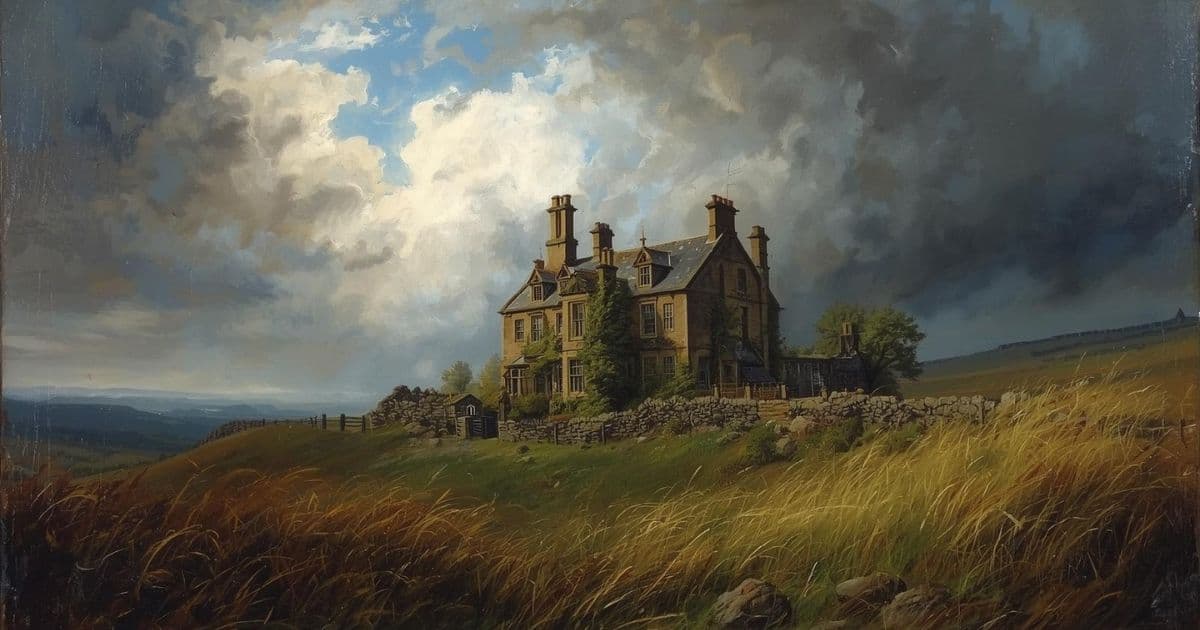
An excerpt from the original text.(complete · 1258 words)
spite of Vronsky’s apparently frivolous life in society, he was a
man who hated irregularity. In early youth in the Corps of Pages, he
had experienced the humiliation of a refusal, when he had tried, being
in difficulties, to borrow money, and since then he had never once put
himself in the same position again.
In order to keep his affairs in some sort of order, he used about five
times a year (more or less frequently, according to circumstances) to
shut himself up alone and put all his affairs into definite shape. This
he used to call his day of reckoning or faire la lessive.
On waking up the day after the races, Vronsky put on a white linen
coat, and without shaving or taking his bath, he distributed about the
table moneys, bills, and letters, and set to work. Petritsky, who knew
he was ill-tempered on such occasions, on waking up and seeing his
comrade at the writing-table, quietly dressed and went out without
getting in his way.
Every man who knows to the minutest details all the complexity of the
conditions surrounding him, cannot help imagining that the complexity
of these conditions, and the difficulty of making them clear, is
something exceptional and personal, peculiar to himself, and never
supposes that others are surrounded by just as complicated an array of
personal affairs as he is. So indeed it seemed to Vronsky. And not
without inward pride, and not without reason, he thought that any other
man would long ago have been in difficulties, would have been forced to
some dishonorable course, if he had found himself in such a difficult
position. But Vronsky felt that now especially it was essential for him
to clear up and define his position if he were to avoid getting into
difficulties.
What Vronsky attacked first as being the easiest was his pecuniary
position. Writing out on note paper in his minute hand all that he
owed, he added up the amount and found that his debts amounted to
seventeen thousand and some odd hundreds, which he left out for the
sake of clearness. Reckoning up his money and his bank book, he found
that he had left one thousand eight hundred roubles, and nothing coming
in before the New Year. Reckoning over again his list of debts, Vronsky
copied it, dividing it into three classes. In the first class he put
the debts which he would have to pay at once, or for which he must in
any case have the money ready so that on demand for payment there could
not be a moment’s delay in paying. Such debts amounted to about four
thousand: one thousand five hundred for a horse, and two thousand five
hundred as surety for a young comrade, Venovsky, who had lost that sum
to a cardsharper in Vronsky’s presence. Vronsky had wanted to pay the
money at the time (he had that amount then), but Venovsky and Yashvin
had insisted that they would pay and not Vronsky, who had not played.
That was so far well, but Vronsky knew that in this dirty business,
though his only share in it was undertaking by word of mouth to be
surety for Venovsky, it was absolutely necessary for him to have the
two thousand five hundred roubles so as to be able to fling it at the
swindler, and have no more words with him. And so for this first and
most important division he must have four thousand roubles. The second
class—eight thousand roubles—consisted of less important debts. These
were principally accounts owing in connection with his race horses, to
the purveyor of oats and hay, the English saddler, and so on. He would
have to pay some two thousand roubles on these debts too, in order to
be quite free from anxiety. The last class of debts—to shops, to
hotels, to his tailor—were such as need not be considered. So that he
needed at least six thousand roubles for current expenses, and he only
had one thousand eight hundred. For a man with one hundred thousand
roubles of revenue, which was what everyone fixed as Vronsky’s income,
such debts, one would suppose, could hardly be embarrassing; but the
fact was that he was far from having one hundred thousand. His father’s
immense property, which alone yielded a yearly income of two hundred
thousand, was left undivided between the brothers. At the time when the
elder brother, with a mass of debts, married Princess Varya Tchirkova,
the daughter of a Decembrist without any fortune whatever, Alexey had
given up to his elder brother almost the whole income from his father’s
estate, reserving for himself only twenty-five thousand a year from it.
Alexey had said at the time to his brother that that sum would be
sufficient for him until he married, which he probably never would do.
And his brother, who was in command of one of the most expensive
regiments, and was only just married, could not decline the gift. His
mother, who had her own separate property, had allowed Alexey every
year twenty thousand in addition to the twenty-five thousand he had
reserved, and Alexey had spent it all. Of late his mother, incensed
with him on account of his love affair and his leaving Moscow, had
given up sending him the money. And in consequence of this, Vronsky,
who had been in the habit of living on the scale of forty-five thousand
a year, having only received twenty thousand that year, found himself
now in difficulties. To get out of these difficulties, he could not
apply to his mother for money. Her last letter, which he had received
the day before, had particularly exasperated him by the hints in it
that she was quite ready to help him to succeed in the world and in the
army, but not to lead a life which was a scandal to all good society.
His mother’s attempt to buy him stung him to the quick and made him
feel colder than ever to her. But he could not draw back from the
generous word when it was once uttered, even though he felt now,
vaguely foreseeing certain eventualities in his intrigue with Madame
Karenina, that this generous word had been spoken thoughtlessly, and
that even though he were not married he might need all the hundred
thousand of income. But it was impossible to draw back. He had only to
recall his brother’s wife, to remember how that sweet, delightful Varya
sought, at every convenient opportunity, to remind him that she
remembered his generosity and appreciated it, to grasp the
impossibility of taking back his gift. It was as impossible as beating
a woman, stealing, or lying. One thing only could and ought to be done,
and Vronsky determined upon it without an instant’s hesitation: to
borrow money from a money-lender, ten thousand roubles, a proceeding
which presented no difficulty, to cut down his expenses generally, and
to sell his race horses. Resolving on this, he promptly wrote a note to
Rolandak, who had more than once sent to him with offers to buy horses
from him. Then he sent for the Englishman and the money-lender, and
divided what money he had according to the accounts he intended to pay.
Having finished this business, he wrote a cold and cutting answer to
his mother. Then he took out of his notebook three notes of Anna’s,
read them again, burned them, and remembering their conversation on the
previous day, he sank into meditation.
Master this chapter. Complete your experience
Purchase the complete book to access all chapters and support classic literature
As an Amazon Associate, we earn a small commission from qualifying purchases at no additional cost to you.
Available in paperback, hardcover, and e-book formats
Let's Analyse the Pattern
The more we intellectually analyze life's meaning, the less meaningful life actually feels.
Why This Matters
Connect literature to life
This chapter teaches how to recognize when thinking about life becomes a substitute for actually living it.
Practice This Today
This week, notice when you're analyzing your choices instead of making them—set a timer for worry sessions, then choose one concrete action.
Now let's explore the literary elements.
Key Quotes & Analysis
"Without knowing what I am and why I am here, life's impossible."
Context: During his deep philosophical struggle about existence
This captures the heart of existential crisis - feeling unable to function without understanding life's ultimate purpose. It shows how overthinking fundamental questions can paralyze daily living. Levin's mistake is believing he needs cosmic answers before he can live authentically.
In Today's Words:
I can't figure out how to live my life if I don't know what the point of it all is.
"The whole world of thought seemed to him divided into two camps."
Context: Describing Levin's mental state while reading philosophy
Shows how intellectual searching can create false either-or thinking that doesn't reflect real life's complexity. Levin is trapped in abstract categories instead of embracing life's messiness. This black-and-white thinking prevents him from finding practical wisdom.
In Today's Words:
Everything seemed like it had to be one way or the other, with no middle ground.
"He felt himself, and did not want to feel himself, on the brink of despair."
Context: Levin recognizing how close he is to complete hopelessness
Captures the dangerous edge of existential crisis where questioning becomes self-destructive. The phrase 'did not want to feel himself' shows his attempt to escape through numbness. This moment reveals how philosophical searching can become a form of self-torture rather than enlightenment.
In Today's Words:
He could feel himself falling into a dark place and was trying not to think about how bad it was getting.
Thematic Threads
Purpose
In This Chapter
Levin searches for life's meaning in philosophy books but finds it feels empty compared to actual work and relationships
Development
Building from his earlier spiritual searching after his brother's death
In Your Life:
You might recognize this when you spend more time reading about how to live than actually living.
Class
In This Chapter
Levin finds more authentic connection with peasants doing real work than with intellectual theories
Development
Continues his pattern of finding truth in simple, working-class wisdom rather than aristocratic philosophizing
In Your Life:
You might notice how overthinking problems often comes from privilege—people struggling to survive don't have time for existential crises.
Identity
In This Chapter
Levin struggles between seeing himself as a thinking person versus a doing person
Development
Deepening his ongoing identity crisis about who he really is
In Your Life:
You might feel torn between who you think you should be and who you actually are when you're just living your life.
Personal Growth
In This Chapter
Levin begins to understand that growth comes from engagement with life, not analysis of it
Development
Represents a turning point in his character development toward practical wisdom
In Your Life:
You might realize your biggest breakthroughs come from doing things, not thinking about doing things.
You now have the context. Time to form your own thoughts.
Discussion Questions
- 1
What happens to Levin when he reads philosophy books versus when he works on his farm?
analysis • surface - 2
Why do you think thinking too much about life's meaning makes Levin feel worse instead of better?
analysis • medium - 3
Where do you see people today getting stuck analyzing their lives instead of living them?
application • medium - 4
When you catch yourself overthinking life's purpose, what specific actions could you take to break that cycle?
application • deep - 5
What does Levin's struggle teach us about the difference between finding meaning and creating meaning?
reflection • deep
Critical Thinking Exercise
Track Your Analysis Paralysis
For the next three days, notice when you're analyzing your life versus living it. Keep a simple tally: mark 'A' when you're analyzing (reading about productivity, questioning your choices, scrolling social media comparing lives) and 'L' when you're living (working, talking with people, doing something that requires focus). At the end of each day, count your marks and notice the pattern.
Consider:
- •Pay attention to how you feel during 'A' moments versus 'L' moments
- •Notice what triggers shift you from living to analyzing
- •Observe whether analysis actually leads to better decisions or just more confusion
Journaling Prompt
Write about a time when you were so busy analyzing whether you were happy that you forgot to actually enjoy what you were doing. What would have happened if you'd just stayed present in that moment?
Coming Up Next...
Chapter 89
Levin's philosophical crisis deepens as he contemplates a drastic decision that could change everything. Meanwhile, his relationship with those closest to him hangs in the balance as his inner turmoil threatens to spill over into his daily life.