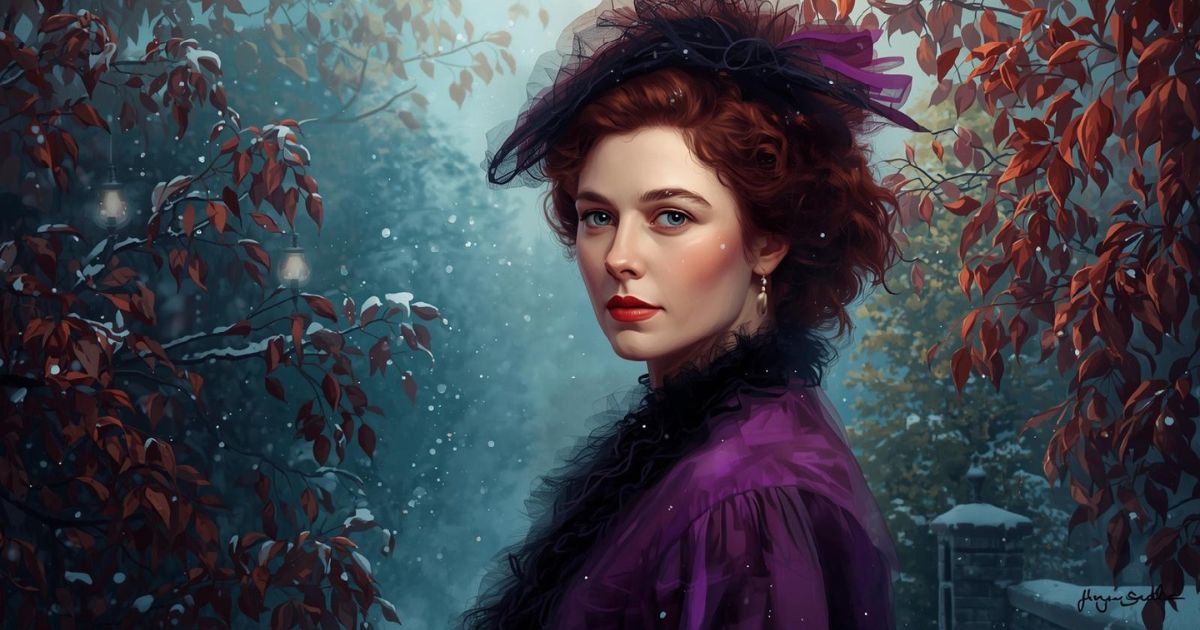
An excerpt from the original text.(complete · 840 words)
he first person to meet Anna at home was her son. He dashed down the
stairs to her, in spite of the governess’s call, and with desperate joy
shrieked: “Mother! mother!” Running up to her, he hung on her neck.
“I told you it was mother!” he shouted to the governess. “I knew!”
And her son, like her husband, aroused in Anna a feeling akin to
disappointment. She had imagined him better than he was in reality. She
had to let herself drop down to the reality to enjoy him as he really
was. But even as he was, he was charming, with his fair curls, his blue
eyes, and his plump, graceful little legs in tightly pulled-up
stockings. Anna experienced almost physical pleasure in the sensation
of his nearness, and his caresses, and moral soothing, when she met his
simple, confiding, and loving glance, and heard his naïve questions.
Anna took out the presents Dolly’s children had sent him, and told her
son what sort of little girl was Tanya at Moscow, and how Tanya could
read, and even taught the other children.
“Why, am I not so nice as she?” asked Seryozha.
“To me you’re nicer than anyone in the world.”
“I know that,” said Seryozha, smiling.
Anna had not had time to drink her coffee when the Countess Lidia
Ivanovna was announced. The Countess Lidia Ivanovna was a tall, stout
woman, with an unhealthily sallow face and splendid, pensive black
eyes. Anna liked her, but today she seemed to be seeing her for the
first time with all her defects.
“Well, my dear, so you took the olive branch?” inquired Countess Lidia
Ivanovna, as soon as she came into the room.
“Yes, it’s all over, but it was all much less serious than we had
supposed,” answered Anna. “My belle-sœur is in general too hasty.”
But Countess Lidia Ivanovna, though she was interested in everything
that did not concern her, had a habit of never listening to what
interested her; she interrupted Anna:
“Yes, there’s plenty of sorrow and evil in the world. I am so worried
today.”
“Oh, why?” asked Anna, trying to suppress a smile.
“I’m beginning to be weary of fruitlessly championing the truth, and
sometimes I’m quite unhinged by it. The Society of the Little Sisters”
(this was a religiously-patriotic, philanthropic institution) “was
going splendidly, but with these gentlemen it’s impossible to do
anything,” added Countess Lidia Ivanovna in a tone of ironical
submission to destiny. “They pounce on the idea, and distort it, and
then work it out so pettily and unworthily. Two or three people, your
husband among them, understand all the importance of the thing, but the
others simply drag it down. Yesterday Pravdin wrote to me....”
Pravdin was a well-known Panslavist abroad, and Countess Lidia Ivanovna
described the purport of his letter.
Then the countess told her of more disagreements and intrigues against
the work of the unification of the churches, and departed in haste, as
she had that day to be at the meeting of some society and also at the
Slavonic committee.
“It was all the same before, of course; but why was it I didn’t notice
it before?” Anna asked herself. “Or has she been very much irritated
today? It’s really ludicrous; her object is doing good; she a
Christian, yet she’s always angry; and she always has enemies, and
always enemies in the name of Christianity and doing good.”
After Countess Lidia Ivanovna another friend came, the wife of a chief
secretary, who told her all the news of the town. At three o’clock she
too went away, promising to come to dinner. Alexey Alexandrovitch was
at the ministry. Anna, left alone, spent the time till dinner in
assisting at her son’s dinner (he dined apart from his parents) and in
putting her things in order, and in reading and answering the notes and
letters which had accumulated on her table.
The feeling of causeless shame, which she had felt on the journey, and
her excitement, too, had completely vanished. In the habitual
conditions of her life she felt again resolute and irreproachable.
She recalled with wonder her state of mind on the previous day. “What
was it? Nothing. Vronsky said something silly, which it was easy to put
a stop to, and I answered as I ought to have done. To speak of it to my
husband would be unnecessary and out of the question. To speak of it
would be to attach importance to what has no importance.” She
remembered how she had told her husband of what was almost a
declaration made her at Petersburg by a young man, one of her husband’s
subordinates, and how Alexey Alexandrovitch had answered that every
woman living in the world was exposed to such incidents, but that he
had the fullest confidence in her tact, and could never lower her and
himself by jealousy. “So then there’s no reason to speak of it? And
indeed, thank God, there’s nothing to speak of,” she told herself.
Master this chapter. Complete your experience
Purchase the complete book to access all chapters and support classic literature
As an Amazon Associate, we earn a small commission from qualifying purchases at no additional cost to you.
Available in paperback, hardcover, and e-book formats
Let's Analyse the Pattern
When relationships cut off from community support turn inward and consume themselves through possessiveness and impossible expectations.
Why This Matters
Connect literature to life
This chapter teaches how to recognize when love is being used to justify cutting off healthy connections and support systems.
Practice This Today
This week, notice when someone asks you to choose between them and other relationships, or when you feel like you're becoming someone's entire emotional world.
Now let's explore the literary elements.
Key Quotes & Analysis
"Love those that hate you, but to love those one hates is impossible."
Context: Anna reflects on how her situation has made her bitter toward the society that rejects her
This reveals how Anna's isolation has turned her love into resentment. She's caught between needing society's acceptance and hating them for rejecting her. The quote shows how external pressure can corrupt even our capacity for love.
In Today's Words:
It's easy to love people who love you back, but impossible to love people who make you hate yourself.
"He had long been wanting not to deceive himself that he was satisfied with his position."
Context: Vronsky finally admits to himself that he's not happy with how his life has turned out
This shows Vronsky's growing self-awareness about his dissatisfaction. He's been lying to himself about being content, but the truth is breaking through. It reveals how people can stay in situations by refusing to acknowledge their real feelings.
In Today's Words:
He'd been lying to himself for a long time about being okay with how things turned out.
"She felt that the love between them was becoming something burdensome."
Context: Anna realizes their passionate love has become a weight rather than a joy
This captures the central tragedy - that their great love has become their prison. What once felt like freedom now feels like obligation and pressure. It shows how external circumstances can poison even the deepest feelings.
In Today's Words:
Their love had stopped feeling like a gift and started feeling like a burden they both had to carry.
Thematic Threads
Isolation
In This Chapter
Anna and Vronsky's relationship exists completely cut off from social acceptance, making them dependent solely on each other
Development
Evolved from earlier social rejection into complete emotional isolation that's poisoning their love
In Your Life:
You might recognize this when a relationship demands you cut ties with friends or family 'for love.'
Social Expectations
In This Chapter
Society's refusal to accept their relationship creates impossible pressure that turns their love toxic
Development
The social consequences that seemed manageable early on now feel crushing and inescapable
In Your Life:
You face this when your choices put you outside your community's acceptance and you feel the weight of constant judgment.
Identity
In This Chapter
Anna has lost her social identity and Vronsky has lost his freedom, leaving both questioning who they are
Development
Both characters' sense of self, previously clear, is now completely destabilized by their choices
In Your Life:
This happens when a major life change makes you feel like you don't know who you are anymore.
Responsibility
In This Chapter
Vronsky feels crushing responsibility for Anna's happiness while resenting the burden this creates
Development
What began as protective devotion has become an impossible weight that breeds resentment
In Your Life:
You experience this when someone makes you responsible for their entire emotional well-being.
Passion vs. Sustainability
In This Chapter
The intense passion that brought them together now feels suffocating and unsustainable
Development
The fire that seemed like their salvation is now burning them both alive
In Your Life:
This appears when the very intensity that attracted you to someone becomes the thing that's destroying the relationship.
You now have the context. Time to form your own thoughts.
Discussion Questions
- 1
What specific changes do you see in Anna and Vronsky's relationship compared to when they first fell in love?
analysis • surface - 2
Why does their isolation from society make their love feel suffocating instead of freeing?
analysis • medium - 3
Where do you see couples today cutting themselves off from friends and family 'for love'? How does that usually end?
application • medium - 4
If you were Anna's friend, what advice would you give her about maintaining her relationship while reconnecting with community?
application • deep - 5
What does this chapter reveal about the difference between healthy interdependence and toxic codependence?
reflection • deep
Critical Thinking Exercise
Map Your Relationship Ecosystem
Draw a simple diagram of your most important relationship (romantic, family, or friendship). Put that person in the center, then map all the other people and activities that feed into your life and theirs. Look at the connections—are you both drawing energy from multiple sources, or is everything flowing through just one relationship?
Consider:
- •Notice if either person has become the sole source of validation or social connection for the other
- •Identify any relationships that were sacrificed 'for love' and whether that strengthened or weakened the primary bond
- •Consider whether your relationship encourages or discourages connections with others
Journaling Prompt
Write about a time when you felt suffocated in a relationship or when someone became too dependent on you. What warning signs did you notice, and how would you handle it differently now?
Coming Up Next...
Chapter 33
As tensions between Anna and Vronsky continue to escalate, Anna makes a decision that will change everything. The weight of her choices finally pushes her toward a moment of reckoning that neither of them saw coming.