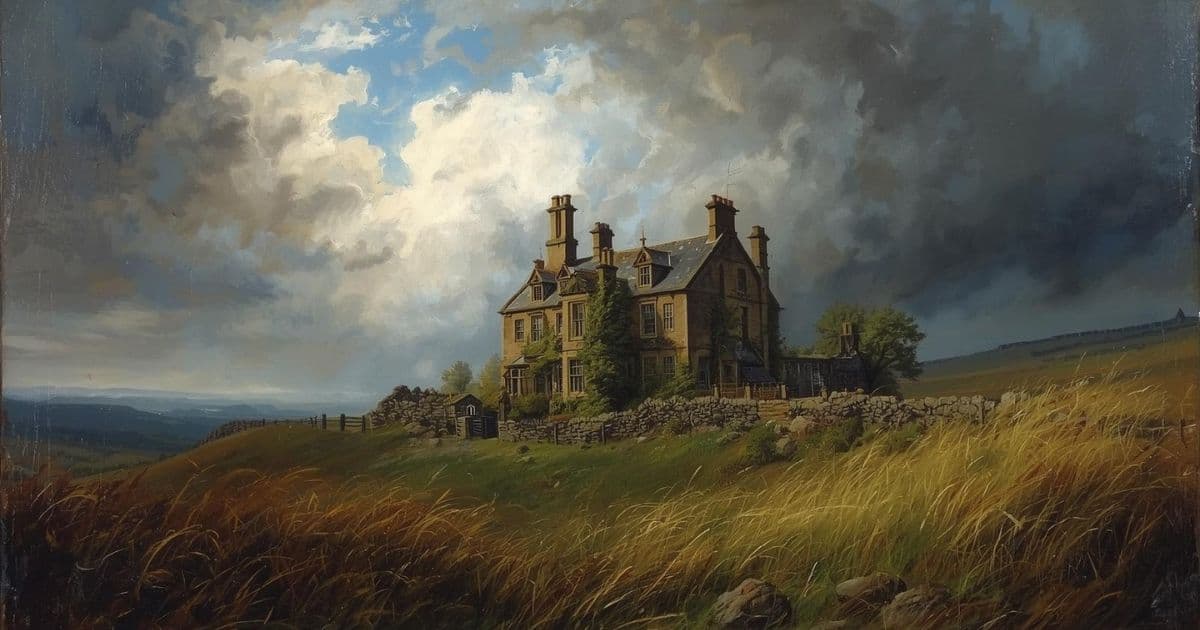
An excerpt from the original text.(complete · 1130 words)
onsky and Anna spent the whole summer and part of the winter in the
country, living in just the same condition, and still taking no steps
to obtain a divorce. It was an understood thing between them that they
should not go away anywhere; but both felt, the longer they lived
alone, especially in the autumn, without guests in the house, that they
could not stand this existence, and that they would have to alter it.
Their life was apparently such that nothing better could be desired.
They had the fullest abundance of everything; they had a child, and
both had occupation. Anna devoted just as much care to her appearance
when they had no visitors, and she did a great deal of reading, both of
novels and of what serious literature was in fashion. She ordered all
the books that were praised in the foreign papers and reviews she
received, and read them with that concentrated attention which is only
given to what is read in seclusion. Moreover, every subject that was of
interest to Vronsky, she studied in books and special journals, so that
he often went straight to her with questions relating to agriculture or
architecture, sometimes even with questions relating to horse-breeding
or sport. He was amazed at her knowledge, her memory, and at first was
disposed to doubt it, to ask for confirmation of her facts; and she
would find what he asked for in some book, and show it to him.
The building of the hospital, too, interested her. She did not merely
assist, but planned and suggested a great deal herself. But her chief
thought was still of herself—how far she was dear to Vronsky, how far
she could make up to him for all he had given up. Vronsky appreciated
this desire not only to please, but to serve him, which had become the
sole aim of her existence, but at the same time he wearied of the
loving snares in which she tried to hold him fast. As time went on, and
he saw himself more and more often held fast in these snares, he had an
ever growing desire, not so much to escape from them, as to try whether
they hindered his freedom. Had it not been for this growing desire to
be free, not to have scenes every time he wanted to go to the town to a
meeting or a race, Vronsky would have been perfectly satisfied with his
life. The rôle he had taken up, the rôle of a wealthy landowner, one of
that class which ought to be the very heart of the Russian aristocracy,
was entirely to his taste; and now, after spending six months in that
character, he derived even greater satisfaction from it. And his
management of his estate, which occupied and absorbed him more and
more, was most successful. In spite of the immense sums cost him by the
hospital, by machinery, by cows ordered from Switzerland, and many
other things, he was convinced that he was not wasting, but increasing
his substance. In all matters affecting income, the sales of timber,
wheat, and wool, the letting of lands, Vronsky was hard as a rock, and
knew well how to keep up prices. In all operations on a large scale on
this and his other estates, he kept to the simplest methods involving
no risk, and in trifling details he was careful and exacting to an
extreme degree. In spite of all the cunning and ingenuity of the German
steward, who would try to tempt him into purchases by making his
original estimate always far larger than really required, and then
representing to Vronsky that he might get the thing cheaper, and so
make a profit, Vronsky did not give in. He listened to his steward,
cross-examined him, and only agreed to his suggestions when the
implement to be ordered or constructed was the very newest, not yet
known in Russia, and likely to excite wonder. Apart from such
exceptions, he resolved upon an increased outlay only where there was a
surplus, and in making such an outlay he went into the minutest
details, and insisted on getting the very best for his money; so that
by the method on which he managed his affairs, it was clear that he was
not wasting, but increasing his substance.
In October there were the provincial elections in the Kashinsky
province, where were the estates of Vronsky, Sviazhsky, Koznishev,
Oblonsky, and a small part of Levin’s land.
These elections were attracting public attention from several
circumstances connected with them, and also from the people taking part
in them. There had been a great deal of talk about them, and great
preparations were being made for them. Persons who never attended the
elections were coming from Moscow, from Petersburg, and from abroad to
attend these. Vronsky had long before promised Sviazhsky to go to them.
Before the elections Sviazhsky, who often visited Vozdvizhenskoe, drove
over to fetch Vronsky. On the day before there had been almost a
quarrel between Vronsky and Anna over this proposed expedition. It was
the very dullest autumn weather, which is so dreary in the country, and
so, preparing himself for a struggle, Vronsky, with a hard and cold
expression, informed Anna of his departure as he had never spoken to
her before. But, to his surprise, Anna accepted the information with
great composure, and merely asked when he would be back. He looked
intently at her, at a loss to explain this composure. She smiled at his
look. He knew that way she had of withdrawing into herself, and knew
that it only happened when she had determined upon something without
letting him know her plans. He was afraid of this; but he was so
anxious to avoid a scene that he kept up appearances, and half
sincerely believed in what he longed to believe in—her reasonableness.
“I hope you won’t be dull?”
“I hope not,” said Anna. “I got a box of books yesterday from
Gautier’s. No, I shan’t be dull.”
“She’s trying to take that tone, and so much the better,” he thought,
“or else it would be the same thing over and over again.”
And he set off for the elections without appealing to her for a candid
explanation. It was the first time since the beginning of their
intimacy that he had parted from her without a full explanation. From
one point of view this troubled him, but on the other side he felt that
it was better so. “At first there will be, as this time, something
undefined kept back, and then she will get used to it. In any case I
can give up anything for her, but not my masculine independence,” he
thought.
Master this chapter. Complete your experience
Purchase the complete book to access all chapters and support classic literature
As an Amazon Associate, we earn a small commission from qualifying purchases at no additional cost to you.
Available in paperback, hardcover, and e-book formats
Let's Analyse the Pattern
Physical work and simple connection provide mental clarity that pure thinking cannot achieve during times of overwhelm.
Why This Matters
Connect literature to life
This chapter teaches how to distinguish between healthy work-based coping and destructive avoidance patterns.
Practice This Today
This week, notice when physical tasks help clear your mental fog—cooking, cleaning, organizing—and intentionally choose these activities when your thoughts start racing.
Now let's explore the literary elements.
Key Quotes & Analysis
"The longer Levin mowed, the oftener he experienced those moments of oblivion when his arms no longer seemed to swing the scythe, but the scythe itself his whole body."
Context: Levin loses himself in the rhythm of cutting hay
This describes the meditative state that comes from repetitive physical work. Levin finds temporary peace when his overthinking mind surrenders to his body's rhythm and the work itself takes over.
In Today's Words:
He got so into the zone that he wasn't even thinking anymore - his body just knew what to do
"He felt a pleasant coolness, and looked up at the sky, expecting to see a cloud. But there was no cloud; it was only a swallow flying low and almost touching him with its wings."
Context: A moment of natural beauty interrupts Levin's work
Shows how physical labor opens Levin to simple pleasures and present-moment awareness. These small natural moments provide relief from his mental torment about life's big questions.
In Today's Words:
He actually noticed something beautiful happening right in front of him instead of being stuck in his head
"When they had mowed two more rows, the old man stopped again and began whetting his scythe. Levin straightened himself, and drawing a deep breath looked round."
Context: Taking a break during the intense hay-cutting work
The natural rhythm of work and rest that the peasants understand instinctively. Levin is learning to follow their lead and accept the body's needs rather than pushing through with pure willpower.
In Today's Words:
The older guy knew when it was time to stop and sharpen his tools, so Levin took a breather too
Thematic Threads
Class
In This Chapter
Levin notices the peasants' natural acceptance versus his intellectual torment
Development
Evolved from earlier social observations to deeper recognition of different ways of knowing
In Your Life:
You might notice how people from different backgrounds handle stress and uncertainty differently than you do
Identity
In This Chapter
Levin seeks his authentic self through physical labor rather than social position
Development
Continuing his journey away from inherited expectations toward personal truth
In Your Life:
You might find your truest self emerges during hands-on work rather than when trying to impress others
Personal Growth
In This Chapter
Growth comes through physical engagement and community connection, not just self-analysis
Development
Building on earlier attempts to find meaning through different paths
In Your Life:
You might discover that working alongside others teaches you things about yourself that solitary reflection cannot
Human Relationships
In This Chapter
Shared labor creates genuine connection without need for words or social performance
Development
Contrasts with earlier struggles in formal social relationships
In Your Life:
You might find deeper connections with people when working toward common goals rather than just talking
You now have the context. Time to form your own thoughts.
Discussion Questions
- 1
What specific actions does Levin take when he's overwhelmed by his thoughts about life's meaning?
analysis • surface - 2
Why does physical labor provide relief for Levin when thinking and analyzing don't?
analysis • medium - 3
Where do you see people today using physical work to deal with stress or confusion in their lives?
application • medium - 4
When you're stuck on a problem or feeling overwhelmed, what kind of physical activity helps you think more clearly?
application • deep - 5
What does the difference between Levin's mental struggle and the peasants' acceptance teach us about different ways of finding peace?
reflection • deep
Critical Thinking Exercise
Map Your Productive Escape Routes
Create a personal inventory of physical activities that help quiet your racing mind. Think about times when you felt overwhelmed or stuck, then found clarity through doing something with your hands or body. List these activities and note what makes each one effective for you.
Consider:
- •Consider both work tasks and personal activities that engage your body
- •Think about the rhythm, repetition, or focus required in each activity
- •Notice which activities work best for different types of mental overwhelm
Journaling Prompt
Write about a specific time when you were mentally stuck or overwhelmed, then found unexpected clarity through physical work or activity. What changed in your thinking, and how can you use this pattern intentionally in the future?
Coming Up Next...
Chapter 183
Levin's physical exhaustion brings unexpected clarity, but a chance encounter will force him to confront whether manual labor can truly answer the deeper questions consuming his soul.