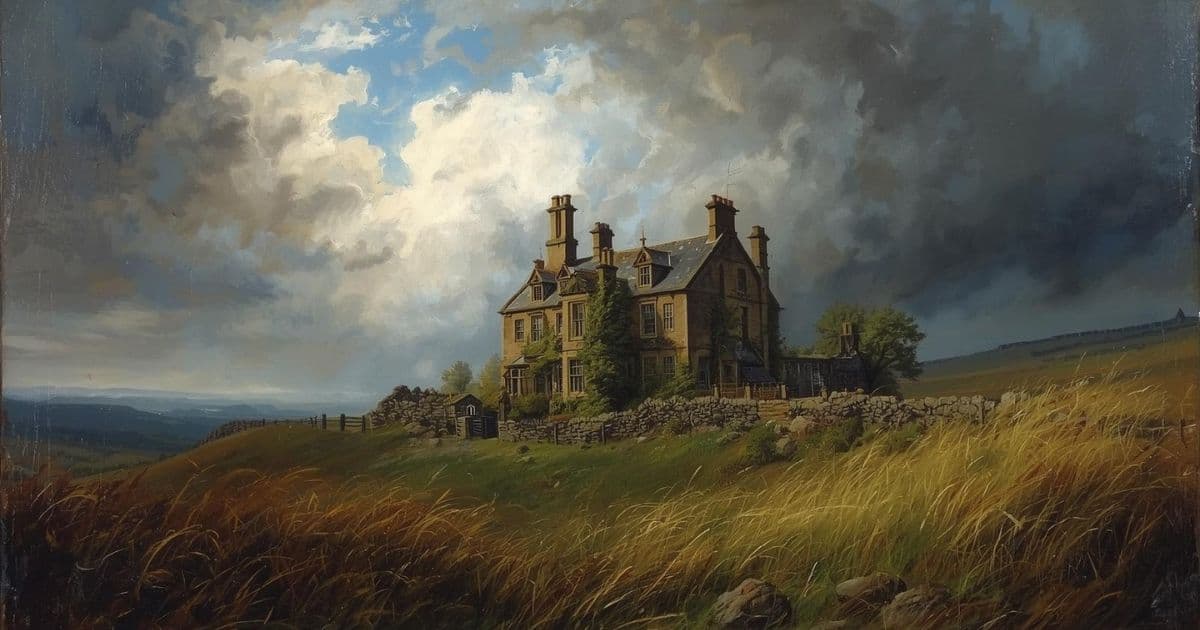
An excerpt from the original text.(complete · 1426 words)
nna looked at Dolly’s thin, care-worn face, with its wrinkles filled
with dust from the road, and she was on the point of saying what she
was thinking, that is, that Dolly had got thinner. But, conscious that
she herself had grown handsomer, and that Dolly’s eyes were telling her
so, she sighed and began to speak about herself.
“You are looking at me,” she said, “and wondering how I can be happy in
my position? Well! it’s shameful to confess, but I ... I’m inexcusably
happy. Something magical has happened to me, like a dream, when you’re
frightened, panic-stricken, and all of a sudden you wake up and all the
horrors are no more. I have waked up. I have lived through the misery,
the dread, and now for a long while past, especially since we’ve been
here, I’ve been so happy!...” she said, with a timid smile of inquiry
looking at Dolly.
“How glad I am!” said Dolly smiling, involuntarily speaking more coldly
than she wanted to. “I’m very glad for you. Why haven’t you written to
me?”
“Why?... Because I hadn’t the courage.... You forget my position....”
“To me? Hadn’t the courage? If you knew how I ... I look at....”
Darya Alexandrovna wanted to express her thoughts of the morning, but
for some reason it seemed to her now out of place to do so.
“But of that we’ll talk later. What’s this, what are all these
buildings?” she asked, wanting to change the conversation and pointing
to the red and green roofs that came into view behind the green hedges
of acacia and lilac. “Quite a little town.”
But Anna did not answer.
“No, no! How do you look at my position, what do you think of it?” she
asked.
“I consider....” Darya Alexandrovna was beginning, but at that instant
Vassenka Veslovsky, having brought the cob to gallop with the right leg
foremost, galloped past them, bumping heavily up and down in his short
jacket on the chamois leather of the side saddle. “He’s doing it, Anna
Arkadyevna!” he shouted.
Anna did not even glance at him; but again it seemed to Darya
Alexandrovna out of place to enter upon such a long conversation in the
carriage, and so she cut short her thought.
“I don’t think anything,” she said, “but I always loved you, and if one
loves anyone, one loves the whole person, just as they are and not as
one would like them to be....”
Anna, taking her eyes off her friend’s face and dropping her eyelids
(this was a new habit Dolly had not seen in her before), pondered,
trying to penetrate the full significance of the words. And obviously
interpreting them as she would have wished, she glanced at Dolly.
“If you had any sins,” she said, “they would all be forgiven you for
your coming to see me and these words.”
And Dolly saw that tears stood in her eyes. She pressed Anna’s hand in
silence.
“Well, what are these buildings? How many there are of them!” After a
moment’s silence she repeated her question.
“These are the servants’ houses, barns, and stables,” answered Anna.
“And there the park begins. It had all gone to ruin, but Alexey had
everything renewed. He is very fond of this place, and, what I never
expected, he has become intensely interested in looking after it. But
his is such a rich nature! Whatever he takes up, he does splendidly. So
far from being bored by it, he works with passionate interest. He—with
his temperament as I know it—he has become careful and businesslike, a
first-rate manager, he positively reckons every penny in his management
of the land. But only in that. When it’s a question of tens of
thousands, he doesn’t think of money.” She spoke with that gleefully
sly smile with which women often talk of the secret characteristics
only known to them—of those they love. “Do you see that big building?
that’s the new hospital. I believe it will cost over a hundred
thousand; that’s his hobby just now. And do you know how it all came
about? The peasants asked him for some meadowland, I think it was, at a
cheaper rate, and he refused, and I accused him of being miserly. Of
course it was not really because of that, but everything together, he
began this hospital to prove, do you see, that he was not miserly about
money. C’est une petitesse, if you like, but I love him all the more
for it. And now you’ll see the house in a moment. It was his
grandfather’s house, and he has had nothing changed outside.”
“How beautiful!” said Dolly, looking with involuntary admiration at the
handsome house with columns, standing out among the different-colored
greens of the old trees in the garden.
“Isn’t it fine? And from the house, from the top, the view is
wonderful.”
They drove into a courtyard strewn with gravel and bright with flowers,
in which two laborers were at work putting an edging of stones round
the light mould of a flower bed, and drew up in a covered entry.
“Ah, they’re here already!” said Anna, looking at the saddle horses,
which were just being led away from the steps. “It is a nice horse,
isn’t it? It’s my cob; my favorite. Lead him here and bring me some
sugar. Where is the count?” she inquired of two smart footmen who
darted out. “Ah, there he is!” she said, seeing Vronsky coming to meet
her with Veslovsky.
“Where are you going to put the princess?” said Vronsky in French,
addressing Anna, and without waiting for a reply, he once more greeted
Darya Alexandrovna, and this time he kissed her hand. “I think the big
balcony room.”
“Oh, no, that’s too far off! Better in the corner room, we shall see
each other more. Come, let’s go up,” said Anna, as she gave her
favorite horse the sugar the footman had brought her.
“Et vous oubliez votre devoir,” she said to Veslovsky, who came out
too on the steps.
“Pardon, j’en ai tout plein les poches,” he answered, smiling,
putting his fingers in his waistcoat pocket.
“Mais vous venez trop tard,” she said, rubbing her handkerchief on
her hand, which the horse had made wet in taking the sugar.
Anna turned to Dolly. “You can stay some time? For one day only? That’s
impossible!”
“I promised to be back, and the children....” said Dolly, feeling
embarrassed both because she had to get her bag out of the carriage,
and because she knew her face must be covered with dust.
“No, Dolly, darling!... Well, we’ll see. Come along, come along!” and
Anna led Dolly to her room.
That room was not the smart guest chamber Vronsky had suggested, but
the one of which Anna had said that Dolly would excuse it. And this
room, for which excuse was needed, was more full of luxury than any in
which Dolly had ever stayed, a luxury that reminded her of the best
hotels abroad.
“Well, darling, how happy I am!” Anna said, sitting down in her riding
habit for a moment beside Dolly. “Tell me about all of you. Stiva I had
only a glimpse of, and he cannot tell one about the children. How is my
favorite, Tanya? Quite a big girl, I expect?”
“Yes, she’s very tall,” Darya Alexandrovna answered shortly, surprised
herself that she should respond so coolly about her children. “We are
having a delightful stay at the Levins’,” she added.
“Oh, if I had known,” said Anna, “that you do not despise me!... You
might have all come to us. Stiva’s an old friend and a great friend of
Alexey’s, you know,” she added, and suddenly she blushed.
“Yes, but we are all....” Dolly answered in confusion.
“But in my delight I’m talking nonsense. The one thing, darling, is
that I am so glad to have you!” said Anna, kissing her again. “You
haven’t told me yet how and what you think about me, and I keep wanting
to know. But I’m glad you will see me as I am. The chief thing I
shouldn’t like would be for people to imagine I want to prove anything.
I don’t want to prove anything; I merely want to live, to do no one
harm but myself. I have the right to do that, haven’t I? But it is a
big subject, and we’ll talk over everything properly later. Now I’ll go
and dress and send a maid to you.”
Master this chapter. Complete your experience
Purchase the complete book to access all chapters and support classic literature
As an Amazon Associate, we earn a small commission from qualifying purchases at no additional cost to you.
Available in paperback, hardcover, and e-book formats
Let's Analyse the Pattern
The belief that physical exhaustion can silence emotional or mental turmoil.
Why This Matters
Connect literature to life
This chapter teaches how to identify when excessive busyness is actually emotional avoidance in disguise.
Practice This Today
This week, notice when you suddenly get 'too busy' to deal with something—that's often your mind trying to outrun a problem that needs direct attention.
Now let's explore the literary elements.
Key Quotes & Analysis
"He wanted to forget himself in sleep, in the work, in anything that would prevent him from thinking."
Context: As Levin pushes himself harder in the fields
This reveals the desperate nature of his attempt to escape his thoughts. He's not working to accomplish something positive, but to run away from his inner turmoil. The phrase 'forget himself' shows how completely he wants to disappear from his own consciousness.
In Today's Words:
He just wanted to stay so busy he couldn't think about his problems.
"The old peasant worked on steadily, without haste, without rest, as if play."
Context: Levin observing how naturally the peasants work
This contrast highlights what Levin is missing - the ability to work without internal struggle. The peasant's work flows like play because he's not fighting himself mentally while doing it. This natural rhythm is what Levin desperately wants but can't achieve.
In Today's Words:
The old guy just worked steadily, like it was no big deal, while Levin was making it way too complicated.
"The harder he worked, the more clearly he felt that the questions that tormented him remained unanswered."
Context: After hours of exhausting labor
This is the crushing realization that his strategy isn't working. Physical exhaustion can't solve mental problems. The irony is that his desperate attempt to not think actually makes him more aware of what he's trying to avoid.
In Today's Words:
No matter how tired he got, the thoughts that were eating at him wouldn't go away.
Thematic Threads
Class
In This Chapter
Levin envies the peasants' apparent contentment and natural acceptance of life's routines
Development
Continues his idealization of working-class simplicity as solution to aristocratic overthinking
In Your Life:
You might romanticize others' lives, thinking they have some secret to happiness you lack
Identity
In This Chapter
Levin tries to transform himself through physical labor, hoping to become someone who doesn't question existence
Development
His identity crisis deepens as he attempts to escape rather than integrate his intellectual nature
In Your Life:
You might try to become a completely different person instead of working with who you actually are
Personal Growth
In This Chapter
Levin mistakes avoidance for progress, believing that working harder equals growing stronger
Development
Shows how growth often requires facing discomfort rather than fleeing from it
In Your Life:
You might confuse staying busy with making actual progress on your problems
Human Relationships
In This Chapter
Levin observes the peasants from the outside, seeking their peace but remaining fundamentally separate
Development
Highlights how isolation compounds suffering and how connection might offer real solutions
In Your Life:
You might try to solve internal struggles alone when reaching out to others could provide perspective
You now have the context. Time to form your own thoughts.
Discussion Questions
- 1
What is Levin trying to accomplish by throwing himself into physical labor with the peasants?
analysis • surface - 2
Why does Levin believe that exhausting his body will quiet his mind, and why doesn't this strategy work?
analysis • medium - 3
Where do you see people today using busyness or physical exhaustion to avoid dealing with emotional problems?
application • medium - 4
When you're trying to avoid difficult thoughts or feelings, what healthier strategies could you use instead of just staying busy?
application • deep - 5
What does Levin's failed attempt to outwork his problems reveal about the difference between physical and emotional healing?
reflection • deep
Critical Thinking Exercise
Map Your Avoidance Patterns
Think about the last time you felt overwhelmed or upset about something important. Write down what you did instead of addressing the problem directly. Did you clean obsessively? Work extra hours? Binge-watch shows? Exercise until you dropped? Now trace the pattern: What were you really trying not to think about?
Consider:
- •Notice the difference between productive activity and avoidance activity
- •Consider whether your 'solution' actually made the original problem better or worse
- •Think about how much energy you spent avoiding versus how much it would have taken to face the issue directly
Journaling Prompt
Write about a time when you successfully faced a difficult situation head-on instead of trying to outrun it. What made the difference in your approach, and what did you learn about yourself?
Coming Up Next...
Chapter 176
Despite his exhaustion, Levin's questions about life's meaning refuse to stay buried. A chance conversation with one of his workers might offer the perspective he's been desperately seeking.