
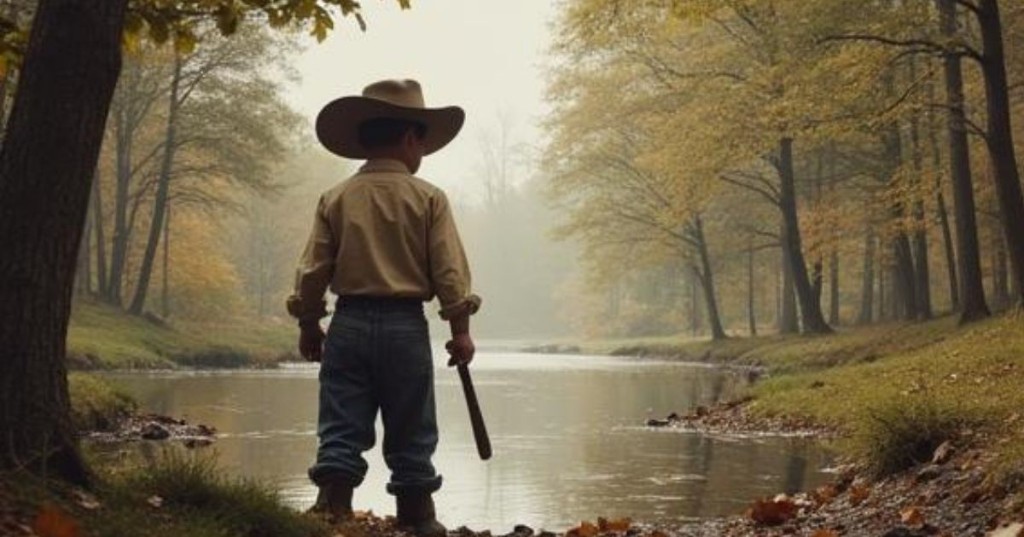
An excerpt from the original text.(complete · 2577 words)
bout noon the next day the boys arrived at the dead tree; they had come
for their tools. Tom was impatient to go to the haunted house; Huck was
measurably so, also—but suddenly said:
“Lookyhere, Tom, do you know what day it is?”
Tom mentally ran over the days of the week, and then quickly lifted his
eyes with a startled look in them—
“My! I never once thought of it, Huck!”
“Well, I didn’t neither, but all at once it popped onto me that it was
Friday.”
“Blame it, a body can’t be too careful, Huck. We might ’a’ got into an
awful scrape, tackling such a thing on a Friday.”
“Might! Better say we would! There’s some lucky days, maybe, but
Friday ain’t.”
“Any fool knows that. I don’t reckon you was the first that found it
out, Huck.”
“Well, I never said I was, did I? And Friday ain’t all, neither. I had a
rotten bad dream last night—dreampt about rats.”
“No! Sure sign of trouble. Did they fight?”
“No.”
“Well, that’s good, Huck. When they don’t fight it’s only a sign that
there’s trouble around, you know. All we got to do is to look mighty
sharp and keep out of it. We’ll drop this thing for today, and play. Do
you know Robin Hood, Huck?”
“No. Who’s Robin Hood?”
“Why, he was one of the greatest men that was ever in England—and the
best. He was a robber.”
“Cracky, I wisht I was. Who did he rob?”
“Only sheriffs and bishops and rich people and kings, and such like. But
he never bothered the poor. He loved ’em. He always divided up with ’em
perfectly square.”
“Well, he must ’a’ been a brick.”
“I bet you he was, Huck. Oh, he was the noblest man that ever was.
They ain’t any such men now, I can tell you. He could lick any man in
England, with one hand tied behind him; and he could take his yew bow
and plug a ten-cent piece every time, a mile and a half.”
“What’s a yew bow?”
“I don’t know. It’s some kind of a bow, of course. And if he hit that
dime only on the edge he would set down and cry—and curse. But we’ll
play Robin Hood—it’s nobby fun. I’ll learn you.”
“I’m agreed.”
So they played Robin Hood all the afternoon, now and then casting a
yearning eye down upon the haunted house and passing a remark about the
morrow’s prospects and possibilities there. As the sun began to sink
into the west they took their way homeward athwart the long shadows
of the trees and soon were buried from sight in the forests of Cardiff
Hill.
On Saturday, shortly after noon, the boys were at the dead tree again.
They had a smoke and a chat in the shade, and then dug a little in their
last hole, not with great hope, but merely because Tom said there were
so many cases where people had given up a treasure after getting down
within six inches of it, and then somebody else had come along and
turned it up with a single thrust of a shovel. The thing failed this
time, however, so the boys shouldered their tools and went away feeling
that they had not trifled with fortune, but had fulfilled all the
requirements that belong to the business of treasure-hunting.
When they reached the haunted house there was something so weird and
grisly about the dead silence that reigned there under the baking sun,
and something so depressing about the loneliness and desolation of the
place, that they were afraid, for a moment, to venture in. Then they
crept to the door and took a trembling peep. They saw a weedgrown,
floorless room, unplastered, an ancient fireplace, vacant windows,
a ruinous staircase; and here, there, and everywhere hung ragged and
abandoned cobwebs. They presently entered, softly, with quickened
pulses, talking in whispers, ears alert to catch the slightest sound,
and muscles tense and ready for instant retreat.
In a little while familiarity modified their fears and they gave the
place a critical and interested examination, rather admiring their own
boldness, and wondering at it, too. Next they wanted to look upstairs.
This was something like cutting off retreat, but they got to daring
each other, and of course there could be but one result—they threw their
tools into a corner and made the ascent. Up there were the same signs of
decay. In one corner they found a closet that promised mystery, but the
promise was a fraud—there was nothing in it. Their courage was up now
and well in hand. They were about to go down and begin work when—
“Sh!” said Tom.
“What is it?” whispered Huck, blanching with fright.
“Sh!... There!... Hear it?”
“Yes!... Oh, my! Let’s run!”
“Keep still! Don’t you budge! They’re coming right toward the door.”
The boys stretched themselves upon the floor with their eyes to
knotholes in the planking, and lay waiting, in a misery of fear.
“They’ve stopped.... No—coming.... Here they are. Don’t whisper another
word, Huck. My goodness, I wish I was out of this!”
Two men entered. Each boy said to himself: “There’s the old deaf and
dumb Spaniard that’s been about town once or twice lately—never saw
t’other man before.”
“T’other” was a ragged, unkempt creature, with nothing very pleasant
in his face. The Spaniard was wrapped in a serape; he had bushy white
whiskers; long white hair flowed from under his sombrero, and he wore
green goggles. When they came in, “t’other” was talking in a low voice;
they sat down on the ground, facing the door, with their backs to the
wall, and the speaker continued his remarks. His manner became less
guarded and his words more distinct as he proceeded:
“No,” said he, “I’ve thought it all over, and I don’t like it. It’s
dangerous.”
“Dangerous!” grunted the “deaf and dumb” Spaniard—to the vast surprise
of the boys. “Milksop!”
This voice made the boys gasp and quake. It was Injun Joe’s! There was
silence for some time. Then Joe said:
“What’s any more dangerous than that job up yonder—but nothing’s come of
it.”
“That’s different. Away up the river so, and not another house about.
’Twon’t ever be known that we tried, anyway, long as we didn’t succeed.”
“Well, what’s more dangerous than coming here in the daytime!—anybody
would suspicion us that saw us.”
“I know that. But there warn’t any other place as handy after that fool
of a job. I want to quit this shanty. I wanted to yesterday, only it
warn’t any use trying to stir out of here, with those infernal boys
playing over there on the hill right in full view.”
“Those infernal boys” quaked again under the inspiration of this remark,
and thought how lucky it was that they had remembered it was Friday and
concluded to wait a day. They wished in their hearts they had waited a
year.
The two men got out some food and made a luncheon. After a long and
thoughtful silence, Injun Joe said:
“Look here, lad—you go back up the river where you belong. Wait there
till you hear from me. I’ll take the chances on dropping into this town
just once more, for a look. We’ll do that ‘dangerous’ job after I’ve
spied around a little and think things look well for it. Then for Texas!
We’ll leg it together!”
This was satisfactory. Both men presently fell to yawning, and Injun Joe
said:
“I’m dead for sleep! It’s your turn to watch.”
He curled down in the weeds and soon began to snore. His comrade stirred
him once or twice and he became quiet. Presently the watcher began to
nod; his head drooped lower and lower, both men began to snore now.
The boys drew a long, grateful breath. Tom whispered:
“Now’s our chance—come!”
Huck said:
“I can’t—I’d die if they was to wake.”
Tom urged—Huck held back. At last Tom rose slowly and softly, and
started alone. But the first step he made wrung such a hideous creak
from the crazy floor that he sank down almost dead with fright. He never
made a second attempt. The boys lay there counting the dragging moments
till it seemed to them that time must be done and eternity growing gray;
and then they were grateful to note that at last the sun was setting.
Now one snore ceased. Injun Joe sat up, stared around—smiled grimly upon
his comrade, whose head was drooping upon his knees—stirred him up with
his foot and said:
“Here! You’re a watchman, ain’t you! All right, though—nothing’s
happened.”
“My! have I been asleep?”
“Oh, partly, partly. Nearly time for us to be moving, pard. What’ll we
do with what little swag we’ve got left?”
“I don’t know—leave it here as we’ve always done, I reckon. No use to
take it away till we start south. Six hundred and fifty in silver’s
something to carry.”
“Well—all right—it won’t matter to come here once more.”
“No—but I’d say come in the night as we used to do—it’s better.”
“Yes: but look here; it may be a good while before I get the right
chance at that job; accidents might happen; ’tain’t in such a very good
place; we’ll just regularly bury it—and bury it deep.”
“Good idea,” said the comrade, who walked across the room, knelt down,
raised one of the rearward hearth-stones and took out a bag that jingled
pleasantly. He subtracted from it twenty or thirty dollars for himself
and as much for Injun Joe, and passed the bag to the latter, who was on
his knees in the corner, now, digging with his bowie-knife.
The boys forgot all their fears, all their miseries in an instant. With
gloating eyes they watched every movement. Luck!—the splendor of it was
beyond all imagination! Six hundred dollars was money enough to make
half a dozen boys rich! Here was treasure-hunting under the happiest
auspices—there would not be any bothersome uncertainty as to where to
dig. They nudged each other every moment—eloquent nudges and easily
understood, for they simply meant—“Oh, but ain’t you glad now we’re
here!”
Joe’s knife struck upon something.
“Hello!” said he.
“What is it?” said his comrade.
“Half-rotten plank—no, it’s a box, I believe. Here—bear a hand and we’ll
see what it’s here for. Never mind, I’ve broke a hole.”
He reached his hand in and drew it out—
“Man, it’s money!”
The two men examined the handful of coins. They were gold. The boys
above were as excited as themselves, and as delighted.
Joe’s comrade said:
“We’ll make quick work of this. There’s an old rusty pick over amongst
the weeds in the corner the other side of the fireplace—I saw it a
minute ago.”
He ran and brought the boys’ pick and shovel. Injun Joe took the
pick, looked it over critically, shook his head, muttered something to
himself, and then began to use it. The box was soon unearthed. It was
not very large; it was iron bound and had been very strong before the
slow years had injured it. The men contemplated the treasure awhile in
blissful silence.
“Pard, there’s thousands of dollars here,” said Injun Joe.
“’Twas always said that Murrel’s gang used to be around here one
summer,” the stranger observed.
“I know it,” said Injun Joe; “and this looks like it, I should say.”
“Now you won’t need to do that job.”
The halfbreed frowned. Said he:
“You don’t know me. Least you don’t know all about that thing. ’Tain’t
robbery altogether—it’s revenge!” and a wicked light flamed in his
eyes. “I’ll need your help in it. When it’s finished—then Texas. Go home
to your Nance and your kids, and stand by till you hear from me.”
“Well—if you say so; what’ll we do with this—bury it again?”
“Yes. [Ravishing delight overhead.] No! by the great Sachem, no!
[Profound distress overhead.] I’d nearly forgot. That pick had fresh
earth on it! [The boys were sick with terror in a moment.] What business
has a pick and a shovel here? What business with fresh earth on
them? Who brought them here—and where are they gone? Have you heard
anybody?—seen anybody? What! bury it again and leave them to come and
see the ground disturbed? Not exactly—not exactly. We’ll take it to my
den.”
“Why, of course! Might have thought of that before. You mean Number
One?”
“No—Number Two—under the cross. The other place is bad—too common.”
“All right. It’s nearly dark enough to start.”
Injun Joe got up and went about from window to window cautiously peeping
out. Presently he said:
“Who could have brought those tools here? Do you reckon they can be
upstairs?”
The boys’ breath forsook them. Injun Joe put his hand on his knife,
halted a moment, undecided, and then turned toward the stairway. The
boys thought of the closet, but their strength was gone. The steps came
creaking up the stairs—the intolerable distress of the situation woke
the stricken resolution of the lads—they were about to spring for the
closet, when there was a crash of rotten timbers and Injun Joe landed on
the ground amid the debris of the ruined stairway. He gathered himself
up cursing, and his comrade said:
“Now what’s the use of all that? If it’s anybody, and they’re up there,
let them stay there—who cares? If they want to jump down, now, and get
into trouble, who objects? It will be dark in fifteen minutes—and then
let them follow us if they want to. I’m willing. In my opinion, whoever
hove those things in here caught a sight of us and took us for ghosts or
devils or something. I’ll bet they’re running yet.”
Joe grumbled awhile; then he agreed with his friend that what daylight
was left ought to be economized in getting things ready for leaving.
Shortly afterward they slipped out of the house in the deepening
twilight, and moved toward the river with their precious box.
Tom and Huck rose up, weak but vastly relieved, and stared after them
through the chinks between the logs of the house. Follow? Not they. They
were content to reach ground again without broken necks, and take the
townward track over the hill. They did not talk much. They were too much
absorbed in hating themselves—hating the ill luck that made them take
the spade and the pick there. But for that, Injun Joe never would have
suspected. He would have hidden the silver with the gold to wait
there till his “revenge” was satisfied, and then he would have had the
misfortune to find that money turn up missing. Bitter, bitter luck that
the tools were ever brought there!
They resolved to keep a lookout for that Spaniard when he should come to
town spying out for chances to do his revengeful job, and follow him to
“Number Two,” wherever that might be. Then a ghastly thought occurred to
Tom.
“Revenge? What if he means us, Huck!”
“Oh, don’t!” said Huck, nearly fainting.
They talked it all over, and as they entered town they agreed to believe
that he might possibly mean somebody else—at least that he might at
least mean nobody but Tom, since only Tom had testified.
Very, very small comfort it was to Tom to be alone in danger! Company
would be a palpable improvement, he thought.
Master this chapter. Complete your experience
Purchase the complete book to access all chapters and support classic literature
As an Amazon Associate, we earn a small commission from qualifying purchases at no additional cost to you.
Available in paperback, hardcover, and e-book formats
Let's Analyse the Pattern
Our subconscious mind processes danger signals faster than rational thought, often manifesting as unexplainable feelings that guide us away from real threats.
Why This Matters
Connect literature to life
This chapter teaches how to recognize when your gut feelings are actually your brain processing danger signals you haven't consciously noticed.
Practice This Today
This week, notice when you get an unexplained 'bad feeling' about a situation—instead of dismissing it, pause and ask yourself what details your subconscious might be picking up on.
Now let's explore the literary elements.
Key Quotes & Analysis
"Blame it, a body can't be too careful, Huck. We might 'a' got into an awful scrape, tackling such a thing on a Friday."
Context: Tom realizes they almost went treasure hunting on an unlucky day
This shows how superstitions can actually protect us from real danger. Tom's respect for folk wisdom accidentally saves their lives by delaying their arrival at the haunted house.
In Today's Words:
Man, we really dodged a bullet there. Good thing we didn't try this on Friday - that could have gone really bad.
"I had a rotten bad dream last night—dreampt about rats."
Context: Huck explains another bad omen that makes him want to postpone their plans
Huck's intuition through dreams represents how our subconscious sometimes warns us about danger. His 'bad feeling' turns out to be completely justified when they discover criminals at their destination.
In Today's Words:
I had the worst nightmare last night - definitely not a good sign.
"Number Two under the cross"
Context: Joe tells his accomplice where they'll hide the treasure they just found
This cryptic location becomes crucial information for Tom and Huck's future treasure hunt. It shows how criminals use coded language and secret locations to protect their illegal activities.
In Today's Words:
We'll stash it at spot number two, you know where I mean.
Thematic Threads
Survival Instincts
In This Chapter
Tom and Huck's superstitious delay accidentally saves them from walking into mortal danger with Injun Joe
Development
Introduced here
In Your Life:
That gut feeling telling you not to walk alone to your car might be picking up on real danger signs you haven't consciously noticed.
Hidden Information
In This Chapter
The boys discover Injun Joe's secret hideout and overhear his revenge plans, gaining dangerous knowledge
Development
Builds on earlier themes of secrets having power and consequences
In Your Life:
Sometimes you learn things about people that put you in a difficult position—knowing when to act on information and when to stay quiet.
Class and Wealth
In This Chapter
The treasure represents instant wealth that could change the boys' social status, but comes with deadly risk
Development
Continues exploring how money and status create both opportunity and danger
In Your Life:
Big opportunities often come with big risks—that promotion, relationship, or investment that could change everything might also cost everything.
Powerlessness
In This Chapter
The boys are trapped, forced to witness criminal activity while unable to act or escape safely
Development
Reinforces how children navigate adult dangers they can't control
In Your Life:
Sometimes you witness workplace misconduct or family dysfunction but can't speak up without putting yourself at risk.
Timing
In This Chapter
One day's difference between safety and mortal danger shows how narrow the margin between outcomes can be
Development
Introduced here
In Your Life:
Small timing decisions—when to speak up, when to apply for jobs, when to have difficult conversations—can have enormous consequences.
You now have the context. Time to form your own thoughts.
Discussion Questions
- 1
How did Tom and Huck's superstition about Friday the 13th accidentally save their lives?
analysis • surface - 2
What signs might the boys' subconscious minds have picked up on that made them feel uneasy about their original timing?
analysis • medium - 3
Think about a time when you had a 'gut feeling' that something wasn't right. What subtle warning signs might your brain have been processing without you realizing it?
application • medium - 4
When should you trust your instincts over logical reasoning, and when should you push through fear to take necessary action?
application • deep - 5
What does this chapter reveal about the difference between helpful caution and paralyzing fear?
reflection • deep
Critical Thinking Exercise
Map Your Warning System
Think of three recent situations where you felt uncomfortable or hesitant but couldn't explain why. For each situation, try to identify what your subconscious might have been picking up on - body language, tone of voice, environmental details, or timing that felt 'off.' Write down what happened and whether trusting or ignoring that feeling proved helpful.
Consider:
- •Your brain processes thousands of details you don't consciously notice
- •Past experiences create pattern recognition that feels like 'intuition'
- •Sometimes the feeling is right but the interpretation is wrong
Journaling Prompt
Write about a time when trusting your gut instinct protected you from a bad situation, even if you couldn't explain why at the time. What did you learn about listening to your internal warning system?
Coming Up Next...
Chapter 27: When Dreams Feel Too Good to Be True
Tom's dreams are haunted by visions of gold slipping through his fingers, but waking brings an even harder reality. As the boys grapple with their terrifying discovery, they must decide whether to pursue the treasure or focus on the more immediate danger of Injun Joe's mysterious revenge plot.



