An excerpt from the original text.(complete · 943 words)
utúzov fell back toward Vienna, destroying behind him the bridges over
the rivers Inn (at Braunau) and Traun (near Linz). On October 23 the
Russian troops were crossing the river Enns. At midday the Russian
baggage train, the artillery, and columns of troops were defiling
through the town of Enns on both sides of the bridge.
It was a warm, rainy, autumnal day. The wide expanse that opened out
before the heights on which the Russian batteries stood guarding the
bridge was at times veiled by a diaphanous curtain of slanting rain, and
then, suddenly spread out in the sunlight, far-distant objects could
be clearly seen glittering as though freshly varnished. Down below,
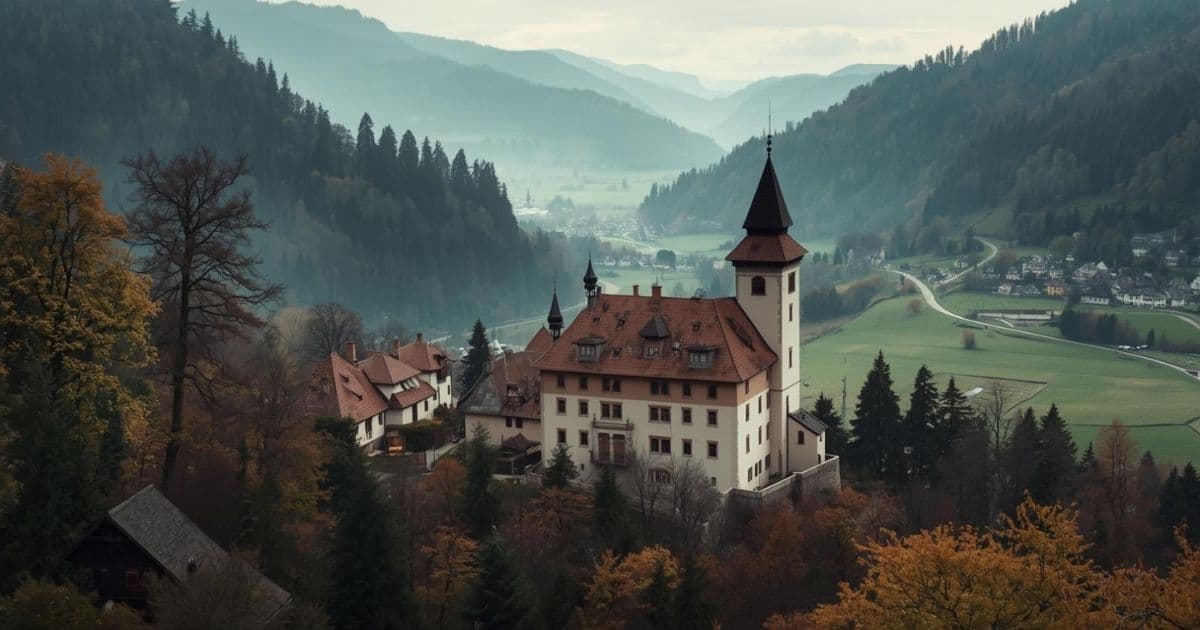
the little town could be seen with its white, red-roofed houses, its
cathedral, and its bridge, on both sides of which streamed jostling
masses of Russian troops. At the bend of the Danube, vessels, an island,
and a castle with a park surrounded by the waters of the confluence of
the Enns and the Danube became visible, and the rocky left bank of the
Danube covered with pine forests, with a mystic background of green
treetops and bluish gorges. The turrets of a convent stood out beyond a
wild virgin pine forest, and far away on the other side of the Enns the
enemy’s horse patrols could be discerned.
Among the field guns on the brow of the hill the general in command of
the rearguard stood with a staff officer, scanning the country through
his fieldglass. A little behind them Nesvítski, who had been sent to
the rearguard by the commander in chief, was sitting on the trail of a
gun carriage. A Cossack who accompanied him had handed him a knapsack
and a flask, and Nesvítski was treating some officers to pies and real
doppelkümmel. The officers gladly gathered round him, some on their
knees, some squatting Turkish fashion on the wet grass.
“Yes, the Austrian prince who built that castle was no fool. It’s
a fine place! Why are you not eating anything, gentlemen?” Nesvítski
was saying.
“Thank you very much, Prince,” answered one of the officers, pleased
to be talking to a staff officer of such importance. “It’s a lovely
place! We passed close to the park and saw two deer... and what a
splendid house!”
“Look, Prince,” said another, who would have dearly liked to take
another pie but felt shy, and therefore pretended to be examining the
countryside—“See, our infantrymen have already got there. Look there
in the meadow behind the village, three of them are dragging something.
They’ll ransack that castle,” he remarked with evident approval.
“So they will,” said Nesvítski. “No, but what I should like,”
added he, munching a pie in his moist-lipped handsome mouth, “would be
to slip in over there.”
He pointed with a smile to a turreted nunnery, and his eyes narrowed and
gleamed.
“That would be fine, gentlemen!”
The officers laughed.
“Just to flutter the nuns a bit. They say there are Italian girls
among them. On my word I’d give five years of my life for it!”
“They must be feeling dull, too,” said one of the bolder officers,
laughing.
Meanwhile the staff officer standing in front pointed out something to
the general, who looked through his field glass.
“Yes, so it is, so it is,” said the general angrily, lowering the
field glass and shrugging his shoulders, “so it is! They’ll be fired
on at the crossing. And why are they dawdling there?”
On the opposite side the enemy could be seen by the naked eye, and from
their battery a milk-white cloud arose. Then came the distant report of
a shot, and our troops could be seen hurrying to the crossing.
Nesvítski rose, puffing, and went up to the general, smiling.
“Would not your excellency like a little refreshment?” he said.
“It’s a bad business,” said the general without answering him,
“our men have been wasting time.”
“Hadn’t I better ride over, your excellency?” asked Nesvítski.
“Yes, please do,” answered the general, and he repeated the order
that had already once been given in detail: “and tell the hussars
that they are to cross last and to fire the bridge as I ordered; and the
inflammable material on the bridge must be reinspected.”
“Very good,” answered Nesvítski.
He called the Cossack with his horse, told him to put away the knapsack
and flask, and swung his heavy person easily into the saddle.
“I’ll really call in on the nuns,” he said to the officers who
watched him smilingly, and he rode off by the winding path down the
hill.
“Now then, let’s see how far it will carry, Captain. Just try!”
said the general, turning to an artillery officer. “Have a little fun
to pass the time.”
“Crew, to your guns!” commanded the officer.
In a moment the men came running gaily from their campfires and began
loading.
“One!” came the command.
Number one jumped briskly aside. The gun rang out with a deafening
metallic roar, and a whistling grenade flew above the heads of our
troops below the hill and fell far short of the enemy, a little smoke
showing the spot where it burst.
The faces of officers and men brightened up at the sound. Everyone got
up and began watching the movements of our troops below, as plainly
visible as if but a stone’s throw away, and the movements of the
approaching enemy farther off. At the same instant the sun came fully
out from behind the clouds, and the clear sound of the solitary shot
and the brilliance of the bright sunshine merged in a single joyous and
spirited impression.
Master this chapter. Complete your experience
Purchase the complete book to access all chapters and support classic literature
As an Amazon Associate, we earn a small commission from qualifying purchases at no additional cost to you.
Available in paperback, hardcover, and e-book formats
Let's Analyse the Pattern
The Coping Divide - How People Handle the Same Crisis Differently
People facing identical stress respond in opposite ways - through social distraction or intense focus - and both approaches serve the same psychological need for managing anxiety.
Why This Matters
Connect literature to life
This chapter teaches how to identify and respect different ways people handle pressure without judging their coping mechanisms.
Practice This Today
This week, notice when someone handles stress differently than you do - instead of judging them as too serious or too casual, ask what they need to feel supported right now.
Now let's explore the literary elements.
Key Quotes & Analysis
"It would be nice if they'd be quicker"
Context: Watching his troops cross too slowly while enemy forces approach
This simple statement reveals the crushing weight of command - knowing that every minute of delay could cost lives, but being unable to make things move faster. It shows how military leaders must balance urgency with the reality of logistics.
In Today's Words:
Come on, people, we don't have all day for this
"Oh, what a fine fellow!"
Context: Making crude jokes about the nuns in the nearby convent
This inappropriate humor shows how people use distraction and shock value to cope with fear and tension. It's a defense mechanism that helps maintain sanity in insane situations.
In Today's Words:
Did you see that? Now that's what I'm talking about!
"Fire at them for fun"
Context: Ordering his artillery to return enemy fire
The casual use of 'for fun' when ordering deadly force shows how war can make violence seem routine. It reveals how people in power can become detached from the human cost of their decisions.
In Today's Words:
Let's give them a taste of their own medicine
Thematic Threads
Class
In This Chapter
Officers share food and make jokes while enlisted men do dangerous work below, showing how rank creates distance from consequences
Development
Continues the theme of how social position affects perspective and responsibility
In Your Life:
You might notice how management handles workplace stress differently than front-line workers who face the actual consequences
Human Relationships
In This Chapter
Bonds form through shared meals and humor even in dangerous situations, while others connect through shared professional focus
Development
Shows how relationships adapt to extreme circumstances, building on earlier themes of wartime connections
In Your Life:
You might see how some friendships strengthen through joking during hard times while others bond through serious problem-solving
Identity
In This Chapter
Each character reveals their core identity through how they handle stress - the joker, the worrier, the commander
Development
Builds on how war strips away social masks to reveal true character
In Your Life:
You might recognize how crisis situations reveal who people really are beneath their everyday personas
Social Expectations
In This Chapter
Military hierarchy expects certain behaviors, but stress reveals individual coping styles that don't always match rank expectations
Development
Continues exploring how formal roles clash with human nature
In Your Life:
You might notice how workplace expectations about 'professional behavior' during stress don't account for different coping styles
You now have the context. Time to form your own thoughts.
Discussion Questions
- 1
What two different ways do the officers handle the stress of being under potential enemy fire?
analysis • surface - 2
Why do you think some people joke around during dangerous situations while others become intensely focused?
analysis • medium - 3
Where have you seen this same pattern of different stress responses in your workplace, family, or community?
application • medium - 4
When you're in a high-stress situation with others, how do you handle the tension between different coping styles?
application • deep - 5
What does this scene teach us about judging others for how they handle pressure?
reflection • deep
Critical Thinking Exercise
Map Your Stress Response Team
Think of a recent stressful situation involving multiple people - a work deadline, family crisis, or community problem. Draw a simple diagram showing who handled stress which way: jokers/socializers on one side, focused/quiet processors on the other. Mark yourself on the spectrum. Then identify one person whose coping style annoyed or confused you at the time.
Consider:
- •Neither coping style is better or worse - they're just different ways of managing the same anxiety
- •People often judge others for not handling stress the 'right' way (meaning their way)
- •The most effective teams have both types working together, not against each other
Journaling Prompt
Write about a time when someone's way of handling stress frustrated you. Looking back, what were they actually trying to accomplish? How might you respond differently now?
Coming Up Next...
Chapter 35: Chaos on the Bridge
The retreat continues as Russian forces face increasing pressure from pursuing enemies. Critical decisions about the bridge crossing will test both military strategy and individual courage under fire.