
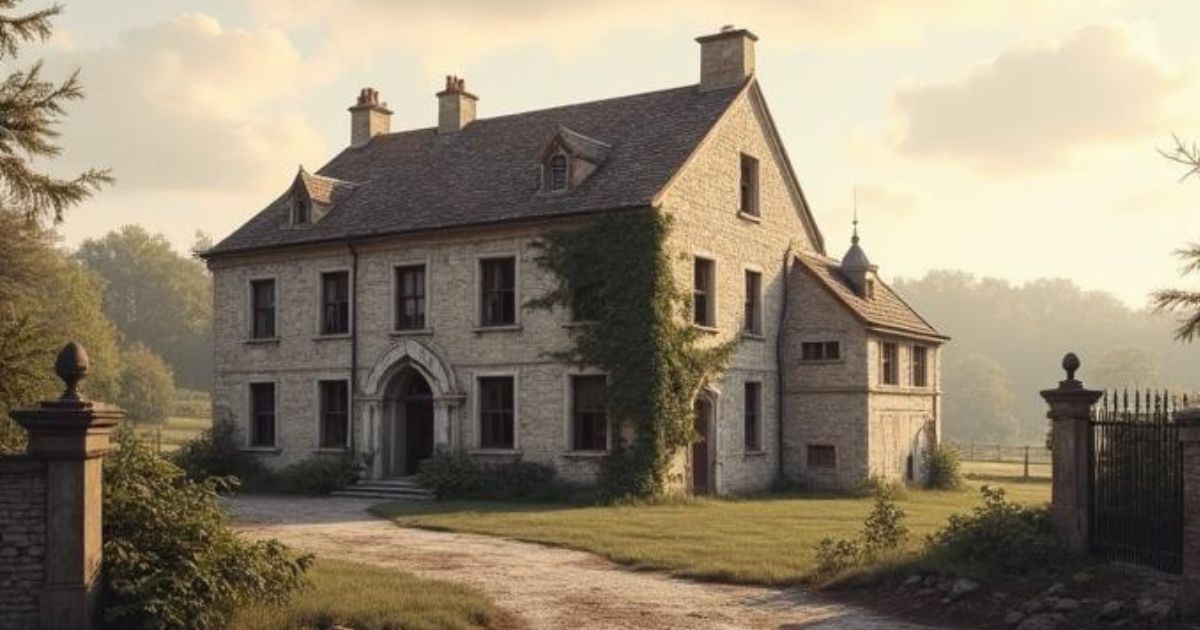
An excerpt from the original text.(complete · 8176 words)
HE CONCERT.
One morning, Mrs. Bretton, coming promptly into my room, desired me to
open my drawers and show her my dresses; which I did, without a word.
“That will do,” said she, when she had turned them over. “You must have
a new one.”
She went out. She returned presently with a dressmaker. She had me
measured. “I mean,” said she, “to follow my own taste, and to have my
own way in this little matter.”
Two days after came home—a pink dress!
“That is not for me,” I said, hurriedly, feeling that I would almost as
soon clothe myself in the costume of a Chinese lady of rank.
“We shall see whether it is for you or not,” rejoined my godmother,
adding with her resistless decision: “Mark my words. You will wear it
this very evening.”
I thought I should not; I thought no human force should avail to put me
into it. A pink dress! I knew it not. It knew not me. I had not proved
it.
My godmother went on to decree that I was to go with her and Graham to
a concert that same night: which concert, she explained, was a grand
affair to be held in the large salle, or hall, of the principal musical
society. The most advanced of the pupils of the Conservatoire were to
perform: it was to be followed by a lottery “au bénéfice des pauvres;”
and to crown all, the King, Queen, and Prince of Labassecour were to be
present. Graham, in sending tickets, had enjoined attention to costume
as a compliment due to royalty: he also recommended punctual readiness
by seven o’clock.
About six, I was ushered upstairs. Without any force at all, I found
myself led and influenced by another’s will, unconsulted, unpersuaded,
quietly overruled. In short, the pink dress went on, softened by some
drapery of black lace. I was pronounced to be en grande tenue, and
requested to look in the glass. I did so with some fear and trembling;
with more fear and trembling, I turned away. Seven o’clock struck; Dr.
Bretton was come; my godmother and I went down. She was clad in brown
velvet; as I walked in her shadow, how I envied her those folds of
grave, dark majesty! Graham stood in the drawing-room doorway.
“I do hope he will not think I have been decking myself out to draw
attention,” was my uneasy aspiration.
“Here, Lucy, are some flowers,” said he, giving me a bouquet. He took
no further notice of my dress than was conveyed in a kind smile and
satisfied nod, which calmed at once my sense of shame and fear of
ridicule. For the rest; the dress was made with extreme simplicity,
guiltless of flounce or furbelow; it was but the light fabric and
bright tint which scared me, and since Graham found in it nothing
absurd, my own eye consented soon to become reconciled.
I suppose people who go every night to places of public amusement, can
hardly enter into the fresh gala feeling with which an opera or a
concert is enjoyed by those for whom it is a rarity: I am not sure that
I expected great pleasure from the concert, having but a very vague
notion of its nature, but I liked the drive there well. The snug
comfort of the close carriage on a cold though fine night, the pleasure
of setting out with companions so cheerful and friendly, the sight of
the stars glinting fitfully through the trees as we rolled along the
avenue; then the freer burst of the night-sky when we issued forth to
the open chaussée, the passage through the city gates, the lights there
burning, the guards there posted, the pretence of inspection, to which
we there submitted, and which amused us so much—all these small matters
had for me, in their novelty, a peculiarly exhilarating charm. How much
of it lay in the atmosphere of friendship diffused about me, I know
not: Dr. John and his mother were both in their finest mood, contending
animatedly with each other the whole way, and as frankly kind to me as
if I had been of their kin.
Our way lay through some of the best streets of Villette, streets
brightly lit, and far more lively now than at high noon. How brilliant
seemed the shops! How glad, gay, and abundant flowed the tide of life
along the broad pavement! While I looked, the thought of the Rue
Fossette came across me—of the walled-in garden and school-house, and
of the dark, vast “classes,” where, as at this very hour, it was my
wont to wander all solitary, gazing at the stars through the high,
blindless windows, and listening to the distant voice of the reader in
the refectory, monotonously exercised upon the “lecture pieuse.” Thus
must I soon again listen and wander; and this shadow of the future
stole with timely sobriety across the radiant present.
By this time we had got into a current of carriages all tending in one
direction, and soon the front of a great illuminated building blazed
before us. Of what I should see within this building, I had, as before
intimated, but an imperfect idea; for no place of public entertainment
had it ever been my lot to enter yet.
We alighted under a portico where there was a great bustle and a great
crowd, but I do not distinctly remember further details, until I found
myself mounting a majestic staircase wide and easy of ascent, deeply
and softly carpeted with crimson, leading up to great doors closed
solemnly, and whose panels were also crimson-clothed.
I hardly noticed by what magic these doors were made to roll back—Dr.
John managed these points; roll back they did, however, and within was
disclosed a hall—grand, wide, and high, whose sweeping circular walls,
and domed hollow ceiling, seemed to me all dead gold (thus with nice
art was it stained), relieved by cornicing, fluting, and garlandry,
either bright, like gold burnished, or snow-white, like alabaster, or
white and gold mingled in wreaths of gilded leaves and spotless lilies:
wherever drapery hung, wherever carpets were spread, or cushions
placed, the sole colour employed was deep crimson. Pendent from the
dome, flamed a mass that dazzled me—a mass, I thought, of rock-crystal,
sparkling with facets, streaming with drops, ablaze with stars, and
gorgeously tinged with dews of gems dissolved, or fragments of rainbows
shivered. It was only the chandelier, reader, but for me it seemed the
work of eastern genii: I almost looked to see if a huge, dark, cloudy
hand—that of the Slave of the Lamp—were not hovering in the lustrous
and perfumed atmosphere of the cupola, guarding its wondrous treasure.
We moved on—I was not at all conscious whither—but at some turn we
suddenly encountered another party approaching from the opposite
direction. I just now see that group, as it flashed—upon me for one
moment. A handsome middle-aged lady in dark velvet; a gentleman who
might be her son—the best face, the finest figure, I thought, I had
ever seen; a third person in a pink dress and black lace mantle.
I noted them all—the third person as well as the other two—and for the
fraction of a moment believed them all strangers, thus receiving an
impartial impression of their appearance. But the impression was hardly
felt and not fixed, before the consciousness that I faced a great
mirror, filling a compartment between two pillars, dispelled it: the
party was our own party. Thus for the first, and perhaps only time in
my life, I enjoyed the “giftie” of seeing myself as others see me. No
need to dwell on the result. It brought a jar of discord, a pang of
regret; it was not flattering, yet, after all, I ought to be thankful;
it might have been worse.
At last, we were seated in places commanding a good general view of
that vast and dazzling, but warm and cheerful hall. Already it was
filled, and filled with a splendid assemblage. I do not know that the
women were very beautiful, but their dresses were so perfect; and
foreigners, even such as are ungraceful in domestic privacy, seem to
possess the art of appearing graceful in public: however blunt and
boisterous those every-day and home movements connected with peignoir
and papillotes, there is a slide, a bend, a carriage of the head and
arms, a mien of the mouth and eyes, kept nicely in reserve for gala
use—always brought out with the grande toilette, and duly put on with
the “parure.”
Some fine forms there were here and there, models of a peculiar style
of beauty; a style, I think, never seen in England; a solid, firm-set,
sculptural style. These shapes have no angles: a caryatid in marble is
almost as flexible; a Phidian goddess is not more perfect in a certain
still and stately sort. They have such features as the Dutch painters
give to their madonnas: low-country classic features, regular but
round, straight but stolid; and for their depth of expressionless calm,
of passionless peace, a polar snow-field could alone offer a type.
Women of this order need no ornament, and they seldom wear any; the
smooth hair, closely braided, supplies a sufficient contrast to the
smoother cheek and brow; the dress cannot be too simple; the rounded
arm and perfect neck require neither bracelet nor chain.
With one of these beauties I once had the honour and rapture to be
perfectly acquainted: the inert force of the deep, settled love she
bore herself, was wonderful; it could only be surpassed by her proud
impotency to care for any other living thing. Of blood, her cool veins
conducted no flow; placid lymph filled and almost obstructed her
arteries.
Such a Juno as I have described sat full in our view—a sort of mark for
all eyes, and quite conscious that so she was, but proof to the
magnetic influence of gaze or glance: cold, rounded, blonde, and
beauteous as the white column, capitalled with gilding, which rose at
her side.
Observing that Dr. John’s attention was much drawn towards her, I
entreated him in a low voice “for the love of heaven to shield well his
heart. You need not fall in love with that lady,” I said, “because, I
tell you beforehand, you might die at her feet, and she would not love
you again.”
“Very well,” said he, “and how do you know that the spectacle of her
grand insensibility might not with me be the strongest stimulus to
homage? The sting of desperation is, I think, a wonderful irritant to
my emotions: but” (shrugging his shoulders) “you know nothing about
these things; I’ll address myself to my mother. Mamma, I’m in a
dangerous way.”
“As if that interested me!” said Mrs. Bretton.
“Alas! the cruelty of my lot!” responded her son. “Never man had a more
unsentimental mother than mine: she never seems to think that such a
calamity can befall her as a daughter-in-law.”
“If I don’t, it is not for want of having that same calamity held over
my head: you have threatened me with it for the last ten years. ‘Mamma,
I am going to be married soon!’ was the cry before you were well out of
jackets.”
“But, mother, one of these days it will be realized. All of a sudden,
when you think you are most secure, I shall go forth like Jacob or
Esau, or any other patriarch, and take me a wife: perhaps of these
which are of the daughters of the land.”
“At your peril, John Graham! that is all.”
“This mother of mine means me to be an old bachelor. What a jealous old
lady it is! But now just look at that splendid creature in the pale
blue satin dress, and hair of paler brown, with ‘reflets satinés’ as
those of her robe. Would you not feel proud, mamma, if I were to bring
that goddess home some day, and introduce her to you as Mrs. Bretton,
junior?”
“You will bring no goddess to La Terrasse: that little château will not
contain two mistresses; especially if the second be of the height,
bulk, and circumference of that mighty doll in wood and wax, and kid
and satin.”
“Mamma, she would fill your blue chair so admirably!”
“Fill my chair? I defy the foreign usurper! a rueful chair should it be
for her: but hush, John Graham! Hold your tongue, and use your eyes.”
During the above skirmish, the hall, which, I had thought, seemed full
at the entrance, continued to admit party after party, until the
semicircle before the stage presented one dense mass of heads, sloping
from floor to ceiling. The stage, too, or rather the wide temporary
platform, larger than any stage, desert half an hour since, was now
overflowing with life; round two grand pianos, placed about the centre,
a white flock of young girls, the pupils of the Conservatoire, had
noiselessly poured. I had noticed their gathering, while Graham and his
mother were engaged in discussing the belle in blue satin, and had
watched with interest the process of arraying and marshalling them. Two
gentlemen, in each of whom I recognised an acquaintance, officered this
virgin troop. One, an artistic-looking man, bearded, and with long
hair, was a noted pianiste, and also the first music-teacher in
Villette; he attended twice a week at Madame Beck’s pensionnat, to give
lessons to the few pupils whose parents were rich enough to allow their
daughters the privilege of his instructions; his name was M. Josef
Emanuel, and he was half-brother to M. Paul: which potent personage was
now visible in the person of the second gentleman.
M. Paul amused me; I smiled to myself as I watched him, he seemed so
thoroughly in his element—standing conspicuous in presence of a wide
and grand assemblage, arranging, restraining, over-aweing about one
hundred young ladies. He was, too, so perfectly in earnest—so
energetic, so intent, and, above all, so absolute: and yet what
business had he there? What had he to do with music or the
Conservatoire—he who could hardly distinguish one note from another? I
knew that it was his love of display and authority which had brought
him there—a love not offensive, only because so naive. It presently
became obvious that his brother, M. Josef, was as much under his
control as were the girls themselves. Never was such a little hawk of a
man as that M. Paul! Ere long, some noted singers and musicians dawned
upon the platform: as these stars rose, the comet-like professor set.
Insufferable to him were all notorieties and celebrities: where he
could not outshine, he fled.
And now all was prepared: but one compartment of the hall waited to be
filled—a compartment covered with crimson, like the grand staircase and
doors, furnished with stuffed and cushioned benches, ranged on each
side of two regal chairs, placed solemnly under a canopy.
A signal was given, the doors rolled back, the assembly stood up, the
orchestra burst out, and, to the welcome of a choral burst, enter the
King, the Queen, the Court of Labassecour.
Till then, I had never set eyes on living king or queen; it may
consequently be conjectured how I strained my powers of vision to take
in these specimens of European royalty. By whomsoever majesty is beheld
for the first time, there will always be experienced a vague surprise
bordering on disappointment, that the same does not appear seated, en
permanence, on a throne, bonneted with a crown, and furnished, as to
the hand, with a sceptre. Looking out for a king and queen, and seeing
only a middle-aged soldier and a rather young lady, I felt half
cheated, half pleased.
Well do I recall that King—a man of fifty, a little bowed, a little
grey: there was no face in all that assembly which resembled his. I had
never read, never been told anything of his nature or his habits; and
at first the strong hieroglyphics graven as with iron stylet on his
brow, round his eyes, beside his mouth, puzzled and baffled instinct.
Ere long, however, if I did not know, at least I felt, the meaning of
those characters written without hand. There sat a silent sufferer—a
nervous, melancholy man. Those eyes had looked on the visits of a
certain ghost—had long waited the comings and goings of that strangest
spectre, Hypochondria. Perhaps he saw her now on that stage, over
against him, amidst all that brilliant throng. Hypochondria has that
wont, to rise in the midst of thousands—dark as Doom, pale as Malady,
and well-nigh strong as Death. Her comrade and victim thinks to be
happy one moment—“Not so,” says she; “I come.” And she freezes the
blood in his heart, and beclouds the light in his eye.
Some might say it was the foreign crown pressing the King’s brows which
bent them to that peculiar and painful fold; some might quote the
effects of early bereavement. Something there might be of both these;
but these are embittered by that darkest foe of humanity—constitutional
melancholy. The Queen, his wife, knew this: it seemed to me, the
reflection of her husband’s grief lay, a subduing shadow, on her own
benignant face. A mild, thoughtful, graceful woman that princess
seemed; not beautiful, not at all like the women of solid charms and
marble feelings described a page or two since. Hers was a somewhat
slender shape; her features, though distinguished enough, were too
suggestive of reigning dynasties and royal lines to give unqualified
pleasure. The expression clothing that profile was agreeable in the
present instance; but you could not avoid connecting it with remembered
effigies, where similar lines appeared, under phase ignoble; feeble, or
sensual, or cunning, as the case might be. The Queen’s eye, however,
was her own; and pity, goodness, sweet sympathy, blessed it with
divinest light. She moved no sovereign, but a lady—kind, loving,
elegant. Her little son, the Prince of Labassecour, and young Duc de
Dindonneau, accompanied her: he leaned on his mother’s knee; and, ever
and anon, in the course of that evening, I saw her observant of the
monarch at her side, conscious of his beclouded abstraction, and
desirous to rouse him from it by drawing his attention to their son.
She often bent her head to listen to the boy’s remarks, and would then
smilingly repeat them to his sire. The moody King started, listened,
smiled, but invariably relapsed as soon as his good angel ceased
speaking. Full mournful and significant was that spectacle! Not the
less so because, both for the aristocracy and the honest bourgeoisie of
Labassecour, its peculiarity seemed to be wholly invisible: I could not
discover that one soul present was either struck or touched.
With the King and Queen had entered their court, comprising two or
three foreign ambassadors; and with them came the elite of the
foreigners then resident in Villette. These took possession of the
crimson benches; the ladies were seated; most of the men remained
standing: their sable rank, lining the background, looked like a dark
foil to the splendour displayed in front. Nor was this splendour
without varying light and shade and gradation: the middle distance was
filled with matrons in velvets and satins, in plumes and gems; the
benches in the foreground, to the Queen’s right hand, seemed devoted
exclusively to young girls, the flower—perhaps, I should rather say,
the bud—of Villette aristocracy. Here were no jewels, no head-dresses,
no velvet pile or silken sheen: purity, simplicity, and aërial grace
reigned in that virgin band. Young heads simply braided, and fair forms
(I was going to write sylph forms, but that would have been quite
untrue: several of these “jeunes filles,” who had not numbered more
than sixteen or seventeen years, boasted contours as robust and solid
as those of a stout Englishwoman of five-and-twenty)—fair forms robed
in white, or pale rose, or placid blue, suggested thoughts of heaven
and angels. I knew a couple, at least, of these “rose et blanche”
specimens of humanity. Here was a pair of Madame Beck’s late
pupils—Mesdemoiselles Mathilde and Angélique: pupils who, during their
last year at school, ought to have been in the first class, but whose
brains never got them beyond the second division. In English, they had
been under my own charge, and hard work it was to get them to translate
rationally a page of The Vicar of Wakefield. Also during three months
I had one of them for my vis-à-vis at table, and the quantity of
household bread, butter, and stewed fruit, she would habitually consume
at “second déjeuner” was a real world’s wonder—to be exceeded only by
the fact of her actually pocketing slices she could not eat. Here be
truths—wholesome truths, too.
I knew another of these seraphs—the prettiest, or, at any rate, the
least demure and hypocritical looking of the lot: she was seated by the
daughter of an English peer, also an honest, though haughty-looking
girl: both had entered in the suite of the British embassy. She (i.e.
my acquaintance) had a slight, pliant figure, not at all like the forms
of the foreign damsels: her hair, too, was not close-braided, like a
shell or a skull-cap of satin; it looked like hair, and waved from
her head, long, curled, and flowing. She chatted away volubly, and
seemed full of a light-headed sort of satisfaction with herself and her
position. I did not look at Dr. Bretton; but I knew that he, too, saw
Ginevra Fanshawe: he had become so quiet, he answered so briefly his
mother’s remarks, he so often suppressed a sigh. Why should he sigh? He
had confessed a taste for the pursuit of love under difficulties; here
was full gratification for that taste. His lady-love beamed upon him
from a sphere above his own: he could not come near her; he was not
certain that he could win from her a look. I watched to see if she
would so far favour him. Our seat was not far from the crimson benches;
we must inevitably be seen thence, by eyes so quick and roving as Miss
Fanshawe’s, and very soon those optics of hers were upon us: at least,
upon Dr. and Mrs. Bretton. I kept rather in the shade and out of sight,
not wishing to be immediately recognised: she looked quite steadily at
Dr. John, and then she raised a glass to examine his mother; a minute
or two afterwards she laughingly whispered her neighbour; upon the
performance commencing, her rambling attention was attracted to the
platform.
On the concert I need not dwell; the reader would not care to have my
impressions thereanent: and, indeed, it would not be worth while to
record them, as they were the impressions of an ignorance crasse. The
young ladies of the Conservatoire, being very much frightened, made
rather a tremulous exhibition on the two grand pianos. M. Josef Emanuel
stood by them while they played; but he had not the tact or influence
of his kinsman, who, under similar circumstances, would certainly have
compelled pupils of his to demean themselves with heroism and
self-possession. M. Paul would have placed the hysteric débutantes
between two fires—terror of the audience, and terror of himself—and
would have inspired them with the courage of desperation, by making the
latter terror incomparably the greater: M. Josef could not do this.
Following the white muslin pianistes, came a fine, full-grown, sulky
lady in white satin. She sang. Her singing just affected me like the
tricks of a conjuror: I wondered how she did it—how she made her voice
run up and down, and cut such marvellous capers; but a simple Scotch
melody, played by a rude street minstrel, has often moved me more
deeply.
Afterwards stepped forth a gentleman, who, bending his body a good deal
in the direction of the King and Queen, and frequently approaching his
white-gloved hand to the region of his heart, vented a bitter outcry
against a certain “fausse Isabelle.” I thought he seemed especially to
solicit the Queen’s sympathy; but, unless I am egregiously mistaken,
her Majesty lent her attention rather with the calm of courtesy than
the earnestness of interest. This gentleman’s state of mind was very
harrowing, and I was glad when he wound up his musical exposition of
the same.
Some rousing choruses struck me as the best part of the evening’s
entertainment. There were present deputies from all the best provincial
choral societies; genuine, barrel-shaped, native Labassecouriens. These
worthies gave voice without mincing the matter their hearty exertions
had at least this good result—the ear drank thence a satisfying sense
of power.
Through the whole performance—timid instrumental duets, conceited vocal
solos, sonorous, brass-lunged choruses—my attention gave but one eye
and one ear to the stage, the other being permanently retained in the
service of Dr. Bretton: I could not forget him, nor cease to question
how he was feeling, what he was thinking, whether he was amused or the
contrary. At last he spoke.
“And how do you like it all, Lucy? You are very quiet,” he said, in his
own cheerful tone.
“I am quiet,” I said, “because I am so very, very much interested:
not merely with the music, but with everything about me.”
He then proceeded to make some further remarks, with so much equanimity
and composure that I began to think he had really not seen what I had
seen, and I whispered—“Miss Fanshawe is here: have you noticed her?”
“Oh, yes! and I observed that you noticed her too.”
“Is she come with Mrs. Cholmondeley, do you think?”
“Mrs. Cholmondeley is there with a very grand party. Yes; Ginevra was
in her train; and Mrs. Cholmondeley was in Lady ——’s train, who was
in the Queen’s train. If this were not one of the compact little minor
European courts, whose very formalities are little more imposing than
familiarities, and whose gala grandeur is but homeliness in Sunday
array, it would sound all very fine.”
“Ginevra saw you, I think?”
“So do I think so. I have had my eye on her several times since you
withdrew yours; and I have had the honour of witnessing a little
spectacle which you were spared.”
I did not ask what; I waited voluntary information, which was presently
given.
“Miss Fanshawe,” he said, “has a companion with her—a lady of rank. I
happen to know Lady Sara by sight; her noble mother has called me in
professionally. She is a proud girl, but not in the least insolent, and
I doubt whether Ginevra will have gained ground in her estimation by
making a butt of her neighbours.”
“What neighbours?”
“Merely myself and my mother. As to me it is all very natural: nothing,
I suppose, can be fairer game than the young bourgeois doctor; but my
mother! I never saw her ridiculed before. Do you know, the curling lip,
and sarcastically levelled glass thus directed, gave me a most curious
sensation?”
“Think nothing of it, Dr. John: it is not worth while. If Ginevra were
in a giddy mood, as she is eminently to-night, she would make no
scruple of laughing at that mild, pensive Queen, or that melancholy
King. She is not actuated by malevolence, but sheer, heedless folly. To
a feather-brained school-girl nothing is sacred.”
“But you forget: I have not been accustomed to look on Miss Fanshawe in
the light of a feather-brained school-girl. Was she not my divinity—the
angel of my career?”
“Hem! There was your mistake.”
“To speak the honest truth, without any false rant or assumed romance,
there actually was a moment, six months ago, when I thought her divine.
Do you remember our conversation about the presents? I was not quite
open with you in discussing that subject: the warmth with which you
took it up amused me. By way of having the full benefit of your lights,
I allowed you to think me more in the dark than I really was. It was
that test of the presents which first proved Ginevra mortal. Still her
beauty retained its fascination: three days—three hours ago, I was very
much her slave. As she passed me to-night, triumphant in beauty, my
emotions did her homage; but for one luckless sneer, I should yet be
the humblest of her servants. She might have scoffed at me, and,
while wounding, she would not soon have alienated me: through myself,
she could not in ten years have done what, in a moment, she has done
through my mother.”
He held his peace awhile. Never before had I seen so much fire, and so
little sunshine in Dr. John’s blue eye as just now.
“Lucy,” he recommenced, “look well at my mother, and say, without fear
or favour, in what light she now appears to you.”
“As she always does—an English, middle-class gentlewoman; well, though
gravely dressed, habitually independent of pretence, constitutionally
composed and cheerful.”
“So she seems to me—bless her! The merry may laugh with mamma, but
the weak only will laugh at her. She shall not be ridiculed, with my
consent, at least; nor without my—my scorn—my antipathy—my—”
He stopped: and it was time—for he was getting excited—more it seemed
than the occasion warranted. I did not then know that he had witnessed
double cause for dissatisfaction with Miss Fanshawe. The glow of his
complexion, the expansion of his nostril, the bold curve which disdain
gave his well-cut under lip, showed him in a new and striking phase.
Yet the rare passion of the constitutionally suave and serene, is not a
pleasant spectacle; nor did I like the sort of vindictive thrill which
passed through his strong young frame.
“Do I frighten you, Lucy?” he asked.
“I cannot tell why you are so very angry.”
“For this reason,” he muttered in my ear. “Ginevra is neither a pure
angel, nor a pure-minded woman.”
“Nonsense! you exaggerate: she has no great harm in her.”
“Too much for me. I can see where you are blind. Now dismiss the
subject. Let me amuse myself by teasing mamma: I will assert that she
is flagging. Mamma, pray rouse yourself.”
“John, I will certainly rouse you if you are not better conducted. Will
you and Lucy be silent, that I may hear the singing?”
They were then thundering in a chorus, under cover of which all the
previous dialogue had taken place.
“You hear the singing, mamma! Now, I will wager my studs, which are
genuine, against your paste brooch—”
“My paste brooch, Graham? Profane boy! you know that it is a stone of
value.”
“Oh! that is one of your superstitions: you were cheated in the
business.”
“I am cheated in fewer things than you imagine. How do you happen to be
acquainted with young ladies of the court, John? I have observed two of
them pay you no small attention during the last half-hour.”
“I wish you would not observe them.”
“Why not? Because one of them satirically levels her eyeglass at me?
She is a pretty, silly girl: but are you apprehensive that her titter
will discomfit the old lady?”
“The sensible, admirable old lady! Mother, you are better to me than
ten wives yet.”
“Don’t be demonstrative, John, or I shall faint, and you will have to
carry me out; and if that burden were laid upon you, you would reverse
your last speech, and exclaim, ‘Mother, ten wives could hardly be worse
to me than you are!’”
The concert over, the Lottery “au bénéfice des pauvres” came next: the
interval between was one of general relaxation, and the pleasantest
imaginable stir and commotion. The white flock was cleared from the
platform; a busy throng of gentlemen crowded it instead, making
arrangements for the drawing; and amongst these—the busiest of
all—re-appeared that certain well-known form, not tall but active,
alive with the energy and movement of three tall men. How M. Paul did
work! How he issued directions, and, at the same time, set his own
shoulder to the wheel! Half-a-dozen assistants were at his beck to
remove the pianos, &c.; no matter, he must add to their strength his
own. The redundancy of his alertness was half-vexing, half-ludicrous:
in my mind I both disapproved and derided most of this fuss. Yet, in
the midst of prejudice and annoyance, I could not, while watching,
avoid perceiving a certain not disagreeable naïveté in all he did and
said; nor could I be blind to certain vigorous characteristics of his
physiognomy, rendered conspicuous now by the contrast with a throng of
tamer faces: the deep, intent keenness of his eye, the power of his
forehead, pale, broad, and full—the mobility of his most flexible
mouth. He lacked the calm of force, but its movement and its fire he
signally possessed.
Meantime the whole hall was in a stir; most people rose and remained
standing, for a change; some walked about, all talked and laughed. The
crimson compartment presented a peculiarly animated scene. The long
cloud of gentlemen, breaking into fragments, mixed with the rainbow
line of ladies; two or three officer-like men approached the King and
conversed with him. The Queen, leaving her chair, glided along the rank
of young ladies, who all stood up as she passed; and to each in turn I
saw her vouchsafe some token of kindness—a gracious word, look or
smile. To the two pretty English girls, Lady Sara and Ginevra Fanshawe,
she addressed several sentences; as she left them, both, and especially
the latter, seemed to glow all over with gratification. They were
afterwards accosted by several ladies, and a little circle of gentlemen
gathered round them; amongst these—the nearest to Ginevra—stood the
Count de Hamal.
“This room is stiflingly hot,” said Dr. Bretton, rising with sudden
impatience. “Lucy—mother—will you come a moment to the fresh air?”
“Go with him, Lucy,” said Mrs. Bretton. “I would rather keep my seat.”
Willingly would I have kept mine also, but Graham’s desire must take
precedence of my own; I accompanied him.
We found the night-air keen; or at least I did: he did not seem to feel
it; but it was very still, and the star-sown sky spread cloudless. I
was wrapped in a fur shawl. We took some turns on the pavement; in
passing under a lamp, Graham encountered my eye.
“You look pensive, Lucy: is it on my account?”
“I was only fearing that you were grieved.”
“Not at all: so be of good cheer—as I am. Whenever I die, Lucy, my
persuasion is that it will not be of heart-complaint. I may be stung, I
may seem to droop for a time, but no pain or malady of sentiment has
yet gone through my whole system. You have always seen me cheerful at
home?”
“Generally.”
“I am glad she laughed at my mother. I would not give the old lady for
a dozen beauties. That sneer did me all the good in the world. Thank
you, Miss Fanshawe!” And he lifted his hat from his waved locks, and
made a mock reverence.
“Yes,” he said, “I thank her. She has made me feel that nine parts in
ten of my heart have always been sound as a bell, and the tenth bled
from a mere puncture: a lancet-prick that will heal in a trice.”
“You are angry just now, heated and indignant; you will think and feel
differently to-morrow.”
“I heated and indignant! You don’t know me. On the contrary, the heat
is gone: I am as cool as the night—which, by the way, may be too cool
for you. We will go back.”
“Dr. John, this is a sudden change.”
“Not it: or if it be, there are good reasons for it—two good reasons: I
have told you one. But now let us re-enter.”
We did not easily regain our seats; the lottery was begun, and all was
excited confusion; crowds blocked the sort of corridor along which we
had to pass: it was necessary to pause for a time. Happening to glance
round—indeed I half fancied I heard my name pronounced—I saw quite
near, the ubiquitous, the inevitable M. Paul. He was looking at me
gravely and intently: at me, or rather at my pink dress—sardonic
comment on which gleamed in his eye. Now it was his habit to indulge in
strictures on the dress, both of the teachers and pupils, at Madame
Beck’s—a habit which the former, at least, held to be an offensive
impertinence: as yet I had not suffered from it—my sombre daily attire
not being calculated to attract notice. I was in no mood to permit any
new encroachment to-night: rather than accept his banter, I would
ignore his presence, and accordingly steadily turned my face to the
sleeve of Dr. John’s coat; finding in that same black sleeve a prospect
more redolent of pleasure and comfort, more genial, more friendly, I
thought, than was offered by the dark little Professor’s unlovely
visage. Dr. John seemed unconsciously to sanction the preference by
looking down and saying in his kind voice, “Ay, keep close to my side,
Lucy: these crowding burghers are no respecters of persons.”
I could not, however, be true to myself. Yielding to some influence,
mesmeric or otherwise—an influence unwelcome, displeasing, but
effective—I again glanced round to see if M. Paul was gone. No, there
he stood on the same spot, looking still, but with a changed eye; he
had penetrated my thought, and read my wish to shun him. The mocking
but not ill-humoured gaze was turned to a swarthy frown, and when I
bowed, with a view to conciliation, I got only the stiffest and
sternest of nods in return.
“Whom have you made angry, Lucy?” whispered Dr. Bretton, smiling. “Who
is that savage-looking friend of yours?”
“One of the professors at Madame Beck’s: a very cross little man.”
“He looks mighty cross just now: what have you done to him? What is it
all about? Ah, Lucy, Lucy! tell me the meaning of this.”
“No mystery, I assure you. M. Emanuel is very exigeant, and because I
looked at your coat-sleeve, instead of curtseying and dipping to him,
he thinks I have failed in respect.”
“The little—” began Dr. John: I know not what more he would have added,
for at that moment I was nearly thrown down amongst the feet of the
crowd. M. Paul had rudely pushed past, and was elbowing his way with
such utter disregard to the convenience and security of all around,
that a very uncomfortable pressure was the consequence.
“I think he is what he himself would call ‘méchant,’” said Dr. Bretton.
I thought so, too.
Slowly and with difficulty we made our way along the passage, and at
last regained our seats. The drawing of the lottery lasted nearly an
hour; it was an animating and amusing scene; and as we each held
tickets, we shared in the alternations of hope and fear raised by each
turn of the wheel. Two little girls, of five and six years old, drew
the numbers: and the prizes were duly proclaimed from the platform.
These prizes were numerous, though of small value. It so fell out that
Dr. John and I each gained one: mine was a cigar-case, his a lady’s
head-dress—a most airy sort of blue and silver turban, with a streamer
of plumage on one side, like a snowy cloud. He was excessively anxious
to make an exchange; but I could not be brought to hear reason, and to
this day I keep my cigar-case: it serves, when I look at it, to remind
me of old times, and one happy evening.
Dr. John, for his part, held his turban at arm’s length between his
finger and thumb, and looked at it with a mixture of reverence and
embarrassment highly provocative of laughter. The contemplation over,
he was about coolly to deposit the delicate fabric on the ground
between his feet; he seemed to have no shadow of an idea of the
treatment or stowage it ought to receive: if his mother had not come to
the rescue, I think he would finally have crushed it under his arm like
an opera-hat; she restored it to the band-box whence it had issued.
Graham was quite cheerful all the evening, and his cheerfulness seemed
natural and unforced. His demeanour, his look, is not easily described;
there was something in it peculiar, and, in its way, original. I read
in it no common mastery of the passions, and a fund of deep and healthy
strength which, without any exhausting effort, bore down Disappointment
and extracted her fang. His manner, now, reminded me of qualities I had
noticed in him when professionally engaged amongst the poor, the
guilty, and the suffering, in the Basse-Ville: he looked at once
determined, enduring, and sweet-tempered. Who could help liking him?
He betrayed no weakness which harassed all your feelings with
considerations as to how its faltering must be propped; from him
broke no irritability which startled calm and quenched mirth; his
lips let fall no caustic that burned to the bone; his eye shot no
morose shafts that went cold, and rusty, and venomed through your
heart: beside him was rest and refuge—around him, fostering sunshine.
And yet he had neither forgiven nor forgotten Miss Fanshawe. Once
angered, I doubt if Dr. Bretton were to be soon propitiated—once
alienated, whether he were ever to be reclaimed. He looked at her more
than once; not stealthily or humbly, but with a movement of hardy, open
observation. De Hamal was now a fixture beside her; Mrs. Cholmondeley
sat near, and they and she were wholly absorbed in the discourse,
mirth, and excitement, with which the crimson seats were as much astir
as any plebeian part of the hall. In the course of some apparently
animated discussion, Ginevra once or twice lifted her hand and arm; a
handsome bracelet gleamed upon the latter. I saw that its gleam
flickered in Dr. John’s eye—quickening therein a derisive, ireful
sparkle; he laughed:——
“I think,” he said, “I will lay my turban on my wonted altar of
offerings; there, at any rate, it would be certain to find favour: no
grisette has a more facile faculty of acceptance. Strange! for after
all, I know she is a girl of family.”
“But you don’t know her education, Dr. John,” said I. “Tossed about all
her life from one foreign school to another, she may justly proffer the
plea of ignorance in extenuation of most of her faults. And then, from
what she says, I believe her father and mother were brought up much as
she has been brought up.”
“I always understood she had no fortune; and once I had pleasure in the
thought,” said he.
“She tells me,” I answered, “that they are poor at home; she always
speaks quite candidly on such points: you never find her lying, as
these foreigners will often lie. Her parents have a large family: they
occupy such a station and possess such connections as, in their
opinion, demand display; stringent necessity of circumstances and
inherent thoughtlessness of disposition combined, have engendered
reckless unscrupulousness as to how they obtain the means of sustaining
a good appearance. This is the state of things, and the only state of
things, she has seen from childhood upwards.”
“I believe it—and I thought to mould her to something better: but,
Lucy, to speak the plain truth, I have felt a new thing to-night, in
looking at her and de Hamal. I felt it before noticing the impertinence
directed at my mother. I saw a look interchanged between them
immediately after their entrance, which threw a most unwelcome light on
my mind.”
“How do you mean? You have been long aware of the flirtation they keep
up?”
“Ay, flirtation! That might be an innocent girlish wile to lure on the
true lover; but what I refer to was not flirtation: it was a look
marking mutual and secret understanding—it was neither girlish nor
innocent. No woman, were she as beautiful as Aphrodite, who could give
or receive such a glance, shall ever be sought in marriage by me: I
would rather wed a paysanne in a short petticoat and high cap—and be
sure that she was honest.”
I could not help smiling. I felt sure he now exaggerated the case:
Ginevra, I was certain, was honest enough, with all her giddiness. I
told him so. He shook his head, and said he would not be the man to
trust her with his honour.
“The only thing,” said I, “with which you may safely trust her. She
would unscrupulously damage a husband’s purse and property, recklessly
try his patience and temper: I don’t think she would breathe, or let
another breathe, on his honour.”
“You are becoming her advocate,” said he. “Do you wish me to resume my
old chains?”
“No: I am glad to see you free, and trust that free you will long
remain. Yet be, at the same time, just.”
“I am so: just as Rhadamanthus, Lucy. When once I am thoroughly
estranged, I cannot help being severe. But look! the King and Queen are
rising. I like that Queen: she has a sweet countenance. Mamma, too, is
excessively tired; we shall never get the old lady home if we stay
longer.”
“I tired, John?” cried Mrs. Bretton, looking at least as animated and
as wide-awake as her son. “I would undertake to sit you out yet: leave
us both here till morning, and we should see which would look the most
jaded by sunrise.”
“I should not like to try the experiment; for, in truth, mamma, you are
the most unfading of evergreens and the freshest of matrons. It must
then be on the plea of your son’s delicate nerves and fragile
constitution that I found a petition for our speedy adjournment.”
“Indolent young man! You wish you were in bed, no doubt; and I suppose
you must be humoured. There is Lucy, too, looking quite done up. For
shame, Lucy! At your age, a week of evenings-out would not have made me
a shade paler. Come away, both of you; and you may laugh at the old
lady as much as you please, but, for my part, I shall take charge of
the bandbox and turban.”
Which she did accordingly. I offered to relieve her, but was shaken off
with kindly contempt: my godmother opined that I had enough to do to
take care of myself. Not standing on ceremony now, in the midst of the
gay “confusion worse confounded” succeeding to the King and Queen’s
departure, Mrs. Bretton preceded us, and promptly made us a lane
through the crowd. Graham followed, apostrophizing his mother as the
most flourishing grisette it had ever been his good fortune to see
charged with carriage of a bandbox; he also desired me to mark her
affection for the sky-blue turban, and announced his conviction that
she intended one day to wear it.
The night was now very cold and very dark, but with little delay we
found the carriage. Soon we were packed in it, as warm and as snug as
at a fire-side; and the drive home was, I think, still pleasanter than
the drive to the concert. Pleasant it was, even though the
coachman—having spent in the shop of a “marchand de vin” a portion of
the time we passed at the concert—drove us along the dark and solitary
chaussée far past the turn leading down to La Terrasse; we, who were
occupied in talking and laughing, not noticing the aberration till, at
last, Mrs. Bretton intimated that, though she had always thought the
château a retired spot, she did not know it was situated at the world’s
end, as she declared seemed now to be the case, for she believed we had
been an hour and a half en route, and had not yet taken the turn down
the avenue.
Then Graham looked out, and perceiving only dim-spread fields, with
unfamiliar rows of pollards and limes ranged along their else invisible
sunk-fences, began to conjecture how matters were, and calling a halt
and descending, he mounted the box and took the reins himself. Thanks
to him, we arrived safe at home about an hour and a half beyond our
time.
Martha had not forgotten us; a cheerful fire was burning, and a neat
supper spread in the dining-room: we were glad of both. The winter dawn
was actually breaking before we gained our chambers. I took off my pink
dress and lace mantle with happier feelings than I had experienced in
putting them on. Not all, perhaps, who had shone brightly arrayed at
that concert could say the same; for not all had been satisfied with
friendship—with its calm comfort and modest hope.
Master this chapter. Complete your experience
Purchase the complete book to access all chapters and support classic literature
As an Amazon Associate, we earn a small commission from qualifying purchases at no additional cost to you.
Available in paperback, hardcover, and e-book formats
Let's Analyse the Pattern
People's true character emerges when they feel safe from social consequences, revealing who they really are beneath their public persona.
Why This Matters
Connect literature to life
This chapter teaches how to identify authentic character by observing behavior when people feel consequence-free.
Practice This Today
This week, notice how people treat service workers, subordinates, or anyone they perceive as powerless—that's their real character showing.
Now let's explore the literary elements.
Key Quotes & Analysis
"That is not for me"
Context: When she first sees the pink dress Mrs. Bretton bought for her
This shows Lucy's deep resistance to feminine presentation and her fear of being seen as frivolous. The pink dress represents everything she's tried to avoid about traditional womanhood.
In Today's Words:
This isn't who I am
"You will wear it this very evening"
Context: Her firm response to Lucy's protest about the dress
Mrs. Bretton's loving but absolute authority shows how older women enforced social expectations. Her certainty suggests she knows what's best for Lucy better than Lucy does.
In Today's Words:
You're wearing it and that's final
"I am perfectly cured"
Context: After seeing Ginevra mock his mother through her opera glass
This moment of revelation shows how quickly romantic feelings can die when someone's true character is revealed. Seeing cruelty toward his beloved mother was the final straw.
In Today's Words:
I'm completely over her now
Thematic Threads
Class
In This Chapter
The concert creates a rigid social hierarchy where Ginevra feels empowered to mock those she sees as beneath her station
Development
Evolved from earlier workplace dynamics to now showing how class operates in leisure and cultural spaces
In Your Life:
Notice how differently people treat you based on perceived social status—at the doctor's office, in stores, at your child's school.
Identity
In This Chapter
Lucy struggles with wearing the pink dress, feeling it doesn't represent her true self, while Ginevra performs an artificial version of elegance
Development
Continued exploration of Lucy's discomfort with feminine expectations and social performance
In Your Life:
Consider when you've felt forced into clothes, roles, or behaviors that don't feel authentic to who you are.
Recognition
In This Chapter
Dr. John finally sees Ginevra's true nature when she mocks his mother, forcing him to abandon his romantic illusions
Development
Builds on earlier hints about Ginevra's selfishness, reaching a breaking point of clarity
In Your Life:
Think about moments when someone's treatment of others you care about forced you to see them clearly.
Social Performance
In This Chapter
The concert becomes a stage where everyone performs their class status, but authentic character breaks through the performance
Development
Introduced here as a new lens for examining how public spaces reveal private truths
In Your Life:
Watch how people behave at weddings, parties, or community events when they're 'on display' socially.
Loyalty
In This Chapter
Dr. John's loyalty to his mother becomes the test that reveals Ginevra's unworthiness of his affection
Development
Builds on earlier themes of family bonds and introduces loyalty as a character-testing force
In Your Life:
Notice how potential partners, friends, or colleagues treat the people you love—it predicts how they'll eventually treat you.
You now have the context. Time to form your own thoughts.
Discussion Questions
- 1
What specific moment completely changed Dr. John's feelings about Ginevra, and why was this particular action so powerful?
analysis • surface - 2
Why do you think Ginevra felt comfortable mocking Mrs. Bretton in this setting when she might not have done so in other circumstances?
analysis • medium - 3
Where have you seen people act differently when they think they're 'safe' from consequences - maybe online, in groups, or around certain people?
application • medium - 4
How can you tell the difference between someone having a bad day and someone revealing their true character?
application • deep - 5
What does this chapter suggest about the value of observing how people treat those who 'can't help them'?
reflection • deep
Critical Thinking Exercise
The Character Reveal Test
Think of someone in your life whose behavior sometimes confuses you - they seem nice sometimes but not others. Map out when they're kind versus when they're not. Look for patterns: Are they different around certain people? In certain settings? When they need something versus when they don't? What does this pattern tell you about their real character?
Consider:
- •Focus on specific behaviors and situations, not your feelings about the person
- •Look for power dynamics - who has more or less influence in each situation
- •Consider whether you've seen their 'mask slip' moment like Dr. John did
Journaling Prompt
Write about a time when you witnessed someone's true character emerge in an unexpected moment. How did it change your relationship with them, and what did you learn about reading people?
Coming Up Next...
Chapter 21: The Weight of Returning
The morning after brings unexpected consequences as Lucy faces the aftermath of her public appearance. The pink dress has attracted more attention than she realized, and certain observers have drawn their own conclusions about her evening out.



