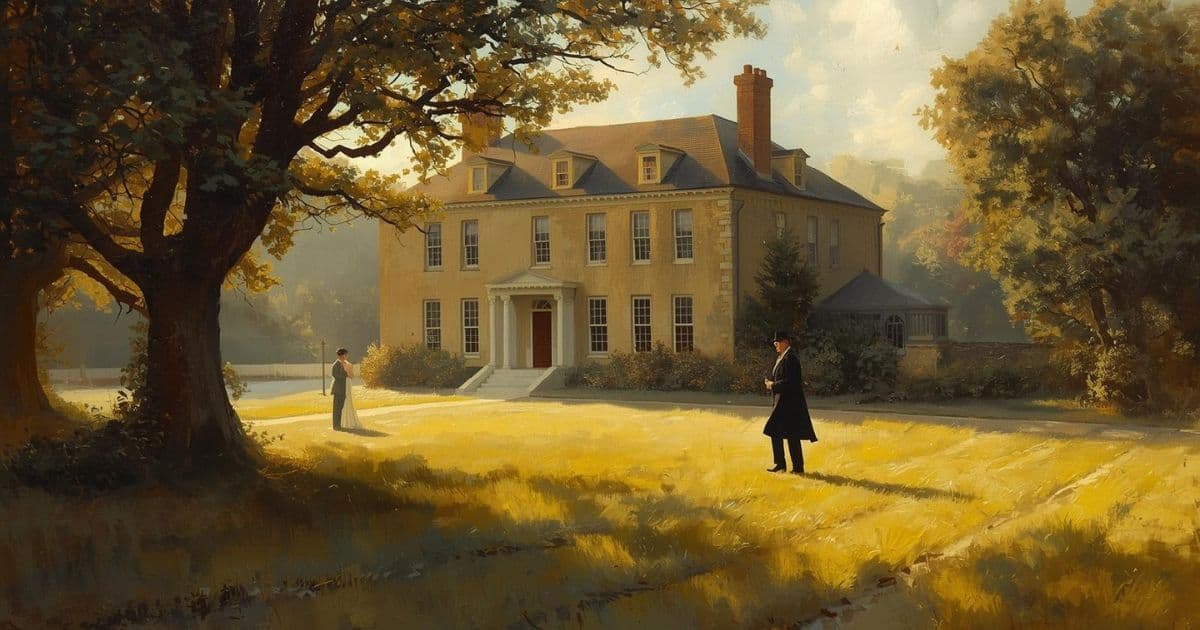
An excerpt from the original text.(complete · 12147 words)
pisode 11: Sirens
Bronze by gold heard the hoofirons, steelyringing.
Imperthnthn thnthnthn.
Chips, picking chips off rocky thumbnail, chips.
Horrid! And gold flushed more.
A husky fifenote blew.
Blew. Blue bloom is on the.
Goldpinnacled hair.
A jumping rose on satiny breast of satin, rose of Castile.
Trilling, trilling: Idolores.
Peep! Who’s in the... peepofgold?
Tink cried to bronze in pity.
And a call, pure, long and throbbing. Longindying call.
Decoy. Soft word. But look: the bright stars fade. Notes chirruping
answer.
O rose! Castile. The morn is breaking.
Jingle jingle jaunted jingling.
Coin rang. Clock clacked.
Avowal. Sonnez. I could. Rebound of garter. Not leave thee. Smack.
La cloche! Thigh smack. Avowal. Warm. Sweetheart, goodbye!
Jingle. Bloo.
Boomed crashing chords. When love absorbs. War! War! The tympanum.
A sail! A veil awave upon the waves.
Lost. Throstle fluted. All is lost now.
Horn. Hawhorn.
When first he saw. Alas!
Full tup. Full throb.
Warbling. Ah, lure! Alluring.
Martha! Come!
Clapclap. Clipclap. Clappyclap.
Goodgod henev erheard inall.
Deaf bald Pat brought pad knife took up.
A moonlit nightcall: far, far.
I feel so sad. P. S. So lonely blooming.
Listen!
The spiked and winding cold seahorn. Have you the? Each, and for other,
plash and silent roar.
Pearls: when she. Liszt’s rhapsodies. Hissss.
You don’t?
Did not: no, no: believe: Lidlyd. With a cock with a carra.
Black. Deepsounding. Do, Ben, do.
Wait while you wait. Hee hee. Wait while you hee.
But wait!
Low in dark middle earth. Embedded ore.
Naminedamine. Preacher is he:
All gone. All fallen.
Tiny, her tremulous fernfoils of maidenhair.
Amen! He gnashed in fury.
Fro. To, fro. A baton cool protruding.
Bronzelydia by Minagold.
By bronze, by gold, in oceangreen of shadow. Bloom. Old Bloom.
One rapped, one tapped, with a carra, with a cock.
Pray for him! Pray, good people!
His gouty fingers nakkering.
Big Benaben. Big Benben.
Last rose Castile of summer left bloom I feel so sad alone.
Pwee! Little wind piped wee.
True men. Lid Ker Cow De and Doll. Ay, ay. Like you men. Will lift your
tschink with tschunk.
Fff! Oo!
Where bronze from anear? Where gold from afar? Where hoofs?
Rrrpr. Kraa. Kraandl.
Then not till then. My eppripfftaph. Be pfrwritt.
Done.
Begin!
Bronze by gold, miss Douce’s head by miss Kennedy’s head, over the
crossblind of the Ormond bar heard the viceregal hoofs go by, ringing
steel.
—Is that her? asked miss Kennedy.
Miss Douce said yes, sitting with his ex, pearl grey and eau de Nil.
—Exquisite contrast, miss Kennedy said.
When all agog miss Douce said eagerly:
—Look at the fellow in the tall silk.
—Who? Where? gold asked more eagerly.
—In the second carriage, miss Douce’s wet lips said, laughing in the
sun.
He’s looking. Mind till I see.
She darted, bronze, to the backmost corner, flattening her face against
the pane in a halo of hurried breath.
Her wet lips tittered:
—He’s killed looking back.
She laughed:
—O wept! Aren’t men frightful idiots?
With sadness.
Miss Kennedy sauntered sadly from bright light, twining a loose hair
behind an ear. Sauntering sadly, gold no more, she twisted twined a
hair. Sadly she twined in sauntering gold hair behind a curving ear.
—It’s them has the fine times, sadly then she said.
A man.
Bloowho went by by Moulang’s pipes bearing in his breast the sweets of
sin, by Wine’s antiques, in memory bearing sweet sinful words, by
Carroll’s dusky battered plate, for Raoul.
The boots to them, them in the bar, them barmaids came. For them
unheeding him he banged on the counter his tray of chattering china.
And
—There’s your teas, he said.
Miss Kennedy with manners transposed the teatray down to an upturned
lithia crate, safe from eyes, low.
—What is it? loud boots unmannerly asked.
—Find out, miss Douce retorted, leaving her spyingpoint.
—Your beau, is it?
A haughty bronze replied:
—I’ll complain to Mrs de Massey on you if I hear any more of your
impertinent insolence.
—Imperthnthn thnthnthn, bootssnout sniffed rudely, as he retreated as
she threatened as he had come.
Bloom.
On her flower frowning miss Douce said:
—Most aggravating that young brat is. If he doesn’t conduct himself
I’ll wring his ear for him a yard long.
Ladylike in exquisite contrast.
—Take no notice, miss Kennedy rejoined.
She poured in a teacup tea, then back in the teapot tea. They cowered
under their reef of counter, waiting on footstools, crates upturned,
waiting for their teas to draw. They pawed their blouses, both of black
satin, two and nine a yard, waiting for their teas to draw, and two and
seven.
Yes, bronze from anear, by gold from afar, heard steel from anear,
hoofs ring from afar, and heard steelhoofs ringhoof ringsteel.
—Am I awfully sunburnt?
Miss bronze unbloused her neck.
—No, said miss Kennedy. It gets brown after. Did you try the borax with
the cherry laurel water?
Miss Douce halfstood to see her skin askance in the barmirror
gildedlettered where hock and claret glasses shimmered and in their
midst a shell.
—And leave it to my hands, she said.
—Try it with the glycerine, miss Kennedy advised.
Bidding her neck and hands adieu miss Douce
—Those things only bring out a rash, replied, reseated. I asked that
old fogey in Boyd’s for something for my skin.
Miss Kennedy, pouring now a fulldrawn tea, grimaced and prayed:
—O, don’t remind me of him for mercy’ sake!
—But wait till I tell you, miss Douce entreated.
Sweet tea miss Kennedy having poured with milk plugged both two ears
with little fingers.
—No, don’t, she cried.
—I won’t listen, she cried.
But Bloom?
Miss Douce grunted in snuffy fogey’s tone:
—For your what? says he.
Miss Kennedy unplugged her ears to hear, to speak: but said, but prayed
again:
—Don’t let me think of him or I’ll expire. The hideous old wretch! That
night in the Antient Concert Rooms.
She sipped distastefully her brew, hot tea, a sip, sipped, sweet tea.
—Here he was, miss Douce said, cocking her bronze head three quarters,
ruffling her nosewings. Hufa! Hufa!
Shrill shriek of laughter sprang from miss Kennedy’s throat. Miss Douce
huffed and snorted down her nostrils that quivered imperthnthn like a
snout in quest.
—O! shrieking, miss Kennedy cried. Will you ever forget his goggle eye?
Miss Douce chimed in in deep bronze laughter, shouting:
—And your other eye!
Bloowhose dark eye read Aaron Figatner’s name. Why do I always think
Figather? Gathering figs, I think. And Prosper Loré’s huguenot name. By
Bassi’s blessed virgins Bloom’s dark eyes went by. Bluerobed, white
under, come to me. God they believe she is: or goddess. Those today. I
could not see. That fellow spoke. A student. After with Dedalus’ son.
He might be Mulligan. All comely virgins. That brings those rakes of
fellows in: her white.
By went his eyes. The sweets of sin. Sweet are the sweets.
Of sin.
In a giggling peal young goldbronze voices blended, Douce with Kennedy
your other eye. They threw young heads back, bronze gigglegold, to let
freefly their laughter, screaming, your other, signals to each other,
high piercing notes.
Ah, panting, sighing, sighing, ah, fordone, their mirth died down.
Miss Kennedy lipped her cup again, raised, drank a sip and
gigglegiggled. Miss Douce, bending over the teatray, ruffled again her
nose and rolled droll fattened eyes. Again Kennygiggles, stooping, her
fair pinnacles of hair, stooping, her tortoise napecomb showed,
spluttered out of her mouth her tea, choking in tea and laughter,
coughing with choking, crying:
—O greasy eyes! Imagine being married to a man like that! she cried.
With his bit of beard!
Douce gave full vent to a splendid yell, a full yell of full woman,
delight, joy, indignation.
—Married to the greasy nose! she yelled.
Shrill, with deep laughter, after, gold after bronze, they urged each
each to peal after peal, ringing in changes, bronzegold, goldbronze,
shrilldeep, to laughter after laughter. And then laughed more. Greasy I
knows. Exhausted, breathless, their shaken heads they laid, braided and
pinnacled by glossycombed, against the counterledge. All flushed (O!),
panting, sweating (O!), all breathless.
Married to Bloom, to greaseabloom.
—O saints above! miss Douce said, sighed above her jumping rose. I
wished I hadn’t laughed so much. I feel all wet.
—O, miss Douce! miss Kennedy protested. You horrid thing!
And flushed yet more (you horrid!), more goldenly.
By Cantwell’s offices roved Greaseabloom, by Ceppi’s virgins, bright of
their oils. Nannetti’s father hawked those things about, wheedling at
doors as I. Religion pays. Must see him for that par. Eat first. I
want. Not yet. At four, she said. Time ever passing. Clockhands
turning. On. Where eat? The Clarence, Dolphin. On. For Raoul. Eat. If I
net five guineas with those ads. The violet silk petticoats. Not yet.
The sweets of sin.
Flushed less, still less, goldenly paled.
Into their bar strolled Mr Dedalus. Chips, picking chips off one of his
rocky thumbnails. Chips. He strolled.
—O, welcome back, miss Douce.
He held her hand. Enjoyed her holidays?
—Tiptop.
He hoped she had nice weather in Rostrevor.
—Gorgeous, she said. Look at the holy show I am. Lying out on the
strand all day.
Bronze whiteness.
—That was exceedingly naughty of you, Mr Dedalus told her and pressed
her hand indulgently. Tempting poor simple males.
Miss Douce of satin douced her arm away.
—O go away! she said. You’re very simple, I don’t think.
He was.
—Well now I am, he mused. I looked so simple in the cradle they
christened me simple Simon.
—You must have been a doaty, miss Douce made answer. And what did the
doctor order today?
—Well now, he mused, whatever you say yourself. I think I’ll trouble
you for some fresh water and a half glass of whisky.
Jingle.
—With the greatest alacrity, miss Douce agreed.
With grace of alacrity towards the mirror gilt Cantrell and Cochrane’s
she turned herself. With grace she tapped a measure of gold whisky from
her crystal keg. Forth from the skirt of his coat Mr Dedalus brought
pouch and pipe. Alacrity she served. He blew through the flue two husky
fifenotes.
—By Jove, he mused, I often wanted to see the Mourne mountains. Must be
a great tonic in the air down there. But a long threatening comes at
last, they say. Yes. Yes.
Yes. He fingered shreds of hair, her maidenhair, her mermaid’s, into
the bowl. Chips. Shreds. Musing. Mute.
None nought said nothing. Yes.
Gaily miss Douce polished a tumbler, trilling:
—O, Idolores, queen of the eastern seas!
—Was Mr Lidwell in today?
In came Lenehan. Round him peered Lenehan. Mr Bloom reached Essex
bridge. Yes, Mr Bloom crossed bridge of Yessex. To Martha I must write.
Buy paper. Daly’s. Girl there civil. Bloom. Old Bloom. Blue bloom is on
the rye.
—He was in at lunchtime, miss Douce said.
Lenehan came forward.
—Was Mr Boylan looking for me?
He asked. She answered:
—Miss Kennedy, was Mr Boylan in while I was upstairs?
She asked. Miss voice of Kennedy answered, a second teacup poised, her
gaze upon a page:
—No. He was not.
Miss gaze of Kennedy, heard, not seen, read on. Lenehan round the
sandwichbell wound his round body round.
—Peep! Who’s in the corner?
No glance of Kennedy rewarding him he yet made overtures. To mind her
stops. To read only the black ones: round o and crooked ess.
Jingle jaunty jingle.
Girlgold she read and did not glance. Take no notice. She took no
notice while he read by rote a solfa fable for her, plappering flatly:
—Ah fox met ah stork. Said thee fox too thee stork: Will you put your
bill down inn my troath and pull upp ah bone?
He droned in vain. Miss Douce turned to her tea aside.
He sighed aside:
—Ah me! O my!
He greeted Mr Dedalus and got a nod.
—Greetings from the famous son of a famous father.
—Who may he be? Mr Dedalus asked.
Lenehan opened most genial arms. Who?
—Who may he be? he asked. Can you ask? Stephen, the youthful bard.
Dry.
Mr Dedalus, famous father, laid by his dry filled pipe.
—I see, he said. I didn’t recognise him for the moment. I hear he is
keeping very select company. Have you seen him lately?
He had.
—I quaffed the nectarbowl with him this very day, said Lenehan. In
Mooney’s en ville and in Mooney’s sur mer. He had received the
rhino for the labour of his muse.
He smiled at bronze’s teabathed lips, at listening lips and eyes:
—The élite of Erin hung upon his lips. The ponderous pundit, Hugh
MacHugh, Dublin’s most brilliant scribe and editor and that minstrel
boy of the wild wet west who is known by the euphonious appellation of
the O’Madden Burke.
After an interval Mr Dedalus raised his grog and
—That must have been highly diverting, said he. I see.
He see. He drank. With faraway mourning mountain eye. Set down his
glass.
He looked towards the saloon door.
—I see you have moved the piano.
—The tuner was in today, miss Douce replied, tuning it for the smoking
concert and I never heard such an exquisite player.
—Is that a fact?
—Didn’t he, miss Kennedy? The real classical, you know. And blind too,
poor fellow. Not twenty I’m sure he was.
—Is that a fact? Mr Dedalus said.
He drank and strayed away.
—So sad to look at his face, miss Douce condoled.
God’s curse on bitch’s bastard.
Tink to her pity cried a diner’s bell. To the door of the bar and
diningroom came bald Pat, came bothered Pat, came Pat, waiter of
Ormond. Lager for diner. Lager without alacrity she served.
With patience Lenehan waited for Boylan with impatience, for
jinglejaunty blazes boy.
Upholding the lid he (who?) gazed in the coffin (coffin?) at the
oblique triple (piano!) wires. He pressed (the same who pressed
indulgently her hand), soft pedalling, a triple of keys to see the
thicknesses of felt advancing, to hear the muffled hammerfall in
action.
Two sheets cream vellum paper one reserve two envelopes when I was in
Wisdom Hely’s wise Bloom in Daly’s Henry Flower bought. Are you not
happy in your home? Flower to console me and a pin cuts lo. Means
something, language of flow. Was it a daisy? Innocence that is.
Respectable girl meet after mass. Thanks awfully muchly. Wise Bloom
eyed on the door a poster, a swaying mermaid smoking mid nice waves.
Smoke mermaids, coolest whiff of all. Hair streaming: lovelorn. For
some man. For Raoul. He eyed and saw afar on Essex bridge a gay hat
riding on a jaunting car. It is. Again. Third time. Coincidence.
Jingling on supple rubbers it jaunted from the bridge to Ormond quay.
Follow. Risk it. Go quick. At four. Near now. Out.
—Twopence, sir, the shopgirl dared to say.
—Aha... I was forgetting... Excuse...
—And four.
At four she. Winsomely she on Bloohimwhom smiled. Bloo smi qui go.
Ternoon. Think you’re the only pebble on the beach? Does that to all.
For men.
In drowsy silence gold bent on her page.
From the saloon a call came, long in dying. That was a tuningfork the
tuner had that he forgot that he now struck. A call again. That he now
poised that it now throbbed. You hear? It throbbed, pure, purer, softly
and softlier, its buzzing prongs. Longer in dying call.
Pat paid for diner’s popcorked bottle: and over tumbler, tray and
popcorked bottle ere he went he whispered, bald and bothered, with miss
Douce.
—The bright stars fade...
A voiceless song sang from within, singing:
—... the morn is breaking.
A duodene of birdnotes chirruped bright treble answer under sensitive
hands. Brightly the keys, all twinkling, linked, all harpsichording,
called to a voice to sing the strain of dewy morn, of youth, of love’s
leavetaking, life’s, love’s morn.
—The dewdrops pearl...
Lenehan’s lips over the counter lisped a low whistle of decoy.
—But look this way, he said, rose of Castile.
Jingle jaunted by the curb and stopped.
She rose and closed her reading, rose of Castile: fretted, forlorn,
dreamily rose.
—Did she fall or was she pushed? he asked her.
She answered, slighting:
—Ask no questions and you’ll hear no lies.
Like lady, ladylike.
Blazes Boylan’s smart tan shoes creaked on the barfloor where he
strode. Yes, gold from anear by bronze from afar. Lenehan heard and
knew and hailed him:
—See the conquering hero comes.
Between the car and window, warily walking, went Bloom, unconquered
hero. See me he might. The seat he sat on: warm. Black wary hecat
walked towards Richie Goulding’s legal bag, lifted aloft, saluting.
—And I from thee...
—I heard you were round, said Blazes Boylan.
He touched to fair miss Kennedy a rim of his slanted straw. She smiled
on him. But sister bronze outsmiled her, preening for him her richer
hair, a bosom and a rose.
Smart Boylan bespoke potions.
—What’s your cry? Glass of bitter? Glass of bitter, please, and a
sloegin for me. Wire in yet?
Not yet. At four she. Who said four?
Cowley’s red lugs and bulging apple in the door of the sheriff’s
office.
Avoid. Goulding a chance. What is he doing in the Ormond? Car waiting.
Wait.
Hello. Where off to? Something to eat? I too was just. In here. What,
Ormond? Best value in Dublin. Is that so? Diningroom. Sit tight there.
See, not be seen. I think I’ll join you. Come on. Richie led on. Bloom
followed bag. Dinner fit for a prince.
Miss Douce reached high to take a flagon, stretching her satin arm, her
bust, that all but burst, so high.
—O! O! jerked Lenehan, gasping at each stretch. O!
But easily she seized her prey and led it low in triumph.
—Why don’t you grow? asked Blazes Boylan.
Shebronze, dealing from her oblique jar thick syrupy liquor for his
lips, looked as it flowed (flower in his coat: who gave him?), and
syrupped with her voice:
—Fine goods in small parcels.
That is to say she. Neatly she poured slowsyrupy sloe.
—Here’s fortune, Blazes said.
He pitched a broad coin down. Coin rang.
—Hold on, said Lenehan, till I...
—Fortune, he wished, lifting his bubbled ale.
—Sceptre will win in a canter, he said.
—I plunged a bit, said Boylan winking and drinking. Not on my own, you
know. Fancy of a friend of mine.
Lenehan still drank and grinned at his tilted ale and at miss Douce’s
lips that all but hummed, not shut, the oceansong her lips had trilled.
Idolores. The eastern seas.
Clock whirred. Miss Kennedy passed their way (flower, wonder who gave),
bearing away teatray. Clock clacked.
Miss Douce took Boylan’s coin, struck boldly the cashregister. It
clanged. Clock clacked. Fair one of Egypt teased and sorted in the till
and hummed and handed coins in change. Look to the west. A clack. For
me.
—What time is that? asked Blazes Boylan. Four?
O’clock.
Lenehan, small eyes ahunger on her humming, bust ahumming, tugged
Blazes Boylan’s elbowsleeve.
—Let’s hear the time, he said.
The bag of Goulding, Collis, Ward led Bloom by ryebloom flowered
tables. Aimless he chose with agitated aim, bald Pat attending, a table
near the door. Be near. At four. Has he forgotten? Perhaps a trick. Not
come: whet appetite. I couldn’t do. Wait, wait. Pat, waiter, waited.
Sparkling bronze azure eyed Blazure’s skyblue bow and eyes.
—Go on, pressed Lenehan. There’s no-one. He never heard.
—... to Flora’s lips did hie.
High, a high note pealed in the treble clear.
Bronzedouce communing with her rose that sank and rose sought Blazes
Boylan’s flower and eyes.
—Please, please.
He pleaded over returning phrases of avowal.
—I could not leave thee...
—Afterwits, miss Douce promised coyly.
—No, now, urged Lenehan. Sonnez la cloche! O do! There’s no-one.
She looked. Quick. Miss Kenn out of earshot. Sudden bent. Two kindling
faces watched her bend.
Quavering the chords strayed from the air, found it again, lost chord,
and lost and found it, faltering.
—Go on! Do! Sonnez!
Bending, she nipped a peak of skirt above her knee. Delayed. Taunted
them still, bending, suspending, with wilful eyes.
—Sonnez!
Smack. She set free sudden in rebound her nipped elastic garter
smackwarm against her smackable a woman’s warmhosed thigh.
—La cloche! cried gleeful Lenehan. Trained by owner. No sawdust
there.
She smilesmirked supercilious (wept! aren’t men?), but, lightward
gliding, mild she smiled on Boylan.
—You’re the essence of vulgarity, she in gliding said.
Boylan, eyed, eyed. Tossed to fat lips his chalice, drank off his
chalice tiny, sucking the last fat violet syrupy drops. His spellbound
eyes went after, after her gliding head as it went down the bar by
mirrors, gilded arch for ginger ale, hock and claret glasses
shimmering, a spiky shell, where it concerted, mirrored, bronze with
sunnier bronze.
Yes, bronze from anearby.
—... Sweetheart, goodbye!
—I’m off, said Boylan with impatience.
He slid his chalice brisk away, grasped his change.
—Wait a shake, begged Lenehan, drinking quickly. I wanted to tell you.
Tom Rochford...
—Come on to blazes, said Blazes Boylan, going.
Lenehan gulped to go.
—Got the horn or what? he said. Wait. I’m coming.
He followed the hasty creaking shoes but stood by nimbly by the
threshold, saluting forms, a bulky with a slender.
—How do you do, Mr Dollard?
—Eh? How do? How do? Ben Dollard’s vague bass answered, turning an
instant from Father Cowley’s woe. He won’t give you any trouble, Bob.
Alf Bergan will speak to the long fellow. We’ll put a barleystraw in
that Judas Iscariot’s ear this time.
Sighing Mr Dedalus came through the saloon, a finger soothing an
eyelid.
—Hoho, we will, Ben Dollard yodled jollily. Come on, Simon. Give us a
ditty. We heard the piano.
Bald Pat, bothered waiter, waited for drink orders. Power for Richie.
And Bloom? Let me see. Not make him walk twice. His corns. Four now.
How warm this black is. Course nerves a bit. Refracts (is it?) heat.
Let me see. Cider. Yes, bottle of cider.
—What’s that? Mr Dedalus said. I was only vamping, man.
—Come on, come on, Ben Dollard called. Begone dull care. Come, Bob.
He ambled Dollard, bulky slops, before them (hold that fellow with the:
hold him now) into the saloon. He plumped him Dollard on the stool. His
gouty paws plumped chords. Plumped, stopped abrupt.
Bald Pat in the doorway met tealess gold returning. Bothered, he wanted
Power and cider. Bronze by the window, watched, bronze from afar.
Jingle a tinkle jaunted.
Bloom heard a jing, a little sound. He’s off. Light sob of breath Bloom
sighed on the silent bluehued flowers. Jingling. He’s gone. Jingle.
Hear.
—Love and War, Ben, Mr Dedalus said. God be with old times.
Miss Douce’s brave eyes, unregarded, turned from the crossblind,
smitten by sunlight. Gone. Pensive (who knows?), smitten (the smiting
light), she lowered the dropblind with a sliding cord. She drew down
pensive (why did he go so quick when I?) about her bronze, over the bar
where bald stood by sister gold, inexquisite contrast, contrast
inexquisite nonexquisite, slow cool dim seagreen sliding depth of
shadow, eau de Nil.
—Poor old Goodwin was the pianist that night, Father Cowley reminded
them. There was a slight difference of opinion between himself and the
Collard grand.
There was.
—A symposium all his own, Mr Dedalus said. The devil wouldn’t stop him.
He was a crotchety old fellow in the primary stage of drink.
—God, do you remember? Ben bulky Dollard said, turning from the
punished keyboard. And by Japers I had no wedding garment.
They laughed all three. He had no wed. All trio laughed. No wedding
garment.
—Our friend Bloom turned in handy that night, Mr Dedalus said. Where’s
my pipe, by the way?
He wandered back to the bar to the lost chord pipe. Bald Pat carried
two diners’ drinks, Richie and Poldy. And Father Cowley laughed again.
—I saved the situation, Ben, I think.
—You did, averred Ben Dollard. I remember those tight trousers too.
That was a brilliant idea, Bob.
Father Cowley blushed to his brilliant purply lobes. He saved the
situa. Tight trou. Brilliant ide.
—I knew he was on the rocks, he said. The wife was playing the piano in
the coffee palace on Saturdays for a very trifling consideration and
who was it gave me the wheeze she was doing the other business? Do you
remember? We had to search all Holles street to find them till the chap
in Keogh’s gave us the number. Remember?
Ben remembered, his broad visage wondering.
—By God, she had some luxurious operacloaks and things there.
Mr Dedalus wandered back, pipe in hand.
—Merrion square style. Balldresses, by God, and court dresses. He
wouldn’t take any money either. What? Any God’s quantity of cocked hats
and boleros and trunkhose. What?
—Ay, ay, Mr Dedalus nodded. Mrs Marion Bloom has left off clothes of
all descriptions.
Jingle jaunted down the quays. Blazes sprawled on bounding tyres.
Liver and bacon. Steak and kidney pie. Right, sir. Right, Pat.
Mrs Marion. Met him pike hoses. Smell of burn. Of Paul de Kock. Nice
name he.
—What’s this her name was? A buxom lassy. Marion...
—Tweedy.
—Yes. Is she alive?
—And kicking.
—She was a daughter of...
—Daughter of the regiment.
—Yes, begad. I remember the old drummajor.
Mr Dedalus struck, whizzed, lit, puffed savoury puff after
—Irish? I don’t know, faith. Is she, Simon?
Puff after stiff, a puff, strong, savoury, crackling.
—Buccinator muscle is... What?... Bit rusty... O, she is... My Irish
Molly, O.
He puffed a pungent plumy blast.
—From the rock of Gibraltar... all the way.
They pined in depth of ocean shadow, gold by the beerpull, bronze by
maraschino, thoughtful all two. Mina Kennedy, 4 Lismore terrace,
Drumcondra with Idolores, a queen, Dolores, silent.
Pat served, uncovered dishes. Leopold cut liverslices. As said before
he ate with relish the inner organs, nutty gizzards, fried cods’ roes
while Richie Goulding, Collis, Ward ate steak and kidney, steak then
kidney, bite by bite of pie he ate Bloom ate they ate.
Bloom with Goulding, married in silence, ate. Dinners fit for princes.
By Bachelor’s walk jogjaunty jingled Blazes Boylan, bachelor, in sun in
heat, mare’s glossy rump atrot, with flick of whip, on bounding tyres:
sprawled, warmseated, Boylan impatience, ardentbold. Horn. Have you
the? Horn. Have you the? Haw haw horn.
Over their voices Dollard bassooned attack, booming over bombarding
chords:
—When love absorbs my ardent soul...
Roll of Bensoulbenjamin rolled to the quivery loveshivery roofpanes.
—War! War! cried Father Cowley. You’re the warrior.
—So I am, Ben Warrior laughed. I was thinking of your landlord. Love or
money.
He stopped. He wagged huge beard, huge face over his blunder huge.
—Sure, you’d burst the tympanum of her ear, man, Mr Dedalus said
through smoke aroma, with an organ like yours.
In bearded abundant laughter Dollard shook upon the keyboard. He would.
—Not to mention another membrane, Father Cowley added. Half time, Ben.
Amoroso ma non troppo. Let me there.
Miss Kennedy served two gentlemen with tankards of cool stout. She
passed a remark. It was indeed, first gentleman said, beautiful
weather. They drank cool stout. Did she know where the lord lieutenant
was going? And heard steelhoofs ringhoof ring. No, she couldn’t say.
But it would be in the paper. O, she need not trouble. No trouble. She
waved about her outspread Independent, searching, the lord
lieutenant, her pinnacles of hair slowmoving, lord lieuten. Too much
trouble, first gentleman said. O, not in the least. Way he looked that.
Lord lieutenant. Gold by bronze heard iron steel.
—............ my ardent soul
I care not foror the morrow.
In liver gravy Bloom mashed mashed potatoes. Love and War someone is.
Ben Dollard’s famous. Night he ran round to us to borrow a dress suit
for that concert. Trousers tight as a drum on him. Musical porkers.
Molly did laugh when he went out. Threw herself back across the bed,
screaming, kicking. With all his belongings on show. O saints above,
I’m drenched! O, the women in the front row! O, I never laughed so
many! Well, of course that’s what gives him the base barreltone. For
instance eunuchs. Wonder who’s playing. Nice touch. Must be Cowley.
Musical. Knows whatever note you play. Bad breath he has, poor chap.
Stopped.
Miss Douce, engaging, Lydia Douce, bowed to suave solicitor, George
Lidwell, gentleman, entering. Good afternoon. She gave her moist (a
lady’s) hand to his firm clasp. Afternoon. Yes, she was back. To the
old dingdong again.
—Your friends are inside, Mr Lidwell.
George Lidwell, suave, solicited, held a lydiahand.
Bloom ate liv as said before. Clean here at least. That chap in the
Burton, gummy with gristle. No-one here: Goulding and I. Clean tables,
flowers, mitres of napkins. Pat to and fro. Bald Pat. Nothing to do.
Best value in Dub.
Piano again. Cowley it is. Way he sits in to it, like one together,
mutual understanding. Tiresome shapers scraping fiddles, eye on the
bowend, sawing the cello, remind you of toothache. Her high long snore.
Night we were in the box. Trombone under blowing like a grampus,
between the acts, other brass chap unscrewing, emptying spittle.
Conductor’s legs too, bagstrousers, jiggedy jiggedy. Do right to hide
them.
Jiggedy jingle jaunty jaunty.
Only the harp. Lovely. Gold glowering light. Girl touched it. Poop of a
lovely. Gravy’s rather good fit for a. Golden ship. Erin. The harp that
once or twice. Cool hands. Ben Howth, the rhododendrons. We are their
harps. I. He. Old. Young.
—Ah, I couldn’t, man, Mr Dedalus said, shy, listless.
Strongly.
—Go on, blast you! Ben Dollard growled. Get it out in bits.
—M’appari, Simon, Father Cowley said.
Down stage he strode some paces, grave, tall in affliction, his long
arms outheld. Hoarsely the apple of his throat hoarsed softly. Softly
he sang to a dusty seascape there: A Last Farewell. A headland, a
ship, a sail upon the billows. Farewell. A lovely girl, her veil awave
upon the wind upon the headland, wind around her.
Cowley sang:
—M’appari tutt’amor:
Il mio sguardo l’incontr...
She waved, unhearing Cowley, her veil, to one departing, dear one, to
wind, love, speeding sail, return.
—Go on, Simon.
—Ah, sure, my dancing days are done, Ben... Well...
Mr Dedalus laid his pipe to rest beside the tuningfork and, sitting,
touched the obedient keys.
—No, Simon, Father Cowley turned. Play it in the original. One flat.
The keys, obedient, rose higher, told, faltered, confessed, confused.
Up stage strode Father Cowley.
—Here, Simon, I’ll accompany you, he said. Get up.
By Graham Lemon’s pineapple rock, by Elvery’s elephant jingly jogged.
Steak, kidney, liver, mashed, at meat fit for princes sat princes Bloom
and Goulding. Princes at meat they raised and drank, Power and cider.
Most beautiful tenor air ever written, Richie said: Sonnambula. He
heard Joe Maas sing that one night. Ah, what M’Guckin! Yes. In his way.
Choirboy style. Maas was the boy. Massboy. A lyrical tenor if you like.
Never forget it. Never.
Tenderly Bloom over liverless bacon saw the tightened features strain.
Backache he. Bright’s bright eye. Next item on the programme. Paying
the piper. Pills, pounded bread, worth a guinea a box. Stave it off
awhile. Sings too: Down among the dead men. Appropriate. Kidney pie.
Sweets to the. Not making much hand of it. Best value in.
Characteristic of him. Power. Particular about his drink. Flaw in the
glass, fresh Vartry water. Fecking matches from counters to save. Then
squander a sovereign in dribs and drabs. And when he’s wanted not a
farthing. Screwed refusing to pay his fare. Curious types.
Never would Richie forget that night. As long as he lived: never. In
the gods of the old Royal with little Peake. And when the first note.
Speech paused on Richie’s lips.
Coming out with a whopper now. Rhapsodies about damn all. Believes his
own lies. Does really. Wonderful liar. But want a good memory.
—Which air is that? asked Leopold Bloom.
—All is lost now.
Richie cocked his lips apout. A low incipient note sweet banshee
murmured: all. A thrush. A throstle. His breath, birdsweet, good teeth
he’s proud of, fluted with plaintive woe. Is lost. Rich sound. Two
notes in one there. Blackbird I heard in the hawthorn valley. Taking my
motives he twined and turned them. All most too new call is lost in
all. Echo. How sweet the answer. How is that done? All lost now.
Mournful he whistled. Fall, surrender, lost.
Bloom bent leopold ear, turning a fringe of doyley down under the vase.
Order. Yes, I remember. Lovely air. In sleep she went to him. Innocence
in the moon. Brave. Don’t know their danger. Still hold her back. Call
name. Touch water. Jingle jaunty. Too late. She longed to go. That’s
why. Woman. As easy stop the sea. Yes: all is lost.
—A beautiful air, said Bloom lost Leopold. I know it well.
Never in all his life had Richie Goulding.
He knows it well too. Or he feels. Still harping on his daughter. Wise
child that knows her father, Dedalus said. Me?
Bloom askance over liverless saw. Face of the all is lost. Rollicking
Richie once. Jokes old stale now. Wagging his ear. Napkinring in his
eye. Now begging letters he sends his son with. Crosseyed Walter sir I
did sir. Wouldn’t trouble only I was expecting some money. Apologise.
Piano again. Sounds better than last time I heard. Tuned probably.
Stopped again.
Dollard and Cowley still urged the lingering singer out with it.
—With it, Simon.
—It, Simon.
—Ladies and gentlemen, I am most deeply obliged by your kind
solicitations.
—It, Simon.
—I have no money but if you will lend me your attention I shall
endeavour to sing to you of a heart bowed down.
By the sandwichbell in screening shadow Lydia, her bronze and rose, a
lady’s grace, gave and withheld: as in cool glaucous eau de Nil Mina
to tankards two her pinnacles of gold.
The harping chords of prelude closed. A chord, longdrawn, expectant,
drew a voice away.
—When first I saw that form endearing...
Richie turned.
—Si Dedalus’ voice, he said.
Braintipped, cheek touched with flame, they listened feeling that flow
endearing flow over skin limbs human heart soul spine. Bloom signed to
Pat, bald Pat is a waiter hard of hearing, to set ajar the door of the
bar. The door of the bar. So. That will do. Pat, waiter, waited,
waiting to hear, for he was hard of hear by the door.
—Sorrow from me seemed to depart.
Through the hush of air a voice sang to them, low, not rain, not leaves
in murmur, like no voice of strings or reeds or whatdoyoucallthem
dulcimers touching their still ears with words, still hearts of their
each his remembered lives. Good, good to hear: sorrow from them each
seemed to from both depart when first they heard. When first they saw,
lost Richie Poldy, mercy of beauty, heard from a person wouldn’t expect
it in the least, her first merciful lovesoft oftloved word.
Love that is singing: love’s old sweet song. Bloom unwound slowly the
elastic band of his packet. Love’s old sweet sonnez la gold. Bloom
wound a skein round four forkfingers, stretched it, relaxed, and wound
it round his troubled double, fourfold, in octave, gyved them fast.
—Full of hope and all delighted...
Tenors get women by the score. Increase their flow. Throw flower at his
feet. When will we meet? My head it simply. Jingle all delighted. He
can’t sing for tall hats. Your head it simply swurls. Perfumed for him.
What perfume does your wife? I want to know. Jing. Stop. Knock. Last
look at mirror always before she answers the door. The hall. There? How
do you? I do well. There? What? Or? Phial of cachous, kissing comfits,
in her satchel. Yes? Hands felt for the opulent.
Alas the voice rose, sighing, changed: loud, full, shining, proud.
—But alas, ’twas idle dreaming...
Glorious tone he has still. Cork air softer also their brogue. Silly
man! Could have made oceans of money. Singing wrong words. Wore out his
wife: now sings. But hard to tell. Only the two themselves. If he
doesn’t break down. Keep a trot for the avenue. His hands and feet sing
too. Drink. Nerves overstrung. Must be abstemious to sing. Jenny Lind
soup: stock, sage, raw eggs, half pint of cream. For creamy dreamy.
Tenderness it welled: slow, swelling, full it throbbed. That’s the
chat. Ha, give! Take! Throb, a throb, a pulsing proud erect.
Words? Music? No: it’s what’s behind.
Bloom looped, unlooped, noded, disnoded.
Bloom. Flood of warm jamjam lickitup secretness flowed to flow in music
out, in desire, dark to lick flow invading. Tipping her tepping her
tapping her topping her. Tup. Pores to dilate dilating. Tup. The joy
the feel the warm the. Tup. To pour o’er sluices pouring gushes. Flood,
gush, flow, joygush, tupthrob. Now! Language of love.
—... ray of hope is...
Beaming. Lydia for Lidwell squeak scarcely hear so ladylike the muse
unsqueaked a ray of hopk.
Martha it is. Coincidence. Just going to write. Lionel’s song. Lovely
name you have. Can’t write. Accept my little pres. Play on her
heartstrings pursestrings too. She’s a. I called you naughty boy. Still
the name: Martha. How strange! Today.
The voice of Lionel returned, weaker but unwearied. It sang again to
Richie Poldy Lydia Lidwell also sang to Pat open mouth ear waiting to
wait. How first he saw that form endearing, how sorrow seemed to part,
how look, form, word charmed him Gould Lidwell, won Pat Bloom’s heart.
Wish I could see his face, though. Explain better. Why the barber in
Drago’s always looked my face when I spoke his face in the glass. Still
hear it better here than in the bar though farther.
—Each graceful look...
First night when first I saw her at Mat Dillon’s in Terenure. Yellow,
black lace she wore. Musical chairs. We two the last. Fate. After her.
Fate. Round and round slow. Quick round. We two. All looked. Halt. Down
she sat. All ousted looked. Lips laughing. Yellow knees.
—Charmed my eye...
Singing. Waiting she sang. I turned her music. Full voice of perfume
of what perfume does your lilactrees. Bosom I saw, both full, throat
warbling. First I saw. She thanked me. Why did she me? Fate. Spanishy
eyes. Under a peartree alone patio this hour in old Madrid one side in
shadow Dolores shedolores. At me. Luring. Ah, alluring.
—Martha! Ah, Martha!
Quitting all languor Lionel cried in grief, in cry of passion dominant
to love to return with deepening yet with rising chords of harmony. In
cry of lionel loneliness that she should know, must martha feel. For
only her he waited. Where? Here there try there here all try where.
Somewhere.
—_Co-ome, thou lost one!
Co-ome, thou dear one!_
Alone. One love. One hope. One comfort me. Martha, chestnote, return!
—Come!
It soared, a bird, it held its flight, a swift pure cry, soar silver
orb it leaped serene, speeding, sustained, to come, don’t spin it out
too long long breath he breath long life, soaring high, high
resplendent, aflame, crowned, high in the effulgence symbolistic, high,
of the etherial bosom, high, of the high vast irradiation everywhere
all soaring all around about the all, the endlessnessnessness...
—To me!
Siopold!
Consumed.
Come. Well sung. All clapped. She ought to. Come. To me, to him, to
her, you too, me, us.
—Bravo! Clapclap. Good man, Simon. Clappyclapclap. Encore! Clapclipclap
clap. Sound as a bell. Bravo, Simon! Clapclopclap. Encore, enclap,
said, cried, clapped all, Ben Dollard, Lydia Douce, George Lidwell,
Pat, Mina Kennedy, two gentlemen with two tankards, Cowley, first gent
with tank and bronze Miss Douce and gold Miss Mina.
Blazes Boylan’s smart tan shoes creaked on the barfloor, said before.
Jingle by monuments of sir John Gray, Horatio onehandled Nelson,
reverend father Theobald Mathew, jaunted, as said before just now.
Atrot, in heat, heatseated. Cloche. Sonnez la. Cloche. Sonnez la.
Slower the mare went up the hill by the Rotunda, Rutland square. Too
slow for Boylan, blazes Boylan, impatience Boylan, joggled the mare.
An afterclang of Cowley’s chords closed, died on the air made richer.
And Richie Goulding drank his Power and Leopold Bloom his cider drank,
Lidwell his Guinness, second gentleman said they would partake of two
more tankards if she did not mind. Miss Kennedy smirked, disserving,
coral lips, at first, at second. She did not mind.
—Seven days in jail, Ben Dollard said, on bread and water. Then you’d
sing, Simon, like a garden thrush.
Lionel Simon, singer, laughed. Father Bob Cowley played. Mina Kennedy
served. Second gentleman paid. Tom Kernan strutted in. Lydia, admired,
admired. But Bloom sang dumb.
Admiring.
Richie, admiring, descanted on that man’s glorious voice. He remembered
one night long ago. Never forget that night. Si sang ’Twas rank and
fame: in Ned Lambert’s ’twas. Good God he never heard in all his life
a note like that he never did then false one we had better part so
clear so God he never heard since love lives not a clinking voice
lives not ask Lambert he can tell you too.
Goulding, a flush struggling in his pale, told Mr Bloom, face of the
night, Si in Ned Lambert’s, Dedalus house, sang ’Twas rank and fame.
He, Mr Bloom, listened while he, Richie Goulding, told him, Mr Bloom,
of the night he, Richie, heard him, Si Dedalus, sing ’Twas rank and
fame in his, Ned Lambert’s, house.
Brothers-in-law: relations. We never speak as we pass by. Rift in the
lute I think. Treats him with scorn. See. He admires him all the more.
The night Si sang. The human voice, two tiny silky chords, wonderful,
more than all others.
That voice was a lamentation. Calmer now. It’s in the silence after you
feel you hear. Vibrations. Now silent air.
Bloom ungyved his crisscrossed hands and with slack fingers plucked the
slender catgut thong. He drew and plucked. It buzz, it twanged. While
Goulding talked of Barraclough’s voice production, while Tom Kernan,
harking back in a retrospective sort of arrangement talked to listening
Father Cowley, who played a voluntary, who nodded as he played. While
big Ben Dollard talked with Simon Dedalus, lighting, who nodded as he
smoked, who smoked.
Thou lost one. All songs on that theme. Yet more Bloom stretched his
string. Cruel it seems. Let people get fond of each other: lure them
on. Then tear asunder. Death. Explos. Knock on the head.
Outtohelloutofthat. Human life. Dignam. Ugh, that rat’s tail wriggling!
Five bob I gave. Corpus paradisum. Corncrake croaker: belly like a
poisoned pup. Gone. They sing. Forgotten. I too. And one day she with.
Leave her: get tired. Suffer then. Snivel. Big spanishy eyes goggling
at nothing. Her wavyavyeavyheavyeavyevyevyhair un comb:’d.
Yet too much happy bores. He stretched more, more. Are you not happy in
your? Twang. It snapped.
Jingle into Dorset street.
Miss Douce withdrew her satiny arm, reproachful, pleased.
—Don’t make half so free, said she, till we are better acquainted.
George Lidwell told her really and truly: but she did not believe.
First gentleman told Mina that was so. She asked him was that so. And
second tankard told her so. That that was so.
Miss Douce, miss Lydia, did not believe: miss Kennedy, Mina, did not
believe: George Lidwell, no: miss Dou did not: the first, the first:
gent with the tank: believe, no, no: did not, miss Kenn: Lidlydiawell:
the tank.
Better write it here. Quills in the postoffice chewed and twisted.
Bald Pat at a sign drew nigh. A pen and ink. He went. A pad. He went. A
pad to blot. He heard, deaf Pat.
—Yes, Mr Bloom said, teasing the curling catgut line. It certainly is.
Few lines will do. My present. All that Italian florid music is. Who is
this wrote? Know the name you know better. Take out sheet notepaper,
envelope: unconcerned. It’s so characteristic.
—Grandest number in the whole opera, Goulding said.
—It is, Bloom said.
Numbers it is. All music when you come to think. Two multiplied by two
divided by half is twice one. Vibrations: chords those are. One plus
two plus six is seven. Do anything you like with figures juggling.
Always find out this equal to that. Symmetry under a cemetery wall. He
doesn’t see my mourning. Callous: all for his own gut. Musemathematics.
And you think you’re listening to the etherial. But suppose you said it
like: Martha, seven times nine minus x is thirtyfive thousand. Fall
quite flat. It’s on account of the sounds it is.
Instance he’s playing now. Improvising. Might be what you like, till
you hear the words. Want to listen sharp. Hard. Begin all right: then
hear chords a bit off: feel lost a bit. In and out of sacks, over
barrels, through wirefences, obstacle race. Time makes the tune.
Question of mood you’re in. Still always nice to hear. Except scales up
and down, girls learning. Two together nextdoor neighbours. Ought to
invent dummy pianos for that. Blumenlied I bought for her. The name.
Playing it slow, a girl, night I came home, the girl. Door of the
stables near Cecilia street. Milly no taste. Queer because we both, I
mean.
Bald deaf Pat brought quite flat pad ink. Pat set with ink pen quite
flat pad. Pat took plate dish knife fork. Pat went.
It was the only language Mr Dedalus said to Ben. He heard them as a boy
in Ringabella, Crosshaven, Ringabella, singing their barcaroles.
Queenstown harbour full of Italian ships. Walking, you know, Ben, in
the moonlight with those earthquake hats. Blending their voices. God,
such music, Ben. Heard as a boy. Cross Ringabella haven mooncarole.
Sour pipe removed he held a shield of hand beside his lips that cooed a
moonlight nightcall, clear from anear, a call from afar, replying.
Down the edge of his Freeman baton ranged Bloom’s, your other eye,
scanning for where did I see that. Callan, Coleman, Dignam Patrick.
Heigho! Heigho! Fawcett. Aha! Just I was looking...
Hope he’s not looking, cute as a rat. He held unfurled his Freeman.
Can’t see now. Remember write Greek ees. Bloom dipped, Bloo mur: dear
sir. Dear Henry wrote: dear Mady. Got your lett and flow. Hell did I
put? Some pock or oth. It is utterl imposs. Underline imposs. To
write today.
Bore this. Bored Bloom tambourined gently with I am just reflecting
fingers on flat pad Pat brought.
On. Know what I mean. No, change that ee. Accep my poor litt pres
enclos. Ask her no answ. Hold on. Five Dig. Two about here. Penny the
gulls. Elijah is com. Seven Davy Byrne’s. Is eight about. Say half a
crown. My poor little pres: p. o. two and six. Write me a long. Do you
despise? Jingle, have you the? So excited. Why do you call me naught?
You naughty too? O, Mairy lost the string of her. Bye for today. Yes,
yes, will tell you. Want to. To keep it up. Call me that other. Other
world she wrote. My patience are exhaust. To keep it up. You must
believe. Believe. The tank. It. Is. True.
Folly am I writing? Husbands don’t. That’s marriage does, their wives.
Because I’m away from. Suppose. But how? She must. Keep young. If she
found out. Card in my high grade ha. No, not tell all. Useless pain. If
they don’t see. Woman. Sauce for the gander.
A hackney car, number three hundred and twentyfour, driver Barton James
of number one Harmony avenue, Donnybrook, on which sat a fare, a young
gentleman, stylishly dressed in an indigoblue serge suit made by George
Robert Mesias, tailor and cutter, of number five Eden quay, and wearing
a straw hat very dressy, bought of John Plasto of number one Great
Brunswick street, hatter. Eh? This is the jingle that joggled and
jingled. By Dlugacz’ porkshop bright tubes of Agendath trotted a
gallantbuttocked mare.
—Answering an ad? keen Richie’s eyes asked Bloom.
—Yes, Mr Bloom said. Town traveller. Nothing doing, I expect.
Bloom mur: best references. But Henry wrote: it will excite me. You
know how. In haste. Henry. Greek ee. Better add postscript. What is he
playing now? Improvising. Intermezzo. P. S. The rum tum tum. How will
you pun? You punish me? Crooked skirt swinging, whack by. Tell me I
want to. Know. O. Course if I didn’t I wouldn’t ask. La la la ree.
Trails off there sad in minor. Why minor sad? Sign H. They like sad
tail at end. P. P. S. La la la ree. I feel so sad today. La ree. So
lonely. Dee.
He blotted quick on pad of Pat. Envel. Address. Just copy out of paper.
Murmured: Messrs Callan, Coleman and Co, limited. Henry wrote:
Miss Martha Clifford
c/o P. O.
Dolphin’s Barn Lane
Dublin.
Blot over the other so he can’t read. There. Right. Idea prize titbit.
Something detective read off blottingpad. Payment at the rate of guinea
per col. Matcham often thinks the laughing witch. Poor Mrs Purefoy. U.
P: up.
Too poetical that about the sad. Music did that. Music hath charms.
Shakespeare said. Quotations every day in the year. To be or not to be.
Wisdom while you wait.
In Gerard’s rosery of Fetter lane he walks, greyedauburn. One life is
all. One body. Do. But do.
Done anyhow. Postal order, stamp. Postoffice lower down. Walk now.
Enough. Barney Kiernan’s I promised to meet them. Dislike that job.
House of mourning. Walk. Pat! Doesn’t hear. Deaf beetle he is.
Car near there now. Talk. Talk. Pat! Doesn’t. Settling those napkins.
Lot of ground he must cover in the day. Paint face behind on him then
he’d be two. Wish they’d sing more. Keep my mind off.
Bald Pat who is bothered mitred the napkins. Pat is a waiter hard of
his hearing. Pat is a waiter who waits while you wait. Hee hee hee hee.
He waits while you wait. Hee hee. A waiter is he. Hee hee hee hee. He
waits while you wait. While you wait if you wait he will wait while you
wait. Hee hee hee hee. Hoh. Wait while you wait.
Douce now. Douce Lydia. Bronze and rose.
She had a gorgeous, simply gorgeous, time. And look at the lovely shell
she brought.
To the end of the bar to him she bore lightly the spiked and winding
seahorn that he, George Lidwell, solicitor, might hear.
—Listen! she bade him.
Under Tom Kernan’s ginhot words the accompanist wove music slow.
Authentic fact. How Walter Bapty lost his voice. Well, sir, the husband
took him by the throat. Scoundrel, said he, You’ll sing no more
lovesongs. He did, faith, sir Tom. Bob Cowley wove. Tenors get wom.
Cowley lay back.
Ah, now he heard, she holding it to his ear. Hear! He heard. Wonderful.
She held it to her own. And through the sifted light pale gold in
contrast glided. To hear.
Tap.
Bloom through the bardoor saw a shell held at their ears. He heard more
faintly that that they heard, each for herself alone, then each for
other, hearing the plash of waves, loudly, a silent roar.
Bronze by a weary gold, anear, afar, they listened.
Her ear too is a shell, the peeping lobe there. Been to the seaside.
Lovely seaside girls. Skin tanned raw. Should have put on coldcream
first make it brown. Buttered toast. O and that lotion mustn’t forget.
Fever near her mouth. Your head it simply. Hair braided over: shell
with seaweed. Why do they hide their ears with seaweed hair? And Turks
the mouth, why? Her eyes over the sheet. Yashmak. Find the way in. A
cave. No admittance except on business.
The sea they think they hear. Singing. A roar. The blood it is. Souse
in the ear sometimes. Well, it’s a sea. Corpuscle islands.
Wonderful really. So distinct. Again. George Lidwell held its murmur,
hearing: then laid it by, gently.
—What are the wild waves saying? he asked her, smiled.
Charming, seasmiling and unanswering Lydia on Lidwell smiled.
Tap.
By Larry O’Rourke’s, by Larry, bold Larry O’, Boylan swayed and Boylan
turned.
From the forsaken shell miss Mina glided to her tankards waiting. No,
she was not so lonely archly miss Douce’s head let Mr Lidwell know.
Walks in the moonlight by the sea. No, not alone. With whom? She nobly
answered: with a gentleman friend.
Bob Cowley’s twinkling fingers in the treble played again. The landlord
has the prior. A little time. Long John. Big Ben. Lightly he played a
light bright tinkling measure for tripping ladies, arch and smiling,
and for their gallants, gentlemen friends. One: one, one, one, one,
one: two, one, three, four.
Sea, wind, leaves, thunder, waters, cows lowing, the cattlemarket,
cocks, hens don’t crow, snakes hissss. There’s music everywhere.
Ruttledge’s door: ee creaking. No, that’s noise. Minuet of Don
Giovanni he’s playing now. Court dresses of all descriptions in castle
chambers dancing. Misery. Peasants outside. Green starving faces eating
dockleaves. Nice that is. Look: look, look, look, look, look: you look
at us.
That’s joyful I can feel. Never have written it. Why? My joy is other
joy. But both are joys. Yes, joy it must be. Mere fact of music shows
you are. Often thought she was in the dumps till she began to lilt.
Then know.
M’Coy valise. My wife and your wife. Squealing cat. Like tearing silk.
Tongue when she talks like the clapper of a bellows. They can’t manage
men’s intervals. Gap in their voices too. Fill me. I’m warm, dark,
open. Molly in quis est homo: Mercadante. My ear against the wall to
hear. Want a woman who can deliver the goods.
Jog jig jogged stopped. Dandy tan shoe of dandy Boylan socks skyblue
clocks came light to earth.
O, look we are so! Chamber music. Could make a kind of pun on that. It
is a kind of music I often thought when she. Acoustics that is.
Tinkling. Empty vessels make most noise. Because the acoustics, the
resonance changes according as the weight of the water is equal to the
law of falling water. Like those rhapsodies of Liszt’s, Hungarian,
gipsyeyed. Pearls. Drops. Rain. Diddleiddle addleaddle ooddleooddle.
Hissss. Now. Maybe now. Before.
One rapped on a door, one tapped with a knock, did he knock Paul de
Kock with a loud proud knocker with a cock carracarracarra cock.
Cockcock.
Tap.
—Qui sdegno, Ben, said Father Cowley.
—No, Ben, Tom Kernan interfered. The Croppy Boy. Our native Doric.
—Ay do, Ben, Mr Dedalus said. Good men and true.
—Do, do, they begged in one.
I’ll go. Here, Pat, return. Come. He came, he came, he did not stay. To
me. How much?
—What key? Six sharps?
—F sharp major, Ben Dollard said.
Bob Cowley’s outstretched talons griped the black deepsounding chords.
Must go prince Bloom told Richie prince. No, Richie said. Yes, must.
Got money somewhere. He’s on for a razzle backache spree. Much? He
seehears lipspeech. One and nine. Penny for yourself. Here. Give him
twopence tip. Deaf, bothered. But perhaps he has wife and family
waiting, waiting Patty come home. Hee hee hee hee. Deaf wait while they
wait.
But wait. But hear. Chords dark. Lugugugubrious. Low. In a cave of the
dark middle earth. Embedded ore. Lumpmusic.
The voice of dark age, of unlove, earth’s fatigue made grave approach
and painful, come from afar, from hoary mountains, called on good men
and true. The priest he sought. With him would he speak a word.
Tap.
Ben Dollard’s voice. Base barreltone. Doing his level best to say it.
Croak of vast manless moonless womoonless marsh. Other comedown. Big
ships’ chandler’s business he did once. Remember: rosiny ropes, ships’
lanterns. Failed to the tune of ten thousand pounds. Now in the Iveagh
home. Cubicle number so and so. Number one Bass did that for him.
The priest’s at home. A false priest’s servant bade him welcome. Step
in. The holy father. With bows a traitor servant. Curlycues of chords.
Ruin them. Wreck their lives. Then build them cubicles to end their
days in. Hushaby. Lullaby. Die, dog. Little dog, die.
The voice of warning, solemn warning, told them the youth had entered a
lonely hall, told them how solemn fell his footsteps there, told them
the gloomy chamber, the vested priest sitting to shrive.
Decent soul. Bit addled now. Thinks he’ll win in Answers, poets’
picture puzzle. We hand you crisp five pound note. Bird sitting
hatching in a nest. Lay of the last minstrel he thought it was. See
blank tee what domestic animal? Tee dash ar most courageous mariner.
Good voice he has still. No eunuch yet with all his belongings.
Listen. Bloom listened. Richie Goulding listened. And by the door deaf
Pat, bald Pat, tipped Pat, listened.
The chords harped slower.
The voice of penance and of grief came slow, embellished, tremulous.
Ben’s contrite beard confessed. in nomine Domini, in God’s name he
knelt. He beat his hand upon his breast, confessing: mea culpa.
Latin again. That holds them like birdlime. Priest with the communion
corpus for those women. Chap in the mortuary, coffin or coffey,
corpusnomine. Wonder where that rat is by now. Scrape.
Tap.
They listened. Tankards and miss Kennedy. George Lidwell, eyelid well
expressive, fullbusted satin. Kernan. Si.
The sighing voice of sorrow sang. His sins. Since Easter he had cursed
three times. You bitch’s bast. And once at masstime he had gone to
play. Once by the churchyard he had passed and for his mother’s rest he
had not prayed. A boy. A croppy boy.
Bronze, listening, by the beerpull gazed far away. Soulfully. Doesn’t
half know I’m. Molly great dab at seeing anyone looking.
Bronze gazed far sideways. Mirror there. Is that best side of her face?
They always know. Knock at the door. Last tip to titivate.
Cockcarracarra.
What do they think when they hear music? Way to catch rattlesnakes.
Night Michael Gunn gave us the box. Tuning up. Shah of Persia liked
that best. Remind him of home sweet home. Wiped his nose in curtain
too. Custom his country perhaps. That’s music too. Not as bad as it
sounds. Tootling. Brasses braying asses through uptrunks. Doublebasses
helpless, gashes in their sides. Woodwinds mooing cows. Semigrand open
crocodile music hath jaws. Woodwind like Goodwin’s name.
She looked fine. Her crocus dress she wore lowcut, belongings on show.
Clove her breath was always in theatre when she bent to ask a question.
Told her what Spinoza says in that book of poor papa’s. Hypnotised,
listening. Eyes like that. She bent. Chap in dresscircle staring down
into her with his operaglass for all he was worth. Beauty of music you
must hear twice. Nature woman half a look. God made the country man the
tune. Met him pike hoses. Philosophy. O rocks!
All gone. All fallen. At the siege of Ross his father, at Gorey all his
brothers fell. To Wexford, we are the boys of Wexford, he would. Last
of his name and race.
I too. Last of my race. Milly young student. Well, my fault perhaps. No
son. Rudy. Too late now. Or if not? If not? If still?
He bore no hate.
Hate. Love. Those are names. Rudy. Soon I am old.
Big Ben his voice unfolded. Great voice Richie Goulding said, a flush
struggling in his pale, to Bloom soon old. But when was young?
Ireland comes now. My country above the king. She listens. Who fears to
speak of nineteen four? Time to be shoving. Looked enough.
—Bless me, father, Dollard the croppy cried. Bless me and let me
go.
Tap.
Bloom looked, unblessed to go. Got up to kill: on eighteen bob a week.
Fellows shell out the dibs. Want to keep your weathereye open. Those
girls, those lovely. By the sad sea waves. Chorusgirl’s romance.
Letters read out for breach of promise. From Chickabiddy’s owny
Mumpsypum. Laughter in court. Henry. I never signed it. The lovely name
you.
Low sank the music, air and words. Then hastened. The false priest
rustling soldier from his cassock. A yeoman captain. They know it all
by heart. The thrill they itch for. Yeoman cap.
Tap. Tap.
Thrilled she listened, bending in sympathy to hear.
Blank face. Virgin should say: or fingered only. Write something on it:
page. If not what becomes of them? Decline, despair. Keeps them young.
Even admire themselves. See. Play on her. Lip blow. Body of white
woman, a flute alive. Blow gentle. Loud. Three holes, all women.
Goddess I didn’t see. They want it. Not too much polite. That’s why he
gets them. Gold in your pocket, brass in your face. Say something. Make
her hear. With look to look. Songs without words. Molly, that
hurdygurdy boy. She knew he meant the monkey was sick. Or because so
like the Spanish. Understand animals too that way. Solomon did. Gift of
nature.
Ventriloquise. My lips closed. Think in my stom. What?
Will? You? I. Want. You. To.
With hoarse rude fury the yeoman cursed, swelling in apoplectic bitch’s
bastard. A good thought, boy, to come. One hour’s your time to live,
your last.
Tap. Tap.
Thrill now. Pity they feel. To wipe away a tear for martyrs that want
to, dying to, die. For all things dying, for all things born. Poor Mrs
Purefoy. Hope she’s over. Because their wombs.
A liquid of womb of woman eyeball gazed under a fence of lashes,
calmly, hearing. See real beauty of the eye when she not speaks. On
yonder river. At each slow satiny heaving bosom’s wave (her heaving
embon) red rose rose slowly sank red rose. Heartbeats: her breath:
breath that is life. And all the tiny tiny fernfoils trembled of
maidenhair.
But look. The bright stars fade. O rose! Castile. The morn. Ha.
Lidwell. For him then not for. Infatuated. I like that? See her from
here though. Popped corks, splashes of beerfroth, stacks of empties.
On the smooth jutting beerpull laid Lydia hand, lightly, plumply, leave
it to my hands. All lost in pity for croppy. Fro, to: to, fro: over the
polished knob (she knows his eyes, my eyes, her eyes) her thumb and
finger passed in pity: passed, reposed and, gently touching, then slid
so smoothly, slowly down, a cool firm white enamel baton protruding
through their sliding ring.
With a cock with a carra.
Tap. Tap. Tap.
I hold this house. Amen. He gnashed in fury. Traitors swing.
The chords consented. Very sad thing. But had to be.
Get out before the end. Thanks, that was heavenly. Where’s my hat. Pass
by her. Can leave that Freeman. Letter I have. Suppose she were the?
No. Walk, walk, walk. Like Cashel Boylo Connoro Coylo Tisdall Maurice
Tisntdall Farrell. Waaaaaaalk.
Well, I must be. Are you off? Yrfmstbyes. Blmstup. O’er ryehigh blue.
Ow. Bloom stood up. Soap feeling rather sticky behind. Must have
sweated: music. That lotion, remember. Well, so long. High grade. Card
inside. Yes.
By deaf Pat in the doorway straining ear Bloom passed.
At Geneva barrack that young man died. At Passage was his body laid.
Dolor! O, he dolores! The voice of the mournful chanter called to
dolorous prayer.
By rose, by satiny bosom, by the fondling hand, by slops, by empties,
by popped corks, greeting in going, past eyes and maidenhair, bronze
and faint gold in deepseashadow, went Bloom, soft Bloom, I feel so
lonely Bloom.
Tap. Tap. Tap.
Pray for him, prayed the bass of Dollard. You who hear in peace.
Breathe a prayer, drop a tear, good men, good people. He was the croppy
boy.
Scaring eavesdropping boots croppy bootsboy Bloom in the Ormond hallway
heard the growls and roars of bravo, fat backslapping, their boots all
treading, boots not the boots the boy. General chorus off for a swill
to wash it down. Glad I avoided.
—Come on, Ben, Simon Dedalus cried. By God, you’re as good as ever you
were.
—Better, said Tomgin Kernan. Most trenchant rendition of that ballad,
upon my soul and honour it is.
—Lablache, said Father Cowley.
Ben Dollard bulkily cachuchad towards the bar, mightily praisefed and
all big roseate, on heavyfooted feet, his gouty fingers nakkering
castagnettes in the air.
Big Benaben Dollard. Big Benben. Big Benben.
Rrr.
And deepmoved all, Simon trumping compassion from foghorn nose, all
laughing they brought him forth, Ben Dollard, in right good cheer.
—You’re looking rubicund, George Lidwell said.
Miss Douce composed her rose to wait.
—Ben machree, said Mr Dedalus, clapping Ben’s fat back shoulderblade.
Fit as a fiddle only he has a lot of adipose tissue concealed about his
person.
Rrrrrrrsss.
—Fat of death, Simon, Ben Dollard growled.
Richie rift in the lute alone sat: Goulding, Collis, Ward. Uncertainly
he waited. Unpaid Pat too.
Tap. Tap. Tap. Tap.
Miss Mina Kennedy brought near her lips to ear of tankard one.
—Mr Dollard, they murmured low.
—Dollard, murmured tankard.
Tank one believed: miss Kenn when she: that doll he was: she doll: the
tank.
He murmured that he knew the name. The name was familiar to him, that
is to say. That was to say he had heard the name of. Dollard, was it?
Dollard, yes.
Yes, her lips said more loudly, Mr Dollard. He sang that song lovely,
murmured Mina. Mr Dollard. And The last rose of summer was a lovely
song. Mina loved that song. Tankard loved the song that Mina.
’Tis the last rose of summer dollard left bloom felt wind wound round
inside.
Gassy thing that cider: binding too. Wait. Postoffice near Reuben J’s
one and eightpence too. Get shut of it. Dodge round by Greek street.
Wish I hadn’t promised to meet. Freer in air. Music. Gets on your
nerves. Beerpull. Her hand that rocks the cradle rules the. Ben Howth.
That rules the world.
Far. Far. Far. Far.
Tap. Tap. Tap. Tap.
Up the quay went Lionelleopold, naughty Henry with letter for Mady,
with sweets of sin with frillies for Raoul with met him pike hoses went
Poldy on.
Tap blind walked tapping by the tap the curbstone tapping, tap by tap.
Cowley, he stuns himself with it: kind of drunkenness. Better give way
only half way the way of a man with a maid. Instance enthusiasts. All
ears. Not lose a demisemiquaver. Eyes shut. Head nodding in time.
Dotty. You daren’t budge. Thinking strictly prohibited. Always talking
shop. Fiddlefaddle about notes.
All a kind of attempt to talk. Unpleasant when it stops because you
never know exac. Organ in Gardiner street. Old Glynn fifty quid a year.
Queer up there in the cockloft, alone, with stops and locks and keys.
Seated all day at the organ. Maunder on for hours, talking to himself
or the other fellow blowing the bellows. Growl angry, then shriek
cursing (want to have wadding or something in his no don’t she cried),
then all of a soft sudden wee little wee little pipy wind.
Pwee! A wee little wind piped eeee. In Bloom’s little wee.
—Was he? Mr Dedalus said, returning with fetched pipe. I was with him
this morning at poor little Paddy Dignam’s...
—Ay, the Lord have mercy on him.
—By the bye there’s a tuningfork in there on the...
Tap. Tap. Tap. Tap.
—The wife has a fine voice. Or had. What? Lidwell asked.
—O, that must be the tuner, Lydia said to Simonlionel first I saw,
forgot it when he was here.
Blind he was she told George Lidwell second I saw. And played so
exquisitely, treat to hear. Exquisite contrast: bronzelid, minagold.
—Shout! Ben Dollard shouted, pouring. Sing out!
—’lldo! cried Father Cowley.
Rrrrrr.
I feel I want...
Tap. Tap. Tap. Tap. Tap
—Very, Mr Dedalus said, staring hard at a headless sardine.
Under the sandwichbell lay on a bier of bread one last, one lonely,
last sardine of summer. Bloom alone.
—Very, he stared. The lower register, for choice.
Tap. Tap. Tap. Tap. Tap. Tap. Tap. Tap.
Bloom went by Barry’s. Wish I could. Wait. That wonderworker if I had.
Twentyfour solicitors in that one house. Counted them. Litigation. Love
one another. Piles of parchment. Messrs Pick and Pocket have power of
attorney. Goulding, Collis, Ward.
But for example the chap that wallops the big drum. His vocation:
Mickey Rooney’s band. Wonder how it first struck him. Sitting at home
after pig’s cheek and cabbage nursing it in the armchair. Rehearsing
his band part. Pom. Pompedy. Jolly for the wife. Asses’ skins. Welt
them through life, then wallop after death. Pom. Wallop. Seems to be
what you call yashmak or I mean kismet. Fate.
Tap. Tap. A stripling, blind, with a tapping cane came taptaptapping by
Daly’s window where a mermaid hair all streaming (but he couldn’t see)
blew whiffs of a mermaid (blind couldn’t), mermaid, coolest whiff of
all.
Instruments. A blade of grass, shell of her hands, then blow. Even comb
and tissuepaper you can knock a tune out of. Molly in her shift in
Lombard street west, hair down. I suppose each kind of trade made its
own, don’t you see? Hunter with a horn. Haw. Have you the? Cloche.
Sonnez la. Shepherd his pipe. Pwee little wee. Policeman a whistle.
Locks and keys! Sweep! Four o’clock’s all’s well! Sleep! All is lost
now. Drum? Pompedy. Wait. I know. Towncrier, bumbailiff. Long John.
Waken the dead. Pom. Dignam. Poor little nominedomine. Pom. It is
music. I mean of course it’s all pom pom pom very much what they call
da capo. Still you can hear. As we march, we march along, march
along. Pom.
I must really. Fff. Now if I did that at a banquet. Just a question of
custom shah of Persia. Breathe a prayer, drop a tear. All the same he
must have been a bit of a natural not to see it was a yeoman cap.
Muffled up. Wonder who was that chap at the grave in the brown macin.
O, the whore of the lane!
A frowsy whore with black straw sailor hat askew came glazily in the
day along the quay towards Mr Bloom. When first he saw that form
endearing? Yes, it is. I feel so lonely. Wet night in the lane. Horn.
Who had the? Heehaw shesaw. Off her beat here. What is she? Hope she.
Psst! Any chance of your wash. Knew Molly. Had me decked. Stout lady
does be with you in the brown costume. Put you off your stroke, that.
Appointment we made knowing we’d never, well hardly ever. Too dear too
near to home sweet home. Sees me, does she? Looks a fright in the day.
Face like dip. Damn her. O, well, she has to live like the rest. Look
in here.
In Lionel Marks’s antique saleshop window haughty Henry Lionel Leopold
dear Henry Flower earnestly Mr Leopold Bloom envisaged battered
candlesticks melodeon oozing maggoty blowbags. Bargain: six bob. Might
learn to play. Cheap. Let her pass. Course everything is dear if you
don’t want it. That’s what good salesman is. Make you buy what he wants
to sell. Chap sold me the Swedish razor he shaved me with. Wanted to
charge me for the edge he gave it. She’s passing now. Six bob.
Must be the cider or perhaps the burgund.
Near bronze from anear near gold from afar they chinked their clinking
glasses all, brighteyed and gallant, before bronze Lydia’s tempting
last rose of summer, rose of Castile. First Lid, De, Cow, Ker, Doll, a
fifth: Lidwell, Si Dedalus, Bob Cowley, Kernan and big Ben Dollard.
Tap. A youth entered a lonely Ormond hall.
Bloom viewed a gallant pictured hero in Lionel Marks’s window. Robert
Emmet’s last words. Seven last words. Of Meyerbeer that is.
—True men like you men.
—Ay, ay, Ben.
—Will lift your glass with us.
They lifted.
Tschink. Tschunk.
Tip. An unseeing stripling stood in the door. He saw not bronze. He saw
not gold. Nor Ben nor Bob nor Tom nor Si nor George nor tanks nor
Richie nor Pat. Hee hee hee hee. He did not see.
Seabloom, greaseabloom viewed last words. Softly. When my country
takes her place among.
Prrprr.
Must be the bur.
Fff! Oo. Rrpr.
Nations of the earth. No-one behind. She’s passed. Then and not till
then. Tram kran kran kran. Good oppor. Coming. Krandlkrankran. I’m
sure it’s the burgund. Yes. One, two. Let my epitaph be. Kraaaaaa.
Written. I have.
Pprrpffrrppffff.
Done.
Master this chapter. Complete your experience
Purchase the complete book to access all chapters and support classic literature
As an Amazon Associate, we earn a small commission from qualifying purchases at no additional cost to you.
Available in paperback, hardcover, and e-book formats
Let's Analyse the Pattern
The survival strategy of splitting ourselves into separate functioning parts when reality becomes too overwhelming to face as a whole.
Why This Matters
Connect literature to life
This chapter teaches how we split ourselves into separate personas to survive overwhelming situations, and when that protection becomes a prison.
Practice This Today
This week, notice when you switch between versions of yourself—work-you versus home-you versus social-media-you—and ask what each compartment is protecting you from.
Now let's explore the literary elements.
Key Quotes & Analysis
"Bronze by gold heard the hoofirons, steelyringing"
Context: The opening line that introduces the two barmaids through the colors of their hair while horses pass outside
Joyce immediately establishes his musical technique, using alliteration and rhythm to create meaning. The bronze and gold become musical notes that will recur throughout the chapter.
In Today's Words:
Two women with different colored hair heard horses clopping by on the street
"Listen! The spiked and winding cold seahorn"
Context: Bloom's mind drifts to thoughts of the sea and distance while listening to music
The seahorn represents both literal sound and metaphorical call - perhaps the call of adventure, escape, or the unknown that Bloom feels but cannot answer.
In Today's Words:
He heard something that made him think of faraway places and different possibilities
"War! War! The tympanum"
Context: During an intense musical performance that stirs violent emotions
Music becomes a battlefield of emotions. The tympanum (eardrum) suggests how sound physically impacts us, how music can feel like an assault on our senses and feelings.
In Today's Words:
The music hit him like a punch, overwhelming and intense
Thematic Threads
Isolation
In This Chapter
Bloom sits surrounded by people yet remains completely alone in his thoughts and secret correspondence
Development
Deepens from earlier chapters where Bloom wandered Dublin's streets—now even in social spaces, he's fundamentally disconnected
In Your Life:
You might recognize this in how you can feel loneliest in crowded rooms or family gatherings.
Performance
In This Chapter
The barmaids perform femininity for male customers while Bloom performs normalcy despite his inner turmoil
Development
Builds on morning chapters where characters put on social masks—here the performance becomes more elaborate and musical
In Your Life:
You see this when you maintain your 'work personality' or 'family role' even when it doesn't match how you really feel.
Memory
In This Chapter
Music triggers cascades of memories about Bloom's courtship with Molly, mixing past joy with present pain
Development
Continues the stream-of-consciousness technique, showing how present moments constantly activate past experiences
In Your Life:
You experience this when a song, smell, or phrase suddenly transports you to a completely different time and emotional state.
Desire
In This Chapter
Multiple forms of longing intersect—sexual desire, nostalgia for lost love, the barmaids' allure, Bloom's secret correspondence
Development
Expands from Bloom's morning thoughts about Molly to show how desire operates in social spaces with multiple participants
In Your Life:
You might notice this in how you're drawn to things that remind you of what you've lost or what you're missing.
Class
In This Chapter
The hotel bar represents a specific social space where working barmaids serve middle-class patrons, each playing their expected roles
Development
Continues Joyce's examination of Dublin's social hierarchy, now focused on service industry dynamics
In Your Life:
You see this in any workplace where your job requires you to perform a certain class identity that may not match your actual economic reality.
You now have the context. Time to form your own thoughts.
Discussion Questions
- 1
Why does Leopold Bloom write secret letters to Martha while sitting in a public bar, and what does this tell us about how he's handling his marriage problems?
analysis • surface - 2
How does the music in the hotel bar affect different characters differently, and why do you think Bloom finds it both comforting and painful?
analysis • medium - 3
Where do you see people today creating separate 'compartments' for different parts of their lives - like having a work personality versus a home personality?
application • medium - 4
When someone you know is going through a difficult time but putting on a brave face in public, how do you decide whether to respect their privacy or reach out?
application • deep - 5
What does Bloom's ability to function normally while his personal life falls apart teach us about human resilience and the cost of emotional survival?
reflection • deep
Critical Thinking Exercise
Map Your Compartments
Draw a simple map of the different 'versions' of yourself you present in different settings - work, family, social media, close friends, strangers. For each version, write 2-3 words describing how you act or what you emphasize. Then identify which parts of your authentic self get hidden in each compartment and why.
Consider:
- •Notice which compartments feel most natural versus which require the most energy to maintain
- •Consider whether your compartments protect you or isolate you from genuine connection
- •Think about what would happen if the walls between compartments became more permeable
Journaling Prompt
Write about a time when your different 'compartments' collided - like when work colleagues met your family, or when a personal crisis affected your professional performance. How did you handle it, and what did you learn about yourself?
Coming Up Next...
Chapter 12: The Cyclops: Nationalism and Prejudice Collide
Bloom's afternoon continues as he encounters a more aggressive and politically charged atmosphere. The narrative voice shifts dramatically, becoming more satirical and confrontational as Irish nationalism and anti-Semitism collide in a Dublin pub.