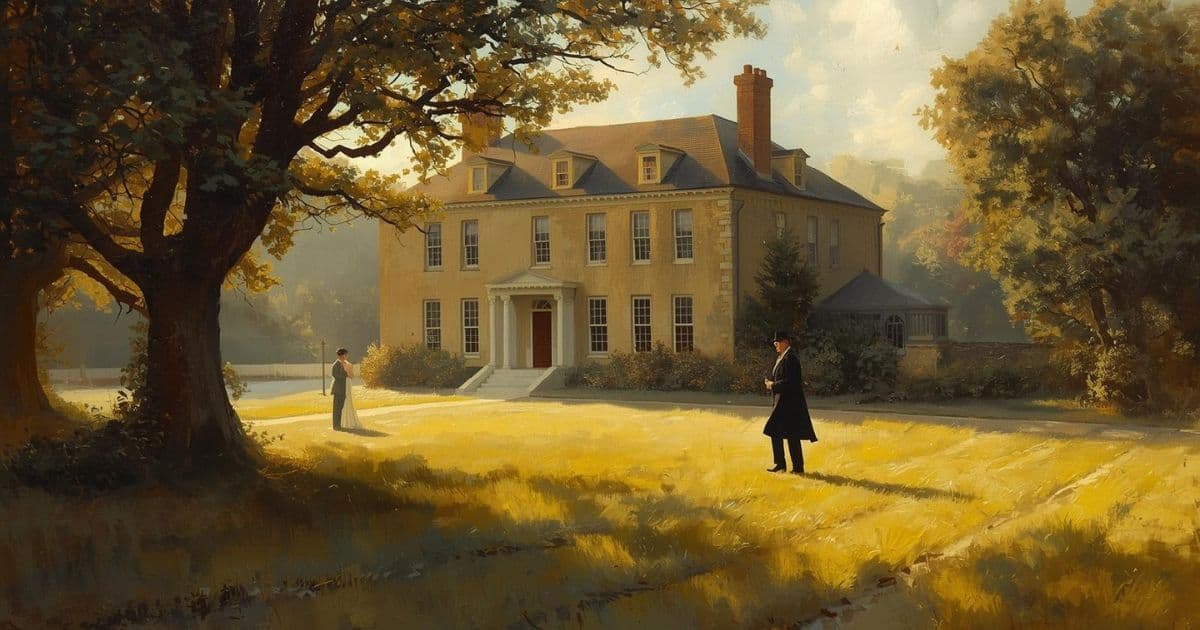
An excerpt from the original text.(complete · 7168 words)
pisode 1: Telemachus
Stately, plump Buck Mulligan came from the stairhead, bearing a bowl of
lather on which a mirror and a razor lay crossed. A yellow
dressinggown, ungirdled, was sustained gently behind him on the mild
morning air. He held the bowl aloft and intoned:
—Introibo ad altare Dei.
Halted, he peered down the dark winding stairs and called out coarsely:
—Come up, Kinch! Come up, you fearful jesuit!
Solemnly he came forward and mounted the round gunrest. He faced about
and blessed gravely thrice the tower, the surrounding land and the
awaking mountains. Then, catching sight of Stephen Dedalus, he bent
towards him and made rapid crosses in the air, gurgling in his throat
and shaking his head. Stephen Dedalus, displeased and sleepy, leaned
his arms on the top of the staircase and looked coldly at the shaking
gurgling face that blessed him, equine in its length, and at the light
untonsured hair, grained and hued like pale oak.
Buck Mulligan peeped an instant under the mirror and then covered the
bowl smartly.
—Back to barracks! he said sternly.
He added in a preacher’s tone:
—For this, O dearly beloved, is the genuine Christine: body and soul
and blood and ouns. Slow music, please. Shut your eyes, gents. One
moment. A little trouble about those white corpuscles. Silence, all.
He peered sideways up and gave a long slow whistle of call, then paused
awhile in rapt attention, his even white teeth glistening here and
there with gold points. Chrysostomos. Two strong shrill whistles
answered through the calm.
—Thanks, old chap, he cried briskly. That will do nicely. Switch off
the current, will you?
He skipped off the gunrest and looked gravely at his watcher, gathering
about his legs the loose folds of his gown. The plump shadowed face and
sullen oval jowl recalled a prelate, patron of arts in the middle ages.
A pleasant smile broke quietly over his lips.
—The mockery of it! he said gaily. Your absurd name, an ancient Greek!
He pointed his finger in friendly jest and went over to the parapet,
laughing to himself. Stephen Dedalus stepped up, followed him wearily
halfway and sat down on the edge of the gunrest, watching him still as
he propped his mirror on the parapet, dipped the brush in the bowl and
lathered cheeks and neck.
Buck Mulligan’s gay voice went on.
—My name is absurd too: Malachi Mulligan, two dactyls. But it has a
Hellenic ring, hasn’t it? Tripping and sunny like the buck himself. We
must go to Athens. Will you come if I can get the aunt to fork out
twenty quid?
He laid the brush aside and, laughing with delight, cried:
—Will he come? The jejune jesuit!
Ceasing, he began to shave with care.
—Tell me, Mulligan, Stephen said quietly.
—Yes, my love?
—How long is Haines going to stay in this tower?
Buck Mulligan showed a shaven cheek over his right shoulder.
—God, isn’t he dreadful? he said frankly. A ponderous Saxon. He thinks
you’re not a gentleman. God, these bloody English! Bursting with money
and indigestion. Because he comes from Oxford. You know, Dedalus, you
have the real Oxford manner. He can’t make you out. O, my name for you
is the best: Kinch, the knife-blade.
He shaved warily over his chin.
—He was raving all night about a black panther, Stephen said. Where is
his guncase?
—A woful lunatic! Mulligan said. Were you in a funk?
—I was, Stephen said with energy and growing fear. Out here in the dark
with a man I don’t know raving and moaning to himself about shooting a
black panther. You saved men from drowning. I’m not a hero, however. If
he stays on here I am off.
Buck Mulligan frowned at the lather on his razorblade. He hopped down
from his perch and began to search his trouser pockets hastily.
—Scutter! he cried thickly.
He came over to the gunrest and, thrusting a hand into Stephen’s upper
pocket, said:
—Lend us a loan of your noserag to wipe my razor.
Stephen suffered him to pull out and hold up on show by its corner a
dirty crumpled handkerchief. Buck Mulligan wiped the razorblade neatly.
Then, gazing over the handkerchief, he said:
—The bard’s noserag! A new art colour for our Irish poets: snotgreen.
You can almost taste it, can’t you?
He mounted to the parapet again and gazed out over Dublin bay, his fair
oakpale hair stirring slightly.
—God! he said quietly. Isn’t the sea what Algy calls it: a great sweet
mother? The snotgreen sea. The scrotumtightening sea. Epi oinopa
ponton. Ah, Dedalus, the Greeks! I must teach you. You must read them
in the original. Thalatta! Thalatta! She is our great sweet mother.
Come and look.
Stephen stood up and went over to the parapet. Leaning on it he looked
down on the water and on the mailboat clearing the harbourmouth of
Kingstown.
—Our mighty mother! Buck Mulligan said.
He turned abruptly his grey searching eyes from the sea to Stephen’s
face.
—The aunt thinks you killed your mother, he said. That’s why she won’t
let me have anything to do with you.
—Someone killed her, Stephen said gloomily.
—You could have knelt down, damn it, Kinch, when your dying mother
asked you, Buck Mulligan said. I’m hyperborean as much as you. But to
think of your mother begging you with her last breath to kneel down and
pray for her. And you refused. There is something sinister in you....
He broke off and lathered again lightly his farther cheek. A tolerant
smile curled his lips.
—But a lovely mummer! he murmured to himself. Kinch, the loveliest
mummer of them all!
He shaved evenly and with care, in silence, seriously.
Stephen, an elbow rested on the jagged granite, leaned his palm against
his brow and gazed at the fraying edge of his shiny black coat-sleeve.
Pain, that was not yet the pain of love, fretted his heart. Silently,
in a dream she had come to him after her death, her wasted body within
its loose brown graveclothes giving off an odour of wax and rosewood,
her breath, that had bent upon him, mute, reproachful, a faint odour of
wetted ashes. Across the threadbare cuffedge he saw the sea hailed as a
great sweet mother by the wellfed voice beside him. The ring of bay and
skyline held a dull green mass of liquid. A bowl of white china had
stood beside her deathbed holding the green sluggish bile which she had
torn up from her rotting liver by fits of loud groaning vomiting.
Buck Mulligan wiped again his razorblade.
—Ah, poor dogsbody! he said in a kind voice. I must give you a shirt
and a few noserags. How are the secondhand breeks?
—They fit well enough, Stephen answered.
Buck Mulligan attacked the hollow beneath his underlip.
—The mockery of it, he said contentedly. Secondleg they should be. God
knows what poxy bowsy left them off. I have a lovely pair with a hair
stripe, grey. You’ll look spiffing in them. I’m not joking, Kinch. You
look damn well when you’re dressed.
—Thanks, Stephen said. I can’t wear them if they are grey.
—He can’t wear them, Buck Mulligan told his face in the mirror.
Etiquette is etiquette. He kills his mother but he can’t wear grey
trousers.
He folded his razor neatly and with stroking palps of fingers felt the
smooth skin.
Stephen turned his gaze from the sea and to the plump face with its
smokeblue mobile eyes.
—That fellow I was with in the Ship last night, said Buck Mulligan,
says you have g. p. i. He’s up in Dottyville with Connolly Norman.
General paralysis of the insane!
He swept the mirror a half circle in the air to flash the tidings
abroad in sunlight now radiant on the sea. His curling shaven lips
laughed and the edges of his white glittering teeth. Laughter seized
all his strong wellknit trunk.
—Look at yourself, he said, you dreadful bard!
Stephen bent forward and peered at the mirror held out to him, cleft by
a crooked crack. Hair on end. As he and others see me. Who chose this
face for me? This dogsbody to rid of vermin. It asks me too.
—I pinched it out of the skivvy’s room, Buck Mulligan said. It does her
all right. The aunt always keeps plainlooking servants for Malachi.
Lead him not into temptation. And her name is Ursula.
Laughing again, he brought the mirror away from Stephen’s peering eyes.
—The rage of Caliban at not seeing his face in a mirror, he said. If
Wilde were only alive to see you!
Drawing back and pointing, Stephen said with bitterness:
—It is a symbol of Irish art. The cracked lookingglass of a servant.
Buck Mulligan suddenly linked his arm in Stephen’s and walked with him
round the tower, his razor and mirror clacking in the pocket where he
had thrust them.
—It’s not fair to tease you like that, Kinch, is it? he said kindly.
God knows you have more spirit than any of them.
Parried again. He fears the lancet of my art as I fear that of his. The
cold steel pen.
—Cracked lookingglass of a servant! Tell that to the oxy chap
downstairs and touch him for a guinea. He’s stinking with money and
thinks you’re not a gentleman. His old fellow made his tin by selling
jalap to Zulus or some bloody swindle or other. God, Kinch, if you and
I could only work together we might do something for the island.
Hellenise it.
Cranly’s arm. His arm.
—And to think of your having to beg from these swine. I’m the only one
that knows what you are. Why don’t you trust me more? What have you up
your nose against me? Is it Haines? If he makes any noise here I’ll
bring down Seymour and we’ll give him a ragging worse than they gave
Clive Kempthorpe.
Young shouts of moneyed voices in Clive Kempthorpe’s rooms. Palefaces:
they hold their ribs with laughter, one clasping another. O, I shall
expire! Break the news to her gently, Aubrey! I shall die! With slit
ribbons of his shirt whipping the air he hops and hobbles round the
table, with trousers down at heels, chased by Ades of Magdalen with the
tailor’s shears. A scared calf’s face gilded with marmalade. I don’t
want to be debagged! Don’t you play the giddy ox with me!
Shouts from the open window startling evening in the quadrangle. A deaf
gardener, aproned, masked with Matthew Arnold’s face, pushes his mower
on the sombre lawn watching narrowly the dancing motes of grasshalms.
To ourselves... new paganism... omphalos.
—Let him stay, Stephen said. There’s nothing wrong with him except at
night.
—Then what is it? Buck Mulligan asked impatiently. Cough it up. I’m
quite frank with you. What have you against me now?
They halted, looking towards the blunt cape of Bray Head that lay on
the water like the snout of a sleeping whale. Stephen freed his arm
quietly.
—Do you wish me to tell you? he asked.
—Yes, what is it? Buck Mulligan answered. I don’t remember anything.
He looked in Stephen’s face as he spoke. A light wind passed his brow,
fanning softly his fair uncombed hair and stirring silver points of
anxiety in his eyes.
Stephen, depressed by his own voice, said:
—Do you remember the first day I went to your house after my mother’s
death?
Buck Mulligan frowned quickly and said:
—What? Where? I can’t remember anything. I remember only ideas and
sensations. Why? What happened in the name of God?
—You were making tea, Stephen said, and went across the landing to get
more hot water. Your mother and some visitor came out of the
drawingroom. She asked you who was in your room.
—Yes? Buck Mulligan said. What did I say? I forget.
—You said, Stephen answered, O, it’s only Dedalus whose mother is
beastly dead.
A flush which made him seem younger and more engaging rose to Buck
Mulligan’s cheek.
—Did I say that? he asked. Well? What harm is that?
He shook his constraint from him nervously.
—And what is death, he asked, your mother’s or yours or my own? You saw
only your mother die. I see them pop off every day in the Mater and
Richmond and cut up into tripes in the dissectingroom. It’s a beastly
thing and nothing else. It simply doesn’t matter. You wouldn’t kneel
down to pray for your mother on her deathbed when she asked you. Why?
Because you have the cursed jesuit strain in you, only it’s injected
the wrong way. To me it’s all a mockery and beastly. Her cerebral lobes
are not functioning. She calls the doctor sir Peter Teazle and picks
buttercups off the quilt. Humour her till it’s over. You crossed her
last wish in death and yet you sulk with me because I don’t whinge like
some hired mute from Lalouette’s. Absurd! I suppose I did say it. I
didn’t mean to offend the memory of your mother.
He had spoken himself into boldness. Stephen, shielding the gaping
wounds which the words had left in his heart, said very coldly:
—I am not thinking of the offence to my mother.
—Of what then? Buck Mulligan asked.
—Of the offence to me, Stephen answered.
Buck Mulligan swung round on his heel.
—O, an impossible person! he exclaimed.
He walked off quickly round the parapet. Stephen stood at his post,
gazing over the calm sea towards the headland. Sea and headland now
grew dim. Pulses were beating in his eyes, veiling their sight, and he
felt the fever of his cheeks.
A voice within the tower called loudly:
—Are you up there, Mulligan?
—I’m coming, Buck Mulligan answered.
He turned towards Stephen and said:
—Look at the sea. What does it care about offences? Chuck Loyola,
Kinch, and come on down. The Sassenach wants his morning rashers.
His head halted again for a moment at the top of the staircase, level
with the roof:
—Don’t mope over it all day, he said. I’m inconsequent. Give up the
moody brooding.
His head vanished but the drone of his descending voice boomed out of
the stairhead:
And no more turn aside and brood
Upon love’s bitter mystery
For Fergus rules the brazen cars.
Woodshadows floated silently by through the morning peace from the
stairhead seaward where he gazed. Inshore and farther out the mirror of
water whitened, spurned by lightshod hurrying feet. White breast of the
dim sea. The twining stresses, two by two. A hand plucking the
harpstrings, merging their twining chords. Wavewhite wedded words
shimmering on the dim tide.
A cloud began to cover the sun slowly, wholly, shadowing the bay in
deeper green. It lay beneath him, a bowl of bitter waters. Fergus’
song: I sang it alone in the house, holding down the long dark chords.
Her door was open: she wanted to hear my music. Silent with awe and
pity I went to her bedside. She was crying in her wretched bed. For
those words, Stephen: love’s bitter mystery.
Where now?
Her secrets: old featherfans, tasselled dancecards, powdered with musk,
a gaud of amber beads in her locked drawer. A birdcage hung in the
sunny window of her house when she was a girl. She heard old Royce sing
in the pantomime of Turko the Terrible and laughed with others when he
sang:
I am the boy
That can enjoy
Invisibility.
Phantasmal mirth, folded away: muskperfumed.
And no more turn aside and brood.
Folded away in the memory of nature with her toys. Memories beset his
brooding brain. Her glass of water from the kitchen tap when she had
approached the sacrament. A cored apple, filled with brown sugar,
roasting for her at the hob on a dark autumn evening. Her shapely
fingernails reddened by the blood of squashed lice from the children’s
shirts.
In a dream, silently, she had come to him, her wasted body within its
loose graveclothes giving off an odour of wax and rosewood, her breath,
bent over him with mute secret words, a faint odour of wetted ashes.
Her glazing eyes, staring out of death, to shake and bend my soul. On
me alone. The ghostcandle to light her agony. Ghostly light on the
tortured face. Her hoarse loud breath rattling in horror, while all
prayed on their knees. Her eyes on me to strike me down. Liliata
rutilantium te confessorum turma circumdet: iubilantium te virginum
chorus excipiat.
Ghoul! Chewer of corpses!
No, mother! Let me be and let me live.
—Kinch ahoy!
Buck Mulligan’s voice sang from within the tower. It came nearer up the
staircase, calling again. Stephen, still trembling at his soul’s cry,
heard warm running sunlight and in the air behind him friendly words.
—Dedalus, come down, like a good mosey. Breakfast is ready. Haines is
apologising for waking us last night. It’s all right.
—I’m coming, Stephen said, turning.
—Do, for Jesus’ sake, Buck Mulligan said. For my sake and for all our
sakes.
His head disappeared and reappeared.
—I told him your symbol of Irish art. He says it’s very clever. Touch
him for a quid, will you? A guinea, I mean.
—I get paid this morning, Stephen said.
—The school kip? Buck Mulligan said. How much? Four quid? Lend us one.
—If you want it, Stephen said.
—Four shining sovereigns, Buck Mulligan cried with delight. We’ll have
a glorious drunk to astonish the druidy druids. Four omnipotent
sovereigns.
He flung up his hands and tramped down the stone stairs, singing out of
tune with a Cockney accent:
O, won’t we have a merry time,
Drinking whisky, beer and wine!
On coronation,
Coronation day!
O, won’t we have a merry time
On coronation day!
Warm sunshine merrying over the sea. The nickel shavingbowl shone,
forgotten, on the parapet. Why should I bring it down? Or leave it
there all day, forgotten friendship?
He went over to it, held it in his hands awhile, feeling its coolness,
smelling the clammy slaver of the lather in which the brush was stuck.
So I carried the boat of incense then at Clongowes. I am another now
and yet the same. A servant too. A server of a servant.
In the gloomy domed livingroom of the tower Buck Mulligan’s gowned form
moved briskly to and fro about the hearth, hiding and revealing its
yellow glow. Two shafts of soft daylight fell across the flagged floor
from the high barbacans: and at the meeting of their rays a cloud of
coalsmoke and fumes of fried grease floated, turning.
—We’ll be choked, Buck Mulligan said. Haines, open that door, will you?
Stephen laid the shavingbowl on the locker. A tall figure rose from the
hammock where it had been sitting, went to the doorway and pulled open
the inner doors.
—Have you the key? a voice asked.
—Dedalus has it, Buck Mulligan said. Janey Mack, I’m choked!
He howled, without looking up from the fire:
—Kinch!
—It’s in the lock, Stephen said, coming forward.
The key scraped round harshly twice and, when the heavy door had been
set ajar, welcome light and bright air entered. Haines stood at the
doorway, looking out. Stephen haled his upended valise to the table and
sat down to wait. Buck Mulligan tossed the fry on to the dish beside
him. Then he carried the dish and a large teapot over to the table, set
them down heavily and sighed with relief.
—I’m melting, he said, as the candle remarked when... But, hush! Not a
word more on that subject! Kinch, wake up! Bread, butter, honey.
Haines, come in. The grub is ready. Bless us, O Lord, and these thy
gifts. Where’s the sugar? O, jay, there’s no milk.
Stephen fetched the loaf and the pot of honey and the buttercooler from
the locker. Buck Mulligan sat down in a sudden pet.
—What sort of a kip is this? he said. I told her to come after eight.
—We can drink it black, Stephen said thirstily. There’s a lemon in the
locker.
—O, damn you and your Paris fads! Buck Mulligan said. I want Sandycove
milk.
Haines came in from the doorway and said quietly:
—That woman is coming up with the milk.
—The blessings of God on you! Buck Mulligan cried, jumping up from his
chair. Sit down. Pour out the tea there. The sugar is in the bag. Here,
I can’t go fumbling at the damned eggs.
He hacked through the fry on the dish and slapped it out on three
plates, saying:
—In nomine Patris et Filii et Spiritus Sancti.
Haines sat down to pour out the tea.
—I’m giving you two lumps each, he said. But, I say, Mulligan, you do
make strong tea, don’t you?
Buck Mulligan, hewing thick slices from the loaf, said in an old
woman’s wheedling voice:
—When I makes tea I makes tea, as old mother Grogan said. And when I
makes water I makes water.
—By Jove, it is tea, Haines said.
Buck Mulligan went on hewing and wheedling:
—So I do, Mrs Cahill, says she. Begob, ma’am, says Mrs Cahill, God
send you don’t make them in the one pot.
He lunged towards his messmates in turn a thick slice of bread, impaled
on his knife.
—That’s folk, he said very earnestly, for your book, Haines. Five lines
of text and ten pages of notes about the folk and the fishgods of
Dundrum. Printed by the weird sisters in the year of the big wind.
He turned to Stephen and asked in a fine puzzled voice, lifting his
brows:
—Can you recall, brother, is mother Grogan’s tea and water pot spoken
of in the Mabinogion or is it in the Upanishads?
—I doubt it, said Stephen gravely.
—Do you now? Buck Mulligan said in the same tone. Your reasons, pray?
—I fancy, Stephen said as he ate, it did not exist in or out of the
Mabinogion. Mother Grogan was, one imagines, a kinswoman of Mary Ann.
Buck Mulligan’s face smiled with delight.
—Charming! he said in a finical sweet voice, showing his white teeth
and blinking his eyes pleasantly. Do you think she was? Quite charming!
Then, suddenly overclouding all his features, he growled in a hoarsened
rasping voice as he hewed again vigorously at the loaf:
_—For old Mary Ann
She doesn’t care a damn.
But, hising up her petticoats..._
He crammed his mouth with fry and munched and droned.
The doorway was darkened by an entering form.
—The milk, sir!
—Come in, ma’am, Mulligan said. Kinch, get the jug.
An old woman came forward and stood by Stephen’s elbow.
—That’s a lovely morning, sir, she said. Glory be to God.
—To whom? Mulligan said, glancing at her. Ah, to be sure!
Stephen reached back and took the milkjug from the locker.
—The islanders, Mulligan said to Haines casually, speak frequently of
the collector of prepuces.
—How much, sir? asked the old woman.
—A quart, Stephen said.
He watched her pour into the measure and thence into the jug rich white
milk, not hers. Old shrunken paps. She poured again a measureful and a
tilly. Old and secret she had entered from a morning world, maybe a
messenger. She praised the goodness of the milk, pouring it out.
Crouching by a patient cow at daybreak in the lush field, a witch on
her toadstool, her wrinkled fingers quick at the squirting dugs. They
lowed about her whom they knew, dewsilky cattle. Silk of the kine and
poor old woman, names given her in old times. A wandering crone, lowly
form of an immortal serving her conqueror and her gay betrayer, their
common cuckquean, a messenger from the secret morning. To serve or to
upbraid, whether he could not tell: but scorned to beg her favour.
—It is indeed, ma’am, Buck Mulligan said, pouring milk into their cups.
—Taste it, sir, she said.
He drank at her bidding.
—If we could live on good food like that, he said to her somewhat
loudly, we wouldn’t have the country full of rotten teeth and rotten
guts. Living in a bogswamp, eating cheap food and the streets paved
with dust, horsedung and consumptives’ spits.
—Are you a medical student, sir? the old woman asked.
—I am, ma’am, Buck Mulligan answered.
—Look at that now, she said.
Stephen listened in scornful silence. She bows her old head to a voice
that speaks to her loudly, her bonesetter, her medicineman: me she
slights. To the voice that will shrive and oil for the grave all there
is of her but her woman’s unclean loins, of man’s flesh made not in
God’s likeness, the serpent’s prey. And to the loud voice that now bids
her be silent with wondering unsteady eyes.
—Do you understand what he says? Stephen asked her.
—Is it French you are talking, sir? the old woman said to Haines.
Haines spoke to her again a longer speech, confidently.
—Irish, Buck Mulligan said. Is there Gaelic on you?
—I thought it was Irish, she said, by the sound of it. Are you from the
west, sir?
—I am an Englishman, Haines answered.
—He’s English, Buck Mulligan said, and he thinks we ought to speak
Irish in Ireland.
—Sure we ought to, the old woman said, and I’m ashamed I don’t speak
the language myself. I’m told it’s a grand language by them that knows.
—Grand is no name for it, said Buck Mulligan. Wonderful entirely. Fill
us out some more tea, Kinch. Would you like a cup, ma’am?
—No, thank you, sir, the old woman said, slipping the ring of the
milkcan on her forearm and about to go.
Haines said to her:
—Have you your bill? We had better pay her, Mulligan, hadn’t we?
Stephen filled again the three cups.
—Bill, sir? she said, halting. Well, it’s seven mornings a pint at
twopence is seven twos is a shilling and twopence over and these three
mornings a quart at fourpence is three quarts is a shilling. That’s a
shilling and one and two is two and two, sir.
Buck Mulligan sighed and, having filled his mouth with a crust thickly
buttered on both sides, stretched forth his legs and began to search
his trouser pockets.
—Pay up and look pleasant, Haines said to him, smiling.
Stephen filled a third cup, a spoonful of tea colouring faintly the
thick rich milk. Buck Mulligan brought up a florin, twisted it round in
his fingers and cried:
—A miracle!
He passed it along the table towards the old woman, saying:
—Ask nothing more of me, sweet. All I can give you I give.
Stephen laid the coin in her uneager hand.
—We’ll owe twopence, he said.
—Time enough, sir, she said, taking the coin. Time enough. Good
morning, sir.
She curtseyed and went out, followed by Buck Mulligan’s tender chant:
_—Heart of my heart, were it more,
More would be laid at your feet._
He turned to Stephen and said:
—Seriously, Dedalus. I’m stony. Hurry out to your school kip and bring
us back some money. Today the bards must drink and junket. Ireland
expects that every man this day will do his duty.
—That reminds me, Haines said, rising, that I have to visit your
national library today.
—Our swim first, Buck Mulligan said.
He turned to Stephen and asked blandly:
—Is this the day for your monthly wash, Kinch?
Then he said to Haines:
—The unclean bard makes a point of washing once a month.
—All Ireland is washed by the gulfstream, Stephen said as he let honey
trickle over a slice of the loaf.
Haines from the corner where he was knotting easily a scarf about the
loose collar of his tennis shirt spoke:
—I intend to make a collection of your sayings if you will let me.
Speaking to me. They wash and tub and scrub. Agenbite of inwit.
Conscience. Yet here’s a spot.
—That one about the cracked lookingglass of a servant being the symbol
of Irish art is deuced good.
Buck Mulligan kicked Stephen’s foot under the table and said with
warmth of tone:
—Wait till you hear him on Hamlet, Haines.
—Well, I mean it, Haines said, still speaking to Stephen. I was just
thinking of it when that poor old creature came in.
—Would I make any money by it? Stephen asked.
Haines laughed and, as he took his soft grey hat from the holdfast of
the hammock, said:
—I don’t know, I’m sure.
He strolled out to the doorway. Buck Mulligan bent across to Stephen
and said with coarse vigour:
—You put your hoof in it now. What did you say that for?
—Well? Stephen said. The problem is to get money. From whom? From the
milkwoman or from him. It’s a toss up, I think.
—I blow him out about you, Buck Mulligan said, and then you come along
with your lousy leer and your gloomy jesuit jibes.
—I see little hope, Stephen said, from her or from him.
Buck Mulligan sighed tragically and laid his hand on Stephen’s arm.
—From me, Kinch, he said.
In a suddenly changed tone he added:
—To tell you the God’s truth I think you’re right. Damn all else they
are good for. Why don’t you play them as I do? To hell with them all.
Let us get out of the kip.
He stood up, gravely ungirdled and disrobed himself of his gown, saying
resignedly:
—Mulligan is stripped of his garments.
He emptied his pockets on to the table.
—There’s your snotrag, he said.
And putting on his stiff collar and rebellious tie he spoke to them,
chiding them, and to his dangling watchchain. His hands plunged and
rummaged in his trunk while he called for a clean handkerchief. God,
we’ll simply have to dress the character. I want puce gloves and green
boots. Contradiction. Do I contradict myself? Very well then, I
contradict myself. Mercurial Malachi. A limp black missile flew out of
his talking hands.
—And there’s your Latin quarter hat, he said.
Stephen picked it up and put it on. Haines called to them from the
doorway:
—Are you coming, you fellows?
—I’m ready, Buck Mulligan answered, going towards the door. Come out,
Kinch. You have eaten all we left, I suppose. Resigned he passed out
with grave words and gait, saying, wellnigh with sorrow:
—And going forth he met Butterly.
Stephen, taking his ashplant from its leaningplace, followed them out
and, as they went down the ladder, pulled to the slow iron door and
locked it. He put the huge key in his inner pocket.
At the foot of the ladder Buck Mulligan asked:
—Did you bring the key?
—I have it, Stephen said, preceding them.
He walked on. Behind him he heard Buck Mulligan club with his heavy
bathtowel the leader shoots of ferns or grasses.
—Down, sir! How dare you, sir!
Haines asked:
—Do you pay rent for this tower?
—Twelve quid, Buck Mulligan said.
—To the secretary of state for war, Stephen added over his shoulder.
They halted while Haines surveyed the tower and said at last:
—Rather bleak in wintertime, I should say. Martello you call it?
—Billy Pitt had them built, Buck Mulligan said, when the French were on
the sea. But ours is the omphalos.
—What is your idea of Hamlet? Haines asked Stephen.
—No, no, Buck Mulligan shouted in pain. I’m not equal to Thomas Aquinas
and the fiftyfive reasons he has made out to prop it up. Wait till I
have a few pints in me first.
He turned to Stephen, saying, as he pulled down neatly the peaks of his
primrose waistcoat:
—You couldn’t manage it under three pints, Kinch, could you?
—It has waited so long, Stephen said listlessly, it can wait longer.
—You pique my curiosity, Haines said amiably. Is it some paradox?
—Pooh! Buck Mulligan said. We have grown out of Wilde and paradoxes.
It’s quite simple. He proves by algebra that Hamlet’s grandson is
Shakespeare’s grandfather and that he himself is the ghost of his own
father.
—What? Haines said, beginning to point at Stephen. He himself?
Buck Mulligan slung his towel stolewise round his neck and, bending in
loose laughter, said to Stephen’s ear:
—O, shade of Kinch the elder! Japhet in search of a father!
—We’re always tired in the morning, Stephen said to Haines. And it is
rather long to tell.
Buck Mulligan, walking forward again, raised his hands.
—The sacred pint alone can unbind the tongue of Dedalus, he said.
—I mean to say, Haines explained to Stephen as they followed, this
tower and these cliffs here remind me somehow of Elsinore. That
beetles o’er his base into the sea, isn’t it?
Buck Mulligan turned suddenly for an instant towards Stephen but did
not speak. In the bright silent instant Stephen saw his own image in
cheap dusty mourning between their gay attires.
—It’s a wonderful tale, Haines said, bringing them to halt again.
Eyes, pale as the sea the wind had freshened, paler, firm and prudent.
The seas’ ruler, he gazed southward over the bay, empty save for the
smokeplume of the mailboat vague on the bright skyline and a sail
tacking by the Muglins.
—I read a theological interpretation of it somewhere, he said bemused.
The Father and the Son idea. The Son striving to be atoned with the
Father.
Buck Mulligan at once put on a blithe broadly smiling face. He looked
at them, his wellshaped mouth open happily, his eyes, from which he had
suddenly withdrawn all shrewd sense, blinking with mad gaiety. He moved
a doll’s head to and fro, the brims of his Panama hat quivering, and
began to chant in a quiet happy foolish voice:
—I’m the queerest young fellow that ever you heard.
My mother’s a jew, my father’s a bird.
With Joseph the joiner I cannot agree.
So here’s to disciples and Calvary.
He held up a forefinger of warning.
—If anyone thinks that I amn’t divine
He’ll get no free drinks when I’m making the wine
But have to drink water and wish it were plain
That I make when the wine becomes water again.
He tugged swiftly at Stephen’s ashplant in farewell and, running
forward to a brow of the cliff, fluttered his hands at his sides like
fins or wings of one about to rise in the air, and chanted:
—Goodbye, now, goodbye! Write down all I said
And tell Tom, Dick and Harry I rose from the dead.
What’s bred in the bone cannot fail me to fly
And Olivet’s breezy... Goodbye, now, goodbye!
He capered before them down towards the fortyfoot hole, fluttering his
winglike hands, leaping nimbly, Mercury’s hat quivering in the fresh
wind that bore back to them his brief birdsweet cries.
Haines, who had been laughing guardedly, walked on beside Stephen and
said:
—We oughtn’t to laugh, I suppose. He’s rather blasphemous. I’m not a
believer myself, that is to say. Still his gaiety takes the harm out of
it somehow, doesn’t it? What did he call it? Joseph the Joiner?
—The ballad of joking Jesus, Stephen answered.
—O, Haines said, you have heard it before?
—Three times a day, after meals, Stephen said drily.
—You’re not a believer, are you? Haines asked. I mean, a believer in
the narrow sense of the word. Creation from nothing and miracles and a
personal God.
—There’s only one sense of the word, it seems to me, Stephen said.
Haines stopped to take out a smooth silver case in which twinkled a
green stone. He sprang it open with his thumb and offered it.
—Thank you, Stephen said, taking a cigarette.
Haines helped himself and snapped the case to. He put it back in his
sidepocket and took from his waistcoatpocket a nickel tinderbox, sprang
it open too, and, having lit his cigarette, held the flaming spunk
towards Stephen in the shell of his hands.
—Yes, of course, he said, as they went on again. Either you believe or
you don’t, isn’t it? Personally I couldn’t stomach that idea of a
personal God. You don’t stand for that, I suppose?
—You behold in me, Stephen said with grim displeasure, a horrible
example of free thought.
He walked on, waiting to be spoken to, trailing his ashplant by his
side. Its ferrule followed lightly on the path, squealing at his heels.
My familiar, after me, calling, Steeeeeeeeeeeephen! A wavering line
along the path. They will walk on it tonight, coming here in the dark.
He wants that key. It is mine. I paid the rent. Now I eat his salt
bread. Give him the key too. All. He will ask for it. That was in his
eyes.
—After all, Haines began...
Stephen turned and saw that the cold gaze which had measured him was
not all unkind.
—After all, I should think you are able to free yourself. You are your
own master, it seems to me.
—I am a servant of two masters, Stephen said, an English and an
Italian.
—Italian? Haines said.
A crazy queen, old and jealous. Kneel down before me.
—And a third, Stephen said, there is who wants me for odd jobs.
—Italian? Haines said again. What do you mean?
—The imperial British state, Stephen answered, his colour rising, and
the holy Roman catholic and apostolic church.
Haines detached from his underlip some fibres of tobacco before he
spoke.
—I can quite understand that, he said calmly. An Irishman must think
like that, I daresay. We feel in England that we have treated you
rather unfairly. It seems history is to blame.
The proud potent titles clanged over Stephen’s memory the triumph of
their brazen bells: et unam sanctam catholicam et apostolicam
ecclesiam: the slow growth and change of rite and dogma like his own
rare thoughts, a chemistry of stars. Symbol of the apostles in the mass
for pope Marcellus, the voices blended, singing alone loud in
affirmation: and behind their chant the vigilant angel of the church
militant disarmed and menaced her heresiarchs. A horde of heresies
fleeing with mitres awry: Photius and the brood of mockers of whom
Mulligan was one, and Arius, warring his life long upon the
consubstantiality of the Son with the Father, and Valentine, spurning
Christ’s terrene body, and the subtle African heresiarch Sabellius who
held that the Father was Himself His own Son. Words Mulligan had spoken
a moment since in mockery to the stranger. Idle mockery. The void
awaits surely all them that weave the wind: a menace, a disarming and a
worsting from those embattled angels of the church, Michael’s host, who
defend her ever in the hour of conflict with their lances and their
shields.
Hear, hear! Prolonged applause. Zut! Nom de Dieu!
—Of course I’m a Britisher, Haines’s voice said, and I feel as one. I
don’t want to see my country fall into the hands of German jews either.
That’s our national problem, I’m afraid, just now.
Two men stood at the verge of the cliff, watching: businessman,
boatman.
—She’s making for Bullock harbour.
The boatman nodded towards the north of the bay with some disdain.
—There’s five fathoms out there, he said. It’ll be swept up that way
when the tide comes in about one. It’s nine days today.
The man that was drowned. A sail veering about the blank bay waiting
for a swollen bundle to bob up, roll over to the sun a puffy face,
saltwhite. Here I am.
They followed the winding path down to the creek. Buck Mulligan stood
on a stone, in shirtsleeves, his unclipped tie rippling over his
shoulder. A young man clinging to a spur of rock near him, moved slowly
frogwise his green legs in the deep jelly of the water.
—Is the brother with you, Malachi?
—Down in Westmeath. With the Bannons.
—Still there? I got a card from Bannon. Says he found a sweet young
thing down there. Photo girl he calls her.
—Snapshot, eh? Brief exposure.
Buck Mulligan sat down to unlace his boots. An elderly man shot up near
the spur of rock a blowing red face. He scrambled up by the stones,
water glistening on his pate and on its garland of grey hair, water
rilling over his chest and paunch and spilling jets out of his black
sagging loincloth.
Buck Mulligan made way for him to scramble past and, glancing at Haines
and Stephen, crossed himself piously with his thumbnail at brow and
lips and breastbone.
—Seymour’s back in town, the young man said, grasping again his spur of
rock. Chucked medicine and going in for the army.
—Ah, go to God! Buck Mulligan said.
—Going over next week to stew. You know that red Carlisle girl, Lily?
—Yes.
—Spooning with him last night on the pier. The father is rotto with
money.
—Is she up the pole?
—Better ask Seymour that.
—Seymour a bleeding officer! Buck Mulligan said.
He nodded to himself as he drew off his trousers and stood up, saying
tritely:
—Redheaded women buck like goats.
He broke off in alarm, feeling his side under his flapping shirt.
—My twelfth rib is gone, he cried. I’m the Übermensch. Toothless
Kinch and I, the supermen.
He struggled out of his shirt and flung it behind him to where his
clothes lay.
—Are you going in here, Malachi?
—Yes. Make room in the bed.
The young man shoved himself backward through the water and reached the
middle of the creek in two long clean strokes. Haines sat down on a
stone, smoking.
—Are you not coming in? Buck Mulligan asked.
—Later on, Haines said. Not on my breakfast.
Stephen turned away.
—I’m going, Mulligan, he said.
—Give us that key, Kinch, Buck Mulligan said, to keep my chemise flat.
Stephen handed him the key. Buck Mulligan laid it across his heaped
clothes.
—And twopence, he said, for a pint. Throw it there.
Stephen threw two pennies on the soft heap. Dressing, undressing. Buck
Mulligan erect, with joined hands before him, said solemnly:
—He who stealeth from the poor lendeth to the Lord. Thus spake
Zarathustra.
His plump body plunged.
—We’ll see you again, Haines said, turning as Stephen walked up the
path and smiling at wild Irish.
Horn of a bull, hoof of a horse, smile of a Saxon.
—The Ship, Buck Mulligan cried. Half twelve.
—Good, Stephen said.
He walked along the upwardcurving path.
Liliata rutilantium.
Turma circumdet.
Iubilantium te virginum.
The priest’s grey nimbus in a niche where he dressed discreetly. I will
not sleep here tonight. Home also I cannot go.
A voice, sweettoned and sustained, called to him from the sea. Turning
the curve he waved his hand. It called again. A sleek brown head, a
seal’s, far out on the water, round.
Usurper.
Master this chapter. Complete your experience
Purchase the complete book to access all chapters and support classic literature
As an Amazon Associate, we earn a small commission from qualifying purchases at no additional cost to you.
Available in paperback, hardcover, and e-book formats
Let's Analyse the Pattern
Defining your worth through relationships with people who don't truly value you, staying trapped by dependency that masquerades as connection.
Why This Matters
Connect literature to life
This chapter teaches how to identify when someone holds power over you through your needs and uses that leverage to diminish you.
Practice This Today
This week, notice when someone treats your vulnerability as entertainment—ask yourself if you're staying because the relationship serves you or because you're afraid you can't survive without it.
Now let's explore the literary elements.
Key Quotes & Analysis
"It is a symbol of Irish art. The cracked looking-glass of a servant."
Context: Stephen reflects on Buck's shaving mirror as representing Irish artistic vision
Stephen sees Irish art as distorted by servitude - unable to reflect reality clearly because Ireland serves foreign masters. The cracked mirror suggests broken perspective and damaged self-image under colonial rule.
In Today's Words:
We can't see ourselves clearly when we're always trying to please someone else.
"I am the servant of two masters, an English and an Italian."
Context: Stephen identifies the forces controlling Irish life
He recognizes that Ireland serves both British political power and Roman Catholic religious authority, leaving little room for authentic Irish expression or individual freedom.
In Today's Words:
I'm stuck between two different bosses who both want to control how I live.
"Her glazing eyes, staring out of death, to shake and bend my soul."
Context: Stephen remembers his mother's dying gaze
His mother's reproachful eyes haunt him because he refused her deathbed wish to pray. The guilt isn't about religion but about denying comfort to someone he loved in their final moments.
In Today's Words:
I can't stop seeing the hurt in her eyes when I wouldn't give her what she needed at the end.
Thematic Threads
Dependency
In This Chapter
Stephen relies on Mulligan for housing and social connection despite recognizing Mulligan's cruelty
Development
Introduced here
In Your Life:
You might recognize this when you realize you're tolerating bad treatment because you need something from that person.
Betrayal
In This Chapter
Mulligan mocks Stephen's dead mother to strangers, revealing how little he values their friendship
Development
Introduced here
In Your Life:
You might see this when someone you trust shares your private pain as entertainment for others.
Grief
In This Chapter
Stephen is haunted by his mother's ghost and his refusal to pray at her deathbed
Development
Introduced here
In Your Life:
You might experience this when guilt over disappointing a loved one becomes a constant internal voice.
Colonial Oppression
In This Chapter
Stephen recognizes he serves 'two masters' - England and the Catholic Church - while seeking artistic freedom
Development
Introduced here
In Your Life:
You might feel this when you realize you're living according to systems and expectations that weren't designed for your benefit.
Artistic Ambition
In This Chapter
Stephen struggles to find his voice as an artist while financially dependent on others
Development
Introduced here
In Your Life:
You might relate when your creative dreams feel impossible because you can't afford the risk of pursuing them.
You now have the context. Time to form your own thoughts.
Discussion Questions
- 1
Why does Stephen stay in the tower with Buck Mulligan even after Mulligan mocks his dead mother to strangers?
analysis • surface - 2
What creates the power imbalance between Stephen and Mulligan, and how does Mulligan use it to his advantage?
analysis • medium - 3
Where do you see this pattern of 'borrowed identity' - depending on someone who doesn't truly value you - in modern relationships?
application • medium - 4
If Stephen asked you for advice about his situation with Mulligan, what practical steps would you suggest he take?
application • deep - 5
What does Stephen's dilemma reveal about the relationship between independence and self-respect?
reflection • deep
Critical Thinking Exercise
Map Your Dependencies
List three important relationships in your life where you depend on the other person for something significant - money, housing, emotional support, social connection. For each relationship, honestly assess: Do they need you as much as you need them? What would happen if this relationship ended tomorrow? What's one small step you could take to become less dependent in each situation?
Consider:
- •Dependencies aren't always bad - the goal is recognizing when they create unhealthy power imbalances
- •Small steps toward independence often feel scary because dependency can feel safer than risk
- •The most dangerous dependencies are the ones we don't acknowledge to ourselves
Journaling Prompt
Write about a time when you stayed in a situation that wasn't good for you because you felt you had no other choice. What would you tell your past self now?
Coming Up Next...
Chapter 2: The Wisdom of Authority
Stephen leaves the tower for his teaching job at a boys' school, where an encounter with his employer Mr. Deasy will force him to confront his financial dependence and hear unsolicited wisdom about money, history, and Ireland's troubles.