
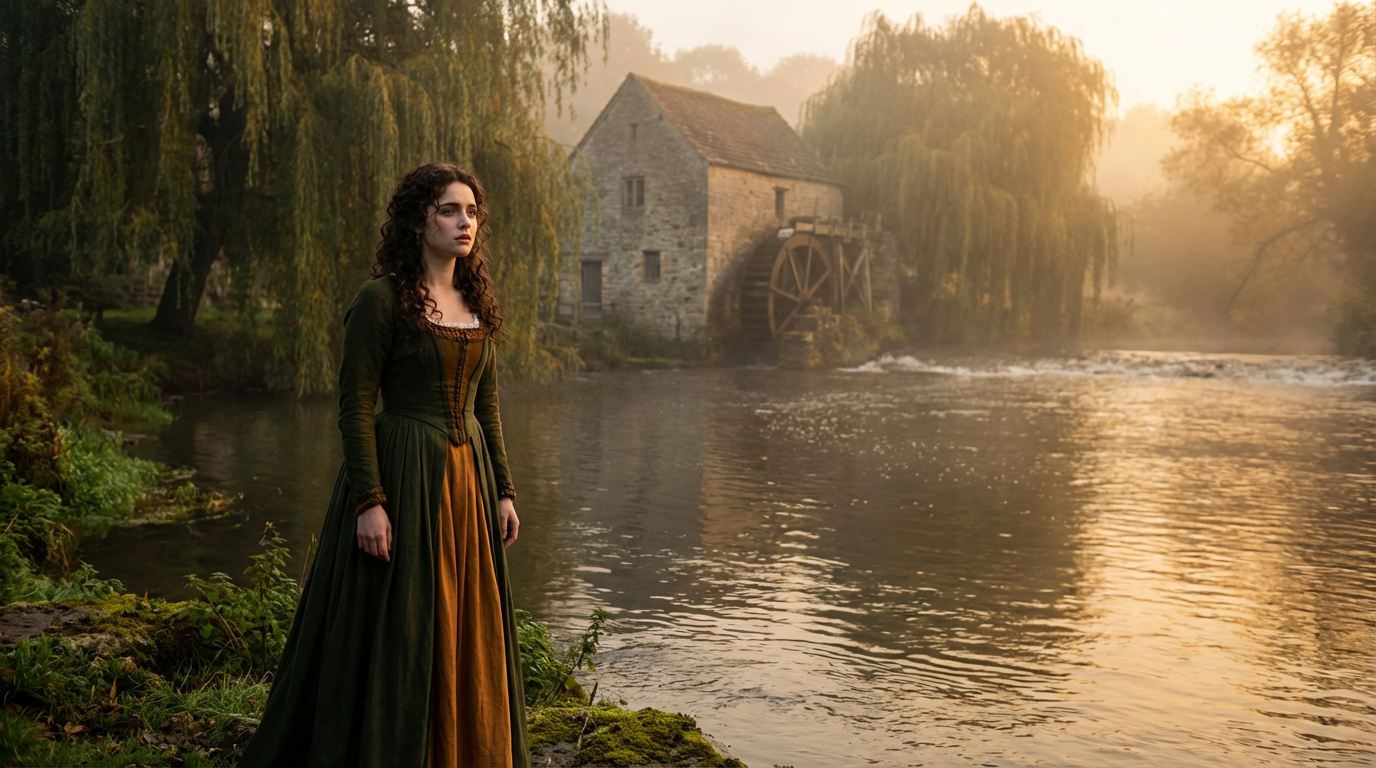
An excerpt from the original text.(complete · 1749 words)
howing That Tom Had Opened the Oyster
“And now we’ve settled this Newcastle business, Tom,” said Mr Deane,
that same afternoon, as they were seated in the private room at the
Bank together, “there’s another matter I want to talk to you about.
Since you’re likely to have rather a smoky, unpleasant time of it at
Newcastle for the next few weeks, you’ll want a good prospect of some
sort to keep up your spirits.”
Tom waited less nervously than he had done on a former occasion in this
apartment, while his uncle took out his snuff-box and gratified each
nostril with deliberate impartiality.
“You see, Tom,” said Mr Deane at last, throwing himself backward, “the
world goes on at a smarter pace now than it did when I was a young
fellow. Why, sir, forty years ago, when I was much such a strapping
youngster as you, a man expected to pull between the shafts the best
part of his life, before he got the whip in his hand. The looms went
slowish, and fashions didn’t alter quite so fast; I’d a best suit that
lasted me six years. Everything was on a lower scale, sir,—in point of
expenditure, I mean. It’s this steam, you see, that has made the
difference; it drives on every wheel double pace, and the wheel of
fortune along with ’em, as our Mr Stephen Guest said at the anniversary
dinner (he hits these things off wonderfully, considering he’s seen
nothing of business). I don’t find fault with the change, as some
people do. Trade, sir, opens a man’s eyes; and if the population is to
get thicker upon the ground, as it’s doing, the world must use its wits
at inventions of one sort or other. I know I’ve done my share as an
ordinary man of business. Somebody has said it’s a fine thing to make
two ears of corn grow where only one grew before; but, sir, it’s a fine
thing, too, to further the exchange of commodities, and bring the
grains of corn to the mouths that are hungry. And that’s our line of
business; and I consider it as honourable a position as a man can hold,
to be connected with it.”
Tom knew that the affair his uncle had to speak of was not urgent; Mr
Deane was too shrewd and practical a man to allow either his
reminiscences or his snuff to impede the progress of trade. Indeed, for
the last month or two, there had been hints thrown out to Tom which
enabled him to guess that he was going to hear some proposition for his
own benefit. With the beginning of the last speech he had stretched out
his legs, thrust his hands in his pockets, and prepared himself for
some introductory diffuseness, tending to show that Mr Deane had
succeeded by his own merit, and that what he had to say to young men in
general was, that if they didn’t succeed too it was because of their
own demerit. He was rather surprised, then, when his uncle put a direct
question to him.
“Let me see,—it’s going on for seven years now since you applied to me
for a situation, eh, Tom?”
“Yes, sir; I’m three-and-twenty now,” said Tom.
“Ah, it’s as well not to say that, though; for you’d pass for a good
deal older, and age tells well in business. I remember your coming very
well; I remember I saw there was some pluck in you, and that was what
made me give you encouragement. And I’m happy to say I was right; I’m
not often deceived. I was naturally a little shy at pushing my nephew,
but I’m happy to say you’ve done me credit, sir; and if I’d had a son
o’ my own, I shouldn’t have been sorry to see him like you.”
Mr Deane tapped his box and opened it again, repeating in a tone of
some feeling, “No, I shouldn’t have been sorry to see him like you.”
“I’m very glad I’ve given you satisfaction, sir; I’ve done my best,”
said Tom, in his proud, independent way.
“Yes, Tom, you’ve given me satisfaction. I don’t speak of your conduct
as a son; though that weighs with me in my opinion of you. But what I
have to do with, as a partner in our firm, is the qualities you’ve
shown as a man o’ business. Ours is a fine business,—a splendid
concern, sir,—and there’s no reason why it shouldn’t go on growing;
there’s a growing capital, and growing outlets for it; but there’s
another thing that’s wanted for the prosperity of every concern, large
or small, and that’s men to conduct it,—men of the right habits; none
o’ your flashy fellows, but such as are to be depended on. Now this is
what Mr Guest and I see clear enough. Three years ago we took Gell into
the concern; we gave him a share in the oil-mill. And why? Why, because
Gell was a fellow whose services were worth a premium. So it will
always be, sir. So it was with me. And though Gell is pretty near ten
years older than you, there are other points in your favour.”
Tom was getting a little nervous as Mr Deane went on speaking; he was
conscious of something he had in his mind to say, which might not be
agreeable to his uncle, simply because it was a new suggestion rather
than an acceptance of the proposition he foresaw.
“It stands to reason,” Mr Deane went on, when he had finished his new
pinch, “that your being my nephew weighs in your favour; but I don’t
deny that if you’d been no relation of mine at all, your conduct in
that affair of Pelley’s bank would have led Mr Guest and myself to make
some acknowledgment of the service you’ve been to us; and, backed by
your general conduct and business ability, it has made us determine on
giving you a share in the business,—a share which we shall be glad to
increase as the years go on. We think that’ll be better, on all
grounds, than raising your salary. It’ll give you more importance, and
prepare you better for taking some of the anxiety off my shoulders by
and by. I’m equal to a good deal o’ work at present, thank God; but I’m
getting older,—there’s no denying that. I told Mr Guest I would open
the subject to you; and when you come back from this northern business,
we can go into particulars. This is a great stride for a young fellow
of three-and-twenty, but I’m bound to say you’ve deserved it.”
“I’m very grateful to Mr Guest and you, sir; of course I feel the most
indebted to you, who first took me into the business, and have taken
a good deal of pains with me since.”
Tom spoke with a slight tremor, and paused after he had said this.
“Yes, yes,” said Mr Deane. “I don’t spare pains when I see they’ll be
of any use. I gave myself some trouble with Gell, else he wouldn’t have
been what he is.”
“But there’s one thing I should like to mention to you uncle. I’ve
never spoken to you of it before. If you remember, at the time my
father’s property was sold, there was some thought of your firm buying
the Mill; I know you thought it would be a very good investment,
especially if steam were applied.”
“To be sure, to be sure. But Wakem outbid us; he’d made up his mind to
that. He’s rather fond of carrying everything over other people’s
heads.”
“Perhaps it’s of no use my mentioning it at present,” Tom went on, “but
I wish you to know what I have in my mind about the Mill. I’ve a strong
feeling about it. It was my father’s dying wish that I should try and
get it back again whenever I could; it was in his family for five
generations. I promised my father; and besides that, I’m attached to
the place. I shall never like any other so well. And if it should ever
suit your views to buy it for the firm, I should have a better chance
of fulfilling my father’s wish. I shouldn’t have liked to mention the
thing to you, only you’ve been kind enough to say my services have been
of some value. And I’d give up a much greater chance in life for the
sake of having the Mill again,—I mean having it in my own hands, and
gradually working off the price.”
Mr Deane had listened attentively, and now looked thoughtful.
“I see, I see,” he said, after a while; “the thing would be possible if
there were any chance of Wakem’s parting with the property. But that I
don’t see. He’s put that young Jetsome in the place; and he had his
reasons when he bought it, I’ll be bound.”
“He’s a loose fish, that young Jetsome,” said Tom. “He’s taking to
drinking, and they say he’s letting the business go down. Luke told me
about it,—our old miller. He says he sha’n’t stay unless there’s an
alteration. I was thinking, if things went on that way, Wakem might be
more willing to part with the Mill. Luke says he’s getting very sour
about the way things are going on.”
“Well, I’ll turn it over, Tom. I must inquire into the matter, and go
into it with Mr Guest. But, you see, it’s rather striking out a new
branch, and putting you to that, instead of keeping you where you are,
which was what we’d wanted.”
“I should be able to manage more than the Mill when things were once
set properly going, sir. I want to have plenty of work. There’s nothing
else I care about much.”
There was something rather sad in that speech from a young man of
three-and-twenty, even in uncle Deane’s business-loving ears.
“Pooh, pooh! you’ll be having a wife to care about one of these days,
if you get on at this pace in the world. But as to this Mill, we
mustn’t reckon on our chickens too early. However, I promise you to
bear it in mind, and when you come back we’ll talk of it again. I am
going to dinner now. Come and breakfast with us to-morrow morning, and
say good-bye to your mother and sister before you start.”
Master this chapter. Complete your experience
Purchase the complete book to access all chapters and support classic literature
As an Amazon Associate, we earn a small commission from qualifying purchases at no additional cost to you.
Available in paperback, hardcover, and e-book formats
Let's Analyse the Pattern
When deep personal commitments consistently override objectively better opportunities, revealing identity anchored in promises rather than possibilities.
Why This Matters
Connect literature to life
This chapter teaches how to recognize when external success conflicts with internal purpose and how to evaluate choices based on deeper values rather than surface benefits.
Practice This Today
This week, notice when you feel conflicted about a 'good opportunity'—that tension often signals a mismatch between what others think you should want and what you actually need.
Now let's explore the literary elements.
Key Quotes & Analysis
"I'd rather have it than a much greater chance in life"
Context: Tom tells his uncle he'd rather buy back the family mill than pursue bigger business opportunities
This reveals Tom's core values - family honor and keeping promises matter more to him than personal advancement or wealth. It shows how deeply his father's dying wish has shaped his priorities.
In Today's Words:
I'd rather do this meaningful thing than chase a bigger paycheck
"It's this steam, you see, that has made the difference; it drives on every wheel double pace"
Context: Explaining how the industrial revolution has changed the pace of business and opportunity
Mr. Deane recognizes they're living through rapid social and economic change. The old rules about slowly working your way up no longer apply - technology is creating new possibilities.
In Today's Words:
Technology has changed everything - the whole world moves twice as fast now
"You want a wife to care about, Tom"
Context: His uncle suggests Tom needs more in his life than just business and family duty
This gentle criticism points out the emotional emptiness in Tom's life. His uncle sees that Tom's single-minded focus on duty is leaving him isolated and perhaps missing out on personal happiness.
In Today's Words:
You need someone to love and care about, not just work goals
Thematic Threads
Duty vs. Opportunity
In This Chapter
Tom chooses family obligation over professional advancement, viewing the mill as a sacred trust rather than business opportunity
Development
Evolved from Tom's childhood sense of responsibility into adult willingness to sacrifice personal gain for family honor
In Your Life:
You might face this when career advancement conflicts with caring for family or staying true to your core values.
Identity and Legacy
In This Chapter
The mill represents five generations of family history—Tom's identity is inseparable from reclaiming this legacy
Development
Deepened from early family pride into Tom's defining life mission and measure of self-worth
In Your Life:
You might struggle with this when family expectations clash with your individual dreams and aspirations.
Success and Sacrifice
In This Chapter
Tom's professional success becomes merely a stepping stone to his real goal, showing how achievement can be both reward and burden
Development
Introduced here as Tom reaches the pinnacle of what others would consider success yet remains unfulfilled
In Your Life:
You might experience this when achieving goals that others admire but that don't align with your deeper purpose.
Emotional Isolation
In This Chapter
Uncle Deane's comment about Tom needing 'a wife to care about' reveals how duty has crowded out personal relationships
Development
Continuation of Tom's pattern of prioritizing obligations over emotional connections throughout the story
In Your Life:
You might recognize this when work or family duties consume so much energy that personal relationships suffer.
Class and Mobility
In This Chapter
Tom's partnership represents upward mobility, but his true desire is to reclaim lost family status rather than climb higher
Development
Evolved from childhood shame about family's fall to adult determination to restore their position
In Your Life:
You might face this when trying to balance personal advancement with loyalty to your roots and community.
You now have the context. Time to form your own thoughts.
Discussion Questions
- 1
Tom gets offered a partnership at 23—a huge achievement—but immediately talks about using it to buy back the family mill. What does this tell you about what really drives him?
analysis • surface - 2
Why does Tom see the mill as more than just property? What does it represent to him that makes him willing to sacrifice 'a much greater chance in life'?
analysis • medium - 3
Tom's uncle says he needs 'a wife to care about,' suggesting Tom's focus on duty has cost him personal relationships. Where do you see this pattern today—people so focused on obligations that they lose touch with their own needs?
application • medium - 4
Think about a time when you had to choose between a smart career move and honoring a family commitment or personal promise. How did you decide, and what did that choice reveal about your values?
application • deep - 5
Tom's identity is built on promises rather than achievements. What's the difference between healthy loyalty and self-destructive martyrdom? How can you tell which one you're dealing with?
reflection • deep
Critical Thinking Exercise
Map Your Sacred Obligations
List three promises or commitments that feel sacred to you—ones you'd honor even if they cost you opportunities. For each one, write down what it represents beyond the surface commitment and what you'd be willing to sacrifice to keep it. Then identify one person in your life who might not understand these choices.
Consider:
- •Some obligations feel sacred because they connect us to something larger than ourselves
- •The cost of keeping promises isn't always financial—it might be time, energy, or other opportunities
- •Others may see your loyalty as foolish if they don't understand what the commitment represents to you
Journaling Prompt
Write about a time when you chose duty over opportunity, or when someone close to you made this choice. What did you learn about the difference between what looks smart from the outside and what feels right from the inside?
Coming Up Next...
Chapter 45: The Dangerous Game of Attraction
The focus shifts to matters of the heart as the laws of attraction come into play. While Tom pursues family duty, other characters find themselves drawn into more complicated emotional territories.



