
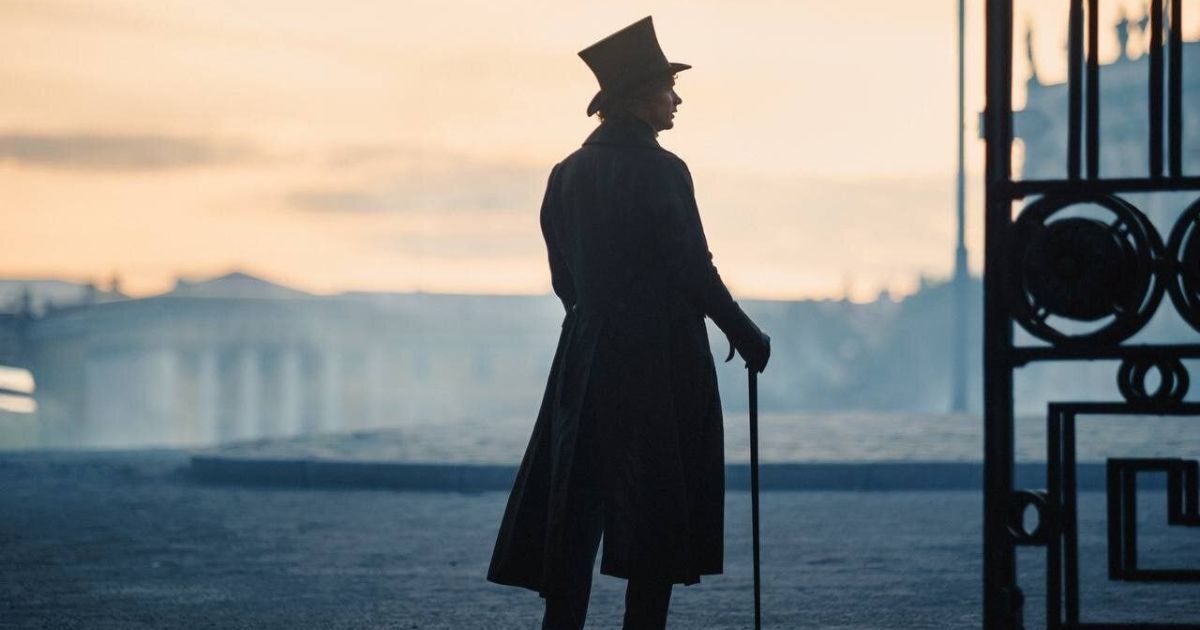
An excerpt from the original text.(complete · 4413 words)
nd now let us leave Mademoiselle Danglars and her friend pursuing
their way to Brussels, and return to poor Andrea Cavalcanti, so
inopportunely interrupted in his rise to fortune. Notwithstanding his
youth, Master Andrea was a very skilful and intelligent boy. We have
seen that on the first rumor which reached the salon he had gradually
approached the door, and crossing two or three rooms at last
disappeared. But we have forgotten to mention one circumstance, which
nevertheless ought not to be omitted; in one of the rooms he crossed,
the trousseau of the bride-elect was on exhibition. There were
caskets of diamonds, cashmere shawls, Valenciennes lace, English veils,
and in fact all the tempting things, the bare mention of which makes
the hearts of young girls bound with joy, and which is called the
corbeille.22 Now, in passing through this room, Andrea proved himself
not only to be clever and intelligent, but also provident, for he
helped himself to the most valuable of the ornaments before him.
Furnished with this plunder, Andrea leaped with a lighter heart from
the window, intending to slip through the hands of the gendarmes. Tall
and well proportioned as an ancient gladiator, and muscular as a
Spartan, he walked for a quarter of an hour without knowing where to
direct his steps, actuated by the sole idea of getting away from the
spot where if he lingered he knew that he would surely be taken. Having
passed through the Rue du Mont-Blanc, guided by the instinct which
leads thieves always to take the safest path, he found himself at the
end of the Rue La Fayette. There he stopped, breathless and panting. He
was quite alone; on one side was the vast wilderness of the
Saint-Lazare, on the other, Paris enshrouded in darkness.
“Am I to be captured?” he cried; “no, not if I can use more activity
than my enemies. My safety is now a mere question of speed.”
At this moment he saw a cab at the top of the Faubourg Poissonnière.
The dull driver, smoking his pipe, was plodding along toward the limits
of the Faubourg Saint-Denis, where no doubt he ordinarily had his
station.
“Ho, friend!” said Benedetto.
“What do you want, sir?” asked the driver.
“Is your horse tired?”
“Tired? oh, yes, tired enough—he has done nothing the whole of this
blessed day! Four wretched fares, and twenty sous over, making in all
seven francs, are all that I have earned, and I ought to take ten to
the owner.”
“Will you add these twenty francs to the seven you have?”
“With pleasure, sir; twenty francs are not to be despised. Tell me what
I am to do for this.”
“A very easy thing, if your horse isn’t tired.”
“I tell you he’ll go like the wind,—only tell me which way to drive.”
“Towards the Louvres.”
“Ah, I know the way—you get good sweetened rum over there.”
“Exactly so; I merely wish to overtake one of my friends, with whom I
am going to hunt tomorrow at Chapelle-en-Serval. He should have waited
for me here with a cabriolet till half-past eleven; it is twelve, and,
tired of waiting, he must have gone on.”
“It is likely.”
“Well, will you try and overtake him?”
“Nothing I should like better.”
“If you do not overtake him before we reach Bourget you shall have
twenty francs; if not before Louvres, thirty.”
“And if we do overtake him?”
“Forty,” said Andrea, after a moment’s hesitation, at the end of which
he remembered that he might safely promise.
“That’s all right,” said the man; “hop in, and we’re off! Who-o-o-pla!”
Andrea got into the cab, which passed rapidly through the Faubourg
Saint-Denis, along the Faubourg Saint-Martin, crossed the barrier, and
threaded its way through the interminable Villette. They never overtook
the chimerical friend, yet Andrea frequently inquired of people on foot
whom he passed and at the inns which were not yet closed, for a green
cabriolet and bay horse; and as there are a great many cabriolets to be
seen on the road to the Low Countries, and as nine-tenths of them are
green, the inquiries increased at every step. Everyone had just seen it
pass; it was only five hundred, two hundred, one hundred steps in
advance; at length they reached it, but it was not the friend. Once the
cab was also passed by a calash rapidly whirled along by two
post-horses.
“Ah,” said Cavalcanti to himself, “if I only had that britzka, those
two good post-horses, and above all the passport that carries them on!”
And he sighed deeply.
The calash contained Mademoiselle Danglars and Mademoiselle d’Armilly.
“Hurry, hurry!” said Andrea, “we must overtake him soon.”
And the poor horse resumed the desperate gallop it had kept up since
leaving the barrier, and arrived steaming at Louvres.
“Certainly,” said Andrea, “I shall not overtake my friend, but I shall
kill your horse, therefore I had better stop. Here are thirty francs; I
will sleep at the Cheval Rouge, and will secure a place in the first
coach. Good-night, friend.”
And Andrea, after placing six pieces of five francs each in the man’s
hand, leaped lightly on to the pathway. The cabman joyfully pocketed
the sum, and turned back on his road to Paris. Andrea pretended to go
towards the hotel of the Cheval Rouge, but after leaning an instant
against the door, and hearing the last sound of the cab, which was
disappearing from view, he went on his road, and with a lusty stride
soon traversed the space of two leagues. Then he rested; he must be
near Chapelle-en-Serval, where he pretended to be going.
It was not fatigue that stayed Andrea here; it was that he might form
some resolution, adopt some plan. It would be impossible to make use of
a diligence, equally so to engage post-horses; to travel either way a
passport was necessary. It was still more impossible to remain in the
department of the Oise, one of the most open and strictly guarded in
France; this was quite out of the question, especially to a man like
Andrea, perfectly conversant with criminal matters.
He sat down by the side of the moat, buried his face in his hands and
reflected. Ten minutes after he raised his head; his resolution was
made. He threw some dust over the topcoat, which he had found time to
unhook from the antechamber and button over his ball costume, and going
to Chapelle-en-Serval he knocked loudly at the door of the only inn in
the place.
The host opened.
“My friend,” said Andrea, “I was coming from Mortefontaine to Senlis,
when my horse, which is a troublesome creature, stumbled and threw me.
I must reach Compiègne tonight, or I shall cause deep anxiety to my
family. Could you let me hire a horse of you?”
An innkeeper has always a horse to let, whether it be good or bad. The
host called the stable-boy, and ordered him to saddle Le Blanc then
he awoke his son, a child of seven years, whom he ordered to ride
before the gentleman and bring back the horse. Andrea gave the
innkeeper twenty francs, and in taking them from his pocket dropped a
visiting card. This belonged to one of his friends at the Café de
Paris, so that the innkeeper, picking it up after Andrea had left, was
convinced that he had let his horse to the Count of Mauléon, 25 Rue
Saint-Dominique, that being the name and address on the card.
Le Blanc was not a fast animal, but he kept up an easy, steady pace;
in three hours and a half Andrea had traversed the nine leagues which
separated him from Compiègne, and four o’clock struck as he reached the
place where the coaches stop. There is an excellent tavern at
Compiègne, well remembered by those who have ever been there. Andrea,
who had often stayed there in his rides about Paris, recollected the
Bell and Bottle inn; he turned around, saw the sign by the light of a
reflected lamp, and having dismissed the child, giving him all the
small coin he had about him, he began knocking at the door, very
reasonably concluding that having now three or four hours before him he
had best fortify himself against the fatigues of the morrow by a sound
sleep and a good supper. A waiter opened the door.
“My friend,” said Andrea, “I have been dining at Saint-Jean-aux-Bois,
and expected to catch the coach which passes by at midnight, but like a
fool I have lost my way, and have been walking for the last four hours
in the forest. Show me into one of those pretty little rooms which
overlook the court, and bring me a cold fowl and a bottle of Bordeaux.”
The waiter had no suspicions; Andrea spoke with perfect composure, he
had a cigar in his mouth, and his hands in the pocket of his top coat;
his clothes were fashionably made, his chin smooth, his boots
irreproachable; he looked merely as if he had stayed out very late,
that was all. While the waiter was preparing his room, the hostess
arose; Andrea assumed his most charming smile, and asked if he could
have No. 3, which he had occupied on his last stay at Compiègne.
Unfortunately, No. 3 was engaged by a young man who was travelling with
his sister. Andrea appeared in despair, but consoled himself when the
hostess assured him that No. 7, prepared for him, was situated
precisely the same as No. 3, and while warming his feet and chatting
about the last races at Chantilly, he waited until they announced his
room to be ready.
Andrea had not spoken without cause of the pretty rooms looking out
upon the court of the Bell Hotel, which with its triple galleries like
those of a theatre, with the jessamine and clematis twining round the
light columns, forms one of the prettiest entrances to an inn that you
can imagine. The fowl was tender, the wine old, the fire clear and
sparkling, and Andrea was surprised to find himself eating with as good
an appetite as though nothing had happened. Then he went to bed and
almost immediately fell into that deep sleep which is sure to visit men
of twenty years of age, even when they are torn with remorse. Now, here
we are obliged to own that Andrea ought to have felt remorse, but that
he did not.
This was the plan which had appealed to him to afford the best chance
of his security. Before daybreak he would awake, leave the inn after
rigorously paying his bill, and reaching the forest, he would, under
pretence of making studies in painting, test the hospitality of some
peasants, procure himself the dress of a woodcutter and a hatchet,
casting off the lion’s skin to assume that of the woodman; then, with
his hands covered with dirt, his hair darkened by means of a leaden
comb, his complexion embrowned with a preparation for which one of his
old comrades had given him the recipe, he intended, by following the
wooded districts, to reach the nearest frontier, walking by night and
sleeping in the day in the forests and quarries, and only entering
inhabited regions to buy a loaf from time to time.
Once past the frontier, Andrea proposed making money of his diamonds;
and by uniting the proceeds to ten bank-notes he always carried about
with him in case of accident, he would then find himself possessor of
about 50,000 livres, which he philosophically considered as no very
deplorable condition after all. Moreover, he reckoned much on the
interest of the Danglars to hush up the rumor of their own
misadventures. These were the reasons which, added to the fatigue,
caused Andrea to sleep so soundly. In order that he might wake early he
did not close the shutters, but contented himself with bolting the door
and placing on the table an unclasped and long-pointed knife, whose
temper he well knew, and which was never absent from him.
About seven in the morning Andrea was awakened by a ray of sunlight,
which played, warm and brilliant, upon his face. In all well-organized
brains, the predominating idea—and there always is one—is sure to be
the last thought before sleeping, and the first upon waking in the
morning. Andrea had scarcely opened his eyes when his predominating
idea presented itself, and whispered in his ear that he had slept too
long. He jumped out of bed and ran to the window. A gendarme was
crossing the court. A gendarme is one of the most striking objects in
the world, even to a man void of uneasiness; but for one who has a
timid conscience, and with good cause too, the yellow, blue, and white
uniform is really very alarming.
“Why is that gendarme there?” asked Andrea of himself.
Then, all at once, he replied, with that logic which the reader has,
doubtless, remarked in him, “There is nothing astonishing in seeing a
gendarme at an inn; instead of being astonished, let me dress myself.”
And the youth dressed himself with a facility his valet de chambre had
failed to rob him of during the two months of fashionable life he had
led in Paris.
“Now then,” said Andrea, while dressing himself, “I’ll wait till he
leaves, and then I’ll slip away.”
50047m
And, saying this, Andrea, who had now put on his boots and cravat,
stole gently to the window, and a second time lifted up the muslin
curtain. Not only was the first gendarme still there, but the young man
now perceived a second yellow, blue, and white uniform at the foot of
the staircase, the only one by which he could descend, while a third,
on horseback, holding a musket in his fist, was posted as a sentinel at
the great street-door which alone afforded the means of egress. The
appearance of the third gendarme settled the matter, for a crowd of
curious loungers was extended before him, effectually blocking the
entrance to the hotel.
“They’re after me!” was Andrea’s first thought. “Diable!”
A pallor overspread the young man’s forehead, and he looked around him
with anxiety. His room, like all those on the same floor, had but one
outlet to the gallery in the sight of everybody. “I am lost!” was his
second thought; and, indeed, for a man in Andrea’s situation, an arrest
meant the assizes, trial, and death,—death without mercy or delay.
For a moment he convulsively pressed his head within his hands, and
during that brief period he became nearly mad with terror; but soon a
ray of hope glimmered in the multitude of thoughts which bewildered his
mind, and a faint smile played upon his white lips and pallid cheeks.
He looked around and saw the objects of his search upon the
chimney-piece; they were a pen, ink, and paper. With forced composure
he dipped the pen in the ink, and wrote the following lines upon a
sheet of paper:
“I have no money to pay my bill, but I am not a dishonest man; I leave
behind me as a pledge this pin, worth ten times the amount. I shall be
excused for leaving at daybreak, for I was ashamed.”
He then drew the pin from his cravat and placed it on the paper. This
done, instead of leaving the door fastened, he drew back the bolts and
even placed the door ajar, as though he had left the room, forgetting
to close it, and slipping into the chimney like a man accustomed to
that kind of gymnastic exercise, after replacing the chimney-board,
which represented Achilles with Deidamia, and effacing the very marks
of his feet upon the ashes, he commenced climbing the hollow tunnel,
which afforded him the only means of escape left.
At this precise time, the first gendarme Andrea had noticed walked
upstairs, preceded by the commissary of police, and supported by the
second gendarme who guarded the staircase and was himself reinforced by
the one stationed at the door.
Andrea was indebted for this visit to the following circumstances. At
daybreak, the telegraphs were set at work in all directions, and almost
immediately the authorities in every district had exerted their utmost
endeavors to arrest the murderer of Caderousse. Compiègne, that royal
residence and fortified town, is well furnished with authorities,
gendarmes, and commissaries of police; they therefore began operations
as soon as the telegraphic despatch arrived, and the Bell and Bottle
being the best-known hotel in the town, they had naturally directed
their first inquiries there.
Now, besides the reports of the sentinels guarding the Hôtel de Ville,
which is next door to the Bell and Bottle, it had been stated by others
that a number of travellers had arrived during the night. The sentinel
who was relieved at six o’clock in the morning, remembered perfectly
that, just as he was taking his post a few minutes past four, a young
man arrived on horseback, with a little boy before him. The young man,
having dismissed the boy and horse, knocked at the door of the hotel,
which was opened, and again closed after his entrance. This late
arrival had attracted much suspicion, and the young man being no other
than Andrea, the commissary and gendarme, who was a brigadier, directed
their steps towards his room. They found the door ajar.
“Oh, oh,” said the brigadier, who thoroughly understood the trick; “a
bad sign to find the door open! I would rather find it triply bolted.”
And, indeed, the little note and pin upon the table confirmed, or
rather corroborated, the sad truth. Andrea had fled. We say
corroborated, because the brigadier was too experienced to be convinced
by a single proof. He glanced around, looked in the bed, shook the
curtains, opened the closets, and finally stopped at the chimney.
Andrea had taken the precaution to leave no traces of his feet in the
ashes, but still it was an outlet, and in this light was not to be
passed over without serious investigation.
The brigadier sent for some sticks and straw, and having filled the
chimney with them, set a light to it. The fire crackled, and the smoke
ascended like the dull vapor from a volcano; but still no prisoner fell
down, as they expected. The fact was, that Andrea, at war with society
ever since his youth, was quite as deep as a gendarme, even though he
were advanced to the rank of brigadier, and quite prepared for the
fire, he had climbed out on the roof and was crouching down against the
chimney-pots.
50049m
At one time he thought he was saved, for he heard the brigadier exclaim
in a loud voice, to the two gendarmes, “He is not here!” But venturing
to peep, he perceived that the latter, instead of retiring, as might
have been reasonably expected upon this announcement, were watching
with increased attention.
It was now his turn to look about him; the Hôtel de Ville, a massive
sixteenth century building, was on his right; anyone could descend from
the openings in the tower, and examine every corner of the roof below,
and Andrea expected momentarily to see the head of a gendarme appear at
one of these openings. If once discovered, he knew he would be lost,
for the roof afforded no chance of escape; he therefore resolved to
descend, not through the same chimney by which he had come up, but by a
similar one conducting to another room.
He looked around for a chimney from which no smoke issued, and having
reached it, he disappeared through the orifice without being seen by
anyone. At the same minute, one of the little windows of the Hôtel de
Ville was thrown open, and the head of a gendarme appeared. For an
instant it remained motionless as one of the stone decorations of the
building, then after a long sigh of disappointment the head
disappeared. The brigadier, calm and dignified as the law he
represented, passed through the crowd, without answering the thousand
questions addressed to him, and re-entered the hotel.
“Well?” asked the two gendarmes.
“Well, my boys,” said the brigadier, “the brigand must really have
escaped early this morning; but we will send to the Villers-Coterets
and Noyon roads, and search the forest, when we shall catch him, no
doubt.”
The honorable functionary had scarcely expressed himself thus, in that
intonation which is peculiar to brigadiers of the gendarmerie, when a
loud scream, accompanied by the violent ringing of a bell, resounded
through the court of the hotel.
“Ah, what is that?” cried the brigadier.
“Some traveller seems impatient,” said the host. “What number was it
that rang?”
“Number 3.”
“Run, waiter!”
At this moment the screams and ringing were redoubled.
“Aha!” said the brigadier, stopping the servant, “the person who is
ringing appears to want something more than a waiter; we will attend
upon him with a gendarme. Who occupies Number 3?”
“The little fellow who arrived last night in a post-chaise with his
sister, and who asked for an apartment with two beds.”
The bell here rang for the third time, with another shriek of anguish.
“Follow me, Mr. Commissary!” said the brigadier; “tread in my steps.”
“Wait an instant,” said the host; “Number 3 has two staircases,—inside
and outside.”
“Good,” said the brigadier. “I will take charge of the inside one. Are
the carbines loaded?”
“Yes, brigadier.”
“Well, you guard the exterior, and if he attempts to fly, fire upon
him; he must be a great criminal, from what the telegraph says.”
The brigadier, followed by the commissary, disappeared by the inside
staircase, accompanied by the noise which his assertions respecting
Andrea had excited in the crowd.
This is what had happened: Andrea had very cleverly managed to descend
two-thirds of the chimney, but then his foot slipped, and
notwithstanding his endeavors, he came into the room with more speed
and noise than he intended. It would have signified little had the room
been empty, but unfortunately it was occupied. Two ladies, sleeping in
one bed, were awakened by the noise, and fixing their eyes upon the
spot whence the sound proceeded, they saw a man. One of these ladies,
the fair one, uttered those terrible shrieks which resounded through
the house, while the other, rushing to the bell-rope, rang with all her
strength. Andrea, as we can see, was surrounded by misfortune.
“For pity’s sake,” he cried, pale and bewildered, without seeing whom
he was addressing,—“for pity’s sake do not call assistance! Save me!—I
will not harm you.”
“Andrea, the murderer!” cried one of the ladies.
“Eugénie! Mademoiselle Danglars!” exclaimed Andrea, stupefied.
“Help, help!” cried Mademoiselle d’Armilly, taking the bell from her
companion’s hand, and ringing it yet more violently.
“Save me, I am pursued!” said Andrea, clasping his hands. “For pity,
for mercy’s sake do not deliver me up!”
“It is too late, they are coming,” said Eugénie.
“Well, conceal me somewhere; you can say you were needlessly alarmed;
you can turn their suspicions and save my life!”
50053m
The two ladies, pressing closely to one another, and drawing the
bedclothes tightly around them, remained silent to this supplicating
voice, repugnance and fear taking possession of their minds.
“Well, be it so,” at length said Eugénie; “return by the same road you
came, and we will say nothing about you, unhappy wretch.”
“Here he is, here he is!” cried a voice from the landing; “here he is!
I see him!”
The brigadier had put his eye to the keyhole, and had discovered Andrea
in a posture of entreaty. A violent blow from the butt end of the
musket burst open the lock, two more forced out the bolts, and the
broken door fell in. Andrea ran to the other door, leading to the
gallery, ready to rush out; but he was stopped short, and he stood with
his body a little thrown back, pale, and with the useless knife in his
clenched hand.
“Fly, then!” cried Mademoiselle d’Armilly, whose pity returned as her
fears diminished; “fly!”
“Or kill yourself!” said Eugénie (in a tone which a Vestal in the
amphitheatre would have used, when urging the victorious gladiator to
finish his vanquished adversary). Andrea shuddered, and looked on the
young girl with an expression which proved how little he understood
such ferocious honor.
“Kill myself?” he cried, throwing down his knife; “why should I do so?”
“Why, you said,” answered Mademoiselle Danglars, “that you would be
condemned to die like the worst criminals.”
50055m
“Bah,” said Cavalcanti, crossing his arms, “one has friends.”
The brigadier advanced to him, sword in hand.
“Come, come,” said Andrea, “sheathe your sword, my fine fellow; there
is no occasion to make such a fuss, since I give myself up;” and he
held out his hands to be manacled.
The two girls looked with horror upon this shameful metamorphosis, the
man of the world shaking off his covering and appearing as a
galley-slave. Andrea turned towards them, and with an impertinent smile
asked, “Have you any message for your father, Mademoiselle Danglars,
for in all probability I shall return to Paris?”
Eugénie covered her face with her hands.
“Oh, oh!” said Andrea, “you need not be ashamed, even though you did
post after me. Was I not nearly your husband?”
50056m
And with this raillery Andrea went out, leaving the two girls a prey to
their own feelings of shame, and to the comments of the crowd. An hour
after they stepped into their calash, both dressed in feminine attire.
The gate of the hotel had been closed to screen them from sight, but
they were forced, when the door was open, to pass through a throng of
curious glances and whispering voices.
Eugénie closed her eyes; but though she could not see, she could hear,
and the sneers of the crowd reached her in the carriage.
“Oh, why is not the world a wilderness?” she exclaimed, throwing
herself into the arms of Mademoiselle d’Armilly, her eyes sparkling
with the same kind of rage which made Nero wish that the Roman world
had but one neck, that he might sever it at a single blow.
The next day they stopped at the Hôtel de Flandre, at Brussels. The
same evening Andrea was incarcerated in the Conciergerie.
Master this chapter. Complete your experience
Purchase the complete book to access all chapters and support classic literature
As an Amazon Associate, we earn a small commission from qualifying purchases at no additional cost to you.
Available in paperback, hardcover, and e-book formats
Let's Analyse the Pattern
The moment when someone sees through your carefully constructed identity to the vulnerable truth underneath, forcing you to choose between maintaining the performance or accepting being truly seen.
Why This Matters
Connect literature to life
This chapter teaches how to identify when someone truly sees through your defenses and how those moments can either heal or destroy relationships.
Practice This Today
This week, notice when someone looks past your usual role or persona and really sees you - pay attention to whether you respond with defensiveness or openness.
Now let's explore the literary elements.
Key Quotes & Analysis
"I am Edmond Dantes!"
Context: When Mercedes forces him to reveal his true identity
This moment strips away all his elaborate disguises and schemes, revealing the wounded man beneath the powerful Count. It shows how revenge has both empowered and imprisoned him.
In Today's Words:
You want to know who I really am? I'm the guy you all destroyed.
"The sins of the fathers shall fall upon the children"
Context: Describing how Fernand's past betrayal now threatens Albert
This captures the tragic way family secrets and past wrongs damage innocent people. It questions whether children should pay for their parents' crimes.
In Today's Words:
Kids end up paying for their parents' mistakes whether they deserve it or not.
"I withdraw my challenge"
Context: After learning the truth about his father's betrayal of Dantes
Albert chooses truth over family loyalty, showing remarkable moral courage. He breaks the cycle of violence by accepting difficult realities instead of fighting them.
In Today's Words:
I was wrong to defend him. I'm not going to keep this fight going.
Thematic Threads
Identity
In This Chapter
The Count's elaborate persona crumbles when Mercedes recognizes Edmond Dantes beneath the disguise
Development
Evolution from Dantes creating Monte Cristo identity to that identity being penetrated and questioned
In Your Life:
You might recognize this when someone sees through your professional mask to your real struggles underneath.
Class
In This Chapter
Albert chooses honor over aristocratic pride, breaking from his father's corrupt legacy
Development
Continued exploration of how class privilege can corrupt moral judgment and family loyalty
In Your Life:
You see this when someone from a 'good family' finally acknowledges their relatives' harmful behavior instead of covering for them.
Personal Growth
In This Chapter
Albert demonstrates moral courage by accepting difficult truths about his father and withdrawing his challenge
Development
Shows how the younger generation can break cycles of dishonor through honest self-examination
In Your Life:
This appears when you choose to break family patterns of denial rather than perpetuate them for comfort.
Human Relationships
In This Chapter
Mercedes' love and recognition force the Count to confront his isolation and the human cost of revenge
Development
Demonstrates how genuine connection can penetrate even the most hardened defenses
In Your Life:
You experience this when someone's authentic care breaks through your walls and makes you question whether your protective strategies are worth the loneliness.
Social Expectations
In This Chapter
Albert defies social expectations by apologizing publicly rather than defending family honor through violence
Development
Shows how moral courage can override social pressure and family loyalty when truth is at stake
In Your Life:
This happens when you choose to do what's right even when it goes against what your family or community expects from you.
You now have the context. Time to form your own thoughts.
Discussion Questions
- 1
What happens when Mercedes recognizes who the Count really is, and how does this change everything for both of them?
analysis • surface - 2
Why does Albert choose to apologize publicly and withdraw his challenge once he learns the truth about his father's past?
analysis • medium - 3
Where have you seen someone's carefully built reputation or image crumble when the truth came out? What happened to the relationships involved?
application • medium - 4
If you discovered a family member had done something that hurt another family deeply, how would you balance loyalty to your family with doing what's right?
application • deep - 5
What does this chapter suggest about whether we can truly hide who we are from people who really know us, and what that means for how we live our lives?
reflection • deep
Critical Thinking Exercise
Map the Moment of Recognition
Think of a time when someone saw through a mask you were wearing - at work, in your family, or in a relationship. Write down what gave you away and how the dynamic changed once they really saw you. Then flip it: recall a time when you recognized someone else's true feelings or motivations beneath their surface behavior.
Consider:
- •What specific details or behaviors revealed the truth beneath the performance?
- •How did the power dynamic shift once real recognition happened?
- •What choices did both people face once the truth was visible?
Journaling Prompt
Write about a family secret or uncomfortable truth that someone in your circle needs to face. How could you approach this with both honesty and compassion, like Mercedes did with the Count?
Coming Up Next...
Chapter 99: The Law
With one enemy's son spared, the Count must decide whether mercy or vengeance will guide his remaining plans. But his other targets won't be so easily swayed by appeals to his humanity.



