An excerpt from the original text.(complete · 1754 words)
[llustration]
The Bennets were engaged to dine with the Lucases; and again, during the
chief of the day, was Miss Lucas so kind as to listen to Mr. Collins.
Elizabeth took an opportunity of thanking her. “It keeps him in good
humour,” said she, “and I am more obliged to you than I can express.”
Charlotte assured her friend of her satisfaction in being useful, and
that it amply repaid her for the little sacrifice of her time. This was
very amiable; but Charlotte’s kindness extended farther than Elizabeth
had any conception of:--its object was nothing less than to secure her
from any return of Mr. Collins’s addresses, by engaging them towards
herself. Such was Miss Lucas’s scheme; and appearances were so
favourable, that when they parted at night, she would have felt almost
sure of success if he had not been to leave Hertfordshire so very soon.
But here she did injustice to the fire and independence of his
character; for it led him to escape out of Longbourn House the next
morning with admirable slyness, and hasten to Lucas Lodge to throw
himself at her feet. He was anxious to avoid the notice of his cousins,
from a conviction that, if they saw him depart, they could not fail to
conjecture his design, and he was not willing to have the attempt known
till its success could be known likewise; for, though feeling almost
secure, and with reason, for Charlotte had been tolerably encouraging,
he was comparatively diffident since the adventure of Wednesday. His
reception, however, was of the most flattering kind. Miss Lucas
perceived him from an upper window as he walked towards the house, and
instantly set out to meet him accidentally in the lane. But little had
she dared to hope that so much love and eloquence awaited her there.
In as short a time as Mr. Collins’s long speeches would allow,
everything was settled between them to the satisfaction of both; and as
they entered the house, he earnestly entreated her to name the day that
was to make him the happiest of men; and though such a solicitation must
be waived for the present, the lady felt no inclination to trifle with
his happiness. The stupidity with which he was favoured by nature must
guard his courtship from any charm that could make a woman wish for its
continuance; and Miss Lucas, who accepted him solely from the pure and
disinterested desire of an establishment, cared not how soon that
establishment were gained.
Sir William and Lady Lucas were speedily applied to for their consent;
and it was bestowed with a most joyful alacrity. Mr. Collins’s present
circumstances made it a most eligible match for their daughter, to whom
they could give little fortune; and his prospects of future wealth were
exceedingly fair. Lady Lucas began directly to calculate, with more
interest than the matter had ever
[Illustration:
“So much love and eloquence”
[Copyright 1894 by George Allen.]]
excited before, how many years longer Mr. Bennet was likely to live; and
Sir William gave it as his decided opinion, that whenever Mr. Collins
should be in possession of the Longbourn estate, it would be highly
expedient that both he and his wife should make their appearance at St.
James’s. The whole family in short were properly overjoyed on the
occasion. The younger girls formed hopes of coming out a year or two
sooner than they might otherwise have done; and the boys were relieved
from their apprehension of Charlotte’s dying an old maid. Charlotte
herself was tolerably composed. She had gained her point, and had time
to consider of it. Her reflections were in general satisfactory. Mr.
Collins, to be sure, was neither sensible nor agreeable: his society was
irksome, and his attachment to her must be imaginary. But still he would
be her husband. Without thinking highly either of men or of matrimony,
marriage had always been her object: it was the only honourable
provision for well-educated young women of small fortune, and, however
uncertain of giving happiness, must be their pleasantest preservative
from want. This preservative she had now obtained; and at the age of
twenty-seven, without having ever been handsome, she felt all the good
luck of it. The least agreeable circumstance in the business was the
surprise it must occasion to Elizabeth Bennet, whose friendship she
valued beyond that of any other person. Elizabeth would wonder, and
probably would blame her; and though her resolution was not to be
shaken, her feelings must be hurt by such a disapprobation. She resolved
to give her the information herself; and therefore charged Mr. Collins,
when he returned to Longbourn to dinner, to drop no hint of what had
passed before any of the family. A promise of secrecy was of course very
dutifully given, but it could not be kept without difficulty; for the
curiosity excited by his long absence burst forth in such very direct
questions on his return, as required some ingenuity to evade, and he was
at the same time exercising great self-denial, for he was longing to
publish his prosperous love.
As he was to begin his journey too early on the morrow to see any of
the family, the ceremony of leave-taking was performed when the ladies
moved for the night; and Mrs. Bennet, with great politeness and
cordiality, said how happy they should be to see him at Longbourn again,
whenever his other engagements might allow him to visit them.
“My dear madam,” he replied, “this invitation is particularly
gratifying, because it is what I have been hoping to receive; and you
may be very certain that I shall avail myself of it as soon as
possible.”
They were all astonished; and Mr. Bennet, who could by no means wish for
so speedy a return, immediately said,--
“But is there not danger of Lady Catherine’s disapprobation here, my
good sir? You had better neglect your relations than run the risk of
offending your patroness.”
“My dear sir,” replied Mr. Collins, “I am particularly obliged to you
for this friendly caution, and you may depend upon my not taking so
material a step without her Ladyship’s concurrence.”
“You cannot be too much on your guard. Risk anything rather than her
displeasure; and if you find it likely to be raised by your coming to us
again, which I should think exceedingly probable, stay quietly at home,
and be satisfied that we shall take no offence.”
“Believe me, my dear sir, my gratitude is warmly excited by such
affectionate attention; and, depend upon it, you will speedily receive
from me a letter of thanks for this as well as for every other mark of
your regard during my stay in Hertfordshire. As for my fair cousins,
though my absence may not be long enough to render it necessary, I shall
now take the liberty of wishing them health and happiness, not excepting
my cousin Elizabeth.”
With proper civilities, the ladies then withdrew; all of them equally
surprised to find that he meditated a quick return. Mrs. Bennet wished
to understand by it that he thought of paying his addresses to one of
her younger girls, and Mary might have been prevailed on to accept him.
She rated his abilities much higher than any of the others: there was a
solidity in his reflections which often struck her; and though by no
means so clever as herself, she thought that, if encouraged to read and
improve himself by such an example as hers, he might become a very
agreeable companion. But on the following morning every hope of this
kind was done away. Miss Lucas called soon after breakfast, and in a
private conference with Elizabeth related the event of the day before.
The possibility of Mr. Collins’s fancying himself in love with her
friend had once occurred to Elizabeth within the last day or two: but
that Charlotte could encourage him seemed almost as far from possibility
as that she could encourage him herself; and her astonishment was
consequently so great as to overcome at first the bounds of decorum, and
she could not help crying out,--
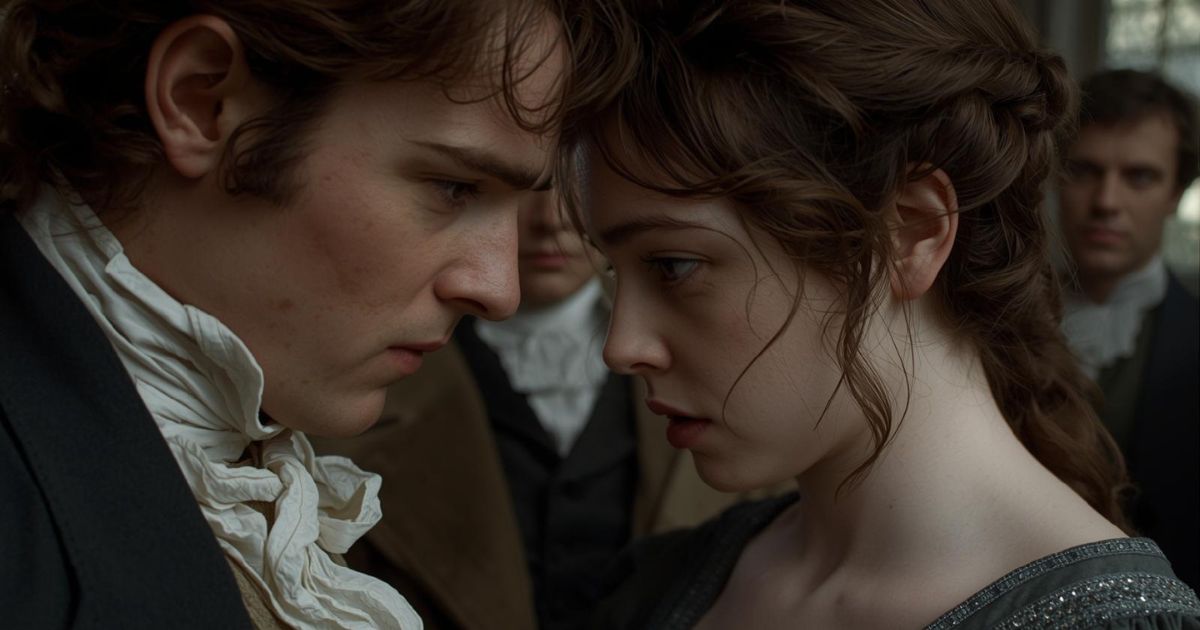
“Engaged to Mr. Collins! my dear Charlotte, impossible!”
The steady countenance which Miss Lucas had commanded in telling her
story gave way to a momentary confusion here on receiving so direct a
reproach; though, as it was no more than she expected, she soon regained
her composure, and calmly replied,--
“Why should you be surprised, my dear Eliza? Do you think it incredible
that Mr. Collins should be able to procure any woman’s good opinion,
because he was not so happy as to succeed with you?”
But Elizabeth had now recollected herself; and, making a strong effort
for it, was able to assure her, with tolerable firmness, that the
prospect of their relationship was highly grateful to her, and that she
wished her all imaginable happiness.
“I see what you are feeling,” replied Charlotte; “you must be surprised,
very much surprised, so lately as Mr. Collins was wishing to marry you.
But when you have had time to think it all over, I hope you will be
satisfied with what I have done. I am not romantic, you know. I never
was. I ask only a comfortable home; and, considering Mr. Collins’s
character, connections, and situation in life, I am convinced that my
chance of happiness with him is as fair as most people can boast on
entering the marriage state.”
Elizabeth quietly answered “undoubtedly;” and, after an awkward pause,
they returned to the rest of the family. Charlotte did not stay much
longer; and Elizabeth was then left to reflect on what she had heard. It
was a long time before she became at all reconciled to the idea of so
unsuitable a match. The strangeness of Mr. Collins’s making two offers
of marriage within three days was nothing in comparison of his being now
accepted. She had always felt that Charlotte’s opinion of matrimony was
not exactly like her own; but she could not have supposed it possible
that, when called into action, she would have sacrificed every better
feeling to worldly advantage. Charlotte, the wife of Mr. Collins, was a
most humiliating picture! And to the pang of a friend disgracing
herself, and sunk in her esteem, was added the distressing conviction
that it was impossible for that friend to be tolerably happy in the lot
she had chosen.
[Illustration:
“Protested he must be entirely mistaken.”
[Copyright 1894 by George Allen.]]
Master this chapter. Complete your experience
Purchase the complete book to access all chapters and support classic literature
As an Amazon Associate, we earn a small commission from qualifying purchases at no additional cost to you.
Available in paperback, hardcover, and e-book formats
Let's Analyse the Pattern
Why This Matters
Connect literature to life
This chapter teaches how to distinguish between settling for less and making the best choice within real limitations.
Now let's explore the literary elements.
Key Quotes & Analysis
"I am not romantic, you know; I never was. I ask only a comfortable home; and considering Mr. Collins's character, connection, and situation in life, I am convinced that my chance of happiness with him is as fair as most people can boast on entering the marriage state."
Context: Charlotte explains her practical decision to marry Mr. Collins to Elizabeth
This quote reveals Charlotte's realistic worldview about marriage and happiness. She doesn't expect romance or passion, just security and comfort, which shows how limited women's expectations had to be in this era.
"You must not disappoint your father."
Context: Charlotte accepts Mr. Collins's proposal immediately
Shows Charlotte's understanding that this opportunity won't come again and that family expectations matter. Her quick acceptance demonstrates how marriage was often a business transaction rather than a romantic choice.
"Engaged to Mr. Collins! My dear Charlotte—impossible!"
Context: Elizabeth's shocked reaction to news of Charlotte's engagement
Elizabeth's disbelief shows her inability to understand how someone could marry without love. Her reaction highlights the class privilege that allows her to be choosy about marriage.
Thematic Threads
Economic Survival
In This Chapter
Charlotte chooses security over love because marriage is her only path to financial independence
Development
Introduced here as counterpoint to Elizabeth's romantic idealism
In Your Life:
Have you ever had to choose financial security over following your heart, or do you have the privilege of prioritizing passion over practical concerns?
Female Friendship
In This Chapter
Elizabeth and Charlotte's friendship strains under fundamentally different approaches to life choices
Development
First major test of their bond, showing how class differences affect relationships
In Your Life:
When has a major life decision created tension with a close friend who made completely different choices than you would?
Practical Wisdom
In This Chapter
Charlotte demonstrates clear-eyed assessment of her limited options and makes strategic choice
Development
Challenges the novel's romantic themes by showing alternative form of intelligence
In Your Life:
Can you think of a time when being practical and strategic served you better than following idealistic expectations?
Social Judgment
In This Chapter
Elizabeth judges Charlotte harshly for pragmatic choice, revealing her own privilege
Development
Elizabeth's prejudice extends beyond Darcy to her closest friend
In Your Life:
Have you ever judged a friend's life choices harshly without fully considering the different pressures and limitations they face?
Marriage Economics
In This Chapter
Collins rebounds immediately from rejection, treating marriage as business transaction
Development
Reinforces marriage as economic arrangement rather than romantic choice
In Your Life:
Have you witnessed someone approach dating or relationships like a business decision rather than seeking emotional connection?
You now have the context. Time to form your own thoughts.
Discussion Questions
- 1
What choice does Charlotte make and why does she make it so quickly?
- 2
Why is Elizabeth horrified by Charlotte's decision when Charlotte seems calm about it?
- 3
Where do you see people today making 'Charlotte choices' - picking security over passion?
- 4
If you were Charlotte's friend, how would you support her decision even if you disagreed with it?
- 5
What does this reveal about how different people define a successful life?
Critical Thinking Exercise
Map Your Constraint Reality
Think of a major decision you're facing or recently made. List your ideal choice, then honestly map your actual constraints - money, time, family obligations, health, location, skills. Now look at Charlotte's choice again. Write a paragraph defending a 'practical' decision you or someone you know has made that others might judge as settling.
Consider:
- •What constraints are invisible to outside observers but very real to you?
- •How do your current resources and responsibilities shape what's actually possible?
- •What would change if you had Elizabeth's advantages versus Charlotte's limitations?
Coming Up Next...
Chapter 23
News of Charlotte's engagement spreads through the neighborhood, causing various reactions from different families. Elizabeth must come to terms with losing her closest friend to a decision she cannot respect.