An excerpt from the original text.(complete · 1276 words)
[llustration]
Elizabeth related to Jane, the next day, what had passed between Mr.
Wickham and herself. Jane listened with astonishment and concern: she
knew not how to believe that Mr. Darcy could be so unworthy of Mr.
Bingley’s regard; and yet it was not in her nature to question the
veracity of a young man of such amiable appearance as Wickham. The
possibility of his having really endured such unkindness was enough to
interest all her tender feelings; and nothing therefore remained to be
done but to think well of them both, to defend the conduct of each, and
throw into the account of accident or mistake whatever could not be
otherwise explained.
“They have both,” said she, “been deceived, I dare say, in some way or
other, of which we can form no idea. Interested people have perhaps
misrepresented each to the other. It is, in short, impossible for us to
conjecture the causes or circumstances which may have alienated them,
without actual blame on either side.”
“Very true, indeed; and now, my dear Jane, what have you got to say in
behalf of the interested people who have probably been concerned in the
business? Do clear them, too, or we shall be obliged to think ill of
somebody.”
“Laugh as much as you choose, but you will not laugh me out of my
opinion. My dearest Lizzy, do but consider in what a disgraceful light
it places Mr. Darcy, to be treating his father’s favourite in such a
manner,--one whom his father had promised to provide for. It is
impossible. No man of common humanity, no man who had any value for his
character, could be capable of it. Can his most intimate friends be so
excessively deceived in him? Oh no.”
“I can much more easily believe Mr. Bingley’s being imposed on than that
Mr. Wickham should invent such a history of himself as he gave me last
night; names, facts, everything mentioned without ceremony. If it be not
so, let Mr. Darcy contradict it. Besides, there was truth in his looks.”
“It is difficult, indeed--it is distressing. One does not know what to
think.”
“I beg your pardon;--one knows exactly what to think.”
But Jane could think with certainty on only one point,--that Mr.
Bingley, if he had been imposed on, would have much to suffer when
the affair became public.
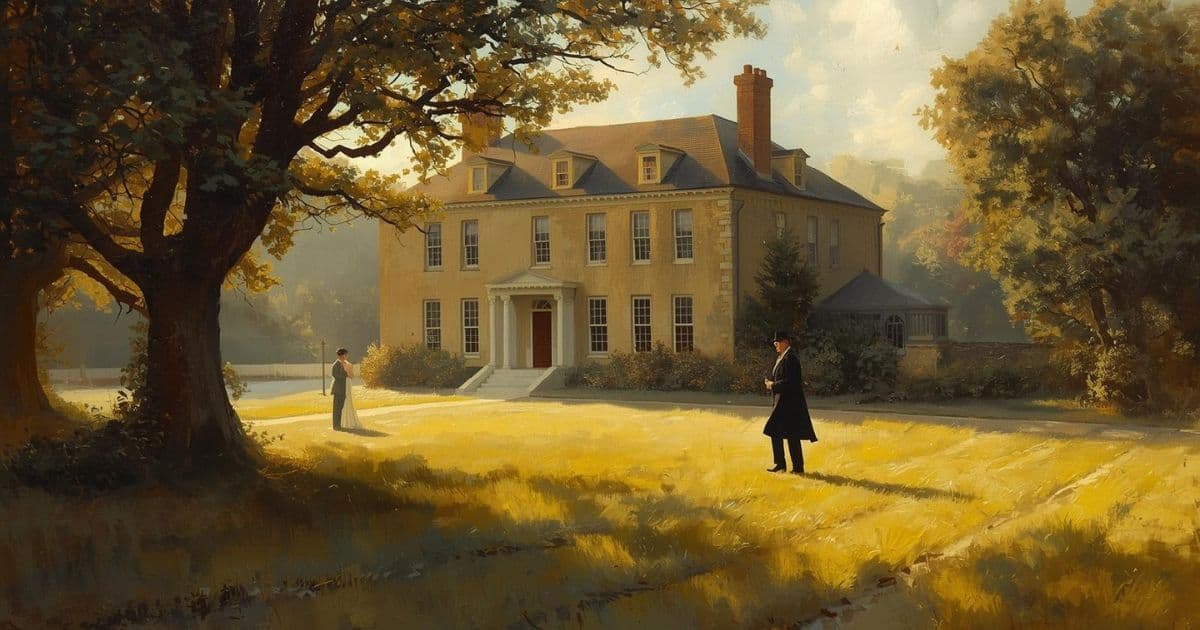
The two young ladies were summoned from the shrubbery, where this
conversation passed, by the arrival of some of the very persons of whom
they had been speaking; Mr. Bingley and his sisters came to give their
personal invitation for the long expected ball at Netherfield, which was
fixed for the following Tuesday. The two ladies were delighted to see
their dear friend again, called it an age since they had met, and
repeatedly asked what she had been doing with herself since their
separation. To the rest of the family they paid little attention;
avoiding Mrs. Bennet as much as possible, saying not much to Elizabeth,
and nothing at all to the others. They were soon gone again, rising from
their seats with an activity which took their brother by surprise, and
hurrying off as if eager to escape from Mrs. Bennet’s civilities.
The prospect of the Netherfield ball was extremely agreeable to every
female of the family. Mrs. Bennet chose to consider it as given in
compliment to her eldest daughter, and was particularly flattered by
receiving the invitation from Mr. Bingley himself, instead of a
ceremonious card. Jane pictured to herself a happy evening in the
society of her two friends, and the attentions of their brother; and
Elizabeth thought with pleasure of dancing a great deal with Mr.
Wickham, and of seeing a confirmation of everything in Mr. Darcy’s look
and behaviour. The happiness anticipated by Catherine and Lydia depended
less on any single event, or any particular person; for though they
each, like Elizabeth, meant to dance half the evening with Mr. Wickham,
he was by no means the only partner who could satisfy them, and a ball
was, at any rate, a ball. And even Mary could assure her family that she
had no disinclination for it.
“While I can have my mornings to myself,” said she, “it is enough. I
think it is no sacrifice to join occasionally in evening engagements.
Society has claims on us all; and I profess myself one of those who
consider intervals of recreation and amusement as desirable for
everybody.”
Elizabeth’s spirits were so high on the occasion, that though she did
not often speak unnecessarily to Mr. Collins, she could not help asking
him whether he intended to accept Mr. Bingley’s invitation, and if he
did, whether he would think it proper to join in the evening’s
amusement; and she was rather surprised to find that he entertained no
scruple whatever on that head, and was very far from dreading a rebuke,
either from the Archbishop or Lady Catherine de Bourgh, by venturing to
dance.
“I am by no means of opinion, I assure you,” said he, “that a ball of
this kind, given by a young man of character, to respectable people, can
have any evil tendency; and I am so far from objecting to dancing
myself, that I shall hope to be honoured with the hands of all my fair
cousins in the course of the evening; and I take this opportunity of
soliciting yours, Miss Elizabeth, for the two first dances especially; a
preference which I trust my cousin Jane will attribute to the right
cause, and not to any disrespect for her.”
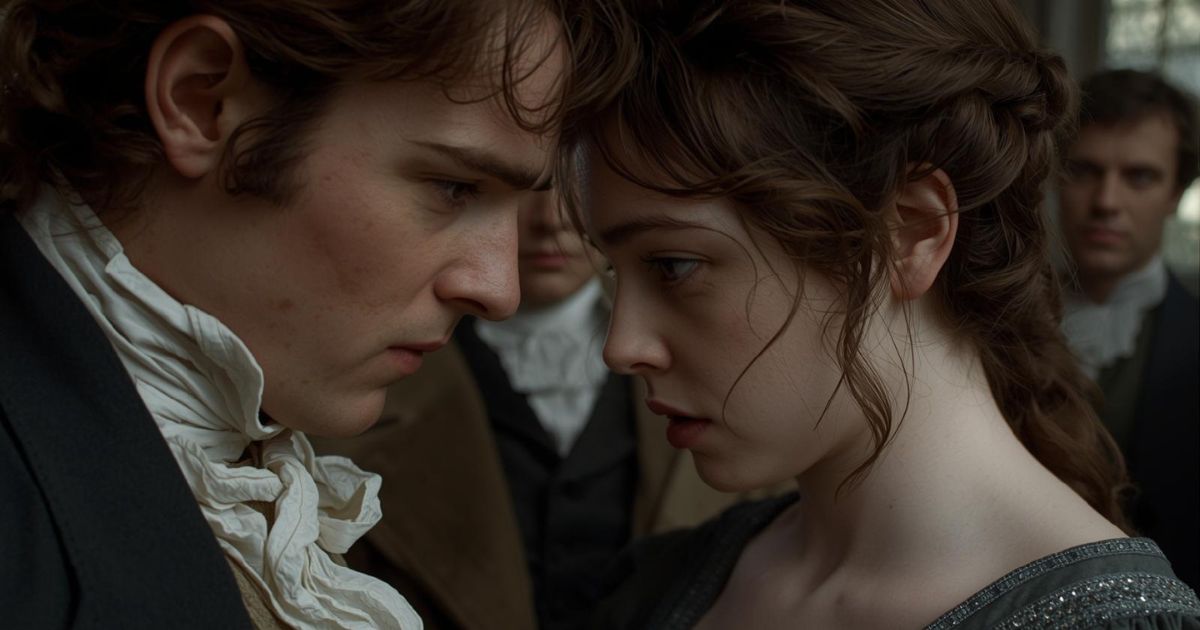
Elizabeth felt herself completely taken in. She had fully proposed being
engaged by Wickham for those very dances; and to have Mr. Collins
instead!--her liveliness had been never worse timed. There was no help
for it, however. Mr. Wickham’s happiness and her own was perforce
delayed a little longer, and Mr. Collins’s proposal accepted with as
good a grace as she could. She was not the better pleased with his
gallantry, from the idea it suggested of something more. It now first
struck her, that she was selected from among her sisters as worthy of
being the mistress of Hunsford Parsonage, and of assisting to form a
quadrille table at Rosings, in the absence of more eligible visitors.
The idea soon reached to conviction, as she observed his increasing
civilities towards herself, and heard his frequent attempt at a
compliment on her wit and vivacity; and though more astonished than
gratified herself by this effect of her charms, it was not long before
her mother gave her to understand that the probability of their marriage
was exceedingly agreeable to her. Elizabeth, however, did not choose
to take the hint, being well aware that a serious dispute must be the
consequence of any reply. Mr. Collins might never make the offer, and,
till he did, it was useless to quarrel about him.
If there had not been a Netherfield ball to prepare for and talk of, the
younger Miss Bennets would have been in a pitiable state at this time;
for, from the day of the invitation to the day of the ball, there was
such a succession of rain as prevented their walking to Meryton once. No
aunt, no officers, no news could be sought after; the very shoe-roses
for Netherfield were got by proxy. Even Elizabeth might have found some
trial of her patience in weather which totally suspended the improvement
of her acquaintance with Mr. Wickham; and nothing less than a dance on
Tuesday could have made such a Friday, Saturday, Sunday, and Monday
endurable to Kitty and Lydia.
[Illustration]
Master this chapter. Complete your experience
Purchase the complete book to access all chapters and support classic literature
As an Amazon Associate, we earn a small commission from qualifying purchases at no additional cost to you.
Available in paperback, hardcover, and e-book formats
Let's Analyse the Pattern
Why This Matters
Connect literature to life
This chapter teaches how people's reactions to your authentic choices reveal their true values and whether they're worth your energy.
Now let's explore the literary elements.
Key Quotes & Analysis
"Her dirty petticoats quite escaped my notice."
Context: Defending Elizabeth when his sisters criticize her muddy appearance
Shows Bingley's genuine character - he sees past superficial appearances to Elizabeth's real concern for her sister. This contrasts sharply with his sisters' shallow focus on clothing and propriety.
"I thought Miss Elizabeth Bennet looked remarkably well when she came into the room this morning. Her dirty petticoats quite escaped my notice."
Context: Surprising everyone by defending Elizabeth's unconventional arrival
Reveals Darcy's growing attraction to Elizabeth's natural, unaffected behavior. His comment shocks the Bingley sisters because it goes against everything they think he values about proper feminine conduct.
"To walk three miles, or four miles, or five miles, or whatever it is, above her ankles in dirt, and alone, quite alone! What could she mean by it?"
Context: Criticizing Elizabeth's journey to Netherfield
Perfectly captures the rigid social expectations Elizabeth defies. Caroline's horror at the idea of walking alone and getting dirty shows how constrained women's lives were by social rules that prioritized appearance over genuine feeling.
Thematic Threads
Authenticity
In This Chapter
Elizabeth's muddy walk reveals her genuine priorities—family over social appearance
Development
Building from earlier hints about Elizabeth's independent thinking
In Your Life:
When have you chosen to show up authentically for someone you care about, even knowing it might make you look bad to others?
Class Judgment
In This Chapter
Bingley sisters horrified by Elizabeth's improper appearance and behavior
Development
Deepening the class tensions introduced through Darcy's initial pride
In Your Life:
Think about a time when someone judged you based on your appearance or background rather than getting to know you—how did that feel?
True Character
In This Chapter
Crisis reveals everyone's real values—Bingley's kindness, sisters' shallowness, Darcy's complexity
Development
First major test of characters established in opening chapters
In Your Life:
What crisis or stressful situation has most revealed your true priorities and character to yourself or others?
Love vs Convention
In This Chapter
Elizabeth chooses family duty over social propriety; Darcy finds himself attracted despite social rules
Development
Introduced here as central tension between heart and society
In Your Life:
When have you had to choose between following your heart and meeting others' expectations of what you 'should' do?
Female Independence
In This Chapter
Elizabeth walks alone across countryside, makes own decisions about staying overnight
Development
Escalating from earlier displays of wit to physical independence
In Your Life:
What's a time you've had to go against social norms or others' advice to take care of something important to you?
You now have the context. Time to form your own thoughts.
Discussion Questions
- 1
What choice does Elizabeth face when she learns Jane is sick, and what does she decide to do?
- 2
Why do the Bingley sisters react so negatively to Elizabeth's appearance, while Bingley and Darcy respond differently?
- 3
When have you seen someone prioritize doing what's right over looking right? How did others react?
- 4
If you had to choose between helping someone you care about and maintaining your reputation, how would you decide?
- 5
What does this chapter reveal about how crisis situations expose people's true values and priorities?
Critical Thinking Exercise
Map Your Muddy Walk Moments
Think of three situations in your life where you had to choose between looking good and doing good. For each situation, write down what you chose and how different people in your life reacted. Then identify which reactions told you something important about those relationships.
Consider:
- •Notice who supported your authentic choice versus who criticized your appearance or approach
- •Consider whether the people who judged you were dealing with their own fears about breaking social rules
- •Reflect on how these moments helped you identify who your real allies are in different areas of life
Coming Up Next...
Chapter 18
Trapped at Netherfield with Jane still ill, Elizabeth must navigate breakfast conversation with the judgmental Bingley sisters while Darcy watches her every move with growing interest. The tension in the house begins to build as these very different personalities are forced into close quarters.