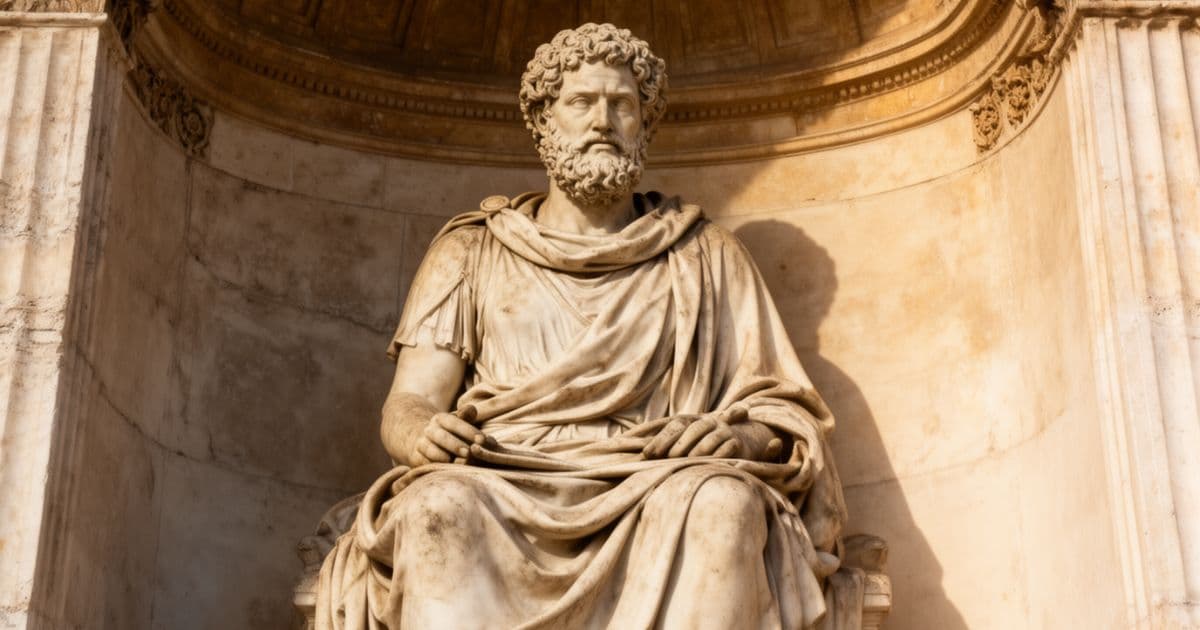
An excerpt from the original text.(complete · 640 words)
hy do we complain of Nature? she has dealt kindly with us.
Life is long enough, if you know how to use it. One man is possessed
by an avarice which nothing can satisfy, another by a laborious
diligence in doing what is totally useless: another is sodden by
wine: another is benumbed by sloth: one man is exhausted by an
ambition which makes him court the good will of others[2]: another,
through his eagerness as a merchant, is led to visit every land and
every sea by the hope of gain: some are plagued by the love of
soldiering, and are always either endangering other men’s lives or
in trembling for their own: some wear away their lives in that
voluntary slavery, the unrequited service of great men: many are
occupied either in laying claim to other men’s fortune or in
complaining of their own: a great number have no settled purpose,
and are tossed from one new scheme to another by a rambling,
inconsistent, dissatisfied, fickle habit of mind: some care for no
object sufficiently to try to attain it, but lie lazily yawning
until their fate comes upon them: so that I cannot doubt the
truth of that verse which the greatest of poets has dressed in the
guise of an oracular response—
“We live a small part only of our lives.”
But all duration is time, not life: vices press upon us and surround
us on every side, and do not permit us to regain our feet, or to
raise our eyes and gaze upon truth, but when we are down keep us
prostrate and chained to low desires. Men who are in this condition
are never allowed to come to themselves: if ever by chance they
obtain any rest, they roll to and fro like the deep sea, which
heaves and tosses after a gale, and they never have any respite
from their lusts. Do you suppose that I speak of those whose ills
are notorious? Nay, look at those whose prosperity all men run to
see: they are choked by their own good things. To how many men do
riches prove a heavy burden? how many men’s eloquence and continual
desire to display their own cleverness has cost them their lives?[3]
how many are sallow with constant sensual indulgence? how many have
no freedom left them by the tribe of clients that surges around
them? Look through all these, from the lowest to the highest:—this
man calls his friends to support him, this one is present in court,
this one is the defendant, this one pleads for him, this one is on
the jury: but no one lays claim to his own self, every one wastes
his time over some one else. Investigate those men, whose names are
in every one’s mouth: you will find that they bear just the same
marks: A is devoted to B, and B to C: no one belongs to himself.
Moreover some men are full of most irrational anger: they complain
of the insolence of their chiefs, because they have not granted
them an audience when they wished for it; as if a man had any right
to complain of being so haughtily shut out by another, when he never
has leisure to give his own conscience a hearing. This chief
of yours, whoever he is, though he may look at you in an offensive
manner, still will some day look at you, open his ears to your
words, and give you a seat by his side: but you never design to
look upon yourself, to listen to your own grievances. You ought
not, then, to claim these services from another, especially since
while you yourself were doing so, you did not wish for an interview
with another man, but were not able to obtain one with yourself.[4]
Master this chapter. Complete your experience
Purchase the complete book to access all chapters and support classic literature
As an Amazon Associate, we earn a small commission from qualifying purchases at no additional cost to you.
Available in paperback, hardcover, and e-book formats
Let's Analyse the Pattern
Living your life on everyone else's schedule while your own dreams and needs remain perpetually postponed.
Why This Matters
Connect literature to life
This chapter teaches how to examine where your time actually goes versus where you think it goes, like checking your bank statement for mysterious charges.
Practice This Today
This week, notice when you say 'I don't have time for...' then track what you actually spent those hours doing - you might be surprised what's eating your life.
Now let's explore the literary elements.
Key Quotes & Analysis
"Life is long enough, if you know how to use it."
Context: Opening argument against those who complain life is too short
This is Seneca's central thesis - the problem isn't that we don't have enough time, it's that we waste the time we have. He's challenging readers to take responsibility for how they spend their days rather than blaming circumstances.
In Today's Words:
You've got plenty of time if you stop wasting it on stuff that doesn't matter.
"We live a small part only of our lives."
Context: Seneca quotes this as an oracular truth about human nature
This quote captures the tragedy Seneca sees everywhere - people going through the motions of living without actually being present to their own experience. Most of what we call life is just distraction.
In Today's Words:
Most people are just sleepwalking through their days.
"Vices press upon us and surround us on every side, and do not permit us to regain our footing."
Context: Explaining why people can't seem to break free from destructive patterns
Seneca recognizes that bad habits and destructive behaviors create a kind of prison. Once you're caught in patterns of greed, laziness, or people-pleasing, it becomes harder to step back and choose differently.
In Today's Words:
Bad habits pile up until you can't even see a way out.
Thematic Threads
Time
In This Chapter
Seneca reveals how we squander our most precious resource by treating it as unlimited while guarding lesser possessions fiercely
Development
Introduced here as the central currency of a meaningful life
In Your Life:
You might notice how you'll fight over a parking spot but give away hours to activities that drain your soul.
Presence
In This Chapter
The chapter shows the difference between being physically present and actually living - most people are sleepwalking through their days
Development
Introduced here as the antidote to wasted time
In Your Life:
You might recognize moments when you're going through the motions at work or home without really being there.
Social Expectations
In This Chapter
People become prisoners of their own success, surrounded by crowds but never truly with themselves
Development
Introduced here as a trap that grows with achievement
In Your Life:
You might see how climbing the ladder at work can leave you further from who you actually want to be.
Self-Ownership
In This Chapter
Seneca contrasts how fiercely we guard property with how freely we give away our time and attention
Development
Introduced here as the foundation of intentional living
In Your Life:
You might notice how you protect your money carefully but let others steal your time without protest.
Intentionality
In This Chapter
The chapter calls for examining whether we're living our days or our days are living us
Development
Introduced here as the key to escaping the borrowed time trap
In Your Life:
You might ask yourself whether your daily choices reflect your values or just your habits.
You now have the context. Time to form your own thoughts.
Discussion Questions
- 1
Seneca describes people who are physically present but spiritually absent. What does he mean by this, and what examples does he give?
analysis • surface - 2
Why does Seneca say we guard our property fiercely but give away our time freely? What's the difference in how we treat these two resources?
analysis • medium - 3
Where do you see this pattern of 'borrowed time' in your own life - times when you're living on everyone else's schedule instead of your own?
application • medium - 4
If you started treating your time like your most valuable possession, what would you stop doing immediately? What would you start doing?
application • deep - 5
Seneca suggests that we complain about not getting time with important people while never making time for ourselves. What does this reveal about how we value our own company versus others?
reflection • deep
Critical Thinking Exercise
Audit Your Time Thieves
For the next week, keep a simple log of how you spend your time in 2-hour blocks. Don't change anything yet - just observe. At the end of each day, mark each block as either 'chosen' (you actively decided to spend time this way) or 'borrowed' (you gave your time to someone else's agenda). Look for patterns in when and why you give your time away.
Consider:
- •Notice the difference between urgent and important - most time thieves disguise themselves as urgent
- •Pay attention to your energy levels during 'chosen' versus 'borrowed' time
- •Watch for the automatic 'yes' response when people ask for your time
Journaling Prompt
Write about a time when you felt most alive and present. What were you doing? Who were you with? How much of that time was truly yours versus time you were giving away to others' expectations?
Coming Up Next...
Chapter 3: The Life Audit That Changes Everything
Seneca is about to deliver one of his most striking analogies about how we protect our physical property while carelessly giving away something far more precious. He'll reveal why we're so blind to this contradiction and what it costs us.