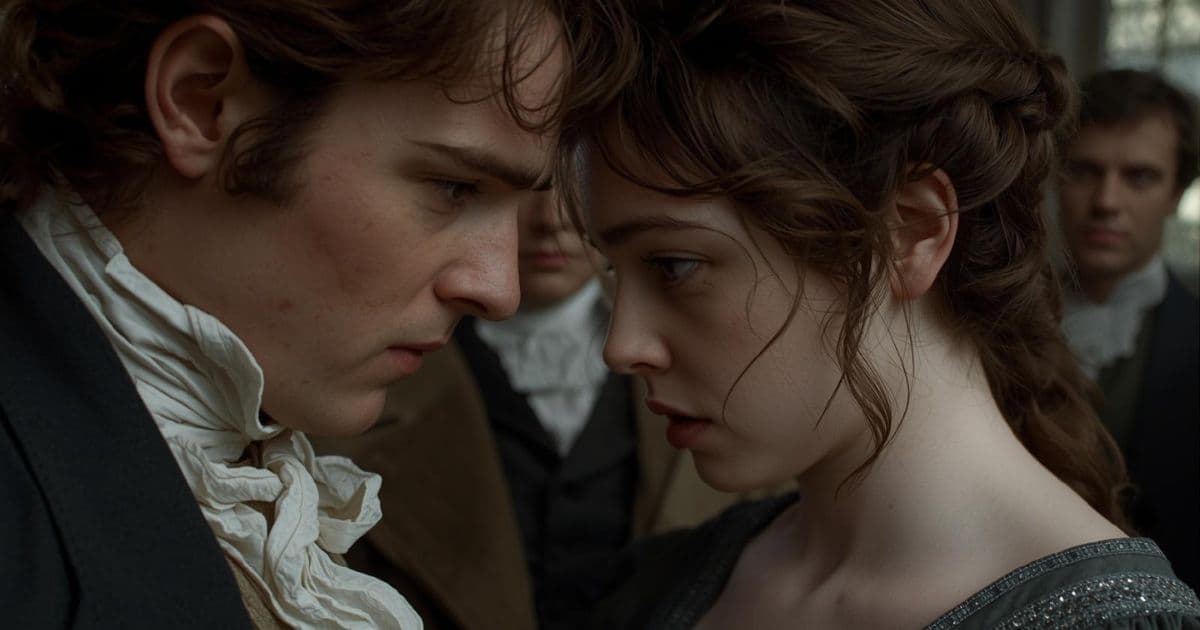
An excerpt from the original text.(complete · 1303 words)
he next morning brought the following very unexpected letter from
Isabella:
Bath, April
My dearest Catherine,
I received your two kind letters with the greatest delight, and
have a thousand apologies to make for not answering them sooner. I
really am quite ashamed of my idleness; but in this horrid place
one can find time for nothing. I have had my pen in my hand to
begin a letter to you almost every day since you left Bath, but
have always been prevented by some silly trifler or other. Pray
write to me soon, and direct to my own home. Thank God, we leave
this vile place to-morrow. Since you went away, I have had no
pleasure in it—the dust is beyond anything; and everybody one cares
for is gone. I believe if I could see you I should not mind the
rest, for you are dearer to me than anybody can conceive. I am
quite uneasy about your dear brother, not having heard from him
since he went to Oxford; and am fearful of some misunderstanding.
Your kind offices will set all right: he is the only man I ever did
or could love, and I trust you will convince him of it. The spring
fashions are partly down; and the hats the most frightful you can
imagine. I hope you spend your time pleasantly, but am afraid you
never think of me. I will not say all that I could of the family
you are with, because I would not be ungenerous, or set you against
those you esteem; but it is very difficult to know whom to trust,
and young men never know their minds two days together. I rejoice
to say that the young man whom, of all others, I particularly
abhor, has left Bath. You will know, from this description, I must
mean Captain Tilney, who, as you may remember, was amazingly
disposed to follow and tease me, before you went away. Afterwards
he got worse, and became quite my shadow. Many girls might have
been taken in, for never were such attentions; but I knew the
fickle sex too well. He went away to his regiment two days ago, and
I trust I shall never be plagued with him again. He is the greatest
coxcomb I ever saw, and amazingly disagreeable. The last two days
he was always by the side of Charlotte Davis: I pitied his taste,
but took no notice of him. The last time we met was in Bath Street,
and I turned directly into a shop that he might not speak to me; I
would not even look at him. He went into the pump-room afterwards;
but I would not have followed him for all the world. Such a
contrast between him and your brother! pray send me some news of
the latter—I am quite unhappy about him; he seemed so uncomfortable
when he went away, with a cold, or something that affected his
spirits. I would write to him myself, but have mislaid his
direction; and, as I hinted above, am afraid he took something in
my conduct amiss. Pray explain everything to his satisfaction; or,
if he still harbours any doubt, a line from himself to me, or a
call at Putney when next in town, might set all to rights. I have
not been to the Rooms this age, nor to the play, except going in
last night with the Hodges, for a frolic, at half price: they
teased me into it; and I was determined they should not say I shut
myself up because Tilney was gone. We happened to sit by the
Mitchells, and they pretended to be quite surprised to see me out.
I knew their spite: at one time they could not be civil to me, but
now they are all friendship; but I am not such a fool as to be
taken in by them. You know I have a pretty good spirit of my own.
Anne Mitchell had tried to put on a turban like mine, as I wore it
the week before at the Concert, but made wretched work of it—it
happened to become my odd face, I believe, at least Tilney told me
so at the time, and said every eye was upon me; but he is the last
man whose word I would take. I wear nothing but purple now: I know
I look hideous in it, but no matter—it is your dear brother’s
favourite colour. Lose no time, my dearest, sweetest Catherine, in
writing to him and to me,
Who ever am, etc.
Such a strain of shallow artifice could not impose even upon Catherine.
Its inconsistencies, contradictions, and falsehood struck her from the
very first. She was ashamed of Isabella, and ashamed of having ever
loved her. Her professions of attachment were now as disgusting as her
excuses were empty, and her demands impudent. “Write to James on her
behalf! no, James should never hear Isabella’s name mentioned by her
again.”
On Henry’s arrival from Woodston, she made known to him and Eleanor
their brother’s safety, congratulating them with sincerity on it, and
reading aloud the most material passages of her letter with strong
indignation. When she had finished it—“So much for Isabella,” she
cried, “and for all our intimacy! she must think me an idiot, or she
could not have written so; but perhaps this has served to make her
character better known to me than mine is to her. I see what she has
been about. She is a vain coquette, and her tricks have not answered. I
do not believe she had ever any regard either for James or for me, and
I wish I had never known her.”
“It will soon be as if you never had,” said Henry.
“There is but one thing that I cannot understand. I see that she has
had designs on Captain Tilney, which have not succeeded; but I do not
understand what Captain Tilney has been about all this time. Why should
he pay her such attentions as to make her quarrel with my brother, and
then fly off himself?”
“I have very little to say for Frederick’s motives, such as I believe
them to have been. He has his vanities as well as Miss Thorpe, and the
chief difference is, that, having a stronger head, they have not yet
injured himself. If the effect of his behaviour does not justify him
with you, we had better not seek after the cause.”
“Then you do not suppose he ever really cared about her?”
“I am persuaded that he never did.”
“And only made believe to do so for mischief’s sake?”
Henry bowed his assent.
“Well, then, I must say that I do not like him at all. Though it has
turned out so well for us, I do not like him at all. As it happens,
there is no great harm done, because I do not think Isabella has any
heart to lose. But, suppose he had made her very much in love with
him?”
“But we must first suppose Isabella to have had a heart to
lose—consequently to have been a very different creature; and, in that
case, she would have met with very different treatment.”
“It is very right that you should stand by your brother.”
“And if you would stand by yours, you would not be much distressed by
the disappointment of Miss Thorpe. But your mind is warped by an innate
principle of general integrity, and therefore not accessible to the
cool reasonings of family partiality, or a desire of revenge.”
Catherine was complimented out of further bitterness. Frederick could
not be unpardonably guilty, while Henry made himself so agreeable. She
resolved on not answering Isabella’s letter, and tried to think no more
of it.
Master this chapter. Complete your experience
Purchase the complete book to access all chapters and support classic literature
As an Amazon Associate, we earn a small commission from qualifying purchases at no additional cost to you.
Available in paperback, hardcover, and e-book formats
Let's Analyse the Pattern
When someone consistently creates problems then demands others help them avoid the consequences, using friendship as emotional blackmail.
Why This Matters
Connect literature to life
This chapter teaches how to spot fake apologies that are really demands for rescue disguised as remorse.
Practice This Today
Next time someone apologizes but immediately asks you to fix their problem or blames circumstances, notice whether they're taking real responsibility or just managing your reaction.
Now let's explore the literary elements.
Key Quotes & Analysis
"I believe if I could see you I should not mind the rest, for you are dearer to me than anybody can conceive."
Context: Isabella trying to flatter Catherine while asking for help fixing her broken engagement
This is classic manipulation - excessive flattery followed by a request for help. Isabella claims Catherine is 'dearer than anybody can conceive' but has ignored her for weeks and is clearly only writing because she needs something.
In Today's Words:
You're like, my absolute best friend ever - now can you please fix this mess I made?
"Your kind offices will set all right: he is the only man I ever did or could love, and I trust you will convince him of it."
Context: Asking Catherine to convince James to take her back after Isabella broke their engagement
Isabella wants Catherine to clean up her mess while claiming James is her 'only love' - even though she obviously pursued Captain Tilney. She's asking Catherine to lie for her while lying herself.
In Today's Words:
Can you tell him I totally love him and fix this for me? Just ignore that whole thing with that other guy.
"Such a strain of shallow artifice could not impose even upon Catherine."
Context: Describing Catherine's reaction to Isabella's manipulative letter
This marks Catherine's growth from naive to wise. Even someone as trusting as Catherine can now see through Isabella's fake emotions and selfish motives. Her moral development is complete.
In Today's Words:
Even Catherine could see right through this fake, manipulative garbage.
Thematic Threads
Manipulation
In This Chapter
Isabella's letter uses false sentiment and victim-playing to manipulate Catherine into fixing her broken engagement
Development
Evolved from subtle social manipulation to obvious emotional blackmail
In Your Life:
You might see this when someone consistently needs rescuing from problems they created themselves
Recognition
In This Chapter
Catherine finally sees through Isabella's lies and contradictions, recognizing her friend's true selfish nature
Development
Catherine's journey from naive trust to clear-eyed assessment reaches completion
In Your Life:
You experience this moment when someone's mask finally slips and you see who they really are
Boundaries
In This Chapter
Catherine decides not to respond to Isabella's letter, symbolically cutting ties with toxicity
Development
Introduced here as Catherine learns to protect herself from harmful relationships
In Your Life:
You might need to make this choice when someone repeatedly brings chaos into your life
Game-Playing
In This Chapter
Henry reveals that Frederick was never serious about Isabella, just enjoyed the attention and drama
Development
Expands the theme beyond female social games to show how men also manipulate for entertainment
In Your Life:
You might encounter people who treat relationships as entertainment rather than genuine connection
Self-Reflection
In This Chapter
Henry points out that Catherine's honest nature makes her vulnerable to judging others by her own standards
Development
Catherine's growing self-awareness includes understanding her own blind spots
In Your Life:
You might realize that your own good nature sometimes prevents you from seeing others' bad intentions
You now have the context. Time to form your own thoughts.
Discussion Questions
- 1
What does Isabella's letter reveal about her true feelings toward James and Captain Tilney?
analysis • surface - 2
Why does Catherine finally see through Isabella's manipulation when she couldn't before?
analysis • medium - 3
Where do you see the 'toxic loyalty trap' in modern relationships - someone creating problems then expecting others to fix them?
application • medium - 4
How would you respond to someone like Isabella who demands you help them avoid consequences they created?
application • deep - 5
What does Catherine's decision not to respond to Isabella teach us about when to end relationships?
reflection • deep
Critical Thinking Exercise
Decode the Manipulation Script
Reread Isabella's letter and identify every manipulation technique she uses. Look for blame-shifting, victim positioning, emotional blackmail, and false promises. Then think of a real situation where someone used similar tactics with you or someone you know.
Consider:
- •Notice how Isabella positions herself as the victim while avoiding responsibility
- •Count how many times she contradicts herself or shifts blame
- •Pay attention to how she tries to make Catherine feel guilty or obligated
Journaling Prompt
Write about a time when someone expected you to rescue them from consequences they created. How did you handle it, and what would you do differently now?
Coming Up Next...
Chapter 28: The Sudden Dismissal
General Tilney must leave for London, giving Catherine her first taste of life at Northanger without his overwhelming presence. What she discovers about happiness in his absence will surprise her.