An excerpt from the original text.(complete · 4137 words)
←etter 91. On the lesson to be drawn from the burning of LyonsMoral letters to Luciliusby Seneca, translated by Richard Mott GummereLetter 92. On the happy lifeLetter 93. On the quality, as contrasted with the length, of life→483391Moral letters to Lucilius — Letter 92. On the happy lifeRichard Mott GummereSeneca XCII. ON THE HAPPY LIFE[1] 1. You and I will agree, I think, that outward things are sought for the satisfaction of the body, that the body is cherished out of regard for the soul, and that in the soul there are certain parts which minister to us, enabling us to move and to sustain life, bestowed upon us just for the sake of the primary part of us.[2] In this primary part there is something irrational, and something rational. The former obeys the latter, while the latter is the only thing that is not referred back to another, but rather refers all things to itself. For the divine reason also is set in supreme command over all things, and is itself subject to none; and even this reason which we possess is the same, because it is derived from the divine reason. 2. Now if we are agreed on this point, it is natural that we shall be agreed on the following also—namely, that the happy life depends upon this and this alone: our attainment of perfect reason. For it is naught but this that keeps the soul from being bowed down, that stands its ground against Fortune; whatever the condition of their affairs may be, it keeps men untroubled. And that alone is a good which is never subject to impairment. That man, I declare, is happy whom nothing makes less strong than he is; he keeps to the heights, leaning upon none but himself; for one who sustains himself by any prop may fall. If the case is otherwise, then things which do not pertain to us will begin to have great influence over us. But who desires Fortune to have the upper hand, or what sensible man prides himself upon that which is not his own? 3. What is the happy life? It is peace of mind, and lasting tranquillity. This will be yours if you possess greatness of soul; it will be yours if you possess the steadfastness that resolutely clings to a good judgment just reached. How does a man reach this condition? By gaining a complete view of truth, by maintaining, in all that he does, order, measure, fitness, and a will that is inoffensive and kindly, that is intent upon reason and never departs therefrom, that commands at the same time love and admiration. In short, to give you the principle in brief compass, the wise man’s soul ought to be such as would be proper for a god. 4. What more can one desire who possesses all honourable things? For if dishonourable things can contribute to the best estate, then there will be the possibility of a happy life under conditions which do not include an honourable life. And what is more base or foolish than to connect the good of a rational soul with things irrational? 5. Yet there are certain philosophers who hold that the Supreme Good admits of increase because it is hardly complete when the gifts of fortune are adverse.[3] Even Antipater,[4] one of the great leaders of this school, admits that he ascribes some influence to externals, though only a very slight influence. You see, however, what absurdity lies in not being content with the daylight unless it is increased by a tiny fire. What importance can a spark have in the midst of this clear sunlight? 6. If you are not contented with only that which is honourable, it must follow that you desire in addition either the kind of quiet which the Greeks call “undisturbedness,” or else pleasure. But the former may be attained in any case. For the mind is free from disturbance when it is fully free to contemplate the universe, and nothing distracts it from the contemplation of nature. The second, pleasure, is simply the good of cattle. We are but adding[5] the irrational to the rational, the dishonourable to the honourable. A pleasant physical sensation affects this life of ours; 7. why, therefore, do you hesitate to say that all is well with a man just because all is well with his appetite? And do you rate, I will not say among heroes, but among men, the person whose Supreme Good is a matter of flavours and colours and sounds? Nay, let him withdraw from the ranks of this, the noblest class of living beings, second only to the gods; let him herd with the dumb brutes—an animal whose delight is in fodder! 8. The irrational part of the soul is twofold[6]: the one part is spirited, ambitious, uncontrolled; its seat is in the passions; the other is lowly, sluggish, and devoted to pleasure. Philosophers have neglected the former, which, though unbridled, is yet better, and is certainly more courageous and more worthy of a man, and have regarded the latter, which is nerveless and ignoble, as indispensable to the happy life. 9. They have ordered reason to serve this latter; they have made the Supreme Good of the noblest living being an abject and mean affair, and a monstrous hybrid, too, composed of various members which harmonize but ill. For as our Vergil, describing Scylla, says[7]: Above, a human face and maiden’s breast,— A beauteous breast,—below, a monster huge Of bulk and shapeless, with a dolphin’s tail Joined to a wolf-like belly. And yet to this Scylla are tacked on the forms of wild animals, dreadful and swift; but from what monstrous shapes have these wiseacres compounded wisdom! 10. Man’s primary art is virtue itself; there is joined to this the useless and fleeting flesh, fitted only for the reception of food, as Posidonius remarks. This divine virtue ends in foulness, and to the higher parts, which are worshipful and heavenly, there is fastened a sluggish and flabby animal. As for the second desideratum,—quiet,—although it would indeed not of itself be of any benefit to the soul, yet it would relieve the soul of hindrances; pleasure, on the contrary, actually destroys the soul and softens all its vigour. What elements so inharmonious as these can be found united? To that which is most vigorous is joined that which is most sluggish, to that which is austere that which is far from serious, to that which is most holy that which is unrestrained even to the point of impurity. 11. “What, then,” comes the retort, “if good health, rest, and freedom from pain are not likely to hinder virtue, shall you not seek all these?” Of course I shall seek them, but not because they are goods,—I shall seek them because they are according to nature and because they will be acquired through the exercise of good judgment on my part. What, then, will be good in them? This alone,—that it is a good thing to choose them. For when I don suitable attire, or walk as I should, or dine as I ought to dine, it is not my dinner, or my walk, or my dress that are goods, but the deliberate choice which I show in regard to them, as I observe, in each thing I do, a mean that conforms with reason. 12. Let me also add that the choice of neat clothing is a fitting object of a man’s efforts; for man is by nature a neat and well-groomed animal. Hence the choice of neat attire, and not neat attire in itself, is a good; since the good is not in the thing selected, but in the quality of the selection. Our actions are honourable, but not the actual things which we do. 13. And you may assume that what I have said about dress applies also to the body. For nature has surrounded our soul with the body as with a sort of garment; the body is its cloak. But who has ever reckoned the value of clothes by the wardrobe which contained them? The scabbard does not make the sword good or bad. Therefore, with regard to the body I shall return the same answer to you,—that, if I have the choice, I shall choose health and strength, but that the good involved will be my judgment regarding these things, and not the things themselves. 14. Another retort is: “Granted that the wise man is happy; nevertheless, he does not attain the Supreme Good which we have defined, unless the means also which nature provides for its attainment are at his call. So, while one who possesses virtue cannot be unhappy, yet one cannot be perfectly happy if one lacks such natural gifts as health, or soundness of limb.” 15. But in saying this, you grant the alternative which seems the more difficult to believe,—that the man who is in the midst of unremitting and extreme pain is not wretched, nay, is even happy; and you deny that which is much less serious,—that he is completely happy. And yet, if virtue can keep a man from being wretched, it will be an easier task for it to render him completely happy. For the difference between happiness and complete happiness is less than that between wretchedness and happiness. Can it be possible that a thing which is so powerful as to snatch a man from disaster, and place him among the happy, cannot also accomplish what remains, and render him supremely happy? Does its strength fail at the very top of the climb? 16. There are in life things which are advantageous and disadvantageous,—both beyond our control. If a good man, in spite of being weighed down by all kinds of disadvantages, is not wretched, how is he not supremely happy, no matter if he does lack certain advantages? For as he is not weighted down to wretchedness by his burden of disadvantages, so he is not withdrawn from supreme happiness through lack of any advantages; nay, he is just as supremely happy without the advantages as he is free from wretchedness though under the load of his disadvantages. Otherwise, if his good can be impaired, it can be snatched from him altogether. 17. A short space above,[8] I remarked that a tiny fire does not add to the sun’s light. For by reason of the sun’s brightness any light that shines apart from the sunlight is blotted out. “But,” one may say, “there are certain objects that stand in the way even of the sunlight.” The sun, however, is unimpaired even in the midst of obstacles, and, though an object may intervene and cut off our view thereof, the sun sticks to his work and goes on his course. Whenever he shines forth from amid the clouds, he is no smaller, nor less punctual either, than when he is free from clouds; since it makes a great deal of difference whether there is merely something in the way of his light or something which interferes with his shining. 18. Similarly, obstacles take nothing away from virtue; it is no smaller, but merely shines with less brilliancy. In our eyes, it may perhaps be less visible and less luminous than before; but as regards itself it is the same and, like the sun when he is eclipsed, is still, though in secret, putting forth its strength. Disasters, therefore, and losses, and wrongs, have only the same power over virtue that a cloud has over the sun. 19. We meet with one person who maintains that a wise man who has met with bodily misfortune is neither wretched nor happy. But he also is in error, for he is putting the results of chance upon a parity with the virtues, and is attributing only the same influence to things that are honourable as to things that are devoid of honour. But what is more detestable and more unworthy than to put contemptible things in the same class with things worthy of reverence! For reverence is due to justice, duty, loyalty, bravery, and prudence; on the contrary, those attributes are worthless with which the most worthless men are often blessed in fuller measure,—such as a sturdy leg, strong shoulders, good teeth, and healthy and solid muscles. 20. Again, if the wise man whose body is a trial to him shall be regarded as neither wretched nor happy, but shall be left in a sort of half-way position, his life also will be neither desirable nor undesirable. But what is so foolish as to say that the wise man’s life is not desirable? And what is so far beyond the bounds of credence as the opinion that any life is neither desirable nor undesirable? Again, if bodily ills do not make a man wretched, they consequently allow him to be happy. For things which have no power to change his condition for the worse, have not the power, either, to disturb that condition when it is at its best. 21. “But,” someone will say, “we know what is cold and what is hot; a lukewarm temperature lies between. Similarly, A is happy, and B is wretched, and C is neither happy nor wretched.” I wish to examine this figure, which is brought into play against us. If I add to your lukewarm water a larger quantity of cold water, the result will be cold water. But if I pour in a larger quantity of hot water, the water will finally become hot. In the case, however, of your man who is neither wretched nor happy, no matter how much I add to his troubles, he will not be unhappy, according to your argument; hence your figure offers no analogy. 22. Again, suppose that I set before you a man who is neither miserable nor happy. I add blindness to his misfortunes; he is not rendered unhappy. I cripple him; he is not rendered unhappy. I add afflictions which are unceasing and severe; he is not rendered unhappy. Therefore, one whose life is not changed to misery by all these ills is not dragged by them, either, from his life of happiness. 23. Then if, as you say, the wise man cannot fall from happiness to wretchedness, he cannot fall into non-happiness. For how, if one has begun to slip, can one stop at any particular place? That which prevents him from rolling to the bottom, keeps him at the summit. Why, you urge, may not a happy life possibly be destroyed? It cannot even be disjointed; and for that reason virtue is itself of itself sufficient for the happy life.[9] 24. “But,” it is said, “is not the wise man happier if he has lived longer and has been distracted by no pain, than one who has always been compelled to grapple with evil fortune?” Answer me now,—is he any better or more honourable? If he is not, then he is not happier either. In order to live more happily, he must live more rightly; if he cannot do that, then he cannot live more happily either. Virtue cannot be strained tighter,[10] and therefore neither can the happy life, which depends on virtue. For virtue is so great a good that it is not affected by such insignificant assaults upon it as shortness of life, pain, and the various bodily vexations. For pleasure does not deserve that. virtue should even glance at it. 25. Now what is the chief thing in virtue? It is the quality of not needing a single day beyond the present, and of not reckoning up the days that are ours; in the slightest possible moment of time virtue completes an eternity of good. These goods seem to us incredible and transcending man’s nature; for we measure its grandeur by the standard of our own weakness, and we call our vices by the name of virtue. Furthermore, does it not seem just as incredible that any man in the midst of extreme suffering should say, “I am happy”? And yet this utterance was heard in the very factory of pleasure, when Epicurus said:[11] “To-day and one other day have been the happiest of all!” although in the one case he was tortured by strangury, and in the other by the incurable pain of an ulcerated stomach. 26. Why, then, should those goods which virtue bestows be incredible in the sight of us, who cultivate virtue, when they are found even in those who acknowledge pleasure as their mistress? These also, ignoble and base-minded as they are, declare that even in the midst of excessive pain and misfortune the wise man will be neither wretched nor happy. And yet this also is incredible,—nay, still more incredible than the other case. For I do not understand how, if virtue falls from her heights, she can help being hurled all the way to the bottom. She either must preserve one in happiness, or, if driven from this position, she will not prevent us from becoming unhappy. If virtue only stands her ground, she cannot be driven from the field; she must either conquer or be conquered. 27. But some say: “Only to the immortal gods is given virtue and the happy life; we can attain but the shadow, as it were, and semblance of such goods as theirs. We approach them, but we never reach them.” Reason, however, is a common attribute of both gods and men; in the gods it is already perfected, in us it is capable of being perfected. 28. But it is our vices that bring us to despair; for the second class of rational being, man, is of an inferior order,—a guardian, as it were, who is too unstable to hold fast to what is best, his judgment still wavering and uncertain. He may require the faculties of sight and hearing, good health, a bodily exterior that is not loathsome, and, besides, greater length of days conjoined with an unimpaired constitution. 29. Though by means of reason he can lead a life which will not bring regrets, yet there resides in this imperfect creature, man, a certain power that makes for badness, because he possesses a mind which is easily moved to perversity. Suppose, however, the badness which is in full view, and has previously been stirred to activity, to be removed; the man is still not a good man, but he is being moulded to goodness. One, however, in whom there is lacking any quality that makes for goodness, is bad. 30. But He in whose body virtue dwells, and spirit E’er present[12] is equal to the gods; mindful of his origin, he strives to return thither. No man does wrong in attempting to regain the heights from which he once came down. And why should you not believe that something of divinity exists in one who is a part of God? All this universe which encompasses us is one, and it is God; we are associates of God; we are his members. Our soul has capabilities, and is carried thither,[13] if vices do not hold it down. Just as it is the nature of our bodies to stand erect and look upward to the sky, so the soul, which may reach out as far as it will, was framed by nature to this end, that it should desire equality with the gods. And if it makes use of its powers and stretches upward into its proper region it is by no alien path that it struggles toward the heights. 31. It would be a great task to journey heavenwards; the soul but returns thither. When once it has found the road, it boldly marches on, scornful of all things. It casts, no backward glance at wealth; gold and silver—things which are fully worthy of the gloom in which they once lay—it values not by the sheen which smites the eyes of the ignorant, but by the mire of ancient days, whence our greed first detached and dug them out. The soul, I affirm, knows that riches are stored elsewhere than in men’s heaped-up treasure-houses; that it is the soul, and not the strong-box, which should be filled. 32. It is the soul that men may set in dominion over all things, and may install as owner of the universe, so that it may limit its riches only by the boundaries of East and West, and, like the gods, may possess all things; and that it may, with its own vast resources, look down from on high upon the wealthy, no one of whom rejoices as much in his own wealth as he resents the wealth of another. 33. When the soul has transported itself to this lofty height, it regards the body also, since it is a burden which must be borne, not as a thing to love, but as a thing to oversee; nor is it subservient to that over which it is set in mastery. For no man is free who is a slave to his body. Indeed, omitting all the other masters which are brought into being by excessive care for the body, the sway which the body itself exercises is captious and fastidious. 34. Forth from this body the soul issues, now with unruffled spirit, now with exultation, and, when once it has gone forth, asks not what shall be the end of the deserted clay. No; just as we do not take thought for the clippings of the hair and the beard, even so that divine soul, when it is about to issue forth from the mortal man, regards the destination of its earthly vessel—whether it be consumed by fire, or shut in by a stone, or buried in the earth, or torn by wild beasts—as being of no more concern to itself than is the afterbirth to a child just born. And whether this body shall be cast out and plucked to pieces by birds, or devoured when thrown to the sea-dogs as prey,[14] how does that concern him who is nothing? 35. Nay even when it is among the living, the soul fears nothing that may happen to the body after death; for though such things may have been threats, they were not enough to terrify the soul previous to the moment of death. It says: “I am not frightened by the executioner’s hook,[15] nor by the revolting mutilation of the corpse which is exposed to the scorn of those who would witness the spectacle. I ask no man to perform the last rites for me; I entrust my remains to none. Nature has made provision that none shall go unburied. Time will lay away one whom cruelty has cast forth.” Those were eloquent words which Maecenas uttered: I want no tomb; for Nature doth provide For outcast bodies burial.[16] You would imagine that this was the saying of a man of strict principles. He was indeed a man of noble and robust native gifts, but in prosperity he impaired these gifts by laxness.[17] Farewell. ↑ The reader will find this topic treated at greater length in Seneca’s De Vita Beata. ↑ i.e., the soul. See Aristotle, Eth. 1. 13: “It is stated that the soul has two parts, one irrational and the other possessing reason.” Aristotle further subdivides the irrational part into (1) that which makes for growth and increase, and (2) desire (which will, however, obey reason). In this passage Seneca uses “soul” in its widest sense. ↑ Certain of the Peripatetic and Academic school. ↑ Probably due to the criticism of the Stoics by Carneades, who said that everything which is according to nature should be classed among the goods. ↑ If we call pleasure a good. ↑ Cf. § 1 of this letter. Plato gives three divisions—the λογιστικόν, the ἐπιθυμητικόν, and the θυμοειδές which obeys either the first or the second. See his Republic, 440. ↑ Aeneid, iii. 426 ff. ↑ § 5. ↑ Answering the objection raised in § 14. ↑ Cf. Ep. lxxi. 16 non intenditur virtus. The Stoic idea of tension may be combined here with the raising of a note to a higher pitch. ↑ Frag. 138 Usener. Cf. Sen. Ep. lxvi. 47. ↑ Vergil, Aeneid, v. 363. Vergil MSS. read pectore. ↑ i.e., to participation in the divine existence. ↑ Vergil, Aeneid, ix. 485. ↑ Cf. Juvenal, x. 65 Seianus ducitur unco spectandus. The bodies of criminals were dragged by the hook through the city to the Scalae Gemoniae, down which they were flung. ↑ Frag. 6 Lunderstedt. ↑ The figure is taken from the Roman dress,—one who was “girt high” (alte cinctus), ready for vigorous walking, being contrasted with the loosely-girdled person (discinctus), indolent or effeminate. On the character of Maecenas see Epp. cxiv. 4 ff., xix. 9, cxx. 19.
Master this chapter. Complete your experience
Purchase the complete book to access all chapters and support classic literature
As an Amazon Associate, we earn a small commission from qualifying purchases at no additional cost to you.
Available in paperback, hardcover, and e-book formats
Let's Analyse the Pattern
Tying personal worth to external circumstances creates perpetual vulnerability and emotional instability.
Why This Matters
Connect literature to life
This chapter teaches how to create self-worth based on character and effort rather than external outcomes or other people's approval.
Practice This Today
This week, notice when you feel upset about something beyond your control, then ask yourself: 'What part of this situation can I actually influence, and how can I measure my success there instead?'
Now let's explore the literary elements.
Key Quotes & Analysis
"The happy life depends upon this and this alone: our attainment of perfect reason."
Context: Seneca is establishing his main argument about what creates lasting happiness.
This quote cuts through all the noise about what we think we need to be happy. Seneca is saying that peace of mind comes from developing our ability to think clearly and make good decisions, not from getting the right job or relationship or bank account.
In Today's Words:
Real happiness comes from learning how to think straight, period.
"It is naught but this that keeps the soul from being bowed down, that stands its ground against Fortune."
Context: Explaining how perfect reason protects us from being crushed by life's inevitable ups and downs.
Seneca is describing resilience - the ability to stay standing when life knocks you around. He's saying this strength comes from within, from how we think about and respond to problems, not from avoiding problems altogether.
In Today's Words:
This is the only thing that keeps you from getting knocked down by whatever life throws at you.
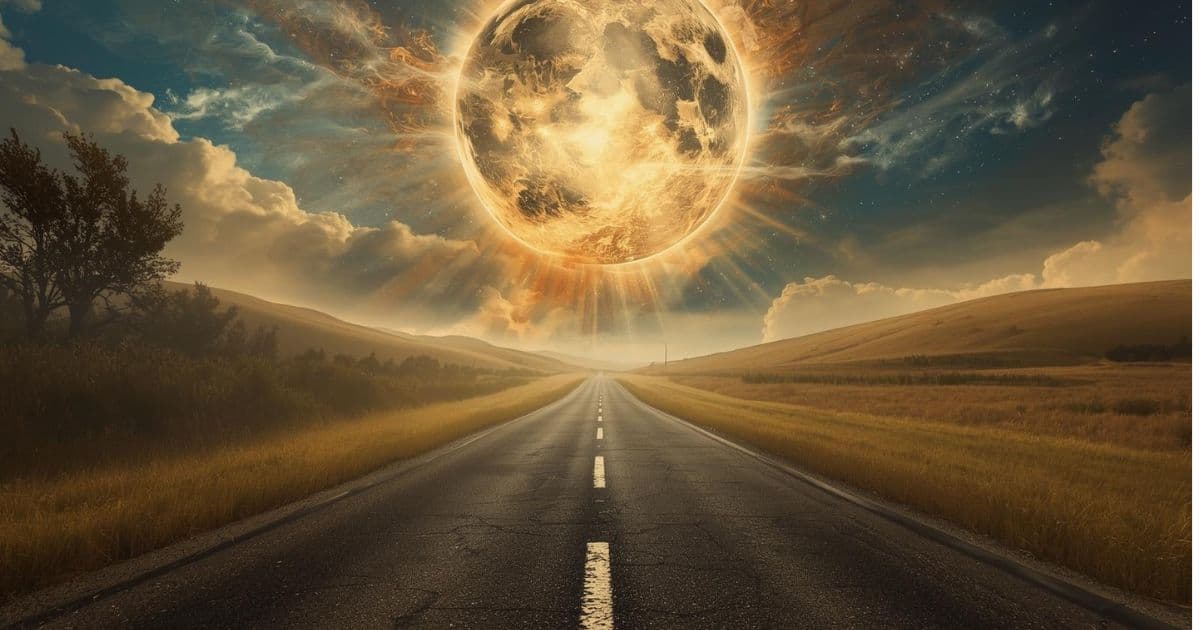
"You might as well say that the sun's light is increased by a candle."
Context: Criticizing philosophers who claim external advantages are necessary for complete happiness.
This is Seneca's way of showing how ridiculous it is to think that someone with virtue needs external things to be truly happy. Just like a candle can't make the sun brighter, health or wealth can't improve the happiness that comes from wisdom.
In Today's Words:
That's like saying you need a flashlight to make the sun brighter - it makes no sense.
Thematic Threads
Control
In This Chapter
Seneca distinguishes between what we can control (our judgment and responses) versus external circumstances
Development
Builds on earlier letters about accepting what we cannot change
In Your Life:
You might waste energy trying to control your teenager's choices instead of focusing on being a consistent, loving parent
Class
In This Chapter
Challenges the notion that material advantages are necessary for complete happiness
Development
Continues theme of virtue transcending social position
In Your Life:
You might feel 'less than' because you don't have what wealthier people have, missing your own sources of contentment
Identity
In This Chapter
Argues that true identity comes from the rational soul, not bodily circumstances
Development
Deepens earlier discussions about who we really are beneath social roles
In Your Life:
You might define yourself by your job title or health status rather than your character and choices
Personal Growth
In This Chapter
Presents wisdom and virtue as the only reliable path to lasting happiness
Development
Culminates earlier teachings about developing inner strength
In Your Life:
You might seek quick fixes for happiness instead of building the slow, steady foundation of good judgment
Social Expectations
In This Chapter
Rejects society's message that external advantages determine life quality
Development
Challenges conventional wisdom about what makes life worth living
In Your Life:
You might feel pressure to achieve certain milestones to be considered successful, ignoring your own definition of a good life
You now have the context. Time to form your own thoughts.
Discussion Questions
- 1
According to Seneca, what's the difference between basing your happiness on external things (like health or wealth) versus internal things (like virtue and character)?
analysis • surface - 2
Why does Seneca compare adding external advantages to happiness like adding a candle to improve sunlight? What's he really saying about how virtue works?
analysis • medium - 3
Think about social media, workplace promotions, or family approval. Where do you see people today making their happiness dependent on things they can't fully control?
application • medium - 4
If you had to choose between being healthy but miserable inside, or sick but genuinely at peace with yourself, which would actually make for a better life? Why?
application • deep - 5
What does this chapter reveal about why some people seem unshakeable no matter what happens to them, while others fall apart when things go wrong?
reflection • deep
Critical Thinking Exercise
Build Your Internal Scorecard
Make two lists: things you currently use to measure your worth that depend on other people or circumstances, and things you could measure that depend only on your own choices and character. Then identify one external scorecard item you could replace with an internal one this week.
Consider:
- •Notice how much mental energy you spend worrying about the external list versus the internal one
- •Consider which list actually predicts your day-to-day mood and self-confidence
- •Think about people you admire - do they seem more focused on external or internal scorecards?
Journaling Prompt
Write about a time when you felt genuinely proud of yourself regardless of what anyone else thought. What made that feeling different from pride that needed outside validation?
Coming Up Next...
Chapter 93: Quality Over Quantity in Life
Having established that happiness depends on virtue alone, Seneca will next explore a deeply personal question: does the quality of life matter more than its length? He examines how we should think about death and whether a short virtuous life can be more valuable than a long mediocre one.