An excerpt from the original text.(complete · 2219 words)
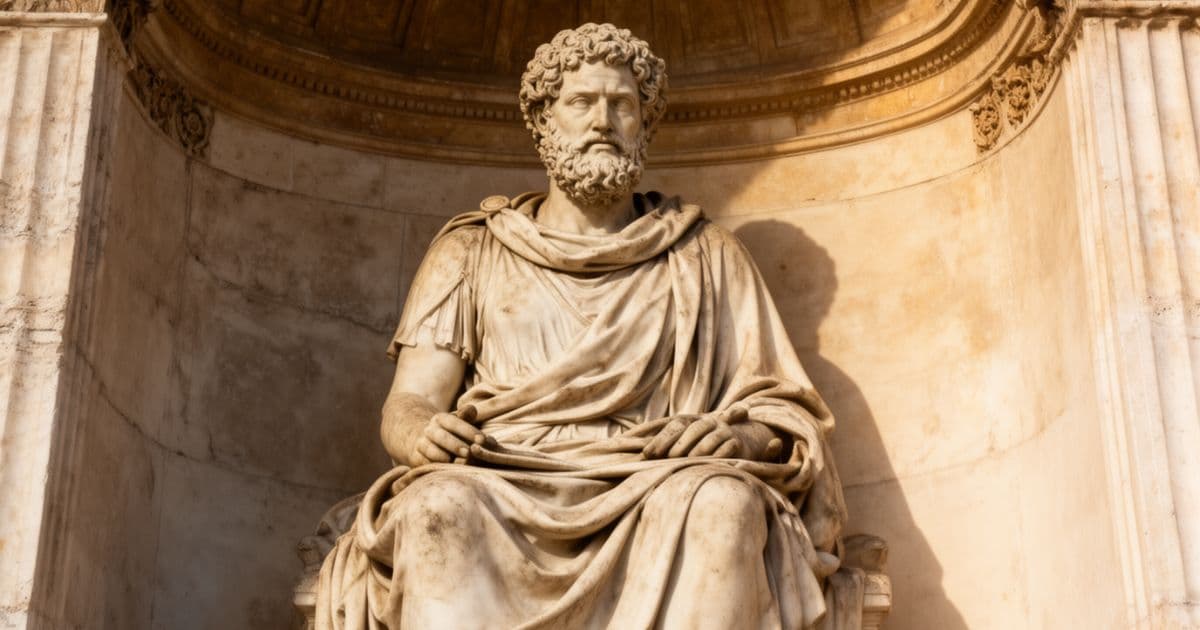
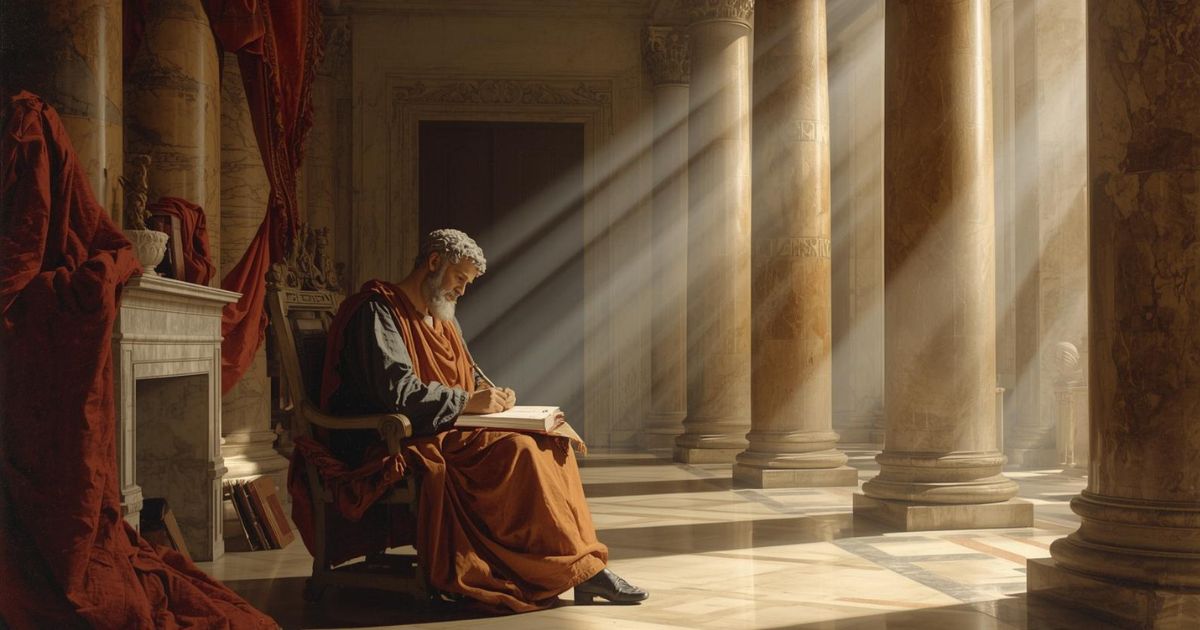
←etter 85. On some vain syllogismsMoral letters to Luciliusby Seneca, translated by Richard Mott GummereLetter 86. On Scipio's villaLetter 87. Some arguments in favour of the simple life→483385Moral letters to Lucilius — Letter 86. On Scipio's villaRichard Mott GummereSeneca LXXXVI. ON SCIPIO’S VILLA 1. I am resting at the country-house which once belonged to Scipio Africanus[1] himself; and I write to you after doing reverence to his spirit and to an altar which I am inclined to think is the tomb[2] of that great warrior. That his soul has indeed returned to the skies, whence it came, I am convinced, not because he commanded mighty armies—for Cambyses also had mighty armies, and Cambyses was a madman[3] who made successful use of his madness—but because he showed moderation and a sense of duty to a marvellous extent. I regard this trait in him as more admirable after his withdrawal from his native land than while he was defending her; for there was the alternative: Scipio should remain in Rome, or Rome should remain free. 2. “It is my wish,” said he, “not to infringe in the least upon our laws, or upon our customs; let all Roman citizens have equal rights. O my country, make the most of the good that I have done, but without me. I have been the cause of your freedom, and I shall also be its proof; I go into exile, if it is true that I have grown beyond what is to your advantage!” 3. What can I do but admire this magnanimity, which led him to withdraw into voluntary exile and to relieve the state of its burden? Matters had gone so far that either liberty must work harm to Scipio, or Scipio to liberty. Either of these things was wrong in the sight of heaven. So he gave way to the laws and withdrew to Liternum, thinking to make the state a debtor for his own exile no less than for the exile of Hannibal.[4] 4. I have inspected the house, which is constructed of hewn stone; the wall which encloses a forest; the towers also, buttressed out on both sides for the purpose of defending the house; the well, concealed among buildings and shrubbery, large enough to keep a whole army supplied; and the small bath, buried in darkness according to the old style, for our ancestors did not think that one could have a hot bath except in darkness. It was therefore a great pleasure to me to contrast Scipio’s ways with our own. 5. Think, in this tiny recess the “terror of Carthage,”[5] to whom Rome should offer thanks because she was not captured more than once, used to bathe a body wearied with work in the fields! For he was accustomed to keep himself busy and to cultivate the soil with his own hands, as the good old Romans were wont to do. Beneath this dingy roof he stood; and this floor, mean as it is, bore his weight. 6. But who in these days could bear to bathe in such a fashion? We think ourselves poor and mean if our walls are not resplendent with large and costly mirrors; if our marbles from Alexandria[6] are not set off by mosaics of Numidian stone,[7] if their borders are not faced over on all sides with difficult patterns, arranged in many colours like paintings; if our vaulted ceilings are not buried in glass; if our swimming-pools are not lined with Thasian marble,[8] once a rare and wonderful sight in any temple—pools into which we let down our bodies after they have been drained weak by abundant perspiration; and finally, if the water has not poured from silver spigots. 7. I have so far been speaking of the ordinary bathing-establishments; what shall I say when I come to those of the freedmen? What a vast number of statues, of columns that support nothing, but are built for decoration, merely in order to spend money! And what masses of water that fall crashing from level to level! We have become so luxurious that we will have nothing but precious stones to walk upon. 8. In this bath of Scipio’s there are tiny chinks—you cannot call them windows—cut out of the stone wall in such a way as to admit light without weakening the fortifications; nowadays, however, people regard baths as fit only for moths if they have not been so arranged that they receive the sun all day long through the widest of windows, if men cannot bathe and get a coat of tan at the same time, and if they cannot look out from their bath-tubs over stretches of land and sea.[9] So it goes; the establishments which had drawn crowds and had won admiration when they were first opened are avoided and put back in the category of venerable antiques as soon as luxury has worked out some new device, to her own ultimate undoing. 9. In the early days, however, there were few baths, and they were not fitted out with any display. For why should men elaborately fit out that which, costs a penny only, and was invented for use, not merely for delight? The bathers of those days did not have water poured over them, nor did it always run fresh as if from a hot spring; and they did not believe that it mattered at all how perfectly pure was the water into which they were to leave their dirt. 10. Ye gods, what a pleasure it is to enter that dark bath, covered with a common sort of roof, knowing that therein your hero Cato, as aedile, or Fabius Maximus, or one of the Cornelii, has warmed the water with his own hands! For this also used to be the duty of the noblest aediles—to enter these places to which the populace resorted, and to demand that they be cleaned and warmed to a heat required by considerations of use and health, not the heat that men have recently made fashionable, as great as a conflagration—so much so, indeed, that a slave condemned for some criminal offence now ought to be bathed alive! It seems to me that nowadays there is no difference between “the bath is on fire,” and “the bath is warm.” 11. How some persons nowadays condemn Scipio as a boor because he did not let daylight into his perspiring-room through wide windows, or because he did not roast in the strong sunlight and dawdle about until he could stew in the hot water! “Poor fool,” they say, “he did not know how to live! He did not bathe in filtered water; it was often turbid, and after heavy rains almost muddy!” But it did not matter much to Scipio if he had to bathe in that way; he went there to wash off sweat, not ointment. 12. And how do you suppose certain persons will answer me? They will say: “I don’t envy Scipio; that was truly an exile’s life—to put up with baths like those!” Friend, if you were wiser, you would know that Scipio did not bathe every day. It is stated by those[10] who have reported to us the old-time ways of Rome that the Romans washed only their arms and legs daily—because those were the members which gathered dirt in their daily toil—and bathed all over only once a week. Here someone will retort: “Yes; pretty dirty fellows they evidently were! How they must have smelled!” But they smelled of the camp, the farm, and heroism. Now that spick-and-span bathing establishments have been devised, men are really fouler than of yore. 13. What says Horatius Flaccus, when he wishes to describe a scoundrel, one who is notorious for his extreme luxury? He says: “Buccillus[11] smells of perfume.” Show me a Buccillus in these days; his smell would be the veritable goat-smell—he would take the place of the Gargonius with whom Horace in the same passage contrasted him. It is nowadays not enough to use ointment, unless you put on a fresh coat two or three times a day, to keep it from evaporating on the body. But why should a man boast of this perfume as if it were his own? 14. If what I am saying shall seem to you too pessimistic, charge it up against Scipio’s country-house, where I have learned a lesson from Aegialus, a most careful householder and now the owner of this estate; he taught me that a tree can be transplanted, no matter how far gone in years. We old men must learn this precept; for there is none of us who is not planting an olive-yard for his successor. I have seen them bearing fruit in due season after three or four years of unproductiveness.[12] 15. And you too shall be shaded by the tree which Is slow to grow, but bringeth shade to cheer Your grandsons in the far-off years,[13] as our poet Vergil says. Vergil sought, however, not what was nearest to the truth, but what was most appropriate, and aimed, not to teach the farmer, but to please the reader. 16. For example, omitting all other errors of his, I will quote the passage in which it was incumbent upon me to-day to detect a fault: In spring sow beans then, too, O clover plant, Thou’rt welcomed by the crumbling furrows; and The millet calls for yearly care.[14] You may judge by the following incident whether those plants should be set out at the same time, or whether both should be sowed in the spring. It is June at the present writing, and we are well on towards July; and I have seen on this very day farmers harvesting beans and sowing millet. 17. But to return to our olive-yard again. I saw it planted in two ways. If the trees were large, Aegialus took their trunks and cut off the branches to the length of one foot each; he then transplanted along with the ball, after cutting off the roots, leaving only the thick part from which the roots hang. He smeared this with manure, and inserted it in the hole, not only heaping up the earth about it, but stamping and pressing it down. 18. There is nothing, he says, more effective than this packing process[15]; in other words, it keeps out the cold and the wind. Besides, the trunk is not shaken so much, and for this reason the packing makes it possible for the young roots to come out and get a hold in the soil. These are of necessity still soft; they have but a slight hold, and a very little shaking uproots them. This ball, moreover, Aegialus lops clean before he covers it up. For he maintains that new roots spring from all the parts which have been shorn. Moreover, the trunk itself should not stand more than three or four feet out of the ground. For there will thus be at once a thick growth from the bottom, nor will there be a large stump, all dry and withered, as is the case with old olive-yards. 19. The second way of setting them out was the following: he set out in similar fashion branches that were strong and of soft bark, as those of young saplings are wont to be. These grow a little more slowly, but, since they spring from what is practically a cutting, there is no roughness or ugliness in them. 20. This too I have seen recently—an aged vine transplanted from its own plantation. In this case, the fibres also should be gathered together, if possible, and then you should cover up the vine-stem more generously, so that roots may spring up even from the stock. I have seen such plantings made not only in February, but at the very end of March; the plants take hold of and embrace alien elms. 21. But all trees, he declares, which are, so to speak, “thick-stemmed,”[16] should be assisted with tank-water; if we have this help, we are our own rain-makers. I do not intend to tell you any more of these precepts, lest, as Aegialus did with me, I may be training you up to be my competitor. Farewell. ↑ See Ep. li. 11. ↑ Cf. Livy xxxvii. 53 morientem rure eo ipso loco sepeliri se iussisse ferunt monumentumque ibi aedificari. ↑ Herodotus iii. 25 ἐμμανής τε ἐὼν καὶ οὐ φρενήρης. ↑ Livy’s account (see above) dwells more on the unwillingness of Scipio and his friends to permit the great conqueror to suffer the indignities of a trial. ↑ A phrase frequent in Roman literature; see Lucretius iii. 1034 Scipiadas, belli fulmen, Carthaginis horror. ↑ Porphyry, basalt, etc. ↑ i.e., the so-called giallo antico, with red and yellow tints predominating. ↑ A white variety, from Thasos, an island off the Thracian coast. ↑ Cf. Pliny, Ep. ii. 17. 12 piscina, ex qua natantes mare aspiciunt. ↑ e.g., Varro, in the Catus: balneum non cotidianum. ↑ Horace calls him Rufillus (Sat. i. 2. 27): pastillos Rufillus olet, Gargonius hircum. ↑ This seems to be the general meaning of the passage. ↑ Georgics, ii. 58. ↑ Georgics, i. 215 f. ↑ In Vitruvius vii. 1 G reads pinsatione, referring to the pounding of stones for flooring. ↑ An agricultural term not elsewhere found.
Master this chapter. Complete your experience
Purchase the complete book to access all chapters and support classic literature
As an Amazon Associate, we earn a small commission from qualifying purchases at no additional cost to you.
Available in paperback, hardcover, and e-book formats
Let's Analyse the Pattern
The gradual corruption of judgment as comfort upgrades become necessities and we lose sight of original purpose.
Why This Matters
Connect literature to life
This chapter teaches how to spot when your standards gradually shift from wanting comfort to needing luxury, losing sight of original purposes.
Practice This Today
This week, notice when you feel like something you used to find acceptable now feels 'beneath you'—then ask what changed and whether the upgrade actually serves the original function.
Now let's explore the literary elements.
Key Quotes & Analysis
"It is my wish not to infringe in the least upon our laws, or upon our customs; let all Roman citizens have equal rights. O my country, make the most of the good that I have done, but without me."
Context: Scipio's explanation for why he chose exile over staying in Rome
This shows the ultimate sacrifice - giving up everything you've earned to preserve something bigger than yourself. Scipio understood that sometimes the greatest service is stepping aside.
In Today's Words:
I don't want to break the rules or mess up how things work. Everyone should be treated fairly. Take what good I've done and run with it, but I need to go.
"I have been the cause of your freedom, and I shall also be its proof; I go into exile, if it is true that I have grown beyond what is to your advantage!"
Context: Scipio explaining that his exile proves Rome's freedom still matters more than any individual
He's saying his willingness to leave proves that Rome is still a republic, not a dictatorship. His sacrifice validates everything he fought for.
In Today's Words:
I helped make you free, and now I'm proving it by walking away. If I'm getting too powerful for your own good, then I'm out.
"He smelled of the camp, the farm, and heroism."
Context: Describing how Scipio smelled after his simple baths, contrasting with modern luxury
This captures the essence of honest work and real accomplishment. Scipio's 'smell' came from activities that actually mattered - defending his country and growing food.
In Today's Words:
He smelled like someone who'd actually done something worthwhile with his day.
Thematic Threads
Class
In This Chapter
Scipio's simple villa versus modern Roman luxury reveals how class displays corrupt practical judgment
Development
Deepens from earlier discussions of social positioning to show how luxury becomes a trap
In Your Life:
You might notice this when your 'needs' keep expanding beyond what actually serves you
Identity
In This Chapter
Scipio smelled of 'camp, farm, and heroism'—his identity came from actions, not accessories
Development
Builds on themes of authentic self-definition versus external validation
In Your Life:
You might catch yourself defining who you are by what you own rather than what you do
Social Expectations
In This Chapter
Modern Romans can't imagine bathing without marble and silver—peer pressure shapes 'necessities'
Development
Expands on conformity pressures to show how group standards corrupt individual judgment
In Your Life:
You might find yourself upgrading things that worked fine because others expect it
Personal Growth
In This Chapter
Learning to transplant old olive trees shows that growth continues at any age with right techniques
Development
Continues theme of adaptability and learning throughout life
In Your Life:
You might discover that you can learn new skills or change patterns even when you feel set in your ways
You now have the context. Time to form your own thoughts.
Discussion Questions
- 1
What differences does Seneca notice between Scipio's simple bath and the elaborate bathing houses of his own time?
analysis • surface - 2
Why does Seneca think luxury corrupts our judgment about what we actually need?
analysis • medium - 3
Where do you see this pattern of 'luxury creep' in modern life—things that started as wants becoming needs?
application • medium - 4
How could you apply Scipio's approach of asking 'what is this actually for?' to your own spending or lifestyle choices?
application • deep - 5
What does this chapter suggest about the relationship between comfort and character?
reflection • deep
Critical Thinking Exercise
Trace Your Luxury Creep
Pick one area of your life where your standards have gradually increased—housing, food, transportation, or entertainment. Write down what you originally needed versus what you think you need now. For each upgrade, identify what problem it was supposed to solve and whether it actually solved that problem or created new ones.
Consider:
- •Notice when 'wants' became redefined as 'needs' in your thinking
- •Look for moments when you started comparing yourself to others rather than focusing on function
- •Consider how each upgrade affected your baseline expectations for the future
Journaling Prompt
Write about a time when you chose simplicity over status, or when you realized you were chasing an image rather than solving a real problem. What did that teach you about your own values?
Coming Up Next...
Chapter 87: The Freedom of Simple Living
Seneca faces an unexpected setback that forces him to examine what it truly means to live simply. His next letter explores how external circumstances test our philosophical principles in ways we never anticipated.