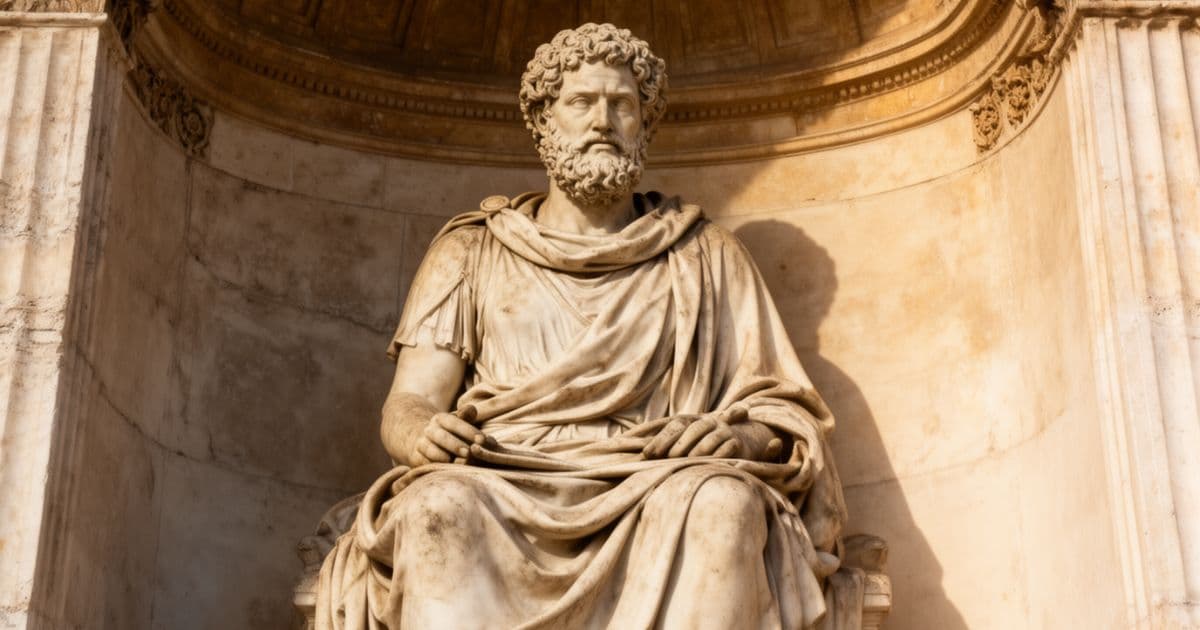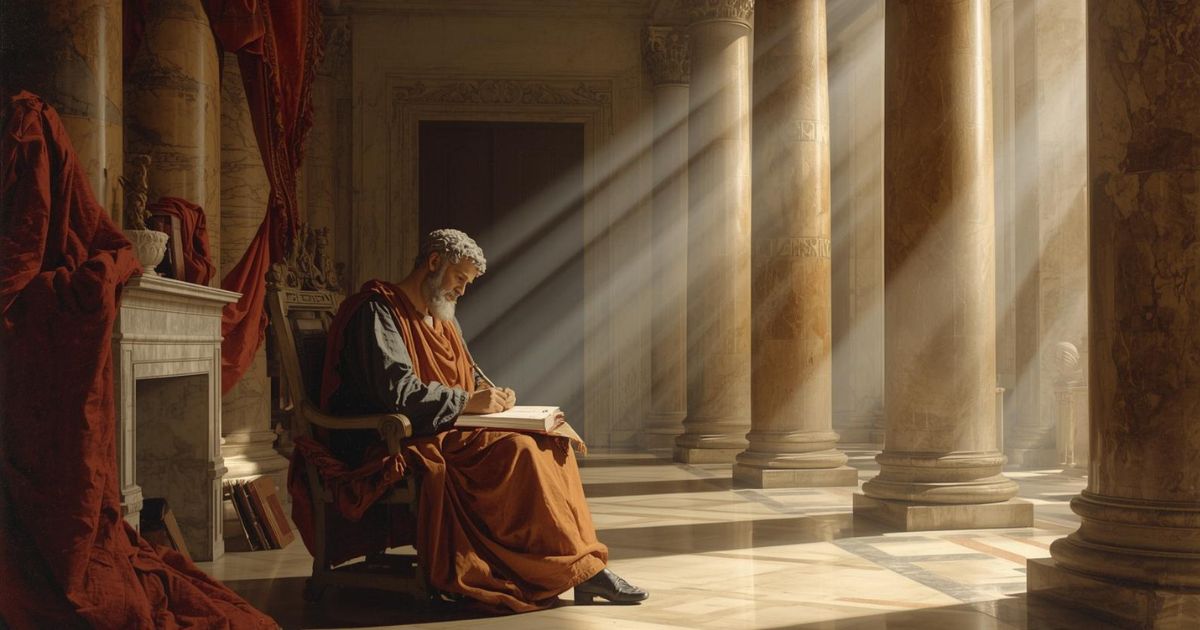
An excerpt from the original text.(complete · 1709 words)
←etter 72. On business as the enemy of philosophyMoral letters to Luciliusby Seneca, translated by Richard Mott GummereLetter 73. On philosophers and kingsLetter 74. On virtue as a refuge from worldly distractions→483216Moral letters to Lucilius — Letter 73. On philosophers and kingsRichard Mott GummereSeneca LXXIII. ON PHILOSOPHERS AND KINGS[1] 1. It seems to me erroneous to believe that those who have loyally dedicated themselves to philosophy are stubborn and rebellious, scorners of magistrates or kings or of those who control the administration of public affairs. For, on the contrary, no class of man is so popular with the philosopher as the ruler is; and rightly so, because rulers bestow upon no men a greater privilege than upon those who are allowed to enjoy peace and leisure. 2. Hence, those who are greatly profited, as regards their purpose of right living, by the security of the State, must needs cherish as a father the author of this good; much more so, at any rate, than those restless persons who are always in the public eye, who owe much to the ruler, but also expect much from him, and are never so generously loaded with favours that their cravings, which grow by being supplied, are thoroughly satisfied. And yet he whose thoughts are of benefits to come has forgotten the benefits received; and there is no greater evil in covetousness than its ingratitude. 3. Besides, no man in public life thinks of the many whom he has outstripped; he thinks rather of those by whom he is outstripped. And these men find it less pleasing to see many behind them than annoying to see anyone ahead of them.[2] That is the trouble with every sort of ambition; it does not look back. Nor is it ambition alone that is fickle, but also every sort of craving, because it always begins where it ought to end. 4. But that other man, upright and pure, who has left the senate and the bar and all affairs of state, that he may retire to nobler affairs,[3] cherishes those who have made it possible for him to do this in security; he is the only person who returns spontaneous thanks to them, the only person who owes them a great debt without their knowledge. Just as a man honours and reveres his teachers, by whose aid he has found release from his early wanderings, so the sage honours these men, also, under whose guardianship he can put his good theories into practice. 5. But you answer: “Other men too are protected by a king’s personal power.” Perfectly true. But just as, out of a number of persons who have profited by the same stretch of calm weather, a man deems that his debt to Neptune is greater if his cargo during that voyage has been more extensive and valuable, and just as the vow is paid with more of a will by the merchant than by the passenger, and just as, from among the merchants themselves, heartier thanks are uttered by the dealer in spices, purple fabrics, and objects worth their weight in gold, than by him who has gathered cheap merchandise that will be nothing but ballast for his ship; similarly, the benefits of this peace, which extends to all, are more deeply appreciated by those who make good use of it. 6. For there are many of our toga-clad citizens to whom peace brings more trouble than war. Or do those, think you, owe as much as we do for the peace they enjoy, who spend it in drunkenness, or in lust, or in other vices which it were worth even a war to interrupt? No, not unless you think that the wise man is so unfair as to believe that as an individual he owes nothing in return for the advantages which he enjoys with all the rest. I owe a great debt to the sun and to the moon; and yet they do not rise for me alone. I am personally beholden to the seasons and to the god who controls them, although in no respect have they been apportioned for my benefit. 7. The foolish greed of mortals makes a distinction between possession and ownership,[4] and believes that it has ownership in nothing in which the general public has a share. But our philosopher considers nothing more truly his own than that which he shares in partnership with all mankind. For these things would not be common property, as indeed they are, unless every individual had his quota; even a joint interest based upon the slightest share makes one a partner. 8. Again, the great and true goods are not divided in such a manner that each has but a slight interest; they belong in their entirety to each individual. At a distribution of grain men receive only the amount that has been promised to each person; the banquet and the meat-dole,[5] or all else that a man can carry away with him, are divided into parts. These goods, however, are indivisible,—I mean peace and liberty,—and they belong in their entirety to all men just as much as they belong to each individual. 9. Therefore the philosopher thinks of the person who makes it possible for him to use and enjoy these things, of the person who exempts him when the state’s dire need summons to arms, to sentry duty, to the defence of the walls, and to the manifold exactions of war; and he gives thanks to the helmsman of his state. This is what philosophy teaches most of all,—honourably to avow the debt of benefits received, and honourably to pay them; sometimes, however, the acknowledgment itself constitutes payment. 10. Our philosopher will therefore acknowledge that he owes a large debt to the ruler who makes it possible, by his management and foresight, for him to enjoy rich leisure, control of his own time, and a tranquillity uninterrupted by public employments. Shepherd! a god this leisure gave to me, For he shall be my god eternally.[6] 11. And if even such leisure as that of our poet owes a great debt to its author, though its greatest boon is this: As thou canst see, He let me turn my cattle out to feed, And play what fancy pleased on rustic reed;[7] how highly are we to value this leisure of the philosopher, which is spent among the gods, and makes us gods? 12. Yes, that is what I mean, Lucilius; and I invite you to heaven by a short cut. Sextius used to say that Jupiter had no more power than the good man. Of course, Jupiter has more gifts which he can offer to mankind; but when you are choosing between two good men, the richer is not necessarily the better, any more than, in the case of two pilots of equal skill in managing the tiller, you would call him the better whose ship is larger and more imposing. 13. In what respect is Jupiter superior to our good man? His goodness lasts longer; but the wise man does not set a lower value upon himself, just because his virtues are limited by a briefer span. Or take two wise men; he who has died at a greater age is not happier than he whose virtue has been limited to fewer years: similarly, a god has no advantage over a wise man in point of happiness,[8] even though he has such an advantage in point of years. That virtue is not greater which lasts longer. 14. Jupiter possesses all things, but he has surely given over the possession of them to others; the only use of them which belongs to him is this: he is the cause of their use to all men. The wise man surveys and scorns all the possessions of others as calmly as does Jupiter, and regards himself with the greater esteem because, while Jupiter cannot make use of them, he, the wise man, does not wish to do so. 15. Let us therefore believe Sextius when he shows us the path of perfect beauty, and cries: “This is ‘the way to the stars’[9]; this is the way, by observing thrift, self-restraint, and courage!” The gods are not disdainful or envious; they open the door to you; they lend a hand as you climb. 16. Do you marvel that man goes to the gods? God comes to men; nay, he comes nearer,—he comes into men.[10] No mind that has not God, is good. Divine seeds are scattered throughout our mortal bodies; if a good husbandman receives them, they spring up in the likeness of their source and of a parity with those from which they came. If, however, the husbandman be bad, like a barren or marshy soil, he kills the seeds, and causes tares to grow up instead of wheat. Farewell. ↑ This letter is especially interesting because of its autobiographical hints, and its relation to Seneca’s own efforts to be rid of court life and seek the leisure of the sage. See the Introduction to Vol. I. pp. viii f. ↑ Cf. Horace, Sat. i. 1. 115f.— Instat equis auriga snos vincentibus, illum Praeteritum temnens extremos inter euntem. ↑ For an interesting account of philosophy and its relation to Roman history see E. V. Arnold, Roman Stoicism, chap. xvi. This subject is discussed fully by Cicero, De Off. i. 71 f., and by Seneca, Ep. xc. ↑ For this figure cf. Ep. lxxii. 7 and note; see also the similar language of lxxxviii. 12 hoc, quod tenes, quod tuum dicis, publicum est et quidem generis humani. ↑ During certain festivals, either cooked or raw meat was distributed among the people. ↑ Vergil, Eclogue, i. 6 f. Vergil owes a debt to the Emperor, and regards him as a “god” because of the bestowal of earthly happiness; how much greater is the debt of the philosopher, who has the opportunity to study heavenly things! ↑ Vergil, Eclogue, i. 9 f. ↑ In the Christian religion, God is everything; among the Stoics, the wise man is equal to the gods. Cf., for example, Ep. xli. 4. ↑ Vergil, Aeneid, ix. 641. ↑ Cf. Ep. xli. §§ 1 f. prope est a te deus, tecum est, intus est.
Master this chapter. Complete your experience
Purchase the complete book to access all chapters and support classic literature
As an Amazon Associate, we earn a small commission from qualifying purchases at no additional cost to you.
Available in paperback, hardcover, and e-book formats
Let's Analyse the Pattern
People who appreciate shared goods multiply their advantages while those focused on individual comparisons diminish what they have.
Why This Matters
Connect literature to life
This chapter teaches how to identify resources that multiply when appreciated versus those that get divided up.
Practice This Today
This week, notice when you're competing for individual goods (money, status) versus accessing shared goods (knowledge, safety, community relationships).
Now let's explore the literary elements.
Key Quotes & Analysis
"No class of man is so popular with the philosopher as the ruler is; and rightly so, because rulers bestow upon no men a greater privilege than upon those who are allowed to enjoy peace and leisure."
Context: Defending philosophers against accusations of being anti-government rebels
Seneca argues that philosophers should be the most grateful citizens because they benefit most from stable government. Peace isn't just absence of war - it's the foundation that makes intellectual and spiritual growth possible.
In Today's Words:
Smart people should actually love good government the most, because they're the ones who really use the freedom and security it provides.
"He whose thoughts are of benefits to come has forgotten the benefits received; and there is no greater evil in covetousness than its ingratitude."
Context: Explaining why ambitious people are never satisfied with what rulers give them
This captures how constantly wanting more makes us blind to what we already have. Gratitude and ambition often work against each other - the more you focus on getting, the less you appreciate having.
In Today's Words:
When you're always thinking about what you want next, you forget to appreciate what you already got, and that's the worst part about being greedy.
"The wise man is equal to the gods in happiness, though not in longevity."
Context: Explaining how virtue makes humans equal to divine beings in what truly matters
This is Seneca's radical claim that inner peace and wisdom matter more than external advantages. You don't need to live forever or have unlimited power to achieve the highest form of happiness.
In Today's Words:
A person with real wisdom can be just as happy as anyone with unlimited power - they just won't live as long.
Thematic Threads
Class
In This Chapter
Seneca argues philosophers benefit most from stability while acknowledging his privileged position as wealthy advisor
Development
Evolved from earlier discussions of poverty and wealth to focus on gratitude across class lines
In Your Life:
You might notice how your economic position affects what you can appreciate versus what you take for granted
Identity
In This Chapter
Redefines philosophers as grateful citizens rather than rebellious outsiders
Development
Continues theme of philosopher as practical person living in society, not isolated thinker
In Your Life:
You might struggle with how others see your values versus how you see yourself
Social Expectations
In This Chapter
Challenges expectation that wisdom leads to criticism of authority and social order
Development
Builds on earlier themes about conforming to social roles while maintaining inner freedom
In Your Life:
You might face pressure to complain about systems you actually benefit from
Personal Growth
In This Chapter
Growth means recognizing shared goods and comparing yourself to your past self, not others
Development
Refines earlier discussions of progress to focus on gratitude as growth strategy
In Your Life:
You might measure progress by looking at who's ahead rather than how far you've come
You now have the context. Time to form your own thoughts.
Discussion Questions
- 1
Seneca argues that philosophers should be more grateful to good leaders than ambitious people are. What's his reasoning?
analysis • surface - 2
Why does Seneca say ambitious people are never satisfied, even when they achieve their goals?
analysis • medium - 3
Think about your current situation - job, family, community. What 'shared goods' do you have access to that you might be taking for granted?
application • medium - 4
Seneca distinguishes between individual goods (that get divided up) and shared goods (that everyone can fully enjoy). How could recognizing this difference change how you approach your daily frustrations?
application • deep - 5
What does this letter reveal about the relationship between gratitude and power? How might grateful people actually have more control over their lives than ungrateful ones?
reflection • deep
Critical Thinking Exercise
Flip Your Comparison Direction
Pick one area of your life where you feel frustrated or behind - work, finances, relationships, health. Write down three people who have 'more' than you in this area. Then flip it: write down three ways you have access to shared goods in this situation that you haven't fully recognized or used. Finally, identify one specific action you could take this week to better utilize what's already available to you.
Consider:
- •Look for things that don't get smaller when shared - knowledge, safety, relationships, opportunities
- •Consider what you have access to versus what you own outright
- •Think about how your current advantages could multiply if you used them differently
Journaling Prompt
Write about a time when focusing on what others had kept you from appreciating or using what you already possessed. What did that cost you, and what would you do differently now?
Coming Up Next...
Chapter 74: Finding Safety in Your Inner Fortress
Next, Seneca shifts from gratitude toward leaders to something more personal: how virtue becomes your refuge when the world feels overwhelming. He'll explore what happens when external distractions threaten your inner peace.