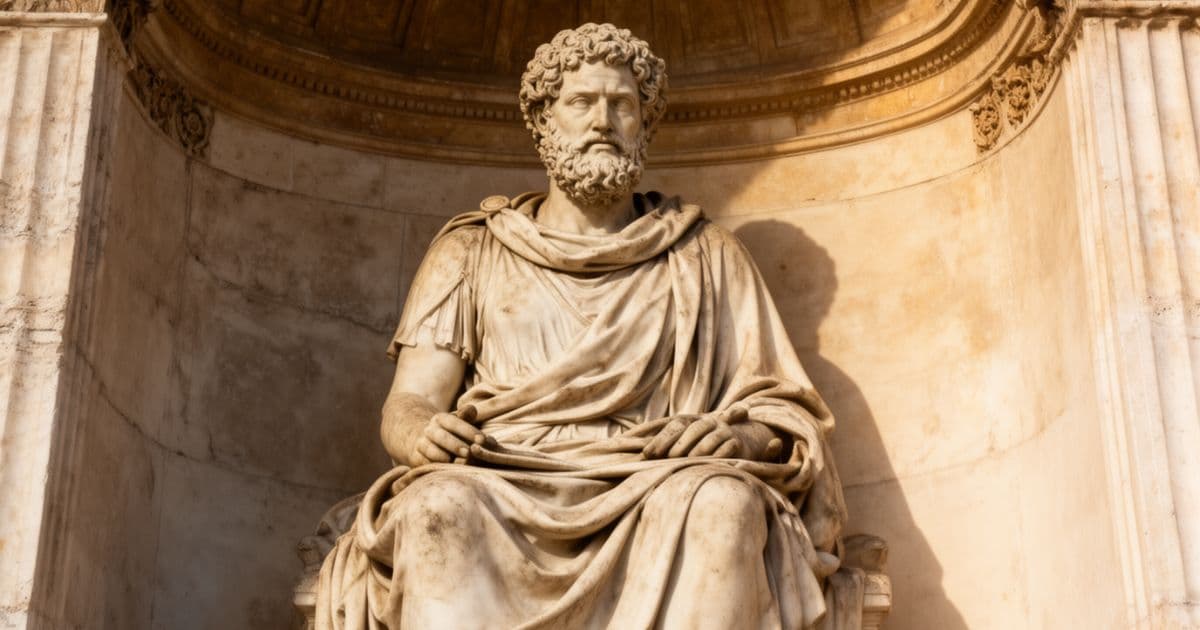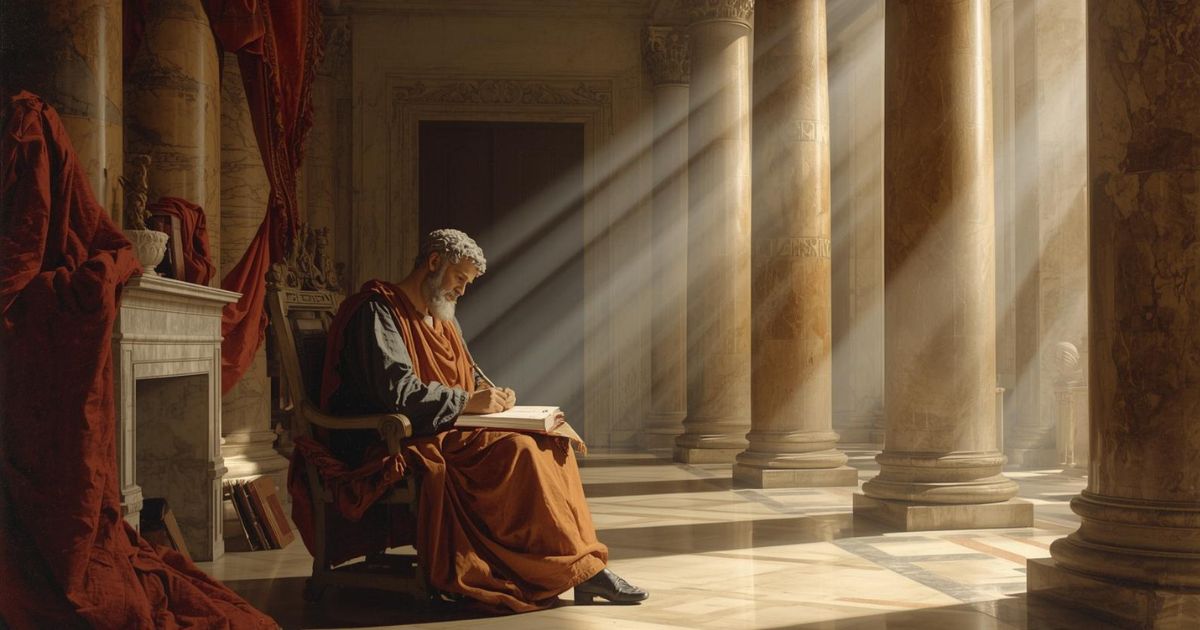
An excerpt from the original text.(complete · 1699 words)
←etter 66. On various aspects of virtueMoral letters to Luciliusby Seneca, translated by Richard Mott GummereLetter 67. On ill-health and endurance of sufferingLetter 68. On wisdom and retirement→483200Moral letters to Lucilius — Letter 67. On ill-health and endurance of sufferingRichard Mott GummereSeneca LXVII. ON ILL-HEALTH AND ENDURANCE OF SUFFERING 1. If I may begin with a commonplace remark,[1] spring is gradually disclosing itself; but though it is rounding into summer, when you would expect hot weather, it has kept rather cool, and one cannot yet be sure of it. For it often slides back into winter weather. Do you wish to know how uncertain it still is? I do not yet trust myself to a bath which is absolutely cold; even at this time I break its chill. You may say that this is no way to show the endurance either of heat or of cold; very true, dear Lucilius, but at my time of life one is at length contented with the natural chill of the body. I can scarcely thaw out in the middle of summer. Accordingly, I spend most of the time bundled up; 2. and I thank old age for keeping me fastened to my bed.[2] Why should I not thank old age on this account? That which I ought not to wish to do, I lack the ability to do. Most of my converse is with books. Whenever your letters arrive, I imagine that I am with you, and I have the feeling that I am about to speak my answer, instead of writing it. Therefore let us together investigate the nature of this problem of yours, just as if we were conversing with one another.[3] 3. You ask me whether every good is desirable. You say: “If it is a good to be brave under torture, to go to the stake with a stout heart, to endure illness with resignation, it follows that these things are desirable. But I do not see that any of them is worth praying for. At any rate I have as yet known of no man who has paid a vow by reason of having been cut to pieces by the rod, or twisted out of shape by the gout, or made taller by the rack.” 4. My dear Lucilius, you must distinguish between these cases; you will then comprehend that there is something in them that is to be desired. I should prefer to be free from torture; but if the time comes when it must be endured, I shall desire that I may conduct myself therein with bravery, honour, and courage. Of course I prefer that war should not occur; but if war does occur, I shall desire that I may nobly endure the wounds, the starvation, and all that the exigency of war brings. Nor am I so mad as to crave illness; but if I must suffer illness, I shall desire that I may do nothing which shows lack of restraint, and nothing that is unmanly. The conclusion is, not that hardships are desirable, but that virtue is desirable, which enables us patiently to endure hardships. 5. Certain of our school,[4] think that, of all such qualities, a stout endurance is not desirable,—though not to be deprecated either—because we ought to seek by prayer only the good which is unalloyed, peaceful, and beyond the reach of trouble. Personally, I do not agree with them. And why? First, because it is impossible for anything to be good without being also desirable. Because, again, if virtue is desirable, and if nothing that is good lacks virtue, then everything good is desirable. And, lastly, because a brave endurance even under torture is desirable. 6. At this point I ask you: Is not bravery desirable? And yet bravery despises and challenges danger. The most beautiful and most admirable part of bravery is that it does not shrink from the stake, advances to meet wounds, and sometimes does not even avoid the spear, but meets it with opposing breast. If bravery is desirable, so is patient endurance of torture; for this is a part of bravery. Only sift these things, as I have suggested; then there will be nothing which can lead you astray. For it is not mere endurance of torture, but brave endurance, that is desirable. I therefore desire that “brave” endurance; and this is virtue. 7. “But,” you say, “who ever desired such a thing for himself?” Some prayers are open and outspoken, when the requests are offered specifically; other prayers are indirectly expressed, when they include many requests under one title. For example, I desire a life of honour. Now a life of honour includes various kinds of conduct; it may include the chest in which Regulus was confined, or the wound of Cato which was torn open by Cato’s own hand, or the exile of Rutilius,[5] or the cup of poison which removed Socrates from gaol to heaven. Accordingly, in praying for a life of honour, I have prayed also for those things without which, on some occasions, life cannot be honourable 8. O thrice and four times blest were they Who underneath the lofty walls of Troy Met happy death before their parents’ eyes![6] What does it matter whether you offer this prayer for some individual, or admit that it was desirable in the past? 9. Decius sacrificed himself for the State; he set spurs to his horse and rushed into the midst of the foe, seeking death. The second Decius, rivalling his father’s valour, reproducing the words which had become sacred[7] and already household words, dashed into the thickest of the fight, anxious only that his sacrifice might bring omen of success,[8] and regarding a noble death as a thing to be desired. Do you doubt, then, whether it is best to die glorious and performing some deed of valour? 10. When one endures torture bravely, one is using all the virtues. Endurance may perhaps be the only virtue that is on view and most manifest; but bravery is there too, and endurance and resignation and long-suffering are its branches. There, too, is foresight; for without foresight no plan can be undertaken; it is foresight that advises one to bear as bravely as possible the things one cannot avoid. There also is steadfastness, which cannot be dislodged from its position, which the wrench of no force can cause to abandon its purpose. There is the whole inseparable company of virtues; every honourable act is the work of one single virtue, but it is in accordance with the judgment of the whole council. And that which is approved by all the virtues, even though it seems to be the work of one alone, is desirable. 11. What? Do you think that those things only are desirable which come to us amid pleasure and ease, and which we bedeck our doors to welcome?[9] There are certain goods whose features are forbidding. There are certain prayers which are offered by a throng, not of men who rejoice, but of men who bow down reverently and worship. 12. Was it not in this fashion, think you, that Regulus prayed that he might reach Carthage? Clothe yourself with a hero’s courage, and withdraw for a little space from the opinions of the common man. Form a proper conception of the image of virtue, a thing of exceeding beauty and grandeur; this image is not to be worshipped by us with incense or garlands, but with sweat and blood. 13. Behold Marcus Cato, laying upon that hallowed breast his unspotted hands, and tearing apart the wounds which had not gone deep enough to kill him! Which, pray, shall you say to him: “I hope all will be as you wish,” and “I am grieved,” or shall it be “Good fortune in your undertaking!”? 14. In this connexion I think of our friend Demetrius, who calls an easy existence, untroubled by the attacks of Fortune, a “Dead Sea.”[10] If you have nothing to stir you up and rouse you to action, nothing which will test your resolution by its threats and hostilities; if you recline in unshaken comfort, it is not tranquillity; it is merely a flat calm. 15. The Stoic Attalus was wont to say: “I should prefer that Fortune keep me in her camp rather than in the lap of luxury. If I am tortured, but bear it bravely, all is well; if I die, but die bravely, it is also well.” Listen to Epicurus; he will tell you that it is actually pleasant.[11] I myself shall never apply an effeminate word to an act so honourable and austere. If I go to the stake, I shall go unbeaten. 16. Why should I not regard this as desirable—not because the fire, burns me, but because it does not overcome me? Nothing is more excellent or more beautiful than virtue; whatever we do in obedience to her orders is both good and desirable. Farewell. ↑ See Introduction (Vol. I. p. x), and the opening sentences of Epp. lxxvii., lxxxvii., and others. ↑ Seneca had a delicate constitution (see Introduction). In the letters he speaks of suffering from asthma (liv.), catarrh (lxxviii.), and fever (civ.). ↑ Cf. lxxv. 1 qualis sermo meus esset, si una sederemus aut ambularemus. ↑ i.e., the Stoics. ↑ Banished from Rome in 92 B.C. Cf. Ep. xxiv. 4. ↑ Vergil, Aeneid, i. 94 ff. ↑ Cf. Livy, vii. 9. 6 ff. . . . legiones auxiliaque hostium mecum deis manibus Tellurique devoveo. ↑ Ut litaret: i.e., that by his sacrifice he might secure an omen of success. Cf. Pliny, N. H. viii. 45, and Suetonius, Augustus, 96: “At the siege of Perusia, when he found the sacrifices were not favourable (sacrificio non litanti), Augustus called for more victims.” ↑ Donaria at the doors of temples signified public rejoicing; cf. Tibullus, i. 15 f. Flava Ceres, tibi sit nostro de rure corona Spicea, quae templi pendeat ante fores. Myrtle decorated the bridegroom’s house-door; garlands heralded the birth of a child (Juvenal, ix. 85). ↑ Cf. Pliny, N. H. iv. 13. Besides the Dead Sea of Palestine, the term was applied to any sluggish body of water. ↑ Cf. Ep. lxvi. 18.
Master this chapter. Complete your experience
Purchase the complete book to access all chapters and support classic literature
As an Amazon Associate, we earn a small commission from qualifying purchases at no additional cost to you.
Available in paperback, hardcover, and e-book formats
Let's Analyse the Pattern
True strength comes not from avoiding hardship but from developing the capacity to meet unavoidable suffering with dignity and grace.
Why This Matters
Connect literature to life
This chapter teaches how to identify which struggles are worth engaging and which are worth avoiding—the difference between necessary resistance and pointless suffering.
Practice This Today
This week, notice when you're facing a difficult situation and ask: 'Is this something I can avoid, or something I need to meet with strength?' Practice choosing your battles wisely.
Now let's explore the literary elements.
Key Quotes & Analysis
"That which I ought not to wish to do, I lack the ability to do."
Context: Reflecting on how his old age and frailty keep him from activities he shouldn't want anyway
This shows Seneca's genius for reframing limitation as liberation. Instead of mourning what he's lost, he sees how physical constraints align with philosophical wisdom about not chasing unnecessary pleasures.
In Today's Words:
My body won't let me do the stupid stuff I shouldn't want to do anyway.
"Why should I not thank old age for keeping me fastened to my bed?"
Context: Explaining how physical limitation has brought him closer to philosophical contemplation
Rather than fighting his circumstances, Seneca finds genuine gratitude for how they've simplified his life and focused his priorities. It's not fake positivity - it's practical wisdom.
In Today's Words:
Maybe being stuck at home is actually protecting me from all the drama I used to get caught up in.
"Most of my converse is with books."
Context: Describing how his physical isolation has deepened his intellectual life
This reveals how Seneca has found richness in solitude, turning limitation into opportunity for growth. He's not just making the best of a bad situation - he's discovered genuine value.
In Today's Words:
These days I mostly hang out with books, and honestly, they're better company than most people.
Thematic Threads
Personal Growth
In This Chapter
Seneca argues that virtue requires resistance to grow stronger, like muscle under stress
Development
Builds on earlier letters about self-improvement, now showing growth requires challenge
In Your Life:
Your biggest growth often comes from your hardest periods, not your easiest ones.
Class
In This Chapter
Uses examples of noble Romans choosing honor over comfort, showing virtue transcends social status
Development
Continues theme that true nobility comes from character, not birth or wealth
In Your Life:
You can choose dignity and principle regardless of your economic situation or background.
Identity
In This Chapter
Defines identity through how one faces adversity rather than what one possesses or achieves
Development
Deepens earlier discussions of authentic self by showing it's revealed through trial
In Your Life:
Who you are is most clearly shown by how you handle your worst days, not your best ones.
Social Expectations
In This Chapter
Challenges expectation that good life means easy life, arguing struggle can be meaningful
Development
Continues rejection of conventional success metrics in favor of philosophical ones
In Your Life:
Society tells you to avoid all discomfort, but some struggles make you stronger and more complete.
Human Relationships
In This Chapter
Shows how facing hardship with dignity inspires others and builds deeper connections
Development
Builds on friendship themes by showing how shared struggle creates bonds
In Your Life:
The people who matter most will respect you more for handling crisis well than for avoiding it entirely.
You now have the context. Time to form your own thoughts.
Discussion Questions
- 1
What distinction does Seneca make between wanting suffering and wanting the strength to handle suffering well?
analysis • surface - 2
Why does Seneca use examples of Cato, Regulus, and Socrates? What do these historical figures demonstrate about choosing virtue over comfort?
analysis • medium - 3
Where do you see people today building resilience before they need it? Think about healthcare workers, parents, or people in recovery.
application • medium - 4
How would you apply Seneca's framework to a current challenge in your life? What would 'handling it with dignity' look like?
application • deep - 5
What does this chapter reveal about the difference between strength and avoidance? Why might an 'easy' life actually make us weaker?
reflection • deep
Critical Thinking Exercise
Build Your Resilience Training Plan
Create a personal 'resilience training' program by identifying three small discomforts you could practice regularly to build your capacity for handling bigger challenges. Think of this like going to the gym for your emotional and mental strength—what are the 'exercises' that would prepare you for real-world hardship?
Consider:
- •Start with manageable challenges that push your comfort zone without overwhelming you
- •Consider different types of strength: physical endurance, emotional regulation, social courage
- •Think about what specific hardships you're most likely to face based on your life circumstances
Journaling Prompt
Write about a time when you surprised yourself with how well you handled a difficult situation. What internal resources did you draw on? How could you strengthen those same resources now?
Coming Up Next...
Chapter 68: The Art of Strategic Withdrawal
Having explored how to face suffering with courage, Seneca next turns to a different challenge: how to handle success and comfort. He'll examine the wisdom of strategic retirement and the art of knowing when to step back from public life.