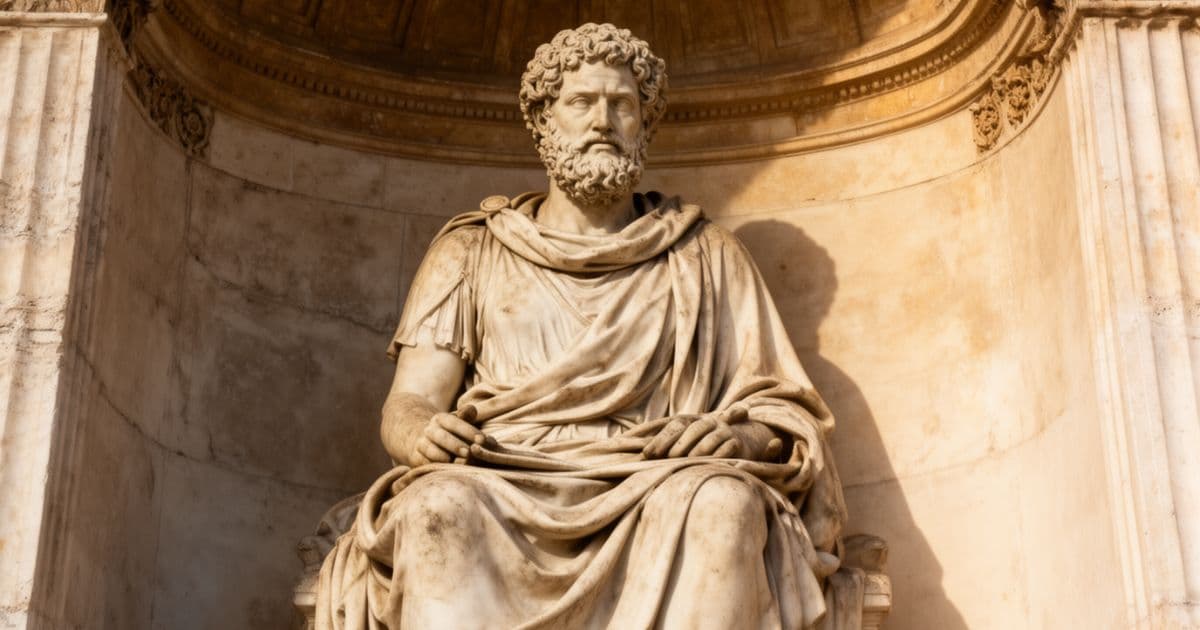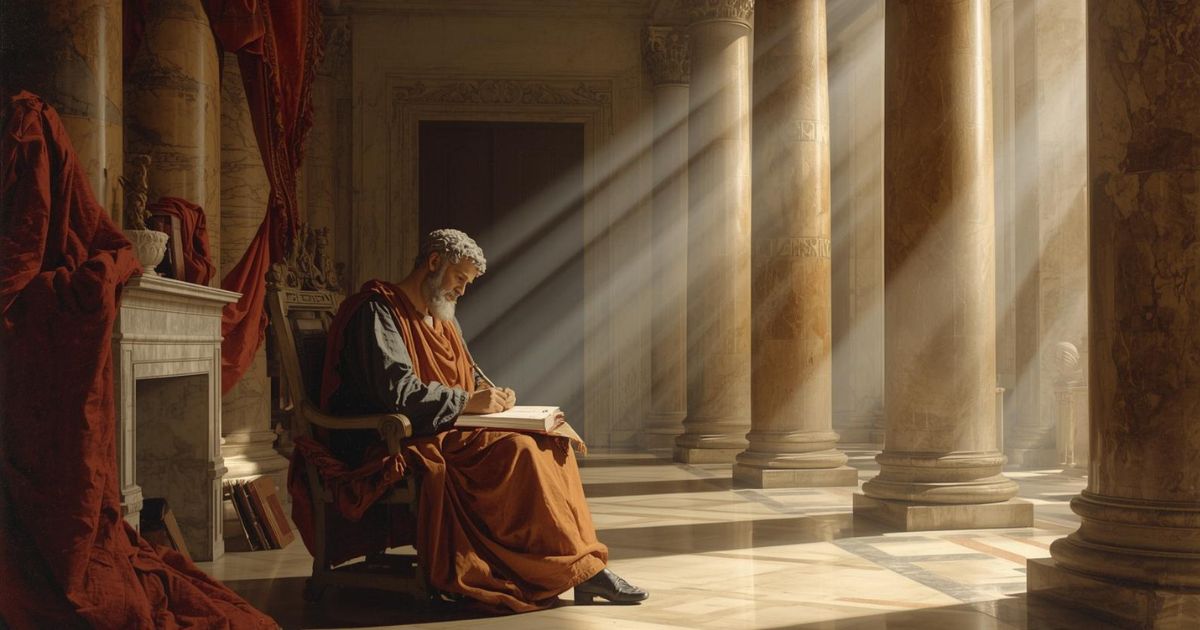
An excerpt from the original text.(complete · 1058 words)
←etter 25. On reformationMoral letters to Luciliusby Seneca, translated by Richard Mott GummereLetter 26. On old age and deathLetter 27. On the good which abides→482902Moral letters to Lucilius — Letter 26. On old age and deathRichard Mott GummereSeneca XXVI. ON OLD AGE AND DEATH 1. I was just lately telling you that I was within sight of old age.[1] I am now afraid that I have left old age behind me. For some other word would now apply to my years, or at any rate to my body; since old age means a time of life that is weary rather than crushed. You may rate me in the worn-out class,—of those who are nearing the end. 2. Nevertheless, I offer thanks to myself, with you as witness; for I feel that age has done no damage to my mind, though I feel its effects on my constitution. Only my vices, and the outward aids to these vices, have reached senility; my mind is strong and rejoices that it has but slight connexion with the body. It has laid aside the greater part of its load. It is alert; it takes issue with me on the subject of old age; it declares that old age is its time of bloom. 3. Let me take it at its word, and let it make the most of the advantages it possesses. The mind bids me do some thinking and consider how much of this peace of spirit and moderation of character I owe to wisdom and how much to my time of life; it bids me distinguish carefully what I cannot do and what I do not want to do. . . .[2] For why should one complain or regard it as a disadvantage, if powers which ought to come to an end have failed? 4. “But,” you say, “it is the greatest possible disadvantage to be worn out and to die off, or rather, if I may speak literally, to melt away! For we are not suddenly smitten and laid low; we are worn away, and every day reduces our powers to a certain extent.” But is there any better end to it all than to glide off to one’s proper haven, when nature slips the cable? Not that there is anything painful in a shock and a sudden departure from existence; it is merely because this other way of departure is easy,—a gradual withdrawal. I, at any rate, as if the test were at hand and the day were come which is to pronounce its decision concerning all the years of my life, watch over myself and commune thus with myself: 5. “The showing which we have made up to the present time, in word or deed, counts for nothing. All this is but a trifling and deceitful pledge of our spirit, and is wrapped in much charlatanism. I shall leave it to Death to determine what progress I have made. Therefore with no faint heart I am making ready for the day when, putting aside all stage artifice and actor’s rouge, I am to pass judgment upon myself,—whether I am merely declaiming brave sentiments, or whether I really feel them; whether all the bold threats I have uttered against fortune are a pretence and a farce. 6. Put aside the opinion of the world; it is always wavering and always takes both sides. Put aside the studies which you have pursued throughout your life; Death will deliver the final judgment in your case. This is what I mean: your debates and learned talks, your maxims gathered from the teachings of the wise, your cultured conversation,—all these afford no proof of the real strength of your soul. Even the most timid man can deliver a bold speech. What you have done in the past will be manifest only at the time when you draw your last breath. I accept the terms; I do not shrink from the decision.” 7. This is what I say to myself, but I would have you think that I have said it to you also. You are younger; but what does that matter? There is no fixed count of our years. You do not know where death awaits you; so be ready for it everywhere. 8. I was just intending to stop, and my hand was making ready for the closing sentence; but the rites are still to be performed and the travelling money for the letter disbursed. And just assume that I am not telling where I intend to borrow the necessary sum; you know upon whose coffers I depend. Wait for me but a moment, and I will pay you from my own account;[3] meanwhile, Epicurus will oblige me with these words:[4] “Think on death,” or rather, if you prefer the phrase, on “migration to heaven.” 9. The meaning is clear,—that it is a wonderful thing to learn thoroughly how to die. You may deem it superfluous to learn a text that can be used only once; but that is just the reason why we ought to think on a thing. When we can never prove whether we really know a thing, we must always be learning it. 10. “Think on death.” In saying this, he bids us think on freedom. He who has learned to die has unlearned slavery; he is above any external power, or, at any rate, he is beyond it. What terrors have prisons and bonds and bars for him? His way out is clear. There is only one chain which binds us to life, and that is the love of life. The chain may not be cast off, but it may be rubbed away, so that, when necessity shall demand, nothing may retard or hinder us from being ready to do at once that which at some time we are bound to do. Farewell. ↑ See the twelfth letter. Seneca was by this time at least sixty-five years old, and probably older. ↑ This passage is hopelessly corrupt. The course of the argument requires something like this: For it is just as much to my advantage not to be able to do what I do not want to do, as it is to be able to do whatever gives me pleasure. ↑ i.e., the money will be brought from home,—the saying will be one of Seneca’s own. ↑ Epicurus, Frag. 205 Usener.
Master this chapter. Complete your experience
Purchase the complete book to access all chapters and support classic literature
As an Amazon Associate, we earn a small commission from qualifying purchases at no additional cost to you.
Available in paperback, hardcover, and e-book formats
Let's Analyse the Pattern
Fear of death creates enslavement to external circumstances, while accepting mortality paradoxically creates freedom to live authentically.
Why This Matters
Connect literature to life
This chapter teaches how to recognize when your fear of loss is being exploited to control your behavior and compromise your values.
Practice This Today
This week, notice when someone's request makes you feel trapped or desperate—ask yourself what you're really afraid of losing and whether that fear is worth sacrificing your dignity.
Now let's explore the literary elements.
Key Quotes & Analysis
"Only my vices, and the outward aids to these vices, have reached senility; my mind is strong and rejoices that it has but slight connexion with the body."
Context: Seneca is reflecting on how aging has affected him differently in body versus mind.
This reveals Seneca's key insight that we are not our bodies, and that wisdom can actually grow stronger as physical strength fades. He's separating his essential self from his physical limitations.
In Today's Words:
My bad habits are getting old and tired, but my mind feels sharper than ever and isn't tied down by what my body can't do anymore.
"The mind bids me do some thinking and consider how much of this peace of spirit and moderation of character I owe to wisdom."
Context: He's crediting his philosophical practice for his mental strength in old age.
This shows how Stoic practice pays off over time - the daily work of philosophy creates real peace and stability that becomes especially valuable in life's challenges.
In Today's Words:
My brain is telling me to figure out how much of my inner calm comes from all the wisdom I've been working on.
"Think on death."
Context: Seneca is referencing this famous philosophical advice about contemplating mortality.
This isn't morbid advice but liberating wisdom - when you truly accept death as inevitable, you stop being controlled by fears and can live more authentically and courageously.
In Today's Words:
Remember that you're going to die - and let that free you to really live.
Thematic Threads
Mortality
In This Chapter
Seneca frames death not as the enemy but as the ultimate test that reveals true character and the key to authentic living
Development
Introduced here as central theme
In Your Life:
You might notice how fear of job loss, health problems, or financial ruin controls your daily decisions
Authenticity
In This Chapter
True character only emerges when facing death—all our public personas and careful image management become irrelevant
Development
Building on earlier discussions of genuine vs. performed virtue
In Your Life:
You might recognize how you modify your behavior based on who might be watching or judging
Freedom
In This Chapter
Liberation comes through accepting mortality rather than fighting it—when death holds no terror, external pressures lose power
Development
Expanding the concept of philosophical freedom into practical life navigation
In Your Life:
You might see how accepting worst-case scenarios actually reduces their power over you
Aging
In This Chapter
Seneca honestly confronts physical decline while celebrating mental growth—the body weakens but wisdom strengthens
Development
Introduced here as personal reflection
In Your Life:
You might notice how society's fear of aging affects your own relationship with getting older
You now have the context. Time to form your own thoughts.
Discussion Questions
- 1
Seneca says his body is failing but his mind feels stronger than ever. What's the difference between what he can't do and what he doesn't want to do anymore?
analysis • surface - 2
Why does Seneca believe that fear of death makes us slaves to everything else in life?
analysis • medium - 3
Think about your own life - where do you see people making compromises or staying silent because they're afraid of losing something they need to survive?
application • medium - 4
Seneca suggests regularly thinking about death not to become morbid, but to become free. How might accepting mortality actually help someone live more authentically?
application • deep - 5
What does this chapter reveal about the relationship between fear and personal power?
reflection • deep
Critical Thinking Exercise
Map Your Fear-Based Decisions
Draw a simple chart with two columns: 'Decisions I make from fear' and 'Decisions I would make if I weren't afraid.' Think about your job, relationships, and daily choices. Fill in both sides honestly. Then circle one fear-based decision you could change this week.
Consider:
- •Notice the difference between reasonable caution and fear-based paralysis
- •Consider what you're really afraid of losing and whether that fear serves you
- •Think about people you know who seem less controlled by these fears - what's different about them?
Journaling Prompt
Write about a time when you made a decision based on fear of consequences rather than what you believed was right. What would you do differently now?
Coming Up Next...
Chapter 27: The Good That Lasts Forever
Seneca turns the tables, questioning whether he has any right to give advice when he's still working on his own flaws. This leads to a deeper exploration of what truly endures in life and what we can count on when everything else falls away.