Amplified ClassicsAmplified Classics
Literature MattersLife IndexEducators
Sign inSign up
Jane Eyre - New Beginnings and Conflicting Paths

Charlotte Brontë

Jane Eyre

New Beginnings and Conflicting Paths

Home›Books›Jane Eyre›Chapter 34
Back to Jane Eyre
12 min•Jane Eyre•Chapter 34 of 37

What You'll Learn

How Jane's newfound independence allows her to choose her own path and priorities

The philosophical conflict between worldly happiness and spiritual duty as presented by St. John

The significance of domestic joy and family relationships in Jane's moral framework

Previous
34 of 37
Next

Summary

New Beginnings and Conflicting Paths

Jane Eyre by Charlotte Brontë

0:000:00

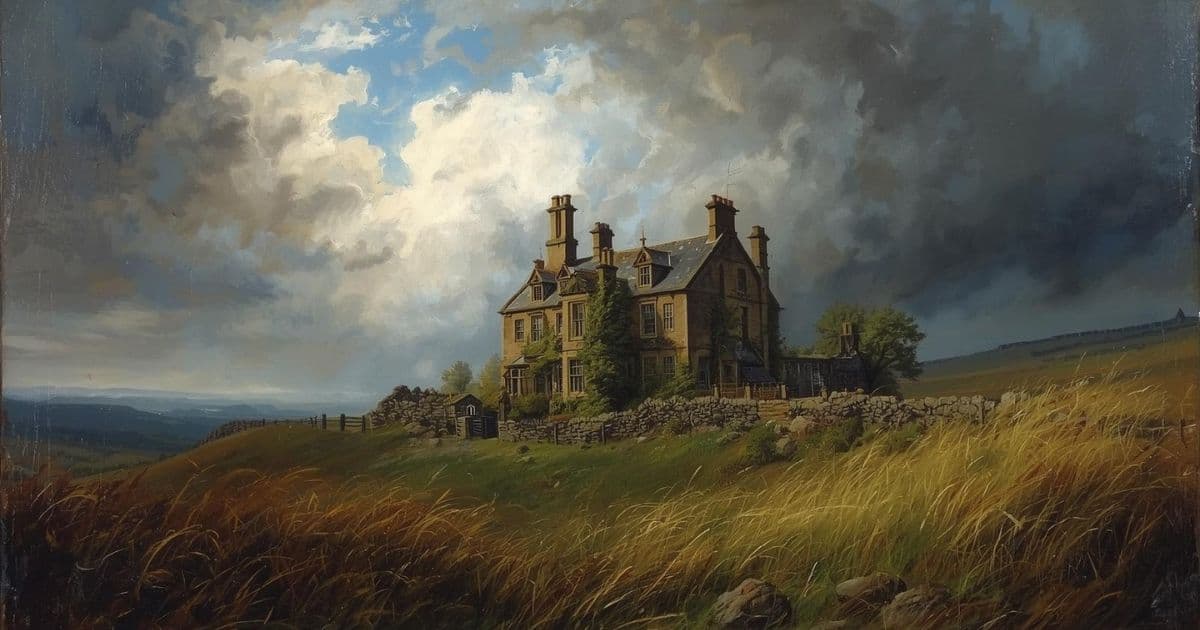
As Christmas approaches, Jane closes Morton school with deep satisfaction, having formed genuine bonds with her students. Her inheritance has given her the freedom to choose her path, and she decides to prepare Moor House for Diana and Mary's return. St. John Rivers observes her departure from teaching with mixed feelings, questioning what she will do next with her life. When Jane enthusiastically describes her plans to clean and prepare the house for her cousins' homecoming, St. John becomes concerned about her focus on domestic pleasures. He warns her against wasting her talents on 'commonplace home pleasures' and urges her to look beyond family ties toward a higher spiritual calling. Jane firmly rejects his austere philosophy, declaring her right to happiness and domestic contentment. She throws herself into preparing Moor House with Hannah's help, refurbishing rooms and creating a warm, welcoming environment. The chapter culminates with the arrival of Diana and Mary, though St. John's disapproval of Jane's choices creates an underlying tension that hints at future conflict over her life's direction.

Coming Up in Chapter 35

He did not leave for Cambridge the next day, as he had said he would. He deferred his departure a whole week, and during that time he made me feel what severe punishment a good yet stern, a conscienti

Share it with friends

Previous ChapterNext Chapter
GO ADS FREE — JOIN US

An excerpt from the original text.(~262 words)

T

was near Christmas by the time all was settled: the season of general holiday approached. I now closed Morton school, taking care that the parting should not be barren on my side. Good fortune opens the hand as well as the heart wonderfully; and to give somewhat when we have largely received, is but to afford a vent to the unusual ebullition of the sensations. I had long felt with pleasure that many of my rustic scholars liked me, and when we parted, that consciousness was confirmed: they man

As Christmas approaches, Jane closes Morton school with deep satisfaction, having formed genuine bonds with her students. Her inheritance has given her the freedom to choose her path, and she decides to prepare Moor House for Diana and Mary's return. St. John Rivers observes her departure from teaching with mixed feelings, questioning what she will do next with her life. When Jane enthusiastically describes her plans to clean and prepare the house for her cousins' homecoming, St. John becomes concerned about her focus on domestic pleasures. He warns her against wasting her talents on 'commonplace home pleasures' and urges her to look beyond family ties toward a higher spiritual calling. Jane firmly rejects his austere philosophy, declaring her right to happiness and domestic contentment. She throws herself into preparing Moor House with Hannah's help, refurbishing rooms and creating a warm, welcoming environment. The chapter culminates with the arrival of Diana and Mary, though St. John's disapproval of Jane's choices creates an underlying tension that hints at future conflict over her life's direction.

Master this chapter. Complete your experience

Purchase the complete book to access all chapters and support classic literature

Read Free on GutenbergBuy at Powell'sBuy on Amazon

As an Amazon Associate, we earn a small commission from qualifying purchases at no additional cost to you.

Available in paperback, hardcover, and e-book formats

GO ADS FREE — JOIN US

Intelligence Amplifier™ Analysis

Deep pattern analysis in progress. Our AI is identifying timeless insights and modern applications.

Why This Matters

Connect literature to life

Literary Insight

Brontë presents a nuanced view of moral choice that challenges both selfish materialism and self-denying spirituality, arguing for a balanced approach to duty and happiness.

Today's Relevance

The debate between Jane and St. John mirrors contemporary discussions about work-life balance, the value of domestic life, and the pressure to constantly optimize one's impact on the world rather than simply being content.

Now let's explore the literary elements.

Terms to Know

ebullition

A sudden outburst or display of emotion; literally means boiling over

paysannes and Bäuerinnen

French and German terms for peasant women, used to contrast with English peasantry

carte blanche

Complete freedom to act as one wishes; literally 'blank card' in French

beau-ideal

A perfect model or standard of excellence or beauty

Characters in This Chapter

Jane Eyre

Protagonist

Now financially independent, embracing domestic happiness and rejecting St. John's austere spiritual demands

St. John Rivers

Jane's cousin and moral challenger

A stern clergyman who disapproves of Jane's focus on worldly pleasures and family ties

Hannah

Servant

Loyal household servant who assists Jane in preparing Moor House

Diana and Mary Rivers

Jane's cousins

Expected to return home for Christmas, representing family bonds and domestic happiness

Key Quotes & Analysis

"The best things the world has!"

— Jane Eyre

Context: Defending domestic happiness against St. John's spiritual arguments

"This world is not the scene of fruition; do not attempt to make it so: nor of rest; do not turn slothful."

— St. John Rivers

Context: Warning Jane against finding contentment in worldly pleasures

"I am disposed to be as content as a queen, and you try to stir me up to restlessness!"

— Jane Eyre

Context: Rejecting St. John's attempts to redirect her life toward missionary work

Thematic Threads

Independence

In This Chapter

Development

In Your Life:

When have you had to choose between financial security and maintaining your personal independence, and what did that decision teach you about what you truly value?

Morality

In This Chapter

Development

In Your Life:

Have you ever faced a situation where doing the right thing would cost you personally, and how did you navigate that moral conflict?

Self-respect

In This Chapter

Development

In Your Life:

Can you think of a time when you had to walk away from something you wanted because accepting it would have compromised your sense of self-worth?

You now have the context. Time to form your own thoughts.

Discussion Questions

  1. 1

    Is St. John right to criticize Jane's focus on domestic happiness, or does she have a valid claim to personal contentment?

  2. 2

    How does Jane's newfound financial independence change the power dynamics in her relationships?

  3. 3

    What does this chapter suggest about the value of 'ordinary' domestic work versus 'important' spiritual or social work?

Critical Thinking Exercise

Compare Jane's philosophy of happiness in this chapter with her earlier attitudes toward duty and self-sacrifice. Has she fundamentally changed, or is this a natural evolution of her character? Consider specific examples from earlier chapters where Jane made choices between personal desire and external obligation.

Coming Up Next...

Chapter 35: The Cold War of Hearts

He did not leave for Cambridge the next day, as he had said he would. He deferred his departure a whole week, and during that time he made me feel what severe punishment a good yet stern, a conscienti

Continue to Chapter 35
Previous
The Tale Revealed
Contents
Next
The Cold War of Hearts

Continue Exploring

Jane Eyre Study GuideTeaching ResourcesEssential Life IndexBrowse by ThemeAll Books
Identity & Self-DiscoveryLove & RelationshipsSocial Class & Status

You Might Also Like

The Strange Case of Dr Jekyll and Mr Hyde cover

The Strange Case of Dr Jekyll and Mr Hyde

Robert Louis Stevenson

Explores identity & self

Wuthering Heights cover

Wuthering Heights

Emily Brontë

Explores identity & self

Great Expectations cover

Great Expectations

Charles Dickens

Explores identity & self

Frankenstein cover

Frankenstein

Mary Shelley

Explores identity & self

Browse all 47+ books

Share This Chapter

Know someone who'd enjoy this? Spread the wisdom!

TwitterFacebookLinkedInEmail

Read ad-free with Prestige

Get rid of ads, unlock study guides and downloads, and support free access for everyone.

Subscribe to PrestigeCreate free account
Intelligence Amplifier
Intelligence Amplifier™Powering Amplified Classics

Exploring human-AI collaboration through books, essays, and philosophical dialogues. Classic literature transformed into navigational maps for modern life.

2025 Books

→ The Amplified Human Spirit→ The Alarming Rise of Stupidity Amplified→ San Francisco: The AI Capital of the World
Visit intelligenceamplifier.org
hello@amplifiedclassics.com

AC Originals

→ The Last Chapter First→ You Are Not Lost→ The Lit of Love→ The Wealth Paradox
Arvintech
arvintechAmplify your Mind
Visit at arvintech.com

Navigate

  • Home
  • Library
  • Essential Life Index
  • How It Works
  • Subscribe
  • Account
  • About
  • Contact
  • Authors
  • Suggest a Book

Made For You

  • Students
  • Educators
  • Families
  • Readers
  • Finding Purpose

Newsletter

Weekly insights from the classics.

Amplify Your Mind

Legal

  • Privacy Policy
  • Terms of Service
  • Cookie Policy
  • Accessibility

Why Public Domain?

We focus on public domain classics because these timeless works belong to everyone. No paywalls, no restrictions—just wisdom that has stood the test of centuries, freely accessible to all readers.

Public domain books have shaped humanity's understanding of love, justice, ambition, and the human condition. By amplifying these works, we help preserve and share literature that truly belongs to the world.

© 2025 Amplified Classics™. All Rights Reserved.

Intelligence Amplifier™ and Amplified Classics™ are proprietary trademarks of Arvin Lioanag.

Copyright Protection: All original content, analyses, discussion questions, pedagogical frameworks, and methodology are protected by U.S. and international copyright law. Unauthorized reproduction, distribution, web scraping, or use for AI training is strictly prohibited. See our Copyright Notice for details.

Disclaimer: The information provided on this website is for general informational and educational purposes only and does not constitute professional, legal, financial, or technical advice. While we strive to ensure accuracy and relevance, we make no warranties regarding completeness, reliability, or suitability. Any reliance on such information is at your own risk. We are not liable for any losses or damages arising from use of this site. By using this site, you agree to these terms.