
Amplified ClassicsAmplified Classics
Literature MattersLife IndexEducators
Sign inSign up
Jane Eyre - A New Beginning: Jane's Cottage and School

Charlotte Brontë

Jane Eyre

A New Beginning: Jane's Cottage and School

Home›Books›Jane Eyre›Chapter 31
Back to Jane Eyre
8 min•Jane Eyre•Chapter 31 of 37

What You'll Learn

How Jane grapples with her new humble circumstances as a village schoolmistress

The internal conflict between moral principle and passionate desire

The theme of self-respect versus social status and material comfort

Previous
31 of 37
Next

Summary

A New Beginning: Jane's Cottage and School

Jane Eyre by Charlotte Brontë

0:000:00

Jane has settled into her new life as a village schoolmistress in Morton, living in a simple cottage provided by St. John Rivers. She describes her modest accommodations and reflects on her first day teaching twenty pupils, most of whom cannot read or write. Despite the humble circumstances, Jane acknowledges that her students possess the same potential for excellence as those of higher birth. However, she struggles with feelings of degradation and desolation, admitting that she feels she has descended in social status. In a moment of profound self-reflection, Jane weighs her current situation against what might have been had she stayed with Rochester as his mistress. She imagines the luxury and passion she would have experienced in France, but ultimately reaffirms that she made the right choice in adhering to her moral principles. The chapter concludes with a visit from St. John Rivers, who brings her art supplies from his sisters and observes her emotional state. Their conversation reveals Jane's determination to make the best of her circumstances while St. John offers philosophical counsel about controlling one's inclinations and finding alternative paths when blocked by circumstance.

Coming Up in Chapter 32

I continued the labours of the village-school as actively and faithfully as I could. It was truly hard work at first. Some time elapsed before, with all my efforts, I could comprehend my scholars and their nature. Wholly untaught, with faculties quite torpid, they seemed to me hopelessly dull; and, ...

Share it with friends

Previous ChapterNext Chapter
GO ADS FREE — JOIN US

An excerpt from the original text.(~280 words)

M

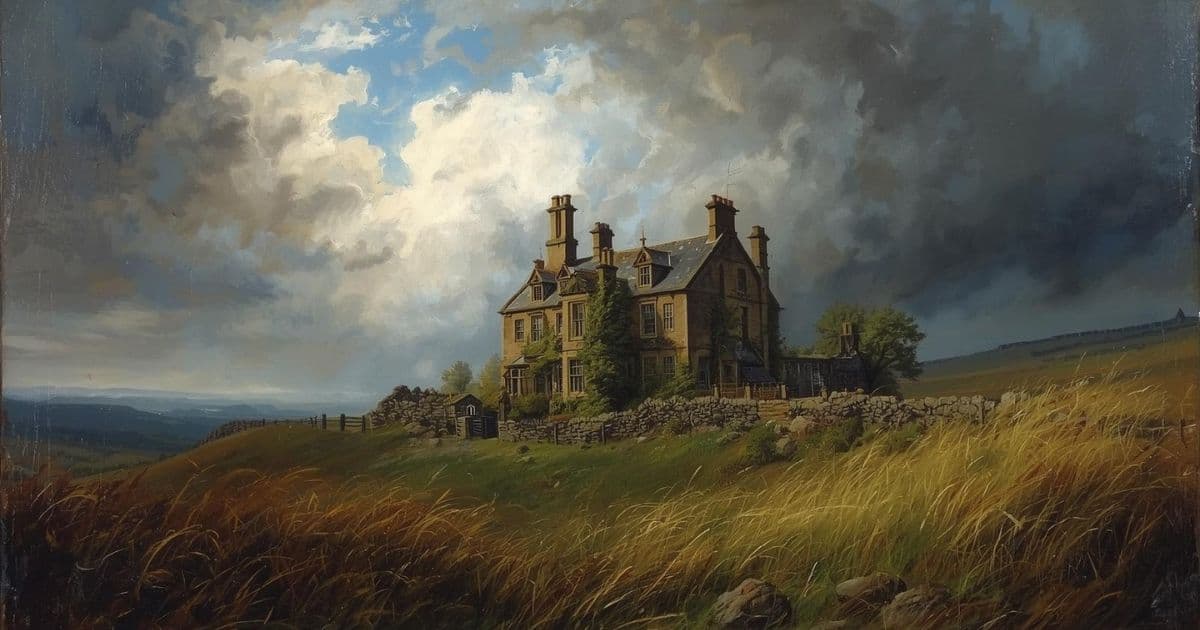
y home, then, when I at last find a home,—is a cottage; a little room with whitewashed walls and a sanded floor, containing four painted chairs and a table, a clock, a cupboard, with two or three plates and dishes, and a set of tea-things in delf. Above, a chamber of the same dimensions as the kitchen, with a deal bedstead and chest of drawers; small, yet too large to be filled with my scanty wardrobe: though the kindness of my gentle and generous friends has increased that, by a modest stock o

Jane has settled into her new life as a village schoolmistress in Morton, living in a simple cottage provided by St. John Rivers. She describes her modest accommodations and reflects on her first day teaching twenty pupils, most of whom cannot read or write. Despite the humble circumstances, Jane acknowledges that her students possess the same potential for excellence as those of higher birth. However, she struggles with feelings of degradation and desolation, admitting that she feels she has descended in social status. In a moment of profound self-reflection, Jane weighs her current situation against what might have been had she stayed with Rochester as his mistress. She imagines the luxury and passion she would have experienced in France, but ultimately reaffirms that she made the right choice in adhering to her moral principles. The chapter concludes with a visit from St. John Rivers, who brings her art supplies from his sisters and observes her emotional state. Their conversation reveals Jane's determination to make the best of her circumstances while St. John offers philosophical counsel about controlling one's inclinations and finding alternative paths when blocked by circumstance.

Master this chapter. Complete your experience

Purchase the complete book to access all chapters and support classic literature

Read Free on GutenbergBuy at Powell'sBuy on Amazon

As an Amazon Associate, we earn a small commission from qualifying purchases at no additional cost to you.

Available in paperback, hardcover, and e-book formats

GO ADS FREE — JOIN US

Intelligence Amplifier™ Analysis

Deep pattern analysis in progress. Our AI is identifying timeless insights and modern applications.

Why This Matters

Connect literature to life

Literary Insight

This chapter explores the timeless tension between moral principle and personal desire, showing how difficult choices shape character and destiny

Today's Relevance

In today's world of ethical compromises and difficult career decisions, Jane's struggle resonates with anyone who has chosen principle over convenience, highlighting the ongoing relevance of moral courage in personal and professional life

Now let's explore the literary elements.

Terms to Know

delf

Delftware, a type of blue and white pottery originally from Delft, Netherlands

cipher

To do arithmetic; basic mathematical calculations

scions

Descendants or offspring, particularly of wealthy or noble families

inanition

Exhaustion caused by lack of nourishment; weakness from hunger

Characters in This Chapter

Jane Eyre

Village schoolmistress

Now living independently in a cottage, teaching poor children while struggling with her reduced social status

St. John Rivers

Clergyman and Jane's benefactor

Visits Jane to check on her welfare and offers philosophical guidance about controlling desires and finding purpose

Key Quotes & Analysis

"I must not forget that these coarsely-clad little peasants are of flesh and blood as good as the scions of gentlest genealogy"

— Jane Eyre

Context: Jane reminds herself that her poor students have the same human worth and potential as wealthy children

"Whether is it better, I ask, to be a slave in a fool's paradise at Marseilles—fevered with delusive bliss one hour—suffocating with the bitterest tears of remorse and shame the next—or to be a village-schoolmistress, free and honest"

— Jane Eyre

Context: Jane weighs her current moral independence against the passionate but compromised life she could have had with Rochester

"God has given us, in a measure, the power to make our own fate"

— St. John Rivers

Context: St. John counsels Jane about taking control of one's destiny when blocked from desired paths

Thematic Threads

Independence

In This Chapter

Development

In Your Life:

When have you had to choose between financial security and personal freedom, and what did that decision teach you about what you truly value?

Morality vs. Passion

In This Chapter

Development

In Your Life:

Think of a time when you wanted something badly but knew it wasn't right - how did you handle the conflict between your desires and your principles?

Social Class

In This Chapter

Development

In Your Life:

Have you ever felt judged or dismissed because of your background, education, or income level, and how did you respond to that treatment?

Self-respect

In This Chapter

Development

In Your Life:

When was the last time you had to stand up for yourself even when it felt uncomfortable or risky - what gave you the courage to do it?

You now have the context. Time to form your own thoughts.

Discussion Questions

  1. 1

    How does Jane's attitude toward her students reflect Victorian class prejudices, and how does she work to overcome them?

  2. 2

    What does Jane's imagined life with Rochester reveal about her understanding of passion versus principle?

  3. 3

    How does St. John's philosophy about making one's own fate compare to Jane's approach to her circumstances?

  4. 4

    In what ways does this chapter demonstrate the cost of moral independence?

Critical Thinking Exercise

Analyze Jane's internal debate about her choice to leave Rochester. Create a detailed comparison chart weighing the benefits and costs of her two options: staying as Rochester's mistress versus her current life as a village schoolmistress. Consider emotional, moral, social, and practical factors.

Coming Up Next...

Chapter 32: Finding Purpose in Simple Service

I continued the labours of the village-school as actively and faithfully as I could. It was truly hard work at first. Some time elapsed before, with all my efforts, I could comprehend my scholars and their nature. Wholly untaught, with faculties quite torpid, they seemed to me hopelessly dull; and, ...

Continue to Chapter 32
Previous
Finding Kinship at Moor House
Contents
Next
Finding Purpose in Simple Service

Continue Exploring

Jane Eyre Study GuideTeaching ResourcesEssential Life IndexBrowse by ThemeAll Books
Identity & Self-DiscoveryLove & RelationshipsSocial Class & Status

You Might Also Like

The Strange Case of Dr Jekyll and Mr Hyde cover

The Strange Case of Dr Jekyll and Mr Hyde

Robert Louis Stevenson

Explores identity & self

Wuthering Heights cover

Wuthering Heights

Emily Brontë

Explores identity & self

Great Expectations cover

Great Expectations

Charles Dickens

Explores identity & self

Frankenstein cover

Frankenstein

Mary Shelley

Explores identity & self

Browse all 47+ books

Share This Chapter

Know someone who'd enjoy this? Spread the wisdom!

TwitterFacebookLinkedInEmail

Read ad-free with Prestige

Get rid of ads, unlock study guides and downloads, and support free access for everyone.

Subscribe to PrestigeCreate free account
Intelligence Amplifier
Intelligence Amplifier™Powering Amplified Classics

Exploring human-AI collaboration through books, essays, and philosophical dialogues. Classic literature transformed into navigational maps for modern life.

2025 Books

→ The Amplified Human Spirit→ The Alarming Rise of Stupidity Amplified→ San Francisco: The AI Capital of the World
Visit intelligenceamplifier.org
hello@amplifiedclassics.com

AC Originals

→ The Last Chapter First→ You Are Not Lost→ The Lit of Love→ The Wealth Paradox
Arvintech
arvintechAmplify your Mind
Visit at arvintech.com

Navigate

  • Home
  • Library
  • Essential Life Index
  • How It Works
  • Subscribe
  • Account
  • About
  • Contact
  • Authors
  • Suggest a Book

Made For You

  • Students
  • Educators
  • Families
  • Readers
  • Finding Purpose

Newsletter

Weekly insights from the classics.

Amplify Your Mind

Legal

  • Privacy Policy
  • Terms of Service
  • Cookie Policy
  • Accessibility

Why Public Domain?

We focus on public domain classics because these timeless works belong to everyone. No paywalls, no restrictions—just wisdom that has stood the test of centuries, freely accessible to all readers.

Public domain books have shaped humanity's understanding of love, justice, ambition, and the human condition. By amplifying these works, we help preserve and share literature that truly belongs to the world.

© 2025 Amplified Classics™. All Rights Reserved.

Intelligence Amplifier™ and Amplified Classics™ are proprietary trademarks of Arvin Lioanag.

Copyright Protection: All original content, analyses, discussion questions, pedagogical frameworks, and methodology are protected by U.S. and international copyright law. Unauthorized reproduction, distribution, web scraping, or use for AI training is strictly prohibited. See our Copyright Notice for details.

Disclaimer: The information provided on this website is for general informational and educational purposes only and does not constitute professional, legal, financial, or technical advice. While we strive to ensure accuracy and relevance, we make no warranties regarding completeness, reliability, or suitability. Any reliance on such information is at your own risk. We are not liable for any losses or damages arising from use of this site. By using this site, you agree to these terms.