
Amplified ClassicsAmplified Classics
Literature MattersLife IndexEducators
Sign inSign up
Jane Eyre - Arrival at Thornfield

Charlotte Brontë

Jane Eyre

Arrival at Thornfield

Home›Books›Jane Eyre›Chapter 11
Back to Jane Eyre
8 min•Jane Eyre•Chapter 11 of 37

What You'll Learn

How Brontë uses theatrical metaphors to frame narrative transitions

The significance of Jane's journey from isolation to potential belonging

Victorian social expectations for governesses and domestic hierarchy

Previous
11 of 37
Next

Summary

Arrival at Thornfield

Jane Eyre by Charlotte Brontë

0:000:00

Jane arrives at the George Inn in Millcote after a sixteen-hour journey, expecting to be met by someone from Thornfield Hall. When no one appears, she experiences anxiety and isolation, reflecting on her vulnerable position as a young woman alone in the world. The chapter captures her internal struggle between the excitement of adventure and the fear of uncertainty. Eventually, a plain servant arrives to transport her to Thornfield Hall in a simple one-horse carriage. During the journey, Jane observes the countryside and contemplates her new situation, hoping that Mrs. Fairfax will prove more agreeable than her previous employer, Mrs. Reed. She resolves to do her best while maintaining her independence and self-respect. Upon arriving at Thornfield, Jane is warmly welcomed by Mrs. Fairfax, a kindly elderly woman in widow's dress who treats her with unexpected courtesy and consideration. The housekeeper's genuine warmth and the cozy domestic atmosphere of the sitting room create a stark contrast to Jane's previous experiences, offering hope for a more positive chapter in her life. The chapter establishes Thornfield as a place of potential refuge and belonging, while also introducing the domestic comfort that will serve as a backdrop for the dramatic events to come. Jane's cautious optimism reflects her hard-won wisdom about not expecting too much too soon.

Coming Up in Chapter 12

The promise of a smooth career, which my first calm introduction to Thornfield Hall seemed to pledge, was not belied on a longer acquaintance with the place and its inmates. Mrs. Fairfax turned out to

Share it with friends

Previous ChapterNext Chapter
GO ADS FREE — JOIN US

An excerpt from the original text.(~312 words)

A

new chapter in a novel is something like a new scene in a play; and when I draw up the curtain this time, reader, you must fancy you see a room in the George Inn at Millcote, with such large figured papering on the walls as inn rooms have; such a carpet, such furniture, such ornaments on the mantelpiece, such prints, including a portrait of George the Third, and another of the Prince of Wales, and a representation of the death of Wolfe. All this is visible to you by the light of an oil lamp ha

Jane arrives at the George Inn in Millcote after a sixteen-hour journey, expecting to be met by someone from Thornfield Hall. When no one appears, she experiences anxiety and isolation, reflecting on her vulnerable position as a young woman alone in the world. The chapter captures her internal struggle between the excitement of adventure and the fear of uncertainty.

Eventually, a plain servant arrives to transport her to Thornfield Hall in a simple one-horse carriage. During the journey, Jane observes the countryside and contemplates her new situation, hoping that Mrs. Fairfax will prove more agreeable than her previous employer, Mrs. Reed. She resolves to do her best while maintaining her independence and self-respect.

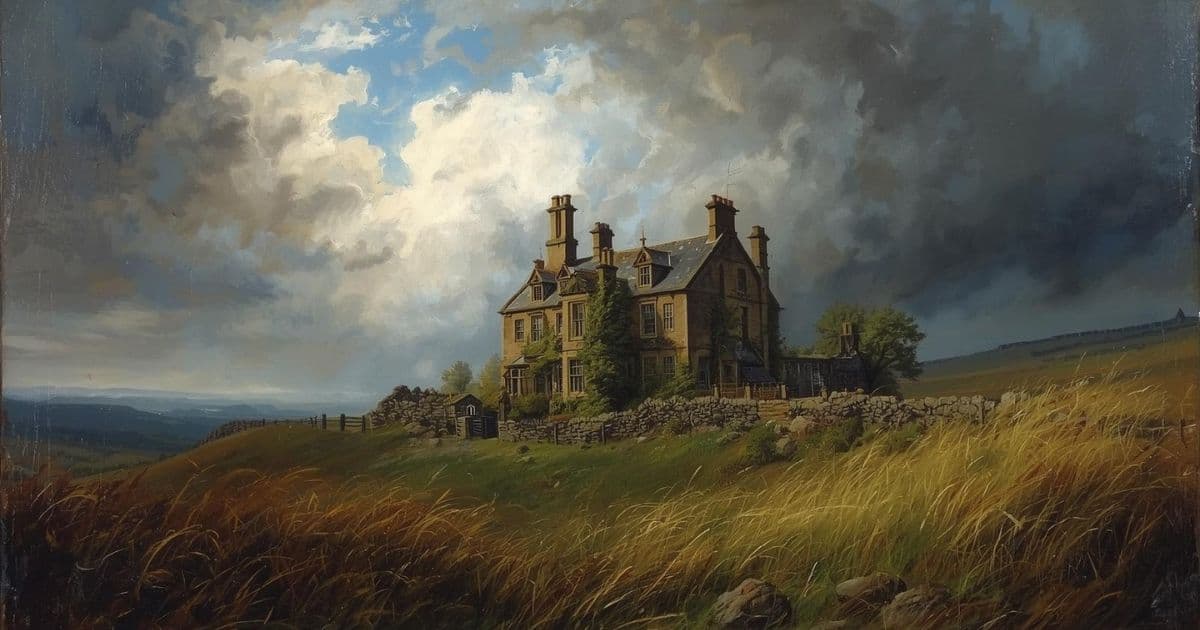
Upon arriving at Thornfield, Jane is warmly welcomed by Mrs. Fairfax, a kindly elderly woman in widow's dress who treats her with unexpected courtesy and consideration. The housekeeper's genuine warmth and the cozy domestic atmosphere of the sitting room create a stark contrast to Jane's previous experiences, offering hope for a more positive chapter in her life.

The chapter establishes Thornfield as a place of potential refuge and belonging, while also introducing the domestic comfort that will serve as a backdrop for the dramatic events to come. Jane's cautious optimism reflects her hard-won wisdom about not expecting too much too soon.

Master this chapter. Complete your experience

Purchase the complete book to access all chapters and support classic literature

Read Free on GutenbergBuy at Powell'sBuy on Amazon

As an Amazon Associate, we earn a small commission from qualifying purchases at no additional cost to you.

Available in paperback, hardcover, and e-book formats

GO ADS FREE — JOIN US

Intelligence Amplifier™ Analysis

Deep pattern analysis in progress. Our AI is identifying timeless insights and modern applications.

Why This Matters

Connect literature to life

Literary Insight

This chapter captures the universal experience of starting over in a new place, balancing hope with hard-won caution

Today's Relevance

Young people today still face similar anxieties when starting new jobs, moving to new cities, or entering unfamiliar social situations, making Jane's emotional journey deeply relatable

Now let's explore the literary elements.

Terms to Know

Governess

A woman employed to teach children in a private household, occupying an ambiguous social position between servant and family member

Negus

A warm drink made of wine, typically port or sherry, mixed with hot water, sugar, lemon, and spices

Millcote

The fictional market town near Thornfield Hall, representing the commercial world beyond the estate

Thornfield Hall

The Gothic mansion where Jane will work as governess, central to the novel's romantic and mysterious elements

Characters in This Chapter

Jane Eyre

Protagonist/New Governess

An 18-year-old woman beginning her position at Thornfield, displaying both vulnerability and determination

Mrs. Fairfax

Housekeeper

A kind, elderly widow who manages Thornfield Hall and welcomes Jane with unexpected warmth and consideration

John

Coachman

The servant who drives slowly and speaks in Yorkshire dialect, representing the working-class locals

Leah

Maid

A servant at Thornfield who assists with domestic tasks and follows Mrs. Fairfax's instructions

Key Quotes & Analysis

"It is a very strange sensation to inexperienced youth to feel itself quite alone in the world, cut adrift from every connection, uncertain whether the port to which it is bound can be reached"

— Jane Eyre

Context: Jane reflects on her isolation while waiting at the inn, capturing the universal experience of young adulthood

"I pray God Mrs. Fairfax may not turn out a second Mrs. Reed; but if she does, I am not bound to stay with her!"

— Jane Eyre

Context: Jane's internal monologue reveals her determination to maintain her independence and self-respect

"She treats me like a visitor. I little expected such a reception; I anticipated only coldness and stiffness"

— Jane Eyre

Context: Jane's surprise at Mrs. Fairfax's kindness highlights the typically harsh treatment of governesses

Thematic Threads

Independence

In This Chapter

Development

In Your Life:

When have you had to balance your desire for independence with your need for financial security or stability?

Social Class

In This Chapter

Development

In Your Life:

How do you navigate situations where you feel like an outsider due to differences in background, education, or economic status?

Belonging vs. Isolation

In This Chapter

Development

In Your Life:

What helps you distinguish between healthy solitude and harmful isolation in your own life?

Self-respect

In This Chapter

Development

In Your Life:

How do you maintain your sense of self-worth when entering new environments where you feel uncertain about your place?

You now have the context. Time to form your own thoughts.

Discussion Questions

  1. 1

    How does Brontë use the theatrical metaphor of 'drawing up the curtain' to frame this chapter's significance?

  2. 2

    What does Jane's internal monologue during the carriage ride reveal about her character development?

  3. 3

    How does Mrs. Fairfax's treatment of Jane challenge Victorian social expectations?

  4. 4

    Why might Brontë choose to end this chapter on a note of cautious optimism rather than complete relief?

Critical Thinking Exercise

Analyze how Brontë uses physical spaces (the inn, the carriage, Thornfield's sitting room) to reflect Jane's emotional journey in this chapter. Consider lighting, comfort, and social dynamics.

Coming Up Next...

Chapter 12: Restlessness and Yearning

The promise of a smooth career, which my first calm introduction to Thornfield Hall seemed to pledge, was not belied on a longer acquaintance with the place and its inmates. Mrs. Fairfax turned out to

Continue to Chapter 12
Previous
The Awakening of Desire
Contents
Next
Restlessness and Yearning

Continue Exploring

Jane Eyre Study GuideTeaching ResourcesEssential Life IndexBrowse by ThemeAll Books
Identity & Self-DiscoveryLove & RelationshipsSocial Class & Status

You Might Also Like

The Strange Case of Dr Jekyll and Mr Hyde cover

The Strange Case of Dr Jekyll and Mr Hyde

Robert Louis Stevenson

Explores identity & self

Wuthering Heights cover

Wuthering Heights

Emily Brontë

Explores identity & self

Great Expectations cover

Great Expectations

Charles Dickens

Explores identity & self

Frankenstein cover

Frankenstein

Mary Shelley

Explores identity & self

Browse all 47+ books

Share This Chapter

Know someone who'd enjoy this? Spread the wisdom!

TwitterFacebookLinkedInEmail

Read ad-free with Prestige

Get rid of ads, unlock study guides and downloads, and support free access for everyone.

Subscribe to PrestigeCreate free account
Intelligence Amplifier
Intelligence Amplifier™Powering Amplified Classics

Exploring human-AI collaboration through books, essays, and philosophical dialogues. Classic literature transformed into navigational maps for modern life.

2025 Books

→ The Amplified Human Spirit→ The Alarming Rise of Stupidity Amplified→ San Francisco: The AI Capital of the World
Visit intelligenceamplifier.org
hello@amplifiedclassics.com

AC Originals

→ The Last Chapter First→ You Are Not Lost→ The Lit of Love→ The Wealth Paradox
Arvintech
arvintechAmplify your Mind
Visit at arvintech.com

Navigate

  • Home
  • Library
  • Essential Life Index
  • How It Works
  • Subscribe
  • Account
  • About
  • Contact
  • Authors
  • Suggest a Book

Made For You

  • Students
  • Educators
  • Families
  • Readers
  • Finding Purpose

Newsletter

Weekly insights from the classics.

Amplify Your Mind

Legal

  • Privacy Policy
  • Terms of Service
  • Cookie Policy
  • Accessibility

Why Public Domain?

We focus on public domain classics because these timeless works belong to everyone. No paywalls, no restrictions—just wisdom that has stood the test of centuries, freely accessible to all readers.

Public domain books have shaped humanity's understanding of love, justice, ambition, and the human condition. By amplifying these works, we help preserve and share literature that truly belongs to the world.

© 2025 Amplified Classics™. All Rights Reserved.

Intelligence Amplifier™ and Amplified Classics™ are proprietary trademarks of Arvin Lioanag.

Copyright Protection: All original content, analyses, discussion questions, pedagogical frameworks, and methodology are protected by U.S. and international copyright law. Unauthorized reproduction, distribution, web scraping, or use for AI training is strictly prohibited. See our Copyright Notice for details.

Disclaimer: The information provided on this website is for general informational and educational purposes only and does not constitute professional, legal, financial, or technical advice. While we strive to ensure accuracy and relevance, we make no warranties regarding completeness, reliability, or suitability. Any reliance on such information is at your own risk. We are not liable for any losses or damages arising from use of this site. By using this site, you agree to these terms.