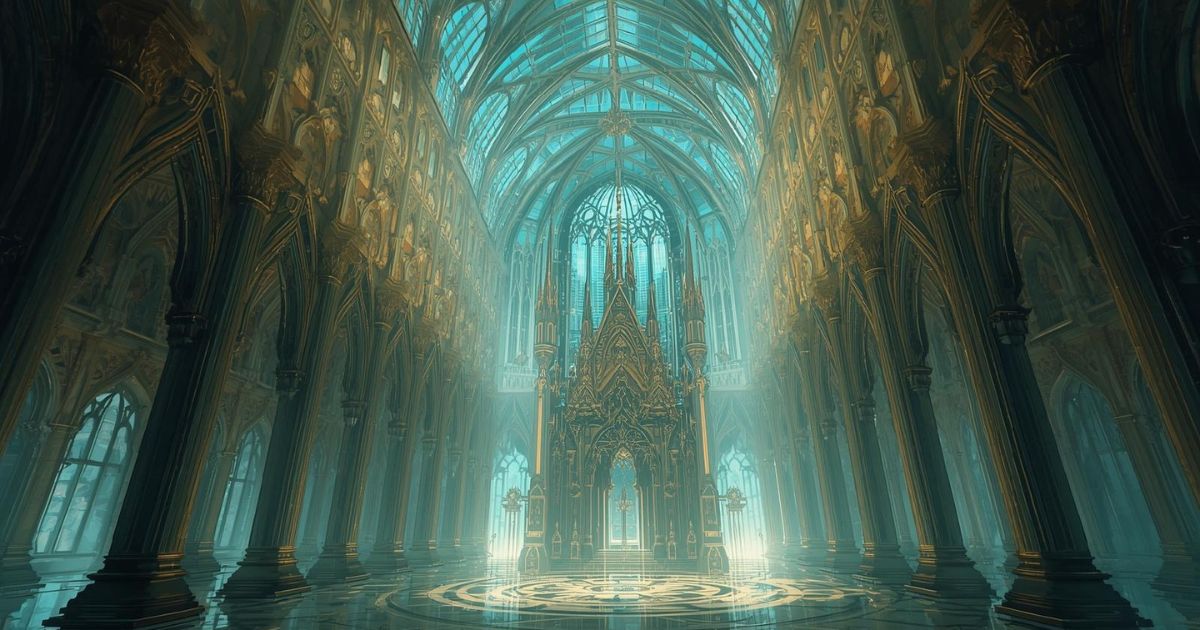
An excerpt from the original text.(complete · 4890 words)
OF THE PRAYER OF RECOLLECTION WHICH GOD GENERALLY GIVES THE SOUL BEFORE
GRANTING IT THAT LAST DESCRIBED. ITS EFFECTS: ALSO THOSE OF THE PRAYER
OF DIVINE CONSOLATIONS DESCRIBED IN THE LAST CHAPTER.
1. The Prayer of recollection compared to the inhabitants of the
castle. 2. The Shepherd recalls His flock into the castle. 3. This
recollection supernatural. 4. It prepares us for higher favours. 5. The
mind must act until God calls it to recollection by love. 6. The soul
should here abandon itself into God's hands. 7. The prayer of
recollection, and distractions in Prayer. 8. Liberty of spirit gained
by consolations. 9. The soul must be watchful. 10. The devil specially
tempts such souls. 11. False trances and raptures. 12. How to treat
those deluded in this way. 13. Risks of delusion in this mansion.
1. THE effects of divine consolations are very numerous: before
describing them, I will speak of another kind of prayer which usually
precedes them. I need not say much on this subject, having written
about it elsewhere. [132] This is a kind of recollection which, I
believe, is supernatural. There is no occasion to retire nor to shut
the eyes, nor does it depend on anything exterior; involuntarily the
eyes suddenly close and solitude is found. Without any labour of one's
own, the temple of which I spoke is reared for the soul in which to
pray: the senses and exterior surroundings appear to lose their hold,
while the spirit gradually regains its lost sovereignty. Some say the
soul enters into itself; others, that it rises above itself. [133] I
can say nothing about these terms, but had better speak of the subject
as I understand it. You will probably grasp my meaning, although,
perhaps, I may be the only person who understands it. Let us imagine
that the senses and powers of the soul (which I compared in my allegory
to the inhabitants of the castle) have fled and joined the enemy
outside. After long days and years of absence, perceiving how great has
been their loss, they return to the neighbourhood of the castle, but
cannot manage to re-enter it, for their evil habits are hard to break
off; still, they are no longer traitors, and they wander about outside.
2. The King, Who holds His court within it, sees their good will, and
out of His great mercy desires them to return to Him. Like a good
Shepherd, He plays so sweetly on His pipe, that although scarcely
hearing it they recognize His call and no longer wander, but return,
like lost sheep, to the mansions. So strong is this Pastor's power over
His flock, that they abandon the worldly cares which misled them and
re-enter the castle.
3. I think I never put this matter so clearly before. To seek God
within ourselves avails us far more than to look for Him amongst
creatures; Saint Augustine tells us how he found the Almighty within
his own soul, after having long sought for Him elsewhere. [134] This
recollection helps us greatly when God bestows it upon us. But do not
fancy you can gain it by thinking of God dwelling within you, or by
imagining Him as present in your soul: this is a good practice and an
excellent kind of meditation, for it is founded on the fact that God
resides within us; [135] it is not, however, the prayer of
recollection, for by the divine assistance every one can practise it,
but what I mean is quite a different thing. Sometimes, before they have
begun to think of God, the powers of the soul find themselves within
the castle. I know not by what means they entered, nor how they heard
the Shepherd's pipe; the ears perceived no sound but the soul is keenly
conscious of a delicious sense of recollection experienced by those who
enjoy this favour, which I cannot describe more clearly.
4. I think I read somewhere [136] that the soul is then like a
tortoise or sea-urchin, which retreats into itself. Those who said this
no doubt understood what they were talking about; but these creatures
can withdraw into themselves at will, while here it is not in our power
to retire into ourselves, unless God gives us the grace. In my opinion,
His Majesty only bestows this favour on those who have renounced the
world, in desire at least, if their state of life does not permit their
doing so in fact. He thus specially calls them to devote themselves to
spiritual things; if they allow Him power to at freely He will bestow
still greater graces on those whom He thus begins calling to a higher
life. Those who enjoy this recollection should thank God fervently: it
is of the highest importance for them to realize the value of this
favour, gratitude for which would prepare them to receive still more
signal graces. Some books advise that as a preparation for hearing what
our Lord may say to us we should keep our minds at rest, waiting to see
what He will work in our souls. [137] But unless His Majesty has
begun to suspend our faculties, I cannot understand how we are to stop
thinking, without doing ourselves more harm than good. This point has
been much debated by those learned in spiritual matters; I confess my
want of humility in having been unable to yield to their opinion. [138]
5. Some one told me of a certain book written on the subject by the
saintly Friar Peter of Alcantara (as I think I may justly call him); I
should have submitted to his decision, knowing that he was competent to
judge, but on reading it I found he agreed with me that the mind must
act until called to recollection by love, although he stated it in
other words. [139] Possibly I may be mistaken, but I rely on these
reasons. Firstly, he who reasons less and tries to do least, does most
in spiritual matters. We should make our petitions like beggars before
a powerful and rich Emperor; then, with downcast eyes, humbly wait.
When He secretly shows us He hears our prayers, it is well to be
silent, as He has drawn us into His presence; there would then be no
harm in trying to keep our minds at rest (that is to say, if we can).
If, however, the King makes no sign of listening or of seeing us, there
is no need to stand inert, like a dolt, which the soul would resemble
if it continued inactive. In this case its dryness would greatly
increase, and the imagination would be made more restless than before
by its very effort to think of nothing. Our Lord wishes us at such a
time to offer Him our petitions and to place ourselves in His presence;
He knows what is best for us.
6. I believe that human efforts avail nothing in these matters, which
His Majesty appears to reserve to Himself, setting this limit to our
powers. In many other things, such as penances, good works, and
prayers, with His aid we can help ourselves as far as human weakness
will allow. The second reason is, that these interior operations being
sweet and peaceful, [140] any painful effort does us more harm than
good. By painful effort' I mean any forcible restraint we place on
ourselves, such as holding our breath. [141] We should rather abandon
our souls into the hands of God, leaving Him to do as He chooses with
us, as far as possible forgetting all self-interest and resigning
ourselves entirely to His will. The third reason is, that the very
effort to think of nothing excites our imagination the more. The fourth
is, because we render God the most true and acceptable service by
caring only for His honour and glory and forgetting ourselves, our
advantages, comfort and happiness. How can we be self-oblivious, while
keeping ourselves under such strict control that we are afraid to move,
or even to think, or to leave our minds enough liberty to desire God's
greater glory and to rejoice in the glory which He possesses? When His
Majesty wishes the mind to rest from working He employs it in another
manner, giving it a light and knowledge far above any obtainable by its
own efforts and absorbing it entirely into Himself. Then, though it
knows not how, it is filled with wisdom such as it could never gain for
itself by striving to suspend the thoughts. God gave us faculties for
our use; each of them will receive its proper reward. Then do not let
us try to charm them to sleep, but permit them to do their work until
divinely called to something higher. [142]
7. In my opinion, when God chooses to place the soul in this mansion it
is best for it to do as I advised, and then endeavour, without force or
disturbance, to keep free from wandering thoughts. No effort, however,
should be made to suspend the imagination entirely from arming, for it
is well to remember God's presence and to consider Who He is. If
transported out of itself by its feelings, well and good; but let it
not try to understand what is passing within it, for this favour is
bestowed on the will which should be left to enjoy it in peace, only
making loving aspirations occasionally. Although, in this kind of
prayer, the soul makes no effort towards it, yet often, for a very
short time, the mind ceases to think at all. I explained elsewhere why
this occurs during this spiritual state. [143] On first speaking of
the fourth mansions, I told you I had mentioned divine consolations
before the prayer of recollection. The latter should have come first,
as it is far inferior to consolations, of which it is the commencement.
Recollection does not require us to give up meditation, nor to cease
using our intellect. In the prayer of quiet, when the water flows from
the spring itself and not through conduits, the mind ceases to act; it
is forced to do so, although it does not understand what is happening,
and so wanders hither and thither in bewilderment, finding no place for
rest. Meanwhile the will, entirely united to. God, is much disturbed by
the tumult of the thoughts: no notice, however, should be taken of
them, or they would cause the loss of a great part of the favour the
soul is enjoying. Let the spirit ignore these distractions and abandon
itself in the arms of divine love: His Majesty will teach it how best
to act, which chiefly consists in its recognizing its unworthiness of
so great a good and occupying itself in thanking Him for it.
8. In order to treat of the prayer of recollection, I passed over in
silence the effects and symptoms to be found in souls thus favoured by
God. Divine consolations evidently cause a dilation or enlargement of
the soul that may be compared to water flowing from a spring into a
basin which has no outlet, but is so constructed as to increase in size
and proportion to the quantity poured into it. God seems to work the
same effect by this prayer, besides giving many other marvellous
graces, so preparing and disposing the soul to contain all He intends
to give it. After interior sweetness and dilation the soul is not so
restrained as formerly in God's service, but possesses much more
liberty of spirit. It is no longer distressed by the terror of hell,
for though more anxious than ever not to offend God, it has lost
servile fear and feels sure that one day it will possess its Lord. It
does not dread the loss of health by austerities; [144] believing
that there is nothing it could not do by His grace, it is more desirous
than before of doing penance. Greater indifference is felt for
sufferings because faith being stronger, it trusts that if borne for
God He will give the grace to endure them patiently. Indeed, such a one
at times even longs for trials, having a most ardent desire to do
something for His sake. As the soul better understands the Divine
Majesty, it realizes more vividly its own baseness. Divine consolation
shows it how vile are earthly pleasures; by gradually withdrawing from
them, it gains greater self-mastery. In short, its virtues are
increased and it will not cease to advance in perfection, unless it
turns back and offends God. Should it act thus, it would lose
everything, however high the state it may have reached.
9. It is not to be supposed that all these effects are produced merely
by God's having shown these favours once or twice. They must be
received continually, for it is on their frequent reception that the
whole welfare of the soul depends. I strongly urge those who have
reached this state to avoid most carefully all occasions of offending
God. [145] The soul is not yet fully established in virtue, but is
like a new-born babe first feeding at its mother's breast: [146] if
it leaves her, what can it do but die? I greatly fear that when a soul
to whom God has granted this favour discontinues prayer, except under
urgent necessity, it will, unless it returns to the practice at once,
go from bad to worse.
10. I realize the danger of such a case, having had the grief of
witnessing the fall of persons I knew through their withdrawal from Him
Who sought, with so much love, to make Himself their friend, as He
proved by His treatment of them. I urgently warn such persons not to
run the risk of sinning, for the devil would rather gain one of these
souls than many to whom our Lord does not grant such graces, [147] as
the former may cause him severe loss by leading others to follow their
example, and may even render great service to the Church of God. Were
there no other reason except that he saw the special love His Majesty
bears these people, it would suffice to make Satan frantic to destroy
God's work in them, so that they might be lost eternally. Therefore
they suffer grievous temptations, and if they fall, they fall lower
than others.
11. You, my sisters, are free from such dangers, as far as we can tell:
God keep you from pride and vainglory! The devil sometimes offers
counterfeits of the graces I have mentioned: this can easily be
detected--the effects being exactly contrary to those of the genuine
ones. [148] Although I have spoken of it elsewhere, [149] I wish to
warn you here of a special danger to which those who practise prayer
are subject, particularly women, whose weakness of constitution makes
them more liable to such mistakes. On account of their penances,
prayers, and vigils, or even merely because of debility of health, some
persons cannot receive spiritual consolation without being overcome by
it. On feeling any interior joy, their bodies being languid and weak,
they fall into a slumber--they call it spiritual sleep--which is a more
advanced stage of what I have described; they think the soul shares in
it as well as the body, and abandon themselves to a sort of
intoxication. The more they lose self-control, the more do their
feelings get possession of them, because the frame becomes more feeble.
They fancy this is a trance and call it one, but I call it nonsense; it
does nothing but waste their time and injure their health.
12. This state lasted with a certain person for eight hours, during
which time she was neither insensible, nor had she any thought of God.
[150] She was cured by being made to eat and sleep well and to leave
off some of her penances. Her recovery was owing to some one who
understood her case; hitherto she had unintentionally deceived both her
confessor and other people, as well as herself. I feel quite sure the
devil had been at work here to serve his own ends and he was beginning
to gain a great deal from it. It should be known that when God bestows
such favours on the soul, although there may be languor both of mind
and body, it is not shared by the soul, which feels great delight at
seeing itself so near God, nor does this state ever continue for more
than a very short time. [151] Although the soul may become absorbed
again, yet, as I said, unless already feeble, the body suffers neither
exhaustion nor pain. I advise any of you who experience the latter to
tell the Prioress, and to divert your thoughts as much as possible from
such matters. The Superior should prevent such a nun from spending more
than a very few hours in prayer, and should make her eat and sleep well
until her usual strength is restored, if she has lost it in this way.
[152] If the nun's constitution is so delicate that this does not
suffice, let her believe me when I tell her that God only calls her to
the active life. There must be such people in monasteries: employ her
in the various offices and be careful that she is never left very long
alone, otherwise she will entirely lose her health. This treatment will
be a great mortification to her: our Lord tests her love for Him by the
way in which she bears His absence. He may be pleased, after a time, to
restore her strength; if not, she will make as much progress, and earn
as great a reward by vocal prayer and obedience as she would have done
by contemplation, and perhaps more.
13. There are people, some of whom I have known, whose minds and
imaginations are so active as to fancy they see whatever they think
about, which is very dangerous. [153] Perhaps I may treat of this
later on, but cannot do so now. I have dwelt at length on this mansion,
as I believe it to be the one most souls enter. As the natural is
combined with the supernatural, the devil can do more harm here than
later on, when God does not leave him so many opportunities. May God be
for ever praised! Amen.
__________________________________________________________________
[132] Life, ch. xiv. 2. The Saint says in the second chapter of this
mansion, § 5, and also in letters dated Dec. 7, 1577 (Vol. II) and Jan.
14, 1580, that when writing the Interior Castle she had more experience
in spiritual things than when she composed her former works. This is
fully borne out by the present chapter. In the corresponding part of
her Life she practically confounded the prayer of recollection with the
prayer of quiet (the second state of the soul). Likewise, in the Way of
Perfection, ch. xxviii., she speaks of but one kind of prayer of
recollection and then passes on to the prayer of quiet. Here, however,
she mentions a second form of the prayer of recollection. See Philippus
a SS. Trinitate, pars iii. tract. i, disc. iii. art. 1, De oratione
recollectionis' (page 81 of the third vol. of the edition of 1874); de
secundo modo recollectionis' (ibid. p. 82.); and art. 2: De oratione
quietis' (ibid. p. 84.) Antonius a Spiritu Sancto, Direct. Mystic.
tract. iv. n. 78: Duo sunt hujus recollectionis modi, primus quidem
activus [reference to the Way of Perfection, l.c.], secundus autem
passivus, [reference to this chapter of the Fourth Mansion].' The
former is not supernatural, in the sense that with special grace from
above it can be acquired; the second is altogether supernatural and
more like gratuitous grace (ibid. no. 80 and 81). On the meaning of
Solitude,' Silence,' etc., see Anton. a Sp. S. l.c., tract. i, n.
78-82.
[133] The edition of Burgos (vol. iv, P. 59) refers appropriately to
the following passage in the Tercer Abecedario (See Life, ch. iv, 8) by
the Franciscan friar Francisco de Osuna, a work which exercised a
profound influence on St. Teresa: 'Entering within oneself; and rising
above oneself, are the two principal points in this exercise, those
which, above all others, one ought to strive after, and which give the
highest satisfaction to the soul. There is less labour in entering
within oneself than in rising above oneself and therefore it appears to
me that when the soul is ready and fit for either, you ought to do the
former, because the other will follow without any effort, and will be
all the more pure and spiritual; however, follow what course your soul
prefers as this will bring you more grace and benefit,' (Tr. ix, ch,
viii).
[134] Some editors of the Interior Castle think that St. Teresa refers
to the following passage taken from the Confessions of St. Augustine:
Too late have I loved Thee, O Beauty, ever ancient yet ever new! too
late have I loved Thee! And behold, Thou wert within me and I abroad,
and there I searched for Thee, and, deformed as I was, I pursued the
beauties that Thou hast made. Thou wert with me, but I was not with
Thee. Those things kept me far from Thee, which, unless they were in
Thee, could have had no being' (St. Augustine's Confessions, bk. x, ch.
xxvii.). The Confessions of St. Augustine were first translated into
Spanish by Sebastian Toscano, a Portuguese Augustinian. This edition,
which was published at Salamanca in 1554, was the one used by St.
Teresa. However, it is more probable that here and elsewhere (Life, ch.
xli. 10; Way of Perf. ch. xxviii. 2) St. Teresa quotes a passage which
occurs in a pious book entitled Soliloquia, and erroneously attributed
to St. Augustine: I have gone about the streets and the broad ways of
the city of this world seeking Thee, but have not found Thee for I was
wrong in seeking without for what was within.' (ch. xxxi.) This
treatise which is also quoted by St. John of the Cross, Spiritual
Canticle, stanza i. 7, Ascent of Mount Carmel, bk. i. ch. v. 1,
appeared in a Spanish translation at Valladolid in 1515, at Medina del
Campo in 1553, and at Toledo in 1565.
[135] Life, ch. xiv. 7, 8; 20.
[136] St. Teresa read this in the Tercer Abecedario of Francisco de
Osuna (tr. vi, ch, iv): This exercise concentrates the senses of man in
the interior of the heart where dwells the daughter of the king'; that
is, the Catholic soul; thus recollected, man may well be compared to
the tortoise or sea-urchin which rolls itself up and withdraws within
itself, disregarding everything outside.'
[137] Life. ch, xii. 8.
[138] Life, ch. xiv, 10.
[139] A Golden Treatise of Mental Prayer by St. Peter of Alcantara,
translated by Rev. G. F. Bullock M.A. and edited by Rev. George Seymour
Hollings S.S.J.E. London, Mowbray, 1905, p. 117. Eighth Counsel. Let
the last and chiefest counsel be that in this holy exercise we should
endeavour to unite Meditation with Contemplation making of the one a
ladder for attaining to the other. For this we must know that (p. 118)
the very office of Meditation is to consider Divine things with
studiousness and attention passing from one to another, to move our
hearts to some affection and deep feeling for them, which is as though
one should strike a flint to draw from it the spark. For Contemplation
is to have drawn forth this spark: I mean to have now found this
affection and feeling which were sought for, and to be in peace and
silence enjoying them; not with many discursive and intellectual
speculations but with simple gaze upon the truth. Wherefore, says a
holy teacher, Meditation goes its way and brings forth fruit, with
labour, but Contemplation bears fruit without labour. The one seeketh,
the other findeth; the one consumeth the food, the other enjoys it; the
one discourseth, and maketh reflections, the other is contented with a
simple gaze upon the things, for it hath in possession their love and
joy. Lastly, the one is as the means, the other as the end; the one as
the road and journeying along it, the other as the end of the road and
of the journeying. From this is to be inferred a very common thing,
which all masters of the spiritual life teach, although it is little
(p. 119) understood of those who learn it; which is this, that, as the
means cease when the end has been attained, as the voyaging is over
when the port has been touched, so when, through the working out of our
Meditation, we have come to the repose and sweet savour of
Contemplation, we ought then to cease from that pious and laborious
searching; and being satisfied with the simple gaze upon, and thought
of, God--as though we had Him there present before us--we should rest
in the enjoyment of that affection then given, whether it be of love,
or of admiration, or joy, or other like sentiment. The reason why this
counsel is given is this, that as the aim of this devotion is love and
the affections of the will rather than the speculations of the
understanding, when the will has been caught and taken by this
affection, we should put away all those discursive and intellectual
speculations, so far as we can, in order that our soul with all its
forces may be fastened upon this affection without being diverted by
the action of other influences. A learned teacher, therefore, counsels
us that as soon as anyone feels himself fired by the love of God, he
should first put aside (p. 120.) all these considerations and
thoughts--however exalted they may seem--not because they are really
not good in themselves, but because they are then hindrances to what is
better. and more important. For this is nothing else than that, having
come to the end and purpose of our work, we should stay therein, and
leave Meditation for the love of Contemplation. This may especially be
done at the end of any exercise, that is, after the petition for the
Divine love of which we have spoken, for one reason, because then it is
supposed that the labour of the exercise we have just gone through has
produced some divine devotion and feeling, since, saith the wise man,
Better is the end of prayer than the beginning': and for another
reason, that, after the work of Prayer and Meditation, it is well that
one should give his mind a little rest, and allow it to repose in the
arms of Contemplation. At this point, then, we should put away all
other thoughts that may present themselves, and, quieting the mind and
stilling the memory, fix all upon our Lord; and remembering that we are
then in His presence, no longer dwell upon the details of divine
things. Ibidem p. 121. And not only at the end of the exercise but in
the midst of it, and at whatever part of it, this spiritual swoon
should come upon us, when the intellect is laid to sleep, we should
make this pause, and enjoy the blessing bestowed; and then, when we
have finished the digestion of it, turn to the matter we have in hand,
as the gardener does, when he waters his garden-bed; who, after giving
it (p. 122) a sufficiency of water, holds back the stream, and lets it
soak and spread itself through the depths of the earth; and then when
this hath somewhat dried up, he turns down upon it again the flow of
water that it may receive still more, and be well irrigated.'
[140] Sap. viii. i: Disponit omnia suaviter.'
[141] Life, ch. xv. i.
[142] 'The whole of the time in which our Lord communicates the simple,
loving general attention of which I made mention before, or when the
soul, assisted by grace, is established in that state, we must contrive
to keep the understanding in repose, undisturbed by the intrusion of
forms, figures, or particular knowledge, unless it were slightly and
for an instant, and that with sweetness of love, to enkindle our souls
the more. At other times, however, in all our acts of devotion and good
works, we must make use of good recollections and meditations, so that
we may feel an increase of profit and devotion; most especially
applying ourselves to the life, passion, and death of Jesus Christ, our
Lord, that our life and conduct may be an imitation of His.' (St. John
of the Cross, Ascent of Mount Carmel, bk. ii. ch. xxxii. 7.)
[143] Life, ch. xv. 2.
[144] Life, ch. xxiv. 2.
[145] Way of Perf. ch. xvi. 5. Castle, M. v. ch. i, 2, 3; ii. 4, 5;
iii. 2, 6, 12.
[146] Way of Perf. ch. xxxi. 7. Concept. ch. iv. 6.
[147] Way of Perf. ch. xl. 3.
[148] Life, ch. xx. 31.
[149] Found. ch. vi.
[150] Found. ch. vi. 15.
[151] Life ch. xviii. 16, 17.
[152] Letter of Oct. 23, 1 376. Vol. II.
[153] Found. ch. viii. 7-8.
_________________________________________________________________
_________________________________________________________________
THE FIFTH MANSIONS
__________________________________________________________________
Master this chapter. Complete your experience
Purchase the complete book to access all chapters and support classic literature
As an Amazon Associate, we earn a small commission from qualifying purchases at no additional cost to you.
Available in paperback, hardcover, and e-book formats
Let's Analyse the Pattern
Real transformation comes as an unexpected gift to those who prepare consistently, while manufactured experiences are forced through effort and lead to delusion.
Why This Matters
Connect literature to life
This chapter teaches how to recognize when something genuine is happening versus when we're forcing or faking an experience.
Practice This Today
This week, notice when you're trying to force a feeling, outcome, or connection—then experiment with stepping back and creating space for authentic experience to emerge naturally.
Now let's explore the literary elements.
Key Quotes & Analysis
"Without any labour of one's own, the temple of which I spoke is reared for the soul in which to pray"
Context: Describing how supernatural recollection happens without effort
This captures the fundamental shift from working for God's attention to receiving it as a gift. The temple metaphor shows this creates a sacred space within the person.
In Today's Words:
Suddenly you find yourself in the zone without even trying - like a quiet space opens up inside you.
"The Shepherd calls His sheep and they come to Him, though they know not how"
Context: Explaining how God initiates the prayer of recollection
Shows that authentic spiritual experience comes from God's initiative, not human effort. The soul responds naturally without understanding the mechanism.
In Today's Words:
Something deep inside you just knows it's time to pay attention, even if you can't explain why.
"We must not try to make the mind a blank, for we shall only succeed in exciting the imagination"
Context: Warning against forcing mystical states
Teresa rejects artificial techniques that empty the mind, arguing this leads to delusion rather than authentic prayer. Natural function should continue until God suspends it.
In Today's Words:
Don't try to force your brain to shut off - you'll just end up overthinking even more.
"The devil has great power over those souls who think they have reached this mansion"
Context: Warning about spiritual pride and deception at this level
Reveals that progress brings new dangers. Those who think they've 'arrived' spiritually become vulnerable to pride and false experiences that can influence others.
In Today's Words:
The moment you think you've got it all figured out is when you're most likely to mess up big time.
Thematic Threads
Control vs. Surrender
In This Chapter
Teresa emphasizes that supernatural recollection cannot be forced—it's God's initiative, not human effort
Development
Builds on earlier themes of letting go of worldly attachments to show complete surrender of spiritual control
In Your Life:
You might struggle with trying to control outcomes in relationships or career instead of doing your part and allowing results to unfold naturally.
Discernment
In This Chapter
Teresa warns extensively about counterfeit spiritual experiences and how to distinguish authentic divine consolation from delusion
Development
Introduced here as a critical skill for navigating higher spiritual states
In Your Life:
You face this when distinguishing between genuine opportunities and too-good-to-be-true offers, or real friends versus manipulative people.
Physical vs. Spiritual Health
In This Chapter
Teresa warns against excessive penances that create false mystical states through physical exhaustion
Development
Builds on earlier emphasis on practical wisdom by addressing the body-spirit connection
In Your Life:
You might mistake physical exhaustion from overwork for dedication, or confuse stress-induced clarity with genuine insight.
Influence and Responsibility
In This Chapter
Teresa notes that souls at this level can influence others, making them particular targets for deception
Development
Introduced here as spiritual advancement brings greater responsibility
In Your Life:
You experience this when your opinion starts carrying more weight at work or in your family, making your choices more consequential.
Natural vs. Forced Process
In This Chapter
Teresa advocates for letting mental faculties work naturally until God suspends them, rather than artificially emptying the mind
Development
Continues the theme of respecting natural rhythms while remaining open to supernatural intervention
In Your Life:
You see this in forcing yourself to feel ready for major decisions versus waiting until clarity naturally emerges through time and experience.
You now have the context. Time to form your own thoughts.
Discussion Questions
- 1
How does Teresa describe the difference between regular prayer (where we do the work) and the prayer of recollection (where God initiates)?
analysis • surface - 2
Why does Teresa warn against trying to force spiritual experiences through extreme practices or artificial mind-emptying?
analysis • medium - 3
Where do you see people today trying to manufacture breakthrough experiences instead of waiting for authentic ones - in careers, relationships, or personal growth?
application • medium - 4
How can you tell the difference between authentic progress in your life versus manufactured results that look good but don't last?
application • deep - 5
What does Teresa's teaching about patience and discernment reveal about why humans are so drawn to quick fixes and forced solutions?
reflection • deep
Critical Thinking Exercise
Authentic vs. Manufactured Experiences Audit
Think of three areas where you're currently trying to create change or growth in your life. For each area, identify what authentic progress would look like versus what manufactured progress looks like. Then honestly assess which path you're currently on and what that reveals about your approach to transformation.
Consider:
- •Authentic experiences often feel natural and sustainable, while manufactured ones require constant effort to maintain
- •Real breakthroughs usually come when you least expect them, not when you're forcing them
- •Consider whether you're doing the foundational work or just going through the motions
Journaling Prompt
Write about a time when you tried to force a breakthrough or transformation. What happened? How did it compare to a time when authentic change happened naturally in your life?
Coming Up Next...
Chapter 8: When God Takes the Wheel
Having learned to distinguish authentic spiritual experiences from counterfeits, Teresa now guides us into the Fifth Mansions, where the soul encounters even more profound mysteries. Here, the prayer of union begins to transform the very core of our being in ways that will challenge everything we thought we knew about ourselves.