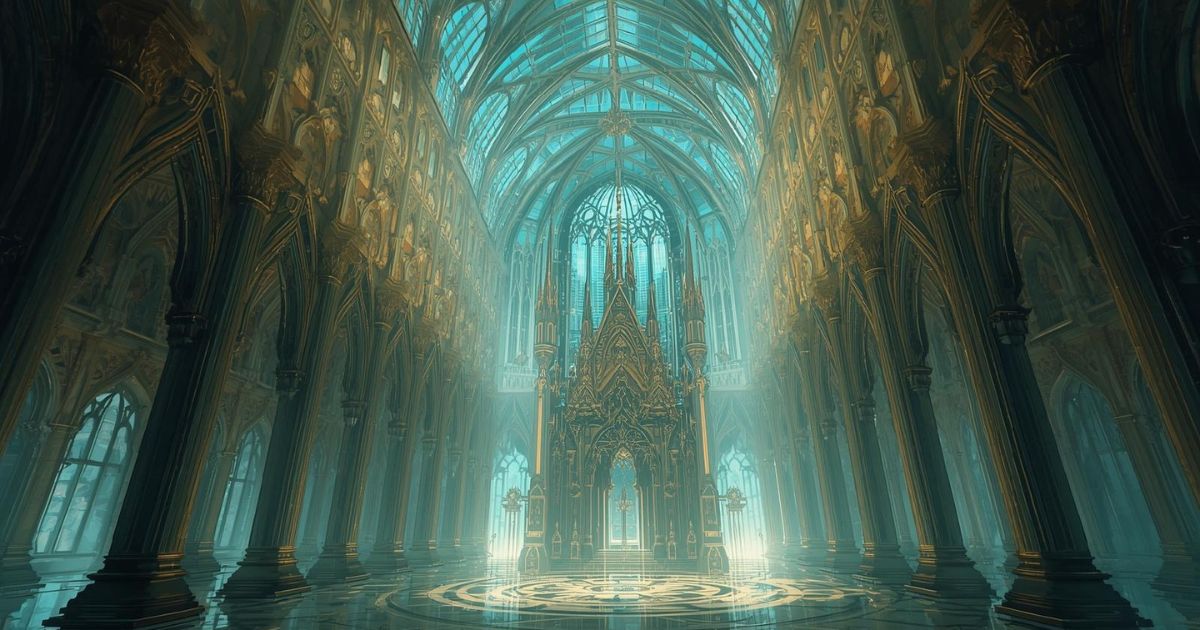
An excerpt from the original text.(complete · 8400 words)
THE CONCLUSION SETS FORTH WHAT APPEARS TO BE OUR LORD'S PRINCIPAL
INTENTION IN CONFERRING THESE SUBLIME FAVOURS ON SOULS, AND EXPLAINS
HOW NECESSARY IT IS FOR MARY AND MARTHA TO GO TOGETHER. THIS CHAPTER IS
VERY PROFITABLE.
1. Vicissitudes of the Seventh Mansion. 2. Humility produced by them.
3. Such souls free from mortal and from wilful venial sins. 4. The fate
of Solomon. 5. Holy fear. 6. These favours strengthen souls to suffer.
7. Crosses borne by the saints. 8. Effect of vision of our Lord on St.
Peter. 9. Fruits of these favours. 10. Why the spiritual marriage takes
place. 11. Love for Christ proved by our deeds. 12. True spirituality.
13. Humility and the virtues must combine with prayer. 14. Zeal of
advanced souls. 15. Strengthened by the divine Presence within them.
16. Examples of the saints. 17. Both Martha and Mary must serve our
Lord. 18. Christ's food. 19. Mary's mortification. 20. Her grief at the
Passion. 21. Can we lead souls to God? 22. How to do so. 23. Love gives
value to our deeds. 24. Conclusion.
1. You must not suppose, sisters, that the effects I mentioned always
exist in the same degree in these souls, for as far as I remember, I
told you that in most cases our Lord occasionally leaves such persons
to the weakness of their nature. The venomous creatures from the moat
round the castle and the other mansions at once unite to revenge
themselves for the time when they were deprived of their power.
2. True, this lasts but a short time--a day perhaps or a little
longer--but during this disturbance, which generally arises from some
passing event, these persons learn what benefits they derive from the
holy Company they are in. Our Lord gives them such great fortitude that
they never desert His service nor the good resolutions they have made,
which only seem to gather strength by trial, nor do their hearts ever
turn from them, even by a slight movement of the will. This trouble
rarely happens; our Lord wishes the soul to keep in mind its natural
condition so that it may be humble and may better understand how much
it owes Him, and how great a grace it has received, and so may praise
Him.
3. Do not fancy that in spite of the strong desire and determination of
these souls that they do not commit imperfections and even fall into
many sins: that is, not wilfully; for such people are given special
grace from God on this point: I mean venial sins. As far as they are
aware, they are free from mortal sins, although they do not feel
certain they may not be guilty of some of which they are ignorant.
4. This grieves their hearts sorely, as does the sight of the souls
perishing around them; although on the one hand they have strong hopes
of not being themselves among the number of the lost, yet remembering
what we are told in Holy Scripture of the fate of men who, like
Solomon, seemed the special favourites of God [437] and conversed so
familiarly with His Majesty, they cannot help fearing for themselves.
5. Let that one among you who feels most confidence on this point fear
the most, for: Blessed is the man who feareth the Lord,' as David said.
[438] May His Majesty ever protect us. Let us beg Him never to permit
us to offend Him: therein lies our greatest safety. May He be for ever
praised. Amen.
6. It would be well to tell you, sisters, the reason why God bestows
such favours on souls in this world, although you must have learned
this by the effects produced if you have considered the matter. I
return to the matter in order that none of you may think it is only for
the sake of the pleasure such persons feel, which would be a great
mistake on your part, for His Majesty can bestow no greater favour on
us than to give us a life such as was led by His beloved Son.
Therefore, as I have often told you, I feel certain that these graces
are sent to strengthen our weakness so that we may imitate Him by
suffering much.
7. We always find that those nearest to Christ our Lord bear the
heaviest cross: think of what His glorious Mother and the Apostles
bore. How do you think St. Paul went through such immense labours?
[439] We learn from his conduct the fruits of genuine visions and
contemplation which come from our Lord and not from our own
imagination, or the devil's fraud. Do you suppose that St. Paul hid
himself to enjoy these spiritual consolations at leisure and did
nothing else? You know that he never took a day's rest so far as we can
learn, nor could he have slept much since he worked all night to get
his living. [440]
8. I am delighted with St. Peter, who when fleeing from prison was met
by our Lord, Who told him He was going to Rome to be crucified again. I
never recite the Office in which this is commemorated without feeling a
special joy. [441] What effect did this vision have on St. Peter, and
what did he do? He went at once to meet his death--and our Lord did him
no small favour in finding him an executioner!
9. Oh, my sisters, how forgetful of her ease, how unmindful of honours,
and how far from seeking men's esteem should she be whose soul God thus
chooses for His special dwelling-place! For if her mind is fixed on
Him, as it ought to be, she must needs forget herself: all her thoughts
are bent on how to please Him better and when and how she can show the
love she bears Him.
10. This is the end and aim of prayer, my daughters; this is the reason
of the spiritual marriage whose children are always good works. Works
are the unmistakable sign which shows these favours come from God, as I
told you. It will do me little good to be deeply recollected when
alone, making acts of the virtues, planning and promising to do wonders
in God's service, if afterwards, when occasion offers, I do just the
opposite. I did wrong in saying, It will do me little good,' for all
the time we spend with God does us great good. Though afterwards we may
weakly fail to perform our good intentions, yet some time or other His
Majesty will find a way for us to practise them although perhaps much
to our regret. Thus when He sees a soul very cowardly, He often sends
it some great affliction, much against its will, and brings it through
this trial with profit to itself, When the soul has learnt this, it is
less timid in offering itself to Him.
11. I ought to have said, will do us little good' in comparison with
the far greater good we can gain when our works fulfil our aspirations
and our promises. She that cannot do all this at once should do it
little by little, gradually dominating her will, if she wishes to gain
fruit from prayer. Even in this little nook she will find many a chance
to praise this. Remember, this is of far more importance than I know
how to express. Fix your eyes on the Crucified One, and all will seem
easy. If His Majesty proved His love for us by such stupendous labours
and sufferings, how can you seek to please Him by words alone?
12. Do you know what it is to be truly spiritual? It is for men to make
themselves the slaves of God--branded with His mark, which is the
cross. Since they have given Him their freedom, He can sell them as
slaves to the whole world, as He was, which would be doing them no
wrong but the greatest favour. Unless you make up your minds to this,
never expect to make much progress, [442] for as I said humility is
the foundation of the whole building and unless you are truly humble,
our Lord, for your own sake, will never permit you to rear it very high
lest it should fall to the ground.
13. Therefore, sisters, take care to lay a firm foundation by seeking
to be the least of all and the slave of others, watching how you can
please and help them, for it will benefit you more than them. Built on
such strong rocks, your castle can never go to ruin. I insist again:
your foundation must not consist of prayer and contemplation alone:
unless you acquire the virtues and praise them, you will always be
dwarfs; and please God no worse may befall you than making no progress,
for you know that to stop is to go back--if you love, you will never be
content to come to a standstill.
14. Perhaps you think I am speaking of beginners and that one may rest
later on, but, as I told you, the rest such souls feel is within them:
they have less outwardly nor do they wish for it. Why, do you think,
does the soul send from its centre these inspirations, or rather
aspirations, (the messages of which I spoke), to the dwellers in the
precincts of the castle and to the surrounding mansions? To send them
to sleep? No, no, no! The soul wages a fiercer war from thence to keep
the powers, senses and the whole body from being idle, than ever it did
when it suffered in their company. Formerly it did not understand the
immense benefit its afflictions brought, though indeed they may have
been the means God used to advance it to this state.
15. Besides, the company it enjoys gives it far greater strength than
ever before. If, as David says: With the holy thou shalt be holy,'
[443] doubtless by its becoming one with the Almighty, by this
sovereign union of spirit with spirit, the soul must gather strength,
as we know the saints did, to suffer and to die. Beyond doubt, with the
force thus gained, the soul succours all within the castle and even the
very body itself, which often seems to have no feeling left in it. The
vigour the soul derives from the wine' drunk in the cellar' [444]
(into which the Bridegroom brought her and would not let her go)
overflows into the feeble body, just as the food we eat nourishes both
the head and the whole frame.
16. Indeed the body suffers much while alive, for whatever work it
does, the soul has energy for far greater tasks and goads it on to
more, for all it can perform appears as nothing. This must be the
reason of the severe penances performed by many of the saints,
especially the glorious Magdalen, who had always spent her life in
luxury. [445] This caused the zeal felt by our Father Elias for the
honour of God, [446] and the desires of St. Dominic, [447] and St.
Francis [448] to draw souls to praise the Almighty. I assure you
that, forgetful of themselves, they must have passed through no small
trials.
17. This, my sisters, is what I would have us strive for--to offer our
petitions and to practise prayer, not for our own enjoyment but to gain
strength to serve God. Let us seek no fresh path; we should lose
ourselves in ways of ease. It would be a strange thing to fancy we
should gain these graces by any other road than that by which Jesus and
all His saints have gone before. Let us not dream of such a thing:
believe me, both Martha and Mary must entertain our Lord and keep Him
as their Guest, nor must they be so inhospitable as to offer Him no
food. How can Mary do this while she sits at His feet, if her sister
does not help her? [449]
18. His food is that in every possible way we should draw souls to Him
so that they may be saved and may praise Him for ever. You may offer
two objections--first, that I said that Mary had chosen the better
part, [450] for she had already done Martha's work by waiting on our
Lord, by washing His feet and by wiping them with her hair.
19. Do you think it was a small mortification for a woman of rank, as
she was, to go through the street, perhaps by herself, for in her zeal
she never thought of how she went? Then she entered a house where she
was a stranger and had to bear the railing of the Pharisee and many
other trials. [451] It was strange to see such a woman as she had
been thus publicly change her life. With a wicked nation like the Jews,
the sight of her love for our Lord Whom they hated so bitterly was
enough to make them cast in her face her former life and taunt her with
wanting to become a saint. Doubtless she must have changed her rich
robes and all the rest. Considering how men talk now of people far less
known than she was, what must have been said of her?
20. I assure you, sisters, she won the better part after many crosses
and mortifications. Must not the mere sight of men's hatred of her
Master have been an intolerable trial? Then, think of what she endured
afterwards at our Lord's death! I believe, myself, that she did not
suffer martyrdom because she was already a martyr by grief at
witnessing the crucifixion. [452] Then what terrible pain His absence
must have caused her [453] during the long years afterwards! You see,
she was not always enjoying contemplation at the feet of our Saviour!
21. Secondly, you may say that you have neither the power nor the means
to lead souls to God; though you would willingly do so, you do not know
how, as you can neither teach nor preach as did the Apostles. I have
often written an answer to this objection though I cannot tell whether
I have done so in connection with the Castle. However, as the
difficulty probably often crosses your minds on account of the desires
our Lord gives you of serving Him, I will now speak of it again. [454]
I told you elsewhere how the devil frequently fills our thoughts with
great schemes, so that instead of putting our hands to what work we can
do to serve our Lord, we may rest satisfied with wishing to perform
impossibilities.
22. You can do much by prayer; and then, do not try to help the whole
world, but principally your companions; this work will be all the
better because you are the more bound to it. Do you think it is a
trifling matter that your humility and mortification, your readiness to
serve your sisters, your fervent charity towards them, and your love of
God, should be as a fire to enkindle their zeal, and that you should
constantly incite them to practise the other virtues? This would be a
great work and one most pleasing to our Lord: by thus doing all that is
in your power, you would prove to His Majesty your willingness to do
still more and He would reward you as if you had won Him many souls. Do
you answer: 'This would not be converting my sisters, for they are very
good already?' What business is that of yours? If they were still
better, the praise they render God would please Him more and their
prayers would be more helpful to their neighbours. [455]
23. In short, my sisters, I will conclude with this advice; do not
build towers without a foundation, for our Lord does not care so much
for the importance of our works as for the love with which they are
done. When we do all we can, His Majesty will enable us to do more
every day. If we do not grow weary, but during the brief time this life
lasts (and perhaps it will be shorter than any of you think) we give
our Lord every sacrifice we can, both interior and exterior, His
Majesty will unite them with that He offered to His Father for us on
the Cross so that they may be worth the value given them by our love,
however mean the works themselves may be.
24. May it please His Majesty, my sisters and my daughters, that we may
all meet together where we may praise Him for ever, and may He give me
grace to practice something of what I have taught you, by the merits of
His Son, Who liveth and reigneth for ever! Amen. I assure you that I am
filled with confusion at myself and I beg you, for the sake of the same
Lord, not to forget this poor sinner in your prayers.
__________________________________________________________________
[437] III. Reg. xi.
[438] Ps. cxi. 1. Beatus vir qui timet Dominum.'
[439] Though thou shouldst have been rapt up to the third heaven with
Saint Paul, thou art not thereby secured that thou shalt suffer no
adversity. I,' said Jesus, will shew him how great things he must
suffer for My name's sake' (Acts. ix. 16). To suffer, therefore, is
what waits for thee, if thou wilt love Jesus and constantly serve Him
For our merit and the advancement of our state consist not in having
many sweetnesses and consolations, but rather in bearing great
afflictions and tribulations' (Imitation, bk. ii. ch. xii. 12).
[440] i Thess. ii. 9.
[441] The Antiphon of the Magnificat at first Vespers of the Feast of
Saints Peter and Paul, June 29, in the Carmelite Breviary used by St.
Teresa is: Beatus Petrus Apostolus vidit sibi Christum occurrere.
Adorans eum ait: "Domine, quo vadis?"--"Venio Romam iterum crucifigi."
The Blessed Apostle Peter saw Christ come to meet him. Adoring Him, he
asked "Lord, where art Thou going?"--"I go to Rome to be crucified
anew." The saint at once returned to Rome and was taken by the soldiers
and crucified. See Letter of Jan. 17. 1577, note 4. Vol. II.
[442] "If thou wilt stand upon self and wilt not offer thyself freely
to My will, thine offering is not perfect, nor will there be entire
union between us.' (Imitation, bk. iv. ch. viii. 2.)
[443] Ps. xvii. 26: Cum sancto sanctus eris.'
[444] Cant. ii. 4.
[445] 'St. Mary Magdalen gave herself up to penance and contemplation
in a deep excavation of the rocks at La Baume, near Marseilles. In this
wild spot there was neither bread, water, nor even herbage. Thus she
lived for more than thirty-two years without any kind of nourishment
but that which was celestial, performing meanwhile most severe
penances.' (St. Vincent Ferrer.)
[446] III Reg. xix. 10.
[447] 'There was one sentiment within him to which may almost be given
the name of passion: it was his ceaseless burning thirst for the
salvation of souls. As his Divine Master had come into the world to
save sinners and loved them even unto death, so he, too, gave up all
that was most dear to him in his life to win souls to Christ. He was
always giving himself: it was the very key-note of his existence. He
would have sold himself as a slave, he would have been cut to pieces by
the heretics, he would spare himself neither by day nor by night, if by
any means he might save some.' (From the History of St. Dominic, by
Augusta Theodosia Drane. London, 1891, p. 256).
[448] 'St. Francis of Assisi, at the very beginning of his Order, when
he had only seven followers, said to them: "Consider, my brethren, what
is our vocation. It is not only for our own salvation that the mercy of
God has called us, but for the salvation of many other souls. It is
that we may go forth and exhort all men rather by our example than by
our words, to do penance and keep the divine commands."' (The Life of
St. Francis of Assisi, by a religious of the Order of Poor Clares,
London, 1861, p. 32).
[449] St. Luke x. 39, 40. Life, ch. xvii. 6. Rel. viii. 6. Way of Perf.
ch. xxxi. 4. Concep. ch. vii. 4.
[450] Ibid. x. 42: Maria optimam partem elegit.'
[451] Ibid. vii. 37.
[452] Marginal note in the Saint's handwriting.
[453] Life, ch. xxi. 9.
[454] Way of Perf. ch, i. 1. Found, ch. i, 6, 7. Supra, M. vi ch. vi,
2.
[455] Way of Perf. ch. vii. 7.
_________________________________________________________________
_________________________________________________________________
IHS
ALTHOUGH, as I told you, I felt reluctant to begin this work, yet now
it is finished I am very glad to have written it, and I think my
trouble has been well spent, though I confess it has cost me but
little. Considering your strict enclosure, the little recreation you
have, my sisters, and how many conveniences are wanting in some of your
convents, I think it may console you to enjoy yourselves in this
interior castle which you can enter, and walk about at will, at any
hour you please, without asking leave of your superiors. It is true you
cannot enter all the mansions by your own power, however great it may
appear to you, unless the Lord of the castle Himself admits you.
Therefore I advise you to use no violence if you meet with any
obstacle, for that would displease Him so much that He would never give
you admission to them. He dearly loves humility: [456] if you think
yourselves unworthy to enter the third mansion, He will grant you all
the sooner the favour of entering the fifth. Then, if you serve Him
well there and often repair to it, He will draw you into the mansion
where He dwells Himself, whence you need never depart unless called
away by the Prioress, whose commands this sovereign Master wishes you
to obey as if they were His own. If by her orders, you are often absent
from His presence chamber, whenever you return He will hold the door
open for you. When once you have learnt how to enjoy this castle, you
will always find rest, however painful your trials may be, in the hope
of returning to your Lord, which no one can prevent. Although I have
only mentioned seven mansions, yet each one contains many more rooms,
above, below, and around it, with fair gardens, fountains, and
labyrinths, besides other things so delightful that you will wish to
consume yourself in praising in return the great God Who has created
the soul to His own image and likeness. If you find anything in the
plan of this treatise which helps you to know Him better, be certain
that it is sent by His Majesty to encourage you, and that whatever you
find amiss in it is my own. In return for my strong desire to aid you
in serving Him, my God and my Lord, I implore you, whenever you read
this, to praise His Majesty fervently in my name and to beg Him to
prosper His Church, to give light to the Lutherans, to pardon my sins
and to free me from purgatory, where perhaps I shall be, by the mercy
of God, when you see this book (if it is given to you after having been
examined by theologians). If these writings contain any error, it is
through my ignorance; I submit in all things to the teachings of the
holy Catholic Roman Church, of which I am now a member, as I protest
and promise I will be both in life and death. May our Lord God be for
ever praised and blessed! Amen, Amen.
I finished writing this book in the convent of St. Joseph of Avila,
1577, on the Vigil of St. Andrew, for the glory of God, Who liveth and
reigneth for ever and ever! Amen.
HERE ENDS THE INTERIOR CASTLE
OR THE MANSIONS
TRANSLATED AND PRINTED BY THE
BENEDICTINES OF STANBROOK
A.D. MCMXXI
__________________________________________________________________
[456] Way of Perf. ch. xvi. 1.
__________________________________________________________________
INDEX
Absalom, III. i. 6
Acts of praise, love, etc. IV. i. 7
Agnes St., VI. v. 13
Alcantara, St. Peter of, IV. iii. 5; VI. vi. 13
Alva, Duchess of; VI. iv. 9; VII. i. 9, note 6
Amber, VI. v. 2
Anthony, St., VI. v. 9
Antonius a Spiritu Sancto, IV. iii. I; VI. i. 5, 12, 18, iii. 5; iv.
17, VI. 11
Apostles, our Lord's prayer for, VII. ii. 10; sufferings of, VII. iv. 7
Augustine, St., IV. iii. 3; VI. vii. 11
Avila, Bl. John of; VI. ix. 11; St. Joseph's convent at, VI. vi. 14;
VII. iv. conclusion
Awe, produced by visions, VI. ix. 4
Babe, likeness of; IV. iii. 9
Bañez, Fr. Dominic, VI. ix. 11
Bee, likeness of; I. ii. 9; V. ii. 2
Beggar, likeness of; IV. iii. 5
Beginners, II. i. passim
Bethsaida, the blind man at the pool of; I. i. 10
Blindness, spiritual, VI. iv. 15
Body, the setting of the diamond, I. i. 3; the outer walls of the
Castle, I. i. 3; care of, III. ii. 9, 11; VI. iii. 12; strength of; not
necessary in prayer of Union, V. i. 2; effect of prayer of Union on, V.
i. 3
Books, spiritual insufficiency of, IV. iii. 4; use of; V. ii. 3
Bride, in the Canticle, V. i. 10; and Bridegroom, V. iv. 3
Butterfly, likeness of, V. ii. I, 2. 6, 7, 8; iv. I; VI. iv. 1, Vi. I,
3; xi. I; VII. iii. 1, 10
Cecilia, St., V. iv. 1
Call, God's, to the soul, II. i. 4-6; IV. iii. 2, 3
Carelessness in prayer, I. i. 9
Carmel, our Lady of; Preface, p. 36; III. i. 5; Order of,
Constitutions, I. ii. 7; V. i. 2; Rule of, VI. vi. 7
Carmelite nuns, discalced, Preface, p. 36; I. i. 9; VI. vi. 14
Castle, Interior, Preface, argument, p. 35; I. i. 2, 3, ii. I; VI. iii.
27, iv. 17; description, I. ii. 8; entrance to, I. i. 7; foundation of,
VII. iv. 13; prayer and meditation, I. i. 9, 11; precincts of, I. i. 10
Caterpillar, likeness of, V. ii. 6
Cellar of wine, V. i. 10, ii. 11
Certitude of the soul, a sign of union, V. i. 8, 9
Changes wrought in the soul by prayer of Union, V. ii. 7, 10, 12
Charity, works of; only remedy in times of darkness, VI. i. 24; effect
of spiritual matrimony, VII. iv. 16-23
Christ's face, VI. ix. 12; sufferings, our pains joined to, V. ii. 4
Church, holy Roman Catholic, Preface, p. 36; VII. iv. conclusion; love
of, IV. i. 7
Clearness, a sign that locutions come from God, VI. iii. 20
Communion, holy, VII. ii. 1
Complaints, loving, VI. ii. 3
Confession, regular, V. ii. 3
Confessor, to be consulted on locutions, VI. iii. 18; and on visions,
VI. ix. 10; if mistaken, VI. viii. 10, 11; timorous, VI. i. 15-19
Confidence, II. i. 17
Confirmation in grace, VII. ii. 13
Conformity with the will of God, II. i. 15; III. ii. 5, 8; VI. xi. 5.
Consolations, divine (prayer of Quiet), III. ii. 13; IV. i. 4, 5, ii.
2, 4, 5, 6, iii. 7; earthly, no use, VI. i. 22
Contempt, III. ii. 6; for earthly things, an effect of raptures, VI. V.
13
Contradiction, by good people, VI. i. 5
Courage, necessary, II. i. 13; III. ii. 10; VI. i. 2, 3, iv. I, V. 7,
14.
Cross, II. i. 15; necessary in prayer of Union, V. ii. 8; of saints,
VII. iv. 7
Crystal, I. i. 2, ii. 3, 4
Darkness, dispelled by God, VI. i. 20; different kinds of, I. ii. I.
VII. i. 4
David, King, III. i. 6; VI. x. 5; VII. iv. 5, 15
Deaf-mutes, II. i. 3, 6
Deception, fear of, VI. i. 16; satanic, V. iv. 5, 6, 7; where
impossible, VI. ii. 9-12
Defects, impeding union, V. iii. 6
Desires, of death, VI. xi. 9; VII. iii. 14; generous, IV. i. 7; to
serve God, better than visions, etc., VI. ix. 20, 2 i; VII. iii. 5; of
suffering, VII. iii. 4; sometimes to be checked, VI. vi. 5; to see God,
VI. vii. 3
Detachment, III. i. 13, ii. 7
Detraction, I. ii. 22
Devil, I. ii. 2; like a file, I. ii. 19 deceives by false favours, IV.
iii. 10-13; V. ii. 8; a good painter, VI. ix. 11; unable to interfere
in prayer of Union, V. i. 6.; and in intellectual visions, VI. x. i;
wiles of, I. ii. 13, 18, 20; II, i. 11; IV. iii. 10; VI. i. 25
Devotion, sensible, see Sweetness in prayer
Diamond, soul likened to, I. i.2, 3
Dilatation of heart, IV. i. 5, ii. 5
Direction necessary, II. i. 18; III. ii. 18
Directors, learned and unlearned, V. i. 7; VI. i. 16-19
Distractions, in prayer, I. i. 10; IV. i. 10, 11
Dominic, St., V. iv. 4; VII. iv. 16
Dove, soul likened to, V. iii. 1; iv. I; VI. ii. I, xi. I
Drowsiness, V. i. 3, 5
Dryness, in prayer, III. i. 9, 10, 15
Easter, trance on the feast of, VI. xi. 8.
Ecstasies, rare in Seventh Mansions, VII. iii. 10
Elias, St., VI. vii. 10; VII. iv. 16
Energy, III. ii. 10, 11
Enriquez, Doña Maria, VI. iv. 9; VII. i. 9
Entering within oneself; IV. iii. I, 3, 4
Envy, spiritual, I. i. 5
Espousals, spiritual, V. iv. 1-3; VI. ii. 1, iv. i; difference between,
and matrimony, VII. ii. 2, 4
Exclamations, VII. ii. 7
Exterior works do not interfere with interior life, VII. iii. 3
Faculties, given to be used, IV. iii. 6; suspension of, VI. iv. 17
Faults, slight, V. iv. 6
Favours, divine, not to be disbelieved, I. i. 6.; value of; III, ii.
16, 17; how to be used, IV. iii. 9, 10; false, IV. iii. 11, 12; V. ii.
8; distinction from divine, IV. iii. 12
Fear of illusions, VI. ix. 8
Ferrer, St. Vincent, VII. iv. 16
Fervour, supernatural, VI. ii. 14; VII. iv. 14
File, devil likened to a, I. ii. 19
Fire of burning coal, God likened to, VI. ii. 6
Flight of the spirit, IV. i. 10; VI. v. I, 2, 8, 10-13
Francis, St., V. iv. 4; VI. vi. 12; VII. iv. 16
Fraternal charity, V. iii. 11, 12
Fretting under trials, III. ii. I, 2
Friendship, spiritual, II. i. 12
Fuente, Don Vicente de, VII. ii. 7
Gaze, the simple, VI. vii. 14
Gedeon, II. i. 13
Give all to God, V. i. 3
God compels the soul to listen when He speaks, VI. iii. 27
God's special care of souls most advanced, VII. iii. 8
Gonzalez, Giles, VII. i. 9
Gratian, Father Jerome, I. ii. 21; IV. i. 11; V. i. 9
Grief; natural and supernatural, V. ii. 11, 13, iii. 7
Hart, wounded, VII. iii. 12
Heathen philosophers, V. iii. 7
Hell, VI. xi. 7; fear of, lost, VI. vii. 4; torments of, milder than
those of the last Judgment, VI. ix. 4
Human praise and blame alike troublesome, VI. i. 7-11
Humanity, sacred of our Lord, meditation on, VI. vii. 6-19; vision of,
VI. ix. 2; VII.
Humility, effect of supernatural favours, VI. iii. 25; v. 5, ix. 9;
false, I. ii. II, 12; always necessary, I. ii. 9, 10, 12; III. i. 13,
15, ii. 3, 8; IV. ii. 8; from vision of a soul in mortal sin, I. ii. 5;
want of I. 15; III. ii. 12; humility and truth, VI. x. 6
Hysteria, see Melancholia
Ignatius of Loyola, St., V. iv. 4
Ignorance, injurious, IV. i. 9, 13; of a priest, V. i. 7, 9
Imagination, IV. i. 8-10, iii. 13; VI. i. 1; difference between it and
visions, VI. ix. 5, 6; locutions proceeding from, VI. iii. 16, 17
Imitation of Christ, I. i. 8; II. i. 8; V. i. 3, iii. 3; VII. iv. 7, 12
Impulses, VI. ii. 12, xi. per totem.
Incense, spiritual, IV. ii. 6; VI. ii. 14
Inebriation, spiritual, VI. iv. 18, 19, vi. 15
Insecurity, III. i. 3
Intellectual locutions, VI. iii. 19-24
Interior Castle, see Castle Isabel of Jesus, VI. xi. 8
Jacob, VI. iv. 6
Jerome, St., VI. ix. 4
Jesus, I. ii. 4; ever our guide, VI. vii. 7, 8; our model, I. ii. 12;
His Passion, V. ii. VI. vii. 8, 9
Jewels, V. i. 2; VI. iv. 9, v. 13, ix. I.
John of Avila, Blessed, VI. ix. 11 n.
John of the Cross, St., I. i. 2, 4; IV. I, 3, iii. 3, 6; V. i. 6, 9;
VI. ii. 3, 14, iii. 5, 7 sqq., iv. 21, v. 2, vii. 8, 10, viii. 3. ix.
20 xi. 4, 6; VII. i. 13, ii. 13
Jonas, prophet, V. iii. 6. 14
Jordan, river, VI. vi. 3
Josue, VI. iii. 27
Joy at seeing locutions fulfilled, VI. iii. 13
Jubilation, I. ii. 5; VI. vi. 11-1 5
Judas, V. iii. 2, iv. 5
Judgment, last, VI. ix. 4
Kernel of palmito, I. ii. 8
Kiss of the Bridegroom, VII. iii. 12
Lazarus, V. iii. 5
Leon, Fray Luis de, III. i. 3; VII. ii. 7
Liberty of spirit, I. ii. 9
Light, I. ii. 15; supernatural, VI. v. 8
Likeness of Christ, VI. ix. 11
Lizards, V. i. 5
Locutions, VI. iii. per totum; Be not troubled,' ib. 7; VI. iv. 21; It
is I,' VI. iii. 8, viii. 3, 4; Be at peace,' VI. iii. 8; VII. ii. 2; To
care for God's affairs,' VII. 11. I, iii. 1
Loss of highly favoured souls, IV. iii. 10
Lot's wife, I. i. 8
Love of enemies, VI. i. 12; of God, IV. i. 7; V. iii. 7, 8; of
neighbour, V. iii. 7, 8
Ludolf of Saxony, VI. ix. 4
Lutherans, VII. iv. conclusion
Mansions, I. i. 2, 4, ii. 4, 8, 15; VII. iv. conclusion
Martha, VII. i. 14, iv. 17
Martin, St., VI. vi. 6
Mary, Blessed Virgin, our help, I. ii. 14; meditation on, VI. vii. 8;
sufferings of, VII. iv. 7
Mary Magdalen, St., I. i. 5; VI. vii. 5, xi. 1 2; VII. i. 14, ii. 9,
iv. i6-20
Matrimony, spiritual, VII. I, 7, ii. per totum; difference between, and
Espousals, VII. ii. 2; effects of, VII. iv. 10 sqq.; in this state soul
free from sin, VII. iv. 3; and confirmed in grace, VII. ii. 13
Meditation, VI. vii. 11-13
Melancholia, (hysteria), III. i 9; IV. ii. 1, 2; VI. i. 15, iii. 2, 3,
vi. 7, 15
Memento, VI. iv. 14
Mendoza, Don Alvaro de, VII. iii. 4
Moses, VI. iv. 7
Mount Carmel, see Carmel
Music, VII. iii. 10
Mysteries, revealed during raptures, VI. iv. 10, 12, 13
Noe's Ark, VII. iii. 12
Nuptials, spiritual, see Matrimony
Obedience, preface, p. 3 5; I. i. 1; III. i. 4, ii. 18
Obligations, of a soul enraptured, VI. v. 4; on account of intellectual
visions, VI. viii. 8
Odour, supernatural, VI. ii. 14
Olive branch, VII. iii. 12
Padranos, Fr. Juan de, VI. viii. 3
Palace, God likened to, VI. x. 3; VII. ii. 15
Palmito, I. ii. 8
Passion of Christ, V. ii. 13; becomes the property of the soul, VI. v.
6; meditation on, VI. vii. 8, 9, 13-15
Paul, St., I. i. 5; III. i. 13; VI. vii. 5, ix. 7; VII. i. 8, ii. 6,
iv. 7; (hermit) VI. v. 9
Peace, II. i. 16; following upon Spiritual Matrimony, VII. ii. 10, 13,
iii. 9, 13; Peace be with you,' V. i. 10; VII. ii. 2
Penances, indiscreet, I. ii. 19.; too discreet, III. ii. 9
Perfection, true, I. ii. 20
Perfume, IV. ii. 6; VI. ii. 14
Perseverance, II. i. 17, 18; III. i. 1
Peter, St., III. i. 13; VI. vii. 5; VII. iv. 8
Phoenix, VI. iv. 3
Philippus a Ss. Trinitate, IV. i. 3, ii. 8, iii. 1; V. i. 8, iii. 4,
iv. 3; VI. i. 18, iv. 3 sqq., v. 2, 10, vi. 11
Pictures, holy, VII. iii. 10
Pilate, VI. x. 5
Prayer, St. Teresa's writings on, Preface, p. 36; books on, I. i. 8;
IV. iii. 4, 5; no difference between vocal and mental, I. i 9; talking
inconsiderately to God is not prayer, I. i. 9; need of guidance in, I.
ii. 7; II. i. 18; perseverance in, II. i. 19; prayer and mortification
a great work, VII. iv. 22
Preparation for prayer of Union, V. ii. 4, 5
Presence, spiritual of our Lord, VI. viii. 2-6; VII. iii. 5, 7; of
Saints, ib. 7; of the Blessed Trinity, VII. i. 9-13
Presence chamber, God's, VII. i. 3, 7
Prioress, advice to, IV. iii. 12; VI. iii. 2, vii. 16, viii. 11, 12
Prophecies, VI. iii. 11, 12
Purgatory, VI. xi. 6
Quiet, prayer of, IV. iii. 7; different from prayer of Union, V. i. 5.
See also Consolations, divine
Raptures, VI. iv. per totum; effects of, VI. vi. i; false, IV. iii. 11;
VI. iv. 22; rare in Seventh Mansion, VII. iii. 10 Recollection, prayer
of, IV. iii. 1, 3, 4; different from prayer of Quiet, IV. iii. 7
Reptiles, I. i. 11, II. ii. 15; II. i. 16; IV. i. 3; VII. ii. 15, iv, 1
River of living waters, I. ii. 1, 3
Sacrament, Blessed, V. i. 9
Samaritan woman, VI. xi. 5
Saul, king, V. iii. 2; VI. ix. 18
Schram, Dom, VI. iii. 10; viii. 10
Search for God, VI. vii. 11
Secrecy of raptures, VI. iv. 20, 21, viii. 12
Security, III. i. 1, 2
Self-knowledge, I. ii. 9-11; IV. i.
13; V. iv. 8; VI. V. 12
Senses, I, ii. 4; IV. iii. 1; VI, iv. 17
Sepulchre, V. i. 10
Sermons, V. ii. 3; VII. 10
Seville, III. ii. 10
Siena, St. Catharine of; VI. v. 2
Silkworm, likeness of, V. ii. 1-6; 5
Sin, mortal, I. ii. 1-3; committed under the very eyes of God, VI. x.
2, 3
Sinners in prison, VII. i. 4, 5
Slaves of Christ, VII. iv. 12; of our neighbour, VII. iv. 13
Sleep of the soul in prayer of Union, V. i. 3
Solitude, desire of, VI. vi. 1, 2
Solomon, III. i. 6; VII. iii. 9, IV. 4
Sorrow for sins increasing with graces, VI. vii. 1-5
Soul likened to a castle, I. i, 2; to a crystal, I. ii. 3; to a garden,
I. i. 2; to a ship, VI. v. 3; dignity of, I. i. 3; a soul that does not
pray is lame, I. i. 8; soul in mortal sin, I. ii. 1-5; VII. i. 4-6; the
soul and its faculties, VII. i. 15, 16
Spark from the fire of God, VI. ii. 6, 7
Standstill in virtue, V. iv. 10
Struggles, interior, II. i. 9, 10
Sufferings, bodily, VI. i. 13, 14
Sun, source of light, I. ii. I, 3-5, 8
Sweetness in prayer, (sensible devotion), IV. i. 4-7, ii. 4.
Tears, IV. i. 4, 6; V. ii. 9; VI. vi. 6, 9
Temptations, advantages of, IV. i. 3; particularly fierce before
Espousals, V. iv. 4, 7
Teresa, St., consoled by Christ, VI. v. 6; cures a melancholy nun, IV.
iii. 12; desires death, VI. vii. 3; desires others to serve God better,
V. iii. 2; her experience in spiritual matters, V. i. 7, iv. 4; feels
no pain during ecstasies, IV. i. 11; feels presence of our Lord, VI.
viii. 2-5; of the Saints, ib. 7; former mistakes, VI. vii. 18, 19;
suffers from headaches, Preface, pp. 35, 36; IV. i. 10; never suffered
from hysteria, IV. ii. 2; locutions, vide sub voce; has more light now
than formerly, I. ii. 7; IV. i. i, ii. 6; praises God for favours
bestowed on others, III. ii. 16; profits by vision of a soul in mortal
sin, I. ii. 1, 2, 5, VII. i. 4; by heavenly visions, VII. i. 14; her
raptures, vide sub voce; readiness to suffer, VI. xi, 10;
self-disparagement, Preface, p. 37; I. ii. 7; III. i. 4, 5, 7; submits
her writings to the judgment of the Church, Preface, p. 36; VII. iv.
conclusion; suffers at the sight of sin, V. ii. 13; transverberation,
VI. xi. 2, 4, 8; is troubled by turmoil of thoughts, IV. 18; troubles
she went through, VI, i. 5-27; vi. 1, viii. 12; her visions, VI. ix.
20; VII. 1; of the Blessed Trinity, VII. i. 9 sqq; wound of love, VI.
ii. 9; writings, Preface, p. 36; I. ii. 6, 7; V. iv. 12
Theriac, II. i. 16
Thomas Aquinas, St., V. i. 6; VI. v. 8
Toledo, St. Joseph's convent at, Preface, p. 36
Tortoise, IV. iii. 4.
Trance, false, IV. iii. 11, 12; VI. iv. 22; at Easter, VI. xi. 8
Transverberation, VI. xi. 2, 4, 8
Tree of life, I. ii. I, 3
Trinity, Blessed, feast of, Preface, p. 36; vision of, VII. i. 9;
presence of, VII. i. 9-13
Troubles preceding perfect union, VI. i. 3-20
Understanding, IV. i. 8
Union, prayer of; different from prayer of Quiet, V. i. 5; leads to
Espousals, V. iv. 2; with vanities of the world, V. i. 6, 7; with the
Will of God, V. iii. 5-8
Ursula, St., V. iv. 4
Velasquez, Don Alonso, VII, 13
Virtues, real and imaginary, V. iii. 9, 10
Visions, corporal, St. Teresa never saw one, VI. ix. 3; imaginary, VI.
iv. 6, v. 9, ix, per totem; intellectual, VI. iv. 10, 11; v. 9; viii.
per totem; x, per totum; not to be sought or wished for, VI. ix. 13-19;
of a soul in mortal sin. I. ii. 2, 5
Watchfulness, III. i. 2; V. iv. 8, 9
Water, spiritual, I. ii, 3; IV. ii. 3, 4, 8; iii. 8; VI. v. 3; xi, 5;
VII. ii. 8, 13
Wax, soul likened to, V. ii, 11, 12; wax candles, VII. ii. 5
Will of God, union with, V. iii. 4, 5; VI. xi. 5
Works, good, II. i. 20; III. i, 12, 14, ii. 1 5; V. iii. 11; VI, i. 24;
VII. iv. 17-24
World, persons in the, III. i. 8, 9; ii. 4, 5
Worldliness, I. ii, i 6, 17; II. i, 7
Wound of love, VI. ii. 2-12; xi. 2-4, 10-12
Zeal, indiscreet, I. ii. 19, 21; III. ii. 19
Zebedee, sons of; VI, xi. 12
__________________________________________________________________
Indexes
__________________________________________________________________
Index of Scripture References
Genesis
[1]1:26 [2]8:10-11 [3]19:26 [4]28:2
Exodus
[5]2 [6]14 [7]33:11
Numbers
[8]12:7-8 [9]13:24
Joshua
[10]3
Judges
[11]7:5
Psalms
[12]1:3 [13]1:3 [14]17:26 [15]77:24 [16]111:1 [17]111:1
[18]113:3 [19]115:11 [20]118:32 [21]118:32 [22]144:3
[23]148:5
Proverbs
[24]8:29 [25]8:31
Song of Solomon
[26]1 [27]1:3 [28]2:4 [29]3:2 [30]8:1
Isaiah
[31]30:15
Matthew
[32]4:20 [33]6:21 [34]7:26-27 [35]10:24 [36]19:21 [37]20:15
[38]20:15 [39]20:16 [40]20:22 [41]20:22 [42]25:41 [43]26
[44]26:41
Mark
[45]10:22 [46]14:6
Luke
[47]7:50 [48]10:39-40 [49]10:40 [50]12:48 [51]15:16
[52]15:23 [53]17:10 [54]17:21 [55]18:13 [56]22:15 [57]24:36
[58]24:36
John
[59]4:15 [60]4:20 [61]5:5 [62]8:12 [63]9:2 [64]9:6
[65]11:16 [66]11:35-36 [67]12:7 [68]14:2 [69]14:6 [70]14:9
[71]14:23 [72]16:7 [73]17:2 [74]17:2 [75]17:20 [76]17:22-23
[77]18:38 [78]20:19 [79]20:19 [80]20:19
Acts
[81]9:3-4 [82]9:6 [83]9:8 [84]9:16 [85]9:18
Romans
[86]8:18
1 Corinthians
[87]4:7 [88]6:17
2 Corinthians
[89]4:6 [90]12:2 [91]12:2-4
Galatians
[92]2 [93]2:20
Philippians
[94]1:21
Colossians
[95]3:3
Prayer of Manasseh
[96]1:18
Sirach
[97]3:27
__________________________________________________________________
Index of Pages of the Print Edition
[98]1 [99]5 [100]7 [101]8 [102]9 [103]10 [104]11 [105]12
[106]13 [107]14 [108]15 [109]16 [110]17 [111]18 [112]19 [113]20
[114]21 [115]22 [116]23 [117]24 [118]25 [119]26 [120]27 [121]28
[122]29 [123]30 [124]31 [125]32 [126]33 [127]34 [128]35 [129]36
[130]37 [131]38 [132]39 [133]40 [134]41 [135]42 [136]43 [137]44
[138]45 [139]46 [140]47 [141]48 [142]49 [143]50 [144]51 [145]52
[146]53 [147]54 [148]55 [149]56 [150]57 [151]58 [152]59 [153]60
[154]61 [155]62 [156]63 [157]64 [158]65 [159]66 [160]67 [161]68
[162]69 [163]70 [164]71 [165]72 [166]73 [167]74 [168]75 [169]76
[170]77 [171]78 [172]79 [173]80 [174]81 [175]82 [176]83 [177]84
[178]85 [179]86 [180]87 [181]88 [182]89 [183]90 [184]91 [185]92
[186]93 [187]94 [188]95 [189]96 [190]97 [191]98 [192]99
[193]100 [194]101 [195]102 [196]103 [197]104 [198]105 [199]106
[200]107 [201]108 [202]109 [203]110 [204]111 [205]112 [206]113
[207]114 [208]115 [209]116 [210]117 [211]118 [212]119 [213]120
[214]121 [215]122 [216]123 [217]124 [218]125 [219]126 [220]127
[221]128 [222]129 [223]130 [224]131 [225]132 [226]133 [227]134
[228]135 [229]136 [230]137 [231]138 [232]139 [233]140 [234]141
[235]142 [236]143 [237]144 [238]145 [239]146 [240]147 [241]148
[242]149 [243]150 [244]151 [245]152 [246]153 [247]154 [248]155
[249]156 [250]157 [251]158 [252]159 [253]160 [254]161 [255]162
[256]163 [257]164 [258]165 [259]166 [260]167 [261]168 [262]169
[263]170 [264]171 [265]172 [266]173 [267]174 [268]175 [269]176
[270]177 [271]178 [272]179 [273]180 [274]181 [275]182 [276]183
[277]184 [278]185 [279]186 [280]187 [281]188 [282]189 [283]190
[284]191 [285]192 [286]193 [287]194 [288]195 [289]196 [290]197
[291]198 [292]199 [293]200 [294]201 [295]202 [296]203 [297]204
[298]205 [299]206 [300]207 [301]208 [302]209 [303]210 [304]211
[305]212 [306]213 [307]214 [308]215 [309]216 [310]217 [311]218
[312]219 [313]220 [314]221 [315]222 [316]223 [317]224 [318]225
[319]226 [320]227 [321]228 [322]229 [323]230 [324]231 [325]232
[326]233 [327]234 [328]235 [329]236 [330]237 [331]238 [332]239
[333]240 [334]241 [335]242 [336]243 [337]244 [338]245 [339]246
[340]247 [341]248 [342]249 [343]250 [344]251 [345]252 [346]253
[347]254 [348]255 [349]256 [350]257 [351]258 [352]259 [353]260
[354]261 [355]262 [356]263 [357]264 [358]265 [359]266 [360]267
[361]268 [362]269 [363]270 [364]271 [365]272 [366]273 [367]274
[368]275 [369]276 [370]277 [371]278 [372]279 [373]280 [374]281
[375]282 [376]283 [377]284 [378]285 [379]286 [380]287 [381]288
[382]289 [383]290 [384]291 [385]292 [386]293 [387]294 [388]295
[389]296 [390]297 [391]298 [392]299 [393]300 [394]301 [395]302
[396]303 [397]304 [398]305 [399]306 [400]307
__________________________________________________________________
This document is from the Christian Classics Ethereal
Library at Calvin College, http://www.ccel.org,
generated on demand from ThML source.
References
1. file:///ccel/t/teresa/castle2/cache/castle2.html3?scrBook=Gen&scrCh=1&scrV=26#v.i-p4.8
2. file:///ccel/t/teresa/castle2/cache/castle2.html3?scrBook=Gen&scrCh=8&scrV=10#xi.iii-p15.5
3. file:///ccel/t/teresa/castle2/cache/castle2.html3?scrBook=Gen&scrCh=19&scrV=26#v.i-p10.4
4. file:///ccel/t/teresa/castle2/cache/castle2.html3?scrBook=Gen&scrCh=28&scrV=2#x.v-p9.3
5. file:///ccel/t/teresa/castle2/cache/castle2.html3?scrBook=Exod&scrCh=2&scrV=0#x.v-p10.2
6. file:///ccel/t/teresa/castle2/cache/castle2.html3?scrBook=Exod&scrCh=14&scrV=0#x.vii-p5.3
7. file:///ccel/t/teresa/castle2/cache/castle2.html3?scrBook=Exod&scrCh=33&scrV=11#iii-p26.4
8. file:///ccel/t/teresa/castle2/cache/castle2.html3?scrBook=Num&scrCh=12&scrV=7#iii-p26.5
9. file:///ccel/t/teresa/castle2/cache/castle2.html3?scrBook=Num&scrCh=13&scrV=24#x.vi-p15.2
10. file:///ccel/t/teresa/castle2/cache/castle2.html3?scrBook=Josh&scrCh=3&scrV=0#x.vii-p5.4
11. file:///ccel/t/teresa/castle2/cache/castle2.html3?scrBook=Judg&scrCh=7&scrV=5#vi.i-p14.2
12. file:///ccel/t/teresa/castle2/cache/castle2.html3?scrBook=Ps&scrCh=1&scrV=3#v.ii-p3.3
13. file:///ccel/t/teresa/castle2/cache/castle2.html3?scrBook=Ps&scrCh=1&scrV=3#xi.ii-p18.2
14. file:///ccel/t/teresa/castle2/cache/castle2.html3?scrBook=Ps&scrCh=17&scrV=26#xi.iv-p17.2
15. file:///ccel/t/teresa/castle2/cache/castle2.html3?scrBook=Ps&scrCh=77&scrV=24#vi.i-p14.7
16. file:///ccel/t/teresa/castle2/cache/castle2.html3?scrBook=Ps&scrCh=111&scrV=1#vii.i-p8.3
17. file:///ccel/t/teresa/castle2/cache/castle2.html3?scrBook=Ps&scrCh=111&scrV=1#xi.iv-p7.2
18. file:///ccel/t/teresa/castle2/cache/castle2.html3?scrBook=Ps&scrCh=113&scrV=3#x.vii-p5.2
19. file:///ccel/t/teresa/castle2/cache/castle2.html3?scrBook=Ps&scrCh=115&scrV=11#x.xi-p7.2
20. file:///ccel/t/teresa/castle2/cache/castle2.html3?scrBook=Ps&scrCh=118&scrV=32#viii.i-p7.2
21. file:///ccel/t/teresa/castle2/cache/castle2.html3?scrBook=Ps&scrCh=118&scrV=32#viii.ii-p8.2
22. file:///ccel/t/teresa/castle2/cache/castle2.html3?scrBook=Ps&scrCh=144&scrV=3#xi.i-p3.2
23. file:///ccel/t/teresa/castle2/cache/castle2.html3?scrBook=Ps&scrCh=148&scrV=5#x.iv-p9.2
24. file:///ccel/t/teresa/castle2/cache/castle2.html3?scrBook=Prov&scrCh=8&scrV=29#x.vi-p5.3
25. file:///ccel/t/teresa/castle2/cache/castle2.html3?scrBook=Prov&scrCh=8&scrV=31#v.i-p4.6
26. file:///ccel/t/teresa/castle2/cache/castle2.html3?scrBook=Song&scrCh=1&scrV=0#xi.iii-p15.2
27. file:///ccel/t/teresa/castle2/cache/castle2.html3?scrBook=Song&scrCh=1&scrV=3#ix.i-p14.2
28. file:///ccel/t/teresa/castle2/cache/castle2.html3?scrBook=Song&scrCh=2&scrV=4#xi.iv-p17.4
29. file:///ccel/t/teresa/castle2/cache/castle2.html3?scrBook=Song&scrCh=3&scrV=2#x.v-p17.3
30. file:///ccel/t/teresa/castle2/cache/castle2.html3?scrBook=Song&scrCh=8&scrV=1#viii.i-p13.3
31. file:///ccel/t/teresa/castle2/cache/castle2.html3?scrBook=Isa&scrCh=30&scrV=15#vii.ii-p20.3
32. file:///ccel/t/teresa/castle2/cache/castle2.html3?scrBook=Matt&scrCh=4&scrV=20#vii.i-p15.2
33. file:///ccel/t/teresa/castle2/cache/castle2.html3?scrBook=Matt&scrCh=6&scrV=21#v.i-p12.4
34. file:///ccel/t/teresa/castle2/cache/castle2.html3?scrBook=Matt&scrCh=7&scrV=26#vi.i-p14.5
35. file:///ccel/t/teresa/castle2/cache/castle2.html3?scrBook=Matt&scrCh=10&scrV=24#vi.i-p21.2
36. file:///ccel/t/teresa/castle2/cache/castle2.html3?scrBook=Matt&scrCh=19&scrV=21#vii.i-p11.2
37. file:///ccel/t/teresa/castle2/cache/castle2.html3?scrBook=Matt&scrCh=20&scrV=15#v.i-p7.2
38. file:///ccel/t/teresa/castle2/cache/castle2.html3?scrBook=Matt&scrCh=20&scrV=15#viii.i-p5.3
39. file:///ccel/t/teresa/castle2/cache/castle2.html3?scrBook=Matt&scrCh=20&scrV=16#ix.i-p4.3
40. file:///ccel/t/teresa/castle2/cache/castle2.html3?scrBook=Matt&scrCh=20&scrV=22#vi.i-p16.3
41. file:///ccel/t/teresa/castle2/cache/castle2.html3?scrBook=Matt&scrCh=20&scrV=22#x.xii-p17.2
42. file:///ccel/t/teresa/castle2/cache/castle2.html3?scrBook=Matt&scrCh=25&scrV=41#x.x-p6.2
43. file:///ccel/t/teresa/castle2/cache/castle2.html3?scrBook=Matt&scrCh=26&scrV=0#x.xii-p17.4
44. file:///ccel/t/teresa/castle2/cache/castle2.html3?scrBook=Matt&scrCh=26&scrV=41#vi.i-p21.4
45. file:///ccel/t/teresa/castle2/cache/castle2.html3?scrBook=Mark&scrCh=10&scrV=22#vii.i-p14.2
46. file:///ccel/t/teresa/castle2/cache/castle2.html3?scrBook=Mark&scrCh=14&scrV=6#x.xii-p17.5
47. file:///ccel/t/teresa/castle2/cache/castle2.html3?scrBook=Luke&scrCh=7&scrV=50#xi.ii-p11.4
48. file:///ccel/t/teresa/castle2/cache/castle2.html3?scrBook=Luke&scrCh=10&scrV=39#xi.iv-p19.2
49. file:///ccel/t/teresa/castle2/cache/castle2.html3?scrBook=Luke&scrCh=10&scrV=40#xi.i-p18.2
50. file:///ccel/t/teresa/castle2/cache/castle2.html3?scrBook=Luke&scrCh=12&scrV=48#x.vi-p6.2
51. file:///ccel/t/teresa/castle2/cache/castle2.html3?scrBook=Luke&scrCh=15&scrV=16#vi.i-p11.2
52. file:///ccel/t/teresa/castle2/cache/castle2.html3?scrBook=Luke&scrCh=15&scrV=23#x.vii-p14.2
53. file:///ccel/t/teresa/castle2/cache/castle2.html3?scrBook=Luke&scrCh=17&scrV=10#vii.i-p15.4
54. file:///ccel/t/teresa/castle2/cache/castle2.html3?scrBook=Luke&scrCh=17&scrV=21#v.i-p10.2
55. file:///ccel/t/teresa/castle2/cache/castle2.html3?scrBook=Luke&scrCh=18&scrV=13#xi.iii-p16.2
56. file:///ccel/t/teresa/castle2/cache/castle2.html3?scrBook=Luke&scrCh=22&scrV=15#ix.ii-p14.2
57. file:///ccel/t/teresa/castle2/cache/castle2.html3?scrBook=Luke&scrCh=24&scrV=36#vi.i-p17.3
58. file:///ccel/t/teresa/castle2/cache/castle2.html3?scrBook=Luke&scrCh=24&scrV=36#x.iv-p10.2
59. file:///ccel/t/teresa/castle2/cache/castle2.html3?scrBook=John&scrCh=4&scrV=15#x.xii-p7.2
60. file:///ccel/t/teresa/castle2/cache/castle2.html3?scrBook=John&scrCh=4&scrV=20#ix.iii-p10.2
61. file:///ccel/t/teresa/castle2/cache/castle2.html3?scrBook=John&scrCh=5&scrV=5#v.i-p12.2
62. file:///ccel/t/teresa/castle2/cache/castle2.html3?scrBook=John&scrCh=8&scrV=12#x.viii-p10.3
63. file:///ccel/t/teresa/castle2/cache/castle2.html3?scrBook=John&scrCh=9&scrV=2#v.i-p7.4
64. file:///ccel/t/teresa/castle2/cache/castle2.html3?scrBook=John&scrCh=9&scrV=6#x.v-p18.2
65. file:///ccel/t/teresa/castle2/cache/castle2.html3?scrBook=John&scrCh=11&scrV=16#vii.i-p4.2
66. file:///ccel/t/teresa/castle2/cache/castle2.html3?scrBook=John&scrCh=11&scrV=35#ix.iii-p7.2
67. file:///ccel/t/teresa/castle2/cache/castle2.html3?scrBook=John&scrCh=12&scrV=7#x.xii-p17.6
68. file:///ccel/t/teresa/castle2/cache/castle2.html3?scrBook=John&scrCh=14&scrV=2#v.i-p4.4
69. file:///ccel/t/teresa/castle2/cache/castle2.html3?scrBook=John&scrCh=14&scrV=6#vi.i-p20.4
70. file:///ccel/t/teresa/castle2/cache/castle2.html3?scrBook=John&scrCh=14&scrV=9#vi.i-p20.6
71. file:///ccel/t/teresa/castle2/cache/castle2.html3?scrBook=John&scrCh=14&scrV=23#xi.i-p13.2
72. file:///ccel/t/teresa/castle2/cache/castle2.html3?scrBook=John&scrCh=16&scrV=7#x.viii-p20.2
73. file:///ccel/t/teresa/castle2/cache/castle2.html3?scrBook=John&scrCh=17&scrV=2#xi.ii-p12.2
74. file:///ccel/t/teresa/castle2/cache/castle2.html3?scrBook=John&scrCh=17&scrV=2#xi.ii-p12.6
75. file:///ccel/t/teresa/castle2/cache/castle2.html3?scrBook=John&scrCh=17&scrV=20#xi.ii-p12.4
76. file:///ccel/t/teresa/castle2/cache/castle2.html3?scrBook=John&scrCh=17&scrV=22#ix.iii-p9.2
77. file:///ccel/t/teresa/castle2/cache/castle2.html3?scrBook=John&scrCh=18&scrV=38#x.xi-p7.4
78. file:///ccel/t/teresa/castle2/cache/castle2.html3?scrBook=John&scrCh=20&scrV=19#vi.i-p17.4
79. file:///ccel/t/teresa/castle2/cache/castle2.html3?scrBook=John&scrCh=20&scrV=19#xi.ii-p4.3
80. file:///ccel/t/teresa/castle2/cache/castle2.html3?scrBook=John&scrCh=20&scrV=19#xi.ii-p11.2
81. file:///ccel/t/teresa/castle2/cache/castle2.html3?scrBook=Acts&scrCh=9&scrV=3#x.x-p9.2
82. file:///ccel/t/teresa/castle2/cache/castle2.html3?scrBook=Acts&scrCh=9&scrV=6#xi.iii-p11.2
83. file:///ccel/t/teresa/castle2/cache/castle2.html3?scrBook=Acts&scrCh=9&scrV=8#xi.i-p10.2
84. file:///ccel/t/teresa/castle2/cache/castle2.html3?scrBook=Acts&scrCh=9&scrV=16#xi.iv-p9.2
85. file:///ccel/t/teresa/castle2/cache/castle2.html3?scrBook=Acts&scrCh=9&scrV=18#xi.i-p10.4
86. file:///ccel/t/teresa/castle2/cache/castle2.html3?scrBook=Rom&scrCh=8&scrV=18#iii-p18.2
87. file:///ccel/t/teresa/castle2/cache/castle2.html3?scrBook=1Cor&scrCh=4&scrV=7#x.vi-p9.2
88. file:///ccel/t/teresa/castle2/cache/castle2.html3?scrBook=1Cor&scrCh=6&scrV=17#xi.ii-p8.2
89. file:///ccel/t/teresa/castle2/cache/castle2.html3?scrBook=2Cor&scrCh=4&scrV=6#iii-p26.2
90. file:///ccel/t/teresa/castle2/cache/castle2.html3?scrBook=2Cor&scrCh=12&scrV=2#x.vi-p10.2
91. file:///ccel/t/teresa/castle2/cache/castle2.html3?scrBook=2Cor&scrCh=12&scrV=2#x.iii-p7.1
92. file:///ccel/t/teresa/castle2/cache/castle2.html3?scrBook=Gal&scrCh=2&scrV=0#ix.ii-p5.3
93. file:///ccel/t/teresa/castle2/cache/castle2.html3?scrBook=Gal&scrCh=2&scrV=20#xi.iii-p3.2
94. file:///ccel/t/teresa/castle2/cache/castle2.html3?scrBook=Phil&scrCh=1&scrV=21#xi.ii-p8.4
95. file:///ccel/t/teresa/castle2/cache/castle2.html3?scrBook=Col&scrCh=3&scrV=3#ix.ii-p5.2
96. file:///ccel/t/teresa/castle2/cache/castle2.html3?scrBook=PrMan&scrCh=1&scrV=18#x.viii-p2.1
97. file:///ccel/t/teresa/castle2/cache/castle2.html3?scrBook=Sir&scrCh=3&scrV=27#vi.i-p20.2
98. file:///ccel/t/teresa/castle2/cache/castle2.html3#i-Page1
99. file:///ccel/t/teresa/castle2/cache/castle2.html3#ii-Page5
100. file:///ccel/t/teresa/castle2/cache/castle2.html3#iii-Page7
101. file:///ccel/t/teresa/castle2/cache/castle2.html3#iii-Page8
102. file:///ccel/t/teresa/castle2/cache/castle2.html3#iii-Page9
103. file:///ccel/t/teresa/castle2/cache/castle2.html3#iii-Page10
104. file:///ccel/t/teresa/castle2/cache/castle2.html3#iii-Page11
105. file:///ccel/t/teresa/castle2/cache/castle2.html3#iii-Page12
106. file:///ccel/t/teresa/castle2/cache/castle2.html3#iii-Page13
107. file:///ccel/t/teresa/castle2/cache/castle2.html3#iii-Page14
108. file:///ccel/t/teresa/castle2/cache/castle2.html3#iii-Page15
109. file:///ccel/t/teresa/castle2/cache/castle2.html3#iii-Page16
110. file:///ccel/t/teresa/castle2/cache/castle2.html3#iii-Page17
111. file:///ccel/t/teresa/castle2/cache/castle2.html3#iii-Page18
112. file:///ccel/t/teresa/castle2/cache/castle2.html3#iii-Page19
113. file:///ccel/t/teresa/castle2/cache/castle2.html3#iii-Page20
114. file:///ccel/t/teresa/castle2/cache/castle2.html3#iii-Page21
115. file:///ccel/t/teresa/castle2/cache/castle2.html3#iii-Page22
116. file:///ccel/t/teresa/castle2/cache/castle2.html3#iii-Page23
117. file:///ccel/t/teresa/castle2/cache/castle2.html3#iii-Page24
118. file:///ccel/t/teresa/castle2/cache/castle2.html3#iii-Page25
119. file:///ccel/t/teresa/castle2/cache/castle2.html3#iii-Page26
120. file:///ccel/t/teresa/castle2/cache/castle2.html3#iii-Page27
121. file:///ccel/t/teresa/castle2/cache/castle2.html3#iii-Page28
122. file:///ccel/t/teresa/castle2/cache/castle2.html3#iii-Page29
123. file:///ccel/t/teresa/castle2/cache/castle2.html3#iii-Page30
124. file:///ccel/t/teresa/castle2/cache/castle2.html3#iii-Page31
125. file:///ccel/t/teresa/castle2/cache/castle2.html3#iii-Page32
126. file:///ccel/t/teresa/castle2/cache/castle2.html3#iii-Page33
127. file:///ccel/t/teresa/castle2/cache/castle2.html3#iii-Page34
128. file:///ccel/t/teresa/castle2/cache/castle2.html3#iv-Page35
129. file:///ccel/t/teresa/castle2/cache/castle2.html3#iv-Page36
130. file:///ccel/t/teresa/castle2/cache/castle2.html3#iv-Page37
131. file:///ccel/t/teresa/castle2/cache/castle2.html3#v.i-Page38
132. file:///ccel/t/teresa/castle2/cache/castle2.html3#v.i-Page39
133. file:///ccel/t/teresa/castle2/cache/castle2.html3#v.i-Page40
134. file:///ccel/t/teresa/castle2/cache/castle2.html3#v.i-Page41
135. file:///ccel/t/teresa/castle2/cache/castle2.html3#v.i-Page42
136. file:///ccel/t/teresa/castle2/cache/castle2.html3#v.i-Page43
137. file:///ccel/t/teresa/castle2/cache/castle2.html3#v.i-Page44
138. file:///ccel/t/teresa/castle2/cache/castle2.html3#v.i-Page45
139. file:///ccel/t/teresa/castle2/cache/castle2.html3#v.ii-Page46
140. file:///ccel/t/teresa/castle2/cache/castle2.html3#v.ii-Page47
141. file:///ccel/t/teresa/castle2/cache/castle2.html3#v.ii-Page48
142. file:///ccel/t/teresa/castle2/cache/castle2.html3#v.ii-Page49
143. file:///ccel/t/teresa/castle2/cache/castle2.html3#v.ii-Page50
144. file:///ccel/t/teresa/castle2/cache/castle2.html3#v.ii-Page51
145. file:///ccel/t/teresa/castle2/cache/castle2.html3#v.ii-Page52
146. file:///ccel/t/teresa/castle2/cache/castle2.html3#v.ii-Page53
147. file:///ccel/t/teresa/castle2/cache/castle2.html3#v.ii-Page54
148. file:///ccel/t/teresa/castle2/cache/castle2.html3#v.ii-Page55
149. file:///ccel/t/teresa/castle2/cache/castle2.html3#v.ii-Page56
150. file:///ccel/t/teresa/castle2/cache/castle2.html3#v.ii-Page57
151. file:///ccel/t/teresa/castle2/cache/castle2.html3#v.ii-Page58
152. file:///ccel/t/teresa/castle2/cache/castle2.html3#vi.i-Page59
153. file:///ccel/t/teresa/castle2/cache/castle2.html3#vi.i-Page60
154. file:///ccel/t/teresa/castle2/cache/castle2.html3#vi.i-Page61
155. file:///ccel/t/teresa/castle2/cache/castle2.html3#vi.i-Page62
156. file:///ccel/t/teresa/castle2/cache/castle2.html3#vi.i-Page63
157. file:///ccel/t/teresa/castle2/cache/castle2.html3#vi.i-Page64
158. file:///ccel/t/teresa/castle2/cache/castle2.html3#vi.i-Page65
159. file:///ccel/t/teresa/castle2/cache/castle2.html3#vi.i-Page66
160. file:///ccel/t/teresa/castle2/cache/castle2.html3#vi.i-Page67
161. file:///ccel/t/teresa/castle2/cache/castle2.html3#vi.i-Page68
162. file:///ccel/t/teresa/castle2/cache/castle2.html3#vi.i-Page69
163. file:///ccel/t/teresa/castle2/cache/castle2.html3#vii.i-Page70
164. file:///ccel/t/teresa/castle2/cache/castle2.html3#vii.i-Page71
165. file:///ccel/t/teresa/castle2/cache/castle2.html3#vii.i-Page72
166. file:///ccel/t/teresa/castle2/cache/castle2.html3#vii.i-Page73
167. file:///ccel/t/teresa/castle2/cache/castle2.html3#vii.i-Page74
168. file:///ccel/t/teresa/castle2/cache/castle2.html3#vii.i-Page75
169. file:///ccel/t/teresa/castle2/cache/castle2.html3#vii.i-Page76
170. file:///ccel/t/teresa/castle2/cache/castle2.html3#vii.i-Page77
171. file:///ccel/t/teresa/castle2/cache/castle2.html3#vii.ii-Page78
172. file:///ccel/t/teresa/castle2/cache/castle2.html3#vii.ii-Page79
173. file:///ccel/t/teresa/castle2/cache/castle2.html3#vii.ii-Page80
174. file:///ccel/t/teresa/castle2/cache/castle2.html3#vii.ii-Page81
175. file:///ccel/t/teresa/castle2/cache/castle2.html3#vii.ii-Page82
176. file:///ccel/t/teresa/castle2/cache/castle2.html3#vii.ii-Page83
177. file:///ccel/t/teresa/castle2/cache/castle2.html3#vii.ii-Page84
178. file:///ccel/t/teresa/castle2/cache/castle2.html3#vii.ii-Page85
179. file:///ccel/t/teresa/castle2/cache/castle2.html3#vii.ii-Page86
180. file:///ccel/t/teresa/castle2/cache/castle2.html3#vii.ii-Page87
181. file:///ccel/t/teresa/castle2/cache/castle2.html3#viii.i-Page88
182. file:///ccel/t/teresa/castle2/cache/castle2.html3#viii.i-Page89
183. file:///ccel/t/teresa/castle2/cache/castle2.html3#viii.i-Page90
184. file:///ccel/t/teresa/castle2/cache/castle2.html3#viii.i-Page91
185. file:///ccel/t/teresa/castle2/cache/castle2.html3#viii.i-Page92
186. file:///ccel/t/teresa/castle2/cache/castle2.html3#viii.i-Page93
187. file:///ccel/t/teresa/castle2/cache/castle2.html3#viii.i-Page94
188. file:///ccel/t/teresa/castle2/cache/castle2.html3#viii.i-Page95
189. file:///ccel/t/teresa/castle2/cache/castle2.html3#viii.i-Page96
190. file:///ccel/t/teresa/castle2/cache/castle2.html3#viii.i-Page97
191. file:///ccel/t/teresa/castle2/cache/castle2.html3#viii.ii-Page98
192. file:///ccel/t/teresa/castle2/cache/castle2.html3#viii.ii-Page99
193. file:///ccel/t/teresa/castle2/cache/castle2.html3#viii.ii-Page100
194. file:///ccel/t/teresa/castle2/cache/castle2.html3#viii.ii-Page101
195. file:///ccel/t/teresa/castle2/cache/castle2.html3#viii.ii-Page102
196. file:///ccel/t/teresa/castle2/cache/castle2.html3#viii.ii-Page103
197. file:///ccel/t/teresa/castle2/cache/castle2.html3#viii.ii-Page104
198. file:///ccel/t/teresa/castle2/cache/castle2.html3#viii.iii-Page105
199. file:///ccel/t/teresa/castle2/cache/castle2.html3#viii.iii-Page106
200. file:///ccel/t/teresa/castle2/cache/castle2.html3#viii.iii-Page107
201. file:///ccel/t/teresa/castle2/cache/castle2.html3#viii.iii-Page108
202. file:///ccel/t/teresa/castle2/cache/castle2.html3#viii.iii-Page109
203. file:///ccel/t/teresa/castle2/cache/castle2.html3#viii.iii-Page110
204. file:///ccel/t/teresa/castle2/cache/castle2.html3#viii.iii-Page111
205. file:///ccel/t/teresa/castle2/cache/castle2.html3#viii.iii-Page112
206. file:///ccel/t/teresa/castle2/cache/castle2.html3#viii.iii-Page113
207. file:///ccel/t/teresa/castle2/cache/castle2.html3#viii.iii-Page114
208. file:///ccel/t/teresa/castle2/cache/castle2.html3#viii.iii-Page115
209. file:///ccel/t/teresa/castle2/cache/castle2.html3#viii.iii-Page116
210. file:///ccel/t/teresa/castle2/cache/castle2.html3#viii.iii-Page117
211. file:///ccel/t/teresa/castle2/cache/castle2.html3#viii.iii-Page118
212. file:///ccel/t/teresa/castle2/cache/castle2.html3#ix.i-Page119
213. file:///ccel/t/teresa/castle2/cache/castle2.html3#ix.i-Page120
214. file:///ccel/t/teresa/castle2/cache/castle2.html3#ix.i-Page121
215. file:///ccel/t/teresa/castle2/cache/castle2.html3#ix.i-Page122
216. file:///ccel/t/teresa/castle2/cache/castle2.html3#ix.i-Page123
217. file:///ccel/t/teresa/castle2/cache/castle2.html3#ix.i-Page124
218. file:///ccel/t/teresa/castle2/cache/castle2.html3#ix.i-Page125
219. file:///ccel/t/teresa/castle2/cache/castle2.html3#ix.i-Page126
220. file:///ccel/t/teresa/castle2/cache/castle2.html3#ix.i-Page127
221. file:///ccel/t/teresa/castle2/cache/castle2.html3#ix.i-Page128
222. file:///ccel/t/teresa/castle2/cache/castle2.html3#ix.ii-Page129
223. file:///ccel/t/teresa/castle2/cache/castle2.html3#ix.ii-Page130
224. file:///ccel/t/teresa/castle2/cache/castle2.html3#ix.ii-Page131
225. file:///ccel/t/teresa/castle2/cache/castle2.html3#ix.ii-Page132
226. file:///ccel/t/teresa/castle2/cache/castle2.html3#ix.ii-Page133
227. file:///ccel/t/teresa/castle2/cache/castle2.html3#ix.ii-Page134
228. file:///ccel/t/teresa/castle2/cache/castle2.html3#ix.ii-Page135
229. file:///ccel/t/teresa/castle2/cache/castle2.html3#ix.ii-Page136
230. file:///ccel/t/teresa/castle2/cache/castle2.html3#ix.ii-Page137
231. file:///ccel/t/teresa/castle2/cache/castle2.html3#ix.ii-Page138
232. file:///ccel/t/teresa/castle2/cache/castle2.html3#ix.iii-Page139
233. file:///ccel/t/teresa/castle2/cache/castle2.html3#ix.iii-Page140
234. file:///ccel/t/teresa/castle2/cache/castle2.html3#ix.iii-Page141
235. file:///ccel/t/teresa/castle2/cache/castle2.html3#ix.iii-Page142
236. file:///ccel/t/teresa/castle2/cache/castle2.html3#ix.iii-Page143
237. file:///ccel/t/teresa/castle2/cache/castle2.html3#ix.iii-Page144
238. file:///ccel/t/teresa/castle2/cache/castle2.html3#ix.iii-Page145
239. file:///ccel/t/teresa/castle2/cache/castle2.html3#ix.iii-Page146
240. file:///ccel/t/teresa/castle2/cache/castle2.html3#ix.iv-Page147
241. file:///ccel/t/teresa/castle2/cache/castle2.html3#ix.iv-Page148
242. file:///ccel/t/teresa/castle2/cache/castle2.html3#ix.iv-Page149
243. file:///ccel/t/teresa/castle2/cache/castle2.html3#ix.iv-Page150
244. file:///ccel/t/teresa/castle2/cache/castle2.html3#ix.iv-Page151
245. file:///ccel/t/teresa/castle2/cache/castle2.html3#ix.iv-Page152
246. file:///ccel/t/teresa/castle2/cache/castle2.html3#ix.iv-Page153
247. file:///ccel/t/teresa/castle2/cache/castle2.html3#x.i-Page154
248. file:///ccel/t/teresa/castle2/cache/castle2.html3#x.i-Page155
249. file:///ccel/t/teresa/castle2/cache/castle2.html3#x.i-Page156
250. file:///ccel/t/teresa/castle2/cache/castle2.html3#x.i-Page157
251. file:///ccel/t/teresa/castle2/cache/castle2.html3#x.i-Page158
252. file:///ccel/t/teresa/castle2/cache/castle2.html3#x.i-Page159
253. file:///ccel/t/teresa/castle2/cache/castle2.html3#x.i-Page160
254. file:///ccel/t/teresa/castle2/cache/castle2.html3#x.i-Page161
255. file:///ccel/t/teresa/castle2/cache/castle2.html3#x.i-Page162
256. file:///ccel/t/teresa/castle2/cache/castle2.html3#x.i-Page163
257. file:///ccel/t/teresa/castle2/cache/castle2.html3#x.i-Page164
258. file:///ccel/t/teresa/castle2/cache/castle2.html3#x.i-Page165
259. file:///ccel/t/teresa/castle2/cache/castle2.html3#x.ii-Page166
260. file:///ccel/t/teresa/castle2/cache/castle2.html3#x.ii-Page167
261. file:///ccel/t/teresa/castle2/cache/castle2.html3#x.ii-Page168
262. file:///ccel/t/teresa/castle2/cache/castle2.html3#x.ii-Page169
263. file:///ccel/t/teresa/castle2/cache/castle2.html3#x.ii-Page170
264. file:///ccel/t/teresa/castle2/cache/castle2.html3#x.iii-Page171
265. file:///ccel/t/teresa/castle2/cache/castle2.html3#x.iii-Page172
266. file:///ccel/t/teresa/castle2/cache/castle2.html3#x.iii-Page173
267. file:///ccel/t/teresa/castle2/cache/castle2.html3#x.iii-Page174
268. file:///ccel/t/teresa/castle2/cache/castle2.html3#x.iv-Page175
269. file:///ccel/t/teresa/castle2/cache/castle2.html3#x.iv-Page176
270. file:///ccel/t/teresa/castle2/cache/castle2.html3#x.iv-Page177
271. file:///ccel/t/teresa/castle2/cache/castle2.html3#x.iv-Page178
272. file:///ccel/t/teresa/castle2/cache/castle2.html3#x.iv-Page179
273. file:///ccel/t/teresa/castle2/cache/castle2.html3#x.iv-Page180
274. file:///ccel/t/teresa/castle2/cache/castle2.html3#x.iv-Page181
275. file:///ccel/t/teresa/castle2/cache/castle2.html3#x.iv-Page182
276. file:///ccel/t/teresa/castle2/cache/castle2.html3#x.iv-Page183
277. file:///ccel/t/teresa/castle2/cache/castle2.html3#x.iv-Page184
278. file:///ccel/t/teresa/castle2/cache/castle2.html3#x.iv-Page185
279. file:///ccel/t/teresa/castle2/cache/castle2.html3#x.iv-Page186
280. file:///ccel/t/teresa/castle2/cache/castle2.html3#x.v-Page187
281. file:///ccel/t/teresa/castle2/cache/castle2.html3#x.v-Page188
282. file:///ccel/t/teresa/castle2/cache/castle2.html3#x.v-Page189
283. file:///ccel/t/teresa/castle2/cache/castle2.html3#x.v-Page190
284. file:///ccel/t/teresa/castle2/cache/castle2.html3#x.v-Page191
285. file:///ccel/t/teresa/castle2/cache/castle2.html3#x.v-Page192
286. file:///ccel/t/teresa/castle2/cache/castle2.html3#x.v-Page193
287. file:///ccel/t/teresa/castle2/cache/castle2.html3#x.v-Page194
288. file:///ccel/t/teresa/castle2/cache/castle2.html3#x.v-Page195
289. file:///ccel/t/teresa/castle2/cache/castle2.html3#x.v-Page196
290. file:///ccel/t/teresa/castle2/cache/castle2.html3#x.v-Page197
291. file:///ccel/t/teresa/castle2/cache/castle2.html3#x.v-Page198
292. file:///ccel/t/teresa/castle2/cache/castle2.html3#x.vi-Page199
293. file:///ccel/t/teresa/castle2/cache/castle2.html3#x.vi-Page200
294. file:///ccel/t/teresa/castle2/cache/castle2.html3#x.vi-Page201
295. file:///ccel/t/teresa/castle2/cache/castle2.html3#x.vi-Page202
296. file:///ccel/t/teresa/castle2/cache/castle2.html3#x.vi-Page203
297. file:///ccel/t/teresa/castle2/cache/castle2.html3#x.vi-Page204
298. file:///ccel/t/teresa/castle2/cache/castle2.html3#x.vi-Page205
299. file:///ccel/t/teresa/castle2/cache/castle2.html3#x.vi-Page206
300. file:///ccel/t/teresa/castle2/cache/castle2.html3#x.vii-Page207
301. file:///ccel/t/teresa/castle2/cache/castle2.html3#x.vii-Page208
302. file:///ccel/t/teresa/castle2/cache/castle2.html3#x.vii-Page209
303. file:///ccel/t/teresa/castle2/cache/castle2.html3#x.vii-Page210
304. file:///ccel/t/teresa/castle2/cache/castle2.html3#x.vii-Page211
305. file:///ccel/t/teresa/castle2/cache/castle2.html3#x.vii-Page212
306. file:///ccel/t/teresa/castle2/cache/castle2.html3#x.vii-Page213
307. file:///ccel/t/teresa/castle2/cache/castle2.html3#x.vii-Page214
308. file:///ccel/t/teresa/castle2/cache/castle2.html3#x.vii-Page215
309. file:///ccel/t/teresa/castle2/cache/castle2.html3#x.viii-Page216
310. file:///ccel/t/teresa/castle2/cache/castle2.html3#x.viii-Page217
311. file:///ccel/t/teresa/castle2/cache/castle2.html3#x.viii-Page218
312. file:///ccel/t/teresa/castle2/cache/castle2.html3#x.viii-Page219
313. file:///ccel/t/teresa/castle2/cache/castle2.html3#x.viii-Page220
314. file:///ccel/t/teresa/castle2/cache/castle2.html3#x.viii-Page221
315. file:///ccel/t/teresa/castle2/cache/castle2.html3#x.viii-Page222
316. file:///ccel/t/teresa/castle2/cache/castle2.html3#x.viii-Page223
317. file:///ccel/t/teresa/castle2/cache/castle2.html3#x.viii-Page224
318. file:///ccel/t/teresa/castle2/cache/castle2.html3#x.viii-Page225
319. file:///ccel/t/teresa/castle2/cache/castle2.html3#x.viii-Page226
320. file:///ccel/t/teresa/castle2/cache/castle2.html3#x.viii-Page227
321. file:///ccel/t/teresa/castle2/cache/castle2.html3#x.viii-Page228
322. file:///ccel/t/teresa/castle2/cache/castle2.html3#x.ix-Page229
323. file:///ccel/t/teresa/castle2/cache/castle2.html3#x.ix-Page230
324. file:///ccel/t/teresa/castle2/cache/castle2.html3#x.ix-Page231
325. file:///ccel/t/teresa/castle2/cache/castle2.html3#x.ix-Page232
326. file:///ccel/t/teresa/castle2/cache/castle2.html3#x.ix-Page233
327. file:///ccel/t/teresa/castle2/cache/castle2.html3#x.ix-Page234
328. file:///ccel/t/teresa/castle2/cache/castle2.html3#x.ix-Page235
329. file:///ccel/t/teresa/castle2/cache/castle2.html3#x.ix-Page236
330. file:///ccel/t/teresa/castle2/cache/castle2.html3#x.x-Page237
331. file:///ccel/t/teresa/castle2/cache/castle2.html3#x.x-Page238
332. file:///ccel/t/teresa/castle2/cache/castle2.html3#x.x-Page239
333. file:///ccel/t/teresa/castle2/cache/castle2.html3#x.x-Page240
334. file:///ccel/t/teresa/castle2/cache/castle2.html3#x.x-Page241
335. file:///ccel/t/teresa/castle2/cache/castle2.html3#x.x-Page242
336. file:///ccel/t/teresa/castle2/cache/castle2.html3#x.x-Page243
337. file:///ccel/t/teresa/castle2/cache/castle2.html3#x.x-Page244
338. file:///ccel/t/teresa/castle2/cache/castle2.html3#x.x-Page245
339. file:///ccel/t/teresa/castle2/cache/castle2.html3#x.x-Page246
340. file:///ccel/t/teresa/castle2/cache/castle2.html3#x.x-Page247
341. file:///ccel/t/teresa/castle2/cache/castle2.html3#x.xi-Page248
342. file:///ccel/t/teresa/castle2/cache/castle2.html3#x.xi-Page249
343. file:///ccel/t/teresa/castle2/cache/castle2.html3#x.xi-Page250
344. file:///ccel/t/teresa/castle2/cache/castle2.html3#x.xi-Page251
345. file:///ccel/t/teresa/castle2/cache/castle2.html3#x.xii-Page252
346. file:///ccel/t/teresa/castle2/cache/castle2.html3#x.xii-Page253
347. file:///ccel/t/teresa/castle2/cache/castle2.html3#x.xii-Page254
348. file:///ccel/t/teresa/castle2/cache/castle2.html3#x.xii-Page255
349. file:///ccel/t/teresa/castle2/cache/castle2.html3#x.xii-Page256
350. file:///ccel/t/teresa/castle2/cache/castle2.html3#x.xii-Page257
351. file:///ccel/t/teresa/castle2/cache/castle2.html3#x.xii-Page258
352. file:///ccel/t/teresa/castle2/cache/castle2.html3#x.xii-Page259
353. file:///ccel/t/teresa/castle2/cache/castle2.html3#x.xii-Page260
354. file:///ccel/t/teresa/castle2/cache/castle2.html3#xi.i-Page261
355. file:///ccel/t/teresa/castle2/cache/castle2.html3#xi.i-Page262
356. file:///ccel/t/teresa/castle2/cache/castle2.html3#xi.i-Page263
357. file:///ccel/t/teresa/castle2/cache/castle2.html3#xi.i-Page264
358. file:///ccel/t/teresa/castle2/cache/castle2.html3#xi.i-Page265
359. file:///ccel/t/teresa/castle2/cache/castle2.html3#xi.i-Page266
360. file:///ccel/t/teresa/castle2/cache/castle2.html3#xi.i-Page267
361. file:///ccel/t/teresa/castle2/cache/castle2.html3#xi.i-Page268
362. file:///ccel/t/teresa/castle2/cache/castle2.html3#xi.i-Page269
363. file:///ccel/t/teresa/castle2/cache/castle2.html3#xi.ii-Page270
364. file:///ccel/t/teresa/castle2/cache/castle2.html3#xi.ii-Page271
365. file:///ccel/t/teresa/castle2/cache/castle2.html3#xi.ii-Page272
366. file:///ccel/t/teresa/castle2/cache/castle2.html3#xi.ii-Page273
367. file:///ccel/t/teresa/castle2/cache/castle2.html3#xi.ii-Page274
368. file:///ccel/t/teresa/castle2/cache/castle2.html3#xi.ii-Page275
369. file:///ccel/t/teresa/castle2/cache/castle2.html3#xi.ii-Page276
370. file:///ccel/t/teresa/castle2/cache/castle2.html3#xi.ii-Page277
371. file:///ccel/t/teresa/castle2/cache/castle2.html3#xi.iii-Page278
372. file:///ccel/t/teresa/castle2/cache/castle2.html3#xi.iii-Page279
373. file:///ccel/t/teresa/castle2/cache/castle2.html3#xi.iii-Page280
374. file:///ccel/t/teresa/castle2/cache/castle2.html3#xi.iii-Page281
375. file:///ccel/t/teresa/castle2/cache/castle2.html3#xi.iii-Page282
376. file:///ccel/t/teresa/castle2/cache/castle2.html3#xi.iii-Page283
377. file:///ccel/t/teresa/castle2/cache/castle2.html3#xi.iii-Page284
378. file:///ccel/t/teresa/castle2/cache/castle2.html3#xi.iii-Page285
379. file:///ccel/t/teresa/castle2/cache/castle2.html3#xi.iii-Page286
380. file:///ccel/t/teresa/castle2/cache/castle2.html3#xi.iv-Page287
381. file:///ccel/t/teresa/castle2/cache/castle2.html3#xi.iv-Page288
382. file:///ccel/t/teresa/castle2/cache/castle2.html3#xi.iv-Page289
383. file:///ccel/t/teresa/castle2/cache/castle2.html3#xi.iv-Page290
384. file:///ccel/t/teresa/castle2/cache/castle2.html3#xi.iv-Page291
385. file:///ccel/t/teresa/castle2/cache/castle2.html3#xi.iv-Page292
386. file:///ccel/t/teresa/castle2/cache/castle2.html3#xi.iv-Page293
387. file:///ccel/t/teresa/castle2/cache/castle2.html3#xi.iv-Page294
388. file:///ccel/t/teresa/castle2/cache/castle2.html3#xi.iv-Page295
389. file:///ccel/t/teresa/castle2/cache/castle2.html3#xi.iv-Page296
390. file:///ccel/t/teresa/castle2/cache/castle2.html3#xi.iv-Page297
391. file:///ccel/t/teresa/castle2/cache/castle2.html3#xii-Page298
392. file:///ccel/t/teresa/castle2/cache/castle2.html3#xii-Page299
393. file:///ccel/t/teresa/castle2/cache/castle2.html3#xii-Page300
394. file:///ccel/t/teresa/castle2/cache/castle2.html3#xiii-Page301
395. file:///ccel/t/teresa/castle2/cache/castle2.html3#xiii-Page302
396. file:///ccel/t/teresa/castle2/cache/castle2.html3#xiii-Page303
397. file:///ccel/t/teresa/castle2/cache/castle2.html3#xiii-Page304
398. file:///ccel/t/teresa/castle2/cache/castle2.html3#xiii-Page305
399. file:///ccel/t/teresa/castle2/cache/castle2.html3#xiii-Page306
400. file:///ccel/t/teresa/castle2/cache/castle2.html3#xiii-Page_307
Master this chapter. Complete your experience
Purchase the complete book to access all chapters and support classic literature
As an Amazon Associate, we earn a small commission from qualifying purchases at no additional cost to you.
Available in paperback, hardcover, and e-book formats
Let's Analyse the Pattern
Real achievement creates responsibility to use your gains in service of others, not just yourself.
Why This Matters
Connect literature to life
This chapter teaches how to distinguish between achievements that isolate you and achievements that multiply your capacity to help others.
Practice This Today
This week, notice when someone uses their position or knowledge to build walls versus bridges—then ask yourself which pattern your own successes follow.
Now let's explore the literary elements.
Key Quotes & Analysis
"Both Martha and Mary must serve our Lord together"
Context: Teresa's central argument that contemplation and action must be combined
This quote captures Teresa's rejection of the either-or mentality that pits spiritual reflection against practical service. She insists that mature spirituality requires both contemplative depth and active engagement with the world's needs.
In Today's Words:
You can't just think good thoughts - you have to put them into action, and you can't just stay busy without taking time to reflect on what really matters.
"Our Lord occasionally leaves such persons to the weakness of their nature"
Context: Warning that even advanced souls experience setbacks and human weakness
Teresa keeps her readers grounded by acknowledging that spiritual progress isn't linear or permanent. Even those who reach the highest levels of union with God still face human limitations and occasional falls.
In Today's Words:
Even the most together people have bad days and make mistakes - that's just part of being human.
"Love gives value to our deeds"
Context: Explaining that the motivation behind our actions matters more than their size or visibility
This quote emphasizes Teresa's belief that the heart behind an action determines its worth, not its external impact. A small act done with genuine love carries more spiritual weight than grand gestures motivated by ego or duty alone.
In Today's Words:
It's not about how big a deal you make - it's about whether you really care.
Thematic Threads
Purpose
In This Chapter
Teresa argues that spiritual experiences exist to make people useful servants, not elevated mystics
Development
Culminates the entire journey - all previous mansions lead to this service orientation
In Your Life:
You might recognize that your skills and knowledge carry responsibility to help others develop theirs.
Class
In This Chapter
She rejects spiritual aristocracy - even highest mystics remain dependent on grace and called to humble service
Development
Final dismantling of spiritual hierarchy established throughout the work
In Your Life:
You might notice when success makes you feel superior rather than more responsible to your community.
Identity
In This Chapter
True spiritual identity means becoming a 'slave to God's will and servant to others,' not achieving special status
Development
Completes the identity transformation from self-focused to other-focused
In Your Life:
You might find your sense of self shifting from what you've achieved to how you can contribute.
Human Relationships
In This Chapter
Even cloistered nuns affect others through example, prayers, and community influence - no one serves alone
Development
Expands earlier themes of spiritual friendship into broader community impact
In Your Life:
You might realize your actions influence others more than you think, even in seemingly isolated roles.
Personal Growth
In This Chapter
Growth's ultimate test is not mystical experiences but practical love and service in daily life
Development
Provides final measure for all previous spiritual development
In Your Life:
You might evaluate your own growth by asking whether it makes you more helpful to others, not just happier yourself.
You now have the context. Time to form your own thoughts.
Discussion Questions
- 1
According to Teresa, what's the real purpose of receiving spiritual gifts or extraordinary experiences?
analysis • surface - 2
Why does Teresa insist that both Martha and Mary must serve Christ together? What happens when you have one without the other?
analysis • medium - 3
Where do you see people today using their success or expertise primarily for personal advancement versus using it to help others grow?
application • medium - 4
Think about your own skills, knowledge, or position. How could you shift from using these mainly for your benefit to using them to lift others up?
application • deep - 5
What does Teresa's teaching reveal about the difference between genuine achievement and empty success?
reflection • deep
Critical Thinking Exercise
Map Your Service Potential
List three areas where you have more knowledge, experience, or stability than others around you. For each area, identify one specific way you could use that advantage to help someone else succeed rather than just advancing yourself. Consider both formal opportunities (mentoring, teaching) and informal ones (sharing resources, making introductions, offering encouragement).
Consider:
- •Start small - even sharing what you've learned from mistakes can help others avoid pitfalls
- •Look for people one step behind you in your journey rather than trying to help everyone
- •Remember that teaching others often strengthens your own understanding and skills
Journaling Prompt
Write about a time when someone used their position or knowledge to genuinely help you grow. What did that feel like, and how did it change your perspective on success?
Coming Up Next...
Chapter 27: The Purpose of Divine Favors
The coming pages reveal spiritual gifts are meant to strengthen us for service, not personal enjoyment, and teach us to balance contemplation with practical action in daily life. These discoveries help us navigate similar situations in our own lives.