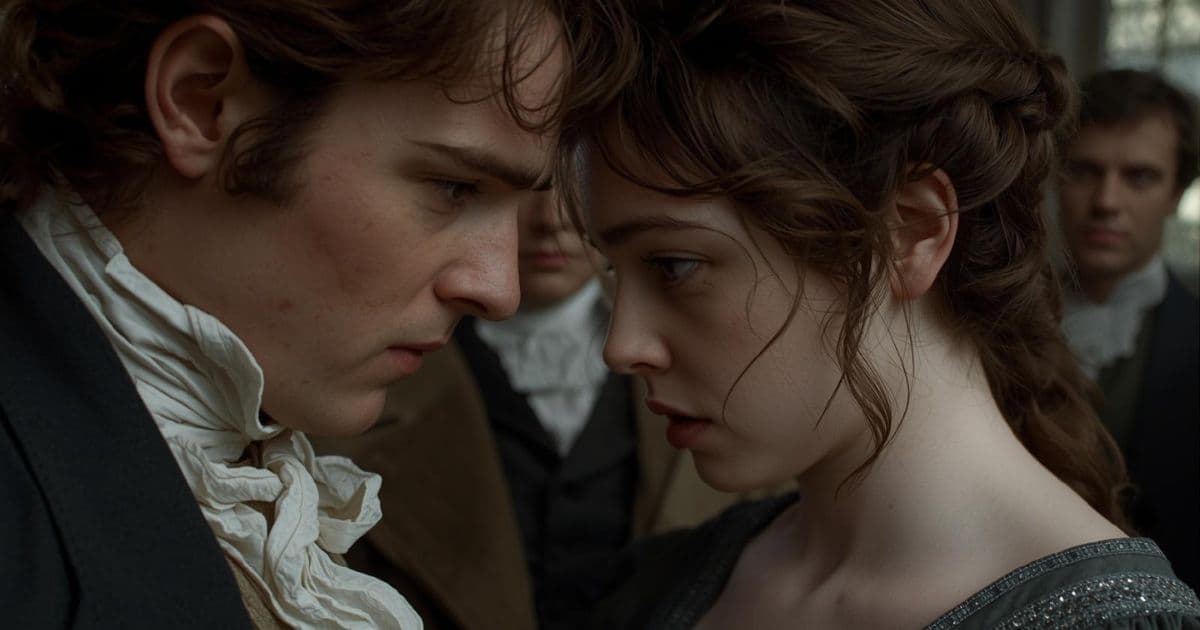
An excerpt from the original text.(complete · 1617 words)
uman nature is so well disposed towards those who are in interesting
situations, that a young person, who either marries or dies, is sure of
being kindly spoken of.
A week had not passed since Miss Hawkins’s name was first mentioned in
Highbury, before she was, by some means or other, discovered to have
every recommendation of person and mind; to be handsome, elegant,
highly accomplished, and perfectly amiable: and when Mr. Elton himself
arrived to triumph in his happy prospects, and circulate the fame of
her merits, there was very little more for him to do, than to tell her
Christian name, and say whose music she principally played.
Mr. Elton returned, a very happy man. He had gone away rejected and
mortified—disappointed in a very sanguine hope, after a series of what
appeared to him strong encouragement; and not only losing the right
lady, but finding himself debased to the level of a very wrong one. He
had gone away deeply offended—he came back engaged to another—and to
another as superior, of course, to the first, as under such
circumstances what is gained always is to what is lost. He came back
gay and self-satisfied, eager and busy, caring nothing for Miss
Woodhouse, and defying Miss Smith.
The charming Augusta Hawkins, in addition to all the usual advantages
of perfect beauty and merit, was in possession of an independent
fortune, of so many thousands as would always be called ten; a point of
some dignity, as well as some convenience: the story told well; he had
not thrown himself away—he had gained a woman of 10,000 l. or
thereabouts; and he had gained her with such delightful rapidity—the
first hour of introduction had been so very soon followed by
distinguishing notice; the history which he had to give Mrs. Cole of
the rise and progress of the affair was so glorious—the steps so quick,
from the accidental rencontre, to the dinner at Mr. Green’s, and the
party at Mrs. Brown’s—smiles and blushes rising in importance—with
consciousness and agitation richly scattered—the lady had been so
easily impressed—so sweetly disposed—had in short, to use a most
intelligible phrase, been so very ready to have him, that vanity and
prudence were equally contented.
He had caught both substance and shadow—both fortune and affection, and
was just the happy man he ought to be; talking only of himself and his
own concerns—expecting to be congratulated—ready to be laughed at—and,
with cordial, fearless smiles, now addressing all the young ladies of
the place, to whom, a few weeks ago, he would have been more cautiously
gallant.
The wedding was no distant event, as the parties had only themselves to
please, and nothing but the necessary preparations to wait for; and
when he set out for Bath again, there was a general expectation, which
a certain glance of Mrs. Cole’s did not seem to contradict, that when
he next entered Highbury he would bring his bride.
During his present short stay, Emma had barely seen him; but just
enough to feel that the first meeting was over, and to give her the
impression of his not being improved by the mixture of pique and
pretension, now spread over his air. She was, in fact, beginning very
much to wonder that she had ever thought him pleasing at all; and his
sight was so inseparably connected with some very disagreeable
feelings, that, except in a moral light, as a penance, a lesson, a
source of profitable humiliation to her own mind, she would have been
thankful to be assured of never seeing him again. She wished him very
well; but he gave her pain, and his welfare twenty miles off would
administer most satisfaction.
The pain of his continued residence in Highbury, however, must
certainly be lessened by his marriage. Many vain solicitudes would be
prevented—many awkwardnesses smoothed by it. A Mrs. Elton would be
an excuse for any change of intercourse; former intimacy might sink
without remark. It would be almost beginning their life of civility
again.
Of the lady, individually, Emma thought very little. She was good
enough for Mr. Elton, no doubt; accomplished enough for
Highbury—handsome enough—to look plain, probably, by Harriet’s side. As
to connexion, there Emma was perfectly easy; persuaded, that after all
his own vaunted claims and disdain of Harriet, he had done nothing. On
that article, truth seemed attainable. What she was, must be
uncertain; but who she was, might be found out; and setting aside the
10,000 l., it did not appear that she was at all Harriet’s superior.
She brought no name, no blood, no alliance. Miss Hawkins was the
youngest of the two daughters of a Bristol—merchant, of course, he must
be called; but, as the whole of the profits of his mercantile life
appeared so very moderate, it was not unfair to guess the dignity of
his line of trade had been very moderate also. Part of every winter she
had been used to spend in Bath; but Bristol was her home, the very
heart of Bristol; for though the father and mother had died some years
ago, an uncle remained—in the law line—nothing more distinctly
honourable was hazarded of him, than that he was in the law line; and
with him the daughter had lived. Emma guessed him to be the drudge of
some attorney, and too stupid to rise. And all the grandeur of the
connexion seemed dependent on the elder sister, who was very well
married, to a gentleman in a great way, near Bristol, who kept
two carriages! That was the wind-up of the history; that was the glory
of Miss Hawkins.
Could she but have given Harriet her feelings about it all! She had
talked her into love; but, alas! she was not so easily to be talked out
of it. The charm of an object to occupy the many vacancies of Harriet’s
mind was not to be talked away. He might be superseded by another; he
certainly would indeed; nothing could be clearer; even a Robert Martin
would have been sufficient; but nothing else, she feared, would cure
her. Harriet was one of those, who, having once begun, would be always
in love. And now, poor girl! she was considerably worse from this
reappearance of Mr. Elton. She was always having a glimpse of him
somewhere or other. Emma saw him only once; but two or three times
every day Harriet was sure just to meet with him, or just to miss
him, just to hear his voice, or see his shoulder, just to have
something occur to preserve him in her fancy, in all the favouring
warmth of surprize and conjecture. She was, moreover, perpetually
hearing about him; for, excepting when at Hartfield, she was always
among those who saw no fault in Mr. Elton, and found nothing so
interesting as the discussion of his concerns; and every report,
therefore, every guess—all that had already occurred, all that might
occur in the arrangement of his affairs, comprehending income,
servants, and furniture, was continually in agitation around her. Her
regard was receiving strength by invariable praise of him, and her
regrets kept alive, and feelings irritated by ceaseless repetitions of
Miss Hawkins’s happiness, and continual observation of, how much he
seemed attached!—his air as he walked by the house—the very sitting of
his hat, being all in proof of how much he was in love!
Had it been allowable entertainment, had there been no pain to her
friend, or reproach to herself, in the waverings of Harriet’s mind,
Emma would have been amused by its variations. Sometimes Mr. Elton
predominated, sometimes the Martins; and each was occasionally useful
as a check to the other. Mr. Elton’s engagement had been the cure of
the agitation of meeting Mr. Martin. The unhappiness produced by the
knowledge of that engagement had been a little put aside by Elizabeth
Martin’s calling at Mrs. Goddard’s a few days afterwards. Harriet had
not been at home; but a note had been prepared and left for her,
written in the very style to touch; a small mixture of reproach, with a
great deal of kindness; and till Mr. Elton himself appeared, she had
been much occupied by it, continually pondering over what could be done
in return, and wishing to do more than she dared to confess. But Mr.
Elton, in person, had driven away all such cares. While he staid, the
Martins were forgotten; and on the very morning of his setting off for
Bath again, Emma, to dissipate some of the distress it occasioned,
judged it best for her to return Elizabeth Martin’s visit.
How that visit was to be acknowledged—what would be necessary—and what
might be safest, had been a point of some doubtful consideration.
Absolute neglect of the mother and sisters, when invited to come, would
be ingratitude. It must not be: and yet the danger of a renewal of the
acquaintance—!
After much thinking, she could determine on nothing better, than
Harriet’s returning the visit; but in a way that, if they had
understanding, should convince them that it was to be only a formal
acquaintance. She meant to take her in the carriage, leave her at the
Abbey Mill, while she drove a little farther, and call for her again so
soon, as to allow no time for insidious applications or dangerous
recurrences to the past, and give the most decided proof of what degree
of intimacy was chosen for the future.
She could think of nothing better: and though there was something in it
which her own heart could not approve—something of ingratitude, merely
glossed over—it must be done, or what would become of Harriet?
Master this chapter. Complete your experience
Purchase the complete book to access all chapters and support classic literature
As an Amazon Associate, we earn a small commission from qualifying purchases at no additional cost to you.
Available in paperback, hardcover, and e-book formats
Let's Analyse the Pattern
The Rebound Recovery Pattern
When rejection wounds our pride, we rush into situations that restore our sense of worth, prioritizing validation over genuine compatibility.
Why This Matters
Connect literature to life
This chapter teaches how to spot when people make major life choices to heal wounded pride rather than for genuine compatibility.
Practice This Today
This week, notice when someone makes a big decision unusually fast after a rejection or setback—ask yourself if they're choosing what's right or what feels like winning.
Now let's explore the literary elements.
Key Quotes & Analysis
"Human nature is so well disposed towards those who are in interesting situations, that a young person, who either marries or dies, is sure of being kindly spoken of."
Context: Opening observation about how people react to major life events
This cynical observation reveals how people create positive narratives around big life changes, regardless of the actual circumstances. Everyone suddenly finds Augusta perfect because she's getting married, not because they actually know her.
In Today's Words:
People always say nice things about brides and people who die, even if they didn't like them before.
"He had gone away rejected and mortified—disappointed in a very sanguine hope... he came back engaged to another—and to another as superior, of course, to the first."
Context: Describing Elton's transformation from rejected suitor to engaged man
This reveals how people rewrite history to protect their ego. Elton now sees Augusta as superior to Emma, when really she's just someone who said yes. The 'of course' shows this is predictable human behavior.
In Today's Words:
He left town heartbroken and came back acting like his new girlfriend is way better than the one who rejected him.
"The charming Augusta Hawkins, in addition to all the usual advantages of perfect beauty and merit, was in possession of an independent fortune."
Context: Describing what makes Augusta attractive as a wife
The formal language masks the practical reality - Elton chose someone with money who would enhance his social position. 'All the usual advantages' suggests these are standard requirements, not unique qualities.
In Today's Words:
Augusta was pretty, nice, and rich - basically everything a guy like Elton was looking for in a wife.
Thematic Threads
Pride
In This Chapter
Elton's wounded pride drives him to find immediate validation through Augusta's acceptance and money
Development
Evolved from his earlier presumption with Emma to defensive recovery behavior
In Your Life:
You might see this when you make quick decisions after being hurt, choosing what feels like winning over what's actually good for you
Class
In This Chapter
Augusta's ten thousand pounds makes her acceptable despite being a merchant's daughter, no better connected than Harriet
Development
Continues the theme of how money can buy social acceptance regardless of true breeding
In Your Life:
You might notice how people judge potential partners or friends by their financial status rather than their character
Self-Deception
In This Chapter
Elton convinces himself Augusta is an upgrade while Emma sees through the illusion
Development
Building on Emma's earlier self-deceptions about matchmaking
In Your Life:
You might catch yourself creating stories about why your rebound choices are actually better than what you lost
Unrequited Love
In This Chapter
Harriet continues pining for Elton despite his obvious indifference and new engagement
Development
Deepens Harriet's pattern of clinging to impossible attachments
In Your Life:
You might recognize the painful habit of feeding feelings for someone who's clearly moved on
Social Control
In This Chapter
Emma orchestrates Harriet's visit to the Martins to prevent rekindling while maintaining appearances
Development
Continues Emma's pattern of manipulating others' relationships for their 'own good'
In Your Life:
You might see this when you try to control a friend's dating choices through subtle management rather than honest conversation
You now have the context. Time to form your own thoughts.
Discussion Questions
- 1
How quickly does Mr. Elton get engaged after Emma rejects him, and what does this timing tell us about his motivations?
analysis • surface - 2
Why does Elton choose Augusta Hawkins specifically - what does she offer that helps heal his wounded pride?
analysis • medium - 3
Think about modern dating apps or workplace situations - where do you see people making quick decisions to prove their worth after rejection?
application • medium - 4
If you were advising someone who just got rejected for a job or relationship, how would you help them avoid the 'rebound trap'?
application • deep - 5
What does this chapter reveal about how our wounded pride can override our better judgment when making important life decisions?
reflection • deep
Critical Thinking Exercise
Design Your Rebound Warning System
Create a personal checklist you could use when making major decisions after a rejection or disappointment. Think about the red flags that indicate you're choosing based on wounded pride rather than genuine fit. What questions would help you pause and evaluate clearly?
Consider:
- •Consider both emotional and practical warning signs that you're moving too fast
- •Think about what good timing looks like for major decisions after setbacks
- •Include questions that help distinguish between healing your ego and making smart choices
Journaling Prompt
Write about a time when you made a quick decision after being rejected or disappointed. Looking back, were you choosing based on what was right for you, or what would prove your worth to others? What would you do differently now?
Coming Up Next...
Chapter 23: When Worlds Collide and New Hope Arrives
Emma's carefully planned visit to the Martins is about to unfold, but will her strategic approach to managing Harriet's social connections go according to plan? Sometimes the best-laid schemes meet unexpected complications.