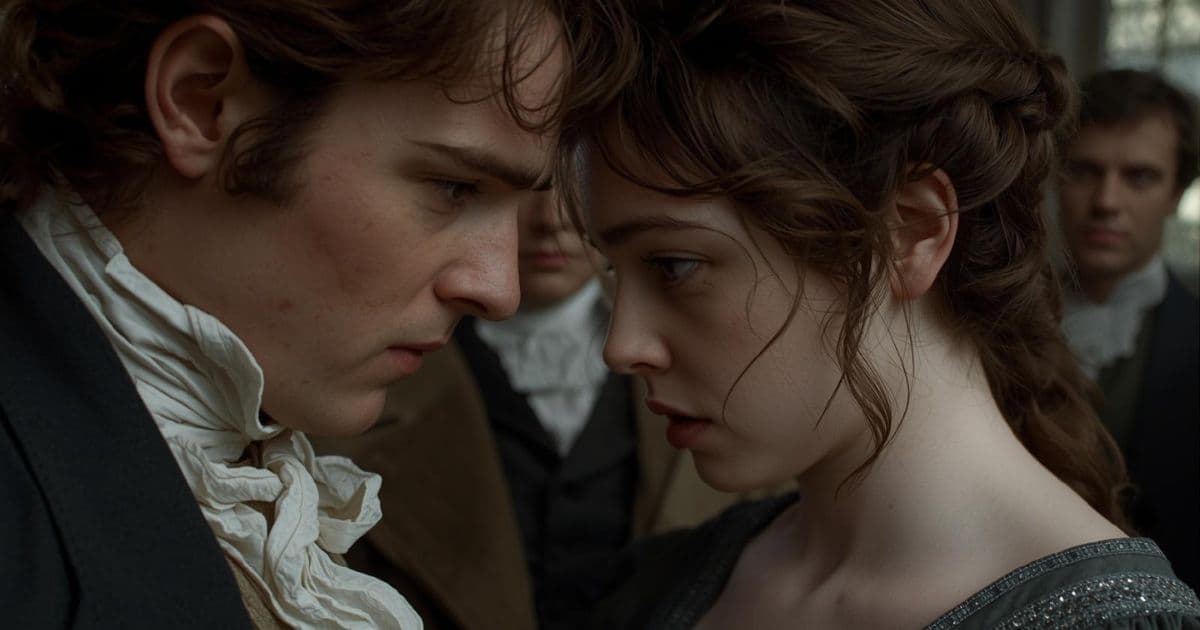
An excerpt from the original text.(complete · 2117 words)
r. Elton must now be left to himself. It was no longer in Emma’s power
to superintend his happiness or quicken his measures. The coming of her
sister’s family was so very near at hand, that first in anticipation,
and then in reality, it became henceforth her prime object of interest;
and during the ten days of their stay at Hartfield it was not to be
expected—she did not herself expect—that any thing beyond occasional,
fortuitous assistance could be afforded by her to the lovers. They
might advance rapidly if they would, however; they must advance somehow
or other whether they would or no. She hardly wished to have more
leisure for them. There are people, who the more you do for them, the
less they will do for themselves.
Mr. and Mrs. John Knightley, from having been longer than usual absent
from Surry, were exciting of course rather more than the usual
interest. Till this year, every long vacation since their marriage had
been divided between Hartfield and Donwell Abbey; but all the holidays
of this autumn had been given to sea-bathing for the children, and it
was therefore many months since they had been seen in a regular way by
their Surry connexions, or seen at all by Mr. Woodhouse, who could not
be induced to get so far as London, even for poor Isabella’s sake; and
who consequently was now most nervously and apprehensively happy in
forestalling this too short visit.
He thought much of the evils of the journey for her, and not a little
of the fatigues of his own horses and coachman who were to bring some
of the party the last half of the way; but his alarms were needless;
the sixteen miles being happily accomplished, and Mr. and Mrs. John
Knightley, their five children, and a competent number of
nursery-maids, all reaching Hartfield in safety. The bustle and joy of
such an arrival, the many to be talked to, welcomed, encouraged, and
variously dispersed and disposed of, produced a noise and confusion
which his nerves could not have borne under any other cause, nor have
endured much longer even for this; but the ways of Hartfield and the
feelings of her father were so respected by Mrs. John Knightley, that
in spite of maternal solicitude for the immediate enjoyment of her
little ones, and for their having instantly all the liberty and
attendance, all the eating and drinking, and sleeping and playing,
which they could possibly wish for, without the smallest delay, the
children were never allowed to be long a disturbance to him, either in
themselves or in any restless attendance on them.
Mrs. John Knightley was a pretty, elegant little woman, of gentle,
quiet manners, and a disposition remarkably amiable and affectionate;
wrapt up in her family; a devoted wife, a doating mother, and so
tenderly attached to her father and sister that, but for these higher
ties, a warmer love might have seemed impossible. She could never see a
fault in any of them. She was not a woman of strong understanding or
any quickness; and with this resemblance of her father, she inherited
also much of his constitution; was delicate in her own health,
over-careful of that of her children, had many fears and many nerves,
and was as fond of her own Mr. Wingfield in town as her father could be
of Mr. Perry. They were alike too, in a general benevolence of temper,
and a strong habit of regard for every old acquaintance.
Mr. John Knightley was a tall, gentleman-like, and very clever man;
rising in his profession, domestic, and respectable in his private
character; but with reserved manners which prevented his being
generally pleasing; and capable of being sometimes out of humour. He
was not an ill-tempered man, not so often unreasonably cross as to
deserve such a reproach; but his temper was not his great perfection;
and, indeed, with such a worshipping wife, it was hardly possible that
any natural defects in it should not be increased. The extreme
sweetness of her temper must hurt his. He had all the clearness and
quickness of mind which she wanted, and he could sometimes act an
ungracious, or say a severe thing.
He was not a great favourite with his fair sister-in-law. Nothing wrong
in him escaped her. She was quick in feeling the little injuries to
Isabella, which Isabella never felt herself. Perhaps she might have
passed over more had his manners been flattering to Isabella’s sister,
but they were only those of a calmly kind brother and friend, without
praise and without blindness; but hardly any degree of personal
compliment could have made her regardless of that greatest fault of all
in her eyes which he sometimes fell into, the want of respectful
forbearance towards her father. There he had not always the patience
that could have been wished. Mr. Woodhouse’s peculiarities and
fidgetiness were sometimes provoking him to a rational remonstrance or
sharp retort equally ill-bestowed. It did not often happen; for Mr.
John Knightley had really a great regard for his father-in-law, and
generally a strong sense of what was due to him; but it was too often
for Emma’s charity, especially as there was all the pain of
apprehension frequently to be endured, though the offence came not. The
beginning, however, of every visit displayed none but the properest
feelings, and this being of necessity so short might be hoped to pass
away in unsullied cordiality. They had not been long seated and
composed when Mr. Woodhouse, with a melancholy shake of the head and a
sigh, called his daughter’s attention to the sad change at Hartfield
since she had been there last.
“Ah, my dear,” said he, “poor Miss Taylor—It is a grievous business.”
“Oh yes, sir,” cried she with ready sympathy, “how you must miss her!
And dear Emma, too!—What a dreadful loss to you both!—I have been so
grieved for you.—I could not imagine how you could possibly do without
her.—It is a sad change indeed.—But I hope she is pretty well, sir.”
“Pretty well, my dear—I hope—pretty well.—I do not know but that the
place agrees with her tolerably.”
Mr. John Knightley here asked Emma quietly whether there were any
doubts of the air of Randalls.
“Oh! no—none in the least. I never saw Mrs. Weston better in my
life—never looking so well. Papa is only speaking his own regret.”
“Very much to the honour of both,” was the handsome reply.
“And do you see her, sir, tolerably often?” asked Isabella in the
plaintive tone which just suited her father.
Mr. Woodhouse hesitated.—“Not near so often, my dear, as I could wish.”
“Oh! papa, we have missed seeing them but one entire day since they
married. Either in the morning or evening of every day, excepting one,
have we seen either Mr. Weston or Mrs. Weston, and generally both,
either at Randalls or here—and as you may suppose, Isabella, most
frequently here. They are very, very kind in their visits. Mr. Weston
is really as kind as herself. Papa, if you speak in that melancholy
way, you will be giving Isabella a false idea of us all. Every body
must be aware that Miss Taylor must be missed, but every body ought
also to be assured that Mr. and Mrs. Weston do really prevent our
missing her by any means to the extent we ourselves anticipated—which
is the exact truth.”
“Just as it should be,” said Mr. John Knightley, “and just as I hoped
it was from your letters. Her wish of shewing you attention could not
be doubted, and his being a disengaged and social man makes it all
easy. I have been always telling you, my love, that I had no idea of
the change being so very material to Hartfield as you apprehended; and
now you have Emma’s account, I hope you will be satisfied.”
“Why, to be sure,” said Mr. Woodhouse—“yes, certainly—I cannot deny
that Mrs. Weston, poor Mrs. Weston, does come and see us pretty
often—but then—she is always obliged to go away again.”
“It would be very hard upon Mr. Weston if she did not, papa.—You quite
forget poor Mr. Weston.”
“I think, indeed,” said John Knightley pleasantly, “that Mr. Weston has
some little claim. You and I, Emma, will venture to take the part of
the poor husband. I, being a husband, and you not being a wife, the
claims of the man may very likely strike us with equal force. As for
Isabella, she has been married long enough to see the convenience of
putting all the Mr. Westons aside as much as she can.”
“Me, my love,” cried his wife, hearing and understanding only in part.—
“Are you talking about me?—I am sure nobody ought to be, or can be, a
greater advocate for matrimony than I am; and if it had not been for
the misery of her leaving Hartfield, I should never have thought of
Miss Taylor but as the most fortunate woman in the world; and as to
slighting Mr. Weston, that excellent Mr. Weston, I think there is
nothing he does not deserve. I believe he is one of the very
best-tempered men that ever existed. Excepting yourself and your
brother, I do not know his equal for temper. I shall never forget his
flying Henry’s kite for him that very windy day last Easter—and ever
since his particular kindness last September twelvemonth in writing
that note, at twelve o’clock at night, on purpose to assure me that
there was no scarlet fever at Cobham, I have been convinced there could
not be a more feeling heart nor a better man in existence.—If any body
can deserve him, it must be Miss Taylor.”
“Where is the young man?” said John Knightley. “Has he been here on
this occasion—or has he not?”
“He has not been here yet,” replied Emma. “There was a strong
expectation of his coming soon after the marriage, but it ended in
nothing; and I have not heard him mentioned lately.”
“But you should tell them of the letter, my dear,” said her father. “He
wrote a letter to poor Mrs. Weston, to congratulate her, and a very
proper, handsome letter it was. She shewed it to me. I thought it very
well done of him indeed. Whether it was his own idea you know, one
cannot tell. He is but young, and his uncle, perhaps—”
“My dear papa, he is three-and-twenty. You forget how time passes.”
“Three-and-twenty!—is he indeed?—Well, I could not have thought it—and
he was but two years old when he lost his poor mother! Well, time does
fly indeed!—and my memory is very bad. However, it was an exceeding
good, pretty letter, and gave Mr. and Mrs. Weston a great deal of
pleasure. I remember it was written from Weymouth, and dated Sept.
28th—and began, ‘My dear Madam,’ but I forget how it went on; and it
was signed ‘F. C. Weston Churchill.’—I remember that perfectly.”
“How very pleasing and proper of him!” cried the good-hearted Mrs. John
Knightley. “I have no doubt of his being a most amiable young man. But
how sad it is that he should not live at home with his father! There is
something so shocking in a child’s being taken away from his parents
and natural home! I never could comprehend how Mr. Weston could part
with him. To give up one’s child! I really never could think well of
any body who proposed such a thing to any body else.”
“Nobody ever did think well of the Churchills, I fancy,” observed Mr.
John Knightley coolly. “But you need not imagine Mr. Weston to have
felt what you would feel in giving up Henry or John. Mr. Weston is
rather an easy, cheerful-tempered man, than a man of strong feelings;
he takes things as he finds them, and makes enjoyment of them somehow
or other, depending, I suspect, much more upon what is called society
for his comforts, that is, upon the power of eating and drinking, and
playing whist with his neighbours five times a week, than upon family
affection, or any thing that home affords.”
Emma could not like what bordered on a reflection on Mr. Weston, and
had half a mind to take it up; but she struggled, and let it pass. She
would keep the peace if possible; and there was something honourable
and valuable in the strong domestic habits, the all-sufficiency of home
to himself, whence resulted her brother’s disposition to look down on
the common rate of social intercourse, and those to whom it was
important.—It had a high claim to forbearance.
Master this chapter. Complete your experience
Purchase the complete book to access all chapters and support classic literature
As an Amazon Associate, we earn a small commission from qualifying purchases at no additional cost to you.
Available in paperback, hardcover, and e-book formats
Let's Analyse the Pattern
The impossible position created when family members' legitimate needs conflict, forcing others to choose sides or sacrifice their own peace.
Why This Matters
Connect literature to life
This chapter teaches how to recognize when family gatherings become emotional battlegrounds where everyone's managing multiple loyalties simultaneously.
Practice This Today
This week, notice when you feel caught between defending one family member and keeping peace with another—that's your signal to step back and assess the real dynamics at play.
Now let's explore the literary elements.
Key Quotes & Analysis
"There are people, who the more you do for them, the less they will do for themselves."
Context: Emma reflects on why she's stepping back from managing Mr. Elton's romantic life
This reveals Emma's growing wisdom about the dangers of enabling others. She's learning that constant interference can actually harm people by making them dependent and passive.
In Today's Words:
Some people will let you do everything for them if you don't set boundaries.
"Poor Isabella, passing her life with those she doated on, full of their merits, blind to their faults, and always innocently busy"
Context: Describing Isabella's devoted but somewhat naive approach to family life
This shows the contrast between Emma's sharp observations and Isabella's gentle, uncritical love. It highlights different ways women can navigate family relationships.
In Today's Words:
Isabella loves her family so much she can't see their flaws and stays constantly busy taking care of everyone.
"What is right to be done cannot be done too soon"
Context: Speaking about Frank Churchill's duty to visit his father after Mr. Weston's marriage
John's blunt moral stance contrasts with others' willingness to make excuses. This quote reveals his no-nonsense approach to family obligations and sets up tension about Frank's character.
In Today's Words:
If something's the right thing to do, stop making excuses and just do it already.
Thematic Threads
Family Dynamics
In This Chapter
Complex web of relationships as Isabella's family arrives, revealing how different personalities clash and accommodate within family structures
Development
Expanded from Emma's relationship with her father to include extended family tensions and competing loyalties
In Your Life:
You see this when your family gatherings become careful negotiations around sensitive relatives' feelings and conflicts.
Social Expectations
In This Chapter
Characters must navigate proper behavior in family settings while managing personal frustrations and maintaining harmony
Development
Building on earlier themes of social propriety, now showing how expectations operate within intimate family circles
In Your Life:
You experience this when you feel pressure to keep family peace even when someone's behavior bothers you.
Judgment
In This Chapter
John Knightley's criticism of Mr. Weston and subtle judgments about parenting and character reveal how families assess each other
Development
Continuing pattern of characters making assumptions about others, now within family context
In Your Life:
You see this when family members make comments about your choices, relationships, or lifestyle during visits.
Communication
In This Chapter
Characters speak in coded language and implications rather than direct conversation, especially around sensitive topics
Development
Ongoing theme of indirect communication, now showing how it operates in family settings
In Your Life:
You recognize this when family conversations are full of what's not being said directly.
Identity
In This Chapter
Emma must balance her roles as daughter, sister, and individual while managing competing family loyalties
Development
Emma's identity challenges become more complex as she navigates multiple family relationships simultaneously
In Your Life:
You feel this when you're pulled between different family members' expectations of who you should be.
You now have the context. Time to form your own thoughts.
Discussion Questions
- 1
What creates the tension when John Knightley interacts with Mr. Woodhouse, and how does Emma respond to this dynamic?
analysis • surface - 2
Why does Isabella work so hard to keep peace between her husband and father, and what does this cost her?
analysis • medium - 3
Where do you see this same loyalty trap playing out in modern families - situations where keeping peace requires someone to choose sides?
application • medium - 4
When you're caught between defending someone you love and maintaining family harmony, what strategies help you navigate without sacrificing your integrity?
application • deep - 5
What does this chapter reveal about how family systems pressure individuals to manage other people's emotions rather than addressing conflicts directly?
reflection • deep
Critical Thinking Exercise
Map Your Own Loyalty Conflicts
Think of a recent family gathering or workplace situation where you felt caught between competing loyalties. Draw a simple diagram showing the people involved and the conflicting expectations pulling at you. Label each person's needs and your relationship to them. Then identify one small action you could take next time to honor your own values while managing the situation.
Consider:
- •Notice which relationships feel most fragile and require the most emotional management from you
- •Consider whether you're taking responsibility for conflicts that aren't actually yours to solve
- •Identify patterns where you consistently sacrifice your own comfort to keep others happy
Journaling Prompt
Write about a time when you successfully navigated a loyalty conflict without choosing sides. What did you do differently, and how did it feel to maintain your integrity while preserving relationships?
Coming Up Next...
Chapter 12: Making Peace After the Fight
The family dynamics continue to unfold as more conversations reveal the true nature of relationships within the Knightley-Woodhouse circle. Emma's role as family peacekeeper will be tested further.