An excerpt from the original text.(complete · 5485 words)
ONATHAN HARKER’S JOURNAL--continued
5 May.--I must have been asleep, for certainly if I had been fully
awake I must have noticed the approach of such a remarkable place. In
the gloom the courtyard looked of considerable size, and as several dark
ways led from it under great round arches, it perhaps seemed bigger than
it really is. I have not yet been able to see it by daylight.
When the calèche stopped, the driver jumped down and held out his hand
to assist me to alight. Again I could not but notice his prodigious
strength. His hand actually seemed like a steel vice that could have
crushed mine if he had chosen. Then he took out my traps, and placed
them on the ground beside me as I stood close to a great door, old and
studded with large iron nails, and set in a projecting doorway of
massive stone. I could see even in the dim light that the stone was
massively carved, but that the carving had been much worn by time and
weather. As I stood, the driver jumped again into his seat and shook the
reins; the horses started forward, and trap and all disappeared down one
of the dark openings.
I stood in silence where I was, for I did not know what to do. Of bell
or knocker there was no sign; through these frowning walls and dark
window openings it was not likely that my voice could penetrate. The
time I waited seemed endless, and I felt doubts and fears crowding upon
me. What sort of place had I come to, and among what kind of people?
What sort of grim adventure was it on which I had embarked? Was this a
customary incident in the life of a solicitor’s clerk sent out to
explain the purchase of a London estate to a foreigner? Solicitor’s
clerk! Mina would not like that. Solicitor--for just before leaving
London I got word that my examination was successful; and I am now a
full-blown solicitor! I began to rub my eyes and pinch myself to see if
I were awake. It all seemed like a horrible nightmare to me, and I
expected that I should suddenly awake, and find myself at home, with
the dawn struggling in through the windows, as I had now and again felt
in the morning after a day of overwork. But my flesh answered the
pinching test, and my eyes were not to be deceived. I was indeed awake
and among the Carpathians. All I could do now was to be patient, and to
wait the coming of the morning.
Just as I had come to this conclusion I heard a heavy step approaching
behind the great door, and saw through the chinks the gleam of a coming
light. Then there was the sound of rattling chains and the clanking of
massive bolts drawn back. A key was turned with the loud grating noise
of long disuse, and the great door swung back.
Within, stood a tall old man, clean shaven save for a long white
moustache, and clad in black from head to foot, without a single speck
of colour about him anywhere. He held in his hand an antique silver
lamp, in which the flame burned without chimney or globe of any kind,
throwing long quivering shadows as it flickered in the draught of the
open door. The old man motioned me in with his right hand with a courtly
gesture, saying in excellent English, but with a strange intonation:--
“Welcome to my house! Enter freely and of your own will!” He made no
motion of stepping to meet me, but stood like a statue, as though his
gesture of welcome had fixed him into stone. The instant, however, that
I had stepped over the threshold, he moved impulsively forward, and
holding out his hand grasped mine with a strength which made me wince,
an effect which was not lessened by the fact that it seemed as cold as
ice--more like the hand of a dead than a living man. Again he said:--
“Welcome to my house. Come freely. Go safely; and leave something of the
happiness you bring!” The strength of the handshake was so much akin to
that which I had noticed in the driver, whose face I had not seen, that
for a moment I doubted if it were not the same person to whom I was
speaking; so to make sure, I said interrogatively:--
“Count Dracula?” He bowed in a courtly way as he replied:--
“I am Dracula; and I bid you welcome, Mr. Harker, to my house. Come in;
the night air is chill, and you must need to eat and rest.” As he was
speaking, he put the lamp on a bracket on the wall, and stepping out,
took my luggage; he had carried it in before I could forestall him. I
protested but he insisted:--
“Nay, sir, you are my guest. It is late, and my people are not
available. Let me see to your comfort myself.” He insisted on carrying
my traps along the passage, and then up a great winding stair, and
along another great passage, on whose stone floor our steps rang
heavily. At the end of this he threw open a heavy door, and I rejoiced
to see within a well-lit room in which a table was spread for supper,
and on whose mighty hearth a great fire of logs, freshly replenished,
flamed and flared.
The Count halted, putting down my bags, closed the door, and crossing
the room, opened another door, which led into a small octagonal room lit
by a single lamp, and seemingly without a window of any sort. Passing
through this, he opened another door, and motioned me to enter. It was a
welcome sight; for here was a great bedroom well lighted and warmed with
another log fire,--also added to but lately, for the top logs were
fresh--which sent a hollow roar up the wide chimney. The Count himself
left my luggage inside and withdrew, saying, before he closed the
door:--
“You will need, after your journey, to refresh yourself by making your
toilet. I trust you will find all you wish. When you are ready, come
into the other room, where you will find your supper prepared.”
The light and warmth and the Count’s courteous welcome seemed to have
dissipated all my doubts and fears. Having then reached my normal state,
I discovered that I was half famished with hunger; so making a hasty
toilet, I went into the other room.
I found supper already laid out. My host, who stood on one side of the
great fireplace, leaning against the stonework, made a graceful wave of
his hand to the table, and said:--
“I pray you, be seated and sup how you please. You will, I trust, excuse
me that I do not join you; but I have dined already, and I do not sup.”
I handed to him the sealed letter which Mr. Hawkins had entrusted to me.
He opened it and read it gravely; then, with a charming smile, he handed
it to me to read. One passage of it, at least, gave me a thrill of
pleasure.
“I must regret that an attack of gout, from which malady I am a constant
sufferer, forbids absolutely any travelling on my part for some time to
come; but I am happy to say I can send a sufficient substitute, one in
whom I have every possible confidence. He is a young man, full of energy
and talent in his own way, and of a very faithful disposition. He is
discreet and silent, and has grown into manhood in my service. He shall
be ready to attend on you when you will during his stay, and shall take
your instructions in all matters.”
The Count himself came forward and took off the cover of a dish, and I
fell to at once on an excellent roast chicken. This, with some cheese
and a salad and a bottle of old Tokay, of which I had two glasses, was
my supper. During the time I was eating it the Count asked me many
questions as to my journey, and I told him by degrees all I had
experienced.
By this time I had finished my supper, and by my host’s desire had drawn
up a chair by the fire and begun to smoke a cigar which he offered me,
at the same time excusing himself that he did not smoke. I had now an
opportunity of observing him, and found him of a very marked
physiognomy.
His face was a strong--a very strong--aquiline, with high bridge of the
thin nose and peculiarly arched nostrils; with lofty domed forehead, and
hair growing scantily round the temples but profusely elsewhere. His
eyebrows were very massive, almost meeting over the nose, and with bushy
hair that seemed to curl in its own profusion. The mouth, so far as I
could see it under the heavy moustache, was fixed and rather
cruel-looking, with peculiarly sharp white teeth; these protruded over
the lips, whose remarkable ruddiness showed astonishing vitality in a
man of his years. For the rest, his ears were pale, and at the tops
extremely pointed; the chin was broad and strong, and the cheeks firm
though thin. The general effect was one of extraordinary pallor.
Hitherto I had noticed the backs of his hands as they lay on his knees
in the firelight, and they had seemed rather white and fine; but seeing
them now close to me, I could not but notice that they were rather
coarse--broad, with squat fingers. Strange to say, there were hairs in
the centre of the palm. The nails were long and fine, and cut to a sharp
point. As the Count leaned over me and his hands touched me, I could not
repress a shudder. It may have been that his breath was rank, but a
horrible feeling of nausea came over me, which, do what I would, I could
not conceal. The Count, evidently noticing it, drew back; and with a
grim sort of smile, which showed more than he had yet done his
protuberant teeth, sat himself down again on his own side of the
fireplace. We were both silent for a while; and as I looked towards the
window I saw the first dim streak of the coming dawn. There seemed a
strange stillness over everything; but as I listened I heard as if from
down below in the valley the howling of many wolves. The Count’s eyes
gleamed, and he said:--
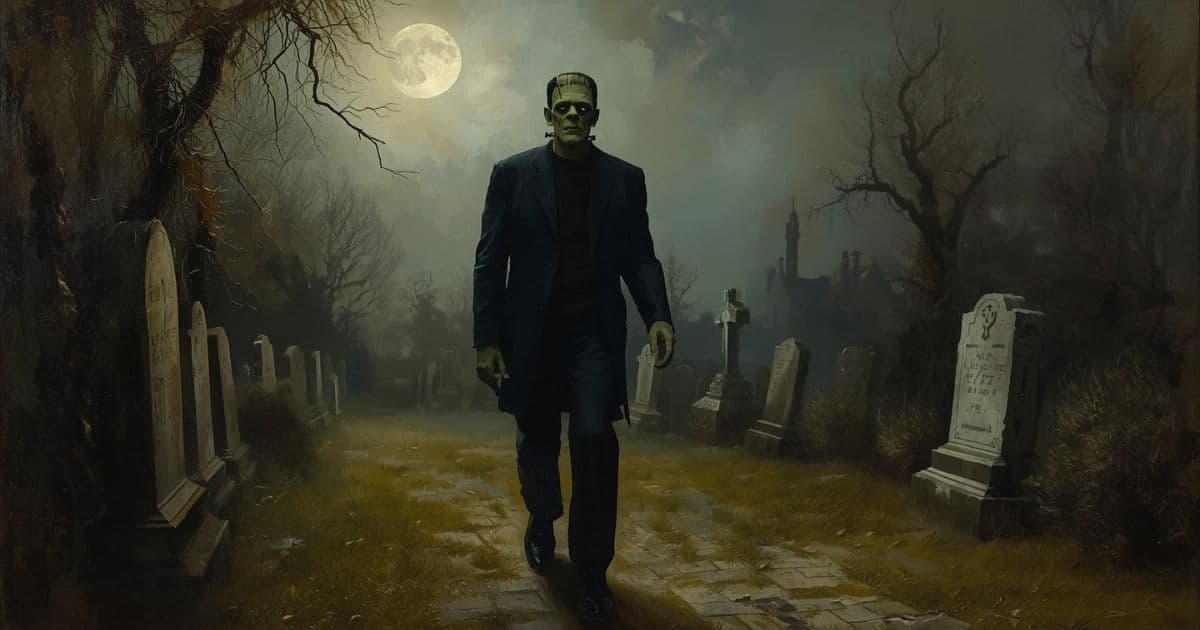
“Listen to them--the children of the night. What music they make!”
Seeing, I suppose, some expression in my face strange to him, he
added:--
“Ah, sir, you dwellers in the city cannot enter into the feelings of the
hunter.” Then he rose and said:--
“But you must be tired. Your bedroom is all ready, and to-morrow you
shall sleep as late as you will. I have to be away till the afternoon;
so sleep well and dream well!” With a courteous bow, he opened for me
himself the door to the octagonal room, and I entered my bedroom....
I am all in a sea of wonders. I doubt; I fear; I think strange things,
which I dare not confess to my own soul. God keep me, if only for the
sake of those dear to me!
* * * * *
7 May.--It is again early morning, but I have rested and enjoyed the
last twenty-four hours. I slept till late in the day, and awoke of my
own accord. When I had dressed myself I went into the room where we had
supped, and found a cold breakfast laid out, with coffee kept hot by the
pot being placed on the hearth. There was a card on the table, on which
was written:--
“I have to be absent for a while. Do not wait for me.--D.” I set to and
enjoyed a hearty meal. When I had done, I looked for a bell, so that I
might let the servants know I had finished; but I could not find one.
There are certainly odd deficiencies in the house, considering the
extraordinary evidences of wealth which are round me. The table service
is of gold, and so beautifully wrought that it must be of immense value.
The curtains and upholstery of the chairs and sofas and the hangings of
my bed are of the costliest and most beautiful fabrics, and must have
been of fabulous value when they were made, for they are centuries old,
though in excellent order. I saw something like them in Hampton Court,
but there they were worn and frayed and moth-eaten. But still in none of
the rooms is there a mirror. There is not even a toilet glass on my
table, and I had to get the little shaving glass from my bag before I
could either shave or brush my hair. I have not yet seen a servant
anywhere, or heard a sound near the castle except the howling of wolves.
Some time after I had finished my meal--I do not know whether to call it
breakfast or dinner, for it was between five and six o’clock when I had
it--I looked about for something to read, for I did not like to go about
the castle until I had asked the Count’s permission. There was
absolutely nothing in the room, book, newspaper, or even writing
materials; so I opened another door in the room and found a sort of
library. The door opposite mine I tried, but found it locked.
In the library I found, to my great delight, a vast number of English
books, whole shelves full of them, and bound volumes of magazines and
newspapers. A table in the centre was littered with English magazines
and newspapers, though none of them were of very recent date. The books
were of the most varied kind--history, geography, politics, political
economy, botany, geology, law--all relating to England and English life
and customs and manners. There were even such books of reference as the
London Directory, the “Red” and “Blue” books, Whitaker’s Almanac, the
Army and Navy Lists, and--it somehow gladdened my heart to see it--the
Law List.
Whilst I was looking at the books, the door opened, and the Count
entered. He saluted me in a hearty way, and hoped that I had had a good
night’s rest. Then he went on:--
“I am glad you found your way in here, for I am sure there is much that
will interest you. These companions”--and he laid his hand on some of
the books--“have been good friends to me, and for some years past, ever
since I had the idea of going to London, have given me many, many hours
of pleasure. Through them I have come to know your great England; and to
know her is to love her. I long to go through the crowded streets of
your mighty London, to be in the midst of the whirl and rush of
humanity, to share its life, its change, its death, and all that makes
it what it is. But alas! as yet I only know your tongue through books.
To you, my friend, I look that I know it to speak.”
“But, Count,” I said, “you know and speak English thoroughly!” He bowed
gravely.
“I thank you, my friend, for your all too-flattering estimate, but yet I
fear that I am but a little way on the road I would travel. True, I know
the grammar and the words, but yet I know not how to speak them.”
“Indeed,” I said, “you speak excellently.”
“Not so,” he answered. “Well, I know that, did I move and speak in your
London, none there are who would not know me for a stranger. That is not
enough for me. Here I am noble; I am boyar; the common people know me,
and I am master. But a stranger in a strange land, he is no one; men
know him not--and to know not is to care not for. I am content if I am
like the rest, so that no man stops if he see me, or pause in his
speaking if he hear my words, ‘Ha, ha! a stranger!’ I have been so long
master that I would be master still--or at least that none other should
be master of me. You come to me not alone as agent of my friend Peter
Hawkins, of Exeter, to tell me all about my new estate in London. You
shall, I trust, rest here with me awhile, so that by our talking I may
learn the English intonation; and I would that you tell me when I make
error, even of the smallest, in my speaking. I am sorry that I had to be
away so long to-day; but you will, I know, forgive one who has so many
important affairs in hand.”
Of course I said all I could about being willing, and asked if I might
come into that room when I chose. He answered: “Yes, certainly,” and
added:--
“You may go anywhere you wish in the castle, except where the doors are
locked, where of course you will not wish to go. There is reason that
all things are as they are, and did you see with my eyes and know with
my knowledge, you would perhaps better understand.” I said I was sure of
this, and then he went on:--
“We are in Transylvania; and Transylvania is not England. Our ways are
not your ways, and there shall be to you many strange things. Nay, from
what you have told me of your experiences already, you know something of
what strange things there may be.”
This led to much conversation; and as it was evident that he wanted to
talk, if only for talking’s sake, I asked him many questions regarding
things that had already happened to me or come within my notice.
Sometimes he sheered off the subject, or turned the conversation by
pretending not to understand; but generally he answered all I asked most
frankly. Then as time went on, and I had got somewhat bolder, I asked
him of some of the strange things of the preceding night, as, for
instance, why the coachman went to the places where he had seen the blue
flames. He then explained to me that it was commonly believed that on a
certain night of the year--last night, in fact, when all evil spirits
are supposed to have unchecked sway--a blue flame is seen over any place
where treasure has been concealed. “That treasure has been hidden,” he
went on, “in the region through which you came last night, there can be
but little doubt; for it was the ground fought over for centuries by the
Wallachian, the Saxon, and the Turk. Why, there is hardly a foot of soil
in all this region that has not been enriched by the blood of men,
patriots or invaders. In old days there were stirring times, when the
Austrian and the Hungarian came up in hordes, and the patriots went out
to meet them--men and women, the aged and the children too--and waited
their coming on the rocks above the passes, that they might sweep
destruction on them with their artificial avalanches. When the invader
was triumphant he found but little, for whatever there was had been
sheltered in the friendly soil.”
“But how,” said I, “can it have remained so long undiscovered, when
there is a sure index to it if men will but take the trouble to look?”
The Count smiled, and as his lips ran back over his gums, the long,
sharp, canine teeth showed out strangely; he answered:--
“Because your peasant is at heart a coward and a fool! Those flames only
appear on one night; and on that night no man of this land will, if he
can help it, stir without his doors. And, dear sir, even if he did he
would not know what to do. Why, even the peasant that you tell me of who
marked the place of the flame would not know where to look in daylight
even for his own work. Even you would not, I dare be sworn, be able to
find these places again?”
“There you are right,” I said. “I know no more than the dead where even
to look for them.” Then we drifted into other matters.
“Come,” he said at last, “tell me of London and of the house which you
have procured for me.” With an apology for my remissness, I went into my
own room to get the papers from my bag. Whilst I was placing them in
order I heard a rattling of china and silver in the next room, and as I
passed through, noticed that the table had been cleared and the lamp
lit, for it was by this time deep into the dark. The lamps were also lit
in the study or library, and I found the Count lying on the sofa,
reading, of all things in the world, an English Bradshaw’s Guide. When I
came in he cleared the books and papers from the table; and with him I
went into plans and deeds and figures of all sorts. He was interested in
everything, and asked me a myriad questions about the place and its
surroundings. He clearly had studied beforehand all he could get on the
subject of the neighbourhood, for he evidently at the end knew very much
more than I did. When I remarked this, he answered:--
“Well, but, my friend, is it not needful that I should? When I go there
I shall be all alone, and my friend Harker Jonathan--nay, pardon me, I
fall into my country’s habit of putting your patronymic first--my friend
Jonathan Harker will not be by my side to correct and aid me. He will be
in Exeter, miles away, probably working at papers of the law with my
other friend, Peter Hawkins. So!”
We went thoroughly into the business of the purchase of the estate at
Purfleet. When I had told him the facts and got his signature to the
necessary papers, and had written a letter with them ready to post to
Mr. Hawkins, he began to ask me how I had come across so suitable a
place. I read to him the notes which I had made at the time, and which I
inscribe here:--
“At Purfleet, on a by-road, I came across just such a place as seemed to
be required, and where was displayed a dilapidated notice that the place
was for sale. It is surrounded by a high wall, of ancient structure,
built of heavy stones, and has not been repaired for a large number of
years. The closed gates are of heavy old oak and iron, all eaten with
rust.
“The estate is called Carfax, no doubt a corruption of the old Quatre
Face, as the house is four-sided, agreeing with the cardinal points of
the compass. It contains in all some twenty acres, quite surrounded by
the solid stone wall above mentioned. There are many trees on it, which
make it in places gloomy, and there is a deep, dark-looking pond or
small lake, evidently fed by some springs, as the water is clear and
flows away in a fair-sized stream. The house is very large and of all
periods back, I should say, to mediæval times, for one part is of stone
immensely thick, with only a few windows high up and heavily barred with
iron. It looks like part of a keep, and is close to an old chapel or
church. I could not enter it, as I had not the key of the door leading
to it from the house, but I have taken with my kodak views of it from
various points. The house has been added to, but in a very straggling
way, and I can only guess at the amount of ground it covers, which must
be very great. There are but few houses close at hand, one being a very
large house only recently added to and formed into a private lunatic
asylum. It is not, however, visible from the grounds.”
When I had finished, he said:--
“I am glad that it is old and big. I myself am of an old family, and to
live in a new house would kill me. A house cannot be made habitable in a
day; and, after all, how few days go to make up a century. I rejoice
also that there is a chapel of old times. We Transylvanian nobles love
not to think that our bones may lie amongst the common dead. I seek not
gaiety nor mirth, not the bright voluptuousness of much sunshine and
sparkling waters which please the young and gay. I am no longer young;
and my heart, through weary years of mourning over the dead, is not
attuned to mirth. Moreover, the walls of my castle are broken; the
shadows are many, and the wind breathes cold through the broken
battlements and casements. I love the shade and the shadow, and would
be alone with my thoughts when I may.” Somehow his words and his look
did not seem to accord, or else it was that his cast of face made his
smile look malignant and saturnine.
Presently, with an excuse, he left me, asking me to put all my papers
together. He was some little time away, and I began to look at some of
the books around me. One was an atlas, which I found opened naturally at
England, as if that map had been much used. On looking at it I found in
certain places little rings marked, and on examining these I noticed
that one was near London on the east side, manifestly where his new
estate was situated; the other two were Exeter, and Whitby on the
Yorkshire coast.
It was the better part of an hour when the Count returned. “Aha!” he
said; “still at your books? Good! But you must not work always. Come; I
am informed that your supper is ready.” He took my arm, and we went into
the next room, where I found an excellent supper ready on the table. The
Count again excused himself, as he had dined out on his being away from
home. But he sat as on the previous night, and chatted whilst I ate.
After supper I smoked, as on the last evening, and the Count stayed with
me, chatting and asking questions on every conceivable subject, hour
after hour. I felt that it was getting very late indeed, but I did not
say anything, for I felt under obligation to meet my host’s wishes in
every way. I was not sleepy, as the long sleep yesterday had fortified
me; but I could not help experiencing that chill which comes over one at
the coming of the dawn, which is like, in its way, the turn of the tide.
They say that people who are near death die generally at the change to
the dawn or at the turn of the tide; any one who has when tired, and
tied as it were to his post, experienced this change in the atmosphere
can well believe it. All at once we heard the crow of a cock coming up
with preternatural shrillness through the clear morning air; Count
Dracula, jumping to his feet, said:--
“Why, there is the morning again! How remiss I am to let you stay up so
long. You must make your conversation regarding my dear new country of
England less interesting, so that I may not forget how time flies by
us,” and, with a courtly bow, he quickly left me.
I went into my own room and drew the curtains, but there was little to
notice; my window opened into the courtyard, all I could see was the
warm grey of quickening sky. So I pulled the curtains again, and have
written of this day.
* * * * *
8 May.--I began to fear as I wrote in this book that I was getting too
diffuse; but now I am glad that I went into detail from the first, for
there is something so strange about this place and all in it that I
cannot but feel uneasy. I wish I were safe out of it, or that I had
never come. It may be that this strange night-existence is telling on
me; but would that that were all! If there were any one to talk to I
could bear it, but there is no one. I have only the Count to speak with,
and he!--I fear I am myself the only living soul within the place. Let
me be prosaic so far as facts can be; it will help me to bear up, and
imagination must not run riot with me. If it does I am lost. Let me say
at once how I stand--or seem to.
I only slept a few hours when I went to bed, and feeling that I could
not sleep any more, got up. I had hung my shaving glass by the window,
and was just beginning to shave. Suddenly I felt a hand on my shoulder,
and heard the Count’s voice saying to me, “Good-morning.” I started, for
it amazed me that I had not seen him, since the reflection of the glass
covered the whole room behind me. In starting I had cut myself slightly,
but did not notice it at the moment. Having answered the Count’s
salutation, I turned to the glass again to see how I had been mistaken.
This time there could be no error, for the man was close to me, and I
could see him over my shoulder. But there was no reflection of him in
the mirror! The whole room behind me was displayed; but there was no
sign of a man in it, except myself. This was startling, and, coming on
the top of so many strange things, was beginning to increase that vague
feeling of uneasiness which I always have when the Count is near; but at
the instant I saw that the cut had bled a little, and the blood was
trickling over my chin. I laid down the razor, turning as I did so half
round to look for some sticking plaster. When the Count saw my face, his
eyes blazed with a sort of demoniac fury, and he suddenly made a grab at
my throat. I drew away, and his hand touched the string of beads which
held the crucifix. It made an instant change in him, for the fury passed
so quickly that I could hardly believe that it was ever there.
“Take care,” he said, “take care how you cut yourself. It is more
dangerous than you think in this country.” Then seizing the shaving
glass, he went on: “And this is the wretched thing that has done the
mischief. It is a foul bauble of man’s vanity. Away with it!” and
opening the heavy window with one wrench of his terrible hand, he flung
out the glass, which was shattered into a thousand pieces on the stones
of the courtyard far below. Then he withdrew without a word. It is very
annoying, for I do not see how I am to shave, unless in my watch-case or
the bottom of the shaving-pot, which is fortunately of metal.
When I went into the dining-room, breakfast was prepared; but I could
not find the Count anywhere. So I breakfasted alone. It is strange that
as yet I have not seen the Count eat or drink. He must be a very
peculiar man! After breakfast I did a little exploring in the castle. I
went out on the stairs, and found a room looking towards the South. The
view was magnificent, and from where I stood there was every opportunity
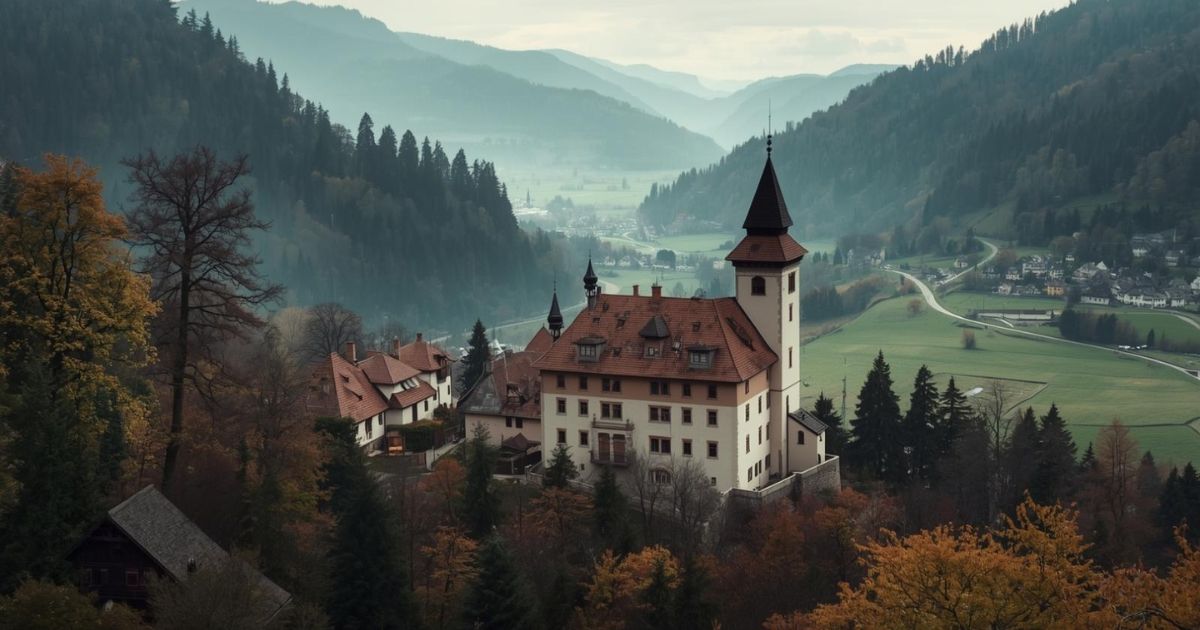
of seeing it. The castle is on the very edge of a terrible precipice. A
stone falling from the window would fall a thousand feet without
touching anything! As far as the eye can reach is a sea of green tree
tops, with occasionally a deep rift where there is a chasm. Here and
there are silver threads where the rivers wind in deep gorges through
the forests.
But I am not in heart to describe beauty, for when I had seen the view I
explored further; doors, doors, doors everywhere, and all locked and
bolted. In no place save from the windows in the castle walls is there
an available exit.
The castle is a veritable prison, and I am a prisoner!
Master this chapter. Complete your experience
Purchase the complete book to access all chapters and support classic literature
As an Amazon Associate, we earn a small commission from qualifying purchases at no additional cost to you.
Available in paperback, hardcover, and e-book formats
Let's Analyse the Pattern
Someone who gains control by appearing helpful while systematically creating dependency and isolation.
Why This Matters
Connect literature to life
This chapter teaches how to distinguish genuine assistance from manipulative control disguised as kindness.
Practice This Today
This week, notice when someone's help comes with unexpected strings attached or makes you more dependent rather than more capable.
Now let's explore the literary elements.
Key Quotes & Analysis
"His hand actually seemed like a steel vice that could have crushed mine if he had chosen."
Context: Harker's first physical contact with the Count when being helped from the carriage
This reveals the Count's inhuman strength while showing how predators often display their power subtly. Harker notices the threat but dismisses it as politeness.
In Today's Words:
His handshake was so strong it felt like he could break my hand if he wanted to.
"I stood in silence where I was, for I did not know what to do."
Context: When Harker is left alone at the castle door with no way to announce himself
This captures the helplessness of being in an unfamiliar situation with no clear options. It foreshadows how trapped he'll become.
In Today's Words:
I just stood there not knowing what my next move should be.
"Listen to them - the children of the night. What music they make!"
Context: The Count's response to hearing wolves howling outside the castle
This reveals the Count's true nature - he finds beauty in predatory sounds that terrify normal people. It shows he's not human despite his polite facade.
In Today's Words:
Those wolves sound beautiful to me - but that should tell you something about what I am.
"Take care how you cut yourself. It is more dangerous than you think in this country."
Context: After Harker cuts himself shaving and the Count reacts violently to the sight of blood
A double meaning - practical advice that also hints at the Count's bloodthirsty nature. The Count struggles to control himself around blood.
In Today's Words:
Be careful with that cut - you have no idea how dangerous bleeding can be around here.
Thematic Threads
Hospitality vs. Control
In This Chapter
Dracula provides elaborate hospitality while secretly imprisoning Harker through locked doors and isolation
Development
Introduced here
In Your Life:
You might see this when someone's 'generosity' always comes with expectations or restrictions you didn't agree to.
Surface vs. Reality
In This Chapter
The Count appears cultured and welcoming but reveals inhuman strength, no reflection, and violent reactions to blood
Development
Builds on Harker's earlier unease about the journey's strangeness
In Your Life:
You might notice this when someone's public persona doesn't match the private interactions that make you uncomfortable.
Isolation as Weapon
In This Chapter
Harker realizes he's completely cut off from help, with no servants, no mirrors, and doors that lock from outside
Development
Escalates from the remote location established in Chapter 1
In Your Life:
You might experience this when someone gradually separates you from friends, family, or other support systems.
Manufactured Dependency
In This Chapter
Dracula positions himself as Harker's only source of information, food, and companionship in the isolated castle
Development
Introduced here
In Your Life:
You might recognize this when someone becomes your sole source of something important, then uses that position to influence your choices.
Ignored Warning Signs
In This Chapter
Harker notices the crushing handshake, lack of mirrors, and strange behaviors but continues to rationalize them away
Development
Continues from his earlier dismissal of local warnings
In Your Life:
You might do this when you explain away someone's concerning behavior because you need something from them.
You now have the context. Time to form your own thoughts.
Discussion Questions
- 1
What specific details about Count Dracula made Jonathan Harker feel increasingly uncomfortable?
analysis • surface - 2
Why does Dracula work so hard to appear helpful and hospitable while simultaneously trapping Harker?
analysis • medium - 3
Where have you seen this pattern of 'helpful control' in modern situations - someone offering assistance that gradually becomes a trap?
application • medium - 4
How would you distinguish between genuine help and manipulative help in your own life?
application • deep - 5
What does Harker's situation reveal about why people sometimes stay in obviously harmful relationships or situations?
reflection • deep
Critical Thinking Exercise
Map the Red Flags
Create two columns: 'What Dracula Says/Does' and 'What This Actually Accomplishes.' List at least 5 examples from the chapter where Dracula's apparent kindness serves his real agenda. Then think of a modern situation where someone might use similar tactics.
Consider:
- •Notice how each 'kindness' actually reduces Harker's options or independence
- •Pay attention to how Dracula gathers information while appearing to make conversation
- •Consider why Harker doesn't immediately recognize the danger despite feeling uncomfortable
Journaling Prompt
Write about a time when someone's 'help' made you feel more trapped than grateful. What were the warning signs you might have missed at first?
Coming Up Next...
Chapter 3: The Prisoner's Terrible Discovery
Harker's imprisonment becomes more apparent as he explores his luxurious cage. But the Count's nocturnal habits and strange behavior are about to reveal something far more terrifying than mere captivity.