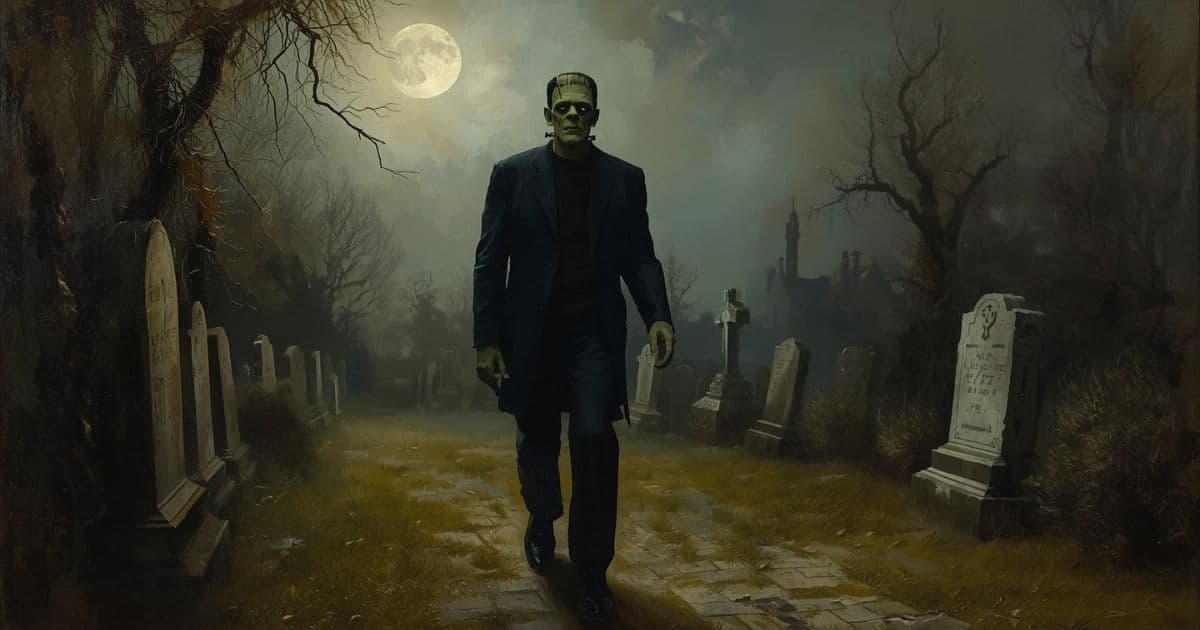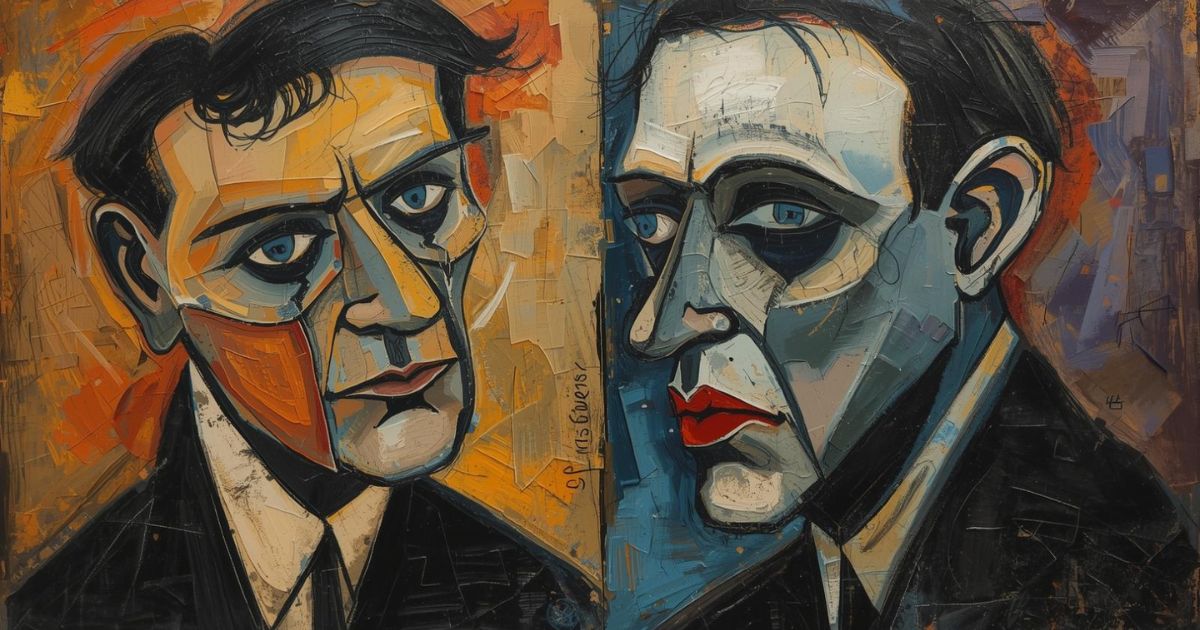
An excerpt from the original text.(complete · 1631 words)
was late in the afternoon, when Mr. Utterson found his way to Dr.
Jekyll’s door, where he was at once admitted by Poole, and carried down
by the kitchen offices and across a yard which had once been a garden,
to the building which was indifferently known as the laboratory or
dissecting rooms. The doctor had bought the house from the heirs of a
celebrated surgeon; and his own tastes being rather chemical than
anatomical, had changed the destination of the block at the bottom of
the garden. It was the first time that the lawyer had been received in
that part of his friend’s quarters; and he eyed the dingy, windowless
structure with curiosity, and gazed round with a distasteful sense of
strangeness as he crossed the theatre, once crowded with eager students
and now lying gaunt and silent, the tables laden with chemical
apparatus, the floor strewn with crates and littered with packing
straw, and the light falling dimly through the foggy cupola. At the
further end, a flight of stairs mounted to a door covered with red
baize; and through this, Mr. Utterson was at last received into the
doctor’s cabinet. It was a large room fitted round with glass presses,
furnished, among other things, with a cheval-glass and a business
table, and looking out upon the court by three dusty windows barred
with iron. The fire burned in the grate; a lamp was set lighted on the
chimney shelf, for even in the houses the fog began to lie thickly; and
there, close up to the warmth, sat Dr. Jekyll, looking deathly sick. He
did not rise to meet his visitor, but held out a cold hand and bade him
welcome in a changed voice.
“And now,” said Mr. Utterson, as soon as Poole had left them, “you have
heard the news?”
The doctor shuddered. “They were crying it in the square,” he said. “I
heard them in my dining-room.”
“One word,” said the lawyer. “Carew was my client, but so are you, and
I want to know what I am doing. You have not been mad enough to hide
this fellow?”
“Utterson, I swear to God,” cried the doctor, “I swear to God I will
never set eyes on him again. I bind my honour to you that I am done
with him in this world. It is all at an end. And indeed he does not
want my help; you do not know him as I do; he is safe, he is quite
safe; mark my words, he will never more be heard of.”
The lawyer listened gloomily; he did not like his friend’s feverish
manner. “You seem pretty sure of him,” said he; “and for your sake, I
hope you may be right. If it came to a trial, your name might appear.”
“I am quite sure of him,” replied Jekyll; “I have grounds for certainty
that I cannot share with any one. But there is one thing on which you
may advise me. I have—I have received a letter; and I am at a loss
whether I should show it to the police. I should like to leave it in
your hands, Utterson; you would judge wisely, I am sure; I have so
great a trust in you.”
“You fear, I suppose, that it might lead to his detection?” asked the
lawyer.
“No,” said the other. “I cannot say that I care what becomes of Hyde; I
am quite done with him. I was thinking of my own character, which this
hateful business has rather exposed.”
Utterson ruminated awhile; he was surprised at his friend’s
selfishness, and yet relieved by it. “Well,” said he, at last, “let me
see the letter.”
The letter was written in an odd, upright hand and signed “Edward
Hyde”: and it signified, briefly enough, that the writer’s benefactor,
Dr. Jekyll, whom he had long so unworthily repaid for a thousand
generosities, need labour under no alarm for his safety, as he had
means of escape on which he placed a sure dependence. The lawyer liked
this letter well enough; it put a better colour on the intimacy than he
had looked for; and he blamed himself for some of his past suspicions.
“Have you the envelope?” he asked.
“I burned it,” replied Jekyll, “before I thought what I was about. But
it bore no postmark. The note was handed in.”
“Shall I keep this and sleep upon it?” asked Utterson.
“I wish you to judge for me entirely,” was the reply. “I have lost
confidence in myself.”
“Well, I shall consider,” returned the lawyer. “And now one word more:
it was Hyde who dictated the terms in your will about that
disappearance?”
The doctor seemed seized with a qualm of faintness; he shut his mouth
tight and nodded.
“I knew it,” said Utterson. “He meant to murder you. You had a fine
escape.”
“I have had what is far more to the purpose,” returned the doctor
solemnly: “I have had a lesson—O God, Utterson, what a lesson I have
had!” And he covered his face for a moment with his hands.
On his way out, the lawyer stopped and had a word or two with Poole.
“By the bye,” said he, “there was a letter handed in to-day: what was
the messenger like?” But Poole was positive nothing had come except by
post; “and only circulars by that,” he added.
This news sent off the visitor with his fears renewed. Plainly the
letter had come by the laboratory door; possibly, indeed, it had been
written in the cabinet; and if that were so, it must be differently
judged, and handled with the more caution. The newsboys, as he went,
were crying themselves hoarse along the footways: “Special edition.
Shocking murder of an M.P.” That was the funeral oration of one friend
and client; and he could not help a certain apprehension lest the good
name of another should be sucked down in the eddy of the scandal. It
was, at least, a ticklish decision that he had to make; and
self-reliant as he was by habit, he began to cherish a longing for
advice. It was not to be had directly; but perhaps, he thought, it
might be fished for.
Presently after, he sat on one side of his own hearth, with Mr. Guest,
his head clerk, upon the other, and midway between, at a nicely
calculated distance from the fire, a bottle of a particular old wine
that had long dwelt unsunned in the foundations of his house. The fog
still slept on the wing above the drowned city, where the lamps
glimmered like carbuncles; and through the muffle and smother of these
fallen clouds, the procession of the town’s life was still rolling in
through the great arteries with a sound as of a mighty wind. But the
room was gay with firelight. In the bottle the acids were long ago
resolved; the imperial dye had softened with time, as the colour grows
richer in stained windows; and the glow of hot autumn afternoons on
hillside vineyards, was ready to be set free and to disperse the fogs
of London. Insensibly the lawyer melted. There was no man from whom he
kept fewer secrets than Mr. Guest; and he was not always sure that he
kept as many as he meant. Guest had often been on business to the
doctor’s; he knew Poole; he could scarce have failed to hear of Mr.
Hyde’s familiarity about the house; he might draw conclusions: was it
not as well, then, that he should see a letter which put that mystery
to right? and above all since Guest, being a great student and critic
of handwriting, would consider the step natural and obliging? The
clerk, besides, was a man of counsel; he could scarce read so strange a
document without dropping a remark; and by that remark Mr. Utterson
might shape his future course.
“This is a sad business about Sir Danvers,” he said.
“Yes, sir, indeed. It has elicited a great deal of public feeling,”
returned Guest. “The man, of course, was mad.”
“I should like to hear your views on that,” replied Utterson. “I have a
document here in his handwriting; it is between ourselves, for I scarce
know what to do about it; it is an ugly business at the best. But there
it is; quite in your way: a murderer’s autograph.”
Guest’s eyes brightened, and he sat down at once and studied it with
passion. “No sir,” he said: “not mad; but it is an odd hand.”
“And by all accounts a very odd writer,” added the lawyer.
Just then the servant entered with a note.
“Is that from Dr. Jekyll, sir?” inquired the clerk. “I thought I knew
the writing. Anything private, Mr. Utterson?”
“Only an invitation to dinner. Why? Do you want to see it?”
“One moment. I thank you, sir;” and the clerk laid the two sheets of
paper alongside and sedulously compared their contents. “Thank you,
sir,” he said at last, returning both; “it’s a very interesting
autograph.”
There was a pause, during which Mr. Utterson struggled with himself.
“Why did you compare them, Guest?” he inquired suddenly.
“Well, sir,” returned the clerk, “there’s a rather singular
resemblance; the two hands are in many points identical: only
differently sloped.”
“Rather quaint,” said Utterson.
“It is, as you say, rather quaint,” returned Guest.
“I wouldn’t speak of this note, you know,” said the master.
“No, sir,” said the clerk. “I understand.”
But no sooner was Mr. Utterson alone that night, than he locked the
note into his safe, where it reposed from that time forward. “What!” he
thought. “Henry Jekyll forge for a murderer!” And his blood ran cold in
his veins.
Master this chapter. Complete your experience
Purchase the complete book to access all chapters and support classic literature
As an Amazon Associate, we earn a small commission from qualifying purchases at no additional cost to you.
Available in paperback, hardcover, and e-book formats
Let's Analyse the Pattern
Good people become complicit in wrongdoing by choosing comfortable lies over hard truths to protect someone they care about.
Why This Matters
Connect literature to life
This chapter teaches how to spot forged communications and question convenient evidence that appears at suspicious times.
Practice This Today
This week, notice when important documents arrive with perfect timing—ask who delivered them, when, and compare writing styles if something feels off.
Now let's explore the literary elements.
Key Quotes & Analysis
"I have buried one friend today and I cannot afford to lose another through any act of mine."
Context: When Utterson questions him about Hyde after the Carew murder
Jekyll is manipulating Utterson's loyalty and friendship to avoid scrutiny. He's using emotional blackmail to prevent his friend from digging deeper into his connection with Hyde.
In Today's Words:
Don't make me lose you too - I can't handle any more drama right now.
"No sir, nothing. Only once a circular came from a chemist's shop."
Context: When Utterson asks if any letters were delivered for Jekyll
This simple statement destroys Jekyll's story about receiving a letter from Hyde. It proves the letter came from inside the house, revealing Jekyll's deception.
In Today's Words:
Nope, no mail today except some junk from the pharmacy.
"There's a rather singular resemblance; the two hands are in many points identical; only differently sloped."
Context: After comparing Jekyll's handwriting with the supposed letter from Hyde
This is the smoking gun that proves Jekyll forged the letter. The expert analysis reveals what Utterson suspected but didn't want to believe about his friend.
In Today's Words:
These look like the same person wrote both - just tilted the pen differently.
Thematic Threads
Loyalty
In This Chapter
Utterson's loyalty to Jekyll overrides his moral duty, leading him to hide evidence rather than confront his friend
Development
Evolved from earlier protective instincts into active complicity
In Your Life:
You might find yourself making excuses for a friend's destructive behavior instead of having a difficult conversation.
Deception
In This Chapter
Jekyll forges Hyde's letter to manipulate the narrative and protect his reputation
Development
Escalated from hiding identity to actively creating false evidence
In Your Life:
You might catch yourself creating elaborate stories to avoid taking responsibility for your mistakes.
Class
In This Chapter
Utterson's concern for Jekyll's reputation as a gentleman influences his decision to suppress evidence
Development
Continues the theme of social status protecting the wealthy from consequences
In Your Life:
You might notice how people with higher status get away with things that would destroy someone with less social capital.
Fear
In This Chapter
Jekyll's terror drives him to desperate deception, while Utterson's fear of losing his friend enables it
Development
Fear has progressed from anxiety to panic, driving increasingly desperate actions
In Your Life:
You might realize that your biggest mistakes often come from decisions made in fear rather than wisdom.
Truth
In This Chapter
The handwriting analysis reveals the truth, but Utterson chooses to bury it rather than act on it
Development
Truth becomes something to be hidden rather than revealed
In Your Life:
You might find yourself avoiding conversations or situations where uncomfortable truths might surface.
You now have the context. Time to form your own thoughts.
Discussion Questions
- 1
What does Utterson discover about the letter supposedly written by Hyde, and how does he react to this discovery?
analysis • surface - 2
Why do you think Utterson chooses to lock away the evidence rather than confront Jekyll directly about the forged letter?
analysis • medium - 3
Where have you seen people cover up or make excuses for someone they care about, even when that person has done something wrong?
application • medium - 4
When is protecting someone actually enabling them to cause more harm? How can you tell the difference between loyalty and complicity?
application • deep - 5
What does this chapter reveal about how crisis situations test our moral boundaries and the relationships we value most?
reflection • deep
Critical Thinking Exercise
The Loyalty Test
Think of a situation where someone you care about did something questionable or harmful. Write down three responses: what you actually did, what you wish you had done, and what you would do if faced with the same situation today. Then identify which response truly serves that person's best interests long-term.
Consider:
- •Consider whether your response protected the person or protected you from discomfort
- •Think about who else might be affected by staying silent or covering up
- •Reflect on whether enabling someone's bad behavior is actually a form of harm
Journaling Prompt
Write about a time when you had to choose between loyalty to someone and doing what you believed was right. What did you learn about yourself from that choice?
Coming Up Next...
Chapter 6: When Friends Fall Apart
Hyde vanishes completely despite massive rewards for his capture, but disturbing stories about his past cruelty begin to surface. The police uncover a trail of violence and strange associates, painting a picture of a man who seemed to inspire hatred wherever he went.