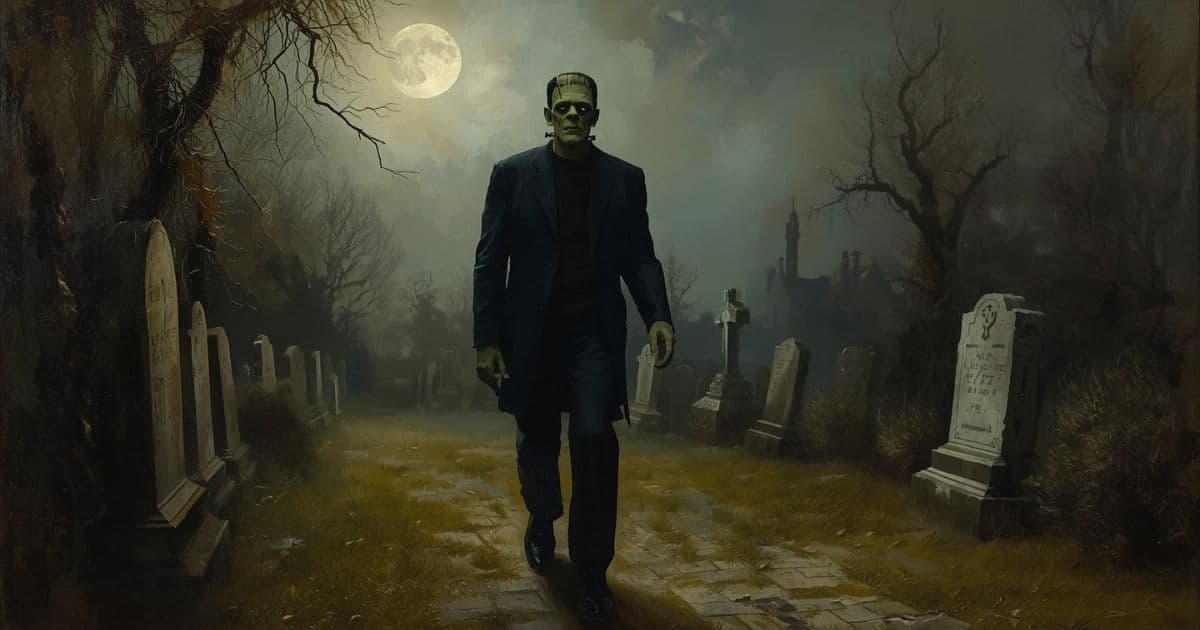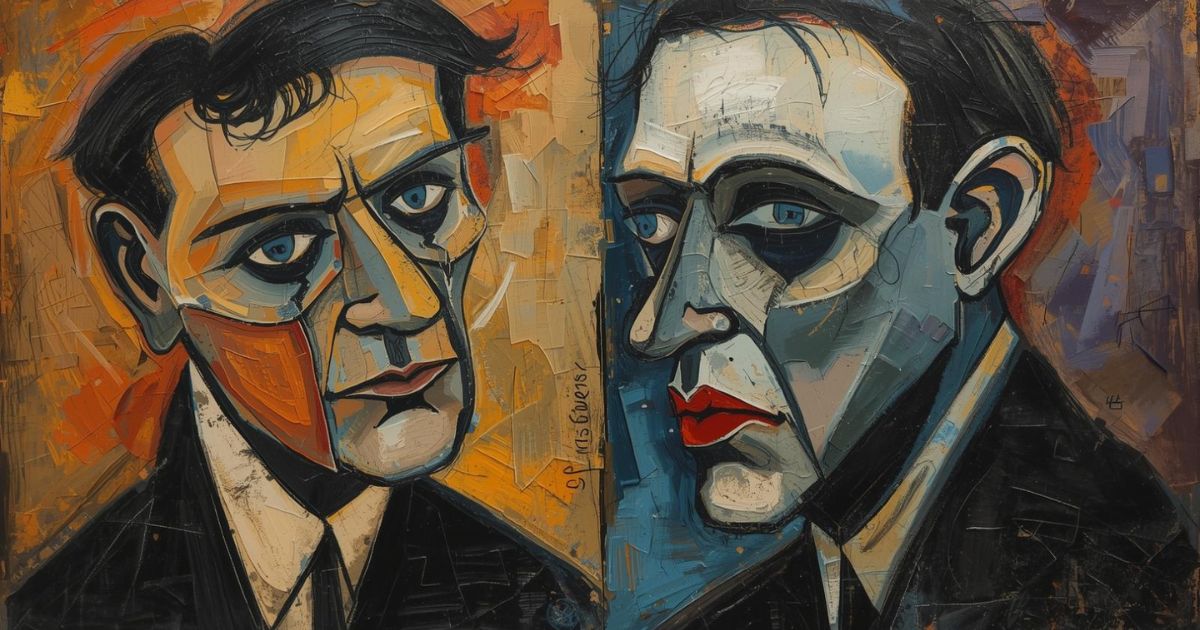
An excerpt from the original text.(complete · 2394 words)
r. Utterson the lawyer was a man of a rugged countenance that was
never lighted by a smile; cold, scanty and embarrassed in discourse;
backward in sentiment; lean, long, dusty, dreary and yet somehow
lovable. At friendly meetings, and when the wine was to his taste,
something eminently human beaconed from his eye; something indeed which
never found its way into his talk, but which spoke not only in these
silent symbols of the after-dinner face, but more often and loudly in
the acts of his life. He was austere with himself; drank gin when he
was alone, to mortify a taste for vintages; and though he enjoyed the
theatre, had not crossed the doors of one for twenty years. But he had
an approved tolerance for others; sometimes wondering, almost with
envy, at the high pressure of spirits involved in their misdeeds; and
in any extremity inclined to help rather than to reprove. “I incline to
Cain’s heresy,” he used to say quaintly: “I let my brother go to the
devil in his own way.” In this character, it was frequently his fortune
to be the last reputable acquaintance and the last good influence in
the lives of downgoing men. And to such as these, so long as they came
about his chambers, he never marked a shade of change in his demeanour.
No doubt the feat was easy to Mr. Utterson; for he was undemonstrative
at the best, and even his friendship seemed to be founded in a similar
catholicity of good-nature. It is the mark of a modest man to accept
his friendly circle ready-made from the hands of opportunity; and that
was the lawyer’s way. His friends were those of his own blood or those
whom he had known the longest; his affections, like ivy, were the
growth of time, they implied no aptness in the object. Hence, no doubt
the bond that united him to Mr. Richard Enfield, his distant kinsman,
the well-known man about town. It was a nut to crack for many, what
these two could see in each other, or what subject they could find in
common. It was reported by those who encountered them in their Sunday
walks, that they said nothing, looked singularly dull and would hail
with obvious relief the appearance of a friend. For all that, the two
men put the greatest store by these excursions, counted them the chief
jewel of each week, and not only set aside occasions of pleasure, but
even resisted the calls of business, that they might enjoy them
uninterrupted.
It chanced on one of these rambles that their way led them down a
by-street in a busy quarter of London. The street was small and what is
called quiet, but it drove a thriving trade on the weekdays. The
inhabitants were all doing well, it seemed, and all emulously hoping to
do better still, and laying out the surplus of their gains in coquetry;
so that the shop fronts stood along that thoroughfare with an air of
invitation, like rows of smiling saleswomen. Even on Sunday, when it
veiled its more florid charms and lay comparatively empty of passage,
the street shone out in contrast to its dingy neighbourhood, like a fire
in a forest; and with its freshly painted shutters, well-polished
brasses, and general cleanliness and gaiety of note, instantly caught
and pleased the eye of the passenger.
Two doors from one corner, on the left hand going east the line was
broken by the entry of a court; and just at that point a certain
sinister block of building thrust forward its gable on the street. It
was two storeys high; showed no window, nothing but a door on the lower
storey and a blind forehead of discoloured wall on the upper; and bore
in every feature, the marks of prolonged and sordid negligence. The
door, which was equipped with neither bell nor knocker, was blistered
and distained. Tramps slouched into the recess and struck matches on
the panels; children kept shop upon the steps; the schoolboy had tried
his knife on the mouldings; and for close on a generation, no one had
appeared to drive away these random visitors or to repair their
ravages.
Mr. Enfield and the lawyer were on the other side of the by-street; but
when they came abreast of the entry, the former lifted up his cane and
pointed.
“Did you ever remark that door?” he asked; and when his companion had
replied in the affirmative, “It is connected in my mind,” added he,
“with a very odd story.”
“Indeed?” said Mr. Utterson, with a slight change of voice, “and what
was that?”
“Well, it was this way,” returned Mr. Enfield: “I was coming home from
some place at the end of the world, about three o’clock of a black
winter morning, and my way lay through a part of town where there was
literally nothing to be seen but lamps. Street after street and all the
folks asleep—street after street, all lighted up as if for a procession
and all as empty as a church—till at last I got into that state of mind
when a man listens and listens and begins to long for the sight of a
policeman. All at once, I saw two figures: one a little man who was
stumping along eastward at a good walk, and the other a girl of maybe
eight or ten who was running as hard as she was able down a cross
street. Well, sir, the two ran into one another naturally enough at the
corner; and then came the horrible part of the thing; for the man
trampled calmly over the child’s body and left her screaming on the
ground. It sounds nothing to hear, but it was hellish to see. It wasn’t
like a man; it was like some damned Juggernaut. I gave a few halloa,
took to my heels, collared my gentleman, and brought him back to where
there was already quite a group about the screaming child. He was
perfectly cool and made no resistance, but gave me one look, so ugly
that it brought out the sweat on me like running. The people who had
turned out were the girl’s own family; and pretty soon, the doctor, for
whom she had been sent, put in his appearance. Well, the child was not
much the worse, more frightened, according to the sawbones; and there
you might have supposed would be an end to it. But there was one
curious circumstance. I had taken a loathing to my gentleman at first
sight. So had the child’s family, which was only natural. But the
doctor’s case was what struck me. He was the usual cut and dry
apothecary, of no particular age and colour, with a strong Edinburgh
accent and about as emotional as a bagpipe. Well, sir, he was like the
rest of us; every time he looked at my prisoner, I saw that sawbones
turn sick and white with the desire to kill him. I knew what was in his
mind, just as he knew what was in mine; and killing being out of the
question, we did the next best. We told the man we could and would make
such a scandal out of this as should make his name stink from one end
of London to the other. If he had any friends or any credit, we
undertook that he should lose them. And all the time, as we were
pitching it in red hot, we were keeping the women off him as best we
could for they were as wild as harpies. I never saw a circle of such
hateful faces; and there was the man in the middle, with a kind of
black sneering coolness—frightened too, I could see that—but carrying
it off, sir, really like Satan. ‘If you choose to make capital out of
this accident,’ said he, ‘I am naturally helpless. No gentleman but
wishes to avoid a scene,’ says he. ‘Name your figure.’ Well, we screwed
him up to a hundred pounds for the child’s family; he would have
clearly liked to stick out; but there was something about the lot of us
that meant mischief, and at last he struck. The next thing was to get
the money; and where do you think he carried us but to that place with
the door?—whipped out a key, went in, and presently came back with the
matter of ten pounds in gold and a cheque for the balance on Coutts’s,
drawn payable to bearer and signed with a name that I can’t mention,
though it’s one of the points of my story, but it was a name at least
very well known and often printed. The figure was stiff; but the
signature was good for more than that if it was only genuine. I took
the liberty of pointing out to my gentleman that the whole business
looked apocryphal, and that a man does not, in real life, walk into a
cellar door at four in the morning and come out with another man’s
cheque for close upon a hundred pounds. But he was quite easy and
sneering. ‘Set your mind at rest,’ says he, ‘I will stay with you till
the banks open and cash the cheque myself.’ So we all set off, the
doctor, and the child’s father, and our friend and myself, and passed
the rest of the night in my chambers; and next day, when we had
breakfasted, went in a body to the bank. I gave in the cheque myself,
and said I had every reason to believe it was a forgery. Not a bit of
it. The cheque was genuine.”
“Tut-tut!” said Mr. Utterson.
“I see you feel as I do,” said Mr. Enfield. “Yes, it’s a bad story. For
my man was a fellow that nobody could have to do with, a really
damnable man; and the person that drew the cheque is the very pink of
the proprieties, celebrated too, and (what makes it worse) one of your
fellows who do what they call good. Blackmail, I suppose; an honest man
paying through the nose for some of the capers of his youth. Black Mail
House is what I call the place with the door, in consequence. Though
even that, you know, is far from explaining all,” he added, and with
the words fell into a vein of musing.
From this he was recalled by Mr. Utterson asking rather suddenly: “And
you don’t know if the drawer of the cheque lives there?”
“A likely place, isn’t it?” returned Mr. Enfield. “But I happen to have
noticed his address; he lives in some square or other.”
“And you never asked about the—place with the door?” said Mr. Utterson.
“No, sir; I had a delicacy,” was the reply. “I feel very strongly about
putting questions; it partakes too much of the style of the day of
judgment. You start a question, and it’s like starting a stone. You sit
quietly on the top of a hill; and away the stone goes, starting others;
and presently some bland old bird (the last you would have thought of)
is knocked on the head in his own back garden and the family have to
change their name. No sir, I make it a rule of mine: the more it looks
like Queer Street, the less I ask.”
“A very good rule, too,” said the lawyer.
“But I have studied the place for myself,” continued Mr. Enfield. “It
seems scarcely a house. There is no other door, and nobody goes in or
out of that one but, once in a great while, the gentleman of my
adventure. There are three windows looking on the court on the first
floor; none below; the windows are always shut but they’re clean. And
then there is a chimney which is generally smoking; so somebody must
live there. And yet it’s not so sure; for the buildings are so packed
together about the court, that it’s hard to say where one ends and
another begins.”
The pair walked on again for a while in silence; and then “Enfield,”
said Mr. Utterson, “that’s a good rule of yours.”
“Yes, I think it is,” returned Enfield.
“But for all that,” continued the lawyer, “there’s one point I want to
ask. I want to ask the name of that man who walked over the child.”
“Well,” said Mr. Enfield, “I can’t see what harm it would do. It was a
man of the name of Hyde.”
“Hm,” said Mr. Utterson. “What sort of a man is he to see?”
“He is not easy to describe. There is something wrong with his
appearance; something displeasing, something down-right detestable. I
never saw a man I so disliked, and yet I scarce know why. He must be
deformed somewhere; he gives a strong feeling of deformity, although I
couldn’t specify the point. He’s an extraordinary looking man, and yet
I really can name nothing out of the way. No, sir; I can make no hand
of it; I can’t describe him. And it’s not want of memory; for I declare
I can see him this moment.”
Mr. Utterson again walked some way in silence and obviously under a
weight of consideration. “You are sure he used a key?” he inquired at
last.
“My dear sir...” began Enfield, surprised out of himself.
“Yes, I know,” said Utterson; “I know it must seem strange. The fact
is, if I do not ask you the name of the other party, it is because I
know it already. You see, Richard, your tale has gone home. If you have
been inexact in any point you had better correct it.”
“I think you might have warned me,” returned the other with a touch of
sullenness. “But I have been pedantically exact, as you call it. The
fellow had a key; and what’s more, he has it still. I saw him use it
not a week ago.”
Mr. Utterson sighed deeply but said never a word; and the young man
presently resumed. “Here is another lesson to say nothing,” said he. “I
am ashamed of my long tongue. Let us make a bargain never to refer to
this again.”
“With all my heart,” said the lawyer. “I shake hands on that, Richard.”
Master this chapter. Complete your experience
Purchase the complete book to access all chapters and support classic literature
As an Amazon Associate, we earn a small commission from qualifying purchases at no additional cost to you.
Available in paperback, hardcover, and e-book formats
Let's Analyse the Pattern
The recognition that some questions, once asked, unleash consequences that harm the very people you're trying to help.
Why This Matters
Connect literature to life
This chapter teaches how to recognize when someone's reluctance to share information is actually protecting vulnerable people from harm.
Practice This Today
This week, notice when colleagues deflect questions about workplace problems—they might be shielding someone who can't afford exposure.
Now let's explore the literary elements.
Key Quotes & Analysis
"I incline to Cain's heresy: I let my brother go to the devil in his own way."
Context: Explaining his philosophy of not judging others while still helping them
This reveals Utterson's core principle - he believes people have the right to make their own mistakes without interference, but he won't abandon them. It's a sophisticated approach to loyalty that respects both friendship and free will.
In Today's Words:
I'm not going to tell you how to live your life, but I'll be here when you need me.
"He was perfectly cool and made no resistance, but gave me one look, so ugly that it brought out the sweat on me like running."
Context: Describing Hyde's reaction when caught trampling the child
This shows Hyde's complete lack of remorse or fear - he's not ashamed or worried about consequences. The physical reaction he provokes in others suggests something fundamentally wrong with him that goes beyond normal human evil.
In Today's Words:
He didn't care that he got caught, and the way he looked at me made my skin crawl like nothing I'd ever experienced.
"I saw that Sawbones turn sick and white with the desire to kill him."
Context: Describing how the doctor reacted to seeing Hyde
Even a medical professional dedicated to healing wanted to commit violence against Hyde. This emphasizes how Hyde inspires irrational hatred in good people, suggesting he represents something beyond normal human wickedness.
In Today's Words:
This guy made even the doctor want to punch him, and doctors are supposed to help everyone.
Thematic Threads
Class
In This Chapter
Hyde's ability to buy his way out of consequences with a respectable man's check reveals how money creates different rules for different people
Development
Introduced here
In Your Life:
You might notice how financial resources determine which mistakes get overlooked and which ones destroy lives
Identity
In This Chapter
Hyde inspires immediate, inexplicable hatred in everyone who sees him, suggesting something fundamentally wrong with his very essence
Development
Introduced here
In Your Life:
You might recognize that gut feeling when someone seems 'off' in ways you can't quite articulate
Social Expectations
In This Chapter
Utterson embodies the ideal of judging no one while helping everyone, especially society's outcasts
Development
Introduced here
In Your Life:
You might see this in how you balance personal values with social pressure to condemn certain people
Human Relationships
In This Chapter
The bond between Utterson and Enfield is built on mutual respect for boundaries and shared understanding of when not to pry
Development
Introduced here
In Your Life:
You might notice how your strongest relationships often depend on knowing what questions not to ask
You now have the context. Time to form your own thoughts.
Discussion Questions
- 1
Why do both Utterson and Enfield choose not to ask more questions about Hyde, even though they're clearly disturbed by what they know?
analysis • surface - 2
What does Enfield mean when he says that asking questions can start stones rolling that 'crush innocent people'? How does this connect to Utterson's philosophy of helping people society has written off?
analysis • medium - 3
Think about your workplace, family, or community. Where do you see people practicing 'strategic ignorance' - choosing not to dig deeper into problems because they understand the consequences?
application • medium - 4
How do you decide when to investigate a problem versus when to offer support without asking questions? What signals help you recognize when curiosity might cause more harm than help?
application • deep - 5
Both men show different forms of wisdom about human complexity - Utterson through non-judgment, Enfield through protective discretion. What does this suggest about the different ways people can show care and moral strength?
reflection • deep
Critical Thinking Exercise
Map Your Protective Silence Zones
Think about the relationships in your life where you practice strategic ignorance - situations where you choose not to ask questions or dig deeper because you understand it would cause harm. Create a simple list of these situations and identify what you offer instead of curiosity (support, presence, practical help, etc.). Consider both times when this approach worked well and times when you struggled with the balance.
Consider:
- •Focus on situations where your restraint protected someone, not where you avoided conflict for yourself
- •Notice the difference between helpful strategic ignorance and harmful willful blindness
- •Consider how you signal availability and care without being intrusive
Journaling Prompt
Write about a time when someone showed you the gift of not asking questions when you needed privacy or space to work through something. How did their restraint help you? What did they offer instead of curiosity that made you feel supported?
Coming Up Next...
Chapter 2: The Lawyer's Obsession
Utterson returns home deeply troubled by what he's learned. Unable to rest, he retreats to his study to examine something that will reveal why Hyde's name struck him like a physical blow - and why this mystery hits closer to home than anyone could imagine.