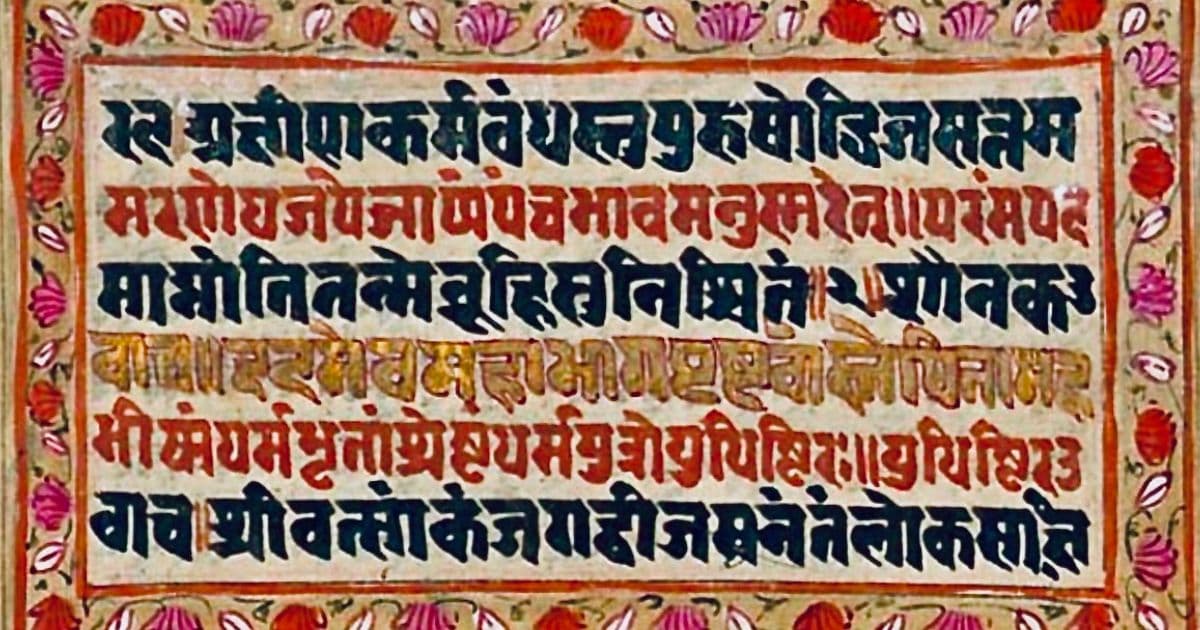
An excerpt from the original text.(complete · 315 words)
appiness
197. Let us live happily then, not hating those who hate us! among men
who hate us let us dwell free from hatred!
198. Let us live happily then, free from ailments among the ailing!
among men who are ailing let us dwell free from ailments!
199. Let us live happily then, free from greed among the greedy! among
men who are greedy let us dwell free from greed!
200. Let us live happily then, though we call nothing our own! We shall
be like the bright gods, feeding on happiness!
201. Victory breeds hatred, for the conquered is unhappy. He who has
given up both victory and defeat, he, the contented, is happy.
202. There is no fire like passion; there is no losing throw like
hatred; there is no pain like this body; there is no happiness higher
than rest.
203. Hunger is the worst of diseases, the body the greatest of pains; if
one knows this truly, that is Nirvana, the highest happiness.
204. Health is the greatest of gifts, contentedness the best riches;
trust is the best of relationships, Nirvana the highest happiness.
205. He who has tasted the sweetness of solitude and tranquillity,
is free from fear and free from sin, while he tastes the sweetness of
drinking in the law.
206. The sight of the elect (Arya) is good, to live with them is always
happiness; if a man does not see fools, he will be truly happy.
207. He who walks in the company of fools suffers a long way; company
with fools, as with an enemy, is always painful; company with the wise
is pleasure, like meeting with kinsfolk.
208. Therefore, one ought to follow the wise, the intelligent, the
learned, the much enduring, the dutiful, the elect; one ought to follow
a good and wise man, as the moon follows the path of the stars.
Master this chapter. Complete your experience
Purchase the complete book to access all chapters and support classic literature
As an Amazon Associate, we earn a small commission from qualifying purchases at no additional cost to you.
Available in paperback, hardcover, and e-book formats
Let's Analyse the Pattern
We unconsciously absorb the energy and behaviors of those around us, but conscious awareness allows us to filter what we let in.
Why This Matters
Connect literature to life
This chapter teaches how to remain centered and professional while others around you choose chaos and negativity.
Practice This Today
This week, notice when you start absorbing someone else's bad mood or drama - pause and ask yourself if their energy serves your goals before letting it in.
Now let's explore the literary elements.
Key Quotes & Analysis
"Let us live happily then, not hating those who hate us! among men who hate us let us dwell free from hatred!"
Context: Opening advice on how to maintain peace around difficult people
This sets the tone for the entire chapter - you can choose your response regardless of how others treat you. It's about emotional independence and not letting other people's energy control your mood.
In Today's Words:
Don't let toxic people turn you toxic - you can stay positive even when they're being negative.
"Victory breeds hatred, for the conquered is unhappy. He who has given up both victory and defeat, he, the contented, is happy."
Context: Explaining why constantly trying to win creates more problems
This reveals that the real problem isn't losing - it's playing the game at all. When you always need to be right or win, you create enemies and stress for yourself.
In Today's Words:
Always needing to win just creates more enemies - the happiest people don't play that game.
"There is no fire like passion; there is no losing throw like hatred; there is no pain like this body; there is no happiness higher than rest."
Context: Identifying the main sources of human suffering
Buddha ranks our internal struggles as worse than external problems. Uncontrolled emotions and physical desires cause more pain than outside circumstances.
In Today's Words:
Your own anger and obsessions will hurt you more than anything anyone else can do to you.
"Health is the greatest of gifts, contentedness the best riches; trust is the best of relationships, Nirvana the highest happiness."
Context: Defining what really matters in life
This completely reframes what success looks like. Instead of money, status, or power, Buddha focuses on basic well-being, satisfaction, and reliable relationships.
In Today's Words:
Being healthy, satisfied, and having people you can count on beats being rich and miserable.
Thematic Threads
Social Environment
In This Chapter
Buddha emphasizes how our companions shape us - wise people elevate us, fools drag us down
Development
Introduced here
In Your Life:
You become like the five people you spend the most time with, whether you realize it or not.
Inner Peace
In This Chapter
Living contentedly among hateful, sick, or greedy people by maintaining internal calm
Development
Introduced here
In Your Life:
Your peace of mind is your responsibility, not dependent on others behaving well.
Personal Boundaries
In This Chapter
Not participating in others' drama or absorbing their negative energy
Development
Introduced here
In Your Life:
You can care about people without taking on their problems as your own.
True Victory
In This Chapter
Distinguishing between winning at others' expense versus inner contentment
Development
Introduced here
In Your Life:
Real success means sleeping well at night, not just getting ahead.
Conscious Choice
In This Chapter
Actively seeking wise mentors and role models rather than defaulting to whoever is around
Development
Introduced here
In Your Life:
You can choose your influences instead of letting them choose you.
You now have the context. Time to form your own thoughts.
Discussion Questions
- 1
Buddha says we can live peacefully among hateful or greedy people without becoming like them. What specific strategies does he suggest for staying calm in chaotic environments?
analysis • surface - 2
Why does Buddha argue that our social circle is more important than our circumstances? What's the difference between being around wise people versus foolish ones?
analysis • medium - 3
Think about your workplace, family, or social media feeds. Where do you see people absorbing negative energy from those around them? Where do you see people successfully filtering out toxicity?
application • medium - 4
Buddha distinguishes between winning at all costs and true victory through inner contentment. How would you apply this distinction to a current conflict or competition in your life?
application • deep - 5
What does this chapter reveal about the human tendency to mirror our environment? Why are we so influenced by the people we spend time with, and how can we use this knowledge intentionally?
reflection • deep
Critical Thinking Exercise
Map Your Energy Ecosystem
Draw a simple map of the people you interact with regularly - family, coworkers, friends, online communities. Mark each person or group as either an 'energy giver' (leaves you feeling positive/motivated) or 'energy taker' (leaves you feeling drained/negative). Then identify which qualities from the energy givers you want to absorb and which toxic patterns from energy takers you need to filter out.
Consider:
- •Notice patterns - are energy takers concentrated in certain areas of your life?
- •Consider whether some energy takers are unavoidable but manageable with better boundaries
- •Look for opportunities to spend more time with energy givers or find new ones
Journaling Prompt
Write about a specific situation where you successfully stayed calm while others around you were chaotic or negative. What did you do differently? How can you apply that same approach to current challenges?
Coming Up Next...
Chapter 16: The Hidden Cost of Wanting
Having learned about true happiness, we next explore the seductive but dangerous world of pleasure - and why chasing temporary highs can derail our journey toward lasting peace.