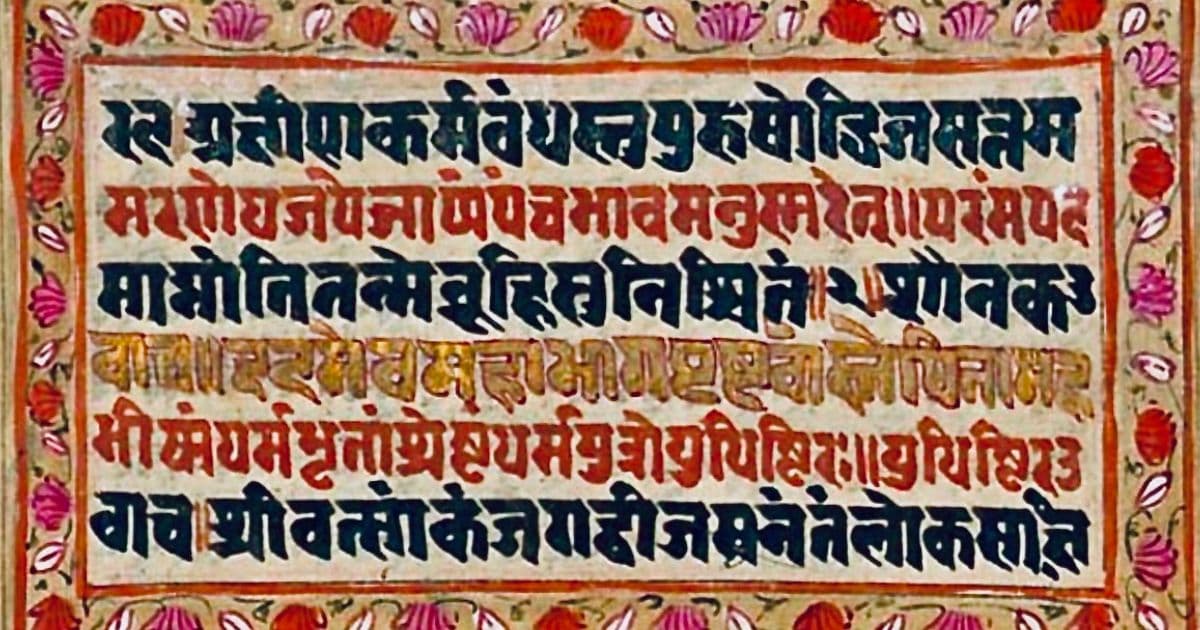
An excerpt from the original text.(complete · 541 words)
18:041:001 anst thou draw out leviathan with an hook? or his tongue with
a cord which thou lettest down?
18:041:002 Canst thou put an hook into his nose? or bore his jaw through
with a thorn?
18:041:003 Will he make many supplications unto thee? will he speak soft
words unto thee?
18:041:004 Will he make a covenant with thee? wilt thou take him for a
servant for ever?
18:041:005 Wilt thou play with him as with a bird? or wilt thou bind him
for thy maidens?
18:041:006 Shall the companions make a banquet of him? shall they part
him among the merchants?
18:041:007 Canst thou fill his skin with barbed irons? or his head with
fish spears?
18:041:008 Lay thine hand upon him, remember the battle, do no more.
18:041:009 Behold, the hope of him is in vain: shall not one be cast down
even at the sight of him?
18:041:010 None is so fierce that dare stir him up: who then is able to
stand before me?
18:041:011 Who hath prevented me, that I should repay him? whatsoever is
under the whole heaven is mine.
18:041:012 I will not conceal his parts, nor his power, nor his comely
proportion.
18:041:013 Who can discover the face of his garment? or who can come to
him with his double bridle?
18:041:014 Who can open the doors of his face? his teeth are terrible
round about.
18:041:015 His scales are his pride, shut up together as with a close
seal.
18:041:016 One is so near to another, that no air can come between them.
18:041:017 They are joined one to another, they stick together, that they
cannot be sundered.
18:041:018 By his neesings a light doth shine, and his eyes are like the
eyelids of the morning.
18:041:019 Out of his mouth go burning lamps, and sparks of fire leap
out.
18:041:020 Out of his nostrils goeth smoke, as out of a seething pot or
caldron.
18:041:021 His breath kindleth coals, and a flame goeth out of his mouth.
18:041:022 In his neck remaineth strength, and sorrow is turned into joy
before him.
18:041:023 The flakes of his flesh are joined together: they are firm in
themselves; they cannot be moved.
18:041:024 His heart is as firm as a stone; yea, as hard as a piece of
the nether millstone.
18:041:025 When he raiseth up himself, the mighty are afraid: by reason
of breakings they purify themselves.
18:041:026 The sword of him that layeth at him cannot hold: the spear,
the dart, nor the habergeon.
18:041:027 He esteemeth iron as straw, and brass as rotten wood.
18:041:028 The arrow cannot make him flee: slingstones are turned with
him into stubble.
18:041:029 Darts are counted as stubble: he laugheth at the shaking of a
spear.
18:041:030 Sharp stones are under him: he spreadeth sharp pointed things
upon the mire.
18:041:031 He maketh the deep to boil like a pot: he maketh the sea like
a pot of ointment.
18:041:032 He maketh a path to shine after him; one would think the deep
to be hoary.
18:041:033 Upon earth there is not his like, who is made without fear.
18:041:034 He beholdeth all high things: he is a king over all the
children of pride.
Master this chapter. Complete your experience
Purchase the complete book to access all chapters and support classic literature
As an Amazon Associate, we earn a small commission from qualifying purchases at no additional cost to you.
Available in paperback, hardcover, and e-book formats
Let's Analyse the Pattern
The encounter with situations that cannot be controlled, defeated, or negotiated with through human effort alone.
Why This Matters
Connect literature to life
This chapter teaches how to identify situations where resistance only creates more suffering and strategic surrender becomes wisdom.
Practice This Today
This week, notice when you're fighting something that doesn't fight back but simply exists—like bureaucracy, chronic illness, or economic downturns—and ask what you can actually control in that situation.
Now let's explore the literary elements.
Key Quotes & Analysis
"Canst thou draw out leviathan with an hook?"
Context: God begins His description by asking if Job can catch this monster like a fish
This opening question sets the tone for the entire chapter. It's not really about fishing - it's about whether Job thinks he can control the uncontrollable forces in his life.
In Today's Words:
You think you can just reel in whatever's destroying your life?
"None is so fierce that dare stir him up: who then is able to stand before me?"
Context: After describing the Leviathan's power, God makes the connection to His own authority
This is the key moment where God reveals His point. If no one can face this creature, how can Job challenge its Creator? It's about recognizing when you're completely outmatched.
In Today's Words:
If nobody's brave enough to mess with this thing, what makes you think you can argue with the one who made it?
"His scales are his pride, shut up together as with a close seal"
Context: Describing the Leviathan's impenetrable armor
This imagery shows how some problems have no weak spots, no way in. Sometimes life presents challenges that can't be solved by finding the right approach or trying harder.
In Today's Words:
This thing is locked up tighter than Fort Knox - there's no getting through to it.
"Lay thine hand upon him, remember the battle, do no more"
Context: Warning what happens to anyone who tries to fight the Leviathan
God is saying that one encounter with forces beyond your control teaches you never to try again. Some lessons only need to be learned once.
In Today's Words:
Touch this thing once and you'll never be stupid enough to try it again.
Thematic Threads
Human Limitations
In This Chapter
God uses Leviathan to demonstrate the absolute boundaries of human power and control
Development
Builds from Job's initial confidence through increasing humility to final recognition of limits
In Your Life:
You might see this when facing chronic illness, economic forces, or family dynamics beyond your control
Wisdom vs Knowledge
In This Chapter
True wisdom means knowing when you're outmatched, not just accumulating information
Development
Evolved from Job's intellectual arguments to deeper understanding of practical wisdom
In Your Life:
You might see this when book knowledge fails you in real crisis situations
Power Dynamics
In This Chapter
The chapter establishes clear hierarchy between creator and creation, controller and controlled
Development
Developed from Job questioning authority to recognizing legitimate power structures
In Your Life:
You might see this in workplace hierarchies or when dealing with institutions like healthcare or legal systems
Acceptance
In This Chapter
Job must accept that some forces are beyond human reach without losing personal dignity
Development
Progressed from resistance and argument to mature acceptance of reality
In Your Life:
You might see this when learning to live with permanent changes or losses in your life
Humility
In This Chapter
Humility is presented not as weakness but as accurate self-assessment in face of greater forces
Development
Transformed from Job's wounded pride to genuine humility without self-destruction
In Your Life:
You might see this when admitting you need help or can't handle everything alone
You now have the context. Time to form your own thoughts.
Discussion Questions
- 1
What specific details does God use to describe Leviathan's power, and why do you think these images would have been particularly striking to ancient people?
analysis • surface - 2
Why does God choose to describe an untameable creature rather than simply telling Job 'you can't understand everything'?
analysis • medium - 3
What are some modern 'Leviathans' - forces in today's world that people often try to control but can't actually defeat through willpower alone?
application • medium - 4
How can you tell the difference between a problem you should keep fighting and a force you need to learn to navigate around?
application • deep - 5
What does this chapter suggest about the relationship between accepting limitations and maintaining personal dignity?
reflection • deep
Critical Thinking Exercise
Map Your Personal Leviathans
Create two lists: situations in your life where you've been fighting against truly untameable forces, and situations where your efforts can actually make a difference. For each 'Leviathan' situation, identify one way you could redirect your energy from fighting the force to navigating around it. This isn't about giving up - it's about fighting smarter.
Consider:
- •Consider whether you're exhausting yourself trying to change things completely outside your control
- •Think about the difference between influence (which you might have) and control (which you might not)
- •Ask yourself: 'Am I trying to defeat this, or adapt to it?'
Journaling Prompt
Write about a time when you finally stopped fighting an untameable force in your life. What changed when you shifted from resistance to navigation? How did this affect your energy and relationships?
Coming Up Next...
Chapter 42: Job's Restoration and New Beginning
After God's overwhelming display of cosmic power and untameable forces, Job finally responds. His answer will reveal whether he has learned the lesson about human limitations and divine mystery.