
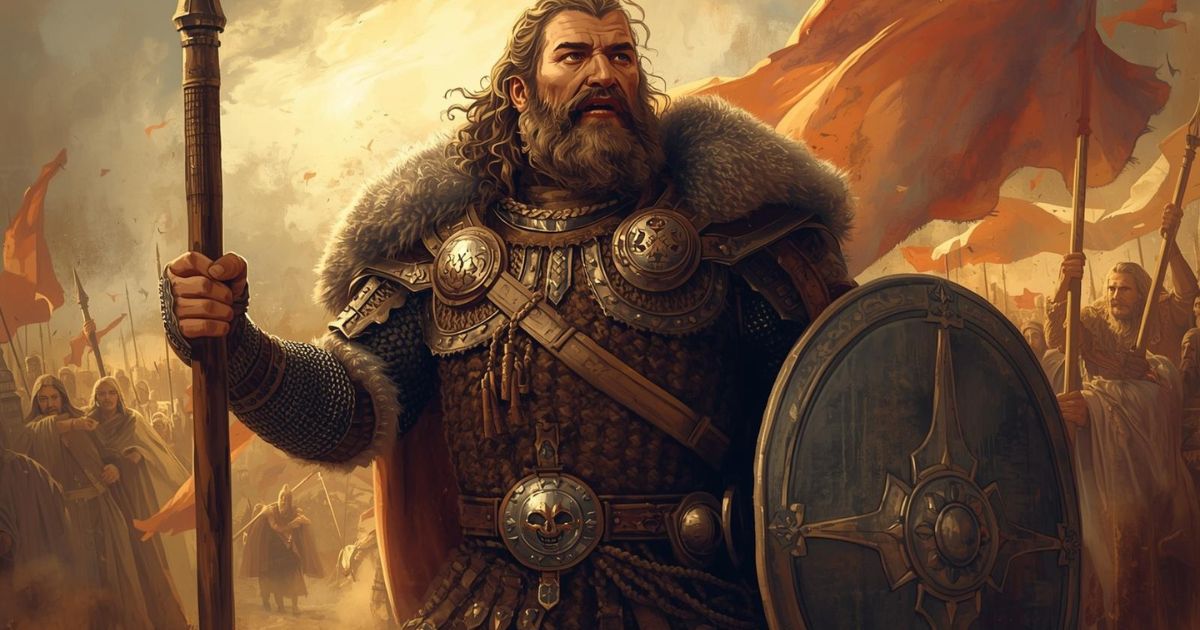
An excerpt from the original text.(complete · 713 words)
SORROW AT PARTING.


{Beowulf's farewell.}

          Beowulf spake, Ecgtheow's offspring:
          "We men of the water wish to declare now
          Fared from far-lands, we're firmly determined
          To seek King Higelac. Here have we fitly
        5 Been welcomed and feasted, as heart would desire it;
          Good was the greeting. If greater affection
          I am anywise able ever on earth to
          Gain at thy hands, ruler of heroes,
          Than yet I have done, I shall quickly be ready

{I shall be ever ready to aid thee.}

       10 For combat and conflict. O'er the course of the waters
          Learn I that neighbors alarm thee with terror,
          As haters did whilom, I hither will bring thee
          For help unto heroes henchmen by thousands.

{My liegelord will encourage me in aiding thee.}

          I know as to Higelac, the lord of the Geatmen,
       15 Though young in years, he yet will permit me,
          By words and by works, ward of the people,
          Fully to furnish thee forces and bear thee
          My lance to relieve thee, if liegemen shall fail thee,
          And help of my hand-strength; if Hrethric be treating,
[63]   20 Bairn of the king, at the court of the Geatmen,
          He thereat may find him friends in abundance:
          Faraway countries he were better to seek for
          Who trusts in himself." Hrothgar discoursed then,
          Making rejoinder: "These words thou hast uttered
       25 All-knowing God hath given thy spirit!

{O Beowulf, thou art wise beyond thy years.}

          Ne'er heard I an earlman thus early in life
          More clever in speaking: thou'rt cautious of spirit,
          Mighty of muscle, in mouth-answers prudent.
          I count on the hope that, happen it ever
       30 That missile shall rob thee of Hrethel's descendant,
          Edge-horrid battle, and illness or weapon
          Deprive thee of prince, of people's protector,

{Should Higelac die, the Geats could find no better successor than thou
wouldst make.}

          And life thou yet holdest, the Sea-Geats will never
          Find a more fitting folk-lord to choose them,
       35 Gem-ward of heroes, than _thou_ mightest prove thee,
          If the kingdom of kinsmen thou carest to govern.
          Thy mood-spirit likes me the longer the better,
          Beowulf dear: thou hast brought it to pass that
          To both these peoples peace shall be common,

{Thou hast healed the ancient breach between our races.}

       40 To Geat-folk and Danemen, the strife be suspended,
          The secret assailings they suffered in yore-days;
          And also that jewels be shared while I govern
          The wide-stretching kingdom, and that many shall visit
          Others o'er the ocean with excellent gift-gems:
       45 The ring-adorned bark shall bring o'er the currents
          Presents and love-gifts. This people I know
          Tow'rd foeman and friend firmly established,[1]
          After ancient etiquette everywise blameless."
          Then the warden of earlmen gave him still farther,

{Parting gifts}

       50 Kinsman of Healfdene, a dozen of jewels,
          Bade him safely seek with the presents
          His well-beloved people, early returning.

[64]

{Hrothgar kisses Beowulf, and weeps.}

          Then the noble-born king kissed the distinguished,
          Dear-lovèd liegeman, the Dane-prince saluted him,
       55 And claspèd his neck; tears from him fell,
          From the gray-headed man: he two things expected,
          Agèd and reverend, but rather the second,
          [2]That bold in council they'd meet thereafter.
          The man was so dear that he failed to suppress the
       60 Emotions that moved him, but in mood-fetters fastened

{The old king is deeply grieved to part with his benefactor.}

          The long-famous hero longeth in secret
          Deep in his spirit for the dear-beloved man
          Though not a blood-kinsman. Beowulf thenceward,
          Gold-splendid warrior, walked o'er the meadows
       65 Exulting in treasure: the sea-going vessel
          Riding at anchor awaited its owner.
          As they pressed on their way then, the present of Hrothgar

{Giving liberally is the true proof of kingship.}

          Was frequently referred to: a folk-king indeed that
          Everyway blameless, till age did debar him
       70 The joys of his might, which hath many oft injured.

    [1] For 'geworhte,' the crux of this passage, B. proposes 'geþóhte,'
    rendering: _I know this people with firm thought every way blameless
    towards foe and friends_.

    [2] S. and B. emend so as to negative the verb 'meet.' "Why should
    Hrothgar weep if he expects to meet Beowulf again?" both these
    scholars ask. But the weeping is mentioned before the 'expectations':
    the tears may have been due to many emotions, especially gratitude,
    struggling for expression.
Master this chapter. Complete your experience
Purchase the complete book to access all chapters and support classic literature
As an Amazon Associate, we earn a small commission from qualifying purchases at no additional cost to you.
Available in paperback, hardcover, and e-book formats
Let's Analyse the Pattern
Turning endings into beginnings by creating mutual obligations and maintaining valuable relationships through transitions.
Why This Matters
Connect literature to life
This chapter teaches how to transform endings into beginnings by creating mutual value and maintaining professional networks.
Practice This Today
Next time you're leaving any situation, ask yourself: What specific help can I offer in the future, and what commitments can I get in return?
Now let's explore the literary elements.
Key Quotes & Analysis
"If greater affection I am anywise able ever on earth to gain at thy hands, ruler of heroes, than yet I have done, I shall quickly be ready for combat and conflict."
Context: Beowulf promises future military aid to Hrothgar before departing Denmark
This shows Beowulf's evolution from a young warrior seeking personal glory to a diplomatic leader building strategic alliances. He's thinking beyond this single victory to long-term political relationships.
In Today's Words:
If there's ever anything more I can do for you, just call me and I'll be there with backup.
"Ne'er heard I an earlman thus early in life more clever in speaking."
Context: Hrothgar praises Beowulf's wisdom and diplomatic skills during their farewell
The old king recognizes that Beowulf has both physical strength and political intelligence. This prediction of future leadership shows how mentors identify and encourage potential in others.
In Today's Words:
I've never met someone your age who's so smart about how to handle people and situations.
"Faraway countries he were better to seek for who trusts in himself."
Context: Beowulf suggests that Hrethric would find good allies among the Geats
This diplomatic invitation shows Beowulf thinking strategically about future generations. He's planting seeds for ongoing relationships between their peoples.
In Today's Words:
Someone with his confidence would do well in our organization - he should consider joining us.
Thematic Threads
Class
In This Chapter
Hrothgar publicly endorses Beowulf as future king material, elevating his social status through royal recognition
Development
Evolution from warrior proving worth to leader gaining political legitimacy
In Your Life:
Your reputation gets built when people in authority publicly vouch for your potential
Identity
In This Chapter
Beowulf transforms from glory-seeking warrior to diplomatic alliance-builder who thinks strategically
Development
Continued maturation from individual hero to someone who understands collective benefit
In Your Life:
You know you're growing when you start thinking about how your actions affect others long-term
Social Expectations
In This Chapter
Both men follow protocols of gift-giving, public promises, and emotional expression appropriate to their roles
Development
Reinforcement of how proper behavior maintains social order and relationships
In Your Life:
Following the unwritten rules of your workplace or community often matters more than being right
Personal Growth
In This Chapter
Beowulf shows maturity by making commitments he can keep and building sustainable relationships
Development
Progression from impulsive youth to calculating leader who thinks beyond immediate glory
In Your Life:
Real growth means considering consequences and building relationships that last beyond the current situation
Human Relationships
In This Chapter
Genuine affection and grief at parting, showing that political alliances can become personal bonds
Development
Deepening understanding that meaningful relationships combine practical benefit with emotional connection
In Your Life:
The best professional relationships become personal ones where people genuinely care about each other's success
You now have the context. Time to form your own thoughts.
Discussion Questions
- 1
What specific promises does Beowulf make to Hrothgar before leaving, and why aren't these just empty words?
analysis • surface - 2
Why does Hrothgar tell Beowulf he'd make a great king? What has he observed about Beowulf's character beyond his fighting ability?
analysis • medium - 3
Think about someone leaving your workplace or community recently. Did they burn bridges or build them? What was the difference in how people talked about them afterward?
application • medium - 4
If you had to leave your current job tomorrow, what specific steps would you take to maintain valuable relationships and leave doors open for the future?
application • deep - 5
Hrothgar weeps when Beowulf leaves, showing that powerful leaders can express genuine emotion. How does this challenge or confirm your ideas about strength and leadership?
reflection • deep
Critical Thinking Exercise
Design Your Exit Strategy
Think of a situation you might need to leave someday - your job, your neighborhood, a relationship, or a group you belong to. Map out how you would leave in a way that builds bridges rather than burns them. What specific value could you offer? What relationships would you want to maintain? What would success look like five years later?
Consider:
- •What help could you offer that costs you little but means a lot to them?
- •Which relationships have potential for mutual benefit long-term?
- •How could you leave your replacement or successor in a better position?
- •What reputation do you want to have after you're gone?
Journaling Prompt
Write about a time when someone left your life or workplace in a way that impressed you. What did they do that made their departure feel positive rather than painful? How did it affect how you thought about them afterward?
Coming Up Next...
Chapter 28: The Journey Home and Queens Compared
Beowulf returns to his homeland, but his adventures in Denmark are just the beginning. The young hero must now face the expectations and responsibilities that come with his newfound reputation.



