
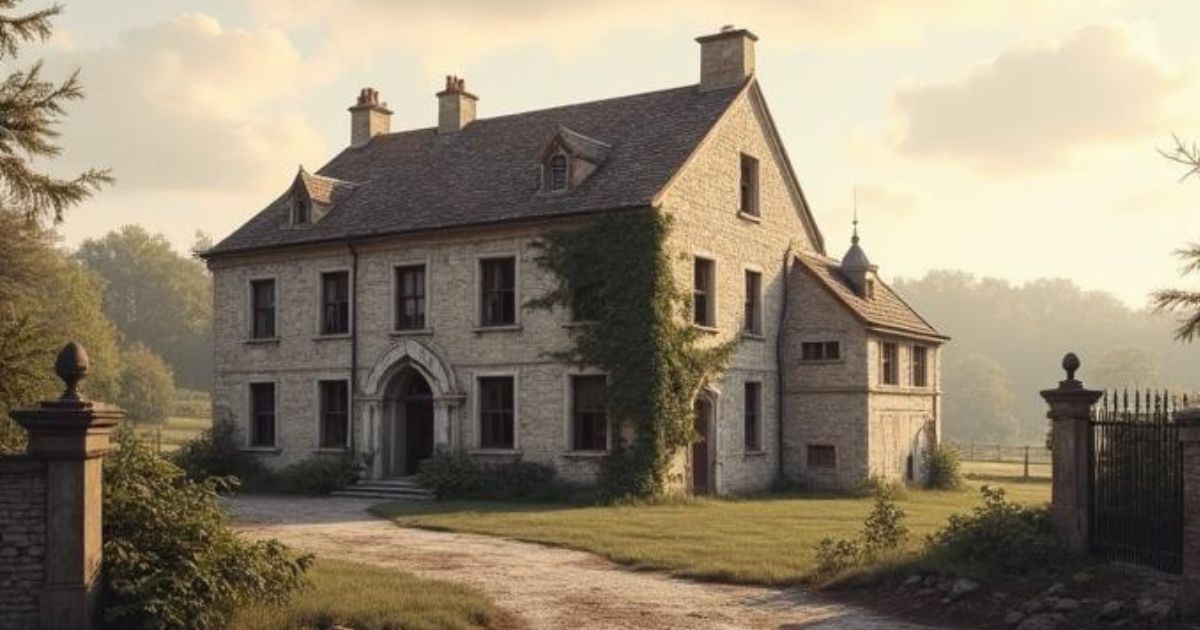
An excerpt from the original text.(complete · 3495 words)
ILLETTE.
I awoke next morning with courage revived and spirits refreshed:
physical debility no longer enervated my judgment; my mind felt prompt
and clear.
Just as I finished dressing, a tap came to the door: I said, “Come in,”
expecting the chambermaid, whereas a rough man walked in and said,—
“Gif me your keys, Meess.”
“Why?” I asked.
“Gif!” said he impatiently; and as he half-snatched them from my hand,
he added, “All right! haf your tronc soon.”
Fortunately it did turn out all right: he was from the custom-house.
Where to go to get some breakfast I could not tell; but I proceeded,
not without hesitation, to descend.
I now observed, what I had not noticed in my extreme weariness last
night, viz. that this inn was, in fact, a large hotel; and as I slowly
descended the broad staircase, halting on each step (for I was in
wonderfully little haste to get down), I gazed at the high ceiling
above me, at the painted walls around, at the wide windows which filled
the house with light, at the veined marble I trod (for the steps were
all of marble, though uncarpeted and not very clean), and contrasting
all this with the dimensions of the closet assigned to me as a chamber,
with the extreme modesty of its appointments, I fell into a
philosophizing mood.
Much I marvelled at the sagacity evinced by waiters and chamber-maids
in proportioning the accommodation to the guest. How could inn-servants
and ship-stewardesses everywhere tell at a glance that I, for instance,
was an individual of no social significance, and little burdened by
cash? They did know it evidently: I saw quite well that they all, in
a moment’s calculation, estimated me at about the same fractional
value. The fact seemed to me curious and pregnant: I would not disguise
from myself what it indicated, yet managed to keep up my spirits pretty
well under its pressure.
Having at last landed in a great hall, full of skylight glare, I made
my way somehow to what proved to be the coffee-room. It cannot be
denied that on entering this room I trembled somewhat; felt uncertain,
solitary, wretched; wished to Heaven I knew whether I was doing right
or wrong; felt convinced that it was the last, but could not help
myself. Acting in the spirit and with the calm of a fatalist, I sat
down at a small table, to which a waiter presently brought me some
breakfast; and I partook of that meal in a frame of mind not greatly
calculated to favour digestion. There were many other people
breakfasting at other tables in the room; I should have felt rather
more happy if amongst them all I could have seen any women; however,
there was not one—all present were men. But nobody seemed to think I
was doing anything strange; one or two gentlemen glanced at me
occasionally, but none stared obtrusively: I suppose if there was
anything eccentric in the business, they accounted for it by this word
“Anglaise!”
Breakfast over, I must again move—in what direction? “Go to Villette,”
said an inward voice; prompted doubtless by the recollection of this
slight sentence uttered carelessly and at random by Miss Fanshawe, as
she bid me good-by: “I wish you would come to Madame Beck’s; she has
some marmots whom you might look after; she wants an English
gouvernante, or was wanting one two months ago.”
Who Madame Beck was, where she lived, I knew not; I had asked, but the
question passed unheard: Miss Fanshawe, hurried away by her friends,
left it unanswered. I presumed Villette to be her residence—to Villette
I would go. The distance was forty miles. I knew I was catching at
straws; but in the wide and weltering deep where I found myself, I
would have caught at cobwebs. Having inquired about the means of
travelling to Villette, and secured a seat in the diligence, I departed
on the strength of this outline—this shadow of a project. Before you
pronounce on the rashness of the proceeding, reader, look back to the
point whence I started; consider the desert I had left, note how little
I perilled: mine was the game where the player cannot lose and may win.
Of an artistic temperament, I deny that I am; yet I must possess
something of the artist’s faculty of making the most of present
pleasure: that is to say, when it is of the kind to my taste. I enjoyed
that day, though we travelled slowly, though it was cold, though it
rained. Somewhat bare, flat, and treeless was the route along which our
journey lay; and slimy canals crept, like half-torpid green snakes,
beside the road; and formal pollard willows edged level fields, tilled
like kitchen-garden beds. The sky, too, was monotonously gray; the
atmosphere was stagnant and humid; yet amidst all these deadening
influences, my fancy budded fresh and my heart basked in sunshine.
These feelings, however, were well kept in check by the secret but
ceaseless consciousness of anxiety lying in wait on enjoyment, like a
tiger crouched in a jungle. The breathing of that beast of prey was in
my ear always; his fierce heart panted close against mine; he never
stirred in his lair but I felt him: I knew he waited only for sun-down
to bound ravenous from his ambush.
I had hoped we might reach Villette ere night set in, and that thus I
might escape the deeper embarrassment which obscurity seems to throw
round a first arrival at an unknown bourne; but, what with our slow
progress and long stoppages—what with a thick fog and small, dense
rain—darkness, that might almost be felt, had settled on the city by
the time we gained its suburbs.
I know we passed through a gate where soldiers were stationed—so much I
could see by lamplight; then, having left behind us the miry Chaussée,
we rattled over a pavement of strangely rough and flinty surface. At a
bureau, the diligence stopped, and the passengers alighted. My first
business was to get my trunk; a small matter enough, but important to
me. Understanding that it was best not to be importunate or over-eager
about luggage, but to wait and watch quietly the delivery of other
boxes till I saw my own, and then promptly claim and secure it, I stood
apart; my eye fixed on that part of the vehicle in which I had seen my
little portmanteau safely stowed, and upon which piles of additional
bags and boxes were now heaped. One by one, I saw these removed,
lowered, and seized on.
I was sure mine ought to be by this time visible: it was not. I had
tied on the direction-card with a piece of green ribbon, that I might
know it at a glance: not a fringe or fragment of green was perceptible.
Every package was removed; every tin-case and brown-paper parcel; the
oilcloth cover was lifted; I saw with distinct vision that not an
umbrella, cloak, cane, hat-box or band-box remained.
And my portmanteau, with my few clothes and little pocket-book
enclasping the remnant of my fifteen pounds, where were they?
I ask this question now, but I could not ask it then. I could say
nothing whatever; not possessing a phrase of speaking French: and it
was French, and French only, the whole world seemed now gabbling around
me. What should I do? Approaching the conductor, I just laid my hand
on his arm, pointed to a trunk, thence to the diligence-roof, and tried
to express a question with my eyes. He misunderstood me, seized the
trunk indicated, and was about to hoist it on the vehicle.
“Let that alone—will you?” said a voice in good English; then, in
correction, “Qu’est-ce que vous faîtes donc? Cette malle est à moi.”
But I had heard the Fatherland accents; they rejoiced my heart; I
turned: “Sir,” said I, appealing to the stranger, without, in my
distress, noticing what he was like, “I cannot speak French. May I
entreat you to ask this man what he has done with my trunk?”
Without discriminating, for the moment, what sort of face it was to
which my eyes were raised and on which they were fixed, I felt in its
expression half-surprise at my appeal and half-doubt of the wisdom of
interference.
“Do ask him; I would do as much for you,” said I.
I don’t know whether he smiled, but he said in a gentlemanly tone—that
is to say, a tone not hard nor terrifying,—“What sort of trunk was
yours?”
I described it, including in my description the green ribbon. And
forthwith he took the conductor under hand, and I felt, through all the
storm of French which followed, that he raked him fore and aft.
Presently he returned to me.
“The fellow avers he was overloaded, and confesses that he removed your
trunk after you saw it put on, and has left it behind at Boue-Marine
with other parcels; he has promised, however, to forward it to-morrow;
the day after, therefore, you will find it safe at this bureau.”
“Thank you,” said I: but my heart sank.
Meantime what should I do? Perhaps this English gentleman saw the
failure of courage in my face; he inquired kindly, “Have you any
friends in this city?”
“No, and I don’t know where to go.”
There was a little pause, in the course of which, as he turned more
fully to the light of a lamp above him, I saw that he was a young,
distinguished, and handsome man; he might be a lord, for anything I
knew: nature had made him good enough for a prince, I thought. His face
was very pleasant; he looked high but not arrogant, manly but not
overbearing. I was turning away, in the deep consciousness of all
absence of claim to look for further help from such a one as he.
“Was all your money in your trunk?” he asked, stopping me.
How thankful was I to be able to answer with truth—“No. I have enough
in my purse” (for I had near twenty francs) “to keep me at a quiet inn
till the day after to-morrow; but I am quite a stranger in Villette,
and don’t know the streets and the inns.”
“I can give you the address of such an inn as you want,” said he; “and
it is not far off: with my direction you will easily find it.”
He tore a leaf from his pocket-book, wrote a few words and gave it to
me. I did think him kind; and as to distrusting him, or his advice,
or his address, I should almost as soon have thought of distrusting the
Bible. There was goodness in his countenance, and honour in his bright
eyes.
“Your shortest way will be to follow the Boulevard and cross the park,”
he continued; “but it is too late and too dark for a woman to go
through the park alone; I will step with you thus far.”
He moved on, and I followed him, through the darkness and the small
soaking rain. The Boulevard was all deserted, its path miry, the water
dripping from its trees; the park was black as midnight. In the double
gloom of trees and fog, I could not see my guide; I could only follow
his tread. Not the least fear had I: I believe I would have followed
that frank tread, through continual night, to the world’s end.
“Now,” said he, when the park was traversed, “you will go along this
broad street till you come to steps; two lamps will show you where they
are: these steps you will descend: a narrower street lies below;
following that, at the bottom you will find your inn. They speak
English there, so your difficulties are now pretty well over.
Good-night.”
“Good-night, sir,” said I: “accept my sincerest thanks.” And we parted.
The remembrance of his countenance, which I am sure wore a light not
unbenignant to the friendless—the sound in my ear of his voice, which
spoke a nature chivalric to the needy and feeble, as well as the
youthful and fair—were a sort of cordial to me long after. He was a
true young English gentleman.
On I went, hurrying fast through a magnificent street and square, with
the grandest houses round, and amidst them the huge outline of more
than one overbearing pile; which might be palace or church—I could not
tell. Just as I passed a portico, two mustachioed men came suddenly
from behind the pillars; they were smoking cigars: their dress implied
pretensions to the rank of gentlemen, but, poor things! they were very
plebeian in soul. They spoke with insolence, and, fast as I walked,
they kept pace with me a long way. At last I met a sort of patrol, and
my dreaded hunters were turned from the pursuit; but they had driven me
beyond my reckoning: when I could collect my faculties, I no longer
knew where I was; the staircase I must long since have passed. Puzzled,
out of breath, all my pulses throbbing in inevitable agitation, I knew
not where to turn. It was terrible to think of again encountering those
bearded, sneering simpletons; yet the ground must be retraced, and the
steps sought out.
I came at last to an old and worn flight, and, taking it for granted
that this must be the one indicated, I descended them. The street into
which they led was indeed narrow, but it contained no inn. On I
wandered. In a very quiet and comparatively clean and well-paved
street, I saw a light burning over the door of a rather large house,
loftier by a story than those round it. This might be the inn at
last. I hastened on: my knees now trembled under me: I was getting
quite exhausted.
No inn was this. A brass-plate embellished the great porte-cochère:
“Pensionnat de Demoiselles” was the inscription; and beneath, a name,
“Madame Beck.”
I started. About a hundred thoughts volleyed through my mind in a
moment. Yet I planned nothing, and considered nothing: I had not time.
Providence said, “Stop here; this is your inn.” Fate took me in her
strong hand; mastered my will; directed my actions: I rang the
door-bell.
While I waited, I would not reflect. I fixedly looked at the
street-stones, where the door-lamp shone, and counted them and noted
their shapes, and the glitter of wet on their angles. I rang again.
They opened at last. A bonne in a smart cap stood before me.
“May I see Madame Beck?” I inquired.
I believe if I had spoken French she would not have admitted me; but,
as I spoke English, she concluded I was a foreign teacher come on
business connected with the pensionnat, and, even at that late hour,
she let me in, without a word of reluctance, or a moment of hesitation.
The next moment I sat in a cold, glittering salon, with porcelain
stove, unlit, and gilded ornaments, and polished floor. A pendule on
the mantel-piece struck nine o’clock.
A quarter of an hour passed. How fast beat every pulse in my frame! How
I turned cold and hot by turns! I sat with my eyes fixed on the door—a
great white folding-door, with gilt mouldings: I watched to see a leaf
move and open. All had been quiet: not a mouse had stirred; the white
doors were closed and motionless.
“You ayre Engliss?” said a voice at my elbow. I almost bounded, so
unexpected was the sound; so certain had I been of solitude.
No ghost stood beside me, nor anything of spectral aspect; merely a
motherly, dumpy little woman, in a large shawl, a wrapping-gown, and a
clean, trim nightcap.
I said I was English, and immediately, without further prelude, we fell
to a most remarkable conversation. Madame Beck (for Madame Beck it
was—she had entered by a little door behind me, and, being shod with
the shoes of silence, I had heard neither her entrance nor
approach)—Madame Beck had exhausted her command of insular speech when
she said, “You ayre Engliss,” and she now proceeded to work away
volubly in her own tongue. I answered in mine. She partly understood
me, but as I did not at all understand her—though we made together an
awful clamour (anything like Madame’s gift of utterance I had not
hitherto heard or imagined)—we achieved little progress. She rang, ere
long, for aid; which arrived in the shape of a “maîtresse,” who had
been partly educated in an Irish convent, and was esteemed a perfect
adept in the English language. A bluff little personage this maîtresse
was—Labassecourienne from top to toe: and how she did slaughter the
speech of Albion! However, I told her a plain tale, which she
translated. I told her how I had left my own country, intent on
extending my knowledge, and gaining my bread; how I was ready to turn
my hand to any useful thing, provided it was not wrong or degrading;
how I would be a child’s-nurse, or a lady’s-maid, and would not refuse
even housework adapted to my strength. Madame heard this; and,
questioning her countenance, I almost thought the tale won her ear:
“Il n’y a que les Anglaises pour ces sortes d’entreprises,” said she:
“sont-elles donc intrépides ces femmes là!”
She asked my name, my age; she sat and looked at me—not pityingly, not
with interest: never a gleam of sympathy, or a shade of compassion,
crossed her countenance during the interview. I felt she was not one to
be led an inch by her feelings: grave and considerate, she gazed,
consulting her judgment and studying my narrative. A bell rang.
“Voilà pour la prière du soir!” said she, and rose. Through her
interpreter, she desired me to depart now, and come back on the morrow;
but this did not suit me: I could not bear to return to the perils of
darkness and the street. With energy, yet with a collected and
controlled manner, I said, addressing herself personally, and not the
maîtresse: “Be assured, madame, that by instantly securing my services,
your interests will be served and not injured: you will find me one who
will wish to give, in her labour, a full equivalent for her wages; and
if you hire me, it will be better that I should stay here this night:
having no acquaintance in Villette, and not possessing the language of
the country, how can I secure a lodging?”
“It is true,” said she; “but at least you can give a reference?”
“None.”
She inquired after my luggage: I told her when it would arrive. She
mused. At that moment a man’s step was heard in the vestibule, hastily
proceeding to the outer door. (I shall go on with this part of my tale
as if I had understood all that passed; for though it was then scarce
intelligible to me, I heard it translated afterwards).
“Who goes out now?” demanded Madame Beck, listening to the tread.
“M. Paul,” replied the teacher. “He came this evening to give a reading
to the first class.”
“The very man I should at this moment most wish to see. Call him.”
The teacher ran to the salon door. M. Paul was summoned. He entered: a
small, dark and spare man, in spectacles.
“Mon cousin,” began Madame, “I want your opinion. We know your skill in
physiognomy; use it now. Read that countenance.”
The little man fixed on me his spectacles: A resolute compression of
the lips, and gathering of the brow, seemed to say that he meant to see
through me, and that a veil would be no veil for him.
“I read it,” he pronounced.
“Et qu’en dites vous?”
“Mais—bien des choses,” was the oracular answer.
“Bad or good?”
“Of each kind, without doubt,” pursued the diviner.
“May one trust her word?”
“Are you negotiating a matter of importance?”
“She wishes me to engage her as bonne or gouvernante; tells a tale full
of integrity, but gives no reference.”
“She is a stranger?”
“An Englishwoman, as one may see.”
“She speaks French?”
“Not a word.”
“She understands it?”
“No.”
“One may then speak plainly in her presence?”
“Doubtless.”
He gazed steadily. “Do you need her services?”
“I could do with them. You know I am disgusted with Madame Svini.”
Still he scrutinized. The judgment, when it at last came, was as
indefinite as what had gone before it.
“Engage her. If good predominates in that nature, the action will bring
its own reward; if evil—eh bien! ma cousine, ce sera toujours une bonne
œuvre.” And with a bow and a “bon soir,” this vague arbiter of my
destiny vanished.
And Madame did engage me that very night—by God’s blessing I was spared
the necessity of passing forth again into the lonesome, dreary, hostile
street.
Master this chapter. Complete your experience
Purchase the complete book to access all chapters and support classic literature
As an Amazon Associate, we earn a small commission from qualifying purchases at no additional cost to you.
Available in paperback, hardcover, and e-book formats
Let's Analyse the Pattern
Complete vulnerability can become strategic freedom when you have nothing left to protect.
Why This Matters
Connect literature to life
This chapter teaches how people reveal their true nature when assessing strangers quickly, and how to present yourself authentically when being evaluated.
Practice This Today
Next time you're in an interview or meeting new people, notice what they focus on first and what questions they ask to gauge your character.
Now let's explore the literary elements.
Key Quotes & Analysis
"I awoke next morning with courage revived and spirits refreshed: physical debility no longer enervated my judgment; my mind felt prompt and clear."
Context: Lucy waking up after her first night in Villette, feeling better after rest
Shows how physical exhaustion can cloud our thinking and decision-making abilities. Lucy recognizes that being tired made everything seem worse than it actually was.
In Today's Words:
After a good night's sleep, I felt like myself again and could think straight.
"Much I marvelled at the sagacity evinced by waiters and chamber-maids in proportioning the accommodation to the guest."
Context: Lucy observing how hotel staff treat guests differently based on perceived social status
Reveals Lucy's awareness of class discrimination and how service workers quickly assess customers' worth. She's both impressed and critical of this social sorting system.
In Today's Words:
I was amazed at how quickly the hotel staff figured out I was broke and treated me accordingly.
"Fortune favours the brave, they say."
Context: Lucy reflecting on her bold decision to seek employment at the school
This classic saying captures the chapter's central theme - that taking risks and acting courageously, even when afraid, can lead to unexpected opportunities and success.
In Today's Words:
Sometimes you have to take a leap of faith and see what happens.
Thematic Threads
Class
In This Chapter
Lucy's lack of references and connections makes her vulnerable, but also allows her to transcend normal class barriers by approaching situations directly
Development
Introduced here
In Your Life:
When you lack traditional credentials, you might find unexpected doors open through direct approach and genuine need.
Identity
In This Chapter
Lucy must present herself to strangers who will judge her worth in minutes, forcing her to distill who she is to essentials
Development
Continuing from previous chapters where Lucy has been defining herself through loss
In Your Life:
Job interviews, first dates, and new social situations all require you to present your essential self quickly.
Social Expectations
In This Chapter
Normal social protocols (proper introductions, references, gradual acquaintance) are abandoned due to Lucy's desperate circumstances
Development
Building on earlier themes of Lucy operating outside conventional social structures
In Your Life:
Sometimes emergency situations or genuine need allow you to bypass usual social rules and connect more directly.
Personal Growth
In This Chapter
Lucy's willingness to risk everything on an unknown opportunity shows growth from passive observer to active agent
Development
Major development from earlier passive Lucy to someone taking bold action
In Your Life:
Growth often requires taking risks that feel too big, but desperation can provide the push you need to act.
Human Relationships
In This Chapter
Strangers become crucial allies (the English gentleman, Madame Beck) while Lucy learns to read and be read by others instantly
Development
Introduced here
In Your Life:
In crisis moments, strangers can become unexpected helpers, and first impressions carry enormous weight.
You now have the context. Time to form your own thoughts.
Discussion Questions
- 1
What specific advantages did Lucy gain from having 'nothing left to lose' when she arrived in Villette?
analysis • surface - 2
Why was Lucy able to take risks that most people wouldn't take, and how did her desperation actually become a form of power?
analysis • medium - 3
Where do you see this 'nothing to lose' pattern in modern situations - job searches, relationships, major life changes?
application • medium - 4
How would you prepare mentally to take necessary risks when you feel like you have everything to protect versus nothing to lose?
application • deep - 5
What does Lucy's experience reveal about the difference between real vulnerability and imaginary fears that keep us paralyzed?
reflection • deep
Critical Thinking Exercise
Map Your Risk Tolerance
Think of a situation where you feel stuck or unable to take action because you have 'too much to lose.' Make two lists: what you think you're protecting versus what you're actually protecting. Then imagine you truly had nothing to lose in this situation - what would you do differently?
Consider:
- •Distinguish between real consequences and imaginary fears
- •Consider whether what you're protecting is actually holding you back
- •Think about times when having less actually freed you to act more boldly
Journaling Prompt
Write about a time when losing something you thought you needed actually opened up better opportunities. What did that experience teach you about the relationship between security and possibility?
Coming Up Next...
Chapter 8: The Art of Quiet Authority
Lucy begins her new life at Madame Beck's school, but she's about to discover that her employer has some very particular methods of running her establishment—and keeping track of her employees.



