
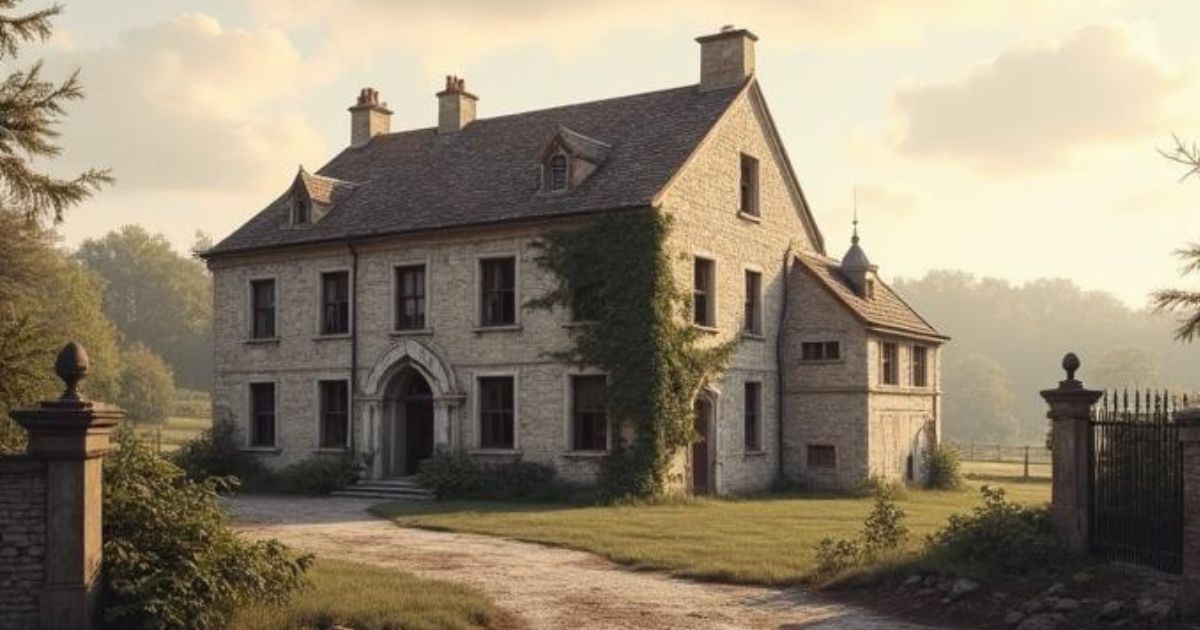
An excerpt from the original text.(complete · 5195 words)
HE LITTLE COUNTESS.
Cheerful as my godmother naturally was, and entertaining as, for our
sakes, she made a point of being, there was no true enjoyment that
evening at La Terrasse, till, through the wild howl of the
winter-night, were heard the signal sounds of arrival. How often, while
women and girls sit warm at snug fire-sides, their hearts and
imaginations are doomed to divorce from the comfort surrounding their
persons, forced out by night to wander through dark ways, to dare
stress of weather, to contend with the snow-blast, to wait at lonely
gates and stiles in wildest storms, watching and listening to see and
hear the father, the son, the husband coming home.
Father and son came at last to the château: for the Count de
Bassompierre that night accompanied Dr. Bretton. I know not which of
our trio heard the horses first; the asperity, the violence of the
weather warranted our running down into the hall to meet and greet the
two riders as they came in; but they warned us to keep our distance:
both were white—two mountains of snow; and indeed Mrs. Bretton, seeing
their condition, ordered them instantly to the kitchen; prohibiting
them, at their peril, from setting foot on her carpeted staircase till
they had severally put off that mask of Old Christmas they now
affected. Into the kitchen, however, we could not help following them:
it was a large old Dutch kitchen, picturesque and pleasant. The little
white Countess danced in a circle about her equally white sire,
clapping her hands and crying, “Papa, papa, you look like an enormous
Polar bear.”
The bear shook himself, and the little sprite fled far from the frozen
shower. Back she came, however, laughing, and eager to aid in removing
the arctic disguise. The Count, at last issuing from his dreadnought,
threatened to overwhelm her with it as with an avalanche.
“Come, then,” said she, bending to invite the fall, and when it was
playfully advanced above her head, bounding out of reach like some
little chamois.
Her movements had the supple softness, the velvet grace of a kitten;
her laugh was clearer than the ring of silver and crystal; as she took
her sire’s cold hands and rubbed them, and stood on tiptoe to reach his
lips for a kiss, there seemed to shine round her a halo of loving
delight. The grave and reverend seignor looked down on her as men do
look on what is the apple of their eye.
“Mrs. Bretton,” said he: “what am I to do with this daughter or
daughterling of mine? She neither grows in wisdom nor in stature. Don’t
you find her pretty nearly as much the child as she was ten years ago?”
“She cannot be more the child than this great boy of mine,” said Mrs.
Bretton, who was in conflict with her son about some change of dress
she deemed advisable, and which he resisted. He stood leaning against
the Dutch dresser, laughing and keeping her at arm’s length.
“Come, mamma,” said he, “by way of compromise, and to secure for us
inward as well as outward warmth, let us have a Christmas wassail-cup,
and toast Old England here, on the hearth.”
So, while the Count stood by the fire, and Paulina Mary still danced to
and fro—happy in the liberty of the wide hall-like kitchen—Mrs. Bretton
herself instructed Martha to spice and heat the wassail-bowl, and,
pouring the draught into a Bretton flagon, it was served round, reaming
hot, by means of a small silver vessel, which I recognised as Graham’s
christening-cup.
“Here’s to Auld Lang Syne!” said the Count; holding the glancing cup on
high. Then, looking at Mrs. Bretton.—
“We twa ha’ paidlet i’ the burn
Fra morning sun till dine,
But seas between us braid ha’ roared
Sin’ auld lang syne.
“And surely ye’ll be your pint-stoup,
And surely I’ll be mine;
And we’ll taste a cup o’ kindness yet
For auld lang syne.”
“Scotch! Scotch!” cried Paulina; “papa is talking Scotch; and Scotch he
is, partly. We are Home and de Bassompierre, Caledonian and Gallic.”
“And is that a Scotch reel you are dancing, you Highland fairy?” asked
her father. “Mrs. Bretton, there will be a green ring growing up in the
middle of your kitchen shortly. I would not answer for her being quite
cannie: she is a strange little mortal.”
“Tell Lucy to dance with me, papa; there is Lucy Snowe.”
Mr. Home (there was still quite as much about him of plain Mr. Home as
of proud Count de Bassompierre) held his hand out to me, saying kindly,
“he remembered me well; and, even had his own memory been less
trustworthy, my name was so often on his daughter’s lips, and he had
listened to so many long tales about me, I should seem like an old
acquaintance.”
Every one now had tasted the wassail-cup except Paulina, whose pas de
fée, ou de fantaisie, nobody thought of interrupting to offer so
profanatory a draught; but she was not to be overlooked, nor baulked of
her mortal privileges.
“Let me taste,” said she to Graham, as he was putting the cup on the
shelf of the dresser out of her reach.
Mrs. Bretton and Mr. Home were now engaged in conversation. Dr. John
had not been unobservant of the fairy’s dance; he had watched it, and
he had liked it. To say nothing of the softness and beauty of the
movements, eminently grateful to his grace-loving eye, that ease in his
mother’s house charmed him, for it set him at ease: again she seemed
a child for him—again, almost his playmate. I wondered how he would
speak to her; I had not yet seen him address her; his first words
proved that the old days of “little Polly” had been recalled to his
mind by this evening’s child-like light-heartedness.
“Your ladyship wishes for the tankard?”
“I think I said so. I think I intimated as much.”
“Couldn’t consent to a step of the kind on any account. Sorry for it,
but couldn’t do it.”
“Why? I am quite well now: it can’t break my collar-bone again, or
dislocate my shoulder. Is it wine?”
“No; nor dew.”
“I don’t want dew; I don’t like dew: but what is it?”
“Ale—strong ale—old October; brewed, perhaps, when I was born.”
“It must be curious: is it good?”
“Excessively good.”
And he took it down, administered to himself a second dose of this
mighty elixir, expressed in his mischievous eyes extreme contentment
with the same, and solemnly replaced the cup on the shelf.
“I should like a little,” said Paulina, looking up; “I never had any
‘old October:’ is it sweet?”
“Perilously sweet,” said Graham.
She continued to look up exactly with the countenance of a child that
longs for some prohibited dainty. At last the Doctor relented, took it
down, and indulged himself in the gratification of letting her taste
from his hand; his eyes, always expressive in the revelation of
pleasurable feelings, luminously and smilingly avowed that it was a
gratification; and he prolonged it by so regulating the position of the
cup that only a drop at a time could reach the rosy, sipping lips by
which its brim was courted.
“A little more—a little more,” said she, petulantly touching his hand
with the forefinger, to make him incline the cup more generously and
yieldingly. “It smells of spice and sugar, but I can’t taste it; your
wrist is so stiff, and you are so stingy.”
He indulged her, whispering, however, with gravity: “Don’t tell my
mother or Lucy; they wouldn’t approve.”
“Nor do I,” said she, passing into another tone and manner as soon as
she had fairly assayed the beverage, just as if it had acted upon her
like some disenchanting draught, undoing the work of a wizard: “I find
it anything but sweet; it is bitter and hot, and takes away my breath.
Your old October was only desirable while forbidden. Thank you, no
more.”
And, with a slight bend—careless, but as graceful as her dance—she
glided from him and rejoined her father.
I think she had spoken truth: the child of seven was in the girl of
seventeen.
Graham looked after her a little baffled, a little puzzled; his eye was
on her a good deal during the rest of the evening, but she did not seem
to notice him.
As we ascended to the drawing-room for tea, she took her father’s arm:
her natural place seemed to be at his side; her eyes and her ears were
dedicated to him. He and Mrs. Bretton were the chief talkers of our
little party, and Paulina was their best listener, attending closely to
all that was said, prompting the repetition of this or that trait or
adventure.
“And where were you at such a time, papa? And what did you say then?
And tell Mrs. Bretton what happened on that occasion.” Thus she drew
him out.
She did not again yield to any effervescence of glee; the infantine
sparkle was exhaled for the night: she was soft, thoughtful, and
docile. It was pretty to see her bid good-night; her manner to Graham
was touched with dignity: in her very slight smile and quiet bow spoke
the Countess, and Graham could not but look grave, and bend responsive.
I saw he hardly knew how to blend together in his ideas the dancing
fairy and delicate dame.
Next day, when we were all assembled round the breakfast-table,
shivering and fresh from the morning’s chill ablutions, Mrs. Bretton
pronounced a decree that nobody, who was not forced by dire necessity,
should quit her house that day.
Indeed, egress seemed next to impossible; the drift darkened the lower
panes of the casement, and, on looking out, one saw the sky and air
vexed and dim, the wind and snow in angry conflict. There was no fall
now, but what had already descended was torn up from the earth, whirled
round by brief shrieking gusts, and cast into a hundred fantastic
forms.
The Countess seconded Mrs. Bretton.
“Papa shall not go out,” said she, placing a seat for herself beside
her father’s arm-chair. “I will look after him. You won’t go into town,
will you, papa?”
“Ay, and No,” was the answer. “If you and Mrs. Bretton are very good
to me, Polly—kind, you know, and attentive; if you pet me in a very
nice manner, and make much of me, I may possibly be induced to wait an
hour after breakfast and see whether this razor-edged wind settles.
But, you see, you give me no breakfast; you offer me nothing: you let
me starve.”
“Quick! please, Mrs. Bretton, and pour out the coffee,” entreated
Paulina, “whilst I take care of the Count de Bassompierre in other
respects: since he grew into a Count, he has needed so much
attention.”
She separated and prepared a roll.
“There, papa, are your ‘pistolets’ charged,” said she. “And there is
some marmalade, just the same sort of marmalade we used to have at
Bretton, and which you said was as good as if it had been conserved in
Scotland—”
“And which your little ladyship used to beg for my boy—do you remember
that?” interposed Mrs. Bretton. “Have you forgotten how you would come
to my elbow and touch my sleeve with the whisper, ‘Please, ma’am,
something good for Graham—a little marmalade, or honey, or jam?’”
“No, mamma,” broke in Dr. John, laughing, yet reddening; “it surely was
not so: I could not have cared for these things.”
“Did he or did he not, Paulina?”
“He liked them,” asserted Paulina.
“Never blush for it, John,” said Mr. Home, encouragingly. “I like them
myself yet, and always did. And Polly showed her sense in catering for
a friend’s material comforts: it was I who put her into the way of such
good manners—nor do I let her forget them. Polly, offer me a small
slice of that tongue.”
“There, papa: but remember you are only waited upon with this
assiduity; on condition of being persuadable, and reconciling yourself
to La Terrasse for the day.”
“Mrs. Bretton,” said the Count, “I want to get rid of my daughter—to
send her to school. Do you know of any good school?”
“There is Lucy’s place—Madame Beck’s.”
“Miss Snowe is in a school?”
“I am a teacher,” I said, and was rather glad of the opportunity of
saying this. For a little while I had been feeling as if placed in a
false position. Mrs. Bretton and son knew my circumstances; but the
Count and his daughter did not. They might choose to vary by some
shades their hitherto cordial manner towards me, when aware of my grade
in society. I spoke then readily: but a swarm of thoughts I had not
anticipated nor invoked, rose dim at the words, making me sigh
involuntarily. Mr. Home did not lift his eyes from his breakfast-plate
for about two minutes, nor did he speak; perhaps he had not caught the
words—perhaps he thought that on a confession of that nature,
politeness would interdict comment: the Scotch are proverbially proud;
and homely as was Mr. Home in look, simple in habits and tastes, I have
all along intimated that he was not without his share of the national
quality. Was his a pseudo pride? was it real dignity? I leave the
question undecided in its wide sense. Where it concerned me
individually I can only answer: then, and always, he showed himself a
true-hearted gentleman.
By nature he was a feeler and a thinker; over his emotions and his
reflections spread a mellowing of melancholy; more than a mellowing: in
trouble and bereavement it became a cloud. He did not know much about
Lucy Snowe; what he knew, he did not very accurately comprehend: indeed
his misconceptions of my character often made me smile; but he saw my
walk in life lay rather on the shady side of the hill: he gave me
credit for doing my endeavour to keep the course honestly straight; he
would have helped me if he could: having no opportunity of helping, he
still wished me well. When he did look at me, his eye was kind; when he
did speak, his voice was benevolent.
“Yours,” said he, “is an arduous calling. I wish you health and
strength to win in it—success.”
His fair little daughter did not take the information quite so
composedly: she fixed on me a pair of eyes wide with wonder—almost with
dismay.
“Are you a teacher?” cried she. Then, having paused on the unpalatable
idea, “Well, I never knew what you were, nor ever thought of asking:
for me, you were always Lucy Snowe.”
“And what am I now?” I could not forbear inquiring.
“Yourself, of course. But do you really teach here, in Villette?”
“I really do.”
“And do you like it?”
“Not always.”
“And why do you go on with it?”
Her father looked at, and, I feared, was going to check her; but he
only said, “Proceed, Polly, proceed with that catechism—prove yourself
the little wiseacre you are. If Miss Snowe were to blush and look
confused, I should have to bid you hold your tongue; and you and I
would sit out the present meal in some disgrace; but she only smiles,
so push her hard, multiply the cross-questions. Well, Miss Snowe, why
do you go on with it?”
“Chiefly, I fear, for the sake of the money I get.”
“Not then from motives of pure philanthropy? Polly and I were clinging
to that hypothesis as the most lenient way of accounting for your
eccentricity.”
“No—no, sir. Rather for the roof of shelter I am thus enabled to keep
over my head; and for the comfort of mind it gives me to think that
while I can work for myself, I am spared the pain of being a burden to
anybody.”
“Papa, say what you will, I pity Lucy.”
“Take up that pity, Miss de Bassompierre; take it up in both hands, as
you might a little callow gosling squattering out of bounds without
leave; put it back in the warm nest of a heart whence it issued, and
receive in your ear this whisper. If my Polly ever came to know by
experience the uncertain nature of this world’s goods, I should like
her to act as Lucy acts: to work for herself, that she might burden
neither kith nor kin.”
“Yes, papa,” said she, pensively and tractably. “But poor Lucy! I
thought she was a rich lady, and had rich friends.”
“You thought like a little simpleton. I never thought so. When I had
time to consider Lucy’s manner and aspect, which was not often, I saw
she was one who had to guard and not be guarded; to act and not be
served: and this lot has, I imagine, helped her to an experience for
which, if she live long enough to realize its full benefit, she may yet
bless Providence. But this school,” he pursued, changing his tone from
grave to gay: “would Madame Beck admit my Polly, do you think, Miss
Lucy?”
I said, there needed but to try Madame; it would soon be seen: she was
fond of English pupils. “If you, sir,” I added, “will but take Miss de
Bassompierre in your carriage this very afternoon, I think I can answer
for it that Rosine, the portress, will not be very slow in answering
your ring; and Madame, I am sure, will put on her best pair of gloves
to come into the salon to receive you.”
“In that case,” responded Mr. Home, “I see no sort of necessity there
is for delay. Mrs. Hurst can send what she calls her young lady’s
‘things’ after her; Polly can settle down to her horn-book before
night; and you, Miss Lucy, I trust, will not disdain to cast an
occasional eye upon her, and let me know, from time to time, how she
gets on. I hope you approve of the arrangement, Countess de
Bassompierre?”
The Countess hemmed and hesitated. “I thought,” said she, “I thought I
had finished my education—”
“That only proves how much we may be mistaken in our thoughts. I hold a
far different opinion, as most of these will who have been auditors of
your profound knowledge of life this morning. Ah, my little girl, thou
hast much to learn; and papa ought to have taught thee more than he has
done! Come, there is nothing for it but to try Madame Beck; and the
weather seems settling, and I have finished my breakfast—”
“But, papa!”
“Well?”
“I see an obstacle.”
“I don’t at all.”
“It is enormous, papa; it can never be got over; it is as large as you
in your greatcoat, and the snowdrift on the top.”
“And, like that snowdrift, capable of melting?”
“No! it is of too—too solid flesh: it is just your own self. Miss Lucy,
warn Madame Beck not to listen to any overtures about taking me,
because, in the end, it would turn out that she would have to take papa
too: as he is so teasing, I will just tell tales about him. Mrs.
Bretton and all of you listen: About five years ago, when I was twelve
years old, he took it into his head that he was spoiling me; that I was
growing unfitted for the world, and I don’t know what, and nothing
would serve or satisfy him, but I must go to school. I cried, and so
on; but M. de Bassompierre proved hard-hearted, quite firm and flinty,
and to school I went. What was the result? In the most admirable
manner, papa came to school likewise: every other day he called to see
me. Madame Aigredoux grumbled, but it was of no use; and so, at last,
papa and I were both, in a manner, expelled. Lucy can just tell Madame
Beck this little trait: it is only fair to let her know what she has to
expect.”
Mrs. Bretton asked Mr. Home what he had to say in answer to this
statement. As he made no defence, judgment was given against him, and
Paulina triumphed.
But she had other moods besides the arch and naïve. After breakfast;
when the two elders withdrew—I suppose to talk over certain of Mrs.
Bretton’s business matters—and the Countess, Dr. Bretton, and I, were
for a short time alone together—all the child left her; with us, more
nearly her companions in age, she rose at once to the little lady: her
very face seemed to alter; that play of feature, and candour of look,
which, when she spoke to her father, made it quite dimpled and round,
yielded to an aspect more thoughtful, and lines distincter and less
mobile.
No doubt Graham noted the change as well as I. He stood for some
minutes near the window, looking out at the snow; presently he
approached the hearth, and entered into conversation, but not quite
with his usual ease: fit topics did not seem to rise to his lips; he
chose them fastidiously, hesitatingly, and consequently infelicitously:
he spoke vaguely of Villette—its inhabitants, its notable sights and
buildings. He was answered by Miss de Bassompierre in quite womanly
sort; with intelligence, with a manner not indeed wholly
disindividualized: a tone, a glance, a gesture, here and there, rather
animated and quick than measured and stately, still recalled little
Polly; but yet there was so fine and even a polish, so calm and
courteous a grace, gilding and sustaining these peculiarities, that a
less sensitive man than Graham would not have ventured to seize upon
them as vantage points, leading to franker intimacy.
Yet while Dr. Bretton continued subdued, and, for him, sedate, he was
still observant. Not one of those petty impulses and natural breaks
escaped him. He did not miss one characteristic movement, one
hesitation in language, or one lisp in utterance. At times, in speaking
fast, she still lisped; but coloured whenever such lapse occurred, and
in a painstaking, conscientious manner, quite as amusing as the slight
error, repeated the word more distinctly.
Whenever she did this, Dr. Bretton smiled. Gradually, as they
conversed, the restraint on each side slackened: might the conference
have but been prolonged, I believe it would soon have become genial:
already to Paulina’s lip and cheek returned the wreathing, dimpling
smile; she lisped once, and forgot to correct herself. And Dr. John, I
know not how he changed, but change he did. He did not grow gayer—no
raillery, no levity sparkled across his aspect—but his position seemed
to become one of more pleasure to himself, and he spoke his augmented
comfort in readier language, in tones more suave. Ten years ago this
pair had always found abundance to say to each other; the intervening
decade had not narrowed the experience or impoverished the intelligence
of either: besides, there are certain natures of which the mutual
influence is such, that the more they say, the more they have to say.
For these out of association grows adhesion, and out of adhesion,
amalgamation.
Graham, however, must go: his was a profession whose claims are neither
to be ignored nor deferred. He left the room; but before he could leave
the house there was a return. I am sure he came back—not for the paper,
or card in his desk, which formed his ostensible errand—but to assure
himself, by one more glance, that Paulina’s aspect was really such as
memory was bearing away: that he had not been viewing her somehow by a
partial, artificial light, and making a fond mistake. No! he found the
impression true—rather, indeed, he gained than lost by this return: he
took away with him a parting look—shy, but very soft—as beautiful, as
innocent, as any little fawn could lift out of its cover of fern, or
any lamb from its meadow-bed.
Being left alone, Paulina and I kept silence for some time: we both
took out some work, and plied a mute and diligent task. The white-wood
workbox of old days was now replaced by one inlaid with precious
mosaic, and furnished with implements of gold; the tiny and trembling
fingers that could scarce guide the needle, though tiny still, were now
swift and skilful: but there was the same busy knitting of the brow,
the same little dainty mannerisms, the same quick turns and
movements—now to replace a stray tress, and anon to shake from the
silken skirt some imaginary atom of dust—some clinging fibre of thread.
That morning I was disposed for silence: the austere fury of the
winter-day had on me an awing, hushing influence. That passion of
January, so white and so bloodless, was not yet spent: the storm had
raved itself hoarse, but seemed no nearer exhaustion. Had Ginevra
Fanshawe been my companion in that drawing-room, she would not have
suffered me to muse and listen undisturbed. The presence just gone from
us would have been her theme; and how she would have rung the changes
on one topic! how she would have pursued and pestered me with questions
and surmises—worried and oppressed me with comments and confidences I
did not want, and longed to avoid.
Paulina Mary cast once or twice towards me a quiet but penetrating
glance of her dark, full eye; her lips half opened, as if to the
impulse of coming utterance: but she saw and delicately respected my
inclination for silence.
“This will not hold long,” I thought to myself; for I was not
accustomed to find in women or girls any power of self-control, or
strength of self-denial. As far as I knew them, the chance of a gossip
about their usually trivial secrets, their often very washy and paltry
feelings, was a treat not to be readily foregone.
The little Countess promised an exception: she sewed till she was tired
of sewing, and then she took a book.
As chance would have it, she had sought it in Dr. Bretton’s own
compartment of the bookcase; and it proved to be an old Bretton
book—some illustrated work of natural history. Often had I seen her
standing at Graham’s side, resting that volume on his knee, and reading
to his tuition; and, when the lesson was over, begging, as a treat,
that he would tell her all about the pictures. I watched her keenly:
here was a true test of that memory she had boasted; would her
recollections now be faithful?
Faithful? It could not be doubted. As she turned the leaves, over her
face passed gleam after gleam of expression, the least intelligent of
which was a full greeting to the Past. And then she turned to the
title-page, and looked at the name written in the schoolboy hand. She
looked at it long; nor was she satisfied with merely looking: she
gently passed over the characters the tips of her fingers, accompanying
the action with an unconscious but tender smile, which converted the
touch into a caress. Paulina loved the Past; but the peculiarity of
this little scene was, that she said nothing: she could feel without
pouring out her feelings in a flux of words.
She now occupied herself at the bookcase for nearly an hour; taking
down volume after volume, and renewing her acquaintance with each. This
done, she seated herself on a low stool, rested her cheek on her hand,
and thought, and still was mute.
The sound of the front door opened below, a rush of cold wind, and her
father’s voice speaking to Mrs. Bretton in the hall, startled her at
last. She sprang up: she was down-stairs in one second.
“Papa! papa! you are not going out?”
“My pet, I must go into town.”
“But it is too—too cold, papa.”
And then I heard M. de Bassompierre showing to her how he was well
provided against the weather; and how he was going to have the
carriage, and to be quite snugly sheltered; and, in short, proving that
she need not fear for his comfort.
“But you will promise to come back here this evening, before it is
quite dark;—you and Dr. Bretton, both, in the carriage? It is not fit
to ride.”
“Well, if I see the Doctor, I will tell him a lady has laid on him her
commands to take care of his precious health and come home early under
my escort.”
“Yes, you must say a lady; and he will think it is his mother, and be
obedient. And, papa, mind to come soon, for I shall watch and
listen.”
The door closed, and the carriage rolled softly through the snow; and
back returned the Countess, pensive and anxious.
She did listen, and watch, when evening closed; but it was in
stillest sort: walking the drawing-room with quite noiseless step. She
checked at intervals her velvet march; inclined her ear, and consulted
the night sounds: I should rather say, the night silence; for now, at
last, the wind was fallen. The sky, relieved of its avalanche, lay
naked and pale: through the barren boughs of the avenue we could see it
well, and note also the polar splendour of the new-year moon—an orb
white as a world of ice. Nor was it late when we saw also the return of
the carriage.
Paulina had no dance of welcome for this evening. It was with a sort of
gravity that she took immediate possession of her father, as he entered
the room; but she at once made him her entire property, led him to the
seat of her choice, and, while softly showering round him honeyed words
of commendation for being so good and coming home so soon, you would
have thought it was entirely by the power of her little hands he was
put into his chair, and settled and arranged; for the strong man seemed
to take pleasure in wholly yielding himself to this dominion-potent
only by love.
Graham did not appear till some minutes after the Count. Paulina half
turned when his step was heard: they spoke, but only a word or two;
their fingers met a moment, but obviously with slight contact. Paulina
remained beside her father; Graham threw himself into a seat on the
other side of the room.
It was well that Mrs. Bretton and Mr. Home had a great deal to say to
each other—almost an inexhaustible fund of discourse in old
recollections; otherwise, I think, our party would have been but a
still one that evening.
After tea, Paulina’s quick needle and pretty golden thimble were busily
plied by the lamp-light, but her tongue rested, and her eyes seemed
reluctant to raise often their lids, so smooth and so full-fringed.
Graham, too, must have been tired with his day’s work: he listened
dutifully to his elders and betters, said very little himself, and
followed with his eye the gilded glance of Paulina’s thimble; as if it
had been some bright moth on the wing, or the golden head of some
darting little yellow serpent.
Master this chapter. Complete your experience
Purchase the complete book to access all chapters and support classic literature
As an Amazon Associate, we earn a small commission from qualifying purchases at no additional cost to you.
Available in paperback, hardcover, and e-book formats
Let's Analyse the Pattern
The awkward process of reconciling past relationships with present realities when people reconnect after significant time apart.
Why This Matters
Connect literature to life
This chapter teaches how to recognize when people are mentally repositioning you in their social hierarchy during interactions.
Practice This Today
This week, notice when someone's tone or body language shifts after learning about your job, living situation, or relationship status - that's social recalibration happening in real time.
Now let's explore the literary elements.
Key Quotes & Analysis
"How often, while women and girls sit warm at snug fire-sides, their hearts and imaginations are doomed to divorce from the comfort surrounding their persons, forced out by night to wander through dark ways"
Context: Lucy reflects while waiting for the men to return through the storm
This captures how women's emotional lives were tied to the men in their lives, unable to fully relax until their loved ones were safe. It shows the mental burden women carried, always worrying about others' welfare.
In Today's Words:
Women can't really relax when the people they care about are out there dealing with dangerous situations - part of them is always out there too, worrying.
"The little white Countess danced round her papa, calling him her king"
Context: Describing Paulina's joyful reunion with her father in the kitchen
Shows Paulina's pure delight and the idealized father-daughter relationship. The 'little white Countess' captures both her noble status and childlike innocence, while 'king' shows how she idolizes her father.
In Today's Words:
Paulina was absolutely thrilled to see her dad, treating him like he was the most important person in the world.
"I am a teacher"
Context: When asked about her situation, Lucy admits her profession
This simple statement creates an awkward moment that reveals class tensions. Lucy's directness contrasts with the social dancing around status that others engage in, showing her honesty but also her social vulnerability.
In Today's Words:
I work for a living - which immediately changed how everyone saw me in that room.
Thematic Threads
Class Boundaries
In This Chapter
Lucy's admission of being a teacher creates social awkwardness, highlighting how economic position shapes social acceptance
Development
Previously implicit, now explicitly addressed as Lucy must navigate her working-class reality among upper-class friends
In Your Life:
You might feel this when your income or job status differs significantly from friends or family members
Identity Fluidity
In This Chapter
Paulina shifts seamlessly between childlike Polly and sophisticated countess, showing how we contain multiple selves
Development
Building on earlier themes of Lucy's multiple personas, now showing how others also navigate shifting identities
In Your Life:
You experience this when you act differently at work versus with family, or when old friends bring out forgotten parts of your personality
Protective Love
In This Chapter
Count de Bassompierre's decision to send Paulina to school despite knowing he'll follow and disrupt everything
Development
Continues exploration of how love can become possessive and potentially limiting
In Your Life:
You might recognize this in overprotective parents who can't let adult children make their own mistakes
Social Performance
In This Chapter
Everyone carefully navigates the reunion dynamics, performing their roles while genuine emotions bubble underneath
Development
Deepens the ongoing theme of how social expectations require constant performance
In Your Life:
You feel this pressure at family gatherings or work events where you must present a certain version of yourself
Observation vs Participation
In This Chapter
Lucy watches the reunion unfold as an outsider, noting dynamics but not fully participating in the emotional reconnection
Development
Reinforces Lucy's consistent role as observer rather than central participant in social dramas
In Your Life:
You might relate to feeling like you're watching life happen around you rather than being fully engaged in it
You now have the context. Time to form your own thoughts.
Discussion Questions
- 1
When Paulina dances around her father in the kitchen, how does she embody both the child Graham once knew and the young woman she's become?
analysis • surface - 2
Why does Lucy's admission that she's a teacher create an awkward moment, and how does it reveal the social boundaries everyone must navigate?
analysis • medium - 3
Think about a time you reunited with someone after years apart. How did you both try to balance who you used to be with who you'd become?
application • medium - 4
When relationships must shift due to new circumstances (like job changes or life transitions), what strategies help people navigate the awkwardness successfully?
application • deep - 5
What does this chapter reveal about how social class and economic necessity shape our ability to maintain relationships across time?
reflection • deep
Critical Thinking Exercise
Map Your Reunion Reckoning
Think of someone you haven't seen in years but might reconnect with. Draw three columns: 'Who They Were,' 'Who They Probably Are Now,' and 'Bridge Points.' Fill in what you remember about them, what you imagine has changed, and what connecting points might help you navigate a reunion successfully.
Consider:
- •Consider how your own changes might surprise them too
- •Think about what social or economic factors might have shifted the dynamic
- •Notice which memories you want to preserve versus which relationships need room to evolve
Journaling Prompt
Write about a reunion that went well or poorly. What made the difference? How did you and the other person handle the gap between past and present?
Coming Up Next...
Chapter 26: Burying Letters and Ghosts
The title 'A Burial' suggests a significant ending or loss is approaching. After the warmth and reunion of this chapter, something or someone important may be laid to rest, potentially shifting the dynamics that have just been reestablished.



