
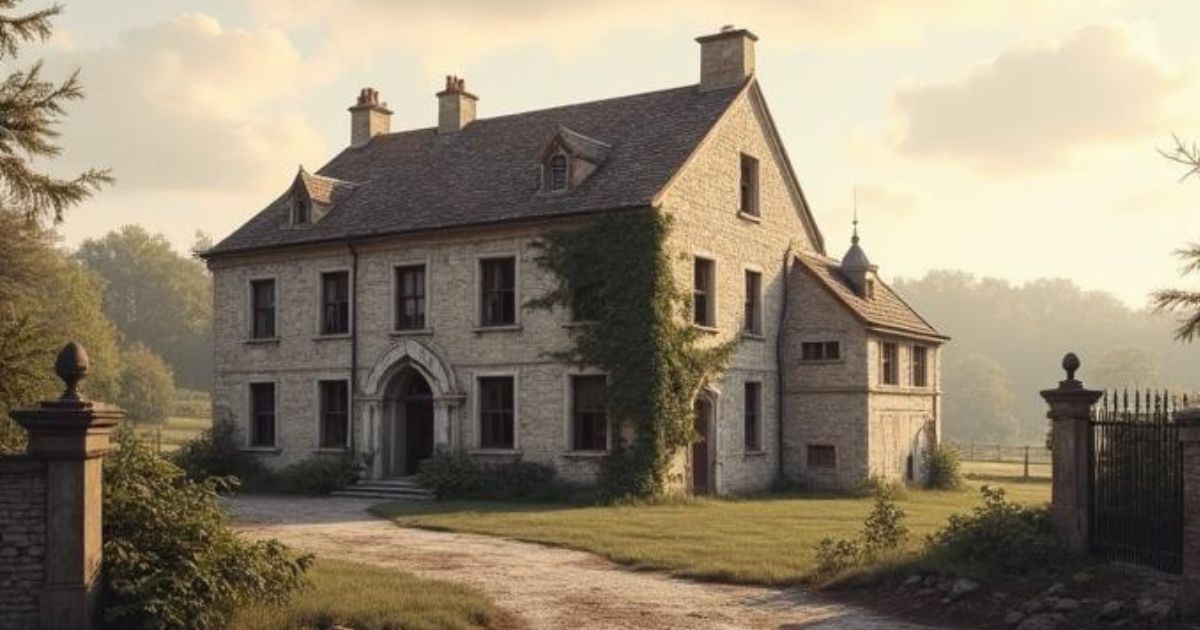
An excerpt from the original text.(complete · 5682 words)
ULD LANG SYNE.
Where my soul went during that swoon I cannot tell. Whatever she saw,
or wherever she travelled in her trance on that strange night she kept
her own secret; never whispering a word to Memory, and baffling
imagination by an indissoluble silence. She may have gone upward, and
come in sight of her eternal home, hoping for leave to rest now, and
deeming that her painful union with matter was at last dissolved. While
she so deemed, an angel may have warned her away from heaven’s
threshold, and, guiding her weeping down, have bound her, once more,
all shuddering and unwilling, to that poor frame, cold and wasted, of
whose companionship she was grown more than weary.
I know she re-entered her prison with pain, with reluctance, with a
moan and a long shiver. The divorced mates, Spirit and Substance, were
hard to re-unite: they greeted each other, not in an embrace, but a
racking sort of struggle. The returning sense of sight came upon me,
red, as if it swam in blood; suspended hearing rushed back loud, like
thunder; consciousness revived in fear: I sat up appalled, wondering
into what region, amongst what strange beings I was waking. At first I
knew nothing I looked on: a wall was not a wall—a lamp not a lamp. I
should have understood what we call a ghost, as well as I did the
commonest object: which is another way of intimating that all my eye
rested on struck it as spectral. But the faculties soon settled each in
his place; the life-machine presently resumed its wonted and regular
working.
Still, I knew not where I was; only in time I saw I had been removed
from the spot where I fell: I lay on no portico-step; night and tempest
were excluded by walls, windows, and ceiling. Into some house I had
been carried—but what house?
I could only think of the pensionnat in the Rue Fossette. Still
half-dreaming, I tried hard to discover in what room they had put me;
whether the great dormitory, or one of the little dormitories. I was
puzzled, because I could not make the glimpses of furniture I saw
accord with my knowledge of any of these apartments. The empty white
beds were wanting, and the long line of large windows. “Surely,”
thought I, “it is not to Madame Beck’s own chamber they have carried
me!” And here my eye fell on an easy-chair covered with blue damask.
Other seats, cushioned to match, dawned on me by degrees; and at last I
took in the complete fact of a pleasant parlour, with a wood fire on a
clear-shining hearth, a carpet where arabesques of bright blue relieved
a ground of shaded fawn; pale walls over which a slight but endless
garland of azure forget-me-nots ran mazed and bewildered amongst myriad
gold leaves and tendrils. A gilded mirror filled up the space between
two windows, curtained amply with blue damask. In this mirror I saw
myself laid, not in bed, but on a sofa. I looked spectral; my eyes
larger and more hollow, my hair darker than was natural, by contrast
with my thin and ashen face. It was obvious, not only from the
furniture, but from the position of windows, doors, and fireplace, that
this was an unknown room in an unknown house.
Hardly less plain was it that my brain was not yet settled; for, as I
gazed at the blue arm-chair, it appeared to grow familiar; so did a
certain scroll-couch, and not less so the round centre-table, with a
blue-covering, bordered with autumn-tinted foliage; and, above all, two
little footstools with worked covers, and a small ebony-framed chair,
of which the seat and back were also worked with groups of brilliant
flowers on a dark ground.
Struck with these things, I explored further. Strange to say, old
acquaintance were all about me, and “auld lang syne” smiled out of
every nook. There were two oval miniatures over the mantel-piece, of
which I knew by heart the pearls about the high and powdered “heads;”
the velvets circling the white throats; the swell of the full muslin
kerchiefs: the pattern of the lace sleeve-ruffles. Upon the
mantel-shelf there were two china vases, some relics of a diminutive
tea-service, as smooth as enamel and as thin as egg-shell, and a white
centre ornament, a classic group in alabaster, preserved under glass.
Of all these things I could have told the peculiarities, numbered the
flaws or cracks, like any clairvoyante. Above all, there was a pair
of handscreens, with elaborate pencil-drawings finished like line
engravings; these, my very eyes ached at beholding again, recalling
hours when they had followed, stroke by stroke and touch by touch, a
tedious, feeble, finical, school-girl pencil held in these fingers, now
so skeleton-like.
Where was I? Not only in what spot of the world, but in what year of
our Lord? For all these objects were of past days, and of a distant
country. Ten years ago I bade them good-by; since my fourteenth year
they and I had never met. I gasped audibly, “Where am I?”
A shape hitherto unnoticed, stirred, rose, came forward: a shape
inharmonious with the environment, serving only to complicate the
riddle further. This was no more than a sort of native bonne, in a
common-place bonne’s cap and print-dress. She spoke neither French nor
English, and I could get no intelligence from her, not understanding
her phrases of dialect. But she bathed my temples and forehead with
some cool and perfumed water, and then she heightened the cushion on
which I reclined, made signs that I was not to speak, and resumed her
post at the foot of the sofa.
She was busy knitting; her eyes thus drawn from me, I could gaze on her
without interruption. I did mightily wonder how she came there, or what
she could have to do among the scenes, or with the days of my girlhood.
Still more I marvelled what those scenes and days could now have to do
with me.
Too weak to scrutinize thoroughly the mystery, I tried to settle it by
saying it was a mistake, a dream, a fever-fit; and yet I knew there
could be no mistake, and that I was not sleeping, and I believed I was
sane. I wished the room had not been so well lighted, that I might not
so clearly have seen the little pictures, the ornaments, the screens,
the worked chair. All these objects, as well as the blue-damask
furniture, were, in fact, precisely the same, in every minutest detail,
with those I so well remembered, and with which I had been so
thoroughly intimate, in the drawing-room of my godmother’s house at
Bretton. Methought the apartment only was changed, being of different
proportions and dimensions.
I thought of Bedreddin Hassan, transported in his sleep from Cairo to
the gates of Damascus. Had a Genius stooped his dark wing down the
storm to whose stress I had succumbed, and gathering me from the
church-steps, and “rising high into the air,” as the eastern tale said,
had he borne me over land and ocean, and laid me quietly down beside a
hearth of Old England? But no; I knew the fire of that hearth burned
before its Lares no more—it went out long ago, and the household gods
had been carried elsewhere.
The bonne turned again to survey me, and seeing my eyes wide open, and,
I suppose, deeming their expression perturbed and excited, she put down
her knitting. I saw her busied for a moment at a little stand; she
poured out water, and measured drops from a phial: glass in hand, she
approached me. What dark-tinged draught might she now be offering? what
Genii-elixir or Magi-distillation?
It was too late to inquire—I had swallowed it passively, and at once. A
tide of quiet thought now came gently caressing my brain; softer and
softer rose the flow, with tepid undulations smoother than balm. The
pain of weakness left my limbs, my muscles slept. I lost power to move;
but, losing at the same time wish, it was no privation. That kind bonne
placed a screen between me and the lamp; I saw her rise to do this, but
do not remember seeing her resume her place: in the interval between
the two acts, I “fell on sleep.”
At waking, lo! all was again changed. The light of high day surrounded
me; not, indeed, a warm, summer light, but the leaden gloom of raw and
blustering autumn. I felt sure now that I was in the pensionnat—sure by
the beating rain on the casement; sure by the “wuther” of wind amongst
trees, denoting a garden outside; sure by the chill, the whiteness, the
solitude, amidst which I lay. I say whiteness—for the dimity
curtains, dropped before a French bed, bounded my view.
I lifted them; I looked out. My eye, prepared to take in the range of a
long, large, and whitewashed chamber, blinked baffled, on encountering
the limited area of a small cabinet—a cabinet with sea-green walls;
also, instead of five wide and naked windows, there was one high
lattice, shaded with muslin festoons: instead of two dozen little
stands of painted wood, each holding a basin and an ewer, there was a
toilette-table dressed, like a lady for a ball, in a white robe over a
pink skirt; a polished and large glass crowned, and a pretty
pin-cushion frilled with lace, adorned it. This toilette, together with
a small, low, green and white chintz arm-chair, a washstand topped with
a marble slab, and supplied with utensils of pale-green ware,
sufficiently furnished the tiny chamber.
Reader; I felt alarmed! Why? you will ask. What was there in this
simple and somewhat pretty sleeping-closet to startle the most timid?
Merely this—These articles of furniture could not be real, solid
arm-chairs, looking-glasses, and washstands—they must be the ghosts of
such articles; or, if this were denied as too wild an hypothesis—and,
confounded as I was, I did deny it—there remained but to conclude
that I had myself passed into an abnormal state of mind; in short, that
I was very ill and delirious: and even then, mine was the strangest
figment with which delirium had ever harassed a victim.
I knew—I was obliged to know—the green chintz of that little chair; the
little snug chair itself, the carved, shining-black, foliated frame of
that glass; the smooth, milky-green of the china vessels on the stand;
the very stand too, with its top of grey marble, splintered at one
corner;—all these I was compelled to recognise and to hail, as last
night I had, perforce, recognised and hailed the rosewood, the drapery,
the porcelain, of the drawing-room.
Bretton! Bretton! and ten years ago shone reflected in that mirror. And
why did Bretton and my fourteenth year haunt me thus? Why, if they came
at all, did they not return complete? Why hovered before my distempered
vision the mere furniture, while the rooms and the locality were gone?
As to that pincushion made of crimson satin, ornamented with gold beads
and frilled with thread-lace, I had the same right to know it as to
know the screens—I had made it myself. Rising with a start from the
bed, I took the cushion in my hand and examined it. There was the
cipher “L. L. B.” formed in gold beds, and surrounded with an oval
wreath embroidered in white silk. These were the initials of my
godmother’s name—Louisa Lucy Bretton.
“Am I in England? Am I at Bretton?” I muttered; and hastily pulling up
the blind with which the lattice was shrouded, I looked out to try and
discover where I was; half-prepared to meet the calm, old, handsome
buildings and clean grey pavement of St. Ann’s Street, and to see at
the end the towers of the minster: or, if otherwise, fully expectant of
a town view somewhere, a rue in Villette, if not a street in a pleasant
and ancient English city.
I looked, on the contrary, through a frame of leafage, clustering round
the high lattice, and forth thence to a grassy mead-like level, a
lawn-terrace with trees rising from the lower ground beyond—high
forest-trees, such as I had not seen for many a day. They were now
groaning under the gale of October, and between their trunks I traced
the line of an avenue, where yellow leaves lay in heaps and drifts, or
were whirled singly before the sweeping west wind. Whatever landscape
might lie further must have been flat, and these tall beeches shut it
out. The place seemed secluded, and was to me quite strange: I did not
know it at all.
Once more I lay down. My bed stood in a little alcove; on turning my
face to the wall, the room with its bewildering accompaniments became
excluded. Excluded? No! For as I arranged my position in this hope,
behold, on the green space between the divided and looped-up curtains,
hung a broad, gilded picture-frame enclosing a portrait. It was
drawn—well drawn, though but a sketch—in water-colours; a head, a boy’s
head, fresh, life-like, speaking, and animated. It seemed a youth of
sixteen, fair-complexioned, with sanguine health in his cheek; hair
long, not dark, and with a sunny sheen; penetrating eyes, an arch
mouth, and a gay smile. On the whole a most pleasant face to look at,
especially for those claiming a right to that youth’s
affections—parents, for instance, or sisters. Any romantic little
school-girl might almost have loved it in its frame. Those eyes looked
as if when somewhat older they would flash a lightning-response to
love: I cannot tell whether they kept in store the steady-beaming shine
of faith. For whatever sentiment met him in form too facile, his lips
menaced, beautifully but surely, caprice and light esteem.
Striving to take each new discovery as quietly as I could, I whispered
to myself—
“Ah! that portrait used to hang in the breakfast-room, over the
mantel-piece: somewhat too high, as I thought. I well remember how I
used to mount a music-stool for the purpose of unhooking it, holding it
in my hand, and searching into those bonny wells of eyes, whose glance
under their hazel lashes seemed like a pencilled laugh; and well I
liked to note the colouring of the cheek, and the expression of the
mouth.” I hardly believed fancy could improve on the curve of that
mouth, or of the chin; even my ignorance knew that both were
beautiful, and pondered perplexed over this doubt: “How it was that
what charmed so much, could at the same time so keenly pain?” Once, by
way of test, I took little Missy Home, and, lifting her in my arms,
told her to look at the picture.
“Do you like it, Polly?” I asked. She never answered, but gazed long,
and at last a darkness went trembling through her sensitive eye, as she
said, “Put me down.” So I put her down, saying to myself. “The child
feels it too.”
All these things do I now think over, adding, “He had his faults, yet
scarce ever was a finer nature; liberal, suave, impressible.” My
reflections closed in an audibly pronounced word, “Graham!”
“Graham!” echoed a sudden voice at the bedside. “Do you want Graham?”
I looked. The plot was but thickening; the wonder but culminating. If
it was strange to see that well-remembered pictured form on the wall,
still stranger was it to turn and behold the equally well-remembered
living form opposite—a woman, a lady, most real and substantial, tall,
well-attired, wearing widow’s silk, and such a cap as best became her
matron and motherly braids of hair. Hers, too, was a good face; too
marked, perhaps, now for beauty, but not for sense or character. She
was little changed; something sterner, something more robust—but she
was my godmother: still the distinct vision of Mrs. Bretton.
I kept quiet, yet internally I was much agitated: my pulse fluttered,
and the blood left my cheek, which turned cold.
“Madam, where am I?” I inquired.
“In a very safe asylum; well protected for the present; make your mind
quite easy till you get a little better; you look ill this morning.”
“I am so entirely bewildered, I do not know whether I can trust my
senses at all, or whether they are misleading me in every particular:
but you speak English, do you not, madam?”
“I should think you might hear that: it would puzzle me to hold a long
discourse in French.”
“You do not come from England?”
“I am lately arrived thence. Have you been long in this country? You
seem to know my son?”
“Do, I, madam? Perhaps I do. Your son—the picture there?”
“That is his portrait as a youth. While looking at it, you pronounced
his name.”
“Graham Bretton?”
She nodded.
“I speak to Mrs. Bretton, formerly of Bretton, ——shire?”
“Quite right; and you, I am told, are an English teacher in a foreign
school here: my son recognised you as such.”
“How was I found, madam, and by whom?”
“My son shall tell you that by-and-by,” said she; “but at present you
are too confused and weak for conversation: try to eat some breakfast,
and then sleep.”
Notwithstanding all I had undergone—the bodily fatigue, the
perturbation of spirits, the exposure to weather—it seemed that I was
better: the fever, the real malady which had oppressed my frame, was
abating; for, whereas during the last nine days I had taken no solid
food, and suffered from continual thirst, this morning, on breakfast
being offered, I experienced a craving for nourishment: an inward
faintness which caused me eagerly to taste the tea this lady offered,
and to eat the morsel of dry toast she allowed in accompaniment. It was
only a morsel, but it sufficed; keeping up my strength till some two or
three hours afterwards, when the bonne brought me a little cup of broth
and a biscuit.
As evening began to darken, and the ceaseless blast still blew wild and
cold, and the rain streamed on, deluge-like, I grew weary—very weary of
my bed. The room, though pretty, was small: I felt it confining: I
longed for a change. The increasing chill and gathering gloom, too,
depressed me; I wanted to see—to feel firelight. Besides, I kept
thinking of the son of that tall matron: when should I see him?
Certainly not till I left my room.
At last the bonne came to make my bed for the night. She prepared to
wrap me in a blanket and place me in the little chintz chair; but,
declining these attentions, I proceeded to dress myself:
The business was just achieved, and I was sitting down to take breath,
when Mrs. Bretton once more appeared.
“Dressed!” she exclaimed, smiling with that smile I so well knew—a
pleasant smile, though not soft. “You are quite better then? Quite
strong—eh?”
She spoke to me so much as of old she used to speak that I almost
fancied she was beginning to know me. There was the same sort of
patronage in her voice and manner that, as a girl, I had always
experienced from her—a patronage I yielded to and even liked; it was
not founded on conventional grounds of superior wealth or station (in
the last particular there had never been any inequality; her degree was
mine); but on natural reasons of physical advantage: it was the shelter
the tree gives the herb. I put a request without further ceremony.
“Do let me go down-stairs, madam; I am so cold and dull here.”
“I desire nothing better, if you are strong enough to bear the change,”
was her reply. “Come then; here is an arm.” And she offered me hers: I
took it, and we descended one flight of carpeted steps to a landing
where a tall door, standing open, gave admission into the blue-damask
room. How pleasant it was in its air of perfect domestic comfort! How
warm in its amber lamp-light and vermilion fire-flush! To render the
picture perfect, tea stood ready on the table—an English tea, whereof
the whole shining service glanced at me familiarly; from the solid
silver urn, of antique pattern, and the massive pot of the same metal,
to the thin porcelain cups, dark with purple and gilding. I knew the
very seed-cake of peculiar form, baked in a peculiar mould, which
always had a place on the tea-table at Bretton. Graham liked it, and
there it was as of yore—set before Graham’s plate with the silver knife
and fork beside it. Graham was then expected to tea: Graham was now,
perhaps, in the house; ere many minutes I might see him.
“Sit down—sit down,” said my conductress, as my step faltered a little
in passing to the hearth. She seated me on the sofa, but I soon passed
behind it, saying the fire was too hot; in its shade I found another
seat which suited me better. Mrs. Bretton was never wont to make a fuss
about any person or anything; without remonstrance she suffered me to
have my own way. She made the tea, and she took up the newspaper. I
liked to watch every action of my godmother; all her movements were so
young: she must have been now above fifty, yet neither her sinews nor
her spirit seemed yet touched by the rust of age. Though portly, she
was alert, and though serene, she was at times impetuous—good health
and an excellent temperament kept her green as in her spring.
While she read, I perceived she listened—listened for her son. She was
not the woman ever to confess herself uneasy, but there was yet no lull
in the weather, and if Graham were out in that hoarse wind—roaring
still unsatisfied—I well knew his mother’s heart would be out with him.
“Ten minutes behind his time,” said she, looking at her watch; then, in
another minute, a lifting of her eyes from the page, and a slight
inclination of her head towards the door, denoted that she heard some
sound. Presently her brow cleared; and then even my ear, less
practised, caught the iron clash of a gate swung to, steps on gravel,
lastly the door-bell. He was come. His mother filled the teapot from
the urn, she drew nearer the hearth the stuffed and cushioned blue
chair—her own chair by right, but I saw there was one who might with
impunity usurp it. And when that one came up the stairs—which he soon
did, after, I suppose, some such attention to the toilet as the wild
and wet night rendered necessary, and strode straight in—
“Is it you, Graham?” said his mother, hiding a glad smile and speaking
curtly.
“Who else should it be, mamma?” demanded the Unpunctual, possessing
himself irreverently of the abdicated throne.
“Don’t you deserve cold tea, for being late?”
“I shall not get my deserts, for the urn sings cheerily.”
“Wheel yourself to the table, lazy boy: no seat will serve you but
mine; if you had one spark of a sense of propriety, you would always
leave that chair for the Old Lady.”
“So I should; only the dear Old Lady persists in leaving it for me. How
is your patient, mamma?”
“Will she come forward and speak for herself?” said Mrs. Bretton,
turning to my corner; and at this invitation, forward I came. Graham
courteously rose up to greet me. He stood tall on the hearth, a figure
justifying his mother’s unconcealed pride.
“So you are come down,” said he; “you must be better then—much better.
I scarcely expected we should meet thus, or here. I was alarmed last
night, and if I had not been forced to hurry away to a dying patient, I
certainly would not have left you; but my mother herself is something
of a doctress, and Martha an excellent nurse. I saw the case was a
fainting-fit, not necessarily dangerous. What brought it on, I have yet
to learn, and all particulars; meantime, I trust you really do feel
better?”
“Much better,” I said calmly. “Much better, I thank you, Dr. John.”
For, reader, this tall young man—this darling son—this host of
mine—this Graham Bretton, was Dr. John: he, and no other; and, what
is more, I ascertained this identity scarcely with surprise. What is
more, when I heard Graham’s step on the stairs, I knew what manner of
figure would enter, and for whose aspect to prepare my eyes. The
discovery was not of to-day, its dawn had penetrated my perceptions
long since. Of course I remembered young Bretton well; and though ten
years (from sixteen to twenty-six) may greatly change the boy as they
mature him to the man, yet they could bring no such utter difference as
would suffice wholly to blind my eyes, or baffle my memory. Dr. John
Graham Bretton retained still an affinity to the youth of sixteen: he
had his eyes; he had some of his features; to wit, all the
excellently-moulded lower half of the face; I found him out soon. I
first recognised him on that occasion, noted several chapters back,
when my unguardedly-fixed attention had drawn on me the mortification
of an implied rebuke. Subsequent observation confirmed, in every point,
that early surmise. I traced in the gesture, the port, and the habits
of his manhood, all his boy’s promise. I heard in his now deep tones
the accent of former days. Certain turns of phrase, peculiar to him of
old, were peculiar to him still; and so was many a trick of eye and
lip, many a smile, many a sudden ray levelled from the irid, under his
well-charactered brow.
To say anything on the subject, to hint at my discovery, had not
suited my habits of thought, or assimilated with my system of feeling.
On the contrary, I had preferred to keep the matter to myself. I liked
entering his presence covered with a cloud he had not seen through,
while he stood before me under a ray of special illumination which
shone all partial over his head, trembled about his feet, and cast
light no farther.
Well I knew that to him it could make little difference, were I to come
forward and announce, “This is Lucy Snowe!” So I kept back in my
teacher’s place; and as he never asked my name, so I never gave it. He
heard me called “Miss,” and “Miss Lucy;” he never heard the surname,
“Snowe.” As to spontaneous recognition—though I, perhaps, was still
less changed than he—the idea never approached his mind, and why should
I suggest it?
During tea, Dr. John was kind, as it was his nature to be; that meal
over, and the tray carried out, he made a cosy arrangement of the
cushions in a corner of the sofa, and obliged me to settle amongst
them. He and his mother also drew to the fire, and ere we had sat ten
minutes, I caught the eye of the latter fastened steadily upon me.
Women are certainly quicker in some things than men.
“Well,” she exclaimed, presently, “I have seldom seen a stronger
likeness! Graham, have you observed it?”
“Observed what? What ails the Old Lady now? How you stare, mamma! One
would think you had an attack of second sight.”
“Tell me, Graham, of whom does that young lady remind you?” pointing to
me.
“Mamma, you put her out of countenance. I often tell you abruptness is
your fault; remember, too, that to you she is a stranger, and does not
know your ways.”
“Now, when she looks down; now, when she turns sideways, who is she
like, Graham?”
“Indeed, mamma, since you propound the riddle, I think you ought to
solve it!”
“And you have known her some time, you say—ever since you first began
to attend the school in the Rue Fossette:—yet you never mentioned to me
that singular resemblance!”
“I could not mention a thing of which I never thought, and which I do
not now acknowledge. What can you mean?”
“Stupid boy! look at her.”
Graham did look: but this was not to be endured; I saw how it must end,
so I thought it best to anticipate.
“Dr. John,” I said, “has had so much to do and think of, since he and I
shook hands at our last parting in St. Ann’s Street, that, while I
readily found out Mr. Graham Bretton, some months ago, it never
occurred to me as possible that he should recognise Lucy Snowe.”
“Lucy Snowe! I thought so! I knew it!” cried Mrs. Bretton. And she at
once stepped across the hearth and kissed me. Some ladies would,
perhaps, have made a great bustle upon such a discovery without being
particularly glad of it; but it was not my godmother’s habit to make a
bustle, and she preferred all sentimental demonstrations in bas-relief.
So she and I got over the surprise with few words and a single salute;
yet I daresay she was pleased, and I know I was. While we renewed old
acquaintance, Graham, sitting opposite, silently disposed of his
paroxysm of astonishment.
“Mamma calls me a stupid boy, and I think I am so,” at length he said;
“for, upon my honour, often as I have seen you, I never once suspected
this fact: and yet I perceive it all now. Lucy Snowe! To be sure! I
recollect her perfectly, and there she sits; not a doubt of it. But,”
he added, “you surely have not known me as an old acquaintance all this
time, and never mentioned it.”
“That I have,” was my answer.
Dr. John commented not. I supposed he regarded my silence as eccentric,
but he was indulgent in refraining from censure. I daresay, too, he
would have deemed it impertinent to have interrogated me very closely,
to have asked me the why and wherefore of my reserve; and, though he
might feel a little curious, the importance of the case was by no means
such as to tempt curiosity to infringe on discretion.
For my part, I just ventured to inquire whether he remembered the
circumstance of my once looking at him very fixedly; for the slight
annoyance he had betrayed on that occasion still lingered sore on my
mind.
“I think I do!” said he: “I think I was even cross with you.”
“You considered me a little bold; perhaps?” I inquired.
“Not at all. Only, shy and retiring as your general manner was, I
wondered what personal or facial enormity in me proved so magnetic to
your usually averted eyes.”
“You see how it was now?”
“Perfectly.”
And here Mrs. Bretton broke in with many, many questions about past
times; and for her satisfaction I had to recur to gone-by troubles, to
explain causes of seeming estrangement, to touch on single-handed
conflict with Life, with Death, with Grief, with Fate. Dr. John
listened, saying little. He and she then told me of changes they had
known: even with them all had not gone smoothly, and fortune had
retrenched her once abundant gifts. But so courageous a mother, with
such a champion in her son, was well fitted to fight a good fight with
the world, and to prevail ultimately. Dr. John himself was one of those
on whose birth benign planets have certainly smiled. Adversity might
set against him her most sullen front: he was the man to beat her down
with smiles. Strong and cheerful, and firm and courteous; not rash, yet
valiant; he was the aspirant to woo Destiny herself, and to win from
her stone eyeballs a beam almost loving.
In the profession he had adopted, his success was now quite decided.
Within the last three months he had taken this house (a small château,
they told me, about half a league without the Porte de Crécy); this
country site being chosen for the sake of his mother’s health, with
which town air did not now agree. Hither he had invited Mrs. Bretton,
and she, on leaving England, had brought with her such residue
furniture of the former St. Ann’s Street mansion as she had thought fit
to keep unsold. Hence my bewilderment at the phantoms of chairs, and
the wraiths of looking-glasses, tea-urns, and teacups.
As the clock struck eleven, Dr. John stopped his mother.
“Miss Snowe must retire now,” he said; “she is beginning to look very
pale. To-morrow I will venture to put some questions respecting the
cause of her loss of health. She is much changed, indeed, since last
July, when I saw her enact with no little spirit the part of a very
killing fine gentleman. As to last night’s catastrophe, I am sure
thereby hangs a tale, but we will inquire no further this evening.
Good-night, Miss Lucy.”
And so he kindly led me to the door, and holding a wax-candle, lighted
me up the one flight of stairs.
When I had said my prayers, and when I was undressed and laid down, I
felt that I still had friends. Friends, not professing vehement
attachment, not offering the tender solace of well-matched and
congenial relationship; on whom, therefore, but moderate demand of
affection was to be made, of whom but moderate expectation formed; but
towards whom my heart softened instinctively, and yearned with an
importunate gratitude, which I entreated Reason betimes to check.
“Do not let me think of them too often, too much, too fondly,” I
implored: “let me be content with a temperate draught of this living
stream: let me not run athirst, and apply passionately to its welcome
waters: let me not imagine in them a sweeter taste than earth’s
fountains know. Oh! would to God I may be enabled to feel enough
sustained by an occasional, amicable intercourse, rare, brief,
unengrossing and tranquil: quite tranquil!”
Still repeating this word, I turned to my pillow; and still repeating
it, I steeped that pillow with tears.
Master this chapter. Complete your experience
Purchase the complete book to access all chapters and support classic literature
As an Amazon Associate, we earn a small commission from qualifying purchases at no additional cost to you.
Available in paperback, hardcover, and e-book formats
Let's Analyse the Pattern
The protective practice of observing before revealing yourself when you recognize someone who doesn't recognize you.
Why This Matters
Connect literature to life
This chapter teaches how to use temporary anonymity as a tool for assessing whether people from your past deserve access to your present life.
Practice This Today
Next time you recognize someone who doesn't recognize you, resist the urge to immediately announce yourself—use the observation window to assess their character first.
Now let's explore the literary elements.
Key Quotes & Analysis
"I know she re-entered her prison with pain, with reluctance, with a moan and a long shiver."
Context: Lucy describing her soul returning to her body after fainting
Shows how Lucy views her physical existence as imprisonment rather than life. The body is a 'prison' that her spirit reluctantly inhabits, revealing her deep depression and disconnection from life.
In Today's Words:
Coming back to consciousness felt like being forced back into a life I didn't want to live.
"I should have understood what we call a ghost, as well as I did the commonest object."
Context: Lucy's disorientation upon waking, unable to recognize familiar things
Captures the surreal experience of trauma recovery where reality feels unreal. Lucy's world has been so disrupted that the supernatural seems as plausible as the ordinary.
In Today's Words:
Nothing made sense - I might as well have been seeing things that weren't there.
"The divorced mates, Spirit and Substance, were hard to re-unite: they greeted each other, not in an embrace, but a racking sort of struggle."
Context: Describing the painful process of regaining consciousness
Uses marriage metaphor to show how trauma separates mind from body. Recovery isn't peaceful reunion but violent struggle, showing Lucy's ongoing battle with mental health.
In Today's Words:
My mind and body felt like they were fighting each other instead of working together.
Thematic Threads
Identity
In This Chapter
Lucy maintains dual identity—known and unknown—choosing when to bridge her past and present selves
Development
Building from her earlier anonymity at the school, now actively managing recognition and revelation
In Your Life:
You control how much of your history to reveal and when, especially in professional or social reconnections
Class
In This Chapter
The childhood furniture represents lost social position, while her current vulnerability highlights her reduced circumstances
Development
Continues the theme of Lucy navigating between her genteel origins and current working-class reality
In Your Life:
Your past economic status doesn't define your current worth, but it shapes how you navigate social reconnections
Emotional Protection
In This Chapter
Lucy's measured response to reunion shows learned caution about investing too heavily in relationships
Development
Evolution from earlier impulsive emotional investments to strategic emotional management
In Your Life:
Past disappointments can teach you to protect your heart while still remaining open to genuine connection
Power Dynamics
In This Chapter
Lucy's secret knowledge gives her temporary power in the relationship, which she uses responsibly
Development
First clear instance of Lucy holding informational advantage over someone with higher social status
In Your Life:
When you have information others don't, how you use that advantage reveals your character
Vulnerability
In This Chapter
Physical collapse forces Lucy into a position where she must accept care and reveal herself
Development
Contrast to her usual self-reliance, showing how crisis can break down protective barriers
In Your Life:
Sometimes our most vulnerable moments create opportunities for authentic connection we wouldn't otherwise allow
You now have the context. Time to form your own thoughts.
Discussion Questions
- 1
Why did Lucy keep quiet for months about recognizing Graham, even though she knew who he was?
analysis • surface - 2
What advantages did Lucy gain by watching Graham without him knowing she recognized him?
analysis • medium - 3
Think about social media or dating apps—when might you recognize someone who doesn't recognize you? How could you use that information gap wisely?
application • medium - 4
Lucy chose to reveal her identity when she was vulnerable and needed care. What does this timing tell us about strategic relationship building?
application • deep - 5
What does Lucy's approach teach us about the difference between deception and self-protection in relationships?
reflection • deep
Critical Thinking Exercise
Map Your Recognition Moments
Think of three times you recognized someone who didn't recognize you—at work, in your neighborhood, or online. For each situation, write down what you learned about them during your 'observation window' and how you decided whether to reveal the connection. Consider what their behavior toward others revealed about their character.
Consider:
- •Did they treat service workers, subordinates, or strangers with respect?
- •How did they handle stress, conflict, or unexpected situations?
- •What did their social media presence or public behavior reveal about their values?
Journaling Prompt
Write about a time when you revealed a past connection too quickly and later regretted it. What would you do differently now, knowing what Lucy's strategy teaches us about protective observation?
Coming Up Next...
Chapter 17: Safe Harbor and Healing
Now that Lucy's identity is revealed, she must navigate this renewed friendship with the Brettons while recovering her strength. But will this sanctuary prove to be temporary, and what complications might arise from mixing her past with her present circumstances?



