
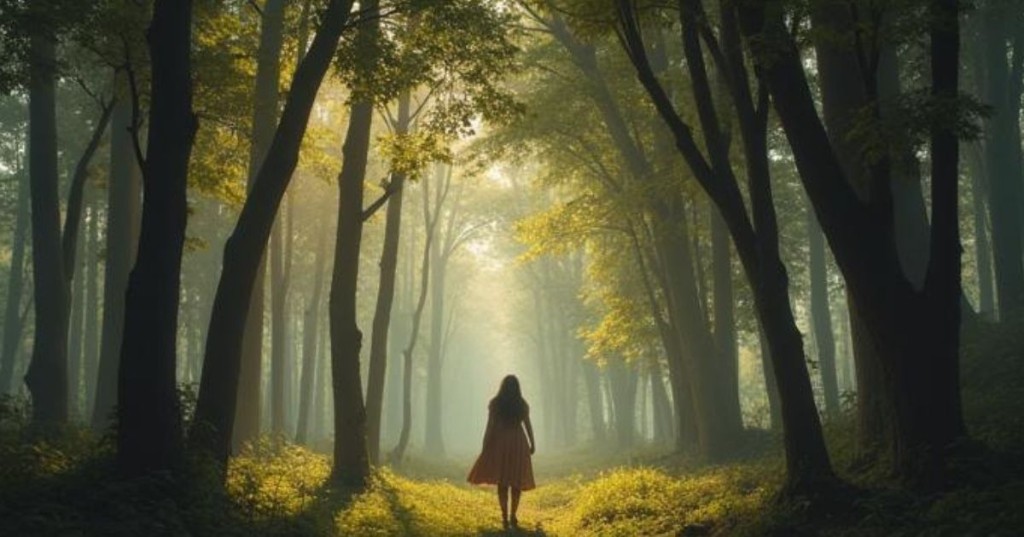
An excerpt from the original text.(complete · 7116 words)
..........ow these antique towers
And vacant courts chill the suspended soul!
Till expectation wears the face of fear:
And fear, half ready to become devotion,
Mutters a kind of mental orison
It knows not wherefore! What a kind of being
Is circumstance!
HORACE WALPOLE.
He approached, and perceived the Gothic remains of an abbey: it stood on
a kind of rude lawn, overshadowed by high and spreading trees which
seemed coeval with the building, and diffused a romantic gloom around.
The greater part of the pile appeared to be sinking into ruins, and that
which had withstood the ravages of time, showed the remaining features
of the fabric more awful in decay. The lofty battlements, thickly
enwreathed with ivy, were half demolished, and become the residence of
birds of prey. Huge fragments of the eastern tower, which was almost
demolished, lay scattered amid the high grass, that waved slowly to the
breeze. "The thistle shook its lonely head; the moss whistled to the
wind." A Gothic gate, richly ornamented with fret-work, which opened
into the main body of the edifice, but which was now obstructed with
brush-wood, remained entire. Above the vast and magnificent portal of
this gate arose a window of the same order, whose pointed arches still
exhibited fragments of stained glass, once the pride of monkish
devotion. La Motte, thinking it possible it might yet shelter some human
being, advanced to the gate and lifted a massy knocker. The hollow
sounds rung through the emptiness of the place. After waiting a few
minutes, he forced back the gate, which was heavy with iron work and
creaked harshly on its hinges.
He entered what appeared to have been the chapel of the abbey, where the
hymn of devotion had once been raised, and the tear of penitence had
once been shed; sounds, which could now only be recalled by
imagination--tears of penitence, which had been long since fixed in
fate. La Motte paused a moment, for he felt a sensation of sublimity
rising into terror--a suspension of mingled astonishment and awe! He
surveyed the vastness of the place, and as he contemplated its ruins,
fancy bore him back to past ages.--And these walls, said he, where once
superstition lurked, and austerity anticipated an earthly purgatory, now
tremble over the mortal remains of the beings who reared them!
The deepening gloom now reminded La Motte that he had no time to lose;
but curiosity prompted him to explore further, and he obeyed the
impulse. As he walked over the broken pavement, the sound of his steps
ran in echoes through the place, and seemed like the mysterious accents
of the dead reproving the sacrilegious mortal who thus dared to disturb
their precincts.
From this chapel he passed into the nave of the great church, of which
one window, more perfect than the rest, opened upon a long vista of the
forest, through which was seen the rich colouring of evening, melting by
imperceptible gradations into the solemn gray of upper air. Dark hills,
whose outline appeared distinct upon the vivid glow of the horizon,
closed the perspective. Several of the pillars, which had once supported
the roof, remained the proud effigies of sinking greatness, and seemed
to nod at every murmur of the blast over the fragments of those that had
fallen a little before them. La Motte sighed. The comparison between
himself and the gradation of decay which these columns exhibited, was
but too obvious and affecting. A few years, said he, and I shall become
like the mortals on whose relicks I now gaze, and, like them too, I may
be the subject of meditation to a succeeding generation, which shall
totter but a little while over the object they contemplate ere they also
sink into the dust.
Retiring from the scene, he walked through the cloisters, till a door,
which communicated with the lofty part of the building, attracted his
curiosity. He opened this, and perceived across the foot of the
staircase another door;--but now, partly checked by fear, and partly by
the recollection of the surprise his family might feel in his absence,
he returned with hasty steps to his carriage, having wasted some of the
precious moments of twilight and gained no information.
Some slight answer to Madame La Motte's inquiries, and a general
direction to Peter to drive carefully on and look for a road,
was all that his anxiety would permit him to utter. The night shade
fell thick around, which, deepened by the gloom of the forest,
soon rendered it dangerous to proceed. Peter stopped; but La Motte,
persisting in his first determination, ordered him to go on. Peter
ventured to remonstrate, Madame La Motte entreated, but La Motte
reproved--commanded, and at length repented; for the hind wheel rising
upon the stump of an old tree, which the darkness had prevented Peter
from observing, the carriage was in an instant overturned.
The party, as may be supposed, were much terrified, but no one was
materially hurt; and having disengaged themselves from their perilous
situation, La Motte and Peter endeavoured to raise the carriage. The
extent of this misfortune was now discovered, for they perceived that
the wheel was broke. Their distress was reasonably great, for not only
was the coach disabled from proceeding, but it could not even afford a
shelter from the cold dews of the night, it being impossible to preserve
it in an upright situation. After a few moments' silence, La Motte
proposed that they should return to the ruins which they had just
quitted, which lay at a very short distance, and pass the night in the
most habitable part of them: that, when morning dawned, Peter should
take one of the coach horses, and endeavour to find a road and a town,
from whence assistance could be procured for repairing the carriage.
This proposal was opposed by Madame La Motte, who shuddered at the idea
of passing so many hours of darkness in a place so forlorn as the
monastery. Terrors, which she neither endeavoured to examine or combat,
overcame her, and she told La Motte she had rather remain exposed to the
unwholesome dews of night, than encounter the desolation of the ruins.
La Motte had at first felt an equal reluctance to return to this spot;
but having subdued his own feelings, he resolved not to yield to those
of his wife.
The horses being now disengaged from the carriage, the party moved
towards the edifice. As they proceeded, Peter, who followed them, struck
a light, and they entered the ruins by the flame of sticks which he had
collected. The partial gleams thrown across the fabric seemed to make
its desolation more solemn, while the obscurity of the greater part of
the pile heightened its sublimity, and led fancy on to scenes of horror.
Adeline, who had hitherto remained in silence, now uttered an
exclamation of mingled admiration and fear. A kind of pleasing dread
thrilled her bosom, and filled all her soul. Tears started into her
eyes:--she wished yet feared to go on;--she hung upon the arm of La
Motte, and looked at him with a sort of hesitating interrogation.
He opened the door of the great hall, and they entered: its extent was
lost in gloom.--Let us stay here, said Madame de La Motte, I will go no
further. La Motte pointed to the broken roof, and was proceeding, when
he was interrupted by an uncommon noise, which passed along the hall.
They were all silent--it was the silence of terror. Madame La Motte
spoke first. Let us quit this spot, said she, any evil is preferable to
the feeling which now oppresses me. Let us retire instantly. The
stillness had for some time remained undisturbed, and La Motte, ashamed
of the fear he had involuntarily betrayed, now thought it necessary to
affect a boldness which he did not feel. He therefore opposed ridicule
to the terror of Madame, and insisted upon proceeding. Thus compelled to
acquiesce, she traversed the hall with trembling steps. They came to a
narrow passage, and Peter's sticks being nearly exhausted, they awaited
here, while he went in search of more.
The almost expiring light flashed faintly upon the walls of the passage,
showing the recess more horrible. Across the hall, the greater part of
which was concealed in shadow, the feeble ray spread a tremulous gleam,
exhibiting the chasm in the roof, while many nameless objects were seen
imperfectly through the dusk. Adeline with a smile inquired of La Motte
if he believed in spirits. The question was ill-timed; for the present
scene impressed its terrors upon La Motte, and, in spite of endeavour,
he felt a superstitious dread stealing upon him. He was now, perhaps,
standing over the ashes of the dead. If spirits were ever permitted to
revisit the earth, this seemed the hour and the place most suitable for
their appearance. La Motte remaining silent, Adeline said, Were I
inclined to superstition--she was interrupted by a return of the noise
which had been lately heard. It sounded down the passage, at whose
entrance they stood, and sunk gradually away. Every heart palpitated,
and they remained listening in silence. A new subject of apprehension
seized La Motte:--the noise might proceed from banditti, and he
hesitated whether it would be safe to proceed. Peter now came with the
light: Madame refused to enter the passage--La Motte was not much
inclined to it; but Peter, in whom curiosity was more prevalent than
fear, readily offered his services. La Motte, after some hesitation,
suffered him to go, while he awaited at the entrance the result of the
inquiry. The extent of the passage soon concealed Peter from view, and
the echoes of his footsteps were lost in a sound which rushed along the
avenue, and became fainter and fainter till it sunk into silence. La
Motte now called aloud to Peter, but no answer was returned; at length,
they heard the sound of a distant footstep, and Peter soon after
appeared, breathless, and pale with fear.
When he came within hearing of La Motte, he called out, An please your
honour, I've done for them, I believe, but I've had a hard bout. I
thought I was fighting with the devil.--What are you speaking of? said
La Motte.
They were nothing but owls and rooks after all, continued Peter; but the
light brought them all about my ears, and they made such a confounded
clapping with their wings, that I thought at first I had been beset with
a legion of devils. But I have driven them all out, master, and you have
nothing to fear now.
The latter part of the sentence, intimating a suspicion of his courage,
La Motte, could have dispensed with, and to retrieve in some degree his
reputation, he made a point of proceeding through the passage. They now
moved on with alacrity, for, as Peter said, they had nothing to fear.
The passage led into a large area, on one side of which, over a range of
cloisters, appeared the west tower, and a lofty part of the edifice; the
other side was open to the woods. La Motte led the way to a door of the
tower, which he now perceived was the same he had formerly entered; but
he found some difficulty in advancing, for the area was overgrown with
brambles and nettles, and the light which Peter carried afforded only an
uncertain gleam. When he unclosed the door, the dismal aspect of the
place revived the apprehensions of Madame La Motte, and extorted from
Adeline an inquiry whither they were going. Peter held up the light to
show the narrow staircase that wound round the tower; but La Motte,
observing the second door, drew back the rusty bolts, and entered a
spacious apartment, which, from its style and condition, was evidently
of a much later date than the other part of the structure: though
desolate and forlorn, it was very little impaired by time; the walls
were damp, but not decayed; and the glass was yet firm in the windows.
They passed on to a suit of apartments resembling the first they had
seen, and expressed their surprise at the incongruous appearance of this
part of the edifice with the mouldering walls they had left behind.
These apartments conducted them to a winding passage, that received
light and air through narrow cavities placed high in the wall; and was
at length closed by a door barred with iron, which being with some
difficulty opened, they entered a vaulted room. La Motte surveyed it
with a scrutinizing eye, and endeavoured to conjecture for what purpose
it had been guarded by a door of such strength; but he saw little within
to assist his curiosity. The room appeared to have been built in modern
times upon a Gothic plan. Adeline approached a large window that formed
a kind of recess raised by one step over the level of the floor; she
observed to La Motte that the whole floor was inlaid with Mosaic work;
which drew from him a remark, that the style of this apartment was not
strictly Gothic. He passed on to a door which appeared on the opposite
side of the apartment, and, unlocking it, found himself in the great
ball by which he had entered the fabric.
He now perceived, what the gloom had before concealed, a spiral
staircase which led to a gallery above, and which, from its present
condition, seemed to have been built with the more modern part of the
fabric, though this also affected the Gothic mode of architecture: La
Motte had little doubt that these stairs led to apartments corresponding
with those he had passed below, and hesitated whether to explore them;
but the entreaties of Madame, who was much fatigued, prevailed with him
to defer all further examination. After some deliberation in which of
the rooms they should pass the night, they determined to return to that
which opened from the tower.
A fire was kindled on a hearth, which it is probable had not for many
years before afforded the warmth of hospitality; and Peter having spread
the provision he had brought from the coach, La Motte and his family,
encircled round the fire, partook of a repast which hunger and fatigue
made delicious. Apprehension gradually gave way to confidence, for they
now found themselves in something like a human habitation, and they had
leisure to laugh at their late terrors; but, as the blasts shook the
doors, Adeline often started, and threw a fearful glance around. They
continued to laugh and talk cheerfully for a time; yet their merriment
was transient, if not affected; for a sense of their peculiar and
distressed circumstances pressed upon their recollection, and sunk each
individual into languor and pensive silence. Adeline felt the
forlornness of her condition with energy; she reflected upon the past
with astonishment, and anticipated the future with fear. She found
herself wholly dependent upon strangers, with no other claim than what
distress demands from the common sympathy of kindred beings; sighs
swelled her heart, and the frequent tear started to her eye; but she
checked it, ere it betrayed on her check the sorrow which she thought it
would be ungrateful to reveal.
La Motte at length broke this meditative silence, by directing the fire
to be renewed for the night, and the door to be secured: this seemed a
necessary precaution, even in this solitude, and was effected by means
of large stones piled against it, for other fastening there was none. It
had frequently occurred to La Motte, that this apparently forsaken
edifice might be a place of refuge to banditti. Here was solitude to
conceal them; and a wild and extensive forest to assist their schemes of
rapine, and to perplex with its labyrinths those who might be bold
enough to attempt pursuit. These apprehensions, however, he hid within
his own bosom, saving his companions from a share of the uneasiness they
occasioned. Peter was ordered to watch at the door; and having given the
fire a rousing stir, our desolate party drew round it, and sought in
sleep a short oblivion of care.
The night passed on without disturbance. Adeline slept, but uneasy
dreams fleeted before her fancy, and she awoke at an early hour: the
recollection of her sorrows arose upon her mind, and yielding to their
pressure, her tears flowed silently and fast. That she might indulge
them without restraint, she went to a window that looked upon an open
part of the forest: all was gloom and silence; she stood for some time
viewing the shadowy scene.
The first tender tints of morning now appeared on the verge of the
horizon, stealing upon the darkness;--so pure, so fine, so ethereal! it
seemed as if heaven was opening to the view. The dark mists were seen to
roll off to the west, as the tints of light grew stronger, deepening the
obscurity of that part of the hemisphere, and involving the features of
the country below; meanwhile, in the east, the hues became more vivid,
darting a trembling lustre far around, till a ruddy glow, which fired
all that part of the heavens, announced the rising sun. At first, a
small line of inconceivable splendour emerged on the horizon, which
quickly expanding, the sun appeared in all his glory, unveiling the
whole face of nature, vivifying every colour of the landscape, and
sprinkling the dewy earth with glittering light. The low and gentle
responses of birds, awakened by the morning ray, now broke the silence
of the hour; their soft warblings rising by degrees till they swelled
the chorus of universal gladness. Adeline's heart swelled too with
gratitude and adoration.
The scene before her soothed her mind, and exalted her thoughts to the
great Author of Nature; she uttered an involuntary prayer: Father of
good, who made this glorious scene! I resign myself to thy hands: thou
wilt support me under my present sorrows, and to protect me from future
evil.
Thus confiding in the benevolence of God, she wiped the tears from her
eyes, while the sweet union of conscience and reflection rewarded her
trust; and her mind, losing the feelings which had lately oppressed it,
became tranquil and composed.
La Motte awoke soon after, and Peter prepared to set out on his
expedition. As he mounted his horse. An' please you, master, said he, I
think we had as good look no further for a habitation till better times
turn up; for nobody will think of looking for us here; and when one sees
the place by daylight, it's none so bad, but what a little patching up
would make it comfortable enough. La Motte made no reply, but he thought
of Peter's words. During the intervals of the night, when anxiety had
kept him waking, the same idea had occurred to him; concealment was his
only security, and this place afforded it. The desolation of the spot
was repulsive to his wishes; but he had only a choice of evils--a forest
with liberty was not a bad home for one who had too much reason to
expect a prison. As he walked through the apartments, and examined their
condition more attentively, he perceived they might easily be made
habitable; and now surveying them under the cheerfulness of morning, his
design strengthened; and he mused upon the means of accomplishing it,
which nothing seemed so much to obstruct as the apparent difficulty of
procuring food.
He communicated his thoughts to Madame La Motte, who felt repugnance to
the scheme. La Motte, however, seldom consulted his wife till he had
determined how to act; and he had already resolved to be guided in this
affair by the report of Peter. If he could discover a town in the
neighbourhood of the forest, where provisions and other necessaries
could be procured, he would seek no further for a place of rest.
In the mean time he spent the anxious interval of Peter's absence in
examining the ruin, and walking over the environs; they were sweetly
romantic, and the luxuriant woods with which they abounded, seemed to
sequester this spot from the rest of the world. Frequently a natural
vista would yield a view of the country, terminated by hills, which
retiring in distance faded into the blue horizon. A stream, various and
musical in its course, wound at the foot of the lawn on which stood the
abbey; here it silently glided beneath the shades, feeding the flowers
that bloomed on its banks, and diffusing dewy freshness around; there it
spread in broad expanse to day, reflecting the sylvan scene, and the
wild deer that tasted its waves. La Motte observed every where a
profusion of game; the pheasants scarcely flew from his approach, and
the deer gazed mildly at him as he passed. They were strangers to man!
On his return to the abbey, La Motte ascended the stairs that led to the
tower. About half way up, a door appeared in the wall; it yielded,
without resistance, to his hand; but a sudden noise within, accompanied
by a cloud of dust, made him step back and close the door. After waiting
a few minutes, he again opened it, and perceived a large room of the
more modern building. The remains of tapestry hung in tatters upon the
walls, which were become the residence of birds of prey, whose sudden
flight on the opening of the door had brought down a quantity of dust,
and occasioned the noise. The windows were shattered, and almost without
glass; but he was surprised to observe some remains of furniture;
chairs, whose fashion and condition bore the date of their antiquity; a
broken table, and an iron grate almost consumed by rust.
On the opposite side of the room was a door which led to another
apartment, proportioned like the first, but hung with arras somewhat
less tattered. In one corner stood a small bedstead, and a few shattered
chairs were placed round the walls. La Motte gazed with a mixture of
wonder and curiosity. 'Tis strange, said he, that these rooms, and these
alone, should bear the marks of inhabitation; perhaps, some wretched
wanderer like myself, may have here sought refuge from a persecuting
world; and here, perhaps, laid down the load of existence; perhaps, too,
I have followed his footsteps, but to mingle my dust with his! He turned
suddenly, and was about to quit the room, when he perceived a small door
near the bed; it opened into a closet, which was lighted by one small
window, and was in the same condition as the apartments he had passed,
except that it was destitute even of the remains of furniture. As he
walked over the floor, he thought he felt one part of it shake beneath
his steps, and, examining, found a trap-door. Curiosity prompted him to
explore further, and with some difficulty he opened it. It disclosed a
staircase which terminated in darkness. La Motte descended a few steps,
but was unwilling to trust the abyss; and, after wondering for what
purpose it was so secretly constructed, he closed the trap, and quitted
this suit of apartments.
The stairs in the tower above were so much decayed, that he did not
attempt to ascend them: he returned to the hall, and by the spiral
staircase which he had observed the evening before, reached the gallery,
and found another suit of apartments entirely furnished, very much like
those below.
He renewed with Madame La Motte his former conversation respecting the
abbey, and she exerted all her endeavours to dissuade him from his
purpose, acknowledging the solitary security of the spot, but pleading
that other places might be found equally well adapted for concealment
and more for comfort. This La Motte doubted: besides, the forest
abounded with game, which would, at once, afford him amusement and food,
a circumstance, considering his small stock of money, by no means to be
overlooked; and he had suffered his mind to dwell so much upon the
scheme, that it was become a favourite one. Adeline listened in anxiety
to the discourse, and waited the issue of Peter's report.
The morning passed but Peter did not return. Our solitary party took
their dinner of the provision they had fortunately brought with them,
and afterwards walked forth into the woods. Adeline, who never suffered
any good to pass unnoticed because it came attended with evil, forgot
for a while the desolation of the abbey in the beauty of the adjacent
scenery. The pleasantness of the shades soothed her heart, and the
varied features of the landscape amused her fancy; she almost thought
she could be contented to live here. Already she began to feel an
interest in the concerns of her companions, and for Madame La Motte she
felt more; it was the warm emotion of gratitude and affection.
The afternoon wore away, and they returned to the abbey. Peter was still
absent, and his absence now began to excite surprise and apprehension.
The approach of darkness also threw a gloom upon the hopes of the
wanderers: another night must be passed under the same forlorn
circumstances as the preceding one! and, what was still worse, with a
very scanty stock of provisions. The fortitude of Madame La Motte now
entirely forsook her, and she wept bitterly. Adeline's heart was as
mournful as Madame's, but she rallied her drooping spirits, and gave the
first instance of her kindness by endeavouring to revive those of her
friend.
La Motte was restless and uneasy, and, leaving the abbey, he walked
alone the way which Peter had taken. He had not gone far, when he
perceived him between the trees, leading his horse.--What news, Peter?
hallooed La Motte. Peter came on, panting for breath, and said not a
word, till La Motte repeated the question in a tone of somewhat more
authority. Ah, bless you, master! said he, when he had taken breath to
answer, I am glad to see you; I thought I should never have got back
again: I've met with a world of misfortunes.
Well, you may relate them hereafter; let me hear whether you have
discovered--
Discovered? interrupted Peter, yes, I am discovered with a vengeance! if
your honour will look at my arms, you'll see how I am discovered.
Discoloured! I suppose you mean, said La Motte. But how came you in this
condition!
Why I tell you how it was, Sir; your honour knows I learnt a smack of
boxing of that Englishman that used to come with his master to our
house.
Well, well--tell me where you have been.
I scarcely know myself, master; I've been where I got a sound drubbing,
but then it was in your business, and so I don't mind. But if ever I
meet with that rascal again!--
You seem to like your first drubbing so well, that you want another, and
unless you speak more to the purpose, you shall soon have one.
Peter was now frightened into method, and endeavoured to proceed: When I
left the old abbey, said he, I followed the way you directed, and
turning to the right of that grove of trees yonder, I looked this way
and that to see if I could see a house or a cottage, or even a man, but
not a soul of them was to be seen, and so I jogged on near the value
of a league, I warrant, and then I came to a track; Oh! oh! says I, we
have you now; this will do--paths can't be made without feet. However, I
was out in my reckoning, for the devil a bit of a soul could I see,
and after following the track this way and that way, for the third
of a league, I lost it, and had to find out another.
Is it impossible for you to speak to the point? said La Motte; omit
these foolish particulars, and tell whether you have succeeded.
Well, then, master, to be short, for that's the nearest way after all, I
wandered a long while at random, I did not know where, all through a
forest like this, and I took special care to note how the trees stood,
that I might find my way back. At last I came to another path, and was
sure I should find something now, though I had found nothing before, for
I could not be mistaken twice; so, peeping between the trees, I spied a
cottage, and I gave my horse a lash that sounded through the forest, and
I was at the door in a minute. They told me there was a town about half
a league off, and bade me follow the track and it would bring me
there,--so it did; and my horse, I believe, smelt the corn in the manger
by the rate he went at. I inquired for a wheel-wright, and was told
there was but one in the place, and he could not be found. I waited and
waited, for I knew it was in vain to think of returning without doing my
business. The man at last came home from the country, and I told him how
long I had waited; for, says I, I knew it was in vain to return without
my business.
Do be less tedious, said La Motte, if it is in thy nature.
It is in my nature, answered Peter, and if it was more in my nature your
honour should have it all. Would you think it, Sir, the fellow had the
impudence to ask a louis-d'or for mending the coach-wheel! I believe in
my conscience he saw I was in a hurry and could not do without him. A
louis-d'or! says I, my master shall give no such price, he sha'n't be
imposed upon by no such rascal as you. Whereupon, the fellow looked
glum, and gave me a douse o'the chops: with this, I up with my fist and
gave him another, and should have beat him presently, if another man had
not come in, and then I was obliged to give up.
And so you are returned as wise as you went?
Why, master, I hope I have too much spirit to submit to a rascal, or let
you submit, to one either: besides, I have bought some nails to try if I
can't mend the wheel myself--I had always a hand at carpentry.
Well, I commend your zeal in my cause, but on this occasion it was
rather ill-timed. And what have you got in that basket?
Why, master, I bethought me that we could not get away from this place
till the carriage was ready to draw us, and in the mean time, says I,
nobody can live without victuals, so I'll e'en lay out the little money
I have and take a basket with me.
That's the only wise thing you have done yet, and this, indeed, redeems
your blunders.
Why now, master, it does my heart good to hear you speak; I knew I was
doing for the best all the while: but I've had a hard job to find my way
back; and here's another piece of ill luck, for the horse has got a
thorn in his foot.
La Motte made inquiries concerning the town, and found it was capable of
supplying him with provision, and what little furniture was necessary to
render the abbey habitable. This intelligence almost settled his plans,
and he ordered Peter to return on the following morning and make
inquiries concerning the abbey. If the answers were favourable to his
wishes, he commissioned him to buy a cart and load it with some
furniture, and some materials necessary for repairing the modern
apartments. Peter stared: What, does your honour mean to live here?
Why, suppose I do?
Why, then your honour has made a wise determination, according to my
hint; for your honour knows I said--
Well, Peter, it is not necessary to repeat what you said; perhaps I had
determined on the subject before.
Egad, master, you're in the right, and I'm glad of it, for I believe we
shall not quickly be disturbed here, except by the rooks and owls. Yes,
yes--I warrant I'll make it a place fit for a king; and as for the town,
one may get any thing, I'm sure of that; though they think no more about
this place than they do about India or England, or any of those places.
They now reached the abbey; where Peter was received with great joy: but
the hopes of his mistress and Adeline were repressed, when they learned
that he returned without having executed his commission, and heard his
account of the town. La Motte's orders to Peter were heard with almost
equal concern by Madame and Adeline; but the latter concealed her
uneasiness, and used all her efforts to overcome that of her friend. The
sweetness of her behaviour, and the air of satisfaction she assumed,
sensibly affected Madame, and discovered to her a source of comfort
which she had hitherto overlooked. The affectionate attentions of her
young friend promised to console her for the want of other society, and
her conversation to enliven the hours which might otherwise be passed in
painful regret.
The observations and general behaviour of Adeline already bespoke a good
understanding and an amiable heart; but she had yet more--she had
genius. She was now in her nineteenth year; her figure of the middling
size, and turned to the most exquisite proportion; her hair was dark
auburn, her eyes blue, and whether they sparkled with intelligence, or
melted with tenderness, they were equally attractive: her form had the
airy lightness of a nymph, and when she smiled, her countenance might
have been drawn for the younger sister of Hebe: the captivations of her
beauty were heightened by the grace and simplicity of her manners, and
confirmed by the intrinsic value of a heart.
That might be shrined in chrystal,
And have all its movements scann'd.
Annette now kindled the fire for the night: Peter's basket was opened,
and supper prepared. Madame La Motte was still pensive and
silent.--There is scarcely any condition so bad, said Adeline, but we
may one time or the other wish we had not quitted it. Honest Peter, when
he was bewildered in the forest, or had two enemies to encounter instead
of one, confesses he wished himself at the abbey. And I am certain,
there is no situation so destitute, but comfort may be extracted from
it. The blaze of this fire shines yet more cheerfully from the
contrasted dreariness of the place; and this plentiful repast is made
yet more delicious from the temporary want we have suffered. Let us
enjoy the good and forget the evil.
You speak, my dear, replied Madame La Motte, like one whose spirits have
not been often depressed by misfortune (Adeline sighed), and whose hopes
are therefore vigorous. Long suffering, said La Motte, has subdued in
our minds that elastic energy which repels the pressure of evil and
dances to the bound of joy. But I speak in raphsody, though only from
the remembrance of such a time. I once, like you, Adeline, could extract
comfort from most situations.
And may now, my dear Sir, said Adeline. Still believe it possible, and
you will find it is so.
The illusion is gone--I can no longer deceive myself.
Pardon me, Sir, if I say, it is now only you deceive yourself, by
suffering the cloud of sorrow to tinge every object you look upon.
It may be so, said La Motte, but let us leave the subject.
After supper, the doors were secured, as before, for the night, and the
wanderers resigned themselves to repose.
On the following morning, Peter again set out for the little town of
Auboine, and the hours of his absence were again spent by Madame La
Motte and Adeline in much anxiety and some hope, for the intelligence he
might bring concerning the abbey might yet release them from the plans
of La Motte. Towards the close of the day he was descried coming slowly
on; and the cart, which accompanied him, too certainly confirmed their
fears. He brought materials for repairing the place, and some furniture.
Of the abbey he gave an account, of which the following is the
substance:--It belonged, together with a large part of the adjacent
forest, to a nobleman, who now resided with his family on a remote
estate. He inherited it, in right of his wife, from his father-in-law,
who had caused the more modern apartments to be erected, and had resided
in them some part of every year, for the purpose of shooting and
hunting. It was reported, that some person was, soon after it came to
the present possessor, brought secretly to the abbey and confined in
these apartments; who, or what he was, had never been conjectured, and
what became of him nobody knew. The report died gradually away, and many
persons entirely disbelieved the whole of it. But however this affair
might be, certain it was, the present owner had visited the abbey only
two summers since his succeeding to it; and the furniture after some
time, was removed.
This circumstance had at first excited surprise, and various reports
rose in consequence, but it was difficult to know what ought to be
believed. Among the rest, it was said that strange appearances had been
observed at the abbey, and uncommon noises heard; and though this report
had been ridiculed by sensible persons as the idle superstition of
ignorance, it had fastened so strongly upon the minds of the common
people, that for the last seventeen years none of the peasantry had
ventured to approach the spot. The abbey was now, therefore, abandoned
to decay.
La Motte ruminated upon this account. At first it called up unpleasant
ideas, but they were soon dismissed, and considerations more interesting
to his welfare took place: he congratulated himself that he had now
found a spot where he was not likely to be either discovered or
disturbed; yet it could not escape him that there was a strange
coincidence between one part of Peter's narrative, and the condition of
the chambers that opened from the tower above stairs. The remains of
furniture, of which the other apartments were void--the solitary
bed--the number and connexion of the rooms, were circumstances that
united to confirm his opinion. This, however, he concealed in his own
breast, for he already perceived that Peter's account had not assisted
in reconciling his family to the necessity of dwelling at the abbey.
But they had only to submit in silence, and whatever disagreeable
apprehension might intrude upon them, they now appeared willing to
suppress the expression of it. Peter, indeed, was exempt from any evil
of this kind; he knew no fear, and his mind was now wholly occupied with
his approaching business. Madame La Motte, with a placid kind of
despair, endeavoured to reconcile herself to that which no effort of
understanding could teach her to avoid, and which an indulgence in
lamentation could only make more intolerable. Indeed, though a sense of
the immediate inconveniences to be endured at the abbey had made her
oppose the scheme of living there, she did not really know how their
situation could be improved by removal: yet her thoughts often wandered
towards Paris, and reflected the retrospect of past times, with the
images of weeping friends left, perhaps, for ever. The affectionate
endearments of her only son, whom, from the danger of his situation, and
the obscurity of hers, she might reasonably fear never to see again,
arose upon her memory and overcame her fortitude. Why--why was I
reserved for this hour? would she say, and what will be my years to
come?
Adeline had no retrospect of past delight to give emphasis to present
calamity--no weeping friends--no dear regretted objects to point the
edge of sorrow, and throw a sickly hue upon her future prospects: she
knew not yet the pangs of disappointed hope, or the acuter sting of
self-accusation; she had no misery but what patience could assuage, or
fortitude overcome.
At the dawn of the following day Peter arose to his labour: he proceeded
with alacrity, and in a few days two of the lower apartments were so
much altered for the better that La Motte began to exult, and his family
to perceive that their situation would not be so miserable as they had
imagined. The furniture Peter had already brought was disposed in these
rooms, one of which was the vaulted apartment. Madame La Motte furnished
this as a sitting-room, preferring it for its large Gothic window, that
descended almost to the floor, admitting a prospect of the lawn, and the
picturesque scenery of the surrounding woods.
Peter having returned to Auboine for a further supply, all the lower
apartments were in a few weeks not only habitable, but comfortable.
These, however, being insufficient for the accommodation of the family,
a room above stairs was prepared for Adeline: it was the chamber that
opened immediately from the tower, and she preferred it to those beyond,
because it was less distant from the family, and the windows fronting an
avenue of the forest afforded a more extensive prospect. The tapestry,
that was decayed, and hung loosely from the walls, was now nailed up,
and made to look less desolate; and though the room had still a solemn
aspect, from its spaciousness and the narrowness of the windows, it was
not uncomfortable.
The first night that Adeline retired hither, she slept little: the
solitary air of the place affected her spirits; the more so, perhaps,
because she had, with friendly consideration, endeavoured to support
them in the presence of Madame La Motte. She remembered the narrative of
Peter, several circumstances of which had impressed her imagination in
spite of her reason, and she found it difficult wholly to subdue
apprehension. At one time, terror so strongly seized her mind, that she
had even opened the door with an intention of calling Madame La Motte;
but, listening for a moment on the stairs of the tower, every thing
seemed still: at length, she heard the voice of La Motte speaking
cheerfully, and the absurdity of her fears struck her forcibly; she
blushed that she had for a moment submitted to them, and returned to her
chamber wondering at herself.
Master this chapter. Complete your experience
Purchase the complete book to access all chapters and support classic literature
As an Amazon Associate, we earn a small commission from qualifying purchases at no additional cost to you.
Available in paperback, hardcover, and e-book formats
Let's Analyse the Pattern
When facing unavoidable hardship, our internal response and chosen focus determine whether we merely survive or actually thrive in difficult circumstances.
Why This Matters
Connect literature to life
This chapter teaches how to maintain psychological stability and find genuine opportunities even when circumstances seem entirely against you.
Practice This Today
This week, notice when you're facing a difficult situation and consciously identify three specific positives or opportunities within it—not fake optimism, but real elements you can work with or appreciate.
Now let's explore the literary elements.
Key Quotes & Analysis
"The lofty battlements, thickly enwreathed with ivy, were half demolished, and become the residence of birds of prey."
Context: Describing the abbey ruins as La Motte first approaches
Shows how nature reclaims human structures over time. The ivy and predatory birds suggest both beauty and danger in abandonment.
In Today's Words:
The old towers were falling apart, covered in vines, with hawks and vultures living in them now.
"La Motte, thinking it possible it might yet shelter some human being, advanced to the gate and lifted a massy knocker."
Context: As La Motte approaches the abbey entrance
Shows his practical hope that someone might still live there who could help them, despite the obvious decay.
In Today's Words:
La Motte figured maybe somebody still lived there, so he walked up and knocked on the big door.
"The hollow sounds rung through the emptiness of the place."
Context: After La Motte knocks on the abbey door
The echoing emptiness emphasizes their isolation and the abbey's abandonment, creating an atmosphere of loneliness and mystery.
In Today's Words:
The knocking just echoed through the empty building with nobody there to answer.
Thematic Threads
Class
In This Chapter
The family's fall from comfortable middle-class life to hiding in ruins strips away social pretensions and reveals character
Development
Introduced here
In Your Life:
Financial setbacks often reveal who we really are beneath our social roles and possessions.
Identity
In This Chapter
Adeline begins discovering her own strength and resilience separate from her social position
Development
Building from Chapter 1
In Your Life:
Crisis situations often force us to discover capabilities we never knew we had.
Home
In This Chapter
The abbey transforms from terrifying ruin to protective shelter through human presence and care
Development
Introduced here
In Your Life:
Home is less about the physical space and more about the safety and belonging we create within it.
Fear
In This Chapter
Characters respond differently to the abbey's ominous reputation—some paralyzed, others cautiously moving forward
Development
Introduced here
In Your Life:
The same threatening situation can either paralyze us or motivate us to find creative solutions.
Survival
In This Chapter
Basic needs for shelter and safety override social conventions and comfort preferences
Development
Building from Chapter 1
In Your Life:
When survival is at stake, we often discover we can adapt to circumstances we never thought possible.
You now have the context. Time to form your own thoughts.
Discussion Questions
- 1
What forces the La Motte family to make the abbey their home, and how does each family member react to this decision?
analysis • surface - 2
Why does Adeline adapt more successfully to their new circumstances than Madame La Motte, despite being younger and more vulnerable?
analysis • medium - 3
Where have you seen this pattern in your own life or community - people facing the same difficult situation but having completely different experiences based on their mindset?
application • medium - 4
If you were forced to start over in an unfamiliar place with limited resources, what specific strategies would you use to build stability and find reasons for hope?
application • deep - 5
What does this chapter reveal about the relationship between our external circumstances and our internal experience of those circumstances?
reflection • deep
Critical Thinking Exercise
Practice the Adeline Response
Think of a current challenge or unwanted change in your life. Write down three genuine positives you can find in this situation - not fake silver linings, but real opportunities, strengths, or small comforts available to you right now. Then identify one small action you can take today to create stability or normalcy, just as Adeline found comfort in simple rituals like sharing meals by the fire.
Consider:
- •Focus on what you can actually control rather than what you wish were different
- •Look for specific, concrete positives rather than vague generalizations
- •Consider how your response to this challenge might be shaping your family's or friends' responses too
Journaling Prompt
Write about a time when you had to adapt to unexpected circumstances. What helped you find your footing? What would you do differently now that you understand the pattern of adaptive resilience?
Coming Up Next...
Chapter 3: Adeline's Dark Past Revealed
As the family settles into their new life at the abbey, the forest around them holds both beauty and hidden dangers. Adeline will soon discover that some mysteries are better left unexplored, and that their sanctuary may harbor secrets that could shatter their fragile peace.



