
An excerpt from the original text.(complete · 3063 words)
ook I, Chapter 11
Meanwhile the holidays had gone by and the season was beginning.
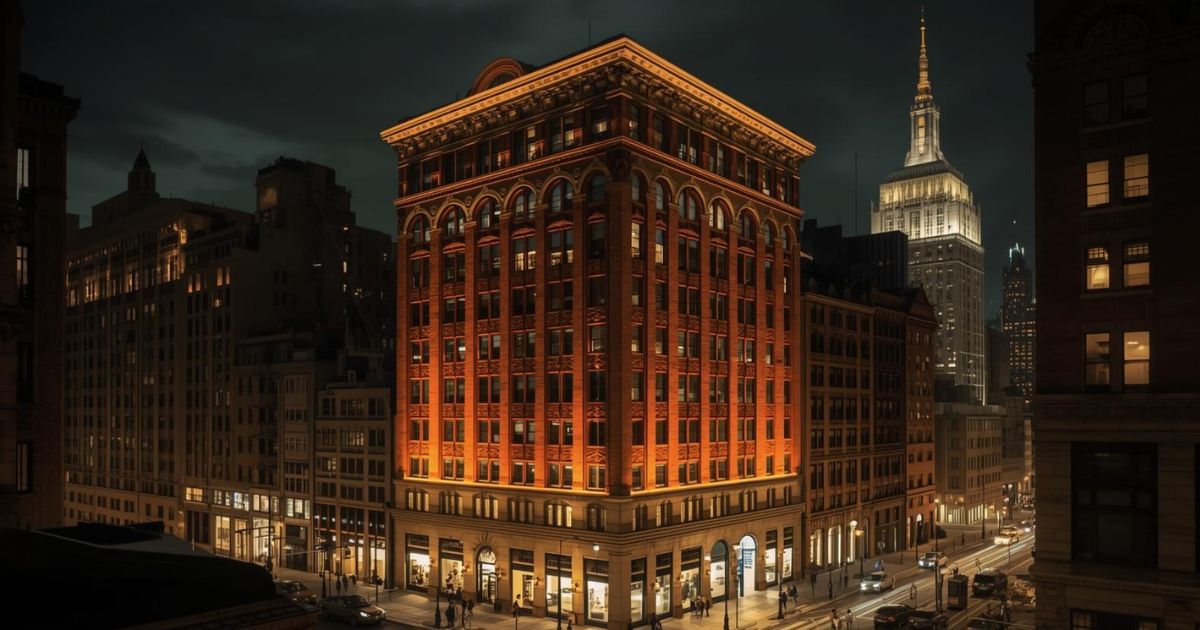
Fifth Avenue had become a nightly torrent of carriages surging
upward to the fashionable quarters about the Park, where
illuminated windows and outspread awnings betokened the usual
routine of hospitality. Other tributary currents crossed the
mainstream, bearing their freight to the theatres, restaurants or
opera; and Mrs. Peniston, from the secluded watch-tower of her
upper window, could tell to a nicety just when the chronic volume
of sound was increased by the sudden influx setting toward a Van
Osburgh ball, or when the multiplication of wheels meant merely
that the opera was over, or that there was a big supper at Sherry’s.
Mrs. Peniston followed the rise and culmination of the season
as keenly as the most active sharer in its gaieties; and,
as a looker-on, she enjoyed opportunities of comparison and
generalization such as those who take part must proverbially
forego. No one could have kept a more accurate record of
social fluctuations, or have put a more unerring finger on
the distinguishing features of each season: its dulness, its
extravagance, its lack of balls or excess of divorces. She had a
special memory for the vicissitudes of the “new people” who rose
to the surface with each recurring tide, and were either submerged
beneath its rush or landed triumphantly beyond the reach of envious
breakers; and she was apt to display a remarkable retrospective
insight into their ultimate fate, so that, when they had fulfilled
their destiny, she was almost always able to say to Grace
Stepney—the recipient of her prophecies—that she had known exactly
what would happen.
This particular season Mrs. Peniston would have characterized as
that in which everybody “felt poor” except the Welly Brys and Mr.
Simon Rosedale. It had been a bad autumn in Wall Street, where
prices fell in accordance with that peculiar law which proves
railway stocks and bales of cotton to be more sensitive to the
allotment of executive power than many estimable citizens trained
to all the advantages of self-government. Even fortunes supposed to
be independent of the market either betrayed a secret dependence on
it, or suffered from a sympathetic affection: fashion sulked in its
country houses, or came to town incognito, general entertainments
were discountenanced, and informality and short dinners became the
fashion.
But society, amused for a while at playing Cinderella, soon
wearied of the hearthside role, and welcomed the Fairy Godmother
in the shape of any magician powerful enough to turn the shrunken
pumpkin back again into the golden coach. The mere fact of growing
richer at a time when most people’s investments are shrinking, is
calculated to attract envious attention; and according to Wall
Street rumours, Welly Bry and Rosedale had found the secret of
performing this miracle.
Rosedale, in particular, was said to have doubled his fortune, and
there was talk of his buying the newly-finished house of one of the
victims of the crash, who, in the space of twelve short months, had
made the same number of millions, built a house in Fifth Avenue,
filled a picture gallery with old masters, entertained all New
York in it, and been smuggled out of the country between a trained
nurse and a doctor, while his creditors mounted guard over the old
masters, and his guests explained to each other that they had dined
with him only because they wanted to see the pictures. Mr. Rosedale
meant to have a less meteoric career. He knew he should have to
go slowly, and the instincts of his race fitted him to suffer
rebuffs and put up with delays. But he was prompt to perceive
that the general dulness of the season afforded him an unusual
opportunity to shine, and he set about with patient industry to
form a background for his growing glory. Mrs. Fisher was of immense
service to him at this period. She had set off so many newcomers
on the social stage that she was like one of those pieces of stock
scenery which tell the experienced spectator exactly what is going
to take place. But Mr. Rosedale wanted, in the long run, a more
individual environment. He was sensitive to shades of difference
which Miss Bart would never have credited him with perceiving,
because he had no corresponding variations of manner; and it
was becoming more and more clear to him that Miss Bart herself
possessed precisely the complementary qualities needed to round off
his social personality.
Such details did not fall within the range of Mrs. Peniston’s
vision. Like many minds of panoramic sweep, hers was apt to
overlook the MINUTIAE of the foreground, and she was much more
likely to know where Carry Fisher had found the Welly Brys’ CHEF
for them, than what was happening to her own niece. She was not,
however, without purveyors of information ready to supplement
her deficiencies. Grace Stepney’s mind was like a kind of moral
fly-paper, to which the buzzing items of gossip were drawn by a
fatal attraction, and where they hung fast in the toils of an
inexorable memory. Lily would have been surprised to know how many
trivial facts concerning herself were lodged in Miss Stepney’s
head. She was quite aware that she was of interest to dingy people,
but she assumed that there is only one form of dinginess, and
that admiration for brilliancy is the natural expression of its
inferior state. She knew that Gerty Farish admired her blindly, and
therefore supposed that she inspired the same sentiments in Grace
Stepney, whom she classified as a Gerty Farish without the saving
traits of youth and enthusiasm.
In reality, the two differed from each other as much as they
differed from the object of their mutual contemplation. Miss
Farish’s heart was a fountain of tender illusions, Miss Stepney’s
a precise register of facts as manifested in their relation to
herself. She had sensibilities which, to Lily, would have seemed
comic in a person with a freckled nose and red eyelids, who lived
in a boarding-house and admired Mrs. Peniston’s drawing-room; but
poor Grace’s limitations gave them a more concentrated inner life,
as poor soil starves certain plants into intenser efflorescence.
She had in truth no abstract propensity to malice: she did not
dislike Lily because the latter was brilliant and predominant,
but because she thought that Lily disliked her. It is less
mortifying to believe one’s self unpopular than insignificant, and
vanity prefers to assume that indifference is a latent form of
unfriendliness. Even such scant civilities as Lily accorded to Mr.
Rosedale would have made Miss Stepney her friend for life; but how
could she foresee that such a friend was worth cultivating? How,
moreover, can a young woman who has never been ignored measure
the pang which this injury inflicts? And, lastly, how could Lily,
accustomed to choose between a pressure of engagements, guess
that she had mortally offended Miss Stepney by causing her to be
excluded from one of Mrs. Peniston’s infrequent dinner-parties?
Mrs. Peniston disliked giving dinners, but she had a high sense
of family obligation, and on the Jack Stepneys’ return from their
honeymoon she felt it incumbent upon her to light the drawing-room
lamps and extract her best silver from the Safe Deposit vaults.
Mrs. Peniston’s rare entertainments were preceded by days of
heart-rending vacillation as to every detail of the feast, from
the seating of the guests to the pattern of the table-cloth, and
in the course of one of these preliminary discussions she had
imprudently suggested to her cousin Grace that, as the dinner was a
family affair, she might be included in it. For a week the prospect
had lighted up Miss Stepney’s colourless existence; then she had
been given to understand that it would be more convenient to have
her another day. Miss Stepney knew exactly what had happened.
Lily, to whom family reunions were occasions of unalloyed dulness,
had persuaded her aunt that a dinner of “smart” people would be
much more to the taste of the young couple, and Mrs. Peniston,
who leaned helplessly on her niece in social matters, had been
prevailed upon to pronounce Grace’s exile. After all, Grace could
come any other day; why should she mind being put off?
It was precisely because Miss Stepney could come any other day—and
because she knew her relations were in the secret of her unoccupied
evenings—that this incident loomed gigantically on her horizon. She
was aware that she had Lily to thank for it; and dull resentment
was turned to active animosity.
Mrs. Peniston, on whom she had looked in a day or two after the
dinner, laid down her crochet-work and turned abruptly from her
oblique survey of Fifth Avenue.
“Gus Trenor?—Lily and Gus Trenor?” she said, growing so suddenly
pale that her visitor was almost alarmed.
“Oh, cousin Julia . . . of course I don’t mean....”
“I don’t know what you DO mean,” said Mrs. Peniston, with a
frightened quiver in her small fretful voice. “Such things were
never heard of in my day. And my own niece! I’m not sure I
understand you. Do people say he’s in love with her?”
Mrs. Peniston’s horror was genuine. Though she boasted an
unequalled familiarity with the secret chronicles of society, she
had the innocence of the school-girl who regards wickedness as a
part of “history,” and to whom it never occurs that the scandals
she reads of in lesson-hours may be repeating themselves in the
next street. Mrs. Peniston had kept her imagination shrouded, like
the drawing-room furniture. She knew, of course, that society was
“very much changed,” and that many women her mother would have
thought “peculiar” were now in a position to be critical about
their visiting-lists; she had discussed the perils of divorce with
her rector, and had felt thankful at times that Lily was still
unmarried; but the idea that any scandal could attach to a young
girl’s name, above all that it could be lightly coupled with that
of a married man, was so new to her that she was as much aghast as
if she had been accused of leaving her carpets down all summer, or
of violating any of the other cardinal laws of house-keeping.
Miss Stepney, when her first fright had subsided, began to feel
the superiority that greater breadth of mind confers. It was
really pitiable to be as ignorant of the world as Mrs. Peniston!
She smiled at the latter’s question. “People always say unpleasant
things—and certainly they’re a great deal together. A friend of
mine met them the other afternoon in the Park—quite late, after the
lamps were lit. It’s a pity Lily makes herself so conspicuous.”
“CONSPICUOUS!” gasped Mrs. Peniston. She bent forward, lowering her
voice to mitigate the horror. “What sort of things do they say?
That he means to get a divorce and marry her?”
Grace Stepney laughed outright. “Dear me, no! He would hardly do
that. It—it’s a flirtation—nothing more.”
“A flirtation? Between my niece and a married man? Do you mean to
tell me that, with Lily’s looks and advantages, she could find no
better use for her time than to waste it on a fat stupid man almost
old enough to be her father?” This argument had such a convincing
ring that it gave Mrs. Peniston sufficient reassurance to pick up
her work, while she waited for Grace Stepney to rally her scattered
forces.
But Miss Stepney was on the spot in an instant. “That’s the worst
of it—people say she isn’t wasting her time! Every one knows, as
you say, that Lily is too handsome and—and charming—to devote
herself to a man like Gus Trenor unless—”
“Unless?” echoed Mrs. Peniston. Her visitor drew breath nervously.
It was agreeable to shock Mrs. Peniston, but not to shock her to
the verge of anger. Miss Stepney was not sufficiently familiar
with the classic drama to have recalled in advance how bearers
of bad tidings are proverbially received, but she now had a
rapid vision of forfeited dinners and a reduced wardrobe as the
possible consequence of her disinterestedness. To the honour of
her sex, however, hatred of Lily prevailed over more personal
considerations. Mrs. Peniston had chosen the wrong moment to boast
of her niece’s charms.
“Unless,” said Grace, leaning forward to speak with low-toned
emphasis, “unless there are material advantages to be gained by
making herself agreeable to him.”
She felt that the moment was tremendous, and remembered suddenly
that Mrs. Peniston’s black brocade, with the cut jet fringe, would
have been hers at the end of the season.
Mrs. Peniston put down her work again. Another aspect of the same
idea had presented itself to her, and she felt that it was beneath
her dignity to have her nerves racked by a dependent relative who
wore her old clothes.
“If you take pleasure in annoying me by mysterious insinuations,”
she said coldly, “you might at least have chosen a more suitable
time than just as I am recovering from the strain of giving a large
dinner.”
The mention of the dinner dispelled Miss Stepney’s last scruples.
“I don’t know why I should be accused of taking pleasure in telling
you about Lily. I was sure I shouldn’t get any thanks for it,” she
returned with a flare of temper. “But I have some family feeling
left, and as you are the only person who has any authority over
Lily, I thought you ought to know what is being said of her.”
“Well,” said Mrs. Peniston, “what I complain of is that you haven’t
told me yet what IS being said.”
“I didn’t suppose I should have to put it so plainly. People say
that Gus Trenor pays her bills.”
“Pays her bills—her bills?” Mrs. Peniston broke into a laugh. “I
can’t imagine where you can have picked up such rubbish. Lily has
her own income—and I provide for her very handsomely—”
“Oh, we all know that,” interposed Miss Stepney drily. “But Lily
wears a great many smart gowns—”
“I like her to be well-dressed—it’s only suitable!”
“Certainly; but then there are her gambling debts besides.”
Miss Stepney, in the beginning, had not meant to bring up this
point; but Mrs. Peniston had only her own incredulity to blame. She
was like the stiff-necked unbelievers of Scripture, who must be
annihilated to be convinced.
“Gambling debts? Lily?” Mrs. Peniston’s voice shook with anger and
bewilderment. She wondered whether Grace Stepney had gone out of
her mind. “What do you mean by her gambling debts?”
“Simply that if one plays bridge for money in Lily’s set one is
liable to lose a great deal—and I don’t suppose Lily always wins.”
“Who told you that my niece played cards for money?”
“Mercy, cousin Julia, don’t look at me as if I were trying to turn
you against Lily! Everybody knows she is crazy about bridge. Mrs.
Gryce told me herself that it was her gambling that frightened
Percy Gryce—it seems he was really taken with her at first. But,
of course, among Lily’s friends it’s quite the custom for girls to
play for money. In fact, people are inclined to excuse her on that
account——”
“To excuse her for what?”
“For being hard up—and accepting attentions from men like Gus
Trenor—and George Dorset——”
Mrs. Peniston gave another cry. “George Dorset? Is there any one
else? I should like to know the worst, if you please.”
“Don’t put it in that way, cousin Julia. Lately Lily has been a
good deal with the Dorsets, and he seems to admire her—but of
course that’s only natural. And I’m sure there is no truth in the
horrid things people say; but she HAS been spending a great deal
of money this winter. Evie Van Osburgh was at Celeste’s ordering
her trousseau the other day—yes, the marriage takes place next
month—and she told me that Celeste showed her the most exquisite
things she was just sending home to Lily. And people say that Judy
Trenor has quarrelled with her on account of Gus; but I’m sure I’m
sorry I spoke, though I only meant it as a kindness.”
Mrs. Peniston’s genuine incredulity enabled her to dismiss Miss
Stepney with a disdain which boded ill for that lady’s prospect of
succeeding to the black brocade; but minds impenetrable to reason
have generally some crack through which suspicion filters, and
her visitor’s insinuations did not glide off as easily as she had
expected. Mrs. Peniston disliked scenes, and her determination
to avoid them had always led her to hold herself aloof from the
details of Lily’s life. In her youth, girls had not been supposed
to require close supervision. They were generally assumed to be
taken up with the legitimate business of courtship and marriage,
and interference in such affairs on the part of their natural
guardians was considered as unwarrantable as a spectator’s suddenly
joining in a game. There had of course been “fast” girls even in
Mrs. Peniston’s early experience; but their fastness, at worst, was
understood to be a mere excess of animal spirits, against which
there could be no graver charge than that of being “unladylike.”
The modern fastness appeared synonymous with immorality, and the
mere idea of immorality was as offensive to Mrs. Peniston as a
smell of cooking in the drawing-room: it was one of the conceptions
her mind refused to admit.
She had no immediate intention of repeating to Lily what she
had heard, or even of trying to ascertain its truth by means of
discreet interrogation. To do so might be to provoke a scene; and
a scene, in the shaken state of Mrs. Peniston’s nerves, with the
effects of her dinner not worn off, and her mind still tremulous
with new impressions, was a risk she deemed it her duty to avoid.
But there remained in her thoughts a settled deposit of resentment
against her niece, all the denser because it was not to be cleared
by explanation or discussion. It was horrible of a young girl to
let herself be talked about; however unfounded the charges against
her, she must be to blame for their having been made. Mrs. Peniston
felt as if there had been a contagious illness in the house, and
she was doomed to sit shivering among her contaminated furniture.
Master this chapter. Complete your experience
Purchase the complete book to access all chapters and support classic literature
As an Amazon Associate, we earn a small commission from qualifying purchases at no additional cost to you.
Available in paperback, hardcover, and e-book formats
Let's Analyse the Pattern
Excluded people systematically convert legitimate hurt into destructive weapons, using collected information to maximum damage.
Why This Matters
Connect literature to life
This chapter teaches how to recognize when someone's hurt feelings are transforming into systematic information collection for future attacks.
Practice This Today
This week, notice when someone seems to be documenting your mistakes or asking pointed questions about your finances or relationships—that's often the warning sign of weaponized resentment building.
Now let's explore the literary elements.
Key Quotes & Analysis
"No one could have kept a more accurate record of social fluctuations, or have put a more unerring finger on the distinguishing features of each season"
Context: Describing Mrs. Peniston's skill at observing social patterns from her window
This shows how being outside the action can actually give clearer perspective on social dynamics. Mrs. Peniston understands the big picture better than the participants, yet this same detachment makes her vulnerable to manipulation.
In Today's Words:
She was like a social media analyst who could predict trends but didn't understand personal drama
"The new people who rose to the surface with each recurring tide, and were either submerged beneath its rush or landed triumphantly beyond the reach of envious breakers"
Context: Explaining Mrs. Peniston's observations about social climbers
This ocean metaphor reveals how brutal and unpredictable social mobility can be. Success isn't guaranteed by money alone - timing, luck, and strategy all matter in navigating social currents.
In Today's Words:
New money people either crash and burn spectacularly or make it so big that the haters can't touch them
"I don't want to do anything unkind, but I don't see why I should be expected to stand by and see my own family injured"
Context: Grace justifying her gossip about Lily to Mrs. Peniston
This reveals how people rationalize harmful behavior by framing it as protection or duty. Grace disguises her revenge as concern for family honor, making her manipulation more effective.
In Today's Words:
I'm not trying to be mean, but someone needs to protect this family from her bad choices
Thematic Threads
Class
In This Chapter
Economic pressure creates new hierarchies as old money struggles while newcomers like Rosedale thrive
Development
Evolution from earlier focus on individual social climbing to systemic economic shifts
In Your Life:
You might see this when economic changes elevate some coworkers while others struggle to maintain status.
Information as Currency
In This Chapter
Grace trades gossip about Lily for social power, turning rumors into weapons
Development
Introduced here
In Your Life:
You might recognize this when someone starts asking unusual questions about your personal life or finances.
Reputation Fragility
In This Chapter
Lily's entire social position can be destroyed by carefully placed suggestions about her relationships
Development
Builds on earlier themes of social vulnerability
In Your Life:
You might see this when workplace rumors about your competence or character spread faster than your actual performance.
Exclusion's Revenge
In This Chapter
Grace's transformation from harmless gossip to active enemy after being left out of family dinner
Development
Introduced here
In Your Life:
You might experience this when someone you've overlooked suddenly becomes your harshest critic.
Financial Vulnerability
In This Chapter
Lily's dependence on others makes her susceptible to both gossip and actual compromise
Development
Deepens from earlier chapters showing her precarious position
In Your Life:
You might recognize this when financial stress makes you vulnerable to rumors or actual exploitation.
You now have the context. Time to form your own thoughts.
Discussion Questions
- 1
What specific action transforms Grace Stepney from harmless gossip collector into active enemy against Lily?
analysis • surface - 2
Why does Grace choose to weaponize truths rather than lies when attacking Lily's reputation?
analysis • medium - 3
Where have you seen excluded people collect information about those who rejected them - at work, in families, or social groups?
application • medium - 4
If you had to exclude someone from an important event or opportunity, how would you handle it to prevent them from becoming an enemy?
application • deep - 5
What does Grace's transformation reveal about how small hurts can grow into major revenge when they tap into deeper patterns of rejection?
reflection • deep
Critical Thinking Exercise
Map Your Own Exclusion Patterns
Think of a time when you felt excluded or overlooked. Write down what information you started noticing about the people who excluded you. Did you find yourself collecting evidence of their mistakes or flaws? Now flip it: consider someone you may have excluded. What information might they be collecting about you?
Consider:
- •Notice how exclusion changes what you pay attention to
- •Recognize the difference between legitimate hurt and weaponized grievance
- •Consider how small slights can escalate when they connect to deeper rejection patterns
Journaling Prompt
Write about a situation where you felt consistently overlooked. How did that change how you viewed the people who overlooked you? What would have helped heal that hurt before it grew into something more destructive?
Coming Up Next...
Chapter 12: The Tableau and the Kiss
The rumors Grace has planted will soon reach other ears, and Lily remains dangerously unaware of the storm gathering around her reputation. Meanwhile, the very relationships Grace has called into question continue to deepen, setting the stage for a reckoning.



