
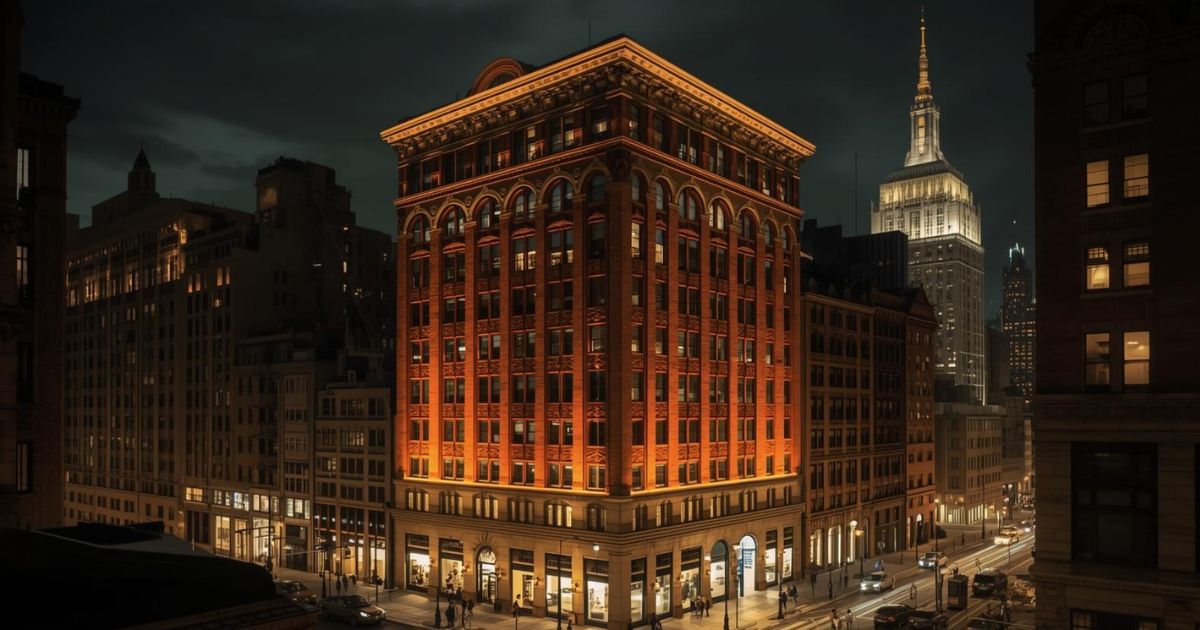
An excerpt from the original text.(complete · 4538 words)
ook I, Chapter 1
Selden paused in surprise. In the afternoon rush of the Grand
Central Station his eyes had been refreshed by the sight of Miss
Lily Bart.
It was a Monday in early September, and he was returning to his
work from a hurried dip into the country; but what was Miss Bart
doing in town at that season? If she had appeared to be catching a
train, he might have inferred that he had come on her in the act
of transition between one and another of the country houses which
disputed her presence after the close of the Newport season; but
her desultory air perplexed him. She stood apart from the crowd,
letting it drift by her to the platform or the street, and wearing
an air of irresolution which might, as he surmised, be the mask of
a very definite purpose. It struck him at once that she was waiting
for some one, but he hardly knew why the idea arrested him. There
was nothing new about Lily Bart, yet he could never see her without
a faint movement of interest: it was characteristic of her that she
always roused speculation, that her simplest acts seemed the result
of far-reaching intentions.
An impulse of curiosity made him turn out of his direct line to the
door, and stroll past her. He knew that if she did not wish to be
seen she would contrive to elude him; and it amused him to think of
putting her skill to the test.
“Mr. Selden—what good luck!”
She came forward smiling, eager almost, in her resolve to intercept
him. One or two persons, in brushing past them, lingered to look;
for Miss Bart was a figure to arrest even the suburban traveller
rushing to his last train.
Selden had never seen her more radiant. Her vivid head, relieved
against the dull tints of the crowd, made her more conspicuous than
in a ball-room, and under her dark hat and veil she regained the
girlish smoothness, the purity of tint, that she was beginning to
lose after eleven years of late hours and indefatigable dancing.
Was it really eleven years, Selden found himself wondering, and had
she indeed reached the nine-and-twentieth birthday with which her
rivals credited her?
“What luck!” she repeated. “How nice of you to come to my rescue!”
He responded joyfully that to do so was his mission in life, and
asked what form the rescue was to take.
“Oh, almost any—even to sitting on a bench and talking to me. One
sits out a cotillion—why not sit out a train? It isn’t a bit hotter
here than in Mrs. Van Osburgh’s conservatory—and some of the women
are not a bit uglier.” She broke off, laughing, to explain that she
had come up to town from Tuxedo, on her way to the Gus Trenors’ at
Bellomont, and had missed the three-fifteen train to Rhinebeck.
“And there isn’t another till half-past five.” She consulted the
little jewelled watch among her laces. “Just two hours to wait. And
I don’t know what to do with myself. My maid came up this morning
to do some shopping for me, and was to go on to Bellomont at one
o’clock, and my aunt’s house is closed, and I don’t know a soul in
town.” She glanced plaintively about the station. “It IS hotter
than Mrs. Van Osburgh’s, after all. If you can spare the time, do
take me somewhere for a breath of air.”
He declared himself entirely at her disposal: the adventure struck
him as diverting. As a spectator, he had always enjoyed Lily Bart;
and his course lay so far out of her orbit that it amused him to
be drawn for a moment into the sudden intimacy which her proposal
implied.
“Shall we go over to Sherry’s for a cup of tea?”
She smiled assentingly, and then made a slight grimace.
“So many people come up to town on a Monday—one is sure to meet a
lot of bores. I’m as old as the hills, of course, and it ought not
to make any difference; but if I’M old enough, you’re not,” she
objected gaily. “I’m dying for tea—but isn’t there a quieter place?”
He answered her smile, which rested on him vividly. Her discretions
interested him almost as much as her imprudences: he was so sure
that both were part of the same carefully-elaborated plan. In
judging Miss Bart, he had always made use of the “argument from
design.”
“The resources of New York are rather meagre,” he said; “but I’ll
find a hansom first, and then we’ll invent something.” He led her
through the throng of returning holiday-makers, past sallow-faced
girls in preposterous hats, and flat-chested women struggling with
paper bundles and palm-leaf fans. Was it possible that she belonged
to the same race? The dinginess, the crudity of this average
section of womanhood made him feel how highly specialized she was.
A rapid shower had cooled the air, and clouds still hung
refreshingly over the moist street.
“How delicious! Let us walk a little,” she said as they emerged
from the station.
They turned into Madison Avenue and began to stroll northward.
As she moved beside him, with her long light step, Selden was
conscious of taking a luxurious pleasure in her nearness: in the
modelling of her little ear, the crisp upward wave of her hair—was
it ever so slightly brightened by art?—and the thick planting
of her straight black lashes. Everything about her was at once
vigorous and exquisite, at once strong and fine. He had a confused
sense that she must have cost a great deal to make, that a great
many dull and ugly people must, in some mysterious way, have
been sacrificed to produce her. He was aware that the qualities
distinguishing her from the herd of her sex were chiefly external:
as though a fine glaze of beauty and fastidiousness had been
applied to vulgar clay. Yet the analogy left him unsatisfied, for a
coarse texture will not take a high finish; and was it not possible
that the material was fine, but that circumstance had fashioned it
into a futile shape?
As he reached this point in his speculations the sun came out, and
her lifted parasol cut off his enjoyment. A moment or two later she
paused with a sigh.
“Oh, dear, I’m so hot and thirsty—and what a hideous place New York
is!” She looked despairingly up and down the dreary thoroughfare.
“Other cities put on their best clothes in summer, but New York
seems to sit in its shirtsleeves.” Her eyes wandered down one of
the side streets. “Someone has had the humanity to plant a few
trees over there. Let us go into the shade.”
“I am glad my street meets with your approval,” said Selden as they
turned the corner.
“Your street? Do you live here?”
She glanced with interest along the new brick and limestone
house-fronts, fantastically varied in obedience to the American
craving for novelty, but fresh and inviting with their awnings and
flower-boxes.
“Ah, yes—to be sure: THE BENEDICK. What a nice-looking building!
I don’t think I’ve ever seen it before.” She looked across at the
flat-house with its marble porch and pseudo-Georgian facade. “Which
are your windows? Those with the awnings down?”
“On the top floor—yes.”
“And that nice little balcony is yours? How cool it looks up there!”
He paused a moment. “Come up and see,” he suggested. “I can give
you a cup of tea in no time—and you won’t meet any bores.”
Her colour deepened—she still had the art of blushing at the right
time—but she took the suggestion as lightly as it was made.
“Why not? It’s too tempting—I’ll take the risk,” she declared.
“Oh, I’m not dangerous,” he said in the same key. In truth, he
had never liked her as well as at that moment. He knew she had
accepted without afterthought: he could never be a factor in her
calculations, and there was a surprise, a refreshment almost, in
the spontaneity of her consent.
On the threshold he paused a moment, feeling for his latchkey.
“There’s no one here; but I have a servant who is supposed to come
in the mornings, and it’s just possible he may have put out the
tea-things and provided some cake.”
He ushered her into a slip of a hall hung with old prints. She
noticed the letters and notes heaped on the table among his gloves
and sticks; then she found herself in a small library, dark but
cheerful, with its walls of books, a pleasantly faded Turkey rug,
a littered desk and, as he had foretold, a tea-tray on a low table
near the window. A breeze had sprung up, swaying inward the muslin
curtains, and bringing a fresh scent of mignonette and petunias
from the flower-box on the balcony.
Lily sank with a sigh into one of the shabby leather chairs.
“How delicious to have a place like this all to one’s self! What a
miserable thing it is to be a woman.” She leaned back in a luxury
of discontent.
Selden was rummaging in a cupboard for the cake.
“Even women,” he said, “have been known to enjoy the privileges of
a flat.”
“Oh, governesses—or widows. But not girls—not poor, miserable,
marriageable girls!”
“I even know a girl who lives in a flat.”
She sat up in surprise. “You do?”
“I do,” he assured her, emerging from the cupboard with the
sought-for cake.
“Oh, I know—you mean Gerty Farish.” She smiled a little unkindly.
“But I said MARRIAGEABLE—and besides, she has a horrid little
place, and no maid, and such queer things to eat. Her cook does the
washing and the food tastes of soap. I should hate that, you know.”
“You shouldn’t dine with her on wash-days,” said Selden, cutting
the cake.
They both laughed, and he knelt by the table to light the lamp
under the kettle, while she measured out the tea into a little
tea-pot of green glaze. As he watched her hand, polished as a
bit of old ivory, with its slender pink nails, and the sapphire
bracelet slipping over her wrist, he was struck with the irony
of suggesting to her such a life as his cousin Gertrude Farish
had chosen. She was so evidently the victim of the civilization
which had produced her, that the links of her bracelet seemed like
manacles chaining her to her fate.
She seemed to read his thought. “It was horrid of me to say that of
Gerty,” she said with charming compunction. “I forgot she was your
cousin. But we’re so different, you know: she likes being good,
and I like being happy. And besides, she is free and I am not. If
I were, I daresay I could manage to be happy even in her flat. It
must be pure bliss to arrange the furniture just as one likes, and
give all the horrors to the ash-man. If I could only do over my
aunt’s drawing-room I know I should be a better woman.”
“Is it so very bad?” he asked sympathetically.
She smiled at him across the tea-pot which she was holding up to be
filled.
“That shows how seldom you come there. Why don’t you come oftener?”
“When I do come, it’s not to look at Mrs. Peniston’s furniture.”
“Nonsense,” she said. “You don’t come at all—and yet we get on so
well when we meet.”
“Perhaps that’s the reason,” he answered promptly. “I’m afraid
I haven’t any cream, you know—shall you mind a slice of lemon
instead?”
“I shall like it better.” She waited while he cut the lemon and
dropped a thin disk into her cup. “But that is not the reason,” she
insisted.
“The reason for what?”
“For your never coming.” She leaned forward with a shade of
perplexity in her charming eyes. “I wish I knew—I wish I could make
you out. Of course I know there are men who don’t like me—one can
tell that at a glance. And there are others who are afraid of me:
they think I want to marry them.” She smiled up at him frankly.
“But I don’t think you dislike me—and you can’t possibly think I
want to marry you.”
“No—I absolve you of that,” he agreed.
“Well, then——?”
He had carried his cup to the fireplace, and stood leaning against
the chimney-piece and looking down on her with an air of indolent
amusement. The provocation in her eyes increased his amusement—he
had not supposed she would waste her powder on such small game; but
perhaps she was only keeping her hand in; or perhaps a girl of her
type had no conversation but of the personal kind. At any rate, she
was amazingly pretty, and he had asked her to tea and must live up
to his obligations.
“Well, then,” he said with a plunge, “perhaps THAT’S the reason.”
“What?”
“The fact that you don’t want to marry me. Perhaps I don’t regard
it as such a strong inducement to go and see you.” He felt a slight
shiver down his spine as he ventured this, but her laugh reassured
him.
“Dear Mr. Selden, that wasn’t worthy of you. It’s stupid of you to
make love to me, and it isn’t like you to be stupid.” She leaned
back, sipping her tea with an air so enchantingly judicial that,
if they had been in her aunt’s drawing-room, he might almost have
tried to disprove her deduction.
“Don’t you see,” she continued, “that there are men enough to say
pleasant things to me, and that what I want is a friend who won’t
be afraid to say disagreeable ones when I need them? Sometimes I
have fancied you might be that friend—I don’t know why, except that
you are neither a prig nor a bounder, and that I shouldn’t have
to pretend with you or be on my guard against you.” Her voice had
dropped to a note of seriousness, and she sat gazing up at him with
the troubled gravity of a child.
“You don’t know how much I need such a friend,” she said. “My aunt
is full of copy-book axioms, but they were all meant to apply to
conduct in the early fifties. I always feel that to live up to them
would include wearing book-muslin with gigot sleeves. And the other
women—my best friends—well, they use me or abuse me; but they don’t
care a straw what happens to me. I’ve been about too long—people
are getting tired of me; they are beginning to say I ought to marry.”
There was a moment’s pause, during which Selden meditated one or
two replies calculated to add a momentary zest to the situation;
but he rejected them in favour of the simple question: “Well, why
don’t you?”
She coloured and laughed. “Ah, I see you ARE a friend after all,
and that is one of the disagreeable things I was asking for.”
“It wasn’t meant to be disagreeable,” he returned amicably. “Isn’t
marriage your vocation? Isn’t it what you’re all brought up for?”
She sighed. “I suppose so. What else is there?”
“Exactly. And so why not take the plunge and have it over?”
She shrugged her shoulders. “You speak as if I ought to marry the
first man who came along.”
“I didn’t mean to imply that you are as hard put to it as that. But
there must be some one with the requisite qualifications.”
She shook her head wearily. “I threw away one or two good chances
when I first came out—I suppose every girl does; and you know I
am horribly poor—and very expensive. I must have a great deal of
money.”
Selden had turned to reach for a cigarette-box on the mantelpiece.
“What’s become of Dillworth?” he asked.
“Oh, his mother was frightened—she was afraid I should have all the
family jewels reset. And she wanted me to promise that I wouldn’t
do over the drawing-room.”
“The very thing you are marrying for!”
“Exactly. So she packed him off to India.”
“Hard luck—but you can do better than Dillworth.”
He offered the box, and she took out three or four cigarettes,
putting one between her lips and slipping the others into a little
gold case attached to her long pearl chain.
“Have I time? Just a whiff, then.” She leaned forward, holding the
tip of her cigarette to his. As she did so, he noted, with a purely
impersonal enjoyment, how evenly the black lashes were set in her
smooth white lids, and how the purplish shade beneath them melted
into the pure pallor of the cheek.
She began to saunter about the room, examining the bookshelves
between the puffs of her cigarette-smoke. Some of the volumes
had the ripe tints of good tooling and old morocco, and her eyes
lingered on them caressingly, not with the appreciation of the
expert, but with the pleasure in agreeable tones and textures that
was one of her inmost susceptibilities. Suddenly her expression
changed from desultory enjoyment to active conjecture, and she
turned to Selden with a question.
“You collect, don’t you—you know about first editions and things?”
“As much as a man may who has no money to spend. Now and then I
pick up something in the rubbish heap; and I go and look on at the
big sales.”
She had again addressed herself to the shelves, but her eyes now
swept them inattentively, and he saw that she was preoccupied with
a new idea.
“And Americana—do you collect Americana?”
Selden stared and laughed.
“No, that’s rather out of my line. I’m not really a collector, you
see; I simply like to have good editions of the books I am fond of.”
She made a slight grimace. “And Americana are horribly dull, I
suppose?”
“I should fancy so—except to the historian. But your real collector
values a thing for its rarity. I don’t suppose the buyers of
Americana sit up reading them all night—old Jefferson Gryce
certainly didn’t.”
She was listening with keen attention. “And yet they fetch fabulous
prices, don’t they? It seems so odd to want to pay a lot for an
ugly badly-printed book that one is never going to read! And I
suppose most of the owners of Americana are not historians either?”
“No; very few of the historians can afford to buy them. They have
to use those in the public libraries or in private collections. It
seems to be the mere rarity that attracts the average collector.”
He had seated himself on an arm of the chair near which she was
standing, and she continued to question him, asking which were the
rarest volumes, whether the Jefferson Gryce collection was really
considered the finest in the world, and what was the largest price
ever fetched by a single volume.
It was so pleasant to sit there looking up at her, as she lifted
now one book and then another from the shelves, fluttering the
pages between her fingers, while her drooping profile was outlined
against the warm background of old bindings, that he talked on
without pausing to wonder at her sudden interest in so unsuggestive
a subject. But he could never be long with her without trying to
find a reason for what she was doing, and as she replaced his
first edition of La Bruyere and turned away from the bookcases,
he began to ask himself what she had been driving at. Her next
question was not of a nature to enlighten him. She paused before
him with a smile which seemed at once designed to admit him to her
familiarity, and to remind him of the restrictions it imposed.
“Don’t you ever mind,” she asked suddenly, “not being rich enough
to buy all the books you want?”
He followed her glance about the room, with its worn furniture and
shabby walls.
“Don’t I just? Do you take me for a saint on a pillar?”
“And having to work—do you mind that?”
“Oh, the work itself is not so bad—I’m rather fond of the law.”
“No; but the being tied down: the routine—don’t you ever want to
get away, to see new places and people?”
“Horribly—especially when I see all my friends rushing to the
steamer.”
She drew a sympathetic breath. “But do you mind enough—to marry to
get out of it?”
Selden broke into a laugh. “God forbid!” he declared.
She rose with a sigh, tossing her cigarette into the grate.
“Ah, there’s the difference—a girl must, a man may if he chooses.”
She surveyed him critically. “Your coat’s a little shabby—but who
cares? It doesn’t keep people from asking you to dine. If I were
shabby no one would have me: a woman is asked out as much for
her clothes as for herself. The clothes are the background, the
frame, if you like: they don’t make success, but they are a part
of it. Who wants a dingy woman? We are expected to be pretty and
well-dressed till we drop—and if we can’t keep it up alone, we have
to go into partnership.”
Selden glanced at her with amusement: it was impossible, even with
her lovely eyes imploring him, to take a sentimental view of her
case.
“Ah, well, there must be plenty of capital on the look-out for
such an investment. Perhaps you’ll meet your fate tonight at the
Trenors’.”
She returned his look interrogatively.
“I thought you might be going there—oh, not in that capacity! But
there are to be a lot of your set—Gwen Van Osburgh, the Wetheralls,
Lady Cressida Raith—and the George Dorsets.”
She paused a moment before the last name, and shot a query through
her lashes; but he remained imperturbable.
“Mrs. Trenor asked me; but I can’t get away till the end of the
week; and those big parties bore me.”
“Ah, so they do me,” she exclaimed.
“Then why go?”
“It’s part of the business—you forget! And besides, if I didn’t, I
should be playing bezique with my aunt at Richfield Springs.”
“That’s almost as bad as marrying Dillworth,” he agreed, and they
both laughed for pure pleasure in their sudden intimacy.
She glanced at the clock.
“Dear me! I must be off. It’s after five.”
She paused before the mantelpiece, studying herself in the mirror
while she adjusted her veil. The attitude revealed the long slope
of her slender sides, which gave a kind of wild-wood grace to
her outline—as though she were a captured dryad subdued to the
conventions of the drawing-room; and Selden reflected that it was
the same streak of sylvan freedom in her nature that lent such
savour to her artificiality.
He followed her across the room to the entrance-hall; but on the
threshold she held out her hand with a gesture of leave-taking.
“It’s been delightful; and now you will have to return my visit.”
“But don’t you want me to see you to the station?”
“No; good bye here, please.”
She let her hand lie in his a moment, smiling up at him adorably.
“Good bye, then—and good luck at Bellomont!” he said, opening the
door for her.
On the landing she paused to look about her. There were a thousand
chances to one against her meeting anybody, but one could never
tell, and she always paid for her rare indiscretions by a violent
reaction of prudence. There was no one in sight, however, but a
char-woman who was scrubbing the stairs. Her own stout person and
its surrounding implements took up so much room that Lily, to pass
her, had to gather up her skirts and brush against the wall. As
she did so, the woman paused in her work and looked up curiously,
resting her clenched red fists on the wet cloth she had just drawn
from her pail. She had a broad sallow face, slightly pitted with
small-pox, and thin straw-coloured hair through which her scalp
shone unpleasantly.
“I beg your pardon,” said Lily, intending by her politeness to
convey a criticism of the other’s manner.
The woman, without answering, pushed her pail aside, and continued
to stare as Miss Bart swept by with a murmur of silken linings.
Lily felt herself flushing under the look. What did the creature
suppose? Could one never do the simplest, the most harmless thing,
without subjecting one’s self to some odious conjecture? Half way
down the next flight, she smiled to think that a char-woman’s stare
should so perturb her. The poor thing was probably dazzled by such
an unwonted apparition. But WERE such apparitions unwonted on
Selden’s stairs? Miss Bart was not familiar with the moral code of
bachelors’ flat-houses, and her colour rose again as it occurred to
her that the woman’s persistent gaze implied a groping among past
associations. But she put aside the thought with a smile at her own
fears, and hastened downward, wondering if she should find a cab
short of Fifth Avenue.
Under the Georgian porch she paused again, scanning the street for
a hansom. None was in sight, but as she reached the sidewalk she
ran against a small glossy-looking man with a gardenia in his coat,
who raised his hat with a surprised exclamation.
“Miss Bart? Well—of all people! This IS luck,” he declared; and she
caught a twinkle of amused curiosity between his screwed-up lids.
“Oh, Mr. Rosedale—how are you?” she said, perceiving that the
irrepressible annoyance on her face was reflected in the sudden
intimacy of his smile.
Mr. Rosedale stood scanning her with interest and approval. He
was a plump rosy man of the blond Jewish type, with smart London
clothes fitting him like upholstery, and small sidelong eyes which
gave him the air of appraising people as if they were bric-a-brac.
He glanced up interrogatively at the porch of the Benedick.
“Been up to town for a little shopping, I suppose?” he said, in a
tone which had the familiarity of a touch.
Miss Bart shrank from it slightly, and then flung herself into
precipitate explanations.
“Yes—I came up to see my dress-maker. I am just on my way to catch
the train to the Trenors’.”
“Ah—your dress-maker; just so,” he said blandly. “I didn’t know
there were any dress-makers in the Benedick.”
“The Benedick?” She looked gently puzzled. “Is that the name of
this building?”
“Yes, that’s the name: I believe it’s an old word for bachelor,
isn’t it? I happen to own the building—that’s the way I know.” His
smile deepened as he added with increasing assurance: “But you must
let me take you to the station. The Trenors are at Bellomont, of
course? You’ve barely time to catch the five-forty. The dress-maker
kept you waiting, I suppose.”
Lily stiffened under the pleasantry.
“Oh, thanks,” she stammered; and at that moment her eye caught
a hansom drifting down Madison Avenue, and she hailed it with a
desperate gesture.
“You’re very kind; but I couldn’t think of troubling you,” she
said, extending her hand to Mr. Rosedale; and heedless of his
protestations, she sprang into the rescuing vehicle, and called out
a breathless order to the driver.
Master this chapter. Complete your experience
Purchase the complete book to access all chapters and support classic literature
As an Amazon Associate, we earn a small commission from qualifying purchases at no additional cost to you.
Available in paperback, hardcover, and e-book formats
Let's Analyse the Pattern
When survival depends on maintaining an expensive facade, authentic connections become both desperately needed and dangerously risky.
Why This Matters
Connect literature to life
This chapter teaches how to recognize when you're trapped in a system where your value depends entirely on others' perceptions rather than your actual capabilities.
Practice This Today
This week, notice when you feel pressure to perform a version of yourself that exhausts your real resources—then identify one small way to build genuine value alongside the performance.
Now let's explore the literary elements.
Key Quotes & Analysis
"The worst of it is that I am horribly poor and very expensive."
Context: Lily explains her financial predicament to Selden during their tea conversation
This perfectly captures Lily's central dilemma - she has cultivated expensive tastes as part of maintaining her social position, but lacks the independent income to support them. She's trapped between her refined lifestyle and financial reality.
In Today's Words:
I'm broke but I'm used to living like I'm rich.
"I have been about too long - people are getting tired of me; they are beginning to say I ought to marry."
Context: Lily admits to Selden that her time in the marriage market is running out
At 29, Lily is considered past her prime in a society where women typically married in their early twenties. The social pressure to marry is intensifying as her value as a potential bride decreases with age.
In Today's Words:
I'm getting too old for this dating scene - people are starting to ask when I'm going to settle down.
"Ah, there's the difference - a girl must, a man may if he chooses."
Context: Responding to Selden's comment about marriage being a choice
Lily highlights the fundamental inequality between men and women in her society. Men can choose whether to marry based on love or preference, while women must marry for survival and social acceptability.
In Today's Words:
Easy for you to say - guys have options, women have to find someone or they're screwed.
"She had a confused sense that she must have appeared more brilliant than usual."
Context: Describing Lily's self-awareness after her intimate conversation with Selden
This shows Lily's constant performance of femininity and charm, even in private moments. She's so accustomed to being 'on' that she evaluates her own authenticity as a performance.
In Today's Words:
She felt like she'd really been on her A-game today.
Thematic Threads
Economic Precarity
In This Chapter
Lily is 'horribly poor and very expensive'—caught between refined tastes and limited means
Development
Introduced here
In Your Life:
When you need to look successful to become successful, but can't afford the appearance of success
Authentic Connection
In This Chapter
Lily finds rare honesty with Selden, someone who doesn't want anything from her
Development
Introduced here
In Your Life:
Those precious relationships where you can drop the performance and just be yourself
Social Surveillance
In This Chapter
Rosedale's knowing look and comments threaten to expose Lily's afternoon visit
Development
Introduced here
In Your Life:
How quickly gossip can destroy your reputation, especially when you're already vulnerable
Gender Economics
In This Chapter
Lily's beauty and social skills are her only marketable assets in the marriage market
Development
Introduced here
In Your Life:
When your value is tied to attributes that age or change, creating constant anxiety about the future
Class Performance
In This Chapter
Lily must maintain expensive appearances while depending on her aunt's modest support
Development
Introduced here
In Your Life:
Keeping up appearances in your social circle when your actual finances don't match
You now have the context. Time to form your own thoughts.
Discussion Questions
- 1
Why does Lily go to Selden's apartment, and what does this choice reveal about what she's missing in her life?
analysis • surface - 2
How does Lily's comment about being 'horribly poor and very expensive' capture her impossible situation?
analysis • medium - 3
Where do you see people today caught between maintaining appearances and their actual financial reality?
application • medium - 4
If you were Lily's friend, what advice would you give her about balancing authenticity with survival needs?
application • deep - 5
What does this chapter suggest about the hidden costs of having to perform your worth for others?
reflection • deep
Critical Thinking Exercise
Map Your Performance vs. Reality
Create two columns: 'What I Need to Project' and 'What's Actually True.' List areas of your life where you feel pressure to perform success, competence, or having it all together. Then identify which performances are necessary for survival versus which ones you've chosen out of habit or fear.
Consider:
- •Consider both professional and personal areas where you feel performance pressure
- •Think about the energy cost of maintaining each performance
- •Identify which performances protect you versus which ones drain you unnecessarily
Journaling Prompt
Write about one area where you could reduce performance pressure by being more authentic with the right people, and describe what that might look like practically.
Coming Up Next...
Chapter 2: Strategic Mistakes and Calculated Charm
Lily arrives at the Trenors' country estate at Bellomont, where the weekend's social dynamics and her precarious position among the wealthy set will become even more apparent. The consequences of her afternoon with Selden may already be starting to unfold.



