
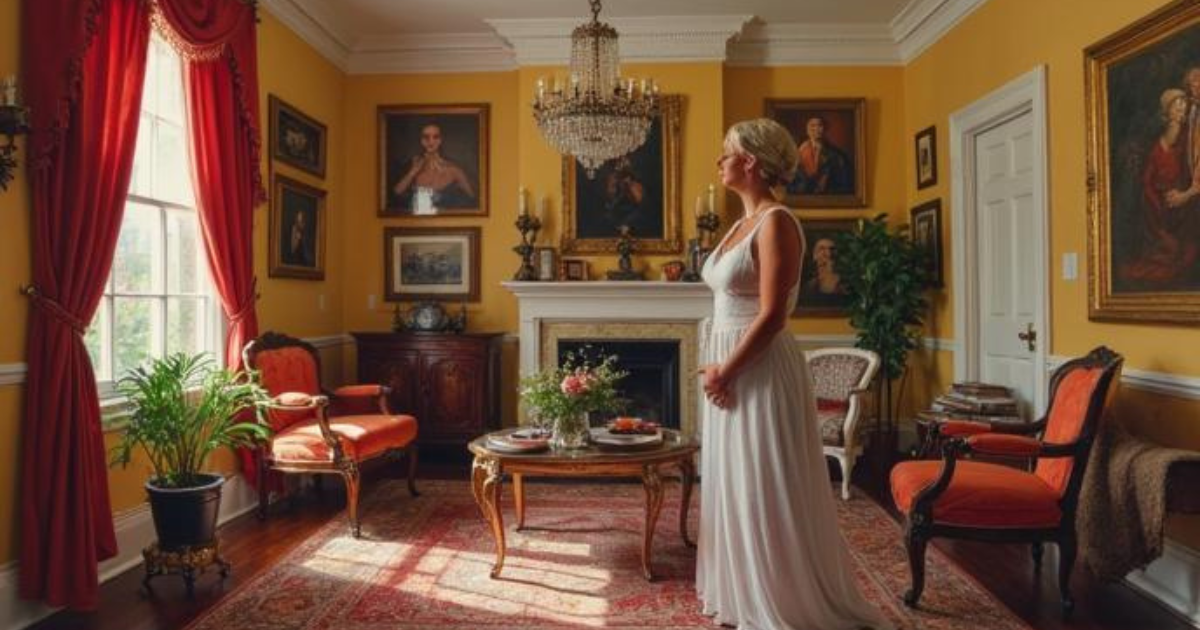
An excerpt from the original text.(complete · 2121 words)
hough Edna had spoken of the dinner as a very grand affair, it was in
truth a very small affair and very select, in so much as the guests
invited were few and were selected with discrimination. She had counted
upon an even dozen seating themselves at her round mahogany board,
forgetting for the moment that Madame Ratignolle was to the last degree
souffrante and unpresentable, and not foreseeing that Madame Lebrun
would send a thousand regrets at the last moment. So there were only
ten, after all, which made a cozy, comfortable number.
There were Mr. and Mrs. Merriman, a pretty, vivacious little woman in
the thirties; her husband, a jovial fellow, something of a
shallow-pate, who laughed a good deal at other people’s witticisms, and
had thereby made himself extremely popular. Mrs. Highcamp had
accompanied them. Of course, there was Alcée Arobin; and Mademoiselle
Reisz had consented to come. Edna had sent her a fresh bunch of violets
with black lace trimmings for her hair. Monsieur Ratignolle brought
himself and his wife’s excuses. Victor Lebrun, who happened to be in
the city, bent upon relaxation, had accepted with alacrity. There was a
Miss Mayblunt, no longer in her teens, who looked at the world through
lorgnettes and with the keenest interest. It was thought and said that
she was intellectual; it was suspected of her that she wrote under a
nom de guerre. She had come with a gentleman by the name of
Gouvernail, connected with one of the daily papers, of whom nothing
special could be said, except that he was observant and seemed quiet
and inoffensive. Edna herself made the tenth, and at half-past eight
they seated themselves at table, Arobin and Monsieur Ratignolle on
either side of their hostess.
Mrs. Highcamp sat between Arobin and Victor Lebrun. Then came Mrs.
Merriman, Mr. Gouvernail, Miss Mayblunt, Mr. Merriman, and Mademoiselle
Reisz next to Monsieur Ratignolle.
There was something extremely gorgeous about the appearance of the
table, an effect of splendor conveyed by a cover of pale yellow satin
under strips of lace-work. There were wax candles, in massive brass
candelabra, burning softly under yellow silk shades; full, fragrant
roses, yellow and red, abounded. There were silver and gold, as she had
said there would be, and crystal which glittered like the gems which
the women wore.
The ordinary stiff dining chairs had been discarded for the occasion
and replaced by the most commodious and luxurious which could be
collected throughout the house. Mademoiselle Reisz, being exceedingly
diminutive, was elevated upon cushions, as small children are sometimes
hoisted at table upon bulky volumes.
“Something new, Edna?” exclaimed Miss Mayblunt, with lorgnette directed
toward a magnificent cluster of diamonds that sparkled, that almost
sputtered, in Edna’s hair, just over the center of her forehead.
“Quite new; ‘brand’ new, in fact; a present from my husband. It arrived
this morning from New York. I may as well admit that this is my
birthday, and that I am twenty-nine. In good time I expect you to drink
my health. Meanwhile, I shall ask you to begin with this cocktail,
composed—would you say ‘composed?’” with an appeal to Miss
Mayblunt—“composed by my father in honor of Sister Janet’s wedding.”
Before each guest stood a tiny glass that looked and sparkled like a
garnet gem.
“Then, all things considered,” spoke Arobin, “it might not be amiss to
start out by drinking the Colonel’s health in the cocktail which he
composed, on the birthday of the most charming of women—the daughter
whom he invented.”
Mr. Merriman’s laugh at this sally was such a genuine outburst and so
contagious that it started the dinner with an agreeable swing that
never slackened.
Miss Mayblunt begged to be allowed to keep her cocktail untouched
before her, just to look at. The color was marvelous! She could compare
it to nothing she had ever seen, and the garnet lights which it emitted
were unspeakably rare. She pronounced the Colonel an artist, and stuck
to it.
Monsieur Ratignolle was prepared to take things seriously; the mets,
the entre-mets, the service, the decorations, even the people. He
looked up from his pompano and inquired of Arobin if he were related to
the gentleman of that name who formed one of the firm of Laitner and
Arobin, lawyers. The young man admitted that Laitner was a warm
personal friend, who permitted Arobin’s name to decorate the firm’s
letterheads and to appear upon a shingle that graced Perdido Street.
“There are so many inquisitive people and institutions abounding,” said
Arobin, “that one is really forced as a matter of convenience these
days to assume the virtue of an occupation if he has it not.” Monsieur
Ratignolle stared a little, and turned to ask Mademoiselle Reisz if she
considered the symphony concerts up to the standard which had been set
the previous winter. Mademoiselle Reisz answered Monsieur Ratignolle in
French, which Edna thought a little rude, under the circumstances, but
characteristic. Mademoiselle had only disagreeable things to say of the
symphony concerts, and insulting remarks to make of all the musicians
of New Orleans, singly and collectively. All her interest seemed to be
centered upon the delicacies placed before her.
Mr. Merriman said that Mr. Arobin’s remark about inquisitive people
reminded him of a man from Waco the other day at the St. Charles
Hotel—but as Mr. Merriman’s stories were always lame and lacking point,
his wife seldom permitted him to complete them. She interrupted him to
ask if he remembered the name of the author whose book she had bought
the week before to send to a friend in Geneva. She was talking “books”
with Mr. Gouvernail and trying to draw from him his opinion upon
current literary topics. Her husband told the story of the Waco man
privately to Miss Mayblunt, who pretended to be greatly amused and to
think it extremely clever.
Mrs. Highcamp hung with languid but unaffected interest upon the warm
and impetuous volubility of her left-hand neighbor, Victor Lebrun. Her
attention was never for a moment withdrawn from him after seating
herself at table; and when he turned to Mrs. Merriman, who was prettier
and more vivacious than Mrs. Highcamp, she waited with easy
indifference for an opportunity to reclaim his attention. There was the
occasional sound of music, of mandolins, sufficiently removed to be an
agreeable accompaniment rather than an interruption to the
conversation. Outside the soft, monotonous splash of a fountain could
be heard; the sound penetrated into the room with the heavy odor of
jessamine that came through the open windows.
The golden shimmer of Edna’s satin gown spread in rich folds on either
side of her. There was a soft fall of lace encircling her shoulders. It
was the color of her skin, without the glow, the myriad living tints
that one may sometimes discover in vibrant flesh. There was something
in her attitude, in her whole appearance when she leaned her head
against the high-backed chair and spread her arms, which suggested the
regal woman, the one who rules, who looks on, who stands alone.
But as she sat there amid her guests, she felt the old ennui overtaking
her; the hopelessness which so often assailed her, which came upon her
like an obsession, like something extraneous, independent of volition.
It was something which announced itself; a chill breath that seemed to
issue from some vast cavern wherein discords waited. There came over
her the acute longing which always summoned into her spiritual vision
the presence of the beloved one, overpowering her at once with a sense
of the unattainable.
The moments glided on, while a feeling of good fellowship passed around
the circle like a mystic cord, holding and binding these people
together with jest and laughter. Monsieur Ratignolle was the first to
break the pleasant charm. At ten o’clock he excused himself. Madame
Ratignolle was waiting for him at home. She was bien souffrante, and
she was filled with vague dread, which only her husband’s presence
could allay.
Mademoiselle Reisz arose with Monsieur Ratignolle, who offered to
escort her to the car. She had eaten well; she had tasted the good,
rich wines, and they must have turned her head, for she bowed
pleasantly to all as she withdrew from table. She kissed Edna upon the
shoulder, and whispered: “Bonne nuit, ma reine; soyez sage.” She had
been a little bewildered upon rising, or rather, descending from her
cushions, and Monsieur Ratignolle gallantly took her arm and led her
away.
Mrs. Highcamp was weaving a garland of roses, yellow and red. When she
had finished the garland, she laid it lightly upon Victor’s black
curls. He was reclining far back in the luxurious chair, holding a
glass of champagne to the light.
As if a magician’s wand had touched him, the garland of roses
transformed him into a vision of Oriental beauty. His cheeks were the
color of crushed grapes, and his dusky eyes glowed with a languishing
fire.
“Sapristi!” exclaimed Arobin.
But Mrs. Highcamp had one more touch to add to the picture. She took
from the back of her chair a white silken scarf, with which she had
covered her shoulders in the early part of the evening. She draped it
across the boy in graceful folds, and in a way to conceal his black,
conventional evening dress. He did not seem to mind what she did to
him, only smiled, showing a faint gleam of white teeth, while he
continued to gaze with narrowing eyes at the light through his glass of
champagne.
“Oh! to be able to paint in color rather than in words!” exclaimed Miss
Mayblunt, losing herself in a rhapsodic dream as she looked at him.
“‘There was a graven image of Desire
Painted with red blood on a ground of gold.’”
murmured Gouvernail, under his breath.
The effect of the wine upon Victor was to change his accustomed
volubility into silence. He seemed to have abandoned himself to a
reverie, and to be seeing pleasing visions in the amber bead.
“Sing,” entreated Mrs. Highcamp. “Won’t you sing to us?”
“Let him alone,” said Arobin.
“He’s posing,” offered Mr. Merriman; “let him have it out.”
“I believe he’s paralyzed,” laughed Mrs. Merriman. And leaning over the
youth’s chair, she took the glass from his hand and held it to his
lips. He sipped the wine slowly, and when he had drained the glass she
laid it upon the table and wiped his lips with her little filmy
handkerchief.
“Yes, I’ll sing for you,” he said, turning in his chair toward Mrs.
Highcamp. He clasped his hands behind his head, and looking up at the
ceiling began to hum a little, trying his voice like a musician tuning
an instrument. Then, looking at Edna, he began to sing:
“Ah! si tu savais!”
“Stop!” she cried, “don’t sing that. I don’t want you to sing it,” and
she laid her glass so impetuously and blindly upon the table as to
shatter it against a carafe. The wine spilled over Arobin’s legs and
some of it trickled down upon Mrs. Highcamp’s black gauze gown. Victor
had lost all idea of courtesy, or else he thought his hostess was not
in earnest, for he laughed and went on:
“Ah! si tu savais
Ce que tes yeux me disent”—
“Oh! you mustn’t! you mustn’t,” exclaimed Edna, and pushing back her
chair she got up, and going behind him placed her hand over his mouth.
He kissed the soft palm that pressed upon his lips.
“No, no, I won’t, Mrs. Pontellier. I didn’t know you meant it,” looking
up at her with caressing eyes. The touch of his lips was like a
pleasing sting to her hand. She lifted the garland of roses from his
head and flung it across the room.
“Come, Victor; you’ve posed long enough. Give Mrs. Highcamp her scarf.”
Mrs. Highcamp undraped the scarf from about him with her own hands.
Miss Mayblunt and Mr. Gouvernail suddenly conceived the notion that it
was time to say good night. And Mr. and Mrs. Merriman wondered how it
could be so late.
Before parting from Victor, Mrs. Highcamp invited him to call upon her
daughter, who she knew would be charmed to meet him and talk French and
sing French songs with him. Victor expressed his desire and intention
to call upon Miss Highcamp at the first opportunity which presented
itself. He asked if Arobin were going his way. Arobin was not.
The mandolin players had long since stolen away. A profound stillness
had fallen upon the broad, beautiful street. The voices of Edna’s
disbanding guests jarred like a discordant note upon the quiet harmony
of the night.
Master this chapter. Complete your experience
Purchase the complete book to access all chapters and support classic literature
As an Amazon Associate, we earn a small commission from qualifying purchases at no additional cost to you.
Available in paperback, hardcover, and e-book formats
Let's Analyse the Pattern
Achieving external transformation while leaving deeper emotional needs unaddressed creates hollow victories that amplify our original restlessness.
Why This Matters
Connect literature to life
This chapter teaches how to spot when we're solving the wrong problem by changing externals instead of addressing internal needs.
Practice This Today
This week, notice when you feel disappointed after getting something you wanted—ask yourself what you were really hoping it would give you.
Now let's explore the literary elements.
Key Quotes & Analysis
"There was something in her attitude, in her whole appearance when she leaned her head against the high-backed chair and spread her arms, which suggested the regal woman, the one who rules, who looks on, who stands alone."
Context: Describing how Edna appears at her own dinner party
This quote captures Edna's transformation into someone who commands her own space and makes her own choices. Yet the phrase 'stands alone' hints at the isolation that comes with her newfound independence.
In Today's Words:
She looked like a queen in her own castle, but queens can be pretty lonely at the top.
"But as she sat there amid her guests, she felt the old ennui overtaking her; the hopelessness which so often assailed her, which came upon her like an obsession, like something extraneous, independent of volition."
Context: Edna's internal experience during her supposedly perfect dinner party
Despite achieving everything she thought she wanted - independence, luxury, admiration - Edna still feels that familiar emptiness. The word 'obsession' suggests this isn't just sadness but a compulsive, overwhelming feeling she can't control.
In Today's Words:
Even surrounded by people at her own party, that old 'what's the point?' feeling crept back in like it always did.
"The touch of his lips was like a pleasing sting to her hand."
Context: When Victor kisses Edna's palm after she covers his mouth to stop him singing
This moment of unexpected intimacy breaks through Edna's emotional numbness. The phrase 'pleasing sting' captures how physical touch can be both painful and awakening, reminding her of what she's been missing.
In Today's Words:
His kiss was like a shock that hurt in a good way - it woke something up in her.
Thematic Threads
Identity
In This Chapter
Edna performs the role of independent hostess but feels disconnected from this new identity
Development
Evolved from her early confusion about who she is to actively trying on new roles that still don't fit
In Your Life:
You might recognize this when career changes or life transitions leave you feeling like you're playing a part rather than being yourself
Class
In This Chapter
The elaborate dinner showcases Edna's access to luxury and social status through her husband's wealth
Development
Continued exploration of how class privilege both enables and constrains Edna's choices
In Your Life:
You see this when financial resources solve some problems but create new pressures about how to use that privilege authentically
Social Expectations
In This Chapter
Edna orchestrates a perfect social gathering while internally rebelling against the very performance she's creating
Development
Deepened from earlier chapters where she simply felt constrained by expectations to actively participating while feeling alienated
In Your Life:
You experience this when you succeed at meeting others' expectations but feel empty because it's not what you actually wanted
Desire
In This Chapter
The song triggers overwhelming longing that shatters Edna's composed exterior, revealing the passion still burning beneath
Development
Intensified from earlier subtle awakenings to explosive emotional reactions that she can barely control
In Your Life:
You might feel this when unexpected reminders of past connections or dreams hit you with surprising force during routine moments
Isolation
In This Chapter
Despite being surrounded by guests at her own party, Edna feels fundamentally alone and misunderstood
Development
Progressed from physical isolation in early chapters to emotional isolation even in crowded social settings
In Your Life:
You know this feeling when you're in a room full of people but feel like no one really sees or understands who you are becoming
You now have the context. Time to form your own thoughts.
Discussion Questions
- 1
Edna throws herself an elaborate birthday party with all the trappings of success, yet feels empty during her own celebration. What specific details show the contrast between the party's surface glamour and Edna's internal state?
analysis • surface - 2
Why does Victor's song trigger such a violent reaction from Edna that she breaks her wine glass and physically stops him? What does this moment reveal about what she's really missing?
analysis • medium - 3
Think about someone you know who achieved a major goal (promotion, weight loss, new relationship, dream purchase) but seemed less happy afterward. What pattern do you see between their external success and internal satisfaction?
application • medium - 4
If you were Edna's friend and noticed her emptiness despite her newfound independence, how would you help her identify what she's actually seeking? What questions would you ask?
application • deep - 5
This chapter suggests that getting what we think we want can sometimes make us feel worse, not better. What does this teach us about the difference between solving symptoms versus solving root problems?
reflection • deep
Critical Thinking Exercise
Map Your Real Hunger
Think of a major goal you're currently working toward or recently achieved. Write it down, then dig deeper: What do you hope this goal will make you feel? Respected? Connected? Free? Secure? Now ask: Is this goal the most direct path to that feeling, or are you solving the wrong problem?
Consider:
- •Sometimes external goals are the right answer, but we need to be honest about what we're really seeking
- •Consider whether you've seen this pattern before in your life - achieving something but still feeling unsatisfied
- •Think about people who seem to have what you want - do they actually seem fulfilled by it?
Journaling Prompt
Write about a time when you got something you really wanted but it didn't make you feel the way you expected. What were you actually hungry for underneath that goal?
Coming Up Next...
Chapter 31: The Empty House and Gentle Touch
After the guests leave, Edna faces the aftermath of her emotional outburst. The evening has stirred up feelings she's been trying to suppress, and a significant encounter awaits that will test everything she thinks she knows about desire and independence.



